218 Results for "

Reversibly

" in MedChemExpress (MCE) Product Catalog:
Products (218)

218 Results for "Reversibly" in MCE Product Catalog:

Cat. No.: HY-78035
CAS No.: 616-02-4
Synonyms: Methylmaleic anhydride
Citraconic anhydride (Methylmaleic anhydride) is a derivative of maleic anhydride (HY-Z0060) and novel antigen retrieval solution. Citraconic anhydride reversibly blocks protein amino groups, stabilizing specific enzymes and improving their catalytic performance. Citraconic anhydride reacts with free amino groups on proteins (especially lysine residues), converting positively charged NH3 + into carboxyl groups, thereby disrupting methylene bridge crosslinks caused by Formaldehyde during antigen retrieval. Citraconic anhydride functionalizes Isotactic polypropylene. Citraconic anhydride precisely responds to pH changes to achieve reversible modification. Citraconic anhydride is irritating to skin and eyes .
loading...
    loading...
Cat. No.: HY-W699451
MTSET chloride is a membrane-impermeable, thiol-specific reagent that primarily acts as an inhibitor of the Nav1.5 sodium channel. MTSET chloride reduces the peak sodium current amplitude of most mutant Nav1.5 channels, induces a hyperpolarizing shift in steady-state inactivation, and slows the recovery process, but shows no activity against wild-type and non-inactivating Nav1.5 channel mutants. MTSET chloride reacts covalently with T336C mutant P2X2 receptors, partially reversibly blocks ATP-induced cation currents, and exerts no effect on wild-type P2X2 receptors .
loading...
    loading...
Cat. No.: HY-120420
CAS No.: 167695-87-6
N4Py is a bleomycin-mimetic pentadentate ligand that targets intracellular FeII and reversibly chelates a variety of transition metals. N4Py chelates induce apoptosis through two pathways: DNA cleavage via ROS generation and XIAP downregulation via ZnII chelation, with only FeII/FeIII-N4Py exhibiting potent DNA cleavage activity. The folate conjugate of N4Py targets folate receptors, can be intracellularly cleaved, and selectively kills FR-positive cancer cells. N4Py can be used in research on various cancers including nasopharyngeal epidermoid carcinoma, ovarian cancer, and mammary adenocarcinoma .
loading...
    loading...
Cat. No.: HY-150085
CAS No.: 2393881-77-9
Target:  

Kallikrein

Research Areas:  

Inflammation/Immunology

GSK951 is a highly potent, selective, and reversibly covalent KLK5 inhibitor, with an IC50 of approximately 250 pM and a pIC50 of 9.6 against hKLK5. It exhibits over 100-fold selectivity over KLK7, KLK14, matriptase, and elastase. GSK951 binds to the catalytic site of KLK5 via covalent interaction with the catalytic serine, with a slow dissociation rate. GSK951 improves skin barrier function, reduces transepidermal water loss, decreases the expression of proinflammatory cytokines, and inhibits the elevated KLK5 protease activity in the stratum corneum. GSK951 can be used in studies related to skin barrier dysfunction.
loading...
    loading...
Cat. No.: HY-173397
CAS No.: 3081681-34-4
Research Areas:  

Metabolic Disease

β-Glucuronidase-IN-3 (Compound 49) is a covalent allosteric β-glucuronidase inhibitor. β-Glucuronidase-IN-3 has potent inhibitory activity against Escherichia coli β-glucuronidase (EcGUS) (IC50: 12.9 nM). β-Glucuronidase-IN-3 exerts its inhibitory effect by reversibly covalently modifying the cysteine residues (Cys28, Cys443, and Cys197) of EcGUS. β-Glucuronidase-IN-3 can be used in the study of intestinal microbiota-related diseases, especially to alleviate the toxic side effects of Irinotecan (HY-16562) and nonsteroidal anti-inflammatory drugs (NSAIDs) .
loading...
    loading...
Cat. No.: HY-178383
Target:  

Glycosidase

Research Areas:  

Metabolic Disease

α-Glucosidase-IN-98 is a potent orally active α-Glucosidase inhibitor with an IC50 of 18.1 μM. α-Glucosidase-IN-98 reversibly binds with α-Glucosidase via hydrogen bonds, electrostatic interactions and hydrophobic effects, which induces significant conformational alterations in the secondary structure of α-Glucosidase. α-Glucosidase-IN-98 decreases postprandial hyperglycemia in Starch (HY-B2225B)/Sucrose (HY-B1779)-challenged mice. α-Glucosidase-IN-98 can be used for type 2 diabetes mellitus (T2DM) research .
loading...
    loading...
Cat. No.: HY-184106
CAS No.: 1268273-85-3
Target:  

HSP Apoptosis

Research Areas:  

Cancer

HSP70-IN-9 is an Hsp70 inhibitor that induces caspase-3,7 activation with an IC50 of 25.2 μM. HSP70-IN-9 reversibly binds to the allosteric pocket of the N-terminal domain, disrupts the Hsp70-HOP-Hsp90 mega-complex, and inhibits client protein refolding, thereby inducing apoptosis and degradation of Hsp90-Hsp70 tumor client proteins, ultimately inhibiting cancer cell growth. HSP70-IN-9 can be used for research on breast cancer, pancreatic cancer, and acute myeloid leukemia .
loading...
    loading...
Cat. No.: HY-P3187A
CAS No.: 9025-53-0
Target:  

DNA/RNA Synthesis

Research Areas:  

Others

exo-β-1,4-xylosidase,Clostridium stercorarium (EC.3.2.1.37) is an exonuclease that specifically acts on the β-1,4 glycosidic bonds at the non-reducing ends of xylan and xylooligosaccharides. exo-β-1,4-xylosidase is Ca 2+-dependent and reversibly binds to metal ions to catalyze the hydrolysis of β-1,4 glycosidic bonds, thereby degrading xylan to produce xylose. exo-β-1,4-xylosidase can be used in research fields such as lignocellulose bioconversion, bioethanol production, and optimization of xylan saccharification processes .
loading...
    loading...
Cat. No.: HY-P3187B
CAS No.: 9025-53-0
Target:  

DNA/RNA Synthesis

Research Areas:  

Others

exo-β-1,4-xylosidase, Bacteroides ovatus (EC.3.2.1.37) is an exonuclease that specifically acts on the β-1,4 glycosidic bonds at the non-reducing ends of xylan and xylooligosaccharides. exo-β-1,4-xylosidase is Ca 2+-dependent and reversibly binds to metal ions to catalyze the hydrolysis of β-1,4 glycosidic bonds, thereby degrading xylan to produce xylose. exo-β-1,4-xylosidase can be used in research fields such as lignocellulose bioconversion, bioethanol production, and optimization of xylan saccharification processes .
loading...
    loading...
Cat. No.: HY-P99138

Target:  

Interleukin Related

Research Areas:  

Inflammation/Immunology Cancer

Anti-Mouse IL-1a Antibody (ALF-161) is an anti-mouse IL-1a IgG1 monoclonal antibody. Anti-Mouse IL-1a Antibody (ALF-161) can inhibit CD8 + T cell response by blocking IL-1a signaling. Anti-Mouse IL-1a Antibody (ALF-161) can reversibly transform myeloid cell expansion and improve T cell function. Anti-Mouse IL-1a Antibody (ALF-161) can be used for researches on immune response and cancer such as breast cancer .
loading...
    loading...
Cat. No.: HY-W654342
Synonyms: NSC 268508-d20; Neuridine-d20
Spermine-d20 (NSC 268508-d20) is deuterium labeled Spermine. Spermine is a natural antioxidant and anti-inflammatory agent. Spermine is known to inhibit some bacterial cultures, especially strains of Staphylococcus aureus. Spermine can reversibly inhibits DNA synthetic response, mixed lymphocyte response and the induction of cytolytic lymphocyte response in primary cultures of murine spleen cells. Spermine is a polyamine nitric oxide donor that can provide nitric oxide to platelets and inhibit platelet activation to a certain extent concentration-dependently. Spermine occurs in mammalian tissues, plants, bacteria, ribosomes and bacteriophage. Spermine tetrahydrochloride inhibits primary human embryo lung fibroblasts in vitro.
loading...
    loading...
Cat. No.: HY-155330
Research Areas:  

Neurological Disease

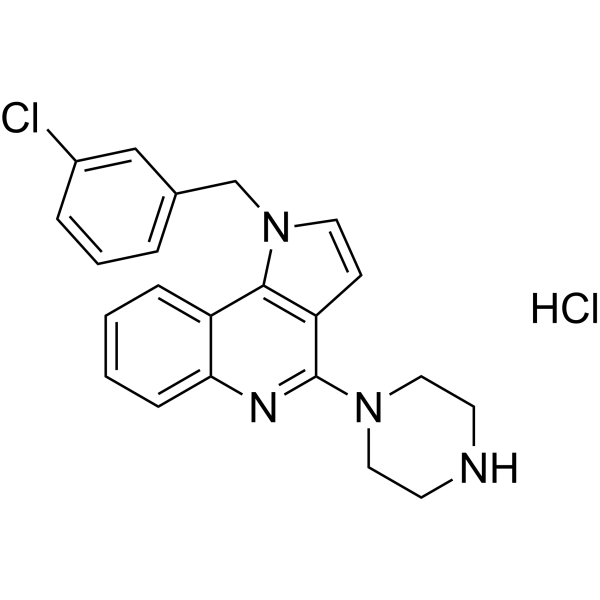
PZ-1922 (Compound 16) is a BBB-penetrable 5-HT6R/5-HT3R antagonist (Ki: 17 nM, 0.45 nM for 5-HT6R/5-HT3R respectively). PZ-1922 reversibly inhibits MAO-B (pIC50: 8.93). PZ-1922 reverses Scopolamine (SCOP) (HY-N0296) induced memory deficits in the novel object recognition (NOR) test in rats. PZ-1922 prevents Aβ-induced memory decline in the T-maze test .
loading...
    loading...
Cat. No.: HY-D1422
CAS No.: 1445108-32-6
Synonyms: BDNCA-346
Target:  

Fluorescent Dye

Research Areas:  

Others

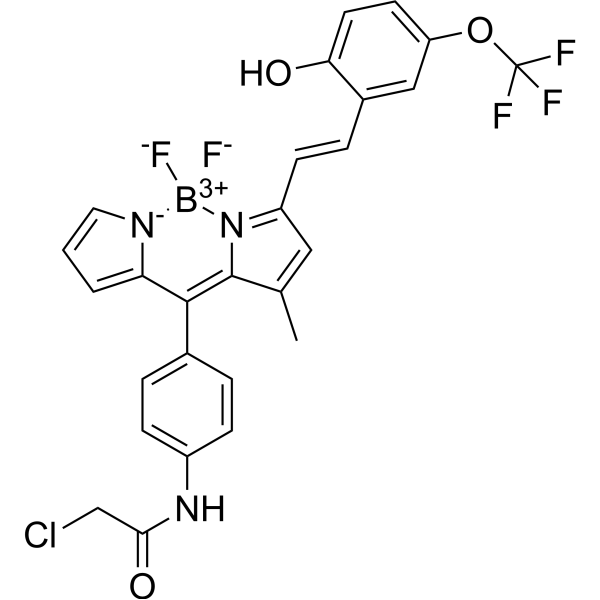
ER Tracker Yellow (BDNCA-346) is a Fluorescent probe for targeted visualization of temperature at the endoplasmic reticulum. Its detection mechanism depends on temperature, with fluorescence intensity decreasing at higher temperatures due to preferential non-radiative processes; this intensity reversibly returns to baseline when cooled, provided the probe does not precipitate or degrade. It localizes specifically to the endoplasmic reticulum, where it may covalently attach to biomacromolecules via a thiol-reactive moiety, and its fluorescence remains stable after cell fixation; its fluorescence intensity is unaffected by physiological pH ranges of 5.0–8.0 and free Ca²⁺ concentrations of 0–800 μM. Its excitation/emission wavelength is Ex/Em = 559/581 nm[1].
loading...
    loading...
Cat. No.: HY-W010514
CAS No.: 1460-57-7
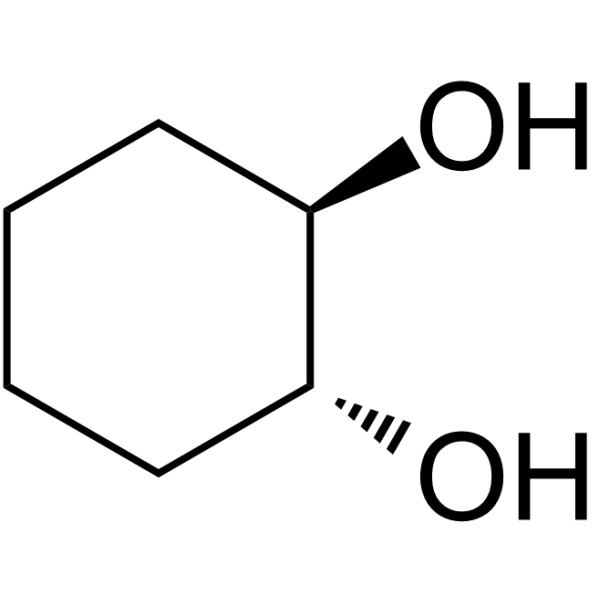
trans-Cyclohexane-1,2-diol (TCHD) is a transient dilator of the nuclear pore complex (NPC). By interacting with the hydrophobic core (FG nucleoporin) of the NPC, trans-Cyclohexane-1,2-diol can disrupt the NPC structure and reversibly increase the permeability of the nuclear pore, allowing macromolecules larger than 40 kDa (such as plasmid DNA) to enter the cell nucleus by passive diffusion, thereby enhancing the nuclear import efficiency of non-viral vectors. trans-Cyclohexane-1,2-diol can improve the efficiency of in vitro electrotransfection or lipid-mediated gene transfection, especially significantly increasing gene expression in differentiated airway epithelial cells .
loading...
    loading...
Cat. No.: HY-108046
CAS No.: 869743-37-3
Synonyms: UP302
Nivitol (UP302) is a natural phenolic compound discovered from Dianella ensifolia and also acts as a Tyrosinase inhibitor. Nivitol competitively and reversibly inhibits tyrosinase, suppressing melanin production. Nivitol inhibits homogentisate 1,2-dioxygenase (HGD). In human leukemia cells, Nivitol inhibits PI3K/AKT pathway phosphorylation, increases ROS, decreases mitochondrial membrane potential, and induces G2/M cell cycle arrest, apoptosis, and PINK1/Parkin-mediated mitophagy. Nivitol exhibits inhibition of tumor growth in the MV411 xenograft mouse model. Nivitol is used for research on exogenous ochronosis, hyperpigmentation, and leukemia .
loading...
    loading...
Cat. No.: HY-110105R
CAS No.: 875755-24-1
NS8593 hydrochloride (Standard) is the analytical standard of NS8593 (hydrochloride) (HY-110105). This product is intended for research and analytical applications. NS8593 hydrochloride is a potent and selective small conductance Ca2+-activated K+ channels (SK channels) inhibitor. NS8593 hydrochloride reversibly inhibits SK3-mediated currents with a Kd value of 77 nM. NS8593 hydrochloride inhibits all the SK1-3 subtypes Ca2+-dependently (Kds of 0.42, 0.60, and 0.73 μM, respectively, at 0.5 μM Ca2+), and does not affect the Ca2+-activated K+ channels of intermediate and large conductance (hIK and hBK channels, respectively) .
loading...
    loading...
Cat. No.: HY-155330A
CAS No.: 1648745-65-6
Research Areas:  

Neurological Disease

PZ-1922 free base is a BBB-penetrable 5-HT6R/5-HT3R antagonist (Ki: 17 nM, 0.45 nM for 5-HT6R/5-HT3R respectively). PZ-1922 free base reversibly inhibits MAO-B (pIC50: 8.93). PZ-1922 free base reverses Scopolamine (SCOP) (HY-N0296) induced memory deficits in the novel object recognition (NOR) test in rats. PZ-1922 free base prevents Aβ-induced memory decline in the T-maze test .
loading...
    loading...
Cat. No.: HY-18347
CAS No.: 210101-16-9
Synonyms: YM 087 free base
Conivaptan (YM 087 free base) is an orally active dual vasopressin V1a/V2 receptor antagonist with Ki values of 0.48 nM and 3.04 nM for vasopressin V1a receptor and V2 receptor, respectively. Conivaptan competitively and reversibly blocks vasopressin-mediated antidiuresis, vasoconstriction, and cellular hypertrophy, while inhibiting CYP3A4. Conivaptan inhibits vasopressin-induced intracellular calcium, cAMP, and mitogen-activated kinase activation in vascular smooth muscle cells and cardiomyocytes. Conivaptan induces water diuresis while improving hemodynamics in heart failure models, reducing left ventricular end-diastolic pressure, vascular resistance, and organ weight. Conivaptan is used for research on hyponatremia and congestive heart failure .
loading...
    loading...
Cat. No.: HY-187585
CAS No.: 104639-01-2
Fourphit is a dopamine transporter (DAT) inhibitor and phencyclidine (PCP) receptor binding agent. Fourphit irreversibly acylates the DAT [ 3H]methylphenidate binding site, reversibly binds to the PCP receptor, and sensitizes neuronal L-type DHP calcium channels. Fourphit attenuates K +-stimulated 45Ca 2+ uptake at high concentrations, and after its pretreatment, Nifedipine (HY-B0284) effectively inhibits this uptake without affecting resting calcium uptake. Fourphit reduces cocaine-induced hyperactivity, decreases cocaine-induced rearing frequency, enhances cocaine-induced thigmotaxis, elicits an acute increase in locomotor activity, and suppresses dark-cycle activity. Fourphit is used in research related to cocaine abuse and addiction .
loading...
    loading...
Cat. No.: HY-B1777AR
CAS No.: 306-67-2
Spermine (tetrahydrochloride) (Standard) is the analytical standard of Spermine (tetrahydrochloride). This product is intended for research and analytical applications. Spermine tetrahydrochloride is a polyamine nitric oxide donor that can provide nitric oxide to platelets and inhibit platelet activation to a certain extent concentration-dependently. Spermine tetrahydrochloride occurs in mammalian tissues, plants, bacteria, ribosomes and bacteriophage. Spermine tetrahydrochloride inhibits primary human embryo lung fibroblasts in vitro. Spermine is a natural antioxidant and anti-inflammatory agent. Spermine is known to inhibit some bacterial cultures, especially strains of Staphylococcus aureus. Spermine induces neurotoxicity in the striarum dose-dependently. Spermine can reversibly inhibits DNA synthetic response, mixed lymphocyte response and the induction of cytolytic lymphocyte response in primary cultures of murine spleen cells .
loading...
    loading...

