2031 Results for "

NF-KB

" in MedChemExpress (MCE) Product Catalog:
Products (2031)

2031 Results for "NF-KB" in MCE Product Catalog:

  • Categories Recommended:
    More
Cat. No.: HY-P82656
Synonyms: MAP3K7IP 3; NAP1; NFKB activating protein 1; Tab3; TAK1 binding protein 3

Host:  

Rabbit

Application:  

WB, ICC/IF

Reactivity:  

Human, Mouse

loading...
    loading...
Cat. No.: HY-101481R
CAS No.: 91503-79-6
Flurbiprofen axetil (Standard) is the analytical standard of Flurbiprofen axetil. This product is intended for research and analytical applications. Flurbiprofen axetil is a non-selective COX inhibitor and a nonsteroidal anti-inflammatory agent with anti-inflammatory and analgesic effects. Flurbiprofen axetil inhibits basal-like breast cancer metastasis by inhibiting the MEK/ERK signaling pathway. Flurbiprofen axetil can promote neuroprotection after focal cerebral ischemia in rats by partially activating PPAR-γ. Flurbiprofen axetil alleviates cerebral ischemia/reperfusion injury by reducing inflammation in a transient global cerebral ischemia/reperfusion rat model. Flurbiprofen axetil can alleviate inflammatory responses and cognitive function in a mild cognitive impairment (MCI) SD rat model through the AMPKα/NF-κB signaling pathway .
loading...
    loading...
Cat. No.: HY-126562R
CAS No.: 5950-12-9
Piperlonguminine (Standard) is the analytical standard of Piperlonguminine (HY-126562). This product is intended for research and analytical applications. Piperlonguminine is a cytochrome P450 (CYP450) inhibitor. Piperlonguminine also inhibits the growth of epimastigotes and intracellular amastigotes of Trypanosoma cruzi, with IC50 values of 53.8 and 33.9 μM, respectively . Piperlonguminine regulates HMGB1/TLR4-NF-κB/MAPK-related inflammatory responses, endothelial protein C receptor (EPCR) shedding, melanogenesis, glycolipid metabolism, ischemic brain injury and tumor growth. Piperlonguminine can be used in research on hyperlipidemia, sepsis, Chagas disease, ischemic stroke, sarcoma and severe acute pancreatitis-associated lung injury .
loading...
    loading...
Cat. No.: HY-167874
CAS No.: 2488255-42-9
ASP-8731 is an orally active BACH1 inhibitor. ASP-8731 activates antioxidant, anti-inflammatory and globin gene pathways by relieving the inhibitory effect of BACH1 on NRF2-mediated gene transcription. ASP-8731 significantly upregulates the expression of HMOX1, FTH1 and various globins (such as HGB, HBG, HBA), increases fetal hemoglobin (HbF) levels, and effectively induces F-cell production in hydroxyurea-unresponsive cells. Meanwhile, ASP-8731 reduces inflammatory responses and white blood cell counts by downregulating VCAM1, ICAM-1 and the phosphorylation level of NF-κB(p65), and blocks heme-induced glutathione depletion and microcirculatory stasis. ASP-8731 holds potential for inhibiting sickle cell disease and related hematological disorders .
loading...
    loading...
Cat. No.: HY-179047
CAS No.: 3040320-18-8
SMU-L11-R is a selective TLR7 agonist with an EC50 of 0.012 μM for human TLR7. SMU-L11-R specifically activates TLR7, recruits  MyD88, and triggers MAPK/NF-κB pathways, leading to TNF-α/IL-1β/IL-6 secretion in both mouse and human peripheral blood mononuclear cells. SMU-L11-R promotes M1-like macrophage polarization. SMU-L11-R exhibits excellent synergistic anti-tumor effects with PD-L1 inhibitors by upregulating CD8 +T cells. SMU-L11-R shows potential in colorectal cancer studies .
loading...
    loading...
Cat. No.: HY-184324
CAS No.: 2975573-18-1
Anti-inflammatory agent 116 is an anti-inflammatory agent. Anti-inflammatory agent 116 inhibits the abnormal activation of the NF-κB/MAPK signaling pathway. Anti-inflammatory agent 116 binds to the p50 subunit and impairs the DNA-binding ability of the p65-p50 heterodimer. Anti-inflammatory agent 116 inhibits LPS-induced production of NO and MtROS, secretion of IL-1β and TNF-α, expression of iNOS and COX-2, phosphorylation of IKK, IκB, p65, p38, ERK and JNK, as well as nuclear translocation of p65. Anti-inflammatory agent 116 alleviates sepsis-associated acute liver injury in mice. Anti-inflammatory agent 116 can be used for the research of sepsis-associated acute liver injury .
loading...
    loading...
Cat. No.: HY-40354AS
CAS No.: 2701680-77-3
Synonyms: Tasocitinib-d3 citrate; CP-690550-d3 citrate
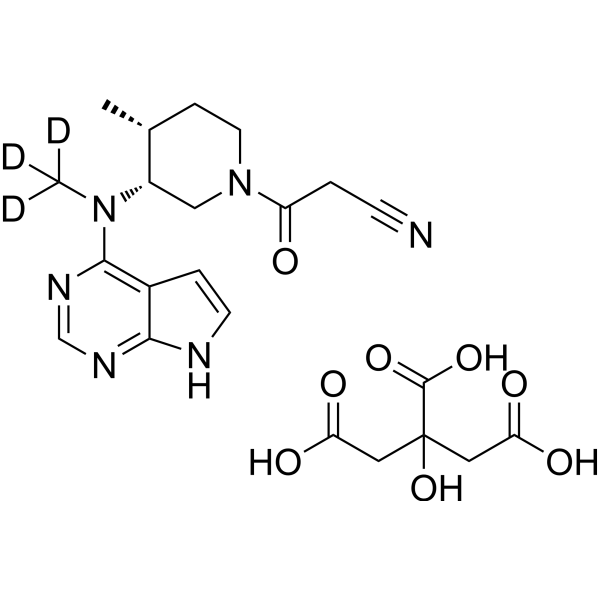
Tofacitinib-d3 citrate (Tasocitinib-d3 citrate; CP-690550-d3 citrate) is the deuterated-labeled Tofacitinib citrate (HY-40354A). Tofacitinib citrate (Tasocitinib citrate) is an orally active, blood-brain barrier permeable selective inhibitor of JAK1/JAK3. Tofacitinib citrate blocks the JAK-STAT/NF-κB signaling pathway, inhibits cytokine signal transduction, phosphorylation of STAT1/STAT5, and suppresses innate and adaptive immune responses. Tofacitinib citrate can be used in research related to major depressive disorder, rheumatoid arthritis, pulmonary diseases, systemic lupus erythematosus, and immune-mediated liver injury .
loading...
    loading...
Cat. No.: HY-40354S1
Synonyms: Tasocitinib-13C3,15N; CP-690550-13C3,15N
Tofacitinib- 13C3, 15N (Tasocitinib- 13C3, 15N; CP-690550- 13C3, 15N) is the 15N, 13C-labeled Tofacitinib (HY-40354). Tofacitinib (Tasocitinib) is an orally active, blood-brain barrier permeable selective inhibitor of JAK1/JAK3. Tofacitinib blocks the JAK-STAT/NF-κB signaling pathway, inhibits cytokine signal transduction, phosphorylation of STAT1/STAT5, and suppresses innate and adaptive immune responses. Tofacitinib can be used in research related to major depressive disorder, rheumatoid arthritis, pulmonary diseases, systemic lupus erythematosus, and immune-mediated liver injury .
loading...
    loading...
Cat. No.: HY-40354S2
Synonyms: Tasocitinib-13C,d3; CP-690550-13C,d3
Tofacitinib- 13C,d3 (Tasocitinib- 13C,d3; CP-690550- 13C,d3) is the deuterated, 13C-labeled Tofacitinib (HY-40354). Tofacitinib (Tasocitinib) is an orally active, blood-brain barrier permeable selective inhibitor of JAK1/JAK3. Tofacitinib blocks the JAK-STAT/NF-κB signaling pathway, inhibits cytokine signal transduction, phosphorylation of STAT1/STAT5, and suppresses innate and adaptive immune responses. Tofacitinib can be used in research related to major depressive disorder, rheumatoid arthritis, pulmonary diseases, systemic lupus erythematosus, and immune-mediated liver injury .
loading...
    loading...
Cat. No.: HY-N9541
CAS No.: 1399690-75-5
Chaetoglobosin Vb is a cytochalasin alkaloid with anti-inflammatory and antioxidant activities. Chaetoglobosin Vb attenuates LPS (HY-D1056)-induced TLR4 inflammatory signaling and IFN-β release by downregulating TRIF, MyD88, TLR4 mRNA and IRF7 expression . Chaetoglobosin Vb downregulates the expression and release of inflammatory mediators such as iNOS, COX-2, TNF-α and IL-6 by blocking MAPK/NF-κB pathway activation. Chaetoglobosin Vb reduces excessive ROS production and protects SOD enzyme activity against LPS-induced oxidative stress. Chaetoglobosin Vb inhibits the growth of certain bacteria and radish seedling roots. Chaetoglobosin Vb can be used in research related to colorectal cancer, bacterial infection, and radish growth .
loading...
    loading...
Cat. No.: HY-W130878
CAS No.: 1806-26-4
4-Octylphenol is a hormone disruptor that has gender-specific effects on male reproductive cells, significantly reducing the mitotic index and the number of spermatogonia. 4-Octylphenol can cause inflammatory damage to fish gills by activating the complement system through the C3a/C3aR axis and the C5a/C5aR1 axis, this leads to complement activation and causes immune suppression due to the imbalance between Th1/Th2 cells and regulatory T cells (Treg)/Th17 cells, as well as inflammatory damage via the Toll-like receptor 7 (Toll-like Receptor (TLR))/IκBα/NF-κB pathway .
loading...
    loading...
Cat. No.: HY-W701772
CAS No.: 946524-37-4
Synonyms: 2-OG-d5
2-Oleoylglycerol-d5 (2-OG-d5) is the deuterium labeled 2-Oleoylglycerol (HY-W011121). 2-Oleoylglycerol (2-OG) is a lipid found in the diet. It is a GPR119 agonist, with an EC50 value of 2.5 μM in activating hGPR119 in transiently transfected COS-7 cells. 2-Oleoylglycerol enhances the inflammatory response of macrophages and promotes fibrosis by activating the GPR119/TAK1/NF-κB/TGF-β1 signaling pathway. It also stimulates glucagon-like peptide 1 (GLP-1) secretion in vivo. 2-Oleoylglycerol is expected to be used in the research of non-alcoholic steatohepatitis (NASH) .
loading...
    loading...
Cat. No.: HY-165613
CAS No.: 656831-18-4
Synonyms: Dipalmitoyl-S-glyceryl-cysteine; S-[2,3-Bis(palmitoyloxy)propyl]cysteine
Pam2Cys (Dipalmitoyl-S-glyceryl-cysteine; S-[2,3-Bis(palmitoyloxy)propyl]cysteine) is a TLR2 agonist and immunostimulant. Pam2Cys binds to TLR2 to activate dendritic cells and trigger the TLR2-dependent NF-κB signaling pathway. Pam2Cys also induces dendritic cell maturation by upregulating the expression of cell surface MHC II molecules. Pam2Cys activates innate immune signaling pathways, drives pro-inflammatory and antimicrobial responses, enhances the expression of macrophage activation markers, increases phagocytic activity, induces the release of IL-12 and pro-inflammatory cytokines, and polarizes macrophages into a pro-inflammatory, antimicrobial phenotype without interfering with IL-10-induced macrophage polarization. Pam2Cys also serves as the lipid moiety in synthetic lipopeptide vaccines and possesses self-adjuvant properties. Pam2Cys enhances the immunogenicity of conjugated peptide segments and induces cellular and humoral immune responses. However, it does not activate CD4 T cells in mouse splenocyte cultures when used alone. Pam2Cys activates pulmonary TLR2 signaling pathways, triggers innate immune responses, recruits neutrophils and macrophages, induces the secretion of various cytokines, alleviates symptoms and damages associated with influenza A virus infection in mice without impairing adaptive immunity. Pam2Cys can be used in studies related to tuberculosis and influenza A virus infection .
loading...
    loading...
Cat. No.: HY-N16637
CAS No.: 408324-05-0
(3R,5R)-3,5-Dihydroxy-1,7-bis(3,4-dihydroxyphenyl)heptane 3-O-β-D-glucopyranoside is a diarylheptanol glycoside compound isolated from Tacca plantaginea. (3R,5R)-3,5-Dihydroxy-1,7-bis(3,4-dihydroxyphenyl)heptane 3-O-β-D-glucopyranoside significantly inhibit TNF-α-induced NF-κB transcriptional activity (IC50 = 9.4 μM). (3R,5R)-3,5-Dihydroxy-1,7-bis(3,4-dihydroxyphenyl)heptane 3-O-β-D-glucopyranoside significantly activates PPAR transcriptional activity (EC50 = 9.9 μM) and has a specific activating effect on PPAR β(δ) (EC50 = 23.1 μM). (3R,5R)-3,5-Dihydroxy-1,7-bis(3,4-dihydroxyphenyl)heptane 3-O-β-D-glucopyranoside is non-toxic to cells at the tested concentration. (3R,5R)-3,5-Dihydroxy-1,7-bis(3,4-dihydroxyphenyl)heptane 3-O-β-D-glucopyranoside can be used for research on inflammatory conditions .
loading...
    loading...
Cat. No.: HY-P86492
Synonyms: RELA; NFKB3; Transcription factor p65; Nuclear factor NF-kappa-B p65 subunit; Nuclear factor of kappa light polypeptide gene enhancer in B-cells 3

Host:  

Rabbit

Application:  

WB, IHC-P, ICC/IF, IP, ELISA

Reactivity:  

Human, Mouse, Rat

loading...
    loading...
Cat. No.: HY-10402R
CAS No.: 585543-15-3
Synonyms: GSK-AHAB (Standard); GW856553X (Standard); SB856553 (Standard)
Losmapimod (GSK-AHAB; GW856553X) (Standard) is the analytical standard of Losmapimod (HY-10402). This product is intended for research and analytical applications. Losmapimod (GSK-AHAB; GW856553X) is an orally active p38α/β MAPK inhibitor, with pKi values of 8.1 and 7.6 for p38α and p38β, respectively. Losmapimod reduces DUX4 expression, thus exerting efficacy in facioscapulohumeral muscular dystrophy. By inhibiting MAPK/NF-κB, Losmapimod reduces apoptosis of epileptiform hippocampal neurons, and exhibits anti-allodynia and anti-hyperalgesic activities. Losmapimod blocks the entry and fusion of Lassa fever virus (LASV). Losmapimod overcomes tyrosine kinase inhibitor resistance in non-small cell lung cancer (NSCLC). Losmapimod inhibits myocardial senescence and inflammation, and possesses cardioprotective activity against cardiotoxicity .
loading...
    loading...
Cat. No.: HY-180119
Target:  

IKK NF-κB Autophagy

Research Areas:  

Cancer

IKKβ-IN-5 is an orally active and selective IKKβ inhibitor with an IC50 of 7.5 nM. IKKβ-IN-5 directly inhibits IKKβ phosphorylation and attenuates NF κB mediated inflammatory and survival signals while promoting autophagy flux. IKKβ-IN-5 exhibits a 6-fold selectivity forIKKβ over the homologous kinase IKKα. IKKβ-IN-5 exerts robust antiproliferative effects through a dual mechanism involving G₂/M phase cell cycle arrest and autophagy activation, even under inflammatory stimulation in vitro. IKKβ-IN-5 demonstrates favorable pharmacokinetics and suppresses tumor growth in vivo. IKKβ-IN-5 can be used for colorectal cancer and potentially other inflammation driven malignancies research .
loading...
    loading...
Cat. No.: HY-18234
CAS No.: 55123-66-5
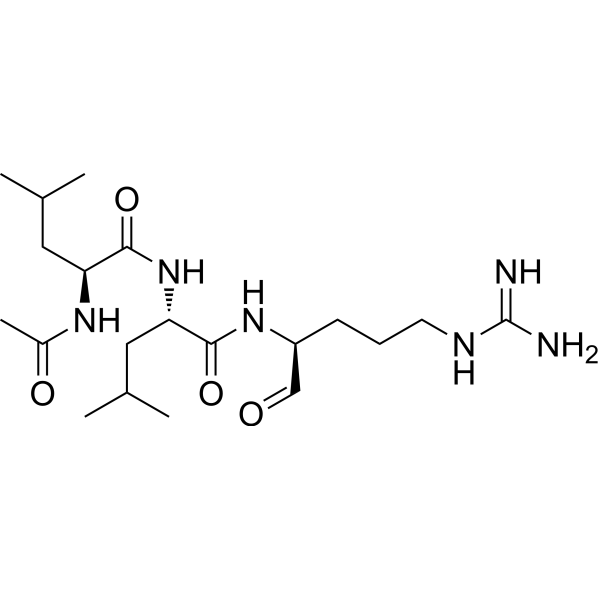
Leupeptin is a broad-spectrum protease inhibitor . By inhibiting the activation of the PTEN/PI3K/Akt/NF-κB/ERK1/2/p38 signaling pathway, Leupeptin significantly reduces LPS-induced NO and ROS production, mitochondrial membrane potential hyperpolarization, phagocytic activity, pro-inflammatory cytokine release, and M1 polarization in mouse peritoneal macrophages, and reverses autophagic flux impairment. It also decreases Concanavalin A (HY-P2149)-induced proliferation index of mouse splenic lymphocytes and the Th1/IL-10 and Th2/IL-10 cytokine ratios, thereby modulating innate and adaptive immune responses. Leupeptin inhibits blood coagulation and tumorigenesis in mouse skin. Leupeptin can be used in research on chronic inflammatory diseases and skin tumorigenesis .
loading...
    loading...
Cat. No.: HY-183478
CAS No.: 39740-82-4
Leupeptin hydrochloride is a broad-spectrum protease inhibitor . By inhibiting the activation of the PTEN/PI3K/Akt/NF-κB/ERK1/2/p38 signaling pathway, Leupeptin hydrochloride significantly reduces LPS-induced NO and ROS production, mitochondrial membrane potential hyperpolarization, phagocytic activity, pro-inflammatory cytokine release, and M1 polarization in mouse peritoneal macrophages, and reverses autophagic flux impairment. It also decreases Concanavalin A (HY-P2149)-induced proliferation index of mouse splenic lymphocytes and the Th1/IL-10 and Th2/IL-10 cytokine ratios, thereby modulating innate and adaptive immune responses. Leupeptin hydrochloride inhibits blood coagulation and tumorigenesis in mouse skin. Leupeptin hydrochloride can be used in research on chronic inflammatory diseases and skin tumorigenesis .
loading...
    loading...
Cat. No.: HY-W683756
CAS No.: 16625-69-7
Boldine hydrochloride is an aporphine alkaloid telomerase (telomerase) inhibitor (IC50 of 0.17 μM for TERT) and a pannexin/connexin hemichannel blocker, with oral activity and blood-brain barrier permeability. Boldine hydrochloride inhibits telomerase activity through direct interaction with the telomerase ribonucleoprotein and non-competitive binding near the TERT active site, and downregulates hTERT mRNA while shifting alternative splicing toward non-functional transcripts. Boldine hydrochloride blocks Panx1, Cx43, Cx26, and Cx30 hemichannels as well as P2X7 receptor-mediated calcium influx. Boldine hydrochloride exhibits antioxidant, anti-inflammatory, antiproliferative, and cytotoxic activities by scavenging ROS, inhibiting NFκB, dephosphorylating SGK1, and reducing TNF-alpha levels. Boldine hydrochloride can be used in research on breast cancer, Alzheimer's disease, glioblastoma, diabetes, and spinal cord injury .
loading...
    loading...

