281 Results for "

Fluorescent substrate

" in MedChemExpress (MCE) Product Catalog:
Products (281)

281 Results for "Fluorescent substrate" in MCE Product Catalog:

Cat. No.: HY-131030
CAS No.: 2127150-20-1
Synonyms: JF669, SE; JF669, NHS
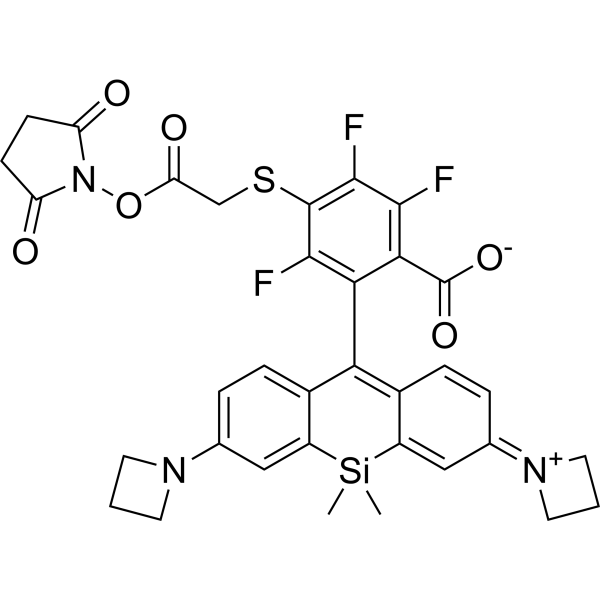
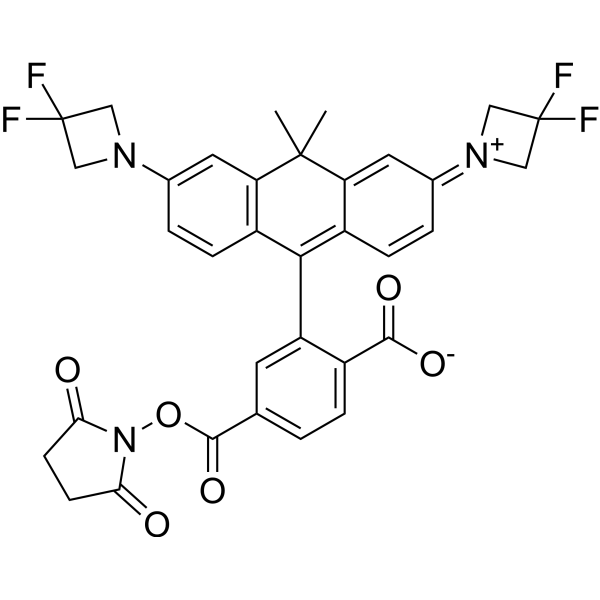
Janelia Fluor 669, SE (JF669, SE), a red fluorescent dye, can be directly reacted with the available thiol-containing HaloTag ligand under mild conditions (DIEA, DMF) to afford a JF669HaloTag ligand in a single step (Ex = 669 nm; Em = 682 nm) . Janelia Fluor fluorescent dyes can be chemically conjugated to the specific HaloTag substrate (a chloroalkane ligand) to form a fluorescent ligand, rather than binding directly to the HaloTag protein itself. Janelia Fluor products are licensed under U.S. Pat. Nos. 9,933,417, 10,018,624 and 10,161,932 and other patents from Howard Hughes Medical Institute.
loading...
    loading...
Cat. No.: HY-137858
CAS No.: 125455-61-0
Synonyms: Gly-Arg-4-NA hydrochloride; GR-pNA hydrochloride; GR p-itoailide hydrochloride
H-Gly-Arg-pNA hydrochloride (GR-pNA hydrochloride) is a colorimetric substrate for thrombin. H-Gly-Arg-pNA is preferentially bound by thrombin and cleaves the Gly-Arg (GR) peptide sequence, releasing p-nitroaniline (pNA) that can be detected colorimetrically at 405 nm. H-Gly-Arg-pNA hydrochloride is used as a fluorescent dye to measure thrombin activity .
loading...
    loading...
Cat. No.: HY-W344383
CAS No.: 73554-90-2
Research Areas:  

Others

Boc-Phe-Ser-Arg-AMC is a fluorescence peptide substrate with specificity. Boc-Phe-Ser-Arg-AMC can be cleaved by tryptase-like serine proteases (TLSPs) to generate fluorescent products, thereby enabling the detection of TLSPs activity. Boc-Phe-Ser-Arg-AMC can be used in studies related to rosacea .
loading...
    loading...
Cat. No.: HY-D3433
CAS No.: 222159-75-3
Synonyms: CDCSF
Target:  

Fluorescent Dye

Research Areas:  

Others

5-Carboxy-2′,7′-dichlorosulfonefluorescein (CDCSF) is a fluorescein derivative-based fluorescent probe. 5-Carboxy-2′,7′-dichlorosulfonefluorescein serves as a fluorescent substrate for the organic anion transporting polypeptide OATP2B1, and is specifically recognized and transported into cells by OATP2B1 under acidic pH conditions, making it suitable for in vitro high-throughput screening of drug-drug interactions (DDI) and food-drug interactions (FDI) (Ex/Em = 485/535 nm) .
loading...
    loading...
Cat. No.: HY-135036
CAS No.: 17695-46-4
Purity:  99.46%
Synonyms: 4-MUB
Research Areas:  

Others

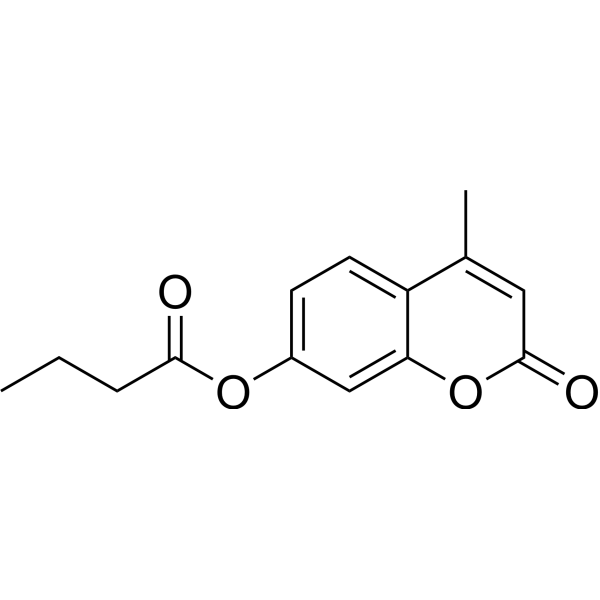
4-Methylumbelliferyl butyrate (4-MUB) is a fluorogenic esterase substrate that is hydrolyzed by esterases to release the fluorescent product 4-methylumbelliferone (HY-N0187). 4-Methylumbelliferyl butyrate is hydrolyzed by the general esterases (GE) of Daphnia magna and Chironomus riparius; it also serves as a substrate for the recombinant mycobacterial carboxylesterase MT2282 (CaeA). 4-Methylumbelliferyl butyrate is used to determine the activity of the S. aureus serine hydrolases FphB and FphH. 4-Methylumbelliferyl butyrate is used in studies related to esterase activity assays .
loading...
    loading...
Cat. No.: HY-138658
Synonyms: JF526, SE; JF526, NHS
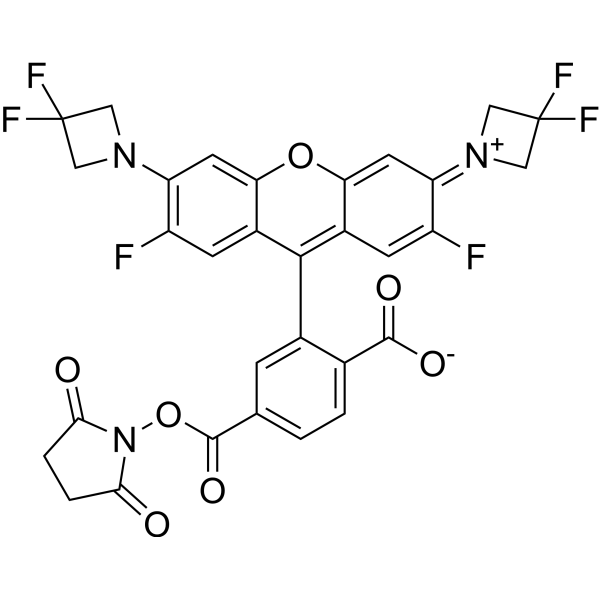
Janelia Fluor 526, SE (JF526,SE) is a fluorogenic yellow fluorescent dye that contains NHS ester group. JF526 is a versatile scaffold for fluorogenic ligands, including labels for genetically encoded self-labeling protein tags and stains for endogenous structures . Janelia Fluor fluorescent dyes can be chemically conjugated to the specific HaloTag substrate (a chloroalkane ligand) to form a fluorescent ligand, rather than binding directly to the HaloTag protein itself. Janelia Fluor products are licensed under U.S. Pat. Nos. 9,933,417, 10,018,624 and 10,161,932 and other patents from Howard Hughes Medical Institute (Ex/Em = 526/550 nm).
loading...
    loading...
Cat. No.: HY-134360A
Synonyms: (y-AmNS)-ATP sodium
Target:  

Fluorescent Dye

Research Areas:  

Metabolic Disease

ATP-1-Aminonaphthalene-5-sulfonate ((y-AmNS)-ATP) sodium is a fluorescent analog of ATP (HY-B2176). ATP-1-Aminonaphthalene-5-sulfonate is a substrate for DNA-dependent RNA polymerase and valyl t-RNA synthetase (Ex/Em = 320/460 nm) .
loading...
    loading...
Cat. No.: HY-P4593
CAS No.: 66647-41-4
Target:  

Thrombin

Research Areas:  

Others

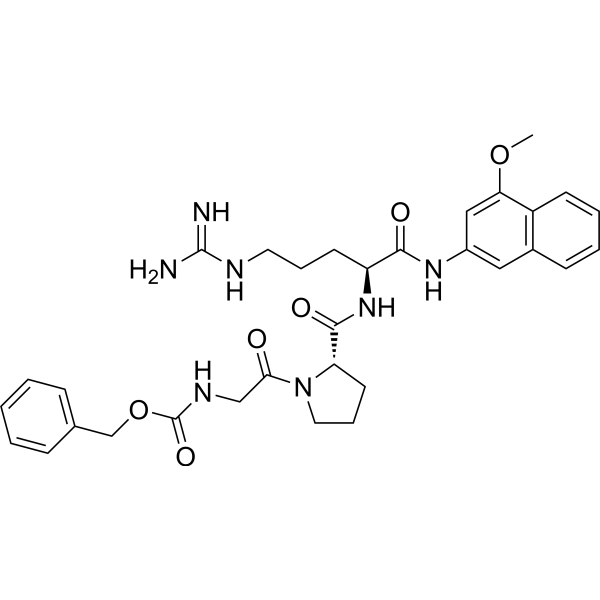
Z-Gly-Pro-Arg-4MβNA is the cleavage of the substrate of thrombin to release free 4-methoxy-2-naphthylamine (4MβNA). Free 4MβNA can be captured by 5-nitrosalicylaldehyde to produce an insoluble yellow fluorescent and marks the site of thrombin activity .
loading...
    loading...
Cat. No.: HY-D2379A
CAS No.: 7449-51-6
Target:  

Fluorescent Dye

Research Areas:  

Others

closed-HMRG is an HMRG (HY-D2379) with a closed spiro-ring structure. HMRG is a fluorescent dye, which serves as the fluorescent active product generated by enzyme-activated fluorescent probes targeting proteases and glycosidases. Its detection mechanism relies on the intramolecular spirocyclization equilibrium: HMRG itself exists in an open non-spirocyclic structure under physiological pH, which maintains a conjugated π system and produces strong fluorescence; whereas its probe precursors (such as Leu-HMRG, Ac-GlyPro-HMRG and βGal-HMRG) exist in a closed spirocyclic form and show no fluorescence due to the disruption of the π-conjugated system; when the target enzyme cleaves the substrate fragment linked to the probe precursor, the closed spirocyclic structure converts to the open structure of HMRG, restoring the conjugated system and generating a strong fluorescent signal. Its detection wavelength is Ex/Em = 501/524 nm .
loading...
    loading...
Cat. No.: HY-W750220
Target:  

β-glucuronidase

Research Areas:  

Metabolic Disease

4-Methylumbelliferyl β-D-glucuronide dihydrate is a fluorescent substrate and fluorescent probe used to detect the activity of β-D-glucuronidase. 4-Methylumbelliferyl β-D-glucuronide dihydrate also serves as a surrogate for assessing fecal coliform contamination in aquatic environments. 4-Methylumbelliferyl β-D-glucuronide dihydrate releases 4-methylumbelliferone via enzyme-mediated cleavage of the β-glycosidic bond; the latter emits fluorescence under alkaline conditions, with an excitation wavelength of 365-366 nm and an emission wavelength of 444 nm .
loading...
    loading...
Cat. No.: HY-W928283
CAS No.: 1135372-06-3
L-Hydroxyproline 7-amido-4-methylcoumarin hydrochloride is a fluorescent substrate with biological activity for enzyme activity detection. L-Hydroxyproline 7-amido-4-methylcoumarin hydrochloride is often used in biochemical research to detect reactions associated with specific enzymes. L-Hydroxyproline 7-amido-4-methylcoumarin hydrochloride helps scientists monitor the progress of reactions through its fluorescent properties. L-Hydroxyproline 7-amido-4-methylcoumarin hydrochloride has important application value in compound development and basic biological research.
loading...
    loading...
Cat. No.: HY-131025
CAS No.: 1811539-88-4
Synonyms: JF585, SE; JF585, NHS
Janelia Fluor 585, SE (JF585, SE) is an orange fluorescent dye containing an NHS ester that can be conjugated with primary amine groups. Janelia Fluor 585, SE can be used immediately for structured illumination (SIM) and stimulated emission depletion (STED) imaging and could be converted to photoactivatable derivative for single-molecule localization microscopy (SMLM) experiments . Janelia Fluor fluorescent dyes can be chemically conjugated to the specific HaloTag substrate (a chloroalkane ligand) to form a fluorescent ligand, rather than binding directly to the HaloTag protein itself. Janelia Fluor products are licensed under U.S. Pat. Nos. 9,933,417, 10,018,624 and 10,161,932 and other patents from Howard Hughes Medical Institute (Ex/Em = 585/609 nm).
loading...
    loading...
Cat. No.: HY-138659
CAS No.: 2042192-00-5
Purity:  95.29%
Synonyms: JF646, Tetrazine
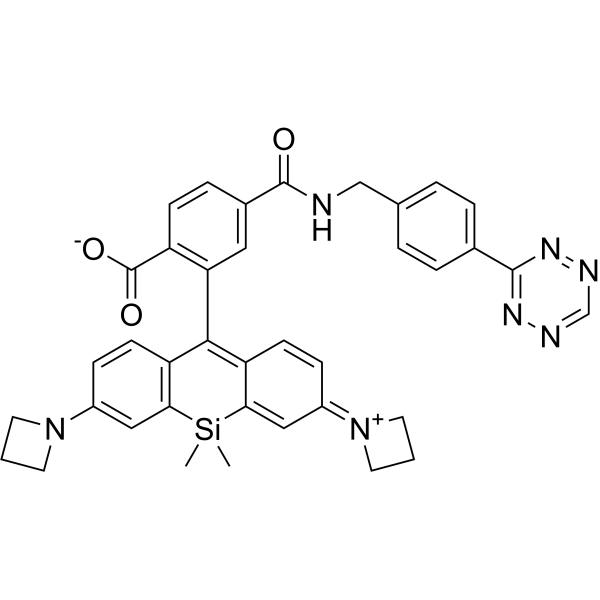
Janelia Fluor 646, Tetrazine (JF646, Tetrazine) a red fluorescent dye that contains a tetrazine group. JF646, Tetrazine can be used in cellular imaging . Janelia Fluor fluorescent dyes can be chemically conjugated to the specific HaloTag substrate (a chloroalkane ligand) to form a fluorescent ligand, rather than binding directly to the HaloTag protein itself. Janelia Fluor products are licensed under U.S. Pat. Nos. 9,933,417, 10,018,624 and 10,161,932 and other patents from Howard Hughes Medical Institute. Janelia Fluor 646, Tetrazine is a click chemistry reagent, it contains a Tetrazine group that can undergo an inverse electron demand Diels-Alder reaction (iEDDA) with molecules containing TCO groups (Ex/Em = 646/664 nm).
loading...
    loading...
Cat. No.: HY-110334
CAS No.: 1883548-88-6
Target:  

Fluorescent Dye

Research Areas:  

Others

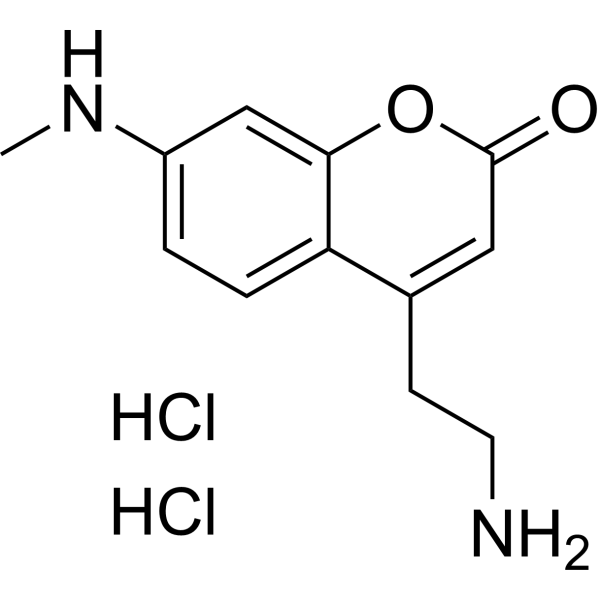
FFN 206 dihydrochloride, a fluorescent probe, is used as an excellent Vesicular Monoamine Transporter 2 (VMAT2) substrate with an apparent Km of 1.16 μM. FFN 206 dihydrochloride is capable of detecting VMAT2 activity in intact cells using fluorescence microscopy, with subcellular localization to VMAT2-expressing acidic compartments without apparent labeling of other organelles .
loading...
    loading...
Cat. No.: HY-124324
CAS No.: 106927-48-4
Synonyms: p-Nitopheyl β-D-cellotioside
4-Nitrophenyl β-D-cellotrioside (p-Nitopheyl β-D-cellotioside) is a chromogenic substrate for endoglucanases and cellulose biohydrolases. As a fluorescent dye, nitrophenyl β-D-Cellotrioside can be hydrolyzed by enzymes to release 4-nitrophenol, producing a yellow color. The activity of the enzyme can be quantitatively analyzed by monitoring the change in absorbance at 405 nm .
loading...
    loading...
Cat. No.: HY-131009
Purity:  66.20%
Research Areas:  

Others

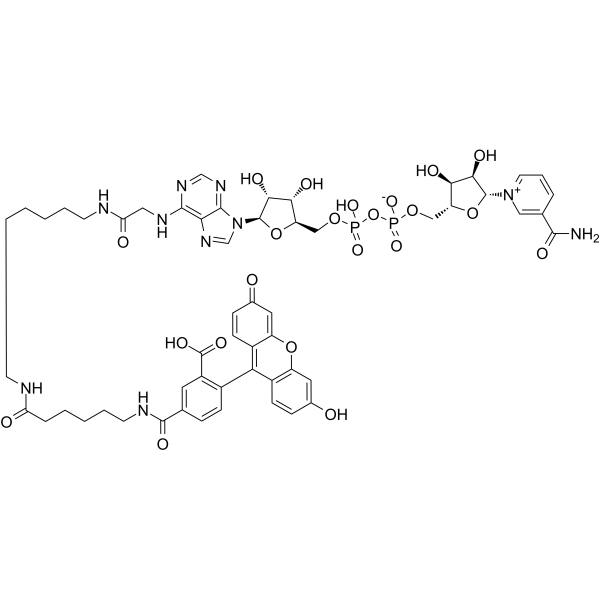
Fluorescein-NAD + is a fluorescent NAD + analog that can be used in studies related to the detection of ADP-ribosylation reactions. Fluorescein-NAD + enables visualization of ADP-ribose groups, thereby facilitating the detection of ADP-ribosylation reactions. Fluorescein-NAD + serves as a substrate for detecting the auto-ribosylation activity of SIRT6 and the ADP-ribosylation of RhoA by C3larvin toxin .
loading...
    loading...
Cat. No.: HY-131009A
Research Areas:  

Others

Fluorescein-NAD + sodium is a fluorescent NAD + analog that can be used in studies related to the detection of ADP-ribosylation reactions. Fluorescein-NAD + sodium enables visualization of ADP-ribose groups, thereby facilitating the detection of ADP-ribosylation reactions. Fluorescein-NAD + sodium serves as a substrate for detecting the auto-ribosylation activity of SIRT6 and the ADP-ribosylation of RhoA by C3larvin toxin .
loading...
    loading...
Cat. No.: HY-138241
CAS No.: 148185-52-8
Target:  

Fluorescent Dye

Research Areas:  

Others

PBD-BODIPY is a probe for the spectrophotometric measurement of autoxidation reactions. Co-autoxidation of the PBD-BODIPY signal carrier and a hydrocarbon co-substrate can be quantified by monitoring loss of absorbance at 591 nm. PBD-BODIPY has been used to measure the activity of radical-trapping antioxidants in cell-free assays. It has also been used as a fluorescent probe for the detection of epoxidation activity.
loading...
    loading...
Cat. No.: HY-139814
CAS No.: 1979130-73-8
Research Areas:  

Others

d-Phe-Pro-Arg-PABA-Resorufin is a selective Thrombin substrate. d-Phe-Pro-Arg-PABA-Resorufin can be cleaved by thrombin to release fluorescent and chromogenic products. d-Phe-Pro-Arg-PABA-Resorufin enables sensitive detection of the thrombin inhibitor Dabigatran (HY-10163) via thrombin-mediated cleavage attenuation .
loading...
    loading...
Cat. No.: HY-187021
CAS No.: 81017-23-4
Target:  

Fluorescent Dye

Research Areas:  

Infection

3-Carboxyumbelliferyl acetate (compound ACC) is a fluorescent substrate that can be used to detect the activity of the Escherichia coli polysaccharide deacetylase PgaB, with a Km of 1.2 mM. 3-Carboxyumbelliferyl acetate undergoes acetate hydrolysis under the catalysis of E. coli PgaB. 3-Carboxyumbelliferyl acetate can be used in studies related to PgaB enzymatic activity and the mechanism of bacterial biofilm formation .
loading...
    loading...

