
273 Results for "

Inositol

" in MedChemExpress (MCE) Product Catalog:
Products (273)

273 Results for "Inositol" in MCE Product Catalog:

Cat. No.: HY-179606
CAS No.: 2877694-62-5
RWT9996 is a GPR17 antagonist. RWT9996 inhibits GPR17-mediated signal transduction processes, including G protein activation and β-arrestin-2 recruitment. RWT9996 inhibits MDL-29951 (HY-16312)-mediated phosphorylation of ERK1/2, phosphorylation of CREB, and accumulation of inositol phosphate (IP1) in oligodendrocyte precursor cells in vitro. RWT9996 can be used in studies related to demyelinating diseases .
loading...
    loading...
Cat. No.: HY-182471
CAS No.: 1531626-08-0
Target:  

Fungal

Research Areas:  

Infection

Aminopyrifen is a GWT-1 inhibitor. Aminopyrifen inhibits the inositol acylation of phosphatidylinositol, disrupting the maturation process of GPI-anchored proteins and the integrity of fungal cell walls. Aminopyrifen strongly inhibits germ tube elongation of Botrytis cinerea, delays spore germination, prevents appressorium formation, and blocks the infection of plant tissues by pathogenic fungi. Aminopyrifen is effective against field populations of eggplant gray mold and cucumber powdery mildew, and can be used for research on various plant fungal diseases such as gray mold and powdery mildew .
loading...
    loading...
Cat. No.: HY-148961
CAS No.: 1438242-59-1
Target:  

mAChR ERK

Research Areas:  

Neurological Disease

HTL-9936 is an orally active partial agonist of muscarinic M1 receptor. HTL-9936 has an EC50 of 32 nM for human M1 receptor and an EC50 of 224 nM for human M4 receptor. HTL-9936 activates Gq/11 coupling, promotes inositol phosphate accumulation, ERK1/2 phosphorylation, β-arrestin recruitment and receptor internalization. HTL-9936 can be used in the research of Alzheimer's disease and schizophrenia .
loading...
    loading...
Cat. No.: HY-177218
CAS No.: 500533-94-8
Synonyms: NSC 119910
Research Areas:  

Neurological Disease

M119 (NSC 119910) is a Gβγ subunit and PLCβ3 inhibitor with selective activity toward μ-opioid receptor-related pathways. M119 selectively inhibits Gβγ-dependent PLCβ3 activation, reduces inositol phosphate production, and enhances μ-opioid receptor-mediated antinociception. M119 attenuates acute μ-opioid receptor agonist-induced antinociceptive tolerance and physical dependence in mice. M119 can be used for pain-related research .
loading...
    loading...
Cat. No.: HY-137603
CAS No.: 79049-97-1
Synonyms: UTPγS
Target:  

P2Y Receptor

Research Areas:  

Metabolic Disease

Uridine-5'-O-(3-thiotriphosphate) (UTPγS), a stable analogue of Uridine triphosphate (UTP) (HY-107372), is a potent agonist of the P2Y2 and P2Y4 receptors with increased metabolic stability. Uridine-5'-O-(3-thiotriphosphate) stimulates inositol phosphate formation in human 1321N1 astrocytoma cells stably expressing the phospholipase C-coupled human P2U-purinoceptor (EC50 = 240 nM) .
loading...
    loading...
Cat. No.: HY-137603A
Synonyms: UTPγS tetrasodium
Target:  

P2Y Receptor

Uridine-5'-O-(3-thiotriphosphate) (UTPγS) tetrasodium, a stable analogue of Uridine triphosphate (UTP) (HY-107372), is a potent agonist of the P2Y2 and P2Y4 receptors with increased metabolic stability. Uridine-5'-O-(3-thiotriphosphate) tetrasodium stimulates inositol phosphate formation in human 1321N1 astrocytoma cells stably expressing the phospholipase C-coupled human P2U-purinoceptor (EC50 = 240 nM) .
loading...
    loading...
Cat. No.: HY-108654
CAS No.: 917567-60-3
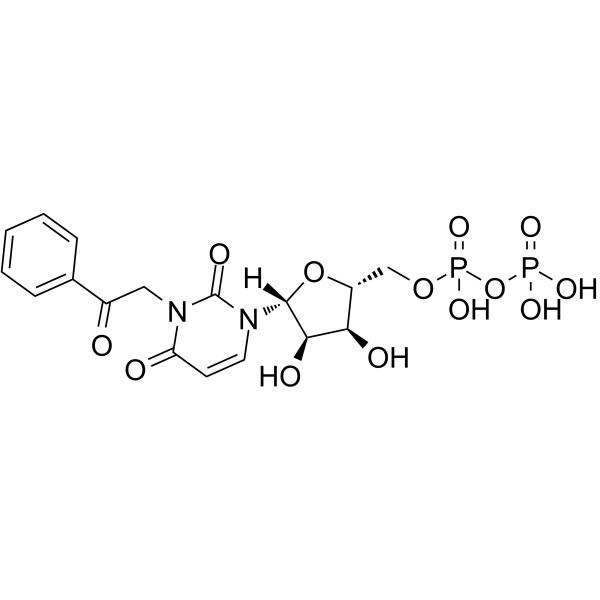
PSB 0474 (3-phenacyl-UDP) is a UDP (HY-113359) analog and selective P2Y6 receptor agonist, with an EC50 value of 70 nM for the hP2Y6 receptor. PSB 0474 activates Phospholipase C-coupled receptors to increase intracellular inositol phosphate levels. PSB 0474 enhances NO release by upregulating inducible iNOS and induces Apoptosis. PSB 0474 increases micturition frequency in urine of anesthetized rats, without altering bladder contraction amplitude/duration or causing urothelial damage. PSB 0474 can be used in studies related to chronic brain inflammation .
loading...
    loading...
Cat. No.: HY-116268
CAS No.: 1133706-08-7
Target:  

Neurokinin Receptor

Research Areas:  

Neurological Disease

GSK256471 is a non-peptide tachykinin NK3 receptor antagonist with a pKi of 8.9 for the human recombinant NK3 receptor and 8.4 for the guinea pig native receptor. GSK256471 exhibits >100-fold selectivity for NK1 (pKi = 5.2) and NK2 (pKi = 7.3) receptors. GSK256471 noncompetitively inhibits neurokinin B (NKB) (HY-P0242)-induced inositol phosphate accumulation, and this inhibition is irreversible. GSK256471 inhibits wet dog shaking behavior and suppresses dopamine release. GSK256471 could be used to study schizophrenia .
loading...
    loading...
Cat. No.: HY-118760
CAS No.: 137031-56-2
Research Areas:  

Cardiovascular Disease

Litebamine is a phenanthrene alkaloid with antiplatelet activity. Litebamine potently targets arachidonic acid- and collagen-induced platelet aggregation, but shows no activity against thrombin-induced aggregation. Litebamine inhibits arachidonic acid- and collagen-induced ATP release and thromboxane B2 production in rabbit platelets, without altering cyclic AMP levels or phosphoinositide breakdown in rabbit platelets. Litebamine has no effect on platelet-activating factor- or U46619 (HY-108566)-induced aggregation, nor does it affect [ 3H] inositol monophosphate production in rabbit platelets induced by collagen, platelet-activating factor or thrombin .
loading...
    loading...
Cat. No.: HY-186122
CCK2R agonist-1 (Compound 2S) is a CCK2R agonist, with an IC50 of 48 nM against wild-type CCK-2R and an IC50 of 450 nM against mutant CCK-2R (N353L). CCK2R agonist-1 stimulates the production of inositol phosphate. The changes in pH and HDC induced by CCK2R agonist-1 in mice are comparable to those induced by the full-length peptide agonist Gastrin. CCK2R agonist-1 can be used in studies of gastric diseases and pain .
loading...
    loading...
Cat. No.: HY-W414697
CAS No.: 40289-37-0
Synonyms: D-Ribo-phytosphingosine (C17 base)
Target:  

Bacterial

Research Areas:  

Others

4-Hydroxysphinganine C17 base (D-Ribo-phytosphingosine C17 base), also known as D-ribo-phytosphingosine or PHS, is a crucial compound present in the membranes of fungi, plants, bacteria, marine organisms, and mammalian tissues. It plays a vital role in preserving the structural integrity of membranes, regulating cellular growth, and mediating the heat stress response in yeast. Additionally, PHS serves as a precursor for the synthesis of important lipid mediators such as PHS 1-phosphate, inositol phosphorylceramide, and KRN7000 (the α-anomer of galactosylceramide). Furthermore, this phospholipid promotes keratinocyte differentiation, making it a valuable active ingredient in cosmetic formulations.
loading...
    loading...
Cat. No.: HY-107664B
Target:  

Neurotensin Receptor

Research Areas:  

Neurological Disease

SR 142948 TFA is an orally active and selective non-peptide neurotensin receptor (NT) antagonist with IC50s of 1.19 nM, 0.32 nM, 3.96 nM in h-NTR1-CHO cells, HT-29 cells, and adult rat brain, respectively. SR 142948 TFA antagonizes NT-induced inositol monophosphate formation in HT-29 cells with an IC50 of 3.9 nM. SR 142948 TFA blocks hypothermia, analgesia and steering behavior induced by NT in vivo. SR 142948 TFA shows blood-brain permeability and can be used in study of psychiatric disorders .
loading...
    loading...
Cat. No.: HY-113817
CAS No.: 1000010-33-2
Target:  

Phosphatase

Research Areas:  

Inflammation/Immunology

SHIP1 activator 1 is an SH3 domain-containing inositol 5-phosphatase regulator with SHIP1 activating activity. SHIP1 activator 1 retains its SHIA-1 activating ability by removing unnecessary functional groups. SHIP1 activator 1 is able to activate SHIP1 in vitro, inhibit Akt phosphorylation in MOLT-4 cells, and show dose-dependent activity in a mouse model of inflammation. SHIP1 activator 1 is an important chemical tool for evaluating the potential of SHIP1 activators as inhibitors of hematopoietic diseases involving abnormal PI3K cell signaling .
loading...
    loading...
Cat. No.: HY-184442
Target:  

G2A (GPR132)

Research Areas:  

Neurological Disease

GPR132 antagonist-2 is a G2A (GPR132) antagonist with an IC50 of 0.69 μM. GPR132 antagonist-2 exerts weak stabilizing effects on the bromodomain of BRD2 and exhibits selectivity for non-olfactory GPCRs. GPR132 antagonist-2 inhibits G2A activation, blocks downstream inositol monophosphate accumulation, reverses G2A-mediated TRPV1 sensitization, suppresses 9-HODE-mediated capsaicin-induced TRPV1 responses, and activates FPR3. GPR132 antagonist-2 can be used in studies related to neuropathic pain .
loading...
    loading...
Cat. No.: HY-137608
CAS No.: 221010-51-1
Synonyms: UDP-β-S
Uridine 5'-O-thiodiphosphate (UDP-β-S) is a P2Y6 receptor agonist with an EC50 of 25 nM. Uridine 5'-O-thiodiphosphate resists degradation by extracellular nucleotidases and stimulates the accumulation of inositol phosphates. Uridine 5'-O-thiodiphosphate stimulates contractile responses in endothelium-denuded rat mesenteric arteries. As a mitogen, Uridine 5'-O-thiodiphosphate stimulates DNA synthesis, [ 3H] thymidine incorporation, protein synthesis, [ 3H]leucine incorporation, and increases the number of vascular smooth muscle cells. Uridine 5'-O-thiodiphosphate can be used in the research of cardiovascular diseases such as atherosclerosis .
loading...
    loading...
Cat. No.: HY-165518
CAS No.: 128851-55-8
M 16287 is an orally active aldose reductase inhibitor, with an IC50 of 0.08 μM in rats and 0.25 μM in cattle. M 16287 improves lens fiber swelling and vacuolization, prevents galactitol accumulation, delays inositol depletion, inhibits glutathione reduction, restores the NADPH/NADP + ratio to normal, and normalizes lens Na + content and Na +/K + ratio. M 16287 prevents galactose-induced cataract formation in rats. M 16287 improves motor nerve conduction velocity in diabetic rats, partially alleviates histopathological changes in the sciatic nerve, and inhibits sorbitol accumulation. M 16287 can be used in studies related to cataracts and diabetic neuropathy .
loading...
    loading...
Cat. No.: HY-19619R
CAS No.: 200933-14-8
Target:  

Phospholipase Apoptosis

Research Areas:  

Cancer

m-3M3FBS (Standard) is the analytical standard of m-3M3FBS. This product is intended for research and analytical applications. m-3M3FBS is a potent phospholipase C (PLC) activator. m-3M3FBS stimulates superoxide generation in human neutrophils, upregulates intracellular calcium concentration, and stimulates inositol phosphate generation in various cell lines. m-3M3FBS induces monocytic leukemia cell apoptosis .
loading...
    loading...
Cat. No.: HY-W009724R
CAS No.: 524-95-8
Synonyms: 2-APB (Standard)
2-Aminoethyl diphenylborinate (Standard) is the analytical standard of 2-Aminoethyl diphenylborinate (HY-W009724). This product is intended for research and analytical applications. 2-Aminoethyl diphenylborinate (2-APB) is a cell-permeable inhibitor of Inositol triphosphate receptor (IP3R). 2-Aminoethyl diphenylborinate also inhibits the store-operated Ca 2+ (SOC) channel and activates some TRP channels (V1, V2 and V3). Additionally, 2-Aminoethyl diphenylborinate has inhibitory effects on vasospasm. At high concentrations, it exhibits specific anti-inflammatory and antioxidant effects in neural tissue .
loading...
    loading...
Cat. No.: HY-P86330
Synonyms: ERN1; IRE1; Serine/threonine-protein kinase/endoribonuclease IRE1; Endoplasmic reticulum-to-nucleus signaling 1; Inositol-requiring protein 1; hIRE1p; Ire1-alpha; IRE1a

Host:  

Rabbit

Application:  

WB, IHC-P, ICC/IF, IP, ELISA

Reactivity:  

Human, Mouse, Rat

loading...
    loading...
Cat. No.: HY-114457
CAS No.: 245126-95-8
Synonyms: L-alpha-PhosphatidylInositol-4,5-bisphosphate; (PtdIns)-(4,5)-P2
Phosphatidylinositol 4,5-bisphosphate (L-alpha-Phosphatidylinositol-4,5-bisphosphate) is a plasma membrane lipid that is enriched in the cytoplasmic leaflet of the plasma membrane. Phosphatidylinositol 4,5-bisphosphate serves as a substrate for phospholipase C and class I PI3K, generating diacylglycerol, inositol (1,4,5)-trisphosphate, and phosphatidylinositol (3,4,5)-trisphosphate. Phosphatidylinositol 4,5-bisphosphate contributes to lamellipodial protrusion, directional cell migration, focal adhesion lipid generation, and trafficking of the GABAA receptor. Phosphatidylinositol 4,5-bisphosphate can be used in research related to acute lung injury and pulmonary edema .
loading...
    loading...

