
276 Results for "

fibroblast cell

" in MedChemExpress (MCE) Product Catalog:
Products (276)

276 Results for "fibroblast cell" in MCE Product Catalog:

Cat. No.: HY-180169
CAS No.: 3106369-28-9
Research Areas:  

Cancer

Photosensitizer-8 (Compound 4), 2-anthrol derivative, is an alkaline phosphatase (ALP)-activatable photosensitizer. Photosensitizer-8 undergoes a phosphate ester hydrolysis reaction in the presence of ALP, rapidly converting into the active photosensitizer 2-anthrol. Photosensitizer-8 exhibits cytotoxicity against ALP-overexpressing cancer cells (HeLa, A549, HCT116) after light exposure, with IC50 values of 14.3 μM, 21.6 μM and 17.5 μM, respectively, while showing no significant cytotoxicity against normal lung fibroblasts (WI-38) (IC50 ≥ 30 μM). Photosensitizer-8 can be used in photodynamic therapy research for ALP-overexpression-related cancers .
loading...
    loading...
Cat. No.: HY-181820
Research Areas:  

Infection

Topoisomerase IV-IN-3 is a Staphylococcus aureus Topoisomerase IV inhibitor, DNA gyrase inhibitor and antibacterial agent. Topoisomerase IV-IN-3 has IC50 values of 1.32 μM and 0.48 μM against topoisomerase IV, and 0.88 μM and 0.54 μM against DNA gyrase. Topoisomerase IV-IN-3 inhibits decatenation, ATPase, and supercoiling activities of its target enzymes. Topoisomerase IV-IN-3 exerts antibacterial activity against Gram-positive and Gram-negative bacterial strains. Topoisomerase IV-IN-3 exhibits low cytotoxicity toward human fibroblast cells. Topoisomerase IV-IN-3 can be used for the research of bacterial infections .
loading...
    loading...
Cat. No.: HY-184986
CAS No.: 2901868-37-7
PIPE-791 is an orally active, blood-brain barrier-permeable selective antagonist of LPAR1. PIPE-791 inhibits LPA-induced calcium mobilization, collagen expression, histamine release, and the activation of fibroblasts, microglia and macrophages. PIPE-791 induces oligodendrocyte precursor cell differentiation, myelination and remyelination, and increases the number of microglia in the retina of normotensive rats. PIPE-791 protects mature oligodendrocytes from cytokine-induced death, reduces the levels of pulmonary fibrosis markers and alleviates neuroinflammation in preclinical models. PIPE-791 can be used in the research of glaucoma, neuroinflammatory diseases, chronic osteoarthritis pain, idiopathic pulmonary fibrosis and multiple sclerosis .
loading...
    loading...
Cat. No.: HY-171881
CAS No.: 864686-48-6
Target:  

GSK-3 DYRK

BI-5521 is an orally active GSK-3 inhibitor with an IC50 of 1.1 nM against GSK-3β. BI-5521 targets the two GSK-3 isoforms with similar potency and exhibits potent inhibitory activity against DYRK1A. By modulating GSK-3 activity, BI-5521 inhibits tumor proliferation and cancer cell growth, exerts cytotoxic effects, and reduces cancer cell viability. It shows consistent chemosensitivity across all subtypes of rhabdomyosarcoma, produces synergistic growth inhibitory effects when combined with SOS1 inhibitors, reduces oral glucose levels, regulates the myofibroblast differentiation pathway, decreases the nuclear localization of YAP/SMAD2/3, and lowers the positive rate of α-SMA in fibroblasts without affecting the apoptosis of CD4 + T cells. BI-5521 can be used in the research of non-small cell lung cancer, pleomorphic rhabdomyosarcoma, type 2 diabetes, pancreatic ductal adenocarcinoma, Alzheimer's disease, bipolar disorder, and metabolic dysfunction-associated steatotic liver disease .
loading...
    loading...
Cat. No.: HY-130743
CAS No.: 4433-08-3
Synonyms: Bis-eugenol; Dehydrodieugenol
Target:  

Parasite

Research Areas:  

Infection

Dieugenol is a neolignan that has been found in N. leucantha and has antioxidative and antiprotozoal activities. It inhibits the formation of thiobarbituric acid reactive substances (TBARS) and scavenges superoxide anions, but not hydroxyl radicals, in cell-free assays. It has anti-trypanosomal activity against T. cruzi amastigotes and trypomastigotes (IC50s=15.1 and 11.5 μM, respectively) but is cytotoxic to NCTC L-929 fibroblasts with a 50% cytotoxic concentration (CC50) value of 58.2 μM.2 Dieugenol (15 μM) disrupts the integrity of the T. cruzi trypomastigote plasma membrane but does not induce the production of reactive oxygen species (ROS) in trypomastigotes or LPS-stimulated and unstimulated isolated mouse peritoneal macrophages.
loading...
    loading...
Cat. No.: HY-167262
CAS No.: 156691-86-0
Target:  

RAR/RXR

Research Areas:  

Metabolic Disease Cancer

AGN-191659 is an orally active RAR/RXR agonist with EC50 values of 11 nM, 23 nM, and 37 nM for RXRα, RARβ, and RARγ, respectively. AGN-191659 activates RXRα, RARβ and RARγ to induce gene transcription. AGN-191659 induces tissue transglutaminase activity, inhibits ornithine decarboxylase activity induced by tumor promoters, and suppresses chondrogenesis. AGN-191659 reverses basic fibroblast growth factor-induced endothelial cell proliferation. AGN-191659 induces hypertriglyceridemia in rat models. AGN-191659 inhibits total heparin-releasable lipase activity. AGN-191659 can be used in research related to promyelocytic leukemia and hypertriglyceridemia .
loading...
    loading...
Cat. No.: HY-B1777AR
CAS No.: 306-67-2
Spermine (tetrahydrochloride) (Standard) is the analytical standard of Spermine (tetrahydrochloride). This product is intended for research and analytical applications. Spermine tetrahydrochloride is a polyamine nitric oxide donor that can provide nitric oxide to platelets and inhibit platelet activation to a certain extent concentration-dependently. Spermine tetrahydrochloride occurs in mammalian tissues, plants, bacteria, ribosomes and bacteriophage. Spermine tetrahydrochloride inhibits primary human embryo lung fibroblasts in vitro. Spermine is a natural antioxidant and anti-inflammatory agent. Spermine is known to inhibit some bacterial cultures, especially strains of Staphylococcus aureus. Spermine induces neurotoxicity in the striarum dose-dependently. Spermine can reversibly inhibits DNA synthetic response, mixed lymphocyte response and the induction of cytolytic lymphocyte response in primary cultures of murine spleen cells .
loading...
    loading...
Cat. No.: HY-B1777AS
CAS No.: 1173022-85-9
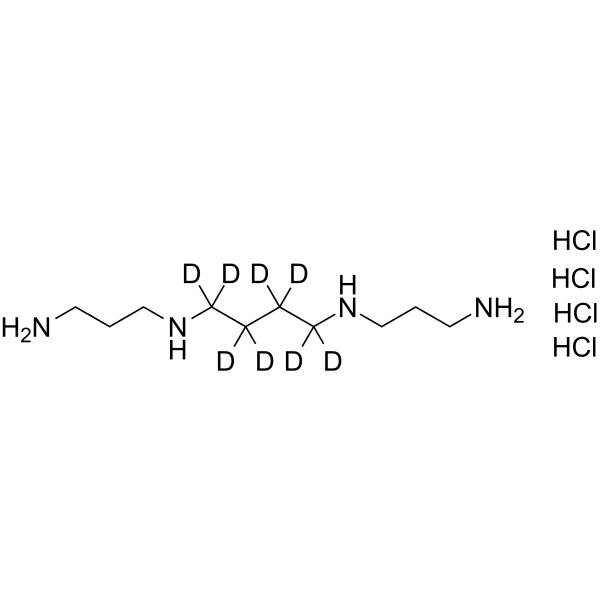
Spermine-d8 (tetrahydrochloride) is the deuterium labeled Spermine tetrahydrochloride. Spermine tetrahydrochloride is a polyamine nitric oxide donor that can provide nitric oxide to platelets and inhibit platelet activation to a certain extent concentration-dependently. Spermine tetrahydrochloride occurs in mammalian tissues, plants, bacteria, ribosomes and bacteriophage. Spermine tetrahydrochloride inhibits primary human embryo lung fibroblasts in vitro. Spermine is a natural antioxidant and anti-inflammatory agent. Spermine is known to inhibit some bacterial cultures, especially strains of Staphylococcus aureus. Spermine induces neurotoxicity in the striarum dose-dependently. Spermine can reversibly inhibits DNA synthetic response, mixed lymphocyte response and the induction of cytolytic lymphocyte response in primary cultures of murine spleen cells .
loading...
    loading...
Cat. No.: HY-P5557
CAS No.: 1429184-62-2
Target:  

Bacterial Necroptosis

Research Areas:  

Infection Inflammation/Immunology

TP4 (Nile tilapia piscidin) is an orally active amphipathic α-helical cationic antimicrobial peptide. TP4 (Nile tilapia piscidin) exerts broad-spectrum bactericidal activity against Gram-positive and Gram-negative bacteria by disrupting cell membrane structures, and also exhibits certain hemolytic activity. TP4 (Nile tilapia piscidin) regulates the innate immune system and enhances the expression of lysozymes, cytokines and antioxidant enzymes to resist bacterial infection. TP4 (Nile tilapia piscidin) also stimulates the proliferation of keratinocytes and fibroblasts, and significantly promotes the healing of wounds infected with MRSA. TP4 (Nile tilapia piscidin) can be used in research related to bacterial infection, peritonitis, wound healing and other fields .
loading...
    loading...
Cat. No.: HY-P991795

Target:  

CXCR

Research Areas:  

Cancer

Anti-Mouse/Human CXCL12 Antibody (K15C) is an antibody targeting SDF-1/CXCL12. Anti-Mouse/Human CXCL12 Antibody (K15C) blocks the biological activity of SDF-1 secreted by cancer-associated fibroblasts. Anti-Mouse/Human CXCL12 Antibody (K15C) inhibits tumor growth, reduces tumor microvessel density, and decreases the proportion of Sca1 +CD31 + endothelial progenitor cells in tumors. Anti-Mouse/Human CXCL12 Antibody (K15C) can be used for research on aggressive human breast cancer. The recommended isotype control is Mouse IgG2a kappa, Isotype Control (HY-P99978) .
loading...
    loading...
Cat. No.: HY-W115785
CAS No.: 1332-07-6
Research Areas:  

Metabolic Disease

Zinc borate is a bioactive inorganic substance with properties including osteogenic induction, pro-angiogenesis, antioxidation, antimutagenesis and cytotoxicity. In the field of bone tissue engineering, Zinc borate is often incorporated into chitosan scaffolds. By releasing zinc ions and borate ions, Zinc borate induces the differentiation of human dental pulp stem cells into osteoblasts, upregulates the expression of bone-related genes and promotes calcium deposition. Zinc borate also promotes angiogenesis by upregulating key factors such as vascular endothelial growth factor. Zinc borate exhibits antioxidant capacity to scavenge free radicals, and can specifically reduce mutagenicity under specific conditions. Zinc borate reduces the survival rate of mouse fibroblasts, but it can still be used in studies related to bone tissue engineering .
loading...
    loading...
Cat. No.: HY-159069
CAS No.: 9010-72-4
Purity:  95.02%
Zymosan (ZM), 95% is a yeast cell wall-derived carbohydrate-rich preparation and immunomodulator. Zymosan (ZM), 95% binds to and activates TLR-2, TLR-4, and Dectin-1 receptor to trigger downstream signaling pathways. Zymosan (ZM), 95% upregulates TLR-2, TLR-4, and TNF-α mRNA expression, increases serum TNF-α levels, and stimulates splenocyte number and viability in mice. Zymosan (ZM), 95% attenuates melanoma growth progression, modulates macrophage marker gene expression, and mediates phagocytosis, ROS generation, and cytokine production. Zymosan (ZM), 95% reduces Connexin 43 protein and mRNA levels, inhibits gap junctional intercellular communication, and induces proinflammatory factor production in human corneal cells. Zymosan (ZM), 95% induces peritoneal inflammation in mice, functions as a drug carrier, and supports fibroblast cell attachment in hydrogel formulations. Zymosan (ZM), 95% can be used for the research of melanoma, tumors, fungal keratitis, ocular surface inflammatory disorders, and peritoneal inflammation .
loading...
    loading...
Cat. No.: HY-158117
Target:  

Apoptosis Autophagy

Research Areas:  

Cancer

[Cu2Cl2(4'-(4-Methoxy-1-naphthyl)-terpy)2](PF6)2 (Compound 3) is a copper complex, which inhibits cell viability of HCT116, HCT116DoxR, A2780 and fibroblasts, with IC50s of 0.13, 0.15, 0.66 and 6.24 μM, respectively. [Cu2Cl2(4'-(4-Methoxy-1-naphthyl)-terpy)2](PF6)2 induces apoptosis and autophagy, and arrests cell cycle at G0/G1 phase in HCT116DoxR. [Cu2Cl2(4'-(4-Methoxy-1-naphthyl)-terpy)2](PF6)2 exhibits antimetastatic efficacy .
loading...
    loading...
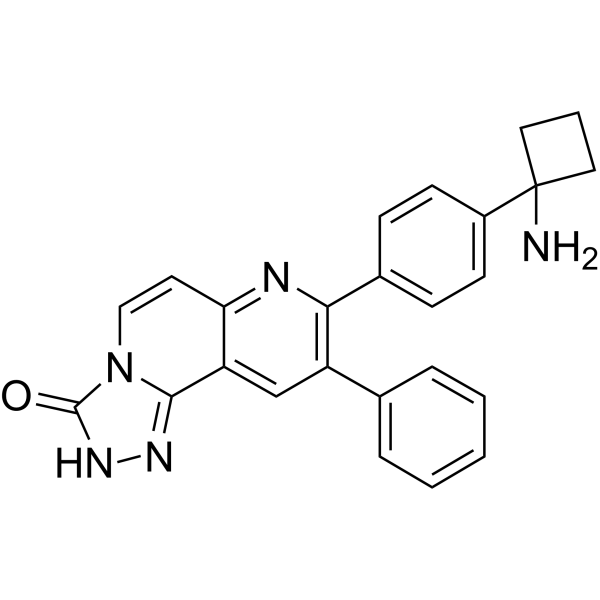
Cat. No.: HY-10357
CAS No.: 1032349-93-1
MK-2206 free base is an orally active pan-AKT inhibitor, with IC50 values of 8 nM, 12 nM and 65 nM against AKT1, AKT2 and AKT3, respectively. MK-2206 free base inhibits the Akt/mTOR signaling pathway and reduces the levels of downstream GSK3β and Mcl-1 via proteasomal degradation. MK-2206 free base induces G1-phase cell cycle arrest, apoptosis, epithelial-mesenchymal transition, fibroblast activation and extracellular matrix deposition. MK-2206 free base causes transient hyperglycemia and hyperinsulinemia in animals. MK-2206 free base can be used in research related to solid tumors, renal fibrosis and hypercholesterolemia .
loading...
    loading...
Cat. No.: HY-115701
CAS No.: 154436-49-4
Synonyms: 1-Stearoyl-2-15(S)-HpETE-sn-glycero-3-phosphoethanolamine; 15(S)-HpETE-SAPE; 15(S)-hydroperoxyeicostetraenoic acid-SAPE
Target:  

Ferroptosis

Research Areas:  

Inflammation/Immunology

1-Stearoyl-2-15(S)-HpETE-sn-glycero-3-Pe is a phospholipid that contains stearic acid (HY-B2219) at the sn-1 position and 15(S)-HpETE at the sn-2 position. It is produced via oxidation of 1-stearoyl-2-arachidonoyl-sn-glycero-3-Pe (SAPE) by 15-lipoxygenase (15-LO). 1-Stearoyl-2-15(S)-HpETE-sn-glycero-3-Pe (0.6 and 0.9 μM) increases ferroptotic cell death in wild-type and Acsl4 knockout Pfa1 mouse embryonic fibroblasts (MEFs) treated with the GPX4 inhibitor RSL3.
loading...
    loading...
Cat. No.: HY-117738
CAS No.: 143651-45-0
Purity:  95.79%
Benarthin is an orally active Pyroglutamyl peptidase inhibitor, THY1 inhibitor (with a Kd value of 5.13e-08 M) and competitive PGP-1 inhibitor (Ki = 1.2 µM). Benarthin is isolated from the culture broth of Streptomyces xanthophaeus MJ244-SF1. Benarthin disrupts the THY1-SFRP1 interaction, inhibits the activation of the GSK3α/β-β-catenin pathway, and reduces the upregulation of FASLG. Benarthin attenuates urothelial anoikis and reduces cell Apoptosis. Benarthin possesses iron-chelating activity. Benarthin maintains urothelial barrier integrity and blocks the pathological cascade of renal interstitial fibroblasts induced by HAP stimulation. Benarthin can be used in studies related to kidney stones .
loading...
    loading...
Cat. No.: HY-139589
CAS No.: 1513852-12-4
Purity:  98.50%
Synonyms: ISC-27864; GRC-27864
Zaloglanstat (ISC-27864; GRC-27864) is a selective, orally active microsomal mPGES-1 inhibitor. Zaloglanstat has an IC50 of 5 nM for human mPGES-1 without significant inhibitory effect on COX-1/2 (IC50 >10 μM). Zaloglanstat blocks the conversion of arachidonic acid metabolite prostaglandin PGH2 to prostaglandin PGE2, thereby inhibiting inflammation-related PGE2 overproduction and reducing inflammatory responses and pain. Zaloglanstat inhibits IL-1β-induced PGE2 release in A549 cells and human synovial fibroblasts in vitro. Zaloglanstat inhibits PGE2 release in pig and dog whole blood with IC50s of 161 nM and 154 nM, respectively. Zaloglanstat can be used in the study of asthma, osteoarthritis, and neurodegenerative diseases .
loading...
    loading...
Cat. No.: HY-B1777S
CAS No.: 93827-50-0
Synonyms: NSC 268508-15N2; Neuridine-15N2
Spermine- 15N2 (NSC 268508- 15N2) is the 15N-labeled Spermine (HY-B1777). Spermine is a natural antioxidant and anti-inflammatory agent. Spermine is known to inhibit some bacterial cultures, especially strains of Staphylococcus aureus. Spermine induces neurotoxicity in the striarum dose-dependently. Spermine can reversibly inhibits DNA synthetic response, mixed lymphocyte response and the induction of cytolytic lymphocyte response in primary cultures of murine spleen cells. Spermine tetrahydrochloride is a polyamine nitric oxide donor that can provide nitric oxide to platelets and inhibit platelet activation to a certain extent concentration-dependently. Spermine tetrahydrochloride occurs in mammalian tissues, plants, bacteria, ribosomes and bacteriophage. Spermine tetrahydrochloride inhibits primary human embryo lung fibroblasts in vitro .
loading...
    loading...
Cat. No.: HY-N6929R
CAS No.: 565-63-9
Angelic acid (Standard)) is the analytical standard of Angelic acid (HY-N6929). This product is intended for research and analytical applications. Angelic acid is a ferroptosis inducer, targeting NRF2 degradation. Angelic acid binds to NRF2 protein and promotes NRF2 degradation via ubiquitination-proteasome pathway, relieves the inhibitory effect of NRF2 on oxidative stress and lipid peroxidation. Then, Angelic acid induces ferroptosis in tumor cells. Angelic acid can enhance the accumulation of intracellular reactive oxygen species (ROS), upregulate ferroptosis-related markers CHAC1 and PTGS2, and synergize with ferroptosis inducers to enhance anti-tumor effects. Angelic acid also has the activity of scavenging UVA-induced ROS in vitro, inhibiting skin fibroblast senescence and extracellular matrix degradation. Angelic Acid helps wound healing with sedative activity .
loading...
    loading...
Cat. No.: HY-W207699
CAS No.: 27052-20-6
MAO-B-IN-46 (Compound 16) is a selective hMAO-B inhibitor (IC50: 26.8 nM), with weak activity against hMAO-A (IC50: 7.2054 μM). MAO-B-IN-46 (Compound 8) also acts as an α-amylase inhibitor (IC50: 19.46 μM). MAO-B-IN-46 exhibits certain neuroprotective effects and shows no significant toxicity to human gingival fibroblasts and SH-SY5Y cells. Additionally, MAO-B-IN-46 can scavenge DPPH and ABTS free radicals, with IC50 values of 17.86 μM and 17.71 μM, respectively. MAO-B-IN-46 can be used in the research of neurodegenerative diseases such as Parkinson's disease, diabetes, and diseases related to oxidative stress resistance .
loading...
    loading...