

294 Results for "

Dermatitis

" in MedChemExpress (MCE) Product Catalog:
Products (294)

294 Results for "Dermatitis" in MCE Product Catalog:

Cat. No.: HY-B1319R
CAS No.: 637-58-1
Synonyms: Pramoxine hydrochloride (Standard)
Research Areas:  

Neurological Disease

Pramocaine (Pramoxine) hydrochloride (Standard) is the analytical standard of Pramocaine hydrochloride (HY-B1319). This product is intended for research and analytical applications. Pramocaine hydrochloride is a topical surface anesthetic and antipruritic agent. Pramocaine hydrochloride reversibly inhibits voltage-gated sodium channel, reduces transmembrane permeability of sodium ions, stabilizes cell membranes, prevents depolarization, blocks action potential conduction, and inhibits peripheral slow C-fiber pathways associated with pain, pruritus and thermoception. Pramocaine hydrochloride can be used in research related to chronic pruritus, renal pruritus, atopic dermatitis, xerotic pruritus, uremic pruritus, and cutaneous hyperalgesia/pain .
loading...
    loading...
Cat. No.: HY-N8593S
CAS No.: 164858-54-2
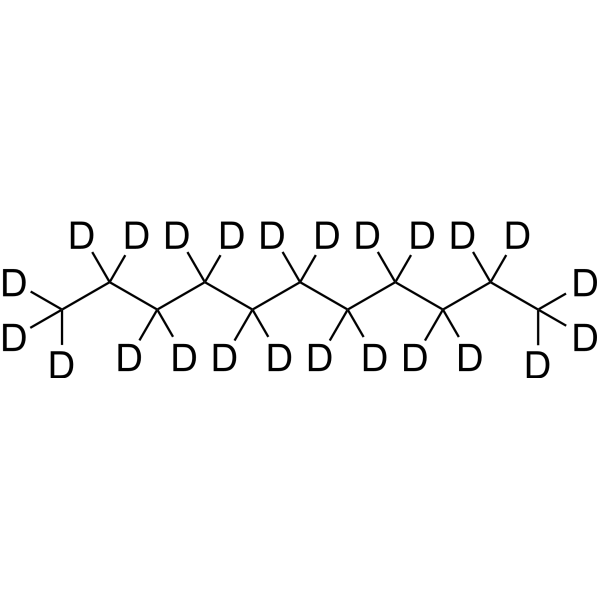
Undecane-d24 is the deuterium labeled Undecane (HY-N8593).Undecane is a potent cAMP agonist with anti-allergic and anti-inflammatory activities. Undecane inhibits degranulation and the secretion of histamine and TNF-α. Undecane reverses the increased levels of p38 phosphorylation, NF-κB transcriptional activity and target cytokine/chemokine genes, including thymus and activation-regulated chemokine (TARC), macrophage-derived chemokine (MDC) and interleukin-8 (IL-8). Undecane can be used for the study of skin inflammatory disorders, such as atopic dermatitis .
loading...
    loading...
Cat. No.: HY-P991598
CAS No.: 2304625-87-2
Synonyms: MOR12743; MOR03207

Research Areas:  

Inflammation/Immunology

MOR-106 (MOR12743) is a humanized anti-IL-17C IgG1 monoclonal antibody. MOR-106 inhibits the NF-κB signaling pathway by specifically binding to IL-17C (IC50 = 59 pM for human IL-17C, IC50 = 55 pM for mouse IL-17C). MOR-106 can effectively inhibit skin inflammation and reduce related inflammatory factors in animal models of psoriasis and atopic dermatitis .
loading...
    loading...
Cat. No.: HY-111167
CAS No.: 906673-33-4
AN-2898 is a selective PDE4 inhibitor with IC50 of 0.027 μM over other phosphodiesterase enzymes, such as PDE1A, PDE2A and PDE3A. AN-2898 also potently inhibits PDE4 subtypes (PDE4B1, PDE4A1A and PDE4D2). AN-2898 significantly inhibits the production of TNF-α, IL-2, IFN-γ, IL-5 and IL-10. AN-2898 can be used for mild to moderate atopic dermatitis (AD) and psoriasis research .
loading...
    loading...
Cat. No.: HY-176520
CAS No.: 2815361-45-4
Research Areas:  

Inflammation/Immunology

PDE4-IN-29 (Compound 55) is an orally active and selective PDE4 inhibitor (including subtypes such as PDE4A1, PDE4B2, PDE4D3) with IC50s of <5 nM against PDE4D3. PDE4-IN-29 inhibits the degradation of cyclic adenosine monophosphate (cAMP), increases intracellular cAMP levels, suppressing the release of inflammatory factors such as TNF-α. PDE4-IN-29 is promising for research of inflammatory diseases including psoriasis, atopic dermatitis, and chronic obstructive pulmonary disease .
loading...
    loading...
Cat. No.: HY-B1319S1
Synonyms: Pramoxine-d9 hydrochloride
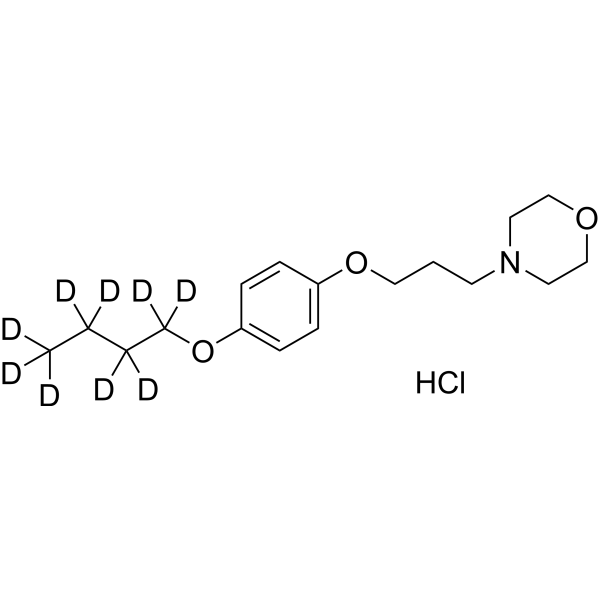
Pramocaine-d9 (Pramoxine-d9) hydrochloride is the d9-labeled Pramocaine hydrochloride (HY-B1319). Pramocaine hydrochloride is a topical surface anesthetic and antipruritic agent. Pramocaine hydrochloride reversibly inhibits voltage-gated sodium channel, reduces transmembrane permeability of sodium ions, stabilizes cell membranes, prevents depolarization, blocks action potential conduction, and inhibits peripheral slow C-fiber pathways associated with pain, pruritus and thermoception. Pramocaine hydrochloride can be used in research related to chronic pruritus, renal pruritus, atopic dermatitis, xerotic pruritus, uremic pruritus, and cutaneous hyperalgesia/pain .
loading...
    loading...
Cat. No.: HY-P5255
CAS No.: 466691-40-7
Target:  

Bacterial

Research Areas:  

Infection Inflammation/Immunology

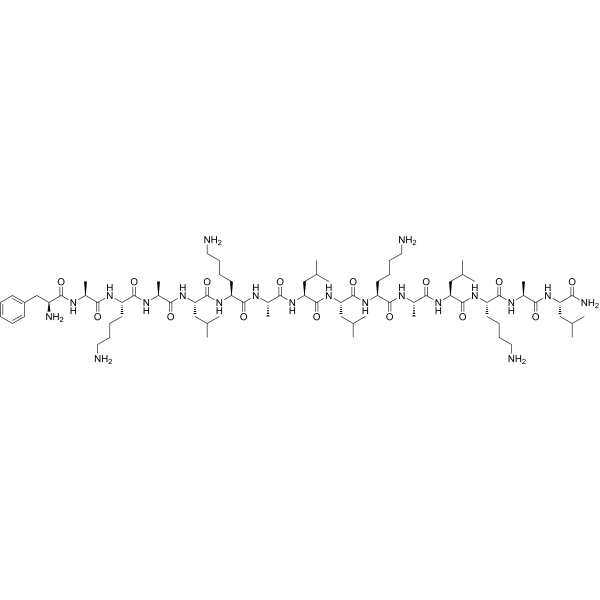
Oligopeptide-10 is a bioactive peptide with antimicrobial activity. Oligopeptide-10 exhibits broad-spectrum bactericidal effects against Gram-positive bacteria including Propionibacterium acnes and Staphylococcus aureus. Oligopeptide-10 targets lipoteichoic acid (LTA) on the surface of bacterial cell membranes, induces bacterial osmotic imbalance by disrupting the integrity of bacterial membranes, and reduces the release of pro-inflammatory cytokines induced by bacteria. Oligopeptide-10 possesses skin-protective activity. Oligopeptide-10 can be applied in research related to acne vulgaris, dandruff, seborrheic dermatitis, and tinea pedis .
loading...
    loading...
Cat. No.: HY-P992034
Synonyms: PR001
Target:  

Interleukin Related

Research Areas:  

Inflammation/Immunology

APG808 (PR001) is an anti-human IL-4Rα monoclonal antibody. APG808 binds to IL-4Rα, prevents IL-13Rα1/IL-4Rα heterodimer formation, and disrupts IL-13 and IL-4 mediated signaling. APG808 ablates Fc and complement effector functions. APG808 can be used for the research of chronic obstructive pulmonary disease, asthma, atopic dermatitis .
loading...
    loading...
Cat. No.: HY-P992521
Target:  

Interleukin Related

Research Areas:  

Inflammation/Immunology

HB-0043 is a IL-17A and IL-36R antagonist. HB-0043 blocks IL-17A- and IL-36R-mediated signaling pathways, inhibits the production of inflammatory cytokines, and reduces the secretion of pro-inflammatory cytokines IL-6 and IL-8. HB-0043 alleviates skin thickening and inflammatory responses in oxazolone-induced and Imiquimod (HY-B0180)-induced skin reaction mouse models. HB-0043 is applicable for the research of atopic dermatitis and psoriasis .
loading...
    loading...
Cat. No.: HY-169864
CAS No.: 1137536-21-0
Target:  

LPL Receptor

Research Areas:  

Inflammation/Immunology

KRO-105714 is the antagonist for sphingosine phosphocholine receptor (SPC Receptor) and sphingosine-1-phosphate receptor 1 (S1P1 Receptor) (IC50=79.2 nM). KRO-105714 inhibits SPC-induced proliferation of NIH3T3 (IC50=5.6 nM), inhibits SPC-induced cell migration (IC50=0.59 μM) and tube formation in HUVECs. KRO-105714 inhibits SPC-induced generation of IL-4 and IL-5, exhibits anti-inflammtory efficacy in mouse atopic dermatitis models .
loading...
    loading...
Cat. No.: HY-N6636R
CAS No.: 4630-07-3
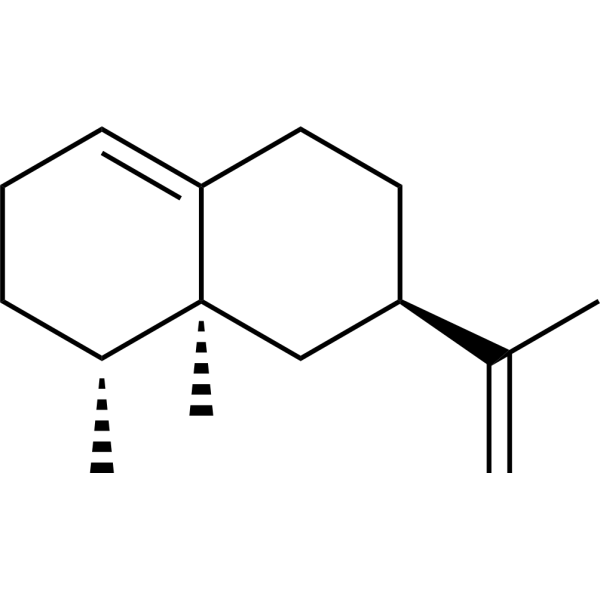
Valencene (Standard) is the analytical standard of Valencene. This product is intended for research and analytical applications. Valencene is a sesquiterpene that can be isolated from Cyperus rotundus. Valencene possesses antiallergic, antimelanogenesis, anti-infammatory, and antioxidant activitivies. Valencene inhibits the exaggerated expression of Th2 chemokines and proinflammatory chemokines through blockade of the NF-κB pathway. Valencene inhibits the production and expression of proinflammatory cytokines IL-1β and IL-6 in LPS-stimulated RAW 264.7 cells. Valencene can reduce atopic dermatitis symptoms and recover decreased expression of filaggrin in DNCB-sensitized mouse model .
loading...
    loading...
Cat. No.: HY-P992132
CAS No.: 3057433-10-7
Synonyms: STAR-0310
Solaprubart (STAR-0310) is a fully human IgG1 subtype monoclonal antibody targeting OX40 (CD134/TNFRSF4), with a Kd of 7.2 nM. By blocking the OX40/OX40L co-stimulatory signal, Solaprubart effectively inhibits cytokine release (IFN-γ, TNF-α, IL-5, IL-13) from activated effector T cells (Th1/Th2/Th17-associated). Solaprubart can be used in research related to moderate-to-severe atopic dermatitis .
loading...
    loading...
Cat. No.: HY-158990
CAS No.: 2883669-12-1
GE1111 is a MRGPRX2 antagonist (IC50 = 9.4 μM). GE1111 inhibits MRGPRX2/MRGPRB2-mediated mast cell activation. GE1111 reduces the expressions of TSLP, IL-13, MCP-1, TNF-α, IL-1β and periostin, maintains the expression levels of claudin 1 and involucrin, restores the phagocytic activity of macrophages, and attenuates the activation of STIM1 and phosphorylated AKT. GE1111 exerts anti-inflammatory and anti-allergic effects in multiple animal models. GE1111 is applicable to the research related to rosacea, atopic dermatitis and ulcerative colitis .
loading...
    loading...
Cat. No.: HY-187958
CAS No.: 91837-56-8
Research Areas:  

Inflammation/Immunology

PO-322 is a selective SGK1 inhibitor with an IC50 of 54 nM. PO-322 reduces NDRG1 phosphorylation through inhibition of SGK1. PO-322 inhibits T cell proliferation and the production of IL-17, IFN-γ, and IL-6, accompanied by upregulated phosphorylation of p70S6K and STAT5. PO-322 exhibits immunosuppressive activity both in vitro and in vivo, and attenuates DNFB-induced delayed-type hypersensitivity and Imiquimod (HY-B0180)-induced psoriasis-like dermatitis. PO-322 is useful for research related to autoimmune diseases and psoriasis .
loading...
    loading...
Cat. No.: HY-P990090
CAS No.: 2648260-80-2
Synonyms: CBP-201

Research Areas:  

Inflammation/Immunology

Rademikibart (CBP-201) is a human monoclonal antibody targeting IL-4Rα and IL-4Rα inhibitor with a KD of 20.7 pM when binding to human IL-4Rα epitopes . Rademikibart does not bind to IL-4Rα from other species. Rademikibart inhibits IL-4 and IL-13-mediated STAT6 signaling, TF-1 cell proliferation and thymus activation regulated chemokine (TRAC) production. Rademikibart can be used for the research of atopic dermatitis and asthma .
loading...
    loading...
Cat. No.: HY-17609S
Synonyms: CR-845-d5; FE-202845-d5
Difelikefalin-d5 (CR-845-d5; FE-202845-d5) is the deuterated-labeled Difelikefalin (HY-17609). Difelikefalin (CR-845; FE-202845) is an orally active peripherally acting kappa opioid receptor agonist. Difelikefalin reduces acute kidney injury, decreases oliguria, maintains urine flow, inhibits cytokine expression, and improves survival in endotoxemia after ischemia/reperfusion. Difelikefalin suppresses pruritus signals and exhibits neuromodulatory antipruritic activity. Difelikefalin can be used in research related to acute kidney injury, chronic kidney disease-associated pruritus, and atopic dermatitis .
loading...
    loading...
Cat. No.: HY-17609S1
Synonyms: CR-845-d5 hydrochloride; FE-202845-d5 hydrochloride
Difelikefalin-d5 hydrochloride (CR-845-d5 hydrochloride; FE-202845-d5 hydrochloride) is the deuterated-labeled Difelikefalin (HY-17609). Difelikefalin (CR-845; FE-202845) is an orally active peripherally acting kappa opioid receptor agonist. Difelikefalin reduces acute kidney injury, decreases oliguria, maintains urine flow, inhibits cytokine expression, and improves survival in endotoxemia after ischemia/reperfusion. Difelikefalin suppresses pruritus signals and exhibits neuromodulatory antipruritic activity. Difelikefalin can be used in research related to acute kidney injury, chronic kidney disease-associated pruritus, and atopic dermatitis .
loading...
    loading...
Cat. No.: HY-19205A
CAS No.: 193739-23-0
Synonyms: LDP-392
CMI-392 (LDP-392) is an orally active dual 5-lipoxygenase inhibitor and platelet-activating factor receptor (PAFR) antagonist, with an IC50 of 10 nM for human PAF receptor and an IC50 of 100 nM for rat 5-lipoxygenase. CMI-392 blocks PAF receptor binding, inhibits leukotriene synthesis, attenuates PAF-induced hemoconcentration, and suppresses arachidonic acid- and TPA-induced ear swelling in mice. CMI-392 reduces inflammatory cell infiltration, decreases MPO levels, alleviates ocular inflammation, and improves dextran sulfate sodium-induced colitis. CMI-392 can be used in the research of inflammatory and immune-related diseases such as colitis and atopic dermatitis .
loading...
    loading...
Cat. No.: HY-P990093
CAS No.: 2734715-10-5
Synonyms: CM310

Research Areas:  

Inflammation/Immunology

Stapokibart (CM310) is a humanized monoclonal antibody targeting IL-4Rα (KD values of 0.25 nM, 1.50 nM, and 2.75 nM for human, cynomolgus monkey, and rat IL-4Rα, respectively). Stapokibart effectively blocks the interaction of cytokines IL-4 and IL-13 with their co-receptor subunit IL-4Rα. Stapokibart reduces IL-4 and IL-13 mRNA, inhibits CD23 upregulation, and inhibits IL-4 and IL-13-induced STAT6 activation. Stapokibart improves inflammation (airway inflammation, rhinitis, dermatitis) .
loading...
    loading...
Cat. No.: HY-103325
CAS No.: 282089-49-0
Purity:  98.72%
JTE-907 is a selective and orally active cannabinoid CB2 receptor inverse agonist and exerts anti-inflammatory effects. JTE-907 upregulates IL-6, MCP-1, IL-1β, VEGF, ANGPTL4, and TRPV1 in mature adipocytes. JTE-907 downregulates CB1, MCP-1, and IL-1β in preadipocytes. JTE-907 inhibits ear swelling in mice. JTE-907 reverses the protective effects of CB2 agonists and Anandamide (HY-10863) against cytokine-evoked colonic mucosal damage. JTE-907 can be used for the research of allergic dermatitis, obesity, and colitis .
loading...
    loading...

