2944 Results for "

Potassium Channel

" in MedChemExpress (MCE) Product Catalog:
Products (2944)

2944 Results for "Potassium Channel" in MCE Product Catalog:

Cat. No.: HY-15589R
CAS No.: 885101-89-3
GW9508 (Standard) is the analytical standard of GW9508. This product is intended for research and analytical applications. GW9508 is a potent and selective G protein-coupled receptors FFA1 (GPR40) and GPR120 agonist with pEC50s of 7.32 and 5.46, respectively. GW9508 shows ~100-fold selectivity for GPR40 over GPR120. GW9508 is inactive against other GPCRs, kinases, proteases, integrins and PPARs. GW9508 is a glucose-sensitive insulin secretagogue and an ATP-sensitive potassium (KATP) channels opener. Anti-inflammatory and anti-atherosclerotic activities .
loading...
    loading...
Cat. No.: HY-173162
CAS No.: 86383-89-3
GPV0057 (Compound 5d) is a selective and potent P-glycoprotein (P-gp) inhibitor. GPV0057 is also a selective potassium channel Kir2.1 activator. GPV0057 competitively binds to the substrate-binding site of P-gp, inhibiting ATP-dependent drug efflux to reverse multidrug resistance in tumor cells. GPV0057 can also stabilizes the open state of Kir2.1 and promotes potassium ion influx. GPV0057 is promising for research of tumors with high P-gp expression, Kir2.1-deficient diseases such as heart failure and Andersen-Tawil Syndrome .
loading...
    loading...
Cat. No.: HY-175244
Target:  

SOS1 Ras Potassium Channel

Research Areas:  

Cancer

SOS1-IN-20 (Compound 12f) is an orally active SOS1 inhibitor with an IC50 of 5.11 nM against KRAS G12C::SOS1. By disrupting the interaction between KRAS and SOS1, SOS1-IN-20 inhibits KRAS activation and downstream signal transduction. SOS1-IN-20 has an IC50 of 253 nM for p-ERK in PC-9 cells and 16.71 μM for hERG channel . SOS1-IN-20 can inhibit the proliferation of tumor cells and has antitumor activity .
loading...
    loading...
Cat. No.: HY-176763
CAS No.: 2376747-46-3
Target:  

Sec61

Research Areas:  

Cancer

KZR-261 is a Sec61 translocase inhibitor. KZR-261 binds directly to the Sec61 channel, thereby inhibiting the biosynthesis of certain Sec61 substrate proteins, including oncogenic factors. KZR-261 activates the endoplasmic reticulum stress response. KZR-261 exhibits broad in vitro anticancer activity. KZR-261 shows antitumor efficacy in mouse models of cancer. KZR-261 can be used for the research of multiple myeloma, colorectal cancer, small cell lung cancer, pancreatic cancer, prostate cancer, non-Hodgkin's lymphoma, and mantle cell lymphoma .
loading...
    loading...
Cat. No.: HY-178494
CAS No.: 3097995-73-5
Research Areas:  

Neurological Disease

Nav1.7-IN-19 is a potent, selective and orally active Nav1.7 inhibitor with an IC50 of 0.49 μM. Nav1.7-IN-19 shows high selectivity for Nav1.7, with selectivities of 312-fold and 662-fold against Nav1.1 and Nav1.5 in the inactivated state. Nav1.7-IN-19 exhibits weak inhibition on hERG potassium channels. Nav1.7-IN-19 exhibits analgesic effect and can be used for the research of neurological disease .
loading...
    loading...
Cat. No.: HY-178780
CAS No.: 2137977-29-6
Synonyms: MKP10241
Target:  

GPR119

Deziglipel (MKP10241) is an orally active GPR119 agonist (human EC50: 3.7 nM; IC50 > 7.2 μM). Deziglipel activates GPR119 to increase cAMP levels, promotes active GLP-1 release, reduces blood glucose and HbA1c, decreases body weight and feed intake, and resolves MASH via altered lipid, cytokine, and liver enzyme levels. Deziglipel shows low hERG channel inhibition, minimal CYP450 inhibition, no PXR activation, and no significant transporter inhibition. Deziglipel can be used for the research of type 2 diabetes mellitus, obesity, MASH/MASLD, and metabolic disorders .
loading...
    loading...
Cat. No.: HY-180529
4-Octyl itaconate-Bn-S-NH2 (Compound 8b) is a vasodilator. 4-Octyl itaconate-Bn-S-NH2 can slowly and stably release H₂S, and it alleviates oxidative stress through an antioxidant reaction that depends on the activation of Nrf2. 4-Octyl itaconate-Bn-S-NH2 inhibits the production of intracellular ROS caused by H₂O₂ damage and the cytotoxicity of cells, and activates potassium channel. 4-Octyl itaconate-Bn-S-NH2 can be used for research on hypertension .
loading...
    loading...
Cat. No.: HY-19397
CAS No.: 275375-69-4
Research Areas:  

Neurological Disease

BMS-223131 (Compound 1) is a potent maxi-K potassium channel opener. BMS-223131 has a strong inhibitory effect on the CYP2C9 enzyme (IC50 = 1.7 μM) and also shows varying degrees of inhibition on other common CYP enzymes such as CYP1A2, CYP2C19, CYP2D6, and CYP3A4. BMS-223131 can enhance the outward current mediated by maxi-K, by promoting K + efflux to hyperpolarize the cell membrane and reducing Ca 2+ influx. BMS-223131 can be used for the research of neurological disease, such as stroke .
loading...
    loading...
Cat. No.: HY-210247
CAS No.: 3066447-73-9
RIPK2-IN-9 is a RIPK2 inhibitor with an IC50 < 2.5 nM. RIPK2-IN-9 inhibits NOD2-mediated NF-κB signaling and the protein-protein interaction between RIPK2 and XIAP, and inhibits NOD2 ligand-induced TNF-α secretion in human whole blood. RIPK2-IN-9 exhibits low inhibitory activity against the hERG channel. RIPK2-IN-9 can be used for research on RIPK2-related inflammatory diseases such as inflammatory bowel disease and rheumatoid arthritis .
loading...
    loading...
Cat. No.: HY-70057R
CAS No.: 133865-89-1
Synonyms: FCE 26743 (Standard); EMD 1195686 (Standard)
Safinamide (Standard) is the analytical standard of Safinamide. This product is intended for research and analytical applications. Safinamide is a potent, selective, and reversible monoamine oxidase B (MAO-B) inhibitor (IC50=0.098 µM) over MAO-A (IC50=580 µM) . Safinamide also blocks sodium channels and modulates glutamate (Glu) release, showing a greater affinity at depolarized (IC50=8 µM) than at resting (IC50=262 µM) potentials. Safinamide has neuroprotective and neurorescuing effects and can be used for the study of parkinson disease, ischemia stroke etc.al .
loading...
    loading...
Cat. No.: HY-A0148AR
CAS No.: 36167-63-2
Synonyms: SKF-102886 (Standard); WR-171669 hydrochloride (Standard)
Halofantrine hydrochloride (Standard) is the analytical standard of Halofantrine hydrochloride. This product is intended for research and analytical applications. Halofantrine hydrochloride (SKF-102886 hydrochloride; WR-171669 hydrochloride) is a blocker that delays the delayed rectifier potassium current by inhibiting human ERG channels, and it is a potent antimalarial agent. Halofantrine hydrochloride inhibits the Cap1-dependent oxidative stress response of Candida albicans, suppresses ROS responses, and enhances the antifungal (Fungal) activity of oxidative damage agents. Halofantrine hydrochloride exhibits antifungal activity in the Galleria mellonella model, and shows antimalarial activity against Plasmodium strains both in vitro and in animal models. Halofantrine hydrochloride can be used in studies related to invasive candidiasis, falciparum malaria, and vivax malaria.
loading...
    loading...
Cat. No.: HY-B0549
CAS No.: 15301-69-6
Synonyms: Rec-7-0040 free base; DW61 free base
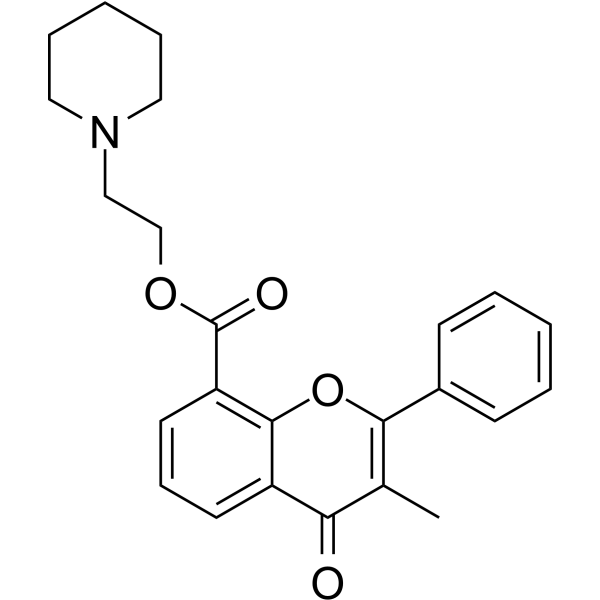
Flavoxate (Rec-7-0040 free base; DW61 free base) is an orally active L-type Ca 2+ channel inhibitor and antispasmodic. Flavoxate inhibits cyclic adenosine monophosphate production by blocking voltage-dependent inward Ba 2+ currents, regulating the brainstem micturition center, and stimulating G protein-coupled receptors. Consequently, Flavoxate induces relaxation of bladder smooth muscle and inhibits isovolumetric rhythmic contractions. Flavoxate effectively increases bladder capacity and alleviates symptoms of urgent urination frequency and pollakiuria caused by overactive bladder. Flavoxate can be used in research on overactive bladder and related voiding dysfunctions .
loading...
    loading...
Cat. No.: HY-B0881R
CAS No.: 968-81-0
Acetohexamide (Standard) is the analytical standard of Acetohexamide. This product is intended for research and analytical applications. Acetohexamide is an orally active first-generation sulfonylurea agent used in research related to type 2 diabetes and cancer. Acetohexamide exerts reductase activity in human erythrocytes. Acetohexamide stimulates the pancreas to secrete insulin. Acetohexamide inhibits ATP-sensitive potassium channels in the β cells of the pancreas. Acetohexamide can inhibit the formation of circular chemorepellent induced defects (CCIDs) in lymphendothelial cell (LEC) monolayers. Acetohexamide inhibits markers of epithelial-to-mesenchymal-transition and migration. Acetohexamide suppresses the synthesis of 12(S)-HETE. Acetohexamide can potentiate hypoglycaemic action .
loading...
    loading...
Cat. No.: HY-B1440R
CAS No.: 985-13-7
Ethaverine hydrochloride (Standard) is the analytical standard of Ethaverine hydrochloride (HY-B1440). This product is intended for research and analytical applications. Ethaverine hydrochloride is a Papaverine derivative and vasodilator. Ethaverine hydrochloride inhibits Phosphodiesterase, Tyrosine hydroxylase, and MAO-B. Ethaverine hydrochloride blocks L-type Ca 2+ channels, reduces intracellular Ca 2+ levels, inhibits platelet adhesion and aggregation, regulates cardiac conduction and heart rate, and increases peripheral and cerebral blood flow. Ethaverine hydrochloride alters cochlear microcirculation, intracochlear Po2, CM potential, and EP in guinea pigs, and induces transient hypotension. Ethaverine hydrochloride is used in the research of peripheral vascular diseases .
loading...
    loading...
Cat. No.: HY-D3170
C-HBrO-GGT is a dual-target fluorescent indicator with specificity for γ-glutamyl transpeptidase (GGT) and hypobromous acid (HBrO). C-HBrO-GGT acts as a substrate for GGT and HBrO, undergoing enzymatic or chemical modification to trigger channel-specific fluorescence, with sequential activation requiring initial GGT hydrolysis. C-HBrO-GGT enables simultaneous in vitro and in vivo fluorescence detection of GGT and HBrO. C-HBrO-GGT identifies mature atherosclerotic plaque positions and provides early warning of plaque formation before visual or classical immunofluorescent detection. C-HBrO-GGT can be used for the research of atherosclerosis (Ex/Em = 370 nm/500 nm) .
loading...
    loading...
Cat. No.: HY-N0215S11
CAS No.: 878339-23-2
Synonyms: (S)-2-Amino-3-phenylpropionic acid-13C9,15N
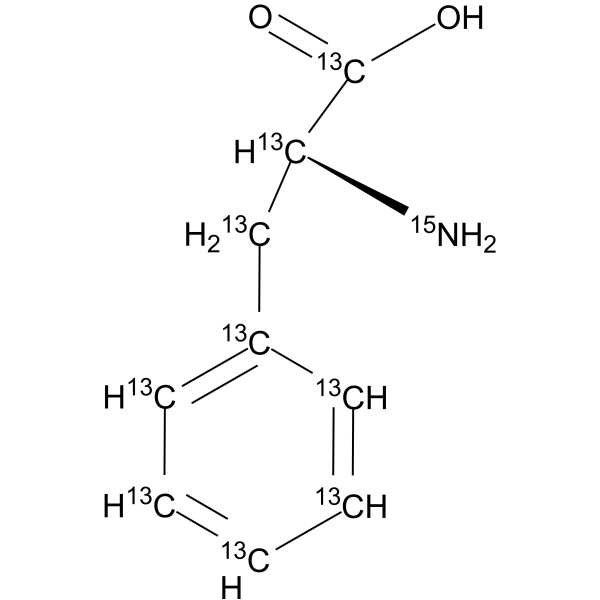
L-Phenylalanine- 13C9, 15N is the 13C- and 15N-labeled L-Phenylalanine. L-Phenylalanine ((S)-2-Amino-3-phenylpropionic acid) is an essential amino acid isolated from Escherichia coli. L-Phenylalanine is a α2δ subunit of voltage-dependent Ca+ channels antagonist with a Ki of 980 nM. L-phenylalanine is a competitive antagonist for the glycine- and glutamate-binding sites of N-methyl-D-aspartate receptors (NMDARs) (KB of 573 μM ) and non-NMDARs, respectively. L-Phenylalanine is widely used in the production of food flavors and pharmaceuticals .
loading...
    loading...
Cat. No.: HY-N0215S14
Synonyms: (S)-2-Amino-3-phenylpropionic acid-15N,d8
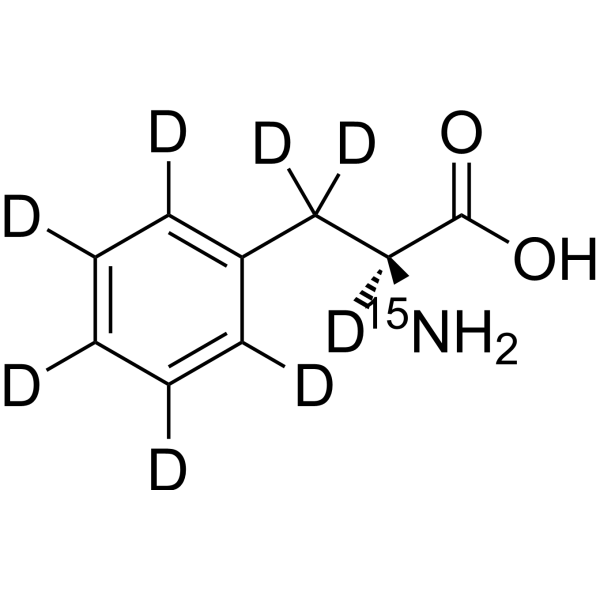
L-Phenylalanine- 15N,d8 is the deuterium and 15N-labeled L-Phenylalanine. L-Phenylalanine ((S)-2-Amino-3-phenylpropionic acid) is an essential amino acid isolated from Escherichia coli. L-Phenylalanine is a α2δ subunit of voltage-dependent Ca2+ channels antagonist with a Ki of 980 nM. L-phenylalanine is a competitive antagonist for the glycine- and glutamate-binding sites of N-methyl-D-aspartate receptors (NMDARs) (KB of 573 μM ) and non-NMDARs, respectively. L-Phenylalanine is widely used in the production of food flavors and pharmaceuticals .
loading...
    loading...
Cat. No.: HY-N1433
CAS No.: 1802-12-6
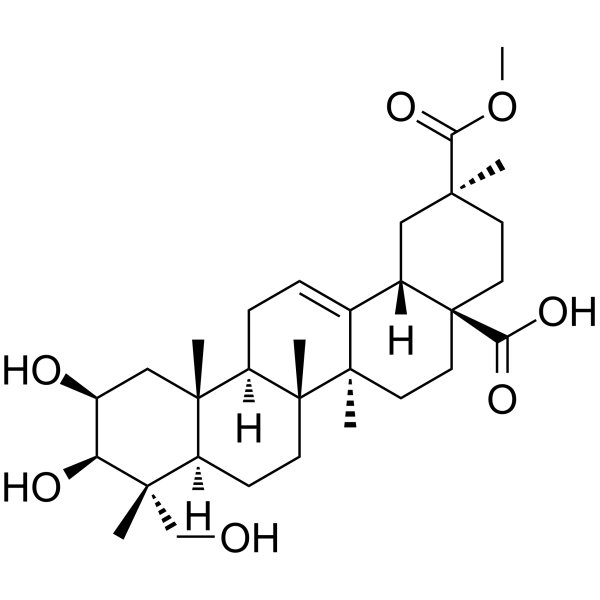
Phytolaccagenin is a triterpenoid saponin aglycone, Antifungal agent, vasodilator, antihypertensive agent, and anti-inflammatory agent. Phytolaccagenin activates vascular and cardiac Muscarinic receptors, blocks cardiac β-adrenergic receptors, and inhibits voltage-dependent calcium channels in blood vessels. Phytolaccagenin inhibits the growth of Candida albicans and Cryptococcus neoformans. Phytolaccagenin induces vasodilation, produces negative inotropic and negative chronotropic effects, reduces mean arterial pressure, and inhibits LPS-induced inflammation. Phytolaccagenin exhibits enhanced antihypertensive effects in high salt-induced hypertensive rats. Phytolaccagenin can be used in the research of candidiasis, cryptococcosis, hypertension, and inflammation-related diseases .
loading...
    loading...
Cat. No.: HY-N1934
CAS No.: 483-15-8
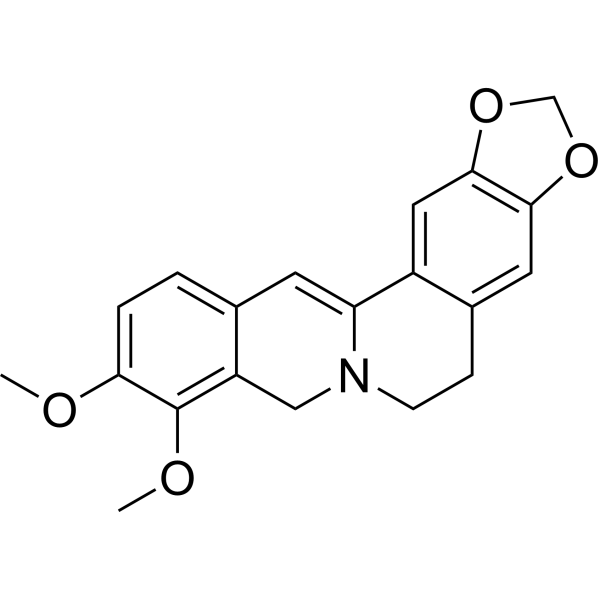
Dihydroberberine is a naturally occurring isoquinoline alkaloid with anti-inflammatory, anti-atherosclerotic, hypolipidemic and anti-tumor activities. Dihydroberberine inhibits the human ether-related gene (hERG) channel and significantly reduces the expression of heat shock protein 90 (Hsp90) and its interaction with hERG. Dihydroberberine also blocks the TLR4/MyD88/NF-κB signaling pathway to reduce pro-inflammatory cytokines and immunoglobulins, and has inhibitory effects on DSS (HY-116282C)-induced experimental colitis. Dihydroberberine also increases the sensitivity of lung cancer to sunitinib (HY-10255A), with synergistic efficacy .
loading...
    loading...
Cat. No.: HY-P12375
CAS No.: 3027663-77-7
Research Areas:  

Cancer

B18 peptide is a cationic amphipathic α-helical peptidomimetic that binds to the BST-2 extracellular domain and forms a stable complex through intermolecular hydrogen bonds near the N-terminus. B18 peptide competitively inhibits the binding of BST-2 to the extracellular matrix via its extracellular domain, reducing migrasome formation. B18 peptide induces membrane lysis through the formation of pores/water channels and annular pores, impairing membrane integrity. B18 peptide exhibits anticancer activity against breast cancer. B18 peptide can be used for research on breast cancer .
loading...
    loading...

