

394 Results for "

monkey FAP

" in MedChemExpress (MCE) Product Catalog:
Products (394)

394 Results for "monkey FAP" in MCE Product Catalog:

  • Categories Recommended:
    More
Cat. No.: HY-152846
CAS No.: 2268739-68-8
Synonyms: GDC-8264
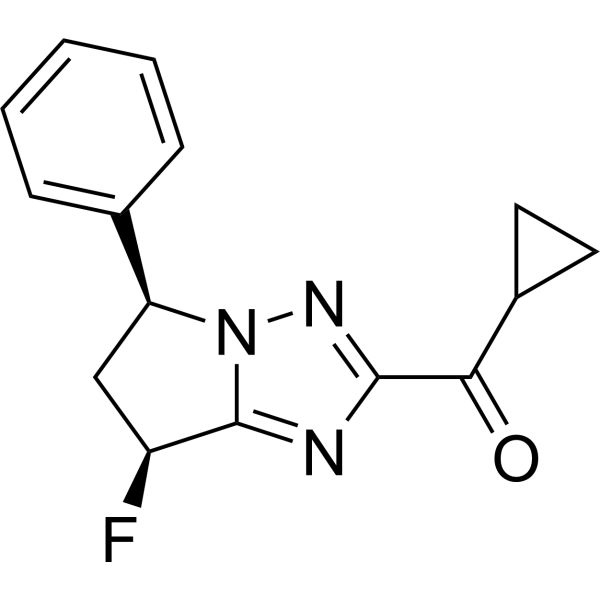
Flizasertib (GDC-8264) is an orally active, reversible and selective RIP1 inhibitor with Ki app values of 0.00071 μM and 0.0013 μM for human and cynomolgus monkey RIP1 kinase, respectively. Flizasertib blocks RIP1 autophosphorylation but does not affect RIP1 protein stability. Flizasertib inhibits pro-inflammatory cytokines (CCL3, CCL4, and IL-1β) production. Flizasertib results in inhibition of colitis and ileitis. Flizasertib can be used in the research of cardiac surgery-associated acute kidney injury .
loading...
    loading...
Cat. No.: HY-16474R
CAS No.: 737789-87-6
Synonyms: TAK-385 (Standard)
Research Areas:  

Endocrinology Cancer

Relugolix (Standard) is the analytical standard of Relugolix. This product is intended for research and analytical applications. Relugolix (TAK-385) is a potent, orally active, nonpeptidic gonadotropin-releasing hormone (GnRH) antagonist. Relugolix possesses high affinity and potent antagonistic activity for human receptor (binding IC50=0.33 nM) and monkey receptor (IC50=0.32 nM) compared with TAK-013 (HY-100209) . Relugolix is used for the study of sex-hormone-dependent diseases, such as including endometriosis, uterine fibroids and prostate cancer et al .
loading...
    loading...
Cat. No.: HY-175701
CAS No.: 2810808-95-6
Synonyms: RO7795081; RG6652
Target:  

Arrestin GLP Receptor

Research Areas:  

Metabolic Disease

CT-996 is an orally active GLP-1RA agonist with an EC50 of 0.49 nM. CT-996 reduces the recruitment of β-arrestin and the internalization of GLP-1R. CT-996 suppresses postprandial blood glucose in mice expressing human GLP-1 receptors and enhances glucose-stimulated insulin secretion (GSIS) in obese monkeys during intravenous glucose challenge. CT-996 can be used for the research of type 2 diabetes (T2D) and obesity .
loading...
    loading...
Cat. No.: HY-P991900

Target:  

CD19

Research Areas:  

Inflammation/Immunology

LY3541860 is a selective anti-CD19 antibody that both binds human CD19 with high affinity and selectively binds human B cells (Kd values: 76.8 pM and 94.5 nM for humans and cynomolgus monkeys, respectively). LY3541860 inhibits CpG-induced CD69 expression (IC50 = 0.006 nM). LY3541860 exhibits potent B cell inhibitory activities. LY3541860 can inhibit both BCR- and TLR-induced human B cell activation. LY3541860 can be used for the research of autoimmune diseases .
loading...
    loading...
Cat. No.: HY-P99404
CAS No.: 2084037-83-0
Synonyms: E6011

Target:  

CXCR

Research Areas:  

Inflammation/Immunology Cancer

Quetmolimab (E6011) is a humanized anti-Fractalkine (CX3CL1) monoclonal antibody. Quetmolimab binds to membrane-bound and soluble Fractalkine, neutralizes Fractalkine-induced migration of CX3CR1-expressing cells, mediates target-bound complex elimination from serum. Quetmolimab suppresses free soluble Fractalkine levels in cynomolgus monkeys, with target engagement linked to increased serum total Fractalkine concentration. Quetmolimab can be used for the research of Crohn’s disease, rheumatoid arthritis, and primary biliary cholangitis .
loading...
    loading...
Cat. No.: HY-101189R
CAS No.: 1046447-90-8
JNJ-39758979 (Standard) is the analytical standard of JNJ-39758979 (HY-101189). This product is intended for research and analytical applications. JNJ-39758979, a chemical probe, is a selective, orally active, and high-affinity histamine H4 receptor antagonist with Kis of 12.5, 5.3, and 25 nM for human, mouse, and monkey histamine H4 receptor, respectively. JNJ-39758979 functionally antagonizes histamine-induced cAMP inhibition with a pA2 of 7.9 in transfected cells. JNJ-39758979 shows good anti-inflammatory and antipruritic activity .
loading...
    loading...
Cat. No.: HY-111262R
CAS No.: 868623-40-9
ABT-384 (Standard) is the analytical standard of ABT-384 (HY-111262). This product is intended for research and analytical applications. ABT-384 is a potent, selective 11-β-hydroxysteroid dehydrogenase type 1 (11β-HSD1) inhibitor. ABT-384 exhibits high affinity (Ki 0.1-2.7 nM) against rodent, monkey, and human 11β-HSD1. ABT-384 blocks regeneration of active cortisol. ABT-384 can be used for the research of Alzheimer’s disease (AD) .
loading...
    loading...
Cat. No.: HY-P12211
Target:  

GLP Receptor

Research Areas:  

Others

GLP2 (rat) (11-33) is a glucagon-like peptide-2 receptor (GLP-2 receptor) antagonist. GLP2 (rat) (11-33) has weak intrinsic agonistic activity on human GLP-2R; it can synergistically enhance the activity of agonistic allosteric regulators on human, cynomolgus monkey, dog and Syrian hamster GLP-2R, but reduces this activity on rat GLP-2R. GLP2 (rat) (11-33) can be used for GLP-2R related research .
loading...
    loading...
Cat. No.: HY-P992045

Research Areas:  

Inflammation/Immunology

HZD37-5 is a humanized monoclonal antibody specifically recognizing N78 loci of IL-17A. HZD37-5 binds to human and rhesus monkeys, blocks IL-17 induced signal transduction and the release of IL-6, IL-8, CXCL-1 and GM-GSF. HZD37-5 significantly inhibited human IL-17A induced-keratinocyte chemoattractant secretion. HZD37-5 can be used for the research of autoimmune diseases including psoriasis and psoriatic arthritis .
loading...
    loading...
Cat. No.: HY-P992381

Target:  

Drug Derivative

Research Areas:  

Cancer

IBI352g4a is a humanized IgG1 monoclonal antibody targeting PVRIG (Kd = 0.53 nM) and acts as a PVRIG/PVRL2 inhibitor. The anti-tumor effect of IBI352g4a depends on the binding of its Fc region to FcγR. IBI352g4a binds to the extracellular domains of human and cynomolgus monkey PVRIG, and blocks the PVRIG-PVRL2 interaction. IBI352g4a induces NK cell activation, promotes their degranulation and tumor killing. IBI352g4a can be used in the research of gastric cancer .
loading...
    loading...
Cat. No.: HY-151500B
Purity:  95.64%
Research Areas:  

Metabolic Disease

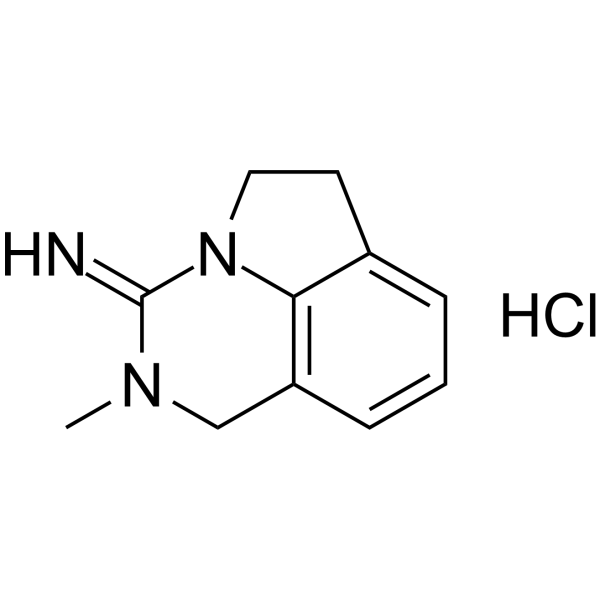
JBSNF-00002 hydrochloride is an orally active small molecule inhibitor of the tricyclic nicotinamide N-methyltransferase (NNMT) with IC50 values for human, mouse and monkey sources of NNMT of 33, 210 and 190 nM respectively. JBSNF-00002 hydrochloride can reduce endogenous MNA levels in U2OS osteosarcoma cells, with its EC50 being 2.5 μM. JBSNF-00002 hydrochloride exhibits significant anti-obesity and anti-diabetic activities in the diet-induced obesity (DIO) model. JBSNF-00002 hydrochloride can be used for the study of metabolic diseases such as obesity, type 2 diabetes and non-alcoholic fatty liver disease .
loading...
    loading...
Cat. No.: HY-151500C
Research Areas:  

Metabolic Disease

JBSNF-00002 is an orally active small molecule inhibitor of the tricyclic nicotinamide N-methyltransferase (NNMT) with IC50 values for human, mouse and monkey sources of NNMT of 33, 210 and 190 nM respectively. JBSNF-00002 can reduce endogenous MNA levels in U2OS osteosarcoma cells, with its EC50 being 2.5 μM. JBSNF-00002 exhibits significant anti-obesity and anti-diabetic activities in the diet-induced obesity (DIO) model. JBSNF-00002 can be used for the study of metabolic diseases such as obesity, type 2 diabetes and non-alcoholic fatty liver disease .
loading...
    loading...
Cat. No.: HY-159709
CAS No.: 2765519-47-7
Target:  

Liposome

Research Areas:  

Metabolic Disease

VL-422 is an ionizable cationic lipid. VL-422 delivers CRISPR complementary single-guide RNA (sgRNA) and Cas9 mRNA to enable in vitro and in vivo gene editing. LNPs containing VL-422 loaded with Cas9 mRNA and sgRNA targeting the ANGPTL3 gene induce the deletion of premature stop codons within the ANGPTL3 gene in the liver of cynomolgus monkeys. Loss-of-function of ANGPTL3 leads to decreased levels of LDL, HDL and cholesterol in plasma. The VL-422 delivery system can be used for the research of gene editing strategies targeting lipid metabolism diseases .
loading...
    loading...
Cat. No.: HY-187122
CAS No.: 1420-88-8
Research Areas:  

Others

N,S-Diacetylcysteamine is an N-acetylcysteamine thioester (SNAc) derivative that serves as an acetyl donor, substrate, substrate inhibitor, condensing agent, and acyl donor. N,S-Diacetylcysteamine acts as an acetyl donor in the INH (Isoniazid) (HY-B0329) acetylation reaction in rhesus monkey liver homogenate, functions as a substrate for pigeon liver arylamine acetylase, and exhibits substrate inhibition against both systems at excessively high concentrations. N,S-Diacetylcysteamine acts as a substrate for peptidoglycan O-acetyltransferase B (PatB) to mediate the acetylation modification of peptidoglycan, and serves as a thioester model for the thioester groups of acetyl-CoA and acyl carrier protein .
loading...
    loading...
Cat. No.: HY-19306
CAS No.: 205678-26-8
Target:  

Integrin

Research Areas:  

Cancer

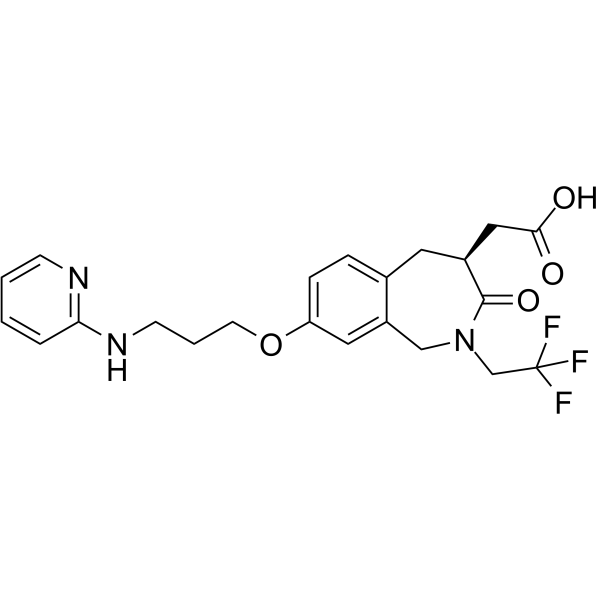
SB-267268 is a selective and nonpeptidic alpha(v)beta3 (αvβ3) and alpha(v)beta5 (αvβ5) integrins antagonist, with Kis of 0.9, 0.5 and 0.7 nM for human αvβ3, monkey αvβ3 and human αvβ5, respectively. SB-267268 inhibits human and mouse αvβ3 with IC50s of 0.68 and 0.29 nM, respectively. SB-267268 reduces angiogenesis and VEGF expression .
loading...
    loading...
Cat. No.: HY-19480B
CAS No.: 1246200-39-4
Synonyms: BCX4208 succinate
Target:  

Phosphatase

Ulodesine succinate (BCX4208 succinate) is a purine nucleoside phosphorylase (PNP) inhibitor, with an IC50 of 2.293 nM against human PNP, and low nanomolar IC50 values against mouse, rat and monkey PNP. Ulodesine succinate blocks the production of uric acid precursors, reduces serum uric acid levels, clears accumulated uric acid in the blood, and elevates the levels of purine nucleosides including guanosine. Ulodesine succinate reduces the counts of total lymphocytes, T lymphocytes and lymphocyte subsets, inhibits the proliferation of cancer cells and activated lymphocytes, and enhances vaccine immune responses. Ulodesine succinate can be used in research related to hyperuricemia and gout .
loading...
    loading...
Cat. No.: HY-P99709
CAS No.: 2118349-31-6
Synonyms: LY3300054

Target:  

PD-1/PD-L1

Research Areas:  

Inflammation/Immunology Cancer

Lodapolimab (LY3300054) is a fully human IgG1λ anti-PD-L1 monoclonal antibody, with an EC50 of 0.075 nM against hPD-L1 and an EC50 of 0.085 nM against cynomolgus monkey PD-L1. Lodapolimab induces naive T cell activation, enhances the T cell activation effect of anti-CTLA4 antibodies, promotes anti-tumor alloreactivity, regulates innate immune pathways, and induces characteristics of adaptive immune activation. Lodapolimab can be used in research related to high-grade serous ovarian cancer and other solid tumors .
loading...
    loading...
Cat. No.: HY-105628
CAS No.: 3734-17-6
Synonyms: CI-427
Target:  

Others

Prodilidine (CI-427) is an orally active, pyrrolidine-derived non-narcotic pain inhibitor. Prodilidine exerts analgesic activity against various nociceptive stimuli, and shows no antipyretic, anti-inflammatory or respiratory depressive effects. Prodilidine fails to inhibit withdrawal symptoms of addictive agents in monkeys, but exhibits excitatory effects and enhances the crossed extensor reflex at toxic doses. Prodilidine is well absorbed from the gastrointestinal tract and metabolized via hepatic microsomal N-demethylation, displaying isomer-specific activity, toxicity and metabolic characteristics. Prodilidine can be used in research related to chronic pain (e.g., cancer-, musculoskeletal/arthritis-derived), traumatic pain and arthritic pain .
loading...
    loading...
Cat. No.: HY-15042
CAS No.: 578727-68-1
Purity:  99.76%
Target:  

Bradykinin Receptor

Research Areas:  

Metabolic Disease

MK 0686, a potent bradykinin B1 receptor antagonist, demonstrates autoinduction of metabolism in rhesus monkeys after oral administration. It undergoes significant biotransformation primarily via oxidation pathways, leading to the formation of metabolites like M11 and M13 in rhesus liver microsomes. This metabolic induction is mediated by CYP2C75, as evidenced by increased mRNA expression, protein levels, and catalytic activity of this enzyme in hepatocytes and liver microsomes from MK 0686-treated animals. The autoinduction phenomenon suggests that MK 0686 enhances its own metabolism by upregulating CYP2C75, potentially influencing its systemic exposure and pharmacokinetics over time .
loading...
    loading...
Cat. No.: HY-151500A
Purity:  99.47%
Research Areas:  

Metabolic Disease

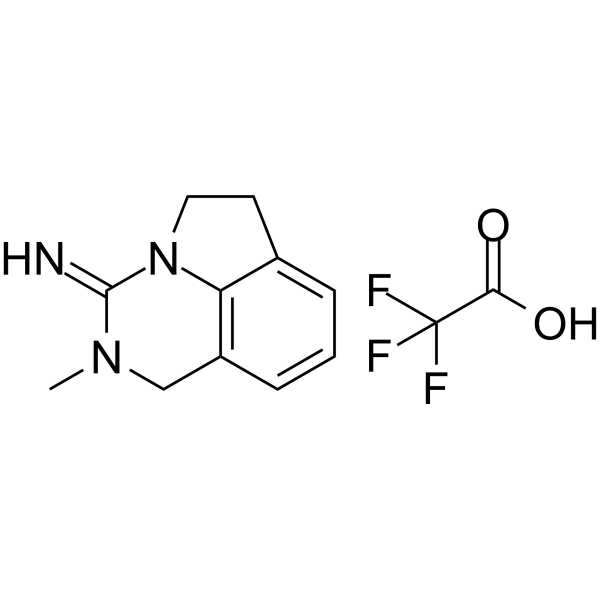
JBSNF-00002 TFA is an orally active small molecule inhibitor of the tricyclic nicotinamide N-methyltransferase (NNMT) with IC50 values for human, mouse and monkey sources of NNMT of 33, 210 and 190 nM respectively. JBSNF-00002 TFA can reduce endogenous MNA levels in U2OS osteosarcoma cells, with its EC50 being 2.5 μM. JBSNF-00002 TFA exhibits significant anti-obesity and anti-diabetic activities in the diet-induced obesity (DIO) model. JBSNF-00002 TFA can be used for the study of metabolic diseases such as obesity, type 2 diabetes and non-alcoholic fatty liver disease .
loading...
    loading...

