90 Results for "

Complex III

" in MedChemExpress (MCE) Product Catalog:
Products (90)

90 Results for "Complex III" in MCE Product Catalog:

Cat. No.: HY-125776
CAS No.: 143390-89-0
Purity:  ≥99.0%
Synonyms: BAS 490 F
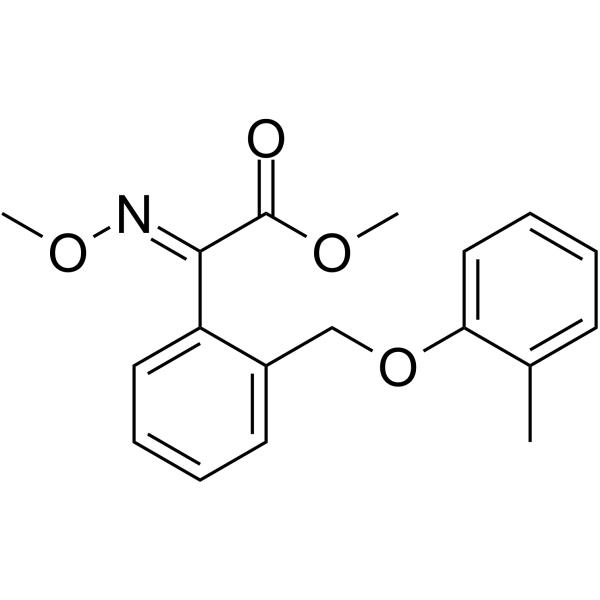
Kresoxim-methyl (BAS 490 F), a Strobilurin-based fungicide, inhibits the respiration at the complex III (cytochrome bc1 complex). Kresoxim-methyl binds to complex III from yeast with an apparent Kd of 0.07 μM proving a high affinity for this enzyme .
loading...
    loading...
Cat. No.: HY-P1858A
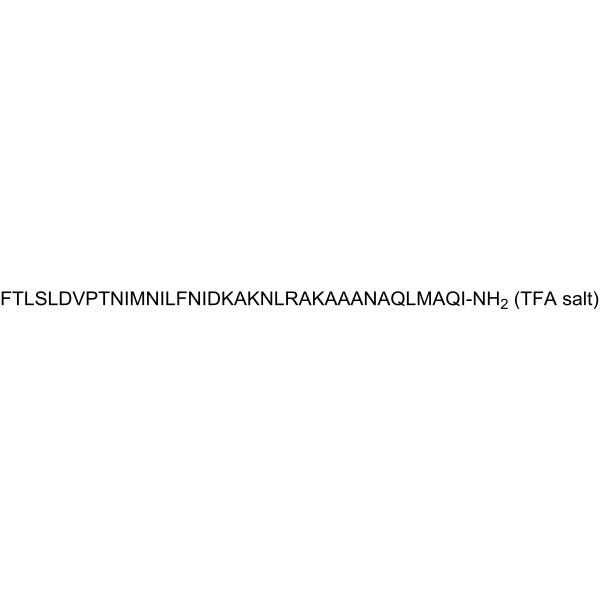
Urocortin III, mouse TFA is a corticotropin-releasing factor (CRF)-related peptide. Urocortin III preferentially binds and activates CRF-R2 . Urocortin III (Ucn3) is a known component of the behavioral stress response system. Urocortin III and CRF-R2 in the medial amygdala regulate complex social dynamics .
loading...
    loading...
Cat. No.: HY-P1858
CAS No.: 357952-10-4
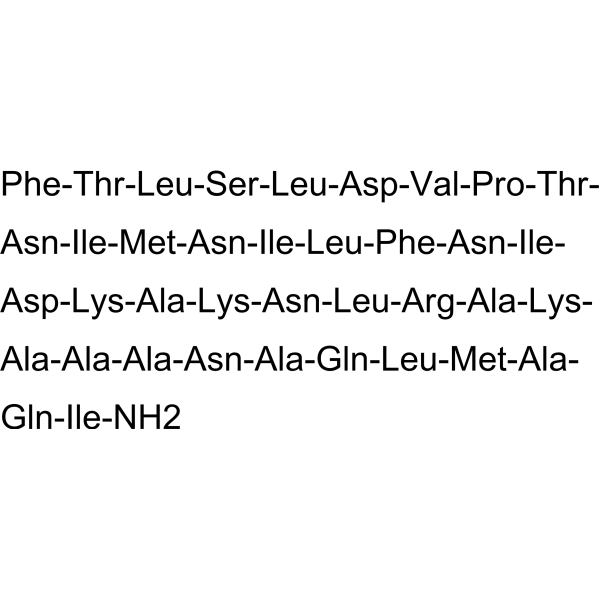
Urocortin III, mouse is a corticotropin-releasing factor (CRF)-related peptide. Urocortin III preferentially binds and activates CRF-R2 . Urocortin III (Ucn3) is a known component of the behavioral stress response system. Urocortin III and CRF-R2 in the medial amygdala regulate complex social dynamics .
loading...
    loading...
Cat. No.: HY-115853
CAS No.: 78668-34-5
Research Areas:  

Others

Pyclen forms kinetically and thermodynamically stable nine-coordinate Ln (III) complexes, as well as Mn (II)-based MRI contrast agents. Pyclen-Based Mn(II) Complexes can be used for liver-specific MRI .
loading...
    loading...
Cat. No.: HY-DY1017
CAS No.: 11078-21-0
Filipin complex (solution) is a potent polyene macrolide antifungal antibiotic. Filipin complex inserts into membranes and sequester cholesterol into complexes and inhibits PRRSV entry. The Filipin complex consists of about 75.8% Filipin III (HY-N6718) , 10.8% Filipin IV, 9.1% Filipin II, and 1.2% Filipin I (Ex/Em = 380/430 nm) .
Solvent and concentration: DMSO: 5 mg/mL
loading...
    loading...
Cat. No.: HY-P6351
Target:  

Integrin

Research Areas:  

Cancer

c(avb6)-DOTA TFA is a conjugate of the αvβ6 integrin selective peptide ring modified with DOTA chelator. The Lu(III) complex of c(avb6)-DOTA TFA has a comparable affinity for αvβ6 integrin (IC50=0.8 nM) and can be used as a tumor diagnostic .
loading...
    loading...
Cat. No.: HY-19882
CAS No.: 941285-15-0
Research Areas:  

Infection

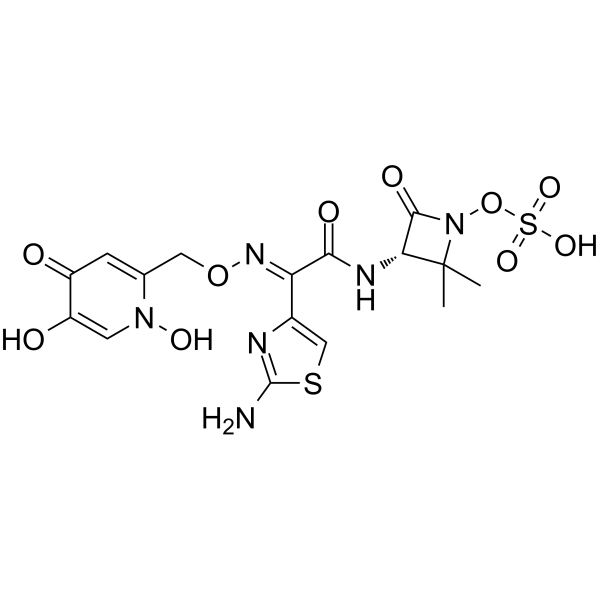
BAL-30072 is a siderophore-bearing monocyclic β-lactam antibiotic with antibacterial activity. BAL-30072 inhibits penicillin-binding proteins 1a, 1b, and 3, thereby disrupting bacterial cell wall synthesis. BAL-30072 inhibits mitochondrial electron transport chain complex II and complex III, while also inhibiting glycolysis and mitochondrial fatty acid β-oxidation. BAL-30072 induces mitochondrial ROS production, cellular ATP depletion, reduces mitochondrial membrane potential, and triggers hepatocyte apoptosis via caspase-3/7 activation. BAL-30072 is a substrate of the hepatic uptake transporters OAT1 and OAT3. BAL-30072 can be used in research related to bacterial infections .
loading...
    loading...
Cat. No.: HY-107966A
CAS No.: 37270-89-6
Synonyms: Nadroparin calcium (MW 3600-5000)
Heparin (Nadroparin) calcium (MW 3600-5000) is an anticoagulant which binds reversibly to antithrombin III (ATIII) to form a heparin-antithrombin III complex. The complex binds to and irreversibly inactivates thrombin and other activated clotting factors IX, X, XI, and XII and prevents the transformation of fibrinogen to fibrin .
loading...
    loading...
Cat. No.: HY-125857B
CAS No.: 9007-43-6
Cytochrome C (Saccharomyces cerevisiae) is a type C cytochrome located in the intermembrane space of the mitochondria. As an electron carrier, Cytochrome C (Saccharomyces cerevisiae) transfers electrons between complex III (cytochrome c reductase) and complex IV (cytochrome c oxidase, CIV) of the respiratory chain. Cytochrome C (Saccharomyces cerevisiae) can play a crucial role in triggering apoptosis by being released from the mitochondria into the cytosol .
loading...
    loading...
Cat. No.: HY-146145
CAS No.: 1472649-01-6
Purity:  99.53%
Research Areas:  

Infection

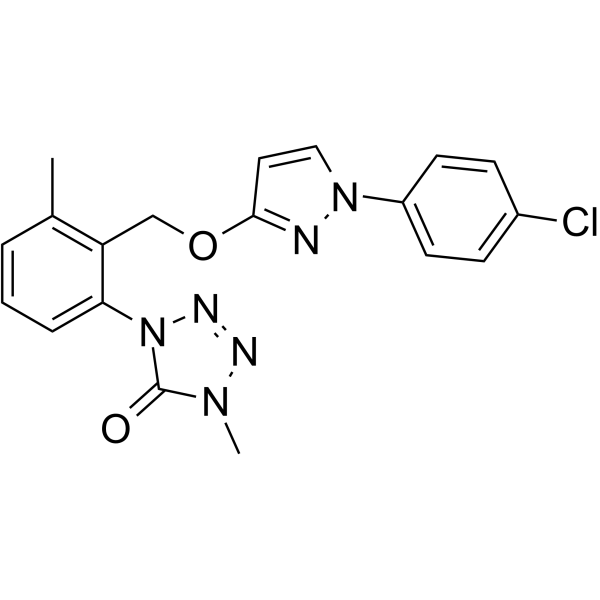
Metyltetraprole is a QoI fungicide containing a tetrazolinone pharmacophore that binds to the Qo site of the cytochrome bc1 complex (complex III), blocks D-Panthenol (HY-B1391) oxidation, and inhibits mitochondrial electron transport, while retaining antifungal activity against QoI-resistant isolates and exhibiting broad-spectrum antifungal effects. Metyltetraprole is used in the study of wheat Septoria leaf blotch, net blotch, cucumber downy mildew, and powdery mildew .
loading...
    loading...
Cat. No.: HY-162066
CAS No.: 2868298-43-3
Target:  

Parasite

Research Areas:  

Infection

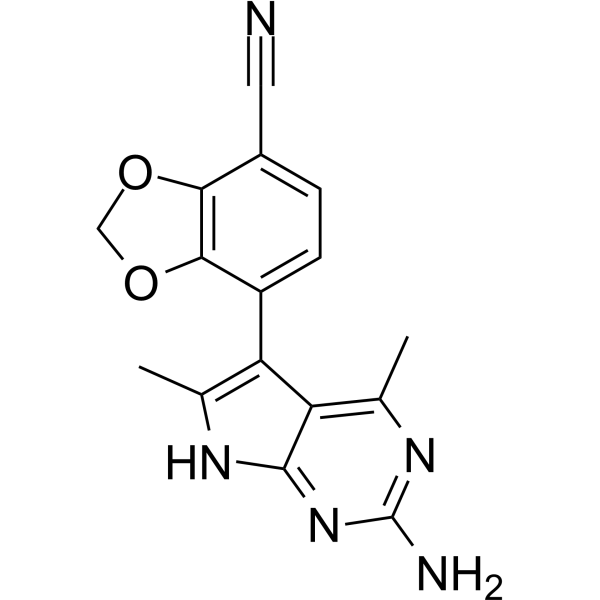
DNDI-6174 is an orally active Leishmania cytochrome b (Qi site of cytochrome bc1 complex/complex III) inhibitor. DNDI-6174 binds to the Qi site of Leishmania cytochrome b, inhibits cytochrome bc1 complex activity in the parasite's electron transport chain across promastigote and axenic amastigote stages. DNDI-6174 reduces parasite burden in rodent models, inhibits growth of various Leishmania species, drug-resistant clinical isolates, and Trypanosoma cruzi, with marginal activity against Trypanosoma brucei. DNDI-6174 can be used for the research of visceral leishmaniasis, cutaneous leishmaniasis .
loading...
    loading...
Cat. No.: HY-118075
CAS No.: 606-06-4
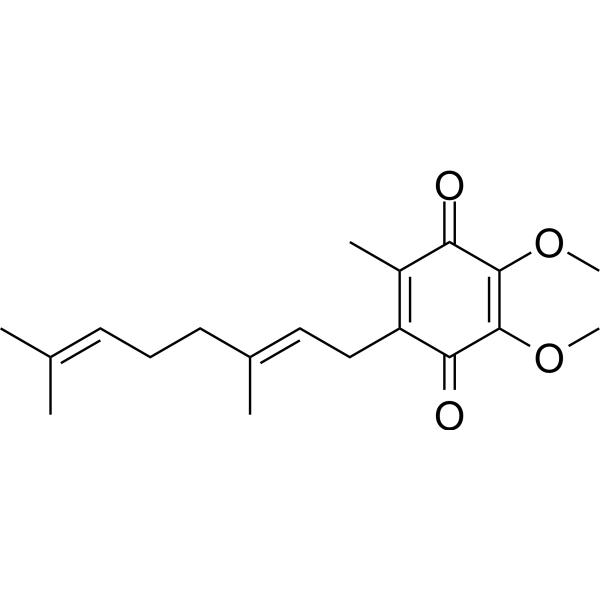
Coenzyme Q2 is a benzoquinone electron carrier in the mitochondrial electron transport chain and a p53-dependent apoptosis inducer. Coenzyme Q2 induces p53 phosphorylation at Ser15, promoting p53 accumulation and functional activation. Coenzyme Q2 induces ROS generation, caspase-3 activation, DNA fragmentation, phosphatidylserine externalization, mitochondrial permeability transition pore opening, and oxidative phosphorylation uncoupling. Coenzyme Q2 inhibits Complex I, Complex III, and Complex IV activities, disrupting electron transport and membrane potential generation. Coenzyme Q2 induces excessive mitochondrial proton leak in forebrain mitochondria. Coenzyme Q2 causes loss of righting reflex in mice, accompanied by slow-wave delta EEG activity and reversible loss of wakefulness. Coenzyme Q2 inhibits lipid peroxidation and scavenges superoxide radicals. Coenzyme Q2 is used in research on leukemia, myocardial ischemia-reperfusion injury, and mitochondrial encephalomyopathy .
loading...
    loading...
Cat. No.: HY-148365
Purity:  98.02%
Research Areas:  

Cancer

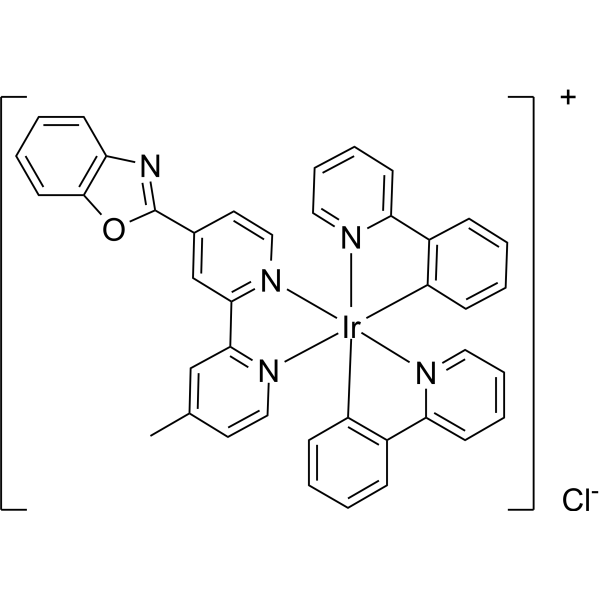
NecroIr1 is an iridium(III) complex, serves as necroptosis inducers in Cisplatin (HY-17394)-resistant lung cancer cells (A549R). NecroIr1 selectively accumulates in mitochondria, leading to oxidative stress and loss of mitochondrial membrane potential (MMP). NecroIr1 activates receptor-interacting serine-threonine kinase 3 (RIPK3) and Mixed Lineage Kinase (MLKL), and regulates CDK4 expression .
loading...
    loading...
Cat. No.: HY-148366
Purity:  98.99%
Research Areas:  

Cancer

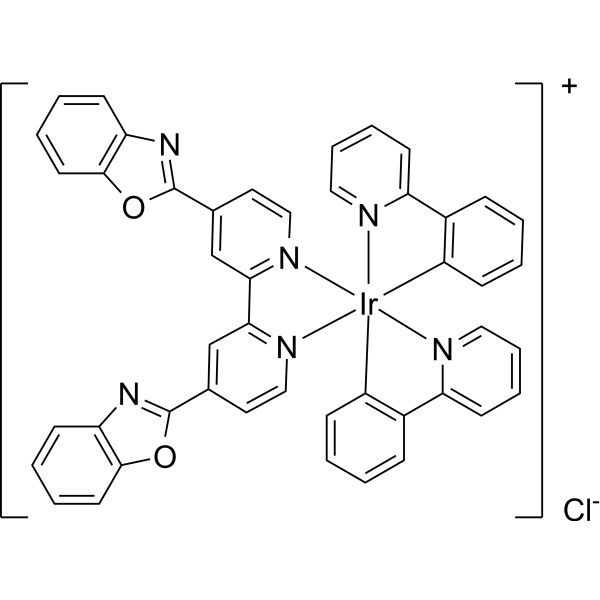
NecroIr2 is an iridium(III) complex, serves as necroptosis inducers in Cisplatin (HY-17394)-resistant lung cancer cells (A549R). NecroIr2 selectively accumulates in mitochondria, leading to oxidative stress and loss of mitochondrial membrane potential (MMP). NecroIr2 activates receptor-interacting serine-threonine kinase 3 (RIPK3) and mixed lineage kinase domain-like pseudokinase (MLKL), and regulates CDK4 expression .
loading...
    loading...
Cat. No.: HY-Y1312
CAS No.: 670-96-2
Synonyms: PhI; 2PZ
Research Areas:  

Others

2-Phenylimidazole (PhI) is a corrosion inhibitor for brass and can be used to prepare complexes with ruthenium (III) .
loading...
    loading...
Cat. No.: HY-N10184
CAS No.: 540770-33-0
Synonyms: FKI-0550
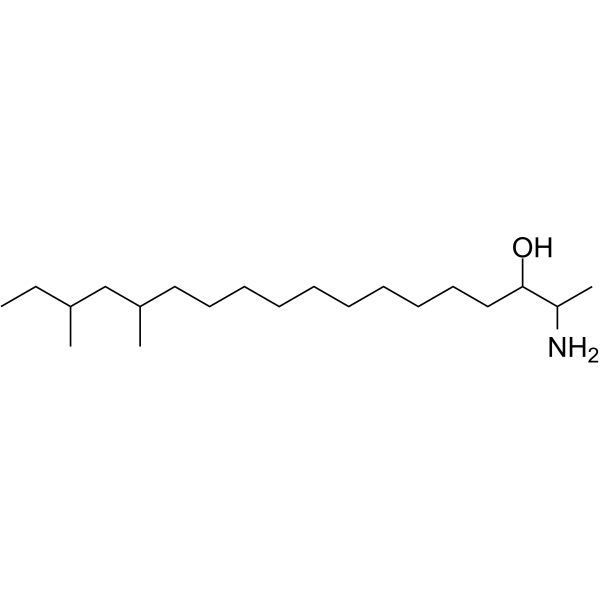
Paecilaminol is an amino alcohol and NADH-fumarate reductase inhibitor (IC50 = 5.1 μM against Ascaris suum) that also inhibits both helminth and mammalian mitochondrial complexes I and III, exhibiting antifungal, antibacterial, nematocidal, insecticidal, and cancer cell growth-inhibitory activities. Paecilaminol can be used in research on helminth infections .
loading...
    loading...
Cat. No.: HY-114164E
CAS No.: 9002-04-4
Rabbit Thrombin is a serine protease. Rabbit Thrombin forms a covalent complex with antithrombin III and reversibly binds endothelial cell surface high-affinity sites. Rabbit Thrombin regulates VEGF and Ang-2, potentiates VEGF mitogenic activity and protects endothelial cells from apoptosis. Rabbit Thrombin can be used for the research of hindlimb ischemia .
loading...
    loading...
Cat. No.: HY-W012232
CAS No.: 3558-69-8
Research Areas:  

Others

2,6-Diphenylpyridine is a proton acceptor (log(P) = 5) and a tridentate [C^N^C] dianionic ligand. 2,6-Diphenylpyridine efficiently transfers protons through a direct pathway at the interface of two immiscible electrolyte solutions. 2,6-Diphenylpyridine as a tridentate ligand and can form mononuclear and binuclear complexes with gold(III). 2,6-Diphenylpyridin is applicable to research in electrochemical ion transfer kinetics and organometallic chemistry .
loading...
    loading...
Cat. No.: HY-107966
CAS No.: 37270-89-6
Synonyms: Nadroparin calcium (MW 15000-19000)
Heparin calcium (MW 15000-19000) is an anticoagulant which binds reversibly to antithrombin III (ATIII) to form a heparin-antithrombin III complex. The complex binds to and irreversibly inactivates thrombin and other activated clotting factors IX, X, XI, and XII and prevents the transformation of fibrinogen to fibrin .
loading...
    loading...
Cat. No.: HY-W009022
CAS No.: 1251-85-0
Diantipyrylmethane is a chromogenic reagent commonly used for the determination of the contents of metals such as Au (III), Ti (IV), Ir, Fe (III), molybdenum, neodymium, U (IV), iridium, platinum and rhenium via spectrophotometry and extraction photometry. Diantipyrylmethane can also form a fluorescent complex with Er (III) ions, which is applied to the determination of erbium .
loading...
    loading...

