102 Results for "

DNA crosslinking

" in MedChemExpress (MCE) Product Catalog:
Products (102)

102 Results for "DNA crosslinking" in MCE Product Catalog:

Cat. No.: HY-101127
CAS No.: 1222490-34-7
Purity:  98.45%
Synonyms: PBD dimer
Target:  

ADC Payloads

Research Areas:  

Cancer

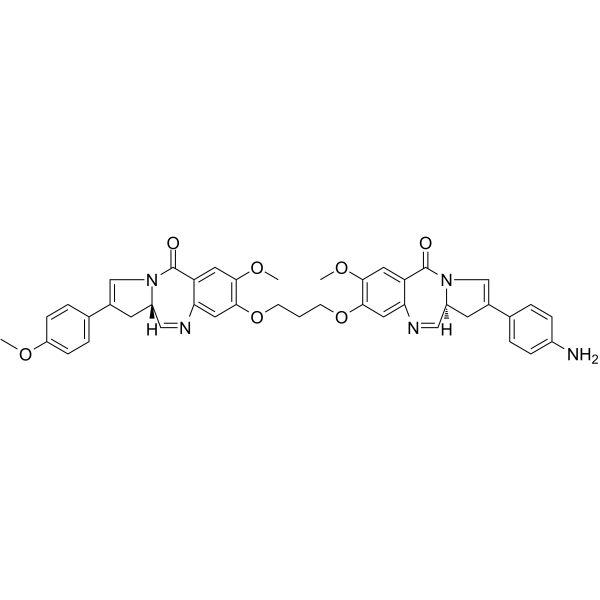
SGD-1882 is a cytotoxic, DNA minor-groove crosslinking agent pyrrolobenzodiazepine (PBD) dimer, acting as the payload for ADCs.
loading...
    loading...
Cat. No.: HY-101162
CAS No.: 1342820-51-2
Purity:  96.17%
Research Areas:  

Cancer

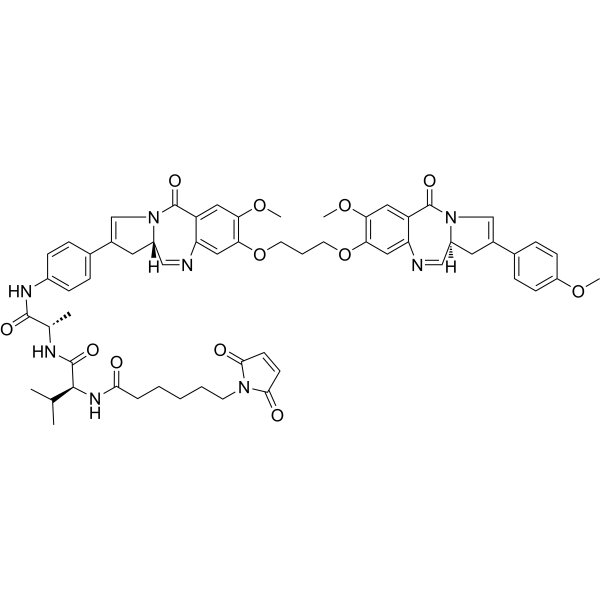
SGD-1910 is a agent-linker conjugate for ADC by using the antitumor antibiotic, pyrrolobenzodiazepine (PBD, a cytotoxic DNA crosslinking), linked via the cleavable linker MC-Val-Ala .
loading...
    loading...
Cat. No.: HY-17371R
CAS No.: 61825-94-3
Research Areas:  

Cancer

Oxaliplatin (Standard) is the analytical standard of Oxaliplatin. This product is intended for research and analytical applications. Oxaliplatin is a DNA synthesis inhibitor. Oxaliplatin causes DNA crosslinking damage, prevents DNA replication and transcription and induces apoptosis. Oxaliplatin can be used for cancer research .
loading...
    loading...
Cat. No.: HY-13543
CAS No.: 21919-05-1
Purity:  99.50%
Synonyms: CB 1954
Research Areas:  

Cancer

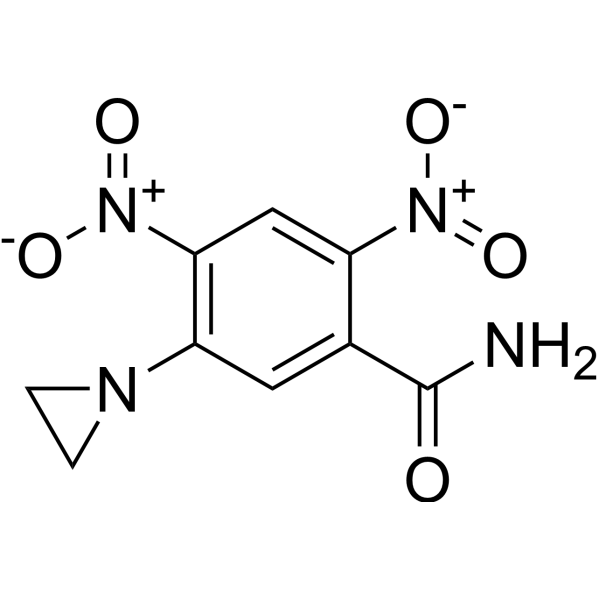
Tretazicar (CB 1954), an antitumor proagent, is highly selective against the Walker 256 rat tumour line. Tretazicar is enzymatically activated to generate a bifunctional agent, which can form DNA-DNA interstrand cross-links. Tretazicar in rat cells involves the reduction of its 4-nitro group to a 4-hydroxylamine by the enzyme NAD(P)H:quinone oxidoreductase 1 (NQO1) .
loading...
    loading...
Cat. No.: HY-141452
CAS No.: 542-78-9
Synonyms: Malondialdehyde
Target:  

Endogenous Metabolite

Research Areas:  

Neurological Disease

Propanedial (Malondialdehyde) (13.88 mM in water) is one of the final products of lipid peroxidation. Propanedial causes protein inactivation, DNA damage and cross-linking by forming stable covalent adducts with biological macromolecules, which is the main mechanism for its cytotoxicity and genotoxicity. Propanedial production increases with the elevation of free radicals. Propanedial is a key biomarker for evaluating the level of cellular oxidative stress [1][2][3].
loading...
    loading...
Cat. No.: HY-B0245S
CAS No.: 116653-28-2
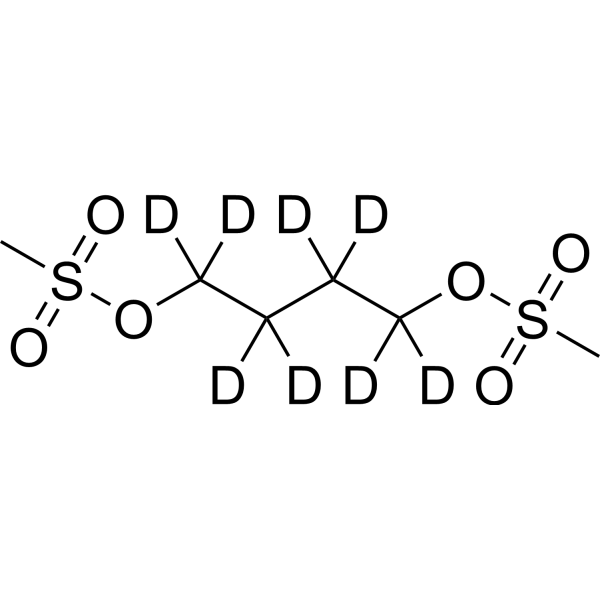
Busulfan-d8 is a deuterium labeled Busulfan. Busulfan is a potent alkylating antineoplastic agent. Busulfan causes DNA damage by cross-linking DNAs and DNA and proteins. Busulfan inhibits thioredoxin reductase. Busulfan induces apoptosis. Busulfan is an immunosuppressive and myeloablative chemotherapeutic agent .
loading...
    loading...
Cat. No.: HY-124325
CAS No.: 622795-76-0
Purity:  ≥98.0%
Research Areas:  

Cancer

PIP-199 is a selective inhibitor of RMI (RecQ-mediated genome instability protein) core complex/MM2 interaction, with an IC50 of 36 μM. PIP-199 can be used for the research of sensitizing resistant tumors to DNA crosslinking chemotherapeutics .
loading...
    loading...
Cat. No.: HY-139621
CAS No.: 2916559-62-9
Research Areas:  

Cancer

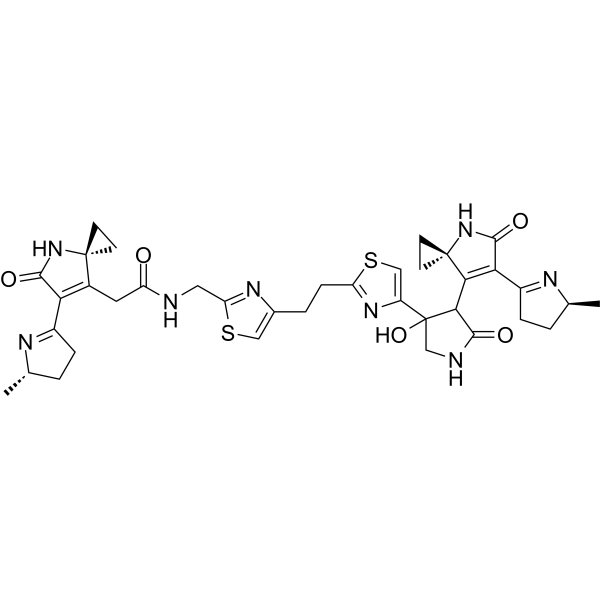
Colibactin 742 is a covalently binding DNA-damaging agent targeting DNA, with an IC50 of 5.2 μM against human cervical cancer cells (HeLa). Colibactin 742 covalently binds to DNA, forming interstrand crosslinks (ICLs), activating the Fanconi anemia DNA repair pathway, inducing γH2AX and FANCD2 foci formation and cell cycle arrest, while exacerbating mismatch repair deficiency (MMRd)-related mutations. Colibactin 742 can mimic the genotoxicity of natural Colibactin while avoiding its instability, and is mainly used in colorectal cancer (CRC) related research, including microbial tumorigenesis mechanisms, DNA damage repair pathways, and mutation signature analysis .
loading...
    loading...
Cat. No.: HY-W244398
CAS No.: 13239-97-9
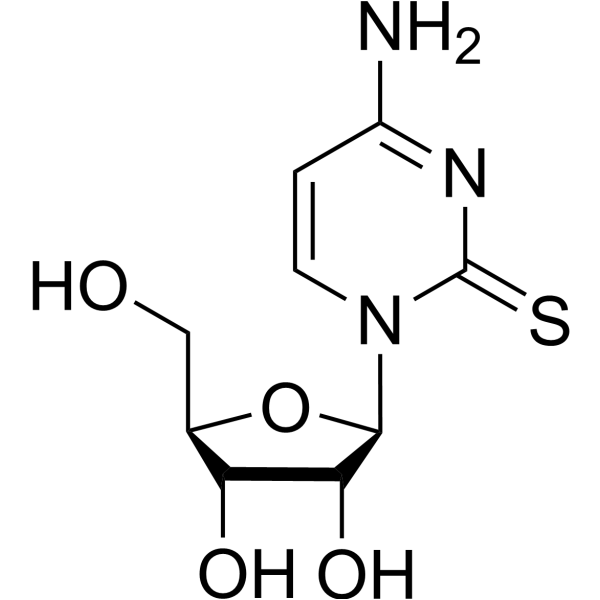
2-Thiocytidine is a natural thionucleoside in prokaryotic tRNA, which is biosynthesized under the catalysis of intracellular sulfur transferase systems and possesses multiple activities such as metal coordination and nucleic acid conformation regulation. 2-Thiocytidine forms stable Zn 2+ and Cd 2+ complexes via its (C2) S group, with partial involvement of N3; metal binding acidifies the deprotonation process of (C4) NH2. 2-Thiocytidine can be used in related research in various fields including nanotechnology and click chemistry for interstrand DNA crosslinking .
loading...
    loading...
Cat. No.: HY-171955
CAS No.: 315705-04-5
LXG6403 is an orally active and irreversible LOX inhibitor (IC50 = 1.3 μM). LXG6403 is ~3.5-fold more specific for LOX than LOXL2 and does not inhibit LOXL1. LXG6403 inhibits FAK signaling and induces ROS generation and DNA damage, leading to G1 arrest and apoptosis in chemoresistant triple-negative breast cancer (TNBC) cell lines. LXG6403 alters the extracellular matrix (ECM) and collagen structure, reducing collagen cross-linking and deposition, thereby increasing drug penetration and reducing tumor stiffness. LXG6403 overcomes Doxorubicin (HY-15142) resistance in chemoresistant TNBC PDX in vivo and can be used to study high-stiffness resistant tumors .
loading...
    loading...
Cat. No.: HY-B0245R
CAS No.: 55-98-1
Busulfan (Standard) is the analytical standard of Busulfan. This product is intended for research and analytical applications. Busulfan is a potent alkylating antineoplastic agent. Busulfan causes DNA damage by cross-linking DNAs and DNA and proteins. Busulfan inhibits thioredoxin reductase. Busulfan induces apoptosis. Busulfan is an immunosuppressive and myeloablative chemotherapeutic agent .
loading...
    loading...
Cat. No.: HY-16405
CAS No.: 851627-62-8
Research Areas:  

Cancer

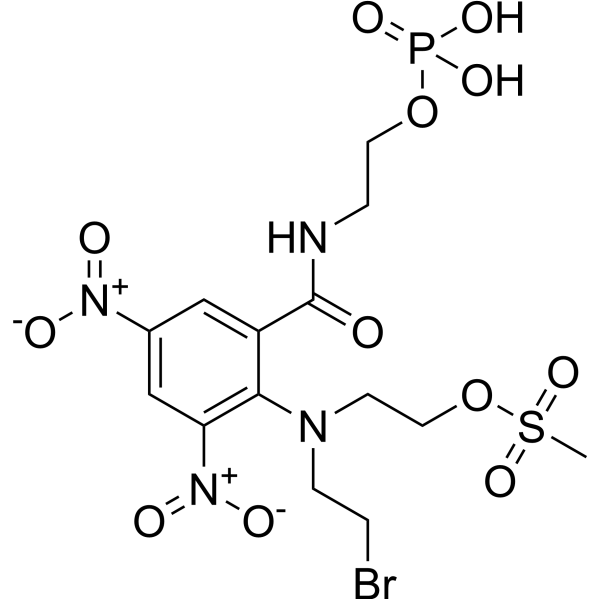
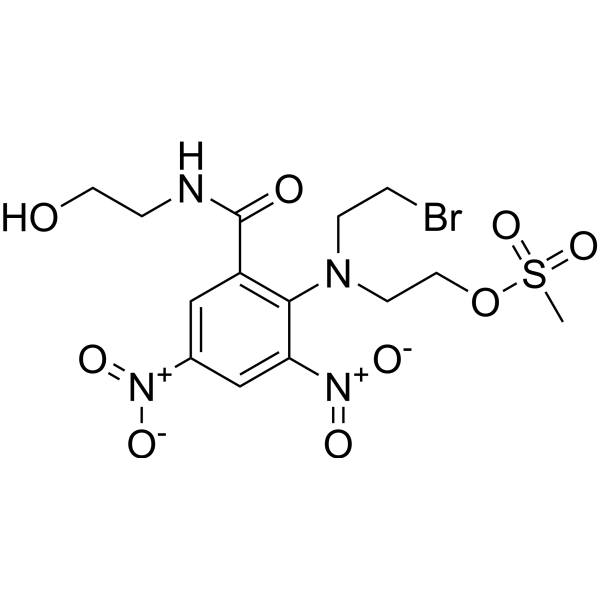
PR-104 is a selective hypoxia-activated DNA cross-linking agent and can be used for the research of multiple tumor xenograft models. PR-104, as a nitrogen mustard pre-proagent, is converted efficiently to the more lipophilic dinitrobenzamide mustards alcohol PR-104A .
loading...
    loading...
Cat. No.: HY-W781133
CAS No.: 106343-54-8
Synonyms: cis-[Pt(NH3)2N1-pyridineCl]Cl
Research Areas:  

Cancer

cDPCP (cis-[Pt(NH3)2(N1-pyridine)Cl]Cl) is a DNA crosslinking agent and also a substrate for OCT1 and OCT2. DPCP exhibits anticancer activity and can improve the survival rate of sarcoma-180 mice. cDPCP is suitable for the research of colorectal cancer and cancers with appropriate cation transporters .
loading...
    loading...
Cat. No.: HY-Y1155
CAS No.: 680-31-9
Synonyms: HMPA
Hexamethylphosphoramide is an orally active polar aprotic solvent, flame retardant additive, and carcinogen. Hexamethylphosphoramide undergoes cytochrome P-450-mediated N-demethylation to Formaldehyde. Hexamethylphosphoramide induces DNA-protein crosslinks. Hexamethylphosphoramide has been linked to nasal tumors (squamous cell carcinoma, adenoid squamous cell carcinoma), squamous metaplasia, rhinitis, tracheitis, and reversible and irreversible infertility .
loading...
    loading...
Cat. No.: HY-W075885
CAS No.: 14913-33-8
Synonyms: trans-platinumdiamminedichloride
trans-Platinum(II)diammine dichloride (trans-platinumdiamminedichloride) is a geometric isomer of Cisplatin (HY-17394). Trans-Platinum(II)diammine dichloride is a DNA cross-linking agent that induces significant DNA cross-link damage while exhibiting low cytotoxicity. Trans-Platinum(II)diammine dichloride is useful for studying DNA-protein cross-links .
loading...
    loading...
Cat. No.: HY-W100491
CAS No.: 935-92-2
Target:  

Drug Derivative

Research Areas:  

Cancer

Trimethylbenzoquinone (Compound 5) is a methylated benzoquinone. Trimethylbenzoquinone exhibits moderate cytotoxicity against K562 cells, with its IC50 being 0.75 μM. Trimethylbenzoquinone is completely unable to cause inter-strand DNA cross-linking and cannot alkylate DNA guanines. Trimethylbenzoquinone can be used to study the relationship between the nitrogen heterocyclic group and DNA cross-linking .
loading...
    loading...
Cat. No.: HY-D2353
CAS No.: 756525-96-9
Target:  

DNA/RNA Synthesis

Research Areas:  

Cancer

Biotin-PEG3-benzophenone is biotin-labeled Benzophenone (HY-Y0546). Benzophenone is an endogenous metabolite and a photosensitizer that has been implicated in photosensitive damage to DNA. Benzophenone causes nucleobase oxidation, formation of cyclobutane-pyrimidine dimers, single-strand breaks, DNA-protein cross-links or abasic sites, different pathologies that may occur in nucleosides, oligonucleotides or DNA .
loading...
    loading...
Cat. No.: HY-W341499
CAS No.: 4494-26-2
Target:  

Endogenous Metabolite

Research Areas:  

Others

5-Formyl-2'-deoxyuridine is a product formed when the 5-methyl group of thymine in DNA undergoes oxidation due to exposure to gamma radiation or certain chemical agents. Serving as a biomarker of oxidative DNA damage, 5-formyl-2'-deoxyuridine is employed in investigations of DNA damage and repair mechanisms. Additionally, 5-Formyl-2'-deoxyuridine can be used in studies involving chemically crosslinking with peptides derived from the RecA protein .
loading...
    loading...
Cat. No.: HY-164496
CAS No.: 1161826-19-2
Target:  

DNA/RNA Synthesis

Research Areas:  

Neurological Disease Cancer

KL-50 is an orally active N3-(2-fluoroethyl) imidazotetrazine DNA alkylating agent with selectivity for MGMT-deficient cells. KL-50 introduces a 2-fluoroethyl group at the O6 position of guanine, forming O6-(2-fluoroethyl) guanine (O6FEtG) lesions and further generating DNA interstrand crosslinks (ICLs). KL-50 induces DNA double-strand breaks, activates ATR-CHK1 and ATM-CHK2 DNA damage responses, and causes cell cycle arrest and micronucleus formation. KL-50 can be used for glioblastoma and DNA damage response research .
loading...
    loading...
Cat. No.: HY-14572
CAS No.: 680199-06-8
Synonyms: SN 27858
Research Areas:  

Cancer

PR-104A (SN 27858) is the alcohol metabolite of phosphate proagent PR-104. PR-104A is a hypoxia-selective DNA cross-linking agent/DNA-damaging agent and cytotoxin. Antitumor Activity . PR-104A is metabolized under hypoxia by the 1-electron NADPH:cytochrome P450 oxidoreductase. PR-104A can be used for the research of relapsed/refractory T-lineage acute lymphoblastic leukemia (T-ALL) .
loading...
    loading...

