
655 Results for "

cleavage

" in MedChemExpress (MCE) Product Catalog:
Products (655)

655 Results for "cleavage" in MCE Product Catalog:

8
8 Cited Publications
Cat. No.: HY-13526
CAS No.: 209984-56-5
Purity:  99.59%
Synonyms: Dibenzazepine; DBZ
Target:  

Notch γ-secretase

Research Areas:  

Cancer

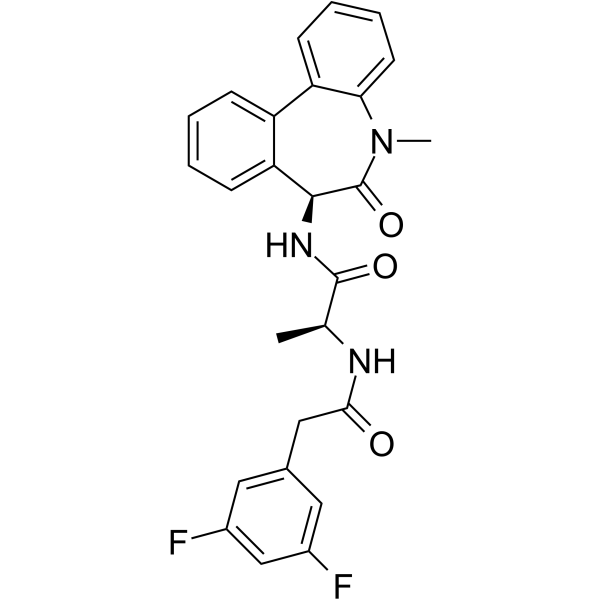
YO-01027 (Dibenzazepine;DBZ) is a potent γ-secretase inhibitor with IC50 values of 2.92 and 2.64 nM for Notch and APPL cleavage, respectively.
loading...
    loading...
8
8 Cited Publications
Cat. No.: HY-P80623
Synonyms: CASP3; CPP32; Caspase-3; CASP-3; Apopain; Cysteine protease CPP32; CPP-32; Protein Yama; SREBP cleavage activity 1; SCA-1

Host:  

Rabbit

Application:  

WB, ICC/IF

Reactivity:  

Human, Mouse, Rat

loading...
    loading...
7
7 Cited Publications
Cat. No.: HY-P7862
Purity:  ≥ 95%, as determined by reducing SDS-PAGE.
Synonyms: C3; Complement Component 3; Complement C3; C3a Anaphylatoxin; CPAMD1; Prepro-C3; ARMD9; Epididymis Secretory Sperm Binding Protein Li 62p; C3a; Acylation-Stimulating Protein cleavage Product; C3b; HEL-S-62p; C3 And PZP-Like Alpha-2-Macroglobulin Domain-Containing Protein 1; AHUS5; Complement Component C3a; ASP; Complement Component C3b
Species:  
Human
Source:  
E. coli
loading...
    loading...
6
6 Cited Publications
Cat. No.: HY-P701341
Purity:  ≥ 90%, as determined by reducing SDS-PAGE.
Synonyms: CASP3; Protein Yama; Caspase 3; Caspase-3; Apopain; CASP-3; CPP32; CPP-32; CPP32B; SCA-1; Caspase 3, Apoptosis-Related Cysteine Peptidase; Yama; Caspase 3, Apoptosis-Related Cysteine Protease; PARP cleavage Protease; SREBP cleavage Activity 1; Procaspase3
Species:  
Human
Source:  
E. coli
loading...
    loading...
6
6 Cited Publications
Cat. No.: HY-P80046
Synonyms: CPP32, CASP3, Caspase-3, CASP-3, Apopain, Cysteine protease CPP32, Protein Yama, SREBP cleavage activity 1, CPP-32, SCA-1

Host:  

Rabbit

Application:  

WB, ICC/IF, IHC-P, IP, FC

Reactivity:  

Human

loading...
    loading...
6
6 Cited Publications
Cat. No.: HY-13326
CAS No.: 1097917-15-1
Purity:  99.88%
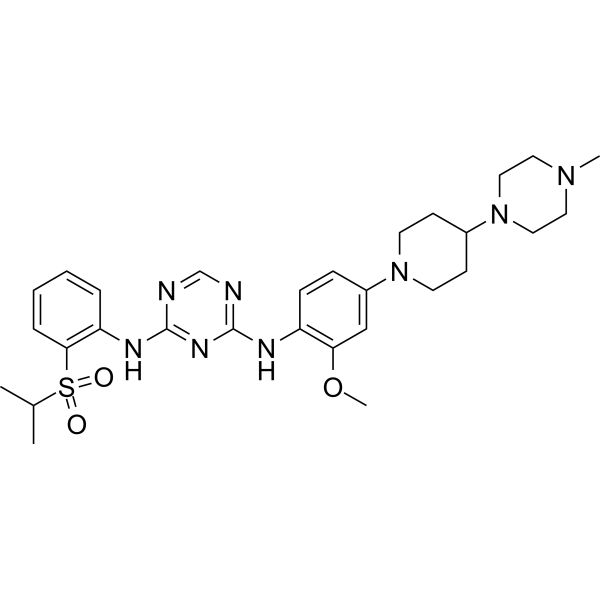
ASP3026 is a selective and orally active inhibitor of anaplastic lymphoma kinase (ALK). ASP3026 is a selective and oral active anaplastic lymphoma kinase (ALK) inhibitor with a IC50 value of 3.5 nM. ASP3026 can inhibit the phosphorylation of IGF-1R, STAT3, AKT and JNK proteins, and induce the cleavage of caspase 3 and PARP. It also inhibited ROS and ACK. ASP3026 can be used in anti-tumor research .
loading...
    loading...
6
6 Cited Publications
Cat. No.: HY-110133
CAS No.: 188791-09-5
Purity:  98.64%
Target:  

Interleukin Related

Research Areas:  

Inflammation/Immunology

JTE-607, a highly selective inflammatory cytokine synthesis inhibitor, protects from endotoxin shock in mice. JTE-607 inhibits inflammatory cytokine production, including TNF-α, IL-1β, IL-6, IL-8 and IL-10, from LPS-stimulated human PBMCs, with IC50s of 11, 5.9, 8.8, 7.3 and 9.1 nM, respectively . Cleavage and Polyadenylation Specificity Factor 3 (CPSF3) is the target of JTE-607 .
loading...
    loading...
6
6 Cited Publications
Cat. No.: HY-19369
CAS No.: 292632-98-5
Synonyms: L-685,458
Target:  

γ-secretase Apoptosis

Research Areas:  

Neurological Disease Cancer

L-685458 is a potent transition state analog (TSA) γ-secretase inhibitor (GSI). L-685458 inhibits amyloid β-protein precursor γ-secretase activity with IC50 of 17 nM, shows greater than 50-100-fold selectivity over other aspartyl proteases tested. L685458 inhibits γ-secretase-mediated cleavage of APP-C99 and Notch-100 with IC50s of 301.3 nM and 351.3 nM, respectively. L-685458 can be used for the research of alzheimer’s disease (AD) and cancers .
loading...
    loading...
5
5 Cited Publications
Cat. No.: HY-101985
CAS No.: 292870-53-2
Purity:  99.75%
BV02 is a 14-3-3 inhibitor and an antibacterial agent. BV02 enhances the cleavage of PARP and caspase-3. BV02 induces Apoptosis, Autophagy, and enhances Akt activation. BV02 has anti-B. melitensis infection and epilepsy-promoting effects. BV02 can also be used in colitis research.
loading...
    loading...
5
5 Cited Publications
Cat. No.: HY-N0499
CAS No.: 528-58-5
Synonyms: IdB 1027
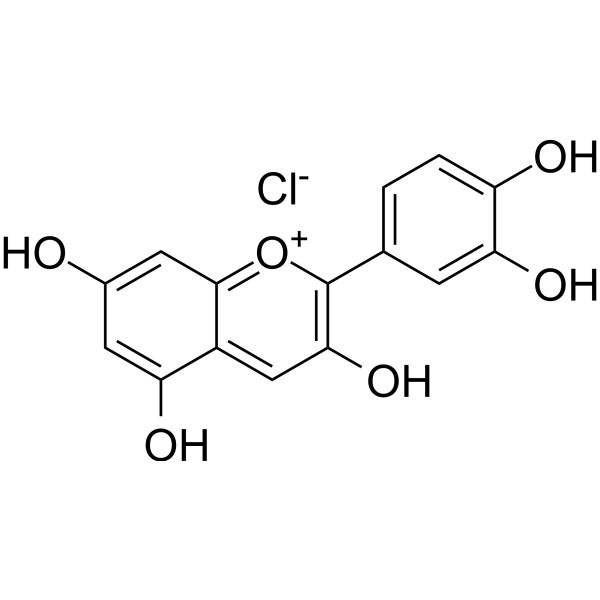
Cyanidin Chloride (IdB 1027) is an orally active antioxidant and enzyme inhibitor. Cyanidin Chloride has IC50 values of 90 μM and 60 μM against PGHS-1 and PGHS-2, respectively. Cyanidin Chloride exhibits excellent antioxidant and anti-inflammatory activities, scavenges free radicals, inhibits lipid peroxidation, and protects DNA from cleavage. Cyanidin Chloride can be used in the research of inflammatory diseases .
loading...
    loading...
5
5 Cited Publications
Cat. No.: HY-120072
CAS No.: 1352879-65-2
Purity:  98.89%
Synonyms: PF-74
Target:  

HIV

Research Areas:  

Infection

PF-3450074 (PF-74) is a specifical inhibitor of HIV-1 capsid protein (CA) and displays a broad-spectrum inhibition of HIV isolates with submicromolar potency (EC50=8-640 nM). PF-3450074 (PF-74) acts at an early stage of HIV-1 infection, inhibits viral replication by directly competing with the binding of CPSF6 and NUP153, and blocks the uncoating, assembly, and the reverse transcription steps of the viral life cycle . CPSF6: nuclear host factors cleavage and polyadenylation specific factor 6; NUP153: nucleoporin 153.
loading...
    loading...
4
4 Cited Publications
Cat. No.: HY-P9914
CAS No.: 219685-50-4
Synonyms: Anti-Human C5, Humanized Antibody; h5G1.1
Eculizumab (Anti-Human C5, Humanized Antibody) is a long-acting humanized monoclonal antibody targeted against complement C5. Eculizumab inhibits the cleavage of C5 into C5a and C5b and inhibits deployment of the terminal complement system including the formation of membrane attack complex (MAC). Eculizumab prevents anti-ganglioside antibody-mediated neuropathy in mice. Eculizumab can be used in hemolysis studies .
loading...
    loading...
4
4 Cited Publications
Cat. No.: HY-125913
CAS No.: 618-39-3
Target:  

Ser/Thr Protease

Research Areas:  

Inflammation/Immunology

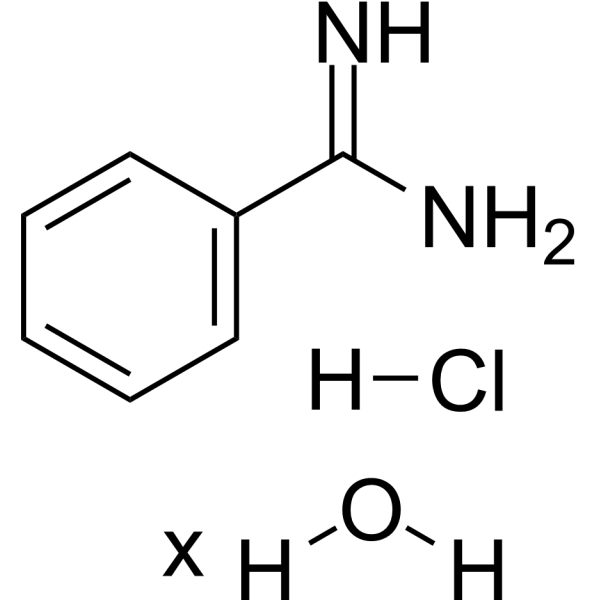
Benzamidine is a competitive protease inhibitor that blocks the hydrolytic cleavage of glucagon by plasmin, trypsin and thrombin. Benzamidine effectively inhibits the degradation of glucagon by relevant proteases during the collection, storage and analysis of human plasma and blood samples. During in vivo metabolism, Benzamidine undergoes N-hydroxylation and produces multiple metabolites, exhibiting characteristics of delayed excretion or biphasic elimination. Benzamidine only induces slight single-strand DNA breaks at high concentrations and shows no significant genotoxic potential overall. Benzamidine may interfere with the detection of some glucagon antisera, but does not affect key antigen-antibody affinity at specific concentrations. Benzamidine can be used as a stabilizer in glucagon radioimmunoassays to ensure the accuracy and recovery rate of detection results .
loading...
    loading...
4
4 Cited Publications
Cat. No.: HY-W018781
CAS No.: 1670-14-0
Target:  

Ser/Thr Protease

Research Areas:  

Cancer

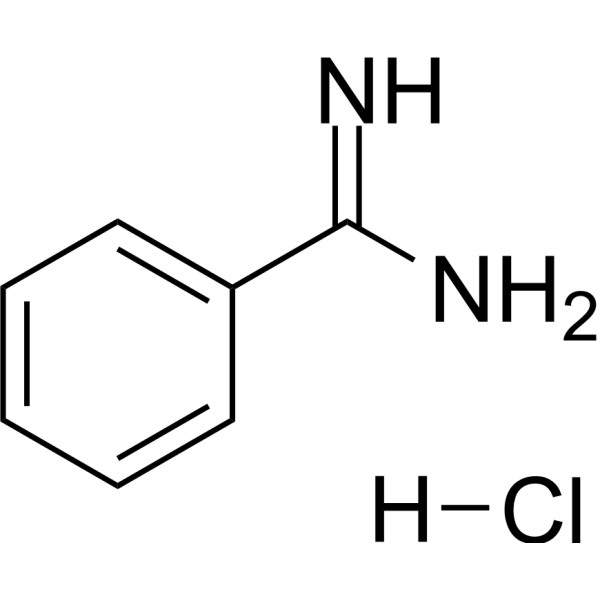
Benzamidine hydrochloride is a competitive protease inhibitor that blocks the hydrolytic cleavage of glucagon by plasmin, trypsin and thrombin. Benzamidine hydrochloride effectively inhibits the degradation of glucagon by relevant proteases during the collection, storage and analysis of human plasma and blood samples. During in vivo metabolism, Benzamidine hydrochloride undergoes N-hydroxylation and produces multiple metabolites, exhibiting characteristics of delayed excretion or biphasic elimination. Benzamidine hydrochloride only induces slight single-strand DNA breaks at high concentrations and shows no significant genotoxic potential overall. Benzamidine hydrochloride may interfere with the detection of some glucagon antisera, but does not affect key antigen-antibody affinity at specific concentrations. Benzamidine hydrochloride can be used as a stabilizer in glucagon radioimmunoassays to ensure the accuracy and recovery rate of detection results .
loading...
    loading...
4
4 Cited Publications
Cat. No.: HY-122542A
CAS No.: 82188-90-7
Synonyms: Pebac; D-Phenylalanyl-prolyl-arginyl Chloromethyl Ketone; D-Phe-Pro-Arg-CH2Cl
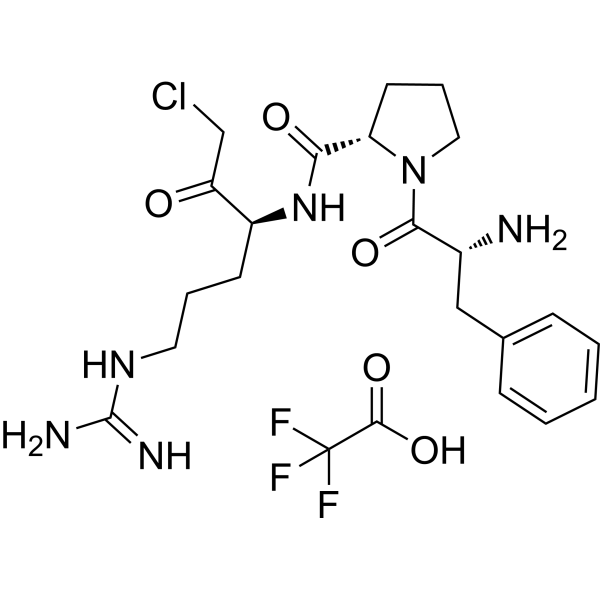
PPACK dihydrochloride is a potent, peptidic inhibitor targeting thrombin and granzyme GZMK. PPACK dihydrochloride specifically blocks the activities of thrombin and GZMK, thereby inhibiting thrombin-mediated PAR-1 cleavage, as well as downstream inflammatory and procoagulant signaling pathways. Through stabilizing IκB proteins, blocking NF-κB activation and reducing systemic levels of proinflammatory/procoagulant biomarkers, PPACK dihydrochloride exerts multiple effects including anti-inflammatory, antithrombotic, barrier repair, and inhibition of atherosclerotic plaque progression. PPACK dihydrochloride binds to platelets without interference from kininogen, effectively limiting acute thrombus growth and reducing eosinophil infiltration and goblet cell hyperplasia in asthma models. PPACK dihydrochloride is an important tool molecule for investigating the mechanisms of atherosclerosis, asthma and related thromboinflammatory diseases .
loading...
    loading...
4
4 Cited Publications
Cat. No.: HY-W087937
CAS No.: 206752-36-5
Synonyms: Benzenecarboximidamide hydrochloride hydrate
Benzamidine (Benzenecarboximidamide) hydrochloride hydrate is a competitive protease inhibitor that blocks the hydrolytic cleavage of glucagon by plasmin, trypsin and thrombin. Benzamidine hydrochloride hydrate effectively inhibits the degradation of glucagon by relevant proteases during the collection, storage and analysis of human plasma and blood samples. During in vivo metabolism, Benzamidine hydrochloride hydrate undergoes N-hydroxylation and produces multiple metabolites, exhibiting characteristics of delayed excretion or biphasic elimination. Benzamidine hydrochloride hydrate only induces slight single-strand DNA breaks at high concentrations and shows no significant genotoxic potential overall. Benzamidine hydrochloride hydrate may interfere with the detection of some glucagon antisera, but does not affect key antigen-antibody affinity at specific concentrations. Benzamidine hydrochloride hydrate can be used as a stabilizer in glucagon radioimmunoassays to ensure the accuracy and recovery rate of detection results .
loading...
    loading...
4
4 Cited Publications
Cat. No.: HY-122542B
CAS No.: 157379-44-7
Purity:  99.28%
PPACK TFA is a potent, peptidic inhibitor targeting thrombin and granzyme GZMK. PPACK TFA specifically blocks the activities of thrombin and GZMK, thereby inhibiting thrombin-mediated PAR-1 cleavage, as well as downstream inflammatory and procoagulant signaling pathways. Through stabilizing IκB proteins, blocking NF-κB activation and reducing systemic levels of proinflammatory/procoagulant biomarkers, PPACK TFA exerts multiple effects including anti-inflammatory, antithrombotic, barrier repair, and inhibition of atherosclerotic plaque progression. PPACK TFA binds to platelets without interference from kininogen, effectively limiting acute thrombus growth and reducing eosinophil infiltration and goblet cell hyperplasia in asthma models. PPACK TFA is an important tool molecule for investigating the mechanisms of atherosclerosis, asthma and related thromboinflammatory diseases .
loading...
    loading...
4
4 Cited Publications
Cat. No.: HY-N2445
CAS No.: 37308-75-1
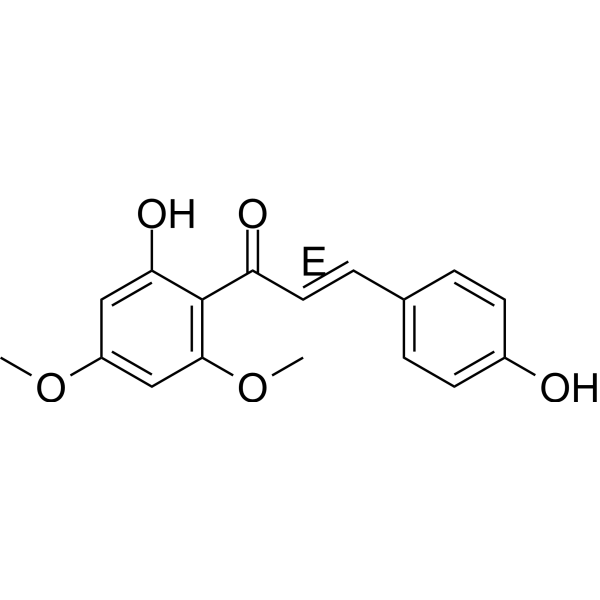
Flavokawain C is an orally active natural chalcone. Flavokawain C inhibits the proliferation of various cancer cells. Flavokawain C upregulates GADD153 in cancer cells, inhibits the phosphorylation of Akt and JNK, suppresses early ERK phosphorylation, activates late ERK phosphorylation, activates caspase related subtypes, induces PARP-1 cleavage, causes upregulation of p21 and p27, downregulation of mutant p53 and anti-apoptotic IAP proteins, elevates intracellular ROS levels, reduces SOD activity, and induces apoptosis. Flavokawain C downregulates FABP4, induces autophagy in cancer cells, and activates the AMPK/mTOR pathway . Flavokawain C decreases the expression of glycolysis-related proteins GLUT1 and HK2, and inhibits glycolysis in nasopharyngeal carcinoma cells. Flavokawain C inhibits the activation of the EGFR/PI3K/Akt/mTOR signaling pathway and reduces the expression of HSP90B1. Flavokawain C inhibits angiogenesis by decreasing the expression of angiogenic proteins Ang-1 and VEGF in human umbilical vein endothelial cells. Flavokawain C increases γ-H2AX levels in cells, inhibits the phosphorylation of FAK, PI3K and AKT in cells, and induces DNA damage in cells. Flavokawain C exerts anti-tumor activity in multiple tumor xenograft mouse models. Flavokawain C is applicable to research related to colorectal cancer, colon adenocarcinoma, nephroblastoma, nasopharyngeal carcinoma and liver cancer .
loading...
    loading...
3
3 Cited Publications
Cat. No.: HY-114174
CAS No.: 220701-06-4
Purity:  99.13%
Target:  

Amyloid-β

Research Areas:  

Neurological Disease

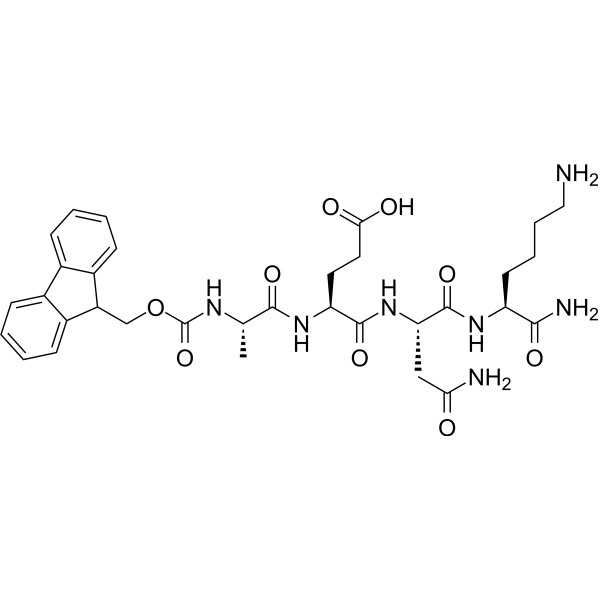
Fmoc-Ala-Glu-Asn-Lys-NH2 is a selective asparagine endopeptidase (AEP) inhibitor peptide and suppresses amyloid precursor protein (APP) cleavage. AEP, a pH-controlled cysteine proteinase, is activated during ageing and mediates APP proteolytic processing .
loading...
    loading...
3
3 Cited Publications
Cat. No.: HY-13945
CAS No.: 362003-83-6
Purity:  99.73%
Target:  

Apoptosis

Research Areas:  

Cancer

NVP 231 is a potent, specific, and reversible ceramide kinase (CerK) inhibitor(IC50=12 nM) that competitively inhibits binding of ceramide to CerK . NVP 231 induces cell apoptosis by increasing DNA fragmentation and caspase-3 and caspase-9 cleavage .
loading...
    loading...

