
117 Results for "

fresh pulp

" in MedChemExpress (MCE) Product Catalog:
Products (117)

117 Results for "fresh pulp" in MCE Product Catalog:

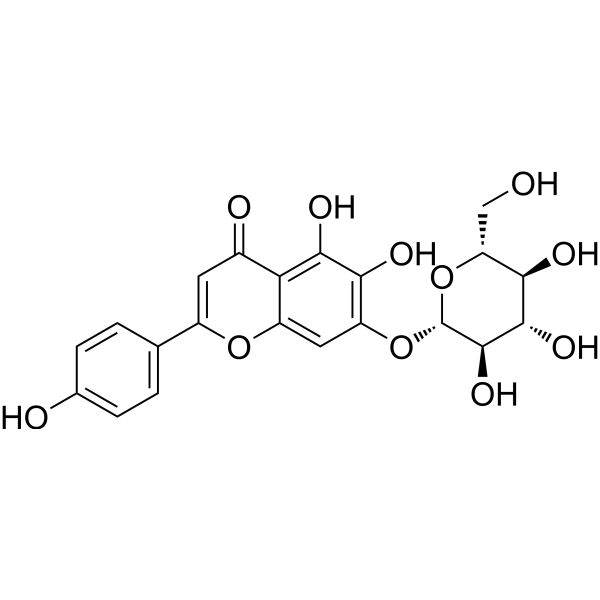
Cat. No.: HY-N9925
CAS No.: 26046-94-6
Synonyms: Scutellarein-7-O-glucoside
Plantaginin is a glycoside can be isolated from fresh leaves of Plantago asiatica L. .
loading...
    loading...
Cat. No.: HY-B0941A
CAS No.: 1214-39-7
Synonyms: Benzyladenine, suitable for plant cell culture; 6-BAP, suitable for plant cell culture; N6-Benzyladenine, suitable for plant cell culture
6-Benzylaminopurine,suitable for plant cell culture is a cytokinin that induces plant growth and development by stimulating cell division, and prolongs the freshness of green vegetables through inhibiting respiratory kinases .
loading...
    loading...
Cat. No.: HY-W019901B
CAS No.: 7778-18-9
Synonyms: Gypsum ustum (97%)
Anhydrous calcium sulfate (97%) serves as an oil-based drilling fluid additive and an osteogenic material. Anhydrous calcium sulfate (97%) increases the plastic viscosity, yield point, apparent viscosity and gel strength of oil-based drilling fluids. Anhydrous calcium sulfate (97%) upregulates the expression of bone-related genes FOSL1, RUNX2 and SPP1. Anhydrous calcium sulfate (97%) significantly affects the behavior of dental pulp stem cells, enhancing their proliferation, differentiation and matrix deposition .
loading...
    loading...
Cat. No.: HY-W111375
CAS No.: 1576-87-0
(E)-Pent-2-enal has a pungent fruity odor. This compound is commonly used in the flavor and fragrance industry because of its strong aroma, often described as fresh and green. Furthermore, (E)-Pent-2-enal can be used as an intermediate in the synthesis of various organic compounds, including pharmaceuticals and agrochemicals. Its unique chemical properties make it an important ingredient in many commercial products, including perfumes, air fresheners and cleaners.
loading...
    loading...
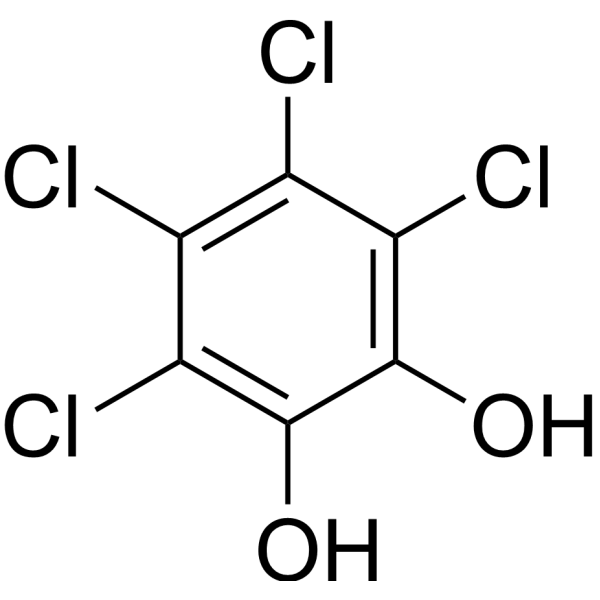
Cat. No.: HY-W006000
CAS No.: 1198-55-6
Target:  

Drug Metabolite

Research Areas:  

Others

Tetrachlorocatechol is a metabolite of pentachlorophenol. Tetrachlorocatechol is one of the most toxic chlorinated catechol produced by the chlorobleaching of pulp and frequently found in the kraft pulp mill effluents .
loading...
    loading...
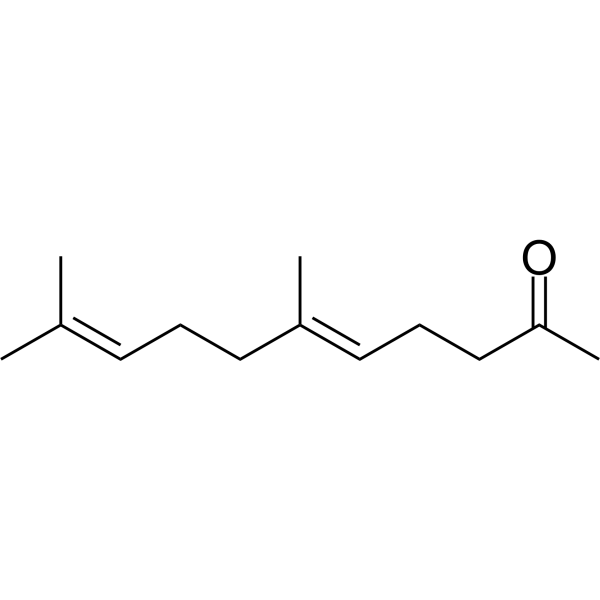
Cat. No.: HY-N8446
CAS No.: 689-67-8
Synonyms: 6,10-Dimethylundeca-5,9-dien-2-one; Dihydropseudoionone
(E/Z)-Geranylacetone is an organic compound commonly used as an ingredient in fragrances and fragrances. It can be used in some products such as perfumes, soaps and cosmetics, and can bring a fresh aromatic smell. In addition, the compound is used in some foods and pharmaceuticals, for example in candy, chewing gum and herbal remedies.
loading...
    loading...
Cat. No.: HY-B0356R
CAS No.: 85721-33-1
Synonyms: Bay-09867 (Standard)
Ciprofloxacin (Standard) is the analytical standard of Ciprofloxacin. This product is intended for research and analytical applications. Ciprofloxacin (Bay-09867) is an orally active, blood-brain barrier permeable fluoroquinolone antibacterial agent. Ciprofloxacin exerts bactericidal effects primarily by inhibiting topoisomerase II and IV. Ciprofloxacin inhibits the proliferation of human dental pulp stem cells and chondrocytes from young rats, and also activates the Akt signaling pathway and upregulates markers such as β-catenin and Nanog to maintain the morphological characteristics of stem cells. Ciprofloxacin induces significant neurotoxicity and tissue damage, including reducing serotonin and glutathione levels in the brain, inducing oxidative stress and depression-like behaviors, and causing articular cartilage damage. Ciprofloxacin can be applied to research related to infections of necrotic young permanent teeth and neurotoxicity .
loading...
    loading...
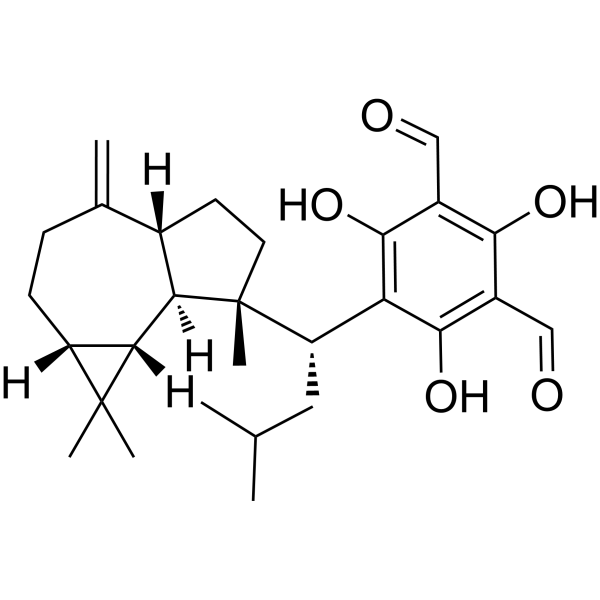
Cat. No.: HY-N3344
CAS No.: 142628-53-3
Macrocarpal C can be isolated from the 95 % ethanol extract of fresh leaves of E. globulus. Macrocarpal C inhibits the growth of T. mentagrophytes via an increase in the permeability of the fungal membrane. Macrocarpal C increases the production of intracellular ROS and? induces apoptosis as a consequence of DNA fragmentation .
loading...
    loading...
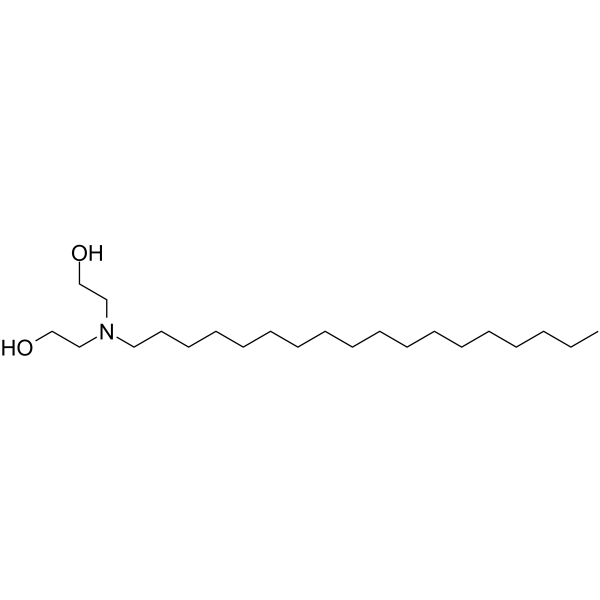
Cat. No.: HY-129197
CAS No.: 10213-78-2
Target:  

Bacterial

Research Areas:  

Infection

Stearyldiethanolamine is a typical amine-based surfactant used in development for antibacterial freshness-keeping film or antibacterial nonwoven fabric. Stearyldiethanolamine can be used as a collector towards the surfaces of quartz and malachite, to recover efficiently malachite from quartz. Stearyldiethanolamine can disrupt bacterial cell membrane with the alkyl chain, leading to irreversible damage and cell death .
loading...
    loading...
Cat. No.: HY-W019711R
CAS No.: 14371-10-9
trans-Cinnamaldehyde (Standard) is the analytical standard of trans-Cinnamaldehyde. This product is intended for research and analytical applications. trans-Cinnamaldehyde can be used to prepare highly polyfunctionalized furan ring by reaction of alkyl isocyanides with dialkyl acetylenedicarboxylate . trans-Cinnamaldehyde can be used to synthesize trans-cinnamaldehyde -β-cyclodextrin complex, an antimicrobial edible coating that increases the shelf life of fresh-cut fruits .
loading...
    loading...
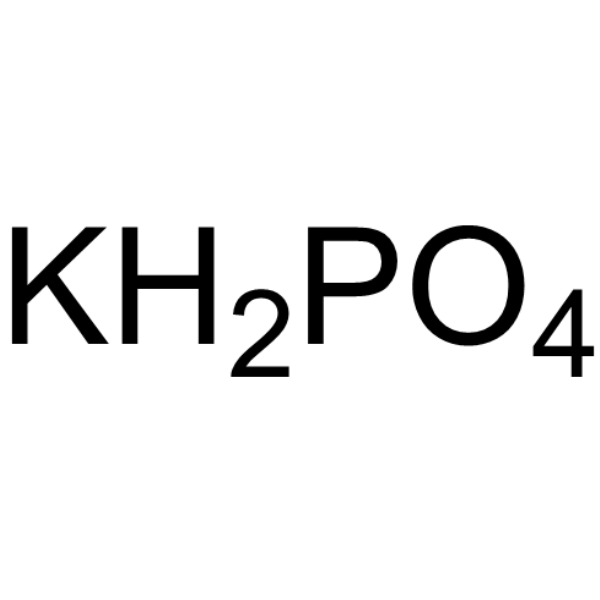
Cat. No.: HY-Y0332G
CAS No.: 7778-77-0
Synonyms: Potassium phosphate monobasic, for molecular biology
Potassium dihydrogen phosphate, for molecular biology (Potassium phosphate monobasic, for molecular biology) is a potassium salt. Potassium dihydrogen phosphate, for molecular biology activates NF-κB. Potassium dihydrogen phosphate, for molecular biology upregulates the expression of dental/osteogenic markers (OCN, DSP/DSPP, OSX, RUNX2, ALP) and enhances the mineralization capacity of human periodontal ligament stem cells. Potassium dihydrogen phosphate, for molecular biology promotes the proliferation of human periodontal ligament stem cells in logarithmic growth phase. Potassium dihydrogen phosphate, for molecular biology promotes the growth of somatic embryos of Dendrobium Sonia, increases leaf number, leaf length and fresh weight of tissue-cultured seedlings. Potassium dihydrogen phosphate, for molecular biology is applicable to periodontal disease-related research .
loading...
    loading...
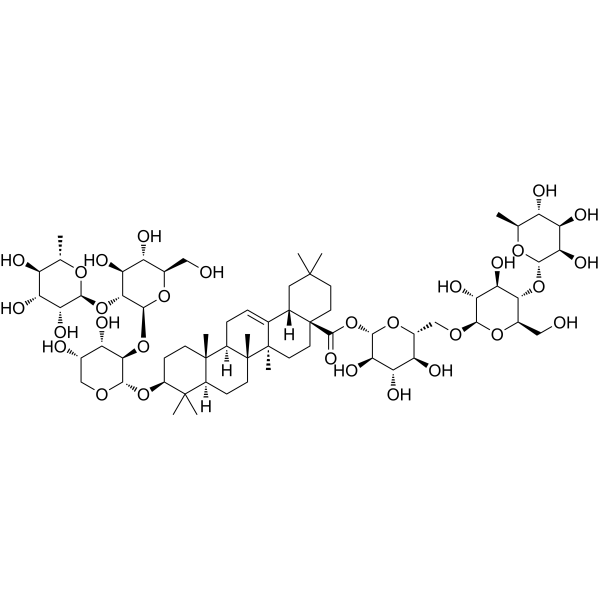
Cat. No.: HY-107242
CAS No.: 124961-61-1
Purity:  99.76%
Raddeanoside R8 is a saponin that can be isolated from fresh rhizoma of Anemone raddeana Regel .
loading...
    loading...
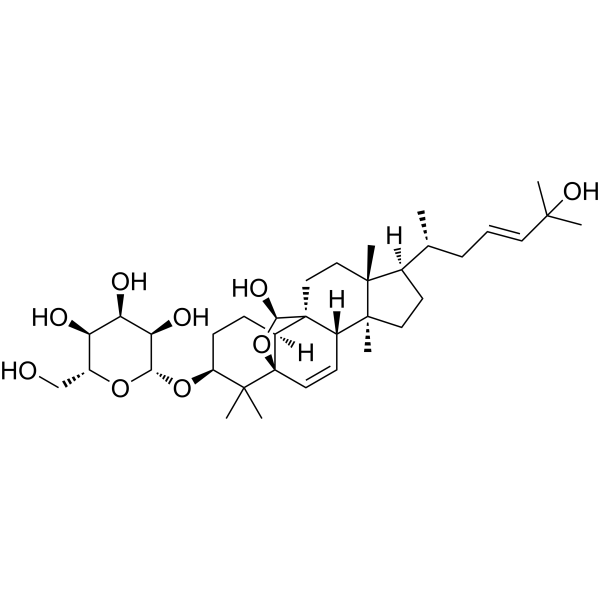
Cat. No.: HY-N8410
CAS No.: 1011726-62-7
Momordicoside P is a cucurbitane-type triterpenoid saponin. Momordicoside P can be isolated from the fresh fruits of Momordica charantia .
loading...
    loading...
Cat. No.: HY-115707
CAS No.: 126281-90-1
Synonyms: 16:0/0:0/18:3-DG; DG(16:0/0:0/18:3); 1-Palmitin-3-Linolenin
Target:  

Others

Research Areas:  

Others

1-Palmitoyl-3-Linolenoyl-rac-glycerol (16:0/0:0/18:3-DG) is a diacylglycerol containing palmitic acid (HY-N0830) and α-linolenic acid (HY-N0728) at the sn-1 and sn-3 positions, respectively. It has been found in the peel and pulp of unripe Dwarf Cavendish bananas.
loading...
    loading...
Cat. No.: HY-W010607R
CAS No.: 928-96-1
Synonyms: (Z)-3-Hexen-1-ol (Standard)
cis-3-Hexen-1-ol (Standard) is the analytical standard of cis-3-Hexen-1-ol. This product is intended for research and analytical applications. cis-3-Hexen-1-ol ((Z)-3-Hexen-1-ol) is a green grassy smelling compound found in many fresh fruits and vegetables. cis-3-Hexen-1-ol is widely used as an added flavor in processed food to provide a fresh green quality. cis-3-Hexen-1-ol is an attractant to various insects .
loading...
    loading...
Cat. No.: HY-130288
CAS No.: 90780-53-3
Synonyms: (±)13-HDoHE; 13-hydroxy Docosahexaenoic acid; (±)13-HDoHE
Target:  

Lipoxygenase

Research Areas:  

Inflammation/Immunology

(±)13-HDHA is an autoxidation product of docosahexaenoic acid (DHA) in vitro. It is also produced from incubations of DHA in rat liver, brain, and intestinal microsomes. Fresh water hydra is shown to metabolize DHA to 13(R)-HDHA, presumably via the 11R-lipoxygenase activity. (±)13-HDHA is a potential marker of oxidative stress in brain and retina where DHA is an abundant polyunsaturated fatty acid.
loading...
    loading...
Cat. No.: HY-109014
CAS No.: 911208-73-6
Purity:  99.82%
Synonyms: CMX-157
Research Areas:  

Infection

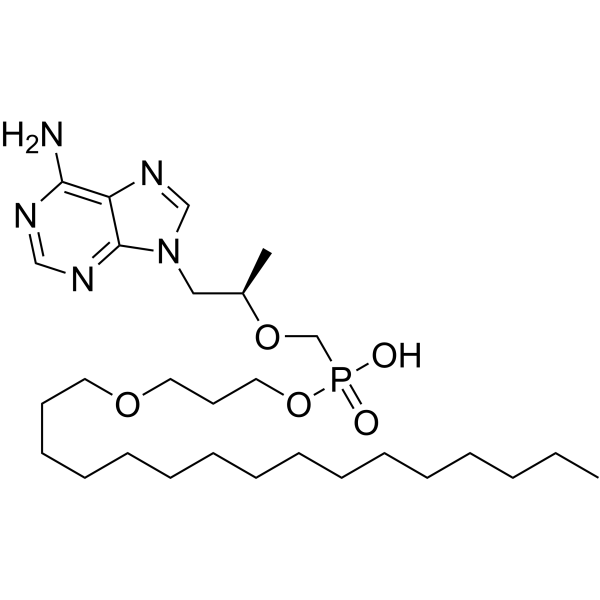
Tenofovir exalidex (CMX157) is a lipid conjugate of the acyclic nucleotide analog Tenofovir with activity against both wild-type and antiretroviral drug-resistant HIV strains, including multidrug nucleoside/nucleotide analog-resistant viruses. Tenofovir exalidex is active against all major subtypes of HIV-1 and HIV-2 in fresh human PBMCs and against all HIV-1 strains evaluated in monocyte-derived macrophages, with EC50s ranging between 0.2 and 7.2 nM. CMX157 is orally available and has no apparent toxicity. Tenofovir exalidex also shows antiviral activity against HBV .
loading...
    loading...
Cat. No.: HY-W011334
CAS No.: 2380-27-0
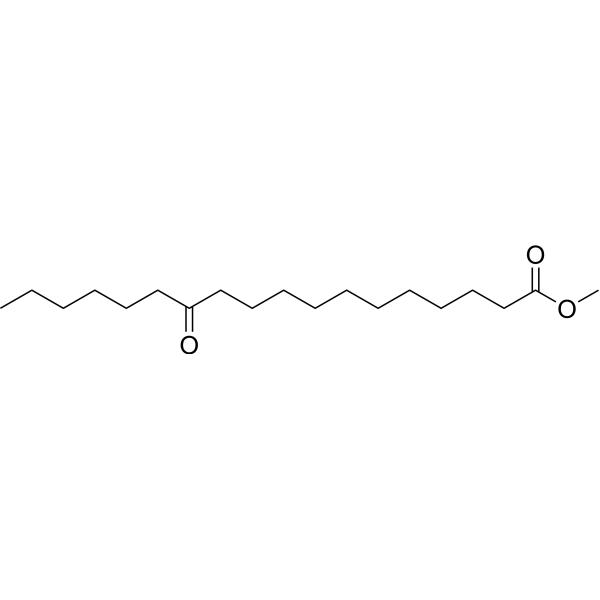
Methyl 12-oxooctadecanoate is a fatty acid that can be isolated from the pulp of Livistona decipiens (Palmae), which has anti-hyperlipidemic and anti-ulcer activities .
loading...
    loading...
Cat. No.: HY-133604
CAS No.: 16766-29-3
Target:  

Drug Intermediate

Research Areas:  

Others

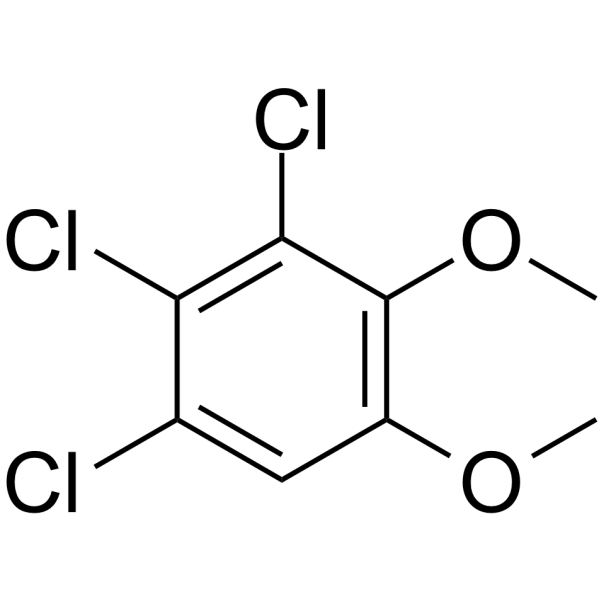
3,4,5-Trichloroveratrole is one of the biodegradation products of bacterial O-methylation of Tri- and Tetra chloroguaiacols. The Tri- and Tetra chloroguaiacols are formed during bleaching of wood pulp in the paper manufacturing industry .
loading...
    loading...
Cat. No.: HY-N15577
CAS No.: 1859979-00-2
Antiproliferative agent-69 (Compound 1) is a prenylated kaempferol derivative found in the fresh bud’s fur of Platanus acerifolia. Antiproliferative agent-69 shows significant antiproliferative effects against human breast cancer cells (MCF-7) and human hepatocellular carcinoma cells (Hep-G2) with IC50 values of 38.2 μM and 39.5 μM, respectively. Antiproliferative agent-69 is promising for research of breast cancer and liver cancer .
loading...
    loading...

