76 Results for "

proteasomal pathway

" in MedChemExpress (MCE) Product Catalog:
Products (76)

76 Results for "proteasomal pathway" in MCE Product Catalog:

Cat. No.: HY-159728
PROTAC PRMT3 degrader 1 is a selective PRMT3 PROTAC degrader with a DC50 of 2.566 μM. PROTAC PRMT3 degrader 1 forms a ternary complex with MDM2 E3 ubiquitin ligase to induce proteasomal and neddylation-dependent degradation of PRMT3. PROTAC PRMT3 degrader 1 activates intrinsic apoptosis, endoplasmic reticulum stress signaling pathways. PROTAC PRMT3 degrader 1 downregulates E2F, MYC, oxidative phosphorylation pathways. PROTAC PRMT3 degrader 1 reduces cellular asymmetric dimethylarginine (ADMA) levels. PROTAC PRMT3 degrader 1 inhibits acute leukemia cell growth. PROTAC PRMT3 degrader 1 acts with glycolysis inhibitor 2-DG to reduce ATP production, induce intrinsic apoptosis, drive synergistic antiproliferative effects. PROTAC PRMT3 degrader 1 can be used for the research of acute leukemia .
loading...
    loading...
Cat. No.: HY-163962
CAS No.: 2451070-32-7
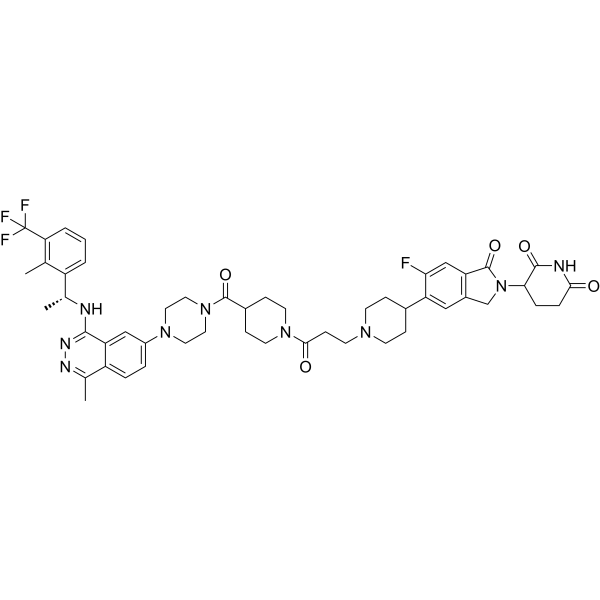
L18I is a Bruton's tyrosine kinase (BTK) PROTAC degrader that targets wild-type and BTK C481, and recruits the cereblon E3 ligase to mediate proteasomal degradation. L18I regulates the BCR, TLR, FcγR and NLRP3 inflammasome signaling pathways, inhibits the phosphorylation of PLCγ-2, ERK1/2 and p38, and reduces the levels of B cell activation markers CD25, CD69 and CD86. L18I downregulates the NF-κB, TNF and TLR signaling pathways, reduces the production of pro-inflammatory cytokines, and decreases immune cell infiltration and immune complex deposition. L18I inhibits the proliferation of BTK-expressing lymphoma cells, induces tumor regression in xenograft models, and exhibits synergistic activity when combined with inhibitors of SYK, PI3K or Lyn. L18I can be used in research related to lupus, diffuse alveolar hemorrhage and B-cell lymphoma .
loading...
    loading...
Cat. No.: HY-145737A
Purity:  99.38%
Target:  

PROTACs SOS1 Ras PERK

Research Areas:  

Cancer

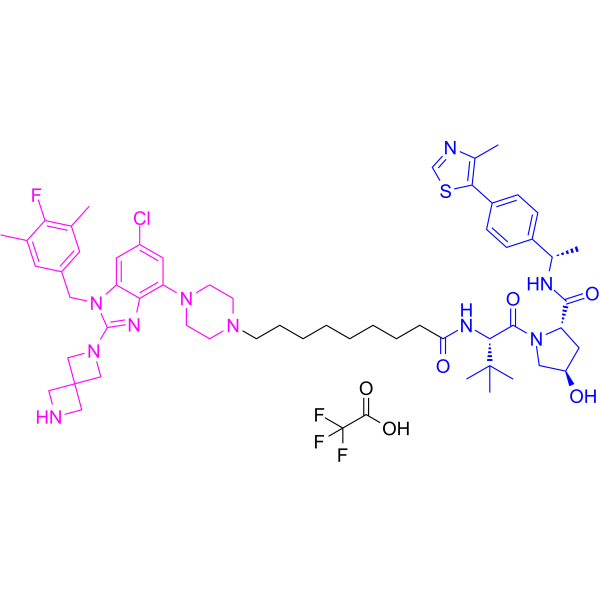
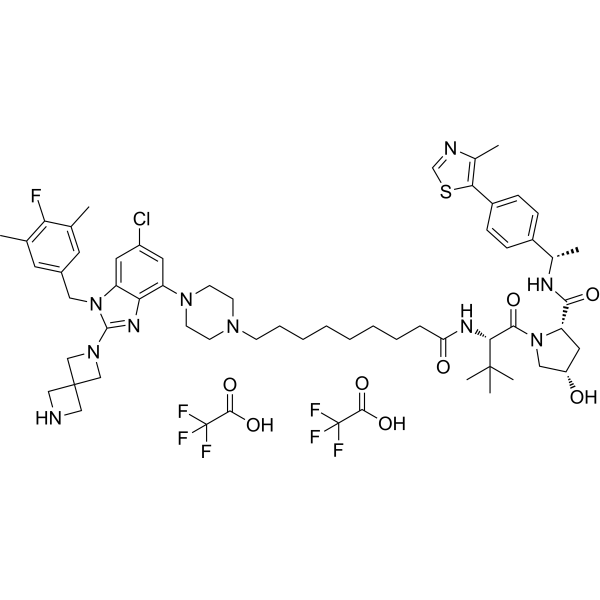
PROTAC SOS1 degrader-1 TFA is a degrader of SOS1 PROTAC, with a DC50 of 98.4 nM and a Kd value of 44 nM. PROTAC SOS1 degrader-1 TFA induces the formation of a ternary complex with SOS1 and the VCB E3 ubiquitin ligase complex, thereby promoting the ubiquitination and proteasomal degradation of SOS1. PROTAC SOS1 degrader-1 TFA reduces KRAS-GTP levels, inhibits the phosphorylation of ERK in the RAS-RAF-MEK-ERK pathway, and suppresses the proliferation of cancer cells carrying KRAS mutations. PROTAC SOS1 degrader-1 TFA inhibits tumor growth in mouse xenograft models. PROTAC SOS1 degrader-1 TFA can be used for the research of KRAS-driven cancers .
loading...
    loading...
Cat. No.: HY-161101
GSPT1 degrader-19 is a molecular glue degrader targeting GSPT1, IKZF1 and IKZF3, with DC50 values of 0.88 nM, 11.54 nM and 13.84 nM, respectively, in MM.1S multiple myeloma cells. GSPT1 degrader-19 induces cereblon (CRBN)-dependent ubiquitination and proteasomal degradation of IKZF1, IKZF3, GSPT1 and GSPT2, and also reduces ZFP91 protein levels via a CRBN-dependent pathway. GSPT1 degrader-19 exerts antiproliferative effects on cancer cells, induces global proteomic changes including downregulation of novel substrates, and exhibits activity against multiple myeloma and leukemia cell lines. GSPT1 degrader-19 can be used in research related to multiple myeloma and leukemia .
loading...
    loading...
Cat. No.: HY-168593
CAS No.: 3119090-33-1
Research Areas:  

Cancer

PROTAC KDM3 degrader-1 is a KDM3A/KDM3B PROTAC degrader with DC50 values of 13.73 nM and 172.6 nM in SW480 cells, respectively. PROTAC KDM3 degrader-1 induces cereblon-dependent proteasomal degradation of KDM3A and KDM3B. PROTAC KDM3 degrader-1 inhibits the oncogenic Wnt/β-catenin signaling pathway. PROTAC KDM3 degrader-1 eliminates colorectal cancer stem cells, suppresses their self-renewal, and blocks colony formation of colorectal cancer cells. PROTAC KDM3 degrader-1 inhibits tumor growth in a colorectal cancer xenograft mouse model. PROTAC KDM3 degrader-1 can be used for the research of colorectal cancer .
loading...
    loading...
Cat. No.: HY-172770
CAS No.: 3113750-79-8
Research Areas:  

Cancer

KMG-1068 is a molecular glue degrader that induces proteasomal degradation of GSPT1 and GSPT2 with DC50 values of 126.7 nM and 42.2 nM, respectively. KMG-1068 binds to the C-terminal IMiD-binding site of CRBN, forms ternary complexes with GSPT1 and GSPT2, and mediates proteasomal degradation of target proteins via the CRL4 ubiquitination pathway. KMG-1068 is applicable to research related to acute myeloid leukemia .
loading...
    loading...
Cat. No.: HY-161233A
Target:  

PROTACs SOS1 ERK p38 MAPK

Research Areas:  

Cancer

BTX-6654 formate is a SOS1 PROTAC degrader. BTX-6654 formate induces ubiquitination and degradation of SOS1 via the proteasomal pathway by bridging SOS1 with the E3 ligase CRBN to form a ternary complex, thereby blocking KRAS activation and downregulating the MAPK signaling pathway (pERK/pS6), and ultimately inhibiting tumor growth. BTX-6654 formate can be used in research on various cancers driven by KRAS mutations .
loading...
    loading...
Cat. No.: HY-149391
CAS No.: 2767204-39-5
PROTAC BTK Degrader-6 is an orally active PROTAC-based BTK degrader with a DC50 of 3.18 nM. PROTAC BTK Degrader-6 induces BTK degradation via proteasomal degradation, ubiquitination, and CRBN ligase recruitment pathways. PROTAC BTK Degrader-6 inhibits NF-κB activation, mRNA expression of IL-1β and IL-6, as well as the secretion of pro-inflammatory cytokines. PROTAC BTK Degrader-6 reduces inflammatory responses in a zymosan-induced mouse model of peritonitis. PROTAC BTK Degrader-6 can be used in peritonitis-related research .
loading...
    loading...
Cat. No.: HY-118998
CAS No.: 1603845-42-6
Target:  

HyT EGFR ERK Akt

Research Areas:  

Cancer

TX2-121-1 is a bifunctional hydrophobic tag Her3 degrader and also a Her3 inhibitor with an IC50 of 49 nM. TX2-121-1 covalently binds to Cys721 of Her3, induces Her3 degradation via the Hsp70/Hsp90-assisted proteasomal pathway, interferes with the heterodimerization of Her3 with Her2/c-Met, and attenuates downstream Erk/Akt signaling, thereby inhibiting Her3-dependent cancer cell growth. TX2-121-1 can be used for the research of non-small cell lung cancer, ovarian cancer and Her3-driven breast cancer .
loading...
    loading...
Cat. No.: HY-161233
Target:  

PROTACs SOS1 ERK p38 MAPK

Research Areas:  

Cancer

BTX-6654 is a SOS1 PROTAC degrader. BTX-6654 induces ubiquitination and degradation of SOS1 via the proteasomal pathway by bridging SOS1 with the E3 ligase CRBN to form a ternary complex, thereby blocking KRAS activation and downregulating the MAPK signaling pathway (pERK/pS6), and ultimately inhibiting tumor growth. BTX-6654 can be used in research on various cancers driven by KRAS mutations .
loading...
    loading...
Cat. No.: HY-144323
CAS No.: 2913177-53-2
Target:  

PROTACs Ras PERK

Research Areas:  

Cancer

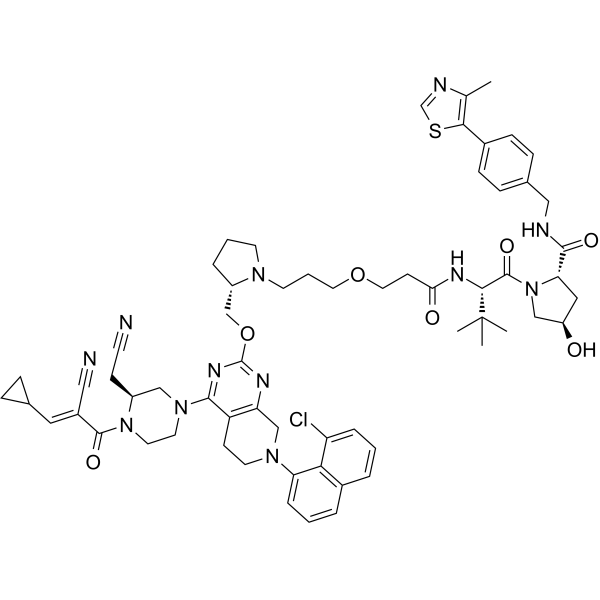
YF135 is a KRAS G12C PROTAC degrader that mediates proteasomal degradation of KRAS G12C in a reversible manner. In KRAS G12C-mutant H358 and H23 lung cancer cells, the DC50 values of YF135 for KRAS degradation are 3.61 μM and 4.53 μM, respectively. YF135 attenuates the pERK signaling pathway in cancer cells. YF135 is applicable for lung cancer-related research .
loading...
    loading...
Cat. No.: HY-164906
CAS No.: 2488892-07-3
Target:  

PROTACs CDK

Research Areas:  

Cancer

TMX-2138 is a CDK PROTAC degrader, with IC50 values against different targets as follows: CDK1 (IC50 = 8.7 nM), CDK2 (IC50 = 10.9 nM), CDK5 (IC50 = 7.0 nM), CDK4 (IC50 = 901.0 nM), CDK6 (IC50 = 465.0 nM), CDK7 (IC50 = 286.0 nM), and CDK9 (IC50 = 25.7 nM). TMX-2138 promotes the ubiquitination of CDK and induces its degradation via the proteasomal pathway. TMX-2138 can be used in ovarian cancer research .
loading...
    loading...
Cat. No.: HY-179578
CAS No.: 1262219-89-5
SU212 is a podophyllotoxin-derived ENO1 inhibitor and AMPK activator. SU212 can selectively induce oxidative phosphorylation, reduce glycolysis activity and glucose uptake in tumor cells, and directly bind to ENO1 without affecting these pathways in normal cells. SU212 induces apoptosis and promotes ENO1 degradation via proteasomal and autophagic pathways without inhibiting the catalytic activity. SU212 leads to mitotic arrest and apoptosis in TNBC (triple-negative breast cancer) cells by activating AMPK, demonstrating potent anti-tumor activity in vitro. SU212 inhibits tumor growth and metastasis in syngeneic, xenograft, and diabetic mouse models, exhibiting an excellent safety profile. SU212 can be used in research on t TNBC, diabetes, and fatty liver disease .
loading...
    loading...
Cat. No.: HY-145281
CAS No.: 2376137-31-2
Target:  

PROTACs Akt PI3K mTOR

Research Areas:  

Cancer

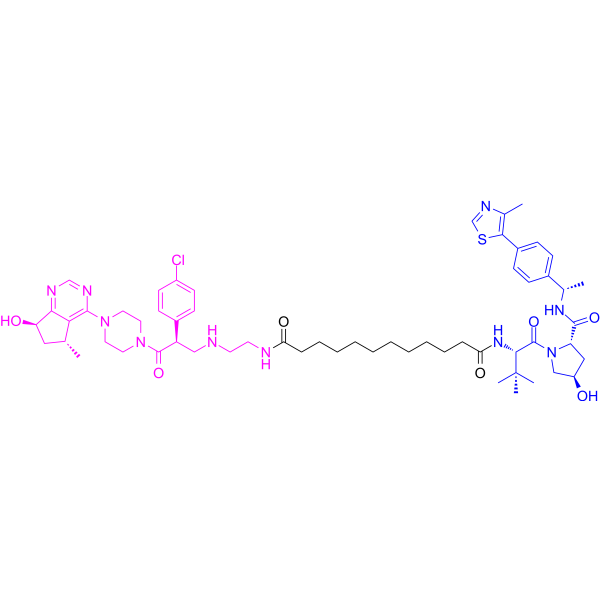
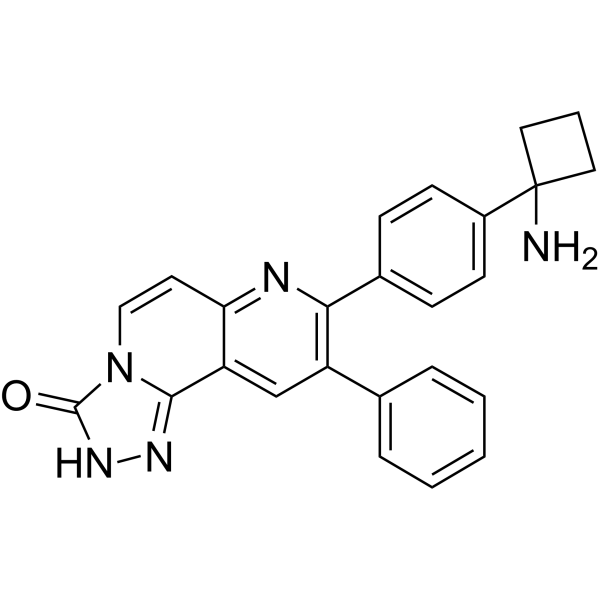
MS98 is a AKT PROTAC degrader with a DC50 of 78 nM in BT474 cells. MS98 binds to purified AKT1, AKT2 and AKT3 isoforms with Kd values of 4 nM, 140 nM and 8 nM, respectively. MS98 recruits the VHL E3 ligase to induce polyubiquitination and proteasomal degradation of AKT. MS98 inhibits downstream signal transduction of the PI3K/AKT/m-TOR pathway. MS98 suppresses cancer cell proliferation. MS98 can be used for the research of prostate cancer and breast cancer .
loading...
    loading...
Cat. No.: HY-145816
CAS No.: 2669785-77-5
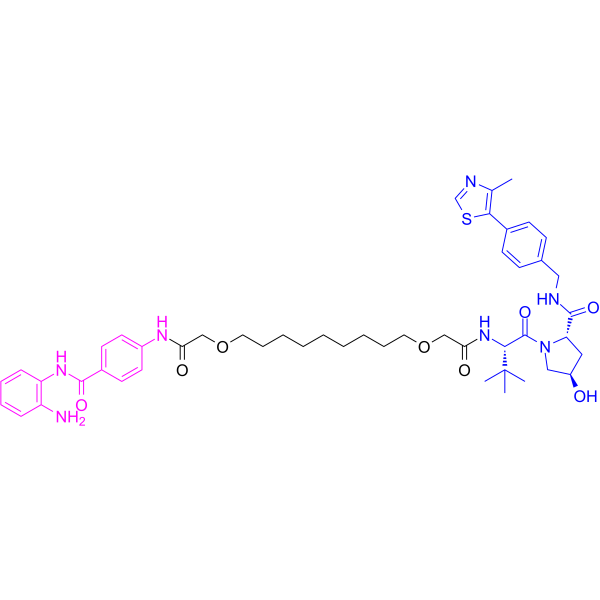
JPS016 is a class I histone deacetylase (HDAC) PROTAC inhibitor. JPS016 recruits the VHL E3 ligase (Ligands for E3 Ligase) to mediate the ubiquitination and proteasomal degradation of HDAC1, HDAC2 and HDAC3. JPS016 reduces the viability of colon cancer cells and induces Apoptosis. JPS016 activates the PINK1/Parkin mitochondrial Autophagy pathway, enhances cardiomyocyte viability, alleviates mitochondrial damage, and reduces mitochondrial ROS production in cells. JPS016 is applicable to research related to colon cancer and sepsis cardiomyopathy .
loading...
    loading...
Cat. No.: HY-169327
CAS No.: 2415160-21-1
Research Areas:  

Cancer

MD-265 is a PROTAC degrader targeting MDM2, which activates p53 in cancer cells carrying wild-type p53. MD-265 induces MDM2 degradation by recruiting the CRL4-CRBN ligase complex via the ubiquitination and proteasomal degradation pathway. MD-265 upregulates p53 target genes, induces apoptosis, reduces Mcl-1 levels, increases caspase-3 cleavage, and inhibits colony formation of wild-type p53 leukemia stem cells. MD-265 can be used in research related to leukemia and acute myeloid leukemia .
loading...
    loading...
Cat. No.: HY-145737
CAS No.: 2913185-35-8
Target:  

PROTACs SOS1 Ras PERK

Research Areas:  

Cancer

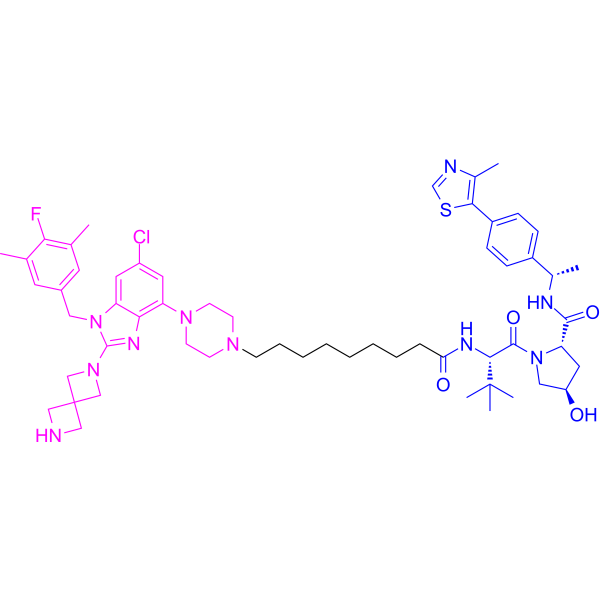
PROTAC SOS1 degrader-1 is a degrader of SOS1 PROTAC, with a DC50 of 98.4 nM and a Kd value of 44 nM. PROTAC SOS1 degrader-1 induces the formation of a ternary complex with SOS1 and the VCB E3 ubiquitin ligase complex, thereby promoting the ubiquitination and proteasomal degradation of SOS1. PROTAC SOS1 degrader-1 reduces KRAS-GTP levels, inhibits the phosphorylation of ERK in the RAS-RAF-MEK-ERK pathway, and suppresses the proliferation of cancer cells carrying KRAS mutations. PROTAC SOS1 degrader-1 inhibits tumor growth in mouse xenograft models. PROTAC SOS1 degrader-1 can be used for the research of KRAS-driven cancers .
loading...
    loading...
Cat. No.: HY-10357
CAS No.: 1032349-93-1
MK-2206 free base is an orally active pan-AKT inhibitor, with IC50 values of 8 nM, 12 nM and 65 nM against AKT1, AKT2 and AKT3, respectively. MK-2206 free base inhibits the Akt/mTOR signaling pathway and reduces the levels of downstream GSK3β and Mcl-1 via proteasomal degradation. MK-2206 free base induces G1-phase cell cycle arrest, apoptosis, epithelial-mesenchymal transition, fibroblast activation and extracellular matrix deposition. MK-2206 free base causes transient hyperglycemia and hyperinsulinemia in animals. MK-2206 free base can be used in research related to solid tumors, renal fibrosis and hypercholesterolemia .
loading...
    loading...
Cat. No.: HY-144657A
Purity:  98.09%
Target:  

PROTACs SOS1 Drug Isomer Ras

Research Areas:  

Cancer

(4S)-PROTAC SOS1 degrader-1 diTFA is a stereoisomer of PROTAC SOS1 degrader-1 (HY-145737). PROTAC SOS1 degrader-1 (Compound 9d) is a degrader of SOS1 PROTAC, with a DC50 of 98.4 nM and a Kd value of 44 nM. PROTAC SOS1 degrader-1 induces the formation of a ternary complex with SOS1 and the VCB E3 ubiquitin ligase complex, thereby promoting the ubiquitination and proteasomal degradation of SOS1. PROTAC SOS1 degrader-1 reduces KRAS-GTP levels, inhibits the phosphorylation of ERK in the RAS-RAF-MEK-ERK pathway, and suppresses the proliferation of cancer cells carrying KRAS mutations. PROTAC SOS1 degrader-1 inhibits tumor growth in mouse xenograft models. PROTAC SOS1 degrader-1 can be used for the research of KRAS-driven cancers .
loading...
    loading...
Cat. No.: HY-177569
NVS1.1 is an orally active, blood-brain barrier-penetrant eRF1 degrader. NVS1.1 induces ubiquitination of eRF1 at Lys279, mediates proteasomal degradation via the E3 ubiquitin ligases RNF14 and RNF25 as well as the translational stress sensor GCN1, traps eRF1 at the ribosomal A-site, inhibits translation termination and triggers ribosome collision. As a readthrough enhancer, NVS1.1 enables near-cognate tRNA incorporation at premature termination codons by reducing intracellular eRF1 levels. NVS1.1 activates ribosome-associated quality control pathways via ribosome collision, including ubiquitination of small subunit ribosomal proteins. NVS1.1 restores functional full-length CFTR and IDUA proteins and reduces glycosaminoglycan accumulation in relevant models. NVS1.1 can be used in the research of cystic fibrosis and Hurler syndrome (mucopolysaccharidosis type I, MPS I) .
loading...
    loading...

