457 Results for "

O2

" in MedChemExpress (MCE) Product Catalog:
Products (457)

457 Results for "O2" in MCE Product Catalog:

Cat. No.: HY-15914
CAS No.: 54970-72-8
Synonyms: DCHBS
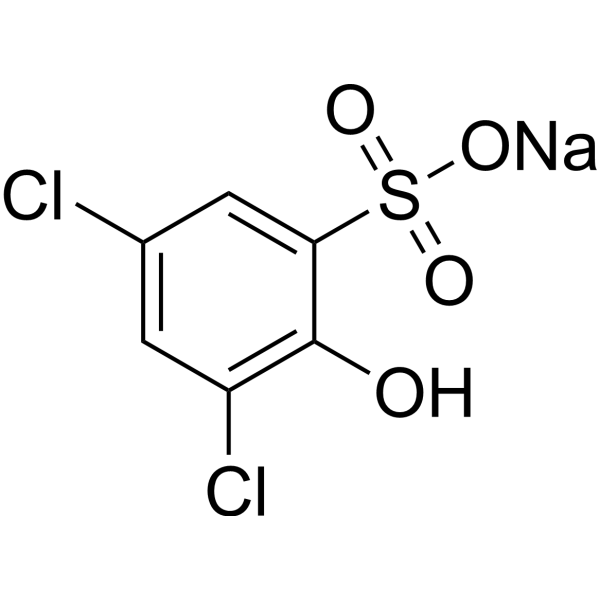
DHBS (3, 5-dichloro-2-hydroxybenzenesulfonate) is used in conjunction with 4-aminoantipyrine (4-AAP) (HY-W100990) and hydrogen peroxide (H2O2) for chromogenic quantitation of peroxidase in coupled enzymatic reactions. Component of Trinder reagent for use with peroxidase to measure generation of hydrogen peroxide in automated systems [2] .
loading...
    loading...
Cat. No.: HY-178139
CAS No.: 3087062-50-5
Target:  

Monoamine Oxidase

Research Areas:  

Cardiovascular Disease

hMAO-B-IN-12 (Compound 6E) is a highly selective human monoamine oxidase B (hMAO-B) inhibitor (IC50=17.7 nM). hMAO-B-IN-12 reduces oxidative stress/lipid metabolism-derived products (e.g., H2O2). hMAO-B-IN-12 is promising for research of atherosclerosis .
loading...
    loading...
Cat. No.: HY-W455884
CAS No.: 26281-43-6
Research Areas:  

Others

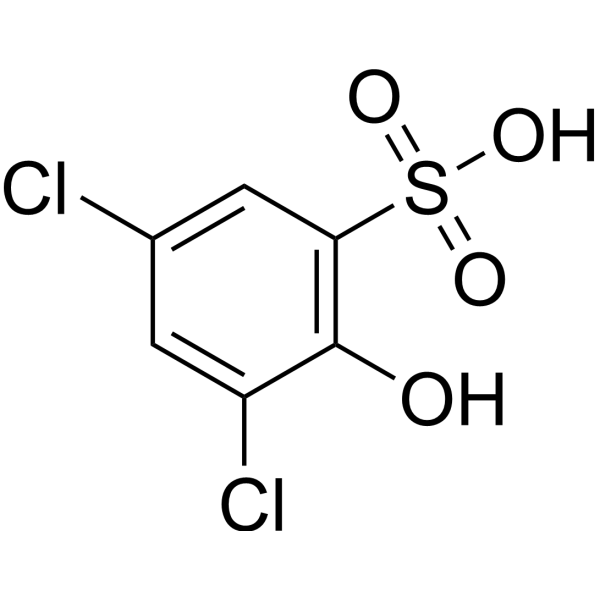
3,5-Dichloro-2-hydroxybenzenesulfonic acid is used in conjunction with Ampyrone (HY-B1398) (4-AAP) and hydrogen peroxide (H2O2) for chromogenic quantification of peroxidase in coupled enzymatic reactions. 3,5-Dichloro-2-hydroxybenzenesulfonic acid is used to measure hydrogen peroxide production in conjunction with peroxidase .
loading...
    loading...
Cat. No.: HY-N3287
CAS No.: 83011-43-2
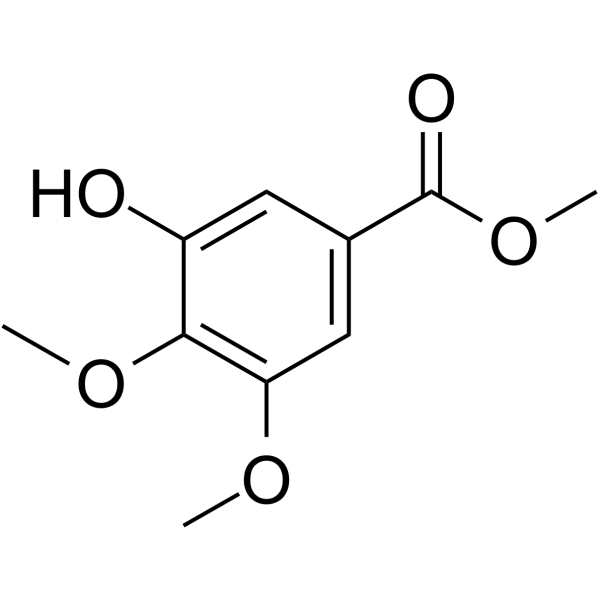
Methyl 3-hydroxy-4,5-dimethoxybenzoate is a gallic acid derivant that can be isolated from myricaria Laxiflora. Methyl 3-hydroxy-4,5-dimethoxybenzoate shows obvious antimicrobial activities. Methyl 3-hydroxy-4,5-dimethoxybenzoate shows fairly active for oxidation resistance in the presence of H2O2 .
loading...
    loading...
Cat. No.: HY-P2848B
Target:  

Xanthine Oxidase

Research Areas:  

Metabolic Disease

Cholesterol Oxidase, Streptomyces sp. (EC 1.1.3.6) is a monomeric flavoprotein containing FAD that catalyzes the first step in cholesterol catabolism. This bifunctional enzyme oxidizes cholesterol to cholest-5-en-3-one in an FAD-requiring step, which is then isomerized to cholest-4-en-3-one with the release of H2O2.
loading...
    loading...
Cat. No.: HY-Y1810
CAS No.: 112-36-7
Diethylene glycol diethyl ether is a glycol dimethyl ether-structured ether electrolyte solvent used in non-aqueous lithium-air batteries. As a reaction promoter, Diethylene glycol diethyl ether facilitates reversible oxygen reduction and oxygen evolution reactions on porous carbon electrodes without the need for a catalyst, and supports the formation and complete decomposition of crystalline Li2O2 during the cycling of lithium-air batteries .
loading...
    loading...
Cat. No.: HY-159515
PBE-AMF is a prodrug that activates H2O2 with anticancer activity. PBE-AMF impedes tumor proliferation by inhibiting DNA synthesis, reducing ATP levels, inducing apoptosis, and arresting the cell cycle. PBE-AMF potently and selectively inhibits the proliferation of MDA-MB-231 cells (IC50=6.4 μM) while sparing non-cancerous MCF-10A cells .
loading...
    loading...
Cat. No.: HY-181176
DEMAMP is an antioxidant. DEMAMP exhibits scavenging effects on DPPH and H2O2 free radicals, with IC50 values of 0.60 and 0.48 mg/mL, respectively. Molecular docking simulations show that DEMAMP potently inhibits NADPH oxidase and the Mpro and RdRp proteins of SARS-CoV-2, and ADMET analysis confirms that it has favorable oral bioavailability. DEMAMP can be used in studies related to COVID-19 .
loading...
    loading...
Cat. No.: HY-W011168
CAS No.: 13389-03-2
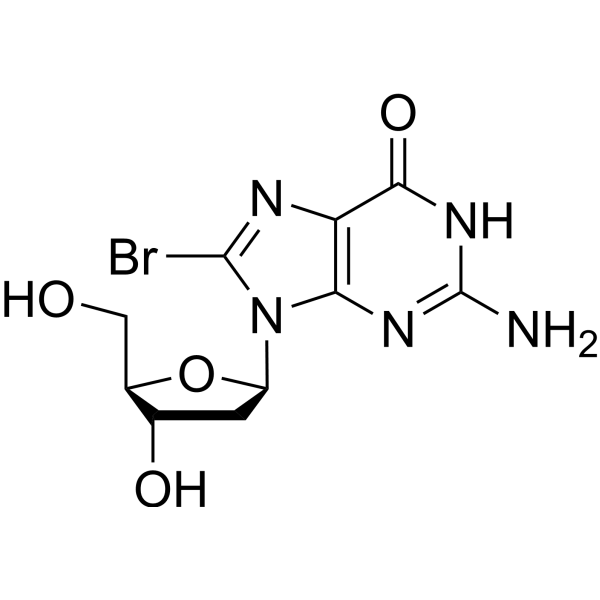
8-Bromo-2'-deoxyguanosine is an inflammation-related DNA halogenated adduct and an early biomarker of inflammation-induced oxidative tissue damage. The formation of 8-Bromo-2'-deoxyguanosine precedes that of oxidative and nitrative products, and it can be generated via the MPO-H2O2-Cl --Br - system. 8-Bromo-2'-deoxyguanosine serves as the immunogen for preparing the monoclonal antibody mAb8B3, which can be used to detect early DNA modifications in preclinical models; its urinary level also increases significantly in inflammatory disease models. 8-Bromo-2'-deoxyguanosine can also be produced in the dermis of UV-B irradiated mice, and the extract of Coprinus comatus significantly reduces its level. 8-Bromo-2'-deoxyguanosine finds applications in studies related to inflammatory diseases, diabetes, hepatocellular carcinoma, and UV-B induced skin inflammation [2] .
loading...
    loading...
Cat. No.: HY-174460
Target:  

Drug Intermediate

Research Areas:  

Cancer

pCR8 is a prodrug of CR8 (HY-18340). pCR8 is amphiphilic and can self-assemble into nanoparticles. pCR8 can release CR8 under the action of high concentration of H2O2 in the tumor microenvironment. CR8 is a molecular glue degrader that can effectively degrade cell cycle-related proteins and has antitumor activity. pCR8 can be used in the research of tumors such as breast cancer .
loading...
    loading...
Cat. No.: HY-Y1885
CAS No.: 7722-88-5
Tetrasodium pyrophosphate is a water-soluble inorganic salt commonly used as a buffering agent, emulsifier, and sequestrant. Tetrasodium pyrophosphate is an antimicrobial agent that can reduce microbial colonization. Tetrasodium pyrophosphate blocks IPP translocation, enhances astaxanthin, phenol, flavonoid, and H2O2 levels, activates PAL and DPPH scavenging activity. Tetrasodium pyrophosphate can be used for the research of alleviating symptoms post COVID-19 [2] .
loading...
    loading...
Cat. No.: HY-P2936A
CAS No.: 9031-54-3
Sphingomyelin phosphodiesterase, Bacillus cereus is a sphingomyelin hydrolase and Insecticide. Sphingomyelin phosphodiesterase, Bacillus cereus catalyzes the decomposition of sphingomyelin into ceramide and phosphorylcholine. Sphingomyelin phosphodiesterase, Bacillus cereus causes rapid paralysis and death in injected insects, including German cockroaches and black cutworms. Sphingomyelin phosphodiesterase, Bacillus cereus reduces H2O2 production. Sphingomyelin phosphodiesterase, Bacillus cereus can be used in studies related to sepsis and endophthalmitis [2] .
loading...
    loading...
Cat. No.: HY-141712
CAS No.: 2696407-32-4
Target:  

TRP Channel

ZA18 is a selective TRPM2 channel inhibitor, with an IC50 value of 6.2 μM. ZA18 can effectively suppress intracellular Ca 2+ overload triggered by TRPM2 channel activation. ZA18 significantly reduce the mortality of SH-SY5Y cells induced by H2O2. ZA18 can be used for the study of ischemia-reperfusion injury, inflammation, or other neurodegenerative diseases .
loading...
    loading...
Cat. No.: HY-141713
CAS No.: 2696407-24-4
Target:  

TRP Channel

ZA10 is a selective TRPM2 channel inhibitor, with an IC50 value of 8.1 μM. ZA10 can effectively suppress intracellular Ca 2+ overload triggered by TRPM2 channel activation. ZA10 significantly reduce the mortality of SH-SY5Y cells induced by H2O2. ZA10 can be used for the study of ischemia-reperfusion injury, inflammation, or other neurodegenerative diseases .
loading...
    loading...
Cat. No.: HY-W008048
CAS No.: 362-75-4
Research Areas:  

Others

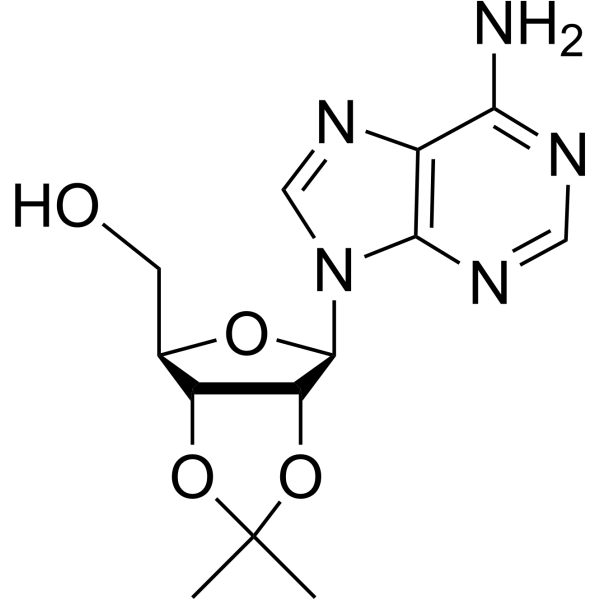
2',3'-O-Isopropylideneadenosine is a nucleoside compound and also a Golgi-targeting moiety. 2',3'-O-Isopropylideneadenosine constitutes a furanose ribose group that undergoes cyclization at the O (2') and O (3') atoms. As a component of the fluorescent probe TPE-Ade, 2',3'-O-Isopropylideneadenosine enables specific Golgi localization for fluorescence imaging. 2',3'-O-Isopropylideneadenosine participates in the synthesis of aggregation-induced emission (AIE) fluorescent probes [2].
loading...
    loading...
Cat. No.: HY-174869
CAS No.: 2412056-40-5
Research Areas:  

Others

Pomalidomide-5-C7-NH2 is an E3 ligase ligand-linker conjugate that incorporates the 5-Aminothalidomide (HY-W023573) based CRBN ligand (HY-103596) and linker. Pomalidomide-5-C7-NH2 can be used for synthesis of PROTAC BT-O2C (HY-174866) .
loading...
    loading...
Cat. No.: HY-W112021
CAS No.: 3117-03-1
Synonyms: 2,5-Dimethoxybenzoquinone
Research Areas:  

Others

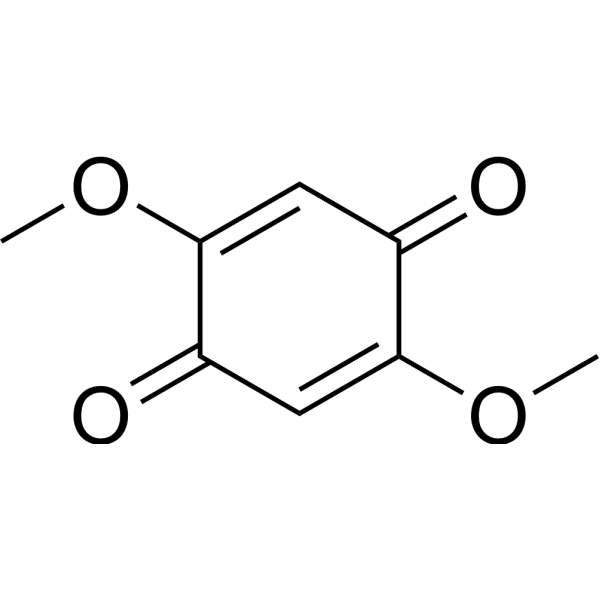
2,5-DMBQ (2,5-Dimethoxybenzoquinone) serves as an extracellular reductant. 2,5-DMBQ is involved in a crucial redox cycle, namely the extracellular hydroquinone-quinone redox cycle. In this cycle, 2,5-DMBQ is capable of reducing extracellular Fe ³⁺ and generating H2O2. 2,5-DMBQ plays a pivotal role in the biodegradation mechanism of brown rot fungal, assisting the fungi in decomposing and utilizing organic matter [2].
loading...
    loading...
Cat. No.: HY-W112021R
CAS No.: 3117-03-1
Synonyms: 2,5-Dimethoxybenzoquinone (Standard)
Research Areas:  

Others

2,5-DMBQ (2,5-Dimethoxybenzoquinone) serves as an extracellular reductant. 2,5-DMBQ is involved in a crucial redox cycle, namely the extracellular hydroquinone-quinone redox cycle. In this cycle, 2,5-DMBQ is capable of reducing extracellular Fe³⁺ and generating H2O2. 2,5-DMBQ plays a pivotal role in the biodegradation mechanism of brown rot fungal, assisting the fungi in decomposing and utilizing organic matter [2].
loading...
    loading...
Cat. No.: HY-175862
CAS No.: 2135481-84-2
ALR2-IN-9 is a potent ALR2 inhibitor (IC50 = 21.8 nM) with excellent antioxidant activity (EC50 for DPPH radical scavenging = 2.8 μM). ALR2-IN-9 interacts directly with Reactive Oxygen Species (ROS)/Reactive Nitrogen Species (RNS) and interrupts the free radical chain reactions, and as an endogenous enzymatic antioxidant regulator, which regulates enzyme functions of CAT and SOD. ALR2-IN-9 regulates PI3K/Akt/Nrf2 pathway to attenuate hyperglycemia-mediated mitochondrial superoxide overproduction in vitro, and ameliorates CuSO4- and H2O2-induced oxidative stress in vivo. ALR2-IN-9 prolongs lifespan of C. elegans via the regulation of stress response genes such as PMK-1. ALR2-IN-9 is a promising anti-aging drug candidate. ALR2-IN-9 can be used for diabetic complication research .
loading...
    loading...
Cat. No.: HY-162860
CAS No.: 1030759-58-0
Target:  

mGluR CaMK Tau Protein

Research Areas:  

Neurological Disease

FO-4-15 is an mGluR1/CaMKIIα activator. FO-4-15 has a protective effect against H2O2 in human neuroblastoma (SH-SY5Y) cells. FO-4-15 can improve cognitive impairment in Alzheimer’s disease mice by activating the mGluR1/CaMKIIα pathway, and can reduce accumulation, hyperphosphorylated Tau, and synaptic damage .
loading...
    loading...

