
450 Results for "

TNF Receptor

" in MedChemExpress (MCE) Product Catalog:
Products (450)

450 Results for "TNF Receptor" in MCE Product Catalog:

Cat. No.: HY-180109
Synonyms: Benzo-17R-Resolvin D2
Benzo-17R-RvD2 (Benzo-17R-Resolvin D2) is a benzo-containing analog of RvD2 (HY-121636). Benzo-17R-RvD2 enhances human macrophage efferocytosis, limits neutrophil infiltration, reduces TNF-α, and increases IL-1 receptor antagonist in peritonitis. Benzo-17R-RvD2 promotes E. coli killing by human leukocytes and reduces neutrophil swarm area without compromising anti-Candida activity. Benzo-17R-RvD2 activates the human-RvD2 receptor with an EC50 ∼1.5 nM. Benzo-17R-RvD2 can be used in research on inflammation-associated diseases such as cardiovascular disease, cancer, neuroinflammation, pain, and muscle regeneration .
loading...
    loading...
Cat. No.: HY-N0637AR
CAS No.: 4049-38-1
Synonyms: (±)-Huazhongilexone (Standard); Dihydroluteolin (Standard)
3-Chlorobenzoic acid (Standard) is the analytical standard of 3-Chlorobenzoic acid. This product is intended for research and analytical applications. (±)-Eriodictyol ((±)-Huazhongilexone; Dihydroluteolin) is an orally active TRPV1 receptor antagonist (IC50=44-47 nM, rTRPV1) with antioxidant and anti-inflammatory activities. (±)-Eriodictyol effectively inhibits lipid peroxidation and the release of proinflammatory cytokines by specifically antagonizing the TRPV1 receptor and activating the Nrf2 signaling pathway. (±)-Eriodictyol reduces the levels of ICAM-1, VEGF, eNOS and TNF-α in the retina and maintains the integrity of the blood-retinal barrier. (±)-Eriodictyol alleviates oxidative stress-induced apoptosis and hyperalgesia, enhances the activity and cytotoxicity of immune cells (such as B lymphocytes, NK cells and macrophages), and increases the levels of antioxidant enzymes simultaneously. (±)-Eriodictyol can be used in the research of diabetic retinopathy, acute lung injury and various pain-related diseases .
loading...
    loading...
Cat. No.: HY-P7693
Purity:  ≥ 95%, as determined by reducing SDS-PAGE.
Synonyms: C1QTNF1; Complement C1q Tumor Necrosis Factor-Related Protein 1; C1q And TNF Related 1; C1q And Tumor Necrosis Factor Related Protein 1; CTRP1; G Protein Coupled Receptor Interacting Protein; GIP; G Protein-Coupled Receptor-Interacting Protein; ZSIG37; FL
Species:  
Human
Source:  
HEK293
loading...
    loading...
Cat. No.: HY-105028
CAS No.: 120210-48-2
Purity:  99.32%
Synonyms: CP-66248
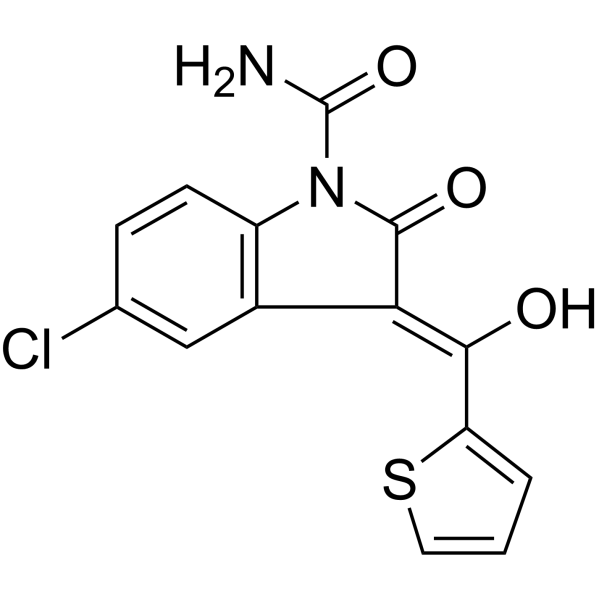
Tenidap (CP-66248) is an orally active dual inhibitor of 5-LOX and COX with anti-inflammatory and immunomodulatory properties. Tenidap downregulates the expression of IL-1 receptors in chondrocytes, reduces the release of pro-inflammatory cytokines such as IL-1, IL-6 and TNF-α, and inhibits MMP production and cartilage degradation. Tenidap also blocks bone resorption and leukocyte adhesion to vascular endothelium, interferes with ion and pH changes associated with mouse sperm capacitation, and selectively enhances the activity of hKir2.3 channels (EC50=1.3 μM). Tenidap is applicable to research related to rheumatoid arthritis .
loading...
    loading...
Cat. No.: HY-177515
CAS No.: 1356013-27-8
Target:  

IRAK STAT JAK NF-κB

Research Areas:  

Inflammation/Immunology

IRAK4 modulator-2 (Compound 5) is a selective dual Interleukin-1 Receptor Associated Kinase 4 (IRAK4) and IRAK1 inhibitor with IC50 values of 0.005 μM and 0.97 μM, erespectively. IRAK4 modulator-2 blocks IRAK-mediated signaling pathways (e.g., JAK-STAT, NF-κB pathways), reduces the production of pro-inflammatory cytokines (e.g., IL-1, TNF), and exerts anti-inflammatory activity. IRAK4 modulator-2 is promising for research of autoimmune diseases and inflammatory diseases, such as rheumatoid arthritis, psoriasis, inflammatory bowel disease .
loading...
    loading...
Cat. No.: HY-B1077R
CAS No.: 26864-56-2
Synonyms: R-16341 (Standard)
Penfluridol (Standard) is the analytical standard of Penfluridol. This product is intended for research and analytical applications. Penfluridol (R-16341) is a potent, long-acting, first-generation, oral diphenylbutylpiperidine antipsychotic agent by targeting D2-like dopamine receptor. Penfluridol effectively inhibits TNFα-induced NF-κB activation and alleviates the severity of arthritis and colitis in vivo. Penfluridol is a Ca2+-calmodulin inhibitor. Penfluridol induces apoptosis and autophagy. Penfluridol is used for chronic schizophrenia, acute psychosis, Tourette syndrome and autoimmune diseases. Penfluridol inhibites the growth of E. faecalis planktonic cells with the MIC of 7.81 μg/ml .
loading...
    loading...
Cat. No.: HY-P87118
Synonyms: CAP 1 antibody; CAP-1 antibody; CAP1 antibody; CD40 associated protein 1 antibody; CD40 binding protein antibody; CD40 bp antibody; CD40 Receptor associated factor 1 antibody; CD40 Receptor-associated factor 1 antibody; CD40-binding protein antibody; CD40BP antibody; CAP 1 antibody; CAP-1 antibody; CAP1 antibody; CD40 associated protein 1 antibody; CD40 binding protein antibody; CD40 bp antibody; CD40 Receptor associated factor 1 antibody; CD40 Receptor-associated factor 1 antibody; CD40-binding protein antibody; CD40BP antibody; CRAF 1 antibody; CRAF1 antibody; IIAE5 antibody; LAP 1 antibody; LAP1 antibody; LMP1 associated protein antibody; LMP1-associated protein 1 antibody; MIPT3 antibody; TNF Receptor associated factor 3 antibody; TNF Receptor-associated factor 3 antibody; TRAF 3 antibody; Traf3 antibody; TRAF3_HUMAN antibody;

Host:  

Rabbit

Application:  

WB

Reactivity:  

Human, Mouse, Rat

loading...
    loading...
Cat. No.: HY-12761
CAS No.: 959746-77-1
Purity:  99.84%
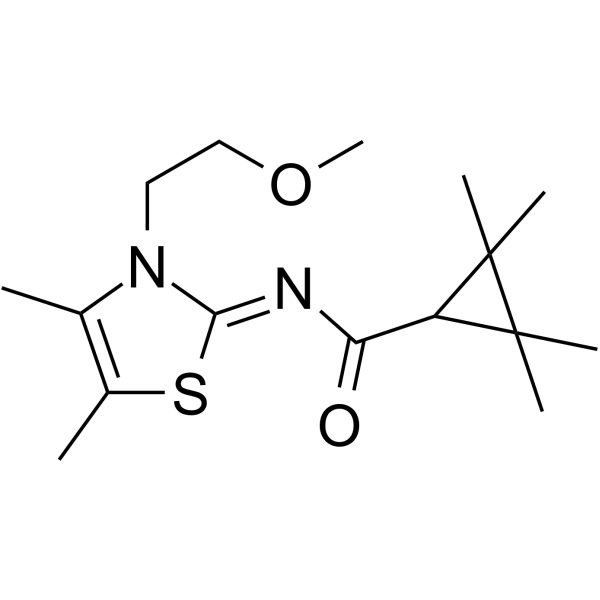
A-836339 is a selective CB2 receptor agonist, with Ki values of 0.4 nM and 0.8 nM in humans and rats, respectively. A-836339 exhibits multiple effects such as analgesia, gastric protection, anti-inflammation, and antioxidant activity. A-836339 produces antinociceptive and analgesic activities by activating CB2 receptors in the dorsal root ganglia and spinal cord. A-836339 can also exert gastric protective effects through anti-inflammatory mechanisms (reducing TNF-α and IL-1β) and antioxidant mechanisms (enhancing the activities of CAT and SOD, and reducing H2O2). Radioactively labeled A-836339 can serve as a CB2-specific radioligand for autoradiography and PET imaging. A-836339 can be used in research on inflammatory pain, neuropathic pain, gastric ulcers, cerebral ischemia, etc .
loading...
    loading...
Cat. No.: HY-122566
CAS No.: 903864-87-9
Synonyms: ZINC666243
Research Areas:  

Cancer

SMU127 is an agonist of the toll-like receptor 1/2 (TLR1/2) heterodimer. It induces NF-κB signaling in cells expressing human TLR2 (EC50=0.55 μM) but not cells expressing human TLR3, -4, -5, -7, or -8 when used at concentrations ranging from 0.1 to 100 μM. SMU127 induces the production of TNF-α in isolated human peripheral blood mononuclear cells (PBMCs) when used at concentrations ranging from 0.01 to 1 μM. In vivo, SMU127 (0.1 mg/animal) reduces tumor volume in a 4T1 murine mammary carcinoma model.
loading...
    loading...
Cat. No.: HY-N1482
CAS No.: 112-39-0
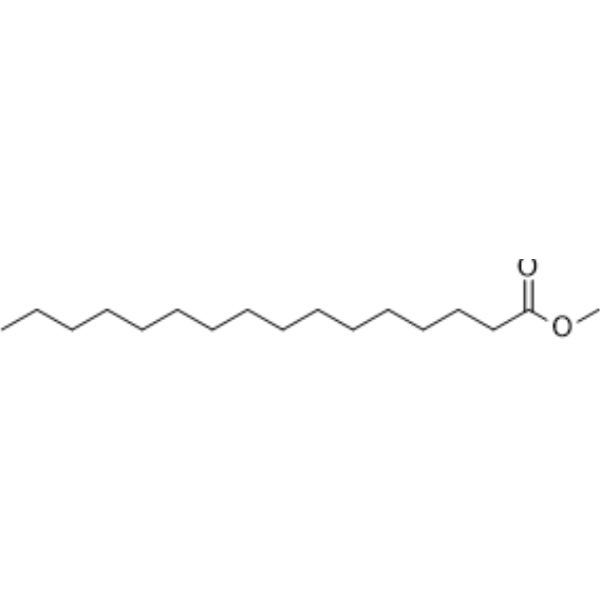
Methyl palmitate is a naturally occurring fatty acid ester. Methyl palmitate is a potent inhibitor of ΙκB phosphorylation. Methyl palmitate modulates macrophage activity and down-regulates pro-inflammatory mediators such as TNF-α and nitric oxide (NO). Methyl palmitate possesses anti-inflammatory and antifibrotic effects. Methyl palmitate can inhibit LPS (HY-D1056)-induced Kupffer cells and rat peritoneal macrophages. Methyl palmitate is able to inhibit the phagocytic function of RAW cells. Methyl palmitate is antagonistic to muscarinic receptors. Methyl palmitate exerts cardioprotective effects against ischemia/reperfusion injury in vivo. Methyl palmitate is highly toxic against adult T. cinnabarinus .
loading...
    loading...
Cat. No.: HY-P83063
Synonyms: TRAF4; CART1; MLN62; RNF83; TNF Receptor-associated factor 4; Cysteine-rich domain associated with RING and Traf domains protein 1; Metastatic lymph node gene 62 protein; MLN 62; RING finger protein 83

Host:  

Rabbit

Application:  

WB, ICC/IF, FC

Reactivity:  

Human, Mouse

loading...
    loading...
Cat. No.: HY-171906
CAS No.: 65446-08-4
Synonyms: 1-Arachidonoyl-sn-glycerol 3-phosphate; 1-Arachidonoyl LPA; LPA (20:4)
Target:  

LPL Receptor

Research Areas:  

Inflammation/Immunology

1-Arachidonoyl-2-hydroxy-sn-glycero-3-PA is a phospholipid containing arachidonic acid at the sn-1 position. It is a precursor to 1-arachidonoyl glycerol (1-Monoarachidin; HY-130567) . 1-Arachidonoyl-2-hydroxy-sn-glycero-3-PA binds to the LPA2/EDG4 receptor with an EC50 value of approximately 10 nM . It prevents TNF-α and IL-6 secretion in wild-type but not Lpa2-/- dendritic cells stimulated by LPS . It also decreases differentiation of HT-29 human colon carcinoma cells to goblet cells in the presence of sodium butyrate .
loading...
    loading...
Cat. No.: HY-W001288
CAS No.: 1074-86-8
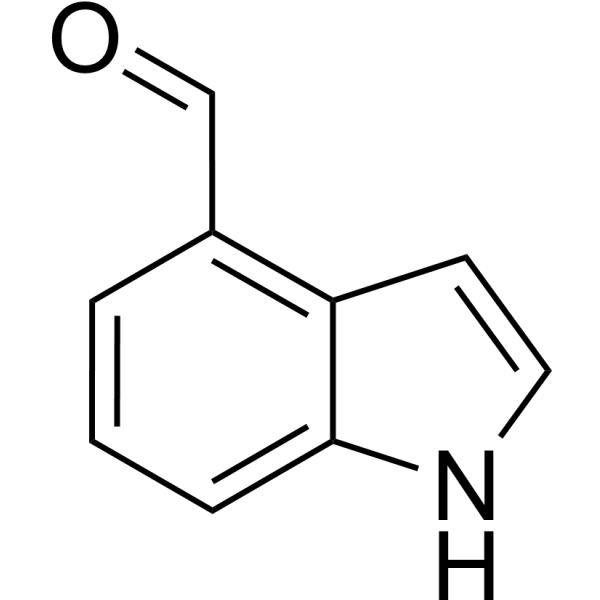
Indole-4-carboxaldehyde is an ergot alkaloid precursor that regulates glycosylation and inflammation. Indole-4-carboxaldehyde upregulates Glo-1, inhibits MGO-induced NF-κB activation, and suppresses MGO-induced expression of TNF-α and IFN-γ. Indole-4-carboxaldehyde inhibits MGO-induced formation of advanced glycation end products (AGE) and expression of their receptor (RAGE). Indole-4-carboxaldehyde is a core metabolite produced in the pedicels of Summer Black grapes after exogenous gibberellin treatment, and it directly promotes fruit enlargement and fruit set of Summer Black grapes. Indole-4-carboxaldehyde can be used in studies related to hepatic steatosis and plant growth regulation .
loading...
    loading...
Cat. No.: HY-106055
CAS No.: 74817-61-1
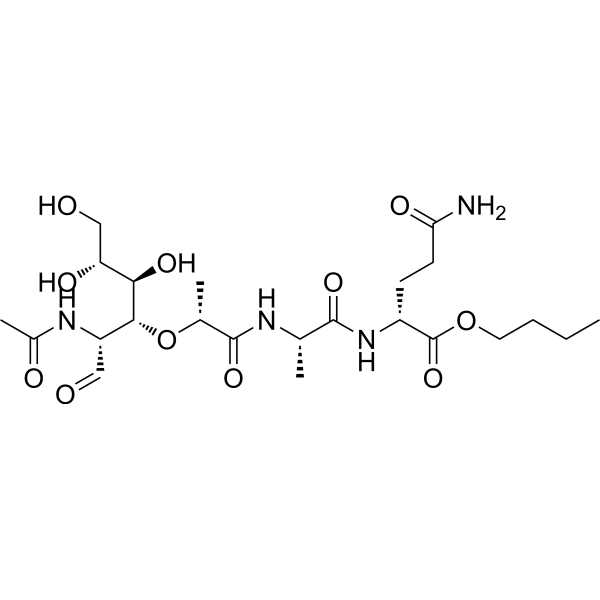
Murabutide is an immunomodulator and also a NOD2 receptor agonist . Murabutide enhances the signal transduction of ATR and NOD2, mediates the activation of the DDR pathway, and thereby repairs radiation-induced DNA double-strand breaks. Murabutide inhibits radiation-induced cell apoptosis and protects cells and mice from radiation-induced toxic damage. Murabutide induces the expression and DNA-binding activity of Oct-1 in macrophages, thereby inhibiting the transcription and replication of HIV-1. Murabutide reduces the expression levels of CD4 and CCR5 on the surface of macrophages, and induces the secretion of β-chemokines, TNF-α and IL-6. Murabutide enhances non-specific viral resistance and targets reticuloendothelial cells. Murabutide can be used in research related to radiation-induced damage and human immunodeficiency virus type 1 infection .
loading...
    loading...
Cat. No.: HY-168971
CAS No.: 1390658-79-3
Synonyms: CP-25
Paeoniflorin-6′-O-benzene sulfonate (CP-25) is the inhibitor for G protein-coupled receptor kinase 2 (GRK2) that inhibits the translocation of GRK2 to the cell membrane, inhibits JAK1/STAT3 signaling pathway. Paeoniflorin-6′-O-benzene sulfonate inhibits IL-17A/CXCL2-induced proliferation of HaCaT. Paeoniflorin-6′-O-benzene sulfonate reduces the levels of inflammatory factors and chemokines such as IL-17A, IL-17F, IFN-γ, TNF-α, IL-22, IL-23, CXCL2, CXCL3 and CXCL9, alleviates Imiquimod (HY-B0180)-induced psoriasis in mouse model .
loading...
    loading...
Cat. No.: HY-171895
CAS No.: 774603-05-3
Synonyms: 12-Nitro-9-cis,12-cis-octadecadienoic acid
12-Nitrolinoleate (12-Nitro-9-cis,12-cis-octadecadienoic acid) is an activator for peroxisome proliferator-activated receptor γ (PPARγ). 12-Nitrolinoleate is a nitrated form of linoleic acid. 12-Nitrolinoleate can be formed upon exposure to acidified nitrate and found in human red blood cells and plasma. 12-Nitrolinoleate can activate PPARγ-dependent gene expression in MCF-7 cells expressing PPARγ with an EC50 = 0.045 μM. 12-Nitrolinoleate is able to inhibit LPS (HY-D1056)-induced NF-κB transcription in RAW 264.7 cells. 12-Nitrolinoleate can inhibit IL-6, TNF-α and CCL2 induced by LPS .
loading...
    loading...
Cat. No.: HY-P99830
CAS No.: 1227158-72-6
Synonyms: KH902
Conbercept (KH902) is a recombinant fusion protein composed of VEGFR-1 (second domain) and VEGFR-2 (third and fourth domains) regions fused to human IgG1 Fc. Conbercept is a VEGF inhibitor (IC50 = 8.8 pM) and is a soluble receptor decoy that blocks all isoforms of VEGF-A (Kd = 0.5 pM), VEGF-B (Kd = 8 pM), VEGF-C, and PlGF (Kd = 5 pM). Conbercept has anti-inflammatory effects, can lower the levels of VEGF, TNF-α and IL-6, and reduce the infiltration of inflammatory cells. Conbercept decreases tumor growth in several oncology studies. Conbercept can be used for various eye diseases such as polypoidal choroidal vasculopathy (PCV), diabetic macular edema (DME) and pathologic myopia choroidal neovascularization (pmCNV) .
loading...
    loading...
Cat. No.: HY-153201
CAS No.: 910113-34-7
PKR1 antagonist-2 is a non-peptide prokineticin receptor antagonist that preferentially binds to and blocks PK-R1 signaling while also blocking PK-R2. PKR1 antagonist-2 shifts the autoimmune response against myelin from a Th1/Th17 profile toward a Th2 profile, reducing myelin antigen-specific T cell proliferation and the production of proinflammatory cytokines (IFN-γ, TNF, IL-6, IL-17), and increasing the levels of anti-inflammatory cytokines IL-4/IL-10. PKR1 antagonist-2 significantly alleviates disease severity in relapsing-remitting and chronic experimental autoimmune encephalomyelitis (EAE). PKR1 antagonist-2 can be used in research related to multiple sclerosis .
loading...
    loading...
Cat. No.: HY-W668775
CAS No.: 871100-12-8
Quin-C7 is an orally active FPR2/ALX antagonist. Quin-C7 binds to the orthosteric ligand-binding pocket of FPR2/ALX, modulates receptor activation, and inhibits pro-inflammatory ERK signaling mediated by serum amyloid A (SAA). Quin-C7 reduces pro-inflammatory mediators TNF-α levels, increases anti-inflammatory IL-10, decreases inflammatory neutrophils and pro-inflammatory M1 macrophages, downregulates ERK1/2 phosphorylation, and upregulates JNK1/2/3 phosphorylation. Quin-C7 blocks FPR2/mFpr2 signaling, reduces brain lesion volume. Quin-C7 can be used for the research of inflammatory bowel disease and neuromyelitis optica spectrum disorder .
loading...
    loading...
Cat. No.: HY-W683756
CAS No.: 16625-69-7
Boldine hydrochloride is an aporphine alkaloid telomerase (telomerase) inhibitor (IC50 of 0.17 μM for TERT) and a pannexin/connexin hemichannel blocker, with oral activity and blood-brain barrier permeability. Boldine hydrochloride inhibits telomerase activity through direct interaction with the telomerase ribonucleoprotein and non-competitive binding near the TERT active site, and downregulates hTERT mRNA while shifting alternative splicing toward non-functional transcripts. Boldine hydrochloride blocks Panx1, Cx43, Cx26, and Cx30 hemichannels as well as P2X7 receptor-mediated calcium influx. Boldine hydrochloride exhibits antioxidant, anti-inflammatory, antiproliferative, and cytotoxic activities by scavenging ROS, inhibiting NFκB, dephosphorylating SGK1, and reducing TNF-alpha levels. Boldine hydrochloride can be used in research on breast cancer, Alzheimer's disease, glioblastoma, diabetes, and spinal cord injury .
loading...
    loading...

