443 Results for "

bladder

" in MedChemExpress (MCE) Product Catalog:
Products (443)

443 Results for "bladder" in MCE Product Catalog:

Cat. No.: HY-101230
CAS No.: 89352-67-0
Purity:  99.97%
Target:  

Opioid Receptor

Research Areas:  

Neurological Disease

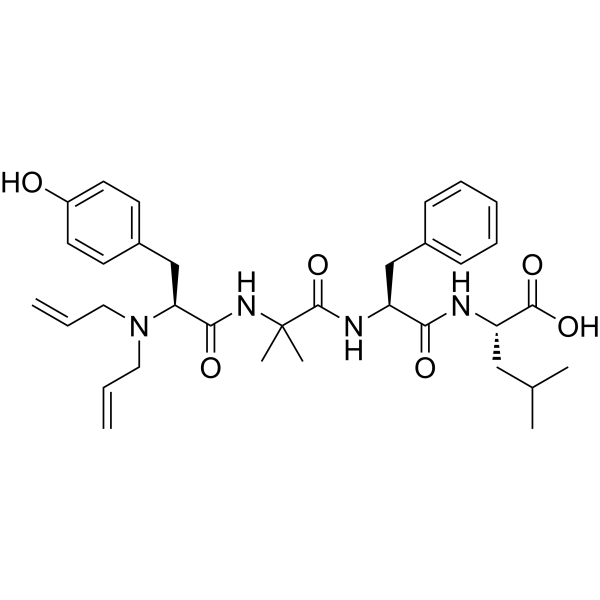
ICI 174864 is a selective and brain-penetrant δ-opioid receptor antagonist with Ke values of 22.0 nM to 30.6 nM at δ-opioid receptor in mouse vas deferens. ICI 174864 selectively blocks biological effects mediated by the δ-opioid receptor agonist DPDPE (HY-P1334) after central administration. ICI 174864 reverses hypotension in rats with endotoxic shock and inhibits acetic acid-induced writhing in mice. ICI 174864 can be used for the research of opioid receptor subtypes, endotoxic hypotension and analgesic pathways .
loading...
    loading...
Cat. No.: HY-153821
CAS No.: 2378257-72-6
Purity:  98.45%
Target:  

PROTACs Ras

Research Areas:  

Cancer

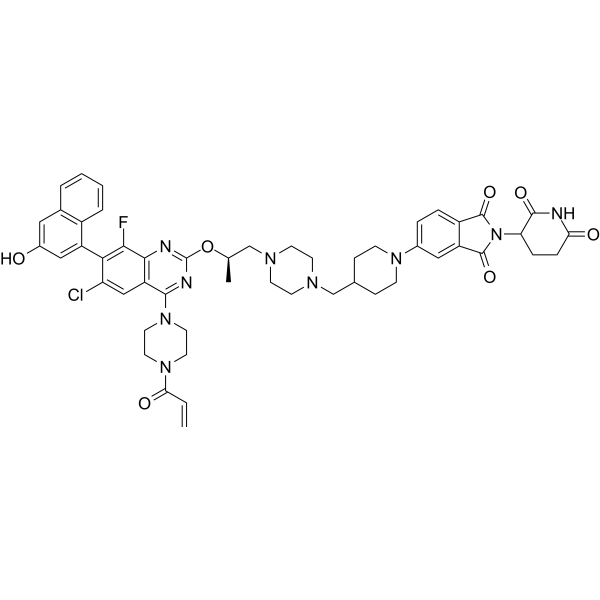
PROTAC KRAS G12C (Compound 432) degrader-2 is a PROTAC degrader that targets KRAS G12C by recruiting cereblon. PROTAC KRAS G12C degrader-2 covalently modifies KRAS G12C. PROTAC KRAS G12C degrader-2 can be used for the research of non-small cell lung cancer .
loading...
    loading...
Cat. No.: HY-165401
CAS No.: 22785-18-8
Target:  

DNA/RNA Synthesis

Research Areas:  

Endocrinology

SC 19886 is an inhibitor of Aldosterone (HY-113313) synthesis. SC 19886 blocks Aldosterone-induced DNA-dependent RNA synthesis. SC 19886 can be used in studies related to primary aldosteronism [1] [2].
loading...
    loading...
Cat. No.: HY-B0985AS
CAS No.: 1287380-98-6
Phenazopyridine-d5 is the deuterated-labeled Phenazopyridine (HY-B0985A). Phenazopyridine is a competitive SARM1 inhibitor, with IC50 145 μM. Phenazopyridine is a TRPM8 antagonist. Phenazopyridine has a local anesthetic/analgesic effect. Phenazopyridine is used to relieve painful symptoms of conditions such as cystitis and urethritis. Phenazopyridine can promote neuronal differentiation and can also be used in the study of traumatic brain injury, peripheral neuropathy and neurodegenerative diseases .
loading...
    loading...
Cat. No.: HY-B0985R
CAS No.: 136-40-3
Research Areas:  

Neurological Disease

Phenazopyridine (hydrochloride) (Standard) is the analytical standard of Phenazopyridine (hydrochloride). This product is intended for research and analytical applications. Phenazopyridine hydrochlorideis a competitive SARM1 inhibitor, with IC50 145 μM. Phenazopyridine hydrochlorideis a TRPM8 antagonist. Phenazopyridine hydrochloride has a local anesthetic/analgesic effect. Phenazopyridine hydrochlorideis used to relieve painful symptoms of conditions such as cystitis and urethritis. Phenazopyridine hydrochloridecan promote neuronal differentiation and can also be used in the study of traumatic brain injury, peripheral neuropathy and neurodegenerative diseases .
loading...
    loading...
Cat. No.: HY-W509797
CAS No.: 21618-92-8
5-(3',4'-Dihydroxyphenyl)-γ-valerolactone is an intestinal microbiota metabolite of (-)-Epicatechin (HY-N0001). 5-(3',4'-Dihydroxyphenyl)-γ-valerolactone downregulates TNF-α-stimulated phosphorylation of IKK and IκBα, inhibits the transcriptional activation of NF-κB, and suppresses the expression of adhesion molecules and chemokines. 5-(3',4'-Dihydroxyphenyl)-γ-valerolactone promotes autophagy, alleviates oxidative stress, maintains osteoblast differentiation, induces G1 phase arrest, inhibits adipogenesis, and scavenges ABTS free radicals. 5-(3',4'-Dihydroxyphenyl)-γ-valerolactone inhibits the adhesion of uropathogenic Escherichia coli to bladder epithelial cells; when used in combination with Curcumin (HY-N0005), it downregulates the NLRP3 and NOX2/Nrf2 signaling pathways, thereby reducing microglial activation. 5-(3',4'-Dihydroxyphenyl)-γ-valerolactone can be used in research related to diabetes, atherosclerosis, osteoporosis, obesity, neurodegenerative diseases involving microglial activation, and urinary tract infections .
loading...
    loading...
Cat. No.: HY-163144
CAS No.: 3044084-97-8
Target:  

PROTACs Src

Research Areas:  

Cancer

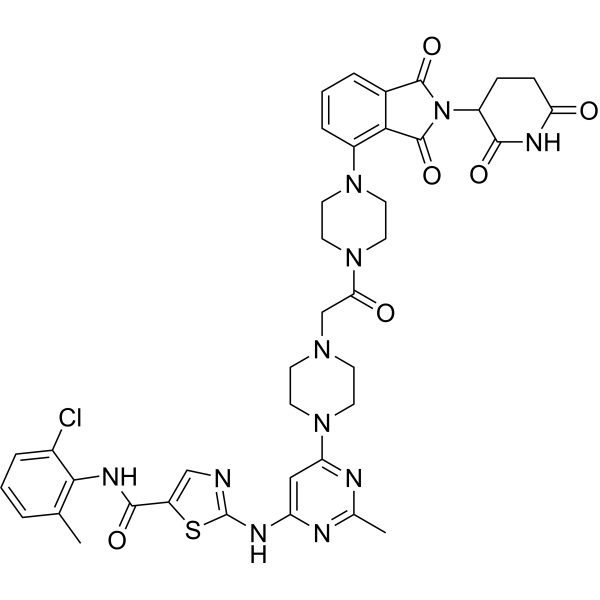
DAS-5-oCRBN is a PROTAC molecule with both c‑Src kinase inhibitory activity and target protein degradation activity, with an EC50 of 45 nM for c‑Src binding. DAS-5-oCRBN binds non-covalently to Cereblon and mediates target protein degradation via the ubiquitin-proteasome pathway. DAS-5-oCRBN can catalytically deplete intracellular c‑Src protein, while blocking both the kinase catalytic function of c‑Src and the non-catalytic protein interactions mediated by its SH2 and SH3 domains. DAS-5-oCRBN inhibits tumor cell proliferation and exerts significant anti-proliferative effects on both c‑Src kinase activity-dependent MDA-MB-231 cells and c‑Src protein level-dependent CAL51 cells. DAS-5-oCRBN can be used in cancer-related research such as studies on triple-negative breast cancer and chronic myeloid leukemia .
loading...
    loading...
Cat. No.: HY-189002
CAS No.: 866554-59-8
Synonyms: ZHD 0501
Target:  

Others

Research Areas:  

Cancer

ACT-007 (ZHD 0501) is an indolocarbazole alkaloid derived from Actinomadura sp., which selectively inhibits the proliferation of lung cancer cells and induces G2/M phase cell cycle arrest in breast cancer cells. ACT-007 can be applied in the research of lung cancer and breast cancer .
loading...
    loading...
Cat. No.: HY-P991106
Synonyms: LY-3076226 antibody

Target:  

FGFR ADC Antibodies

Research Areas:  

Cancer

IMC-D11 (LY-3076226 antibody) is an anti-FGFR3 IgG1 monoclonal antibody with an EC50 of approximately 0.1 nM against hFGFR3b and hFGFR3c. IMC-D11 inhibits the growth of FGFR3-dependent lung adenocarcinoma in mouse models and shows no effect on tumors that do not express FGFR3. IMC-D11 can serve as an ADC Antibody for ADC synthesis, such as LY3076226. IMC-D11 is applicable to research related to urothelial carcinoma, multiple myeloma, lung adenocarcinoma, as well as advanced or metastatic cancers .
loading...
    loading...
Cat. No.: HY-W791041
CAS No.: 116371-66-5
Synonyms: dFdCDP
Research Areas:  

Cancer

Gemcitabine 5'-diphosphate (dFdCDP) is a core active metabolic intermediate of Gemcitabine (HY-17026) and a potent ribonucleotide reductase (RNR) inhibitor. Gemcitabine 5'-diphosphate depletes deoxyribonucleotide pools, consumes deoxycytidine triphosphate and increases the phosphorylation level of gemcitabine. Gemcitabine 5'-diphosphate prolongs the intracellular retention duration of gemcitabine metabolites, enhances the nucleic acid incorporation of gemcitabine, and exerts anti-tumor/cytotoxic effects .
loading...
    loading...
Cat. No.: HY-106593
CAS No.: 40574-52-5
Synonyms: SC 23133
Research Areas:  

Cardiovascular Disease

Prorenone (SC 23133) is a spironolactone-type steroidal mineralocorticoid receptor (MR) antagonist that can cross the blood-brain barrier, with low affinity for glucocorticoid receptors and rat prostate androgen receptors. Prorenone inhibits the binding and action of Aldosterone (HY-113313), blocks its induced nuclear receptor activity and stimulated sodium transport, antagonizes aldosterone-induced urinary potassium excretion, and prevents aldosterone-induced elevation of blood pressure. Prorenone can be used in research related to hypertension .
loading...
    loading...
Cat. No.: HY-P2593
CAS No.: 125989-15-3
Target:  

Neurokinin Receptor

Research Areas:  

Neurological Disease

L-659874 is a selective NK2 receptor antagonist with an IC50 value of 0.49 μM in hamsters. L-659874 inhibits NK2 receptor-mediated hydrolysis of inositol phospholipids. L-659874 could be used for research on the correlation between pain signal transduction and smooth muscle responses .
loading...
    loading...
Cat. No.: HY-N2593R
CAS No.: 32507-66-7
Isorhapontigenin (Standard) is the analytical standard of Isorhapontigenin (HY-N2593). This product is intended for research and analytical applications. Isorhapontigenin is an orally active dietary polyphenol. Isorhapontigenin acts as a potent antioxidant that reduces the production of reactive oxygen species (ROS). Isorhapontigenin promotes the binding of JUN to the AP-1 site on the SESN2 promoter, induces SESN2 transcription, triggers MAPK8-dependent JUN activation, and upregulates the expression of PPAR-α, PGC-1α and CPT-1A to facilitate fatty acid oxidation. Isorhapontigenin induces autophagy, apoptosis and preadipocyte differentiation; it inhibits tumor growth, cell invasion, NF-κB transcriptional activity, the PI3K/Akt signaling pathway, STAT1 phosphorylation and MMP-2 expression. Isorhapontigenin alleviates oxidative stress, inflammatory cytokine release and triglyceride accumulation; it increases intracellular ATP levels and promotes Nrf2 nuclear translocation. Isorhapontigenin improves insulin sensitivity in adipose tissue and glucose tolerance, and reduces postprandial blood glucose, insulin and free fatty acid levels. Isorhapontigenin is applicable to research on bladder cancer, liver injury, chronic obstructive pulmonary disease, acute lung injury and type 2 diabetes.
loading...
    loading...
Cat. No.: HY-N11811
CAS No.: 117405-52-4
trans-p-Sinapoyl-β-D-glucopyranoside is a phenolic acid glycoside and Antibacterial agent. trans-p-Sinapoyl-β-D-glucopyranoside can be isolated from chili pepper (Capsicum annuum L.) and Sorbaria tomentosa. trans-p-Sinapoyl-β-D-glucopyranoside scavenges DPPH free radicals. trans-p-Sinapoyl-β-D-glucopyranoside exhibits anticancer, anti-inflammatory, antidiabetic and antihypertensive activities. trans-p-Sinapoyl-β-D-glucopyranoside exerts antioxidant activity by inhibiting the fading of β-Carotene (HY-N0411) emulsion .
loading...
    loading...
Cat. No.: HY-P992413

Target:  

Integrin

Research Areas:  

Inflammation/Immunology

MOR102 is a fully human IgG4 monoclonal antibody and an ICAM-1 inhibitor, lacking cross-reactivity with ICAM-2 and ICAM-3. MOR102 binds to the LFA-1 binding site within ICAM-1 domain 1, blocks ICAM-1/LFA-1 interaction, binds human keratinocytes with increased binding to interferon-γ-stimulated keratinocytes. MOR102 inhibits lymphocyte adhesion, reduces lymphocyte proliferation, prevents local T-cell activation, reduces inflammatory infiltrate, restores orthokeratotic differentiation, and reduces epidermal thickness. MOR102 can be used for the research of psoriasis .
loading...
    loading...
Cat. No.: HY-N0469R
CAS No.: 56-87-1
L-Lysine (Standard) is the analytical standard of L-Lysine. This product is intended for research and analytical applications. L-lysine is an essential amino acid for humans with orally activity. L-lysine can inhibit the occurrence of HSV infections and is used in herpes research. L-lysine increases calcium absorption, reduces diabetes-related diseases, improves gut health, and alleviates pancreatic inflammation. L-lysine can be used in research on metabolism, infection, and inflammation . IC50 & Target:L-lysine (150 mg/kg) promotes, but not initiates, bladder cancer. The administration of L-lysine to rats submitted to colovesical cystoplasty accelerates the development of transitional metaplasia of the intestinal epithelium .
L-lysine (10 mg/kg) treatment attenuates pancreatic tissue injury induced by L-arginine by inhibiting the release of the inflammatory cytokine IL-6 and enhance antioxidant activity . In Vivo:L-lysine (10?mg/kg, p.o., pre-treated or post-treated, administration duration 15 days) treatment attenuates pancreatic tissue injury induced by L-arginine by inhibiting the release of the inflammatory cytokine IL-6 and enhance antioxidant activity in acute pancreatitis mice model . L-lysine (5 or 10?mg/kg, p.o., 45 days) ameliorates sepsis-induced acute lung injury in a lipopolysaccharide (HY-D1056)-induced mouse model .
loading...
    loading...
Cat. No.: HY-184870
CAS No.: 31621-87-1
Target:  

Others

Research Areas:  

Inflammation/Immunology

Polydioxanone is a colorless, crystalline semi-crystalline thermoplastic poly (ether-ester) bioabsorbable polymer. Polydioxanone serves as a hemostatic agent, biodegradable agent, degradant, lumen patency maintainer, as well as a temporary inducer of tracheal tissue injury and inflammation. Polydioxanone controls bone bleeding in biocompatible matrices, degrades via random hydrolytic scission and end-chain scission, with accelerated degradation occurring at pH <1.67, maintains tracheal lumen patency, and induces reversible tracheal epithelial necrosis, inflammation, fibrous tissue hyperplasia, and goblet cell hyperplasia. Polydioxanone can be used in research on bone bleeding, non-malignant tracheal stenosis, tracheobronchial stenosis, tracheobronchomalacia, and airway obstruction associated with vascular compression .
loading...
    loading...
Cat. No.: HY-D1056A3
Synonyms: LPS, from Escherichia coli (O26:B6)
Lipopolysaccharides, from E. coli (Escherichia coli) O26:B6 are lipopolysaccharide endotoxins and TLR-4 activators derived from E. coli, classified as S-type LPS, which can activate pathogen-associated molecular patterns (PAMP) of the immune system and induce cellular secretion of migrasomes. Lipopolysaccharides, from E. coli O26:B6 exhibit a typical three-part structure: O-antigen, core oligosaccharide, and lipid A, and can be recognized by the core-specific monoclonal antibody MAb J8-4C10. Lipopolysaccharides, from E. coli O26:B6 can promote an increase in pro-inflammatory cytokines in plasma, thereby triggering hypothalamic-pituitary-adrenal (HPA) activation and leading to adrenal oxidative damage. The pathogenic effects of Lipopolysaccharides, from E. coli O26:B6 can be used to construct various models, such as cellular inflammation models, sepsis, acute lung injury models, adrenal dysfunction models, and bladder infection models, etc .
It is recommended to prepare a solution with concentration ≥2 mg/mL. Vortex thoroughly for more than 10 minutes. Due to the adsorption characteristics of LPS, silanized container or low adsorption centrifuge tubes should be used for aliquoting and storage, and mix thoroughly before use.
loading...
    loading...
Cat. No.: HY-119753
CAS No.: 68284-69-5
Synonyms: SC-31828
Target:  

Others

Research Areas:  

Cardiovascular Disease

Disobutamide (SC-31828) is an orally active, blood-brain barrier permeable cationic amphiphilic ditertiary amine piperidine ring compound with antiarrhythmic properties. Disobutamide induces lysosomal phospholipid accumulation, which triggers extensive cytoplasmic vacuolization and leads to cell death. Disobutamide prolongs multiple electrocardiographic intervals in canine hearts, induces cardiac arrest at high doses, and causes decreased retinal reflectivity. Disobutamide can be used in studies related to arrhythmias, and also serves as a model drug for investigating the storage mechanisms and toxicity thresholds of intracellular amphiphilic compounds .
loading...
    loading...
Cat. No.: HY-N19113
CAS No.: 112900-04-6
Emindole SB is an anticancer agent. Emindole SB can be isolated from Penicillium species. Emindole SB exerts anticancer effects against ovarian cancer, breast cancer and lymphoma. Emindole SB shows no toxicity to Caenorhabditis elegans. Emindole SB can be used in studies related to ovarian cancer, lymphoma and breast cancer .
loading...
    loading...

