
4991 Results for "

expression

" in MedChemExpress (MCE) Product Catalog:
Products (4991)

4991 Results for "expression" in MCE Product Catalog:

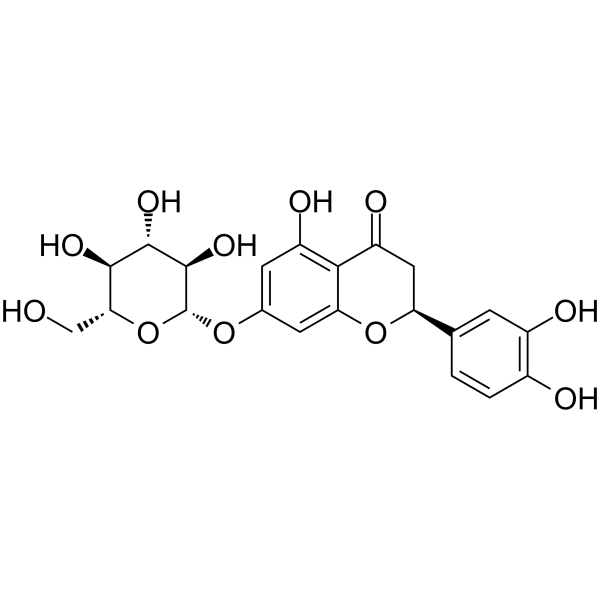
Cat. No.: HY-N3847
CAS No.: 38965-51-4
Synonyms: Eriodictyol 7-O-β-D-glucoside
Eriodictyol-7-O-glucoside (Eriodictyol 7-O-β-D-glucoside), a flavonoid, is an Nrf2 activator. Eriodictyol-7-O-glucoside exhibits significant scavenging effects on both hydroxyl radicals and superoxide anions, with IC50 values of 0.28 mM and 0.30 mM, respectively. Eriodictyol-7-O-glucoside increases the nuclear localization of Nrf2 and induces the expression of the Nrf2/ARE-dependent genes. Eriodictyol-7-O-glucoside provides protection against oxygen and glucose deprivation (OGD)-induced oxidative insult. Eriodictyol-7-O-glucoside demonstrates neuroprotective efficacy in a rat model of focal cerebral ischemia (MCAO). Eriodictyol-7-O-glucoside can be used for the study of stroke .
loading...
    loading...
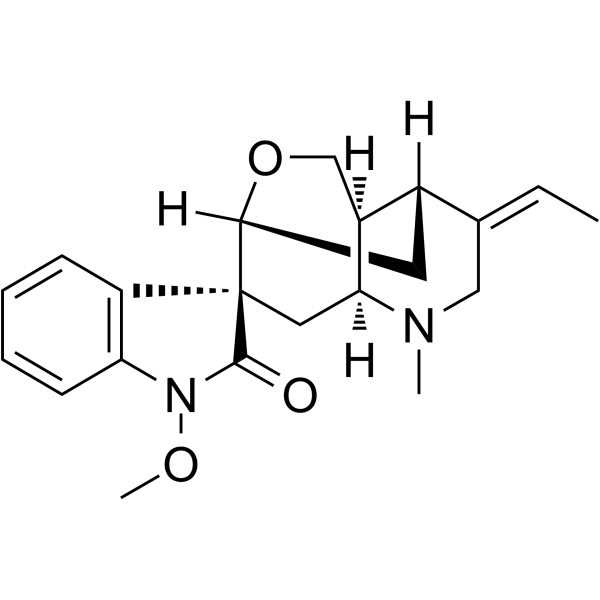
Cat. No.: HY-N4031
CAS No.: 82375-29-9
Humantenine is a highly toxic indole alkaloid from Gelsemium elegans (Gardn. & Champ.) Benth. that binds to RNA m6A modification regulatory proteins (ALKBH5, METTL). Humantenine stably binds via hydrogen bonding and hydrophobic interactions and disrupts the m6A methylation level of target genes, thereby impairing the expression of intestinal epithelial cell tight junction and cytoskeleton-related genes, causing intestinal barrier dysfunction and significant intestinal cytotoxicity. The intraperitoneal injection LD50 values of Humantenine are <1 mg/kg in mice, 1.2 mg/kg in male rats and 1.5 mg/kg in female rats, respectively. Species differences exist in the metabolism of Humantenine in human, porcine, goat and rat liver microsomes, and demethylation, dehydrogenation and oxidation occur in liver microsomes .
loading...
    loading...
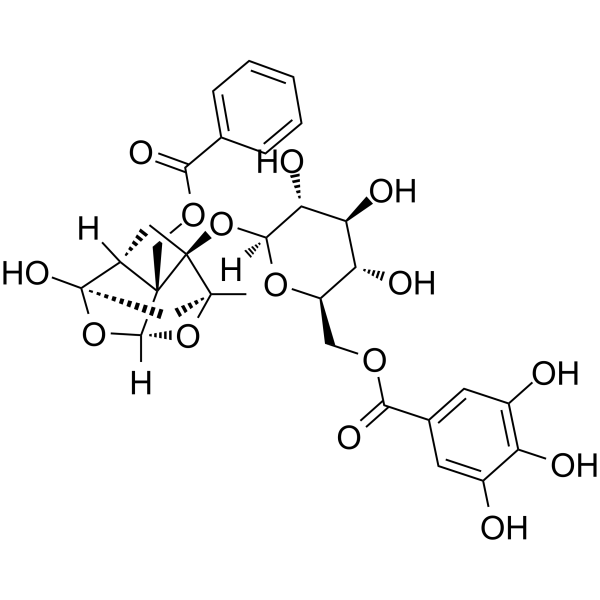
Cat. No.: HY-N5048
CAS No.: 122965-41-7
Synonyms: 6'-O-Galloyl paeoniflorin
Galloylpaeoniflorin (6'-O-Galloyl paeoniflorin) is an orally active galloylated derivative of Paeoniflorin (HY-N0293) found in peony roots with various anti-inflammatory and antioxidant activities. Galloylpaeoniflorin suppresses RANKL-induced activation of ERK, JNK, c-Fos, c-Jun, and NFATc1, and reduces osteoclast-specific gene expression. Galloylpaeoniflorin activates Nrf2 and PI3K/Akt pathways, inhibits NF-κB activation, and scavenges ROS to reduce oxidative DNA, lipid, and protein damage. Galloylpaeoniflorin attenuates neuroinflammation, inhibits apoptosis, reduces Helicobacter pylori-induced gastric mucosa injury and UVB-induced cell damage. Galloylpaeoniflorin can be used for the research of osteoporosis, gastritis, ischemic stroke and skin diseases .
loading...
    loading...
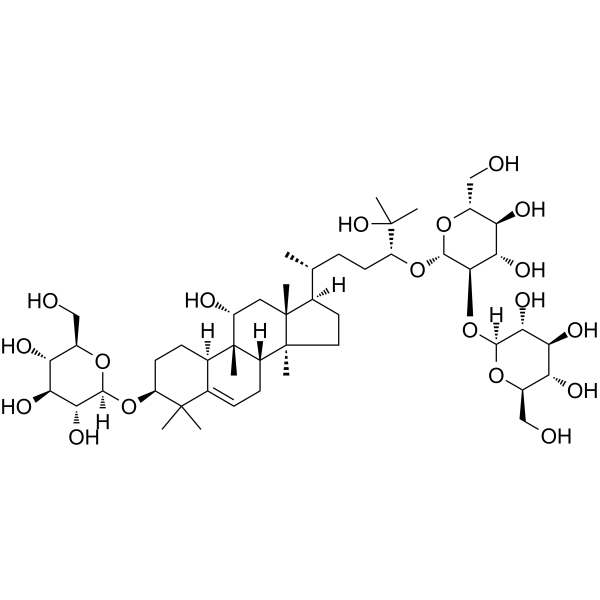
Cat. No.: HY-N6928
CAS No.: 88901-37-5
Mogroside III-E is a cucurbitane-type triterpenoid glycoside extracted from Siraitia grosvenorii, and it is an orally active TLR4 inhibitor. Mogroside III-E downregulates the expression of TLR4 and MyD88, and blocks the phosphorylation of downstream ERK, JNK and p38 MAPK molecules; meanwhile, it inhibits TGF-β- or LPS-mediated transdifferentiation of primary pulmonary fibroblasts into myofibroblasts, reduces the content of fibrosis markers such as hydroxyproline, suppresses the pro-fibrotic TGF-β/Smad signaling pathway, and downregulates the levels of inflammatory factors MPO and IL-1β. Mogroside III-E alleviates Bleomycin (HY-108345)-induced pulmonary collagen deposition and inflammatory infiltration in mice. Mogroside III-E can be used in studies related to idiopathic pulmonary fibrosis .
loading...
    loading...
Cat. No.: HY-N7700
CAS No.: 15769-56-9
Synonyms: G2013
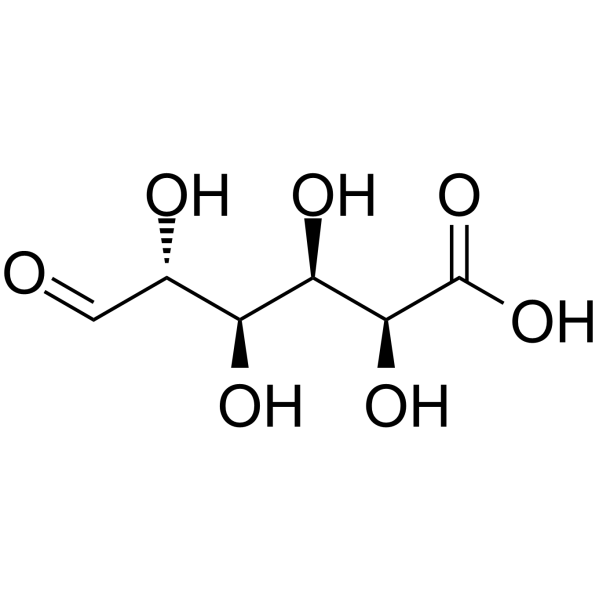
Guluronic acid (G2013) is an orally active oxidative stress regulator and anti-inflammatory agent that exerts pharmacological effects by down-regulating various pro-inflammatory and oxidative stress-related genes (such as TLR4, NF-κB, iNOS, etc.) and inhibiting the activities of COX-2, MMPs and VEGF. Low-dose Guluronic acid up-regulates the expression of immunoregulatory genes SHIP1 and SOCS1, thereby effectively inhibiting cancer-related inflammation, tumor angiogenesis, cell adhesion and metastasis, while reducing the accumulation of immunosuppressive cells. Guluronic acid significantly prolongs the survival time of tumor-bearing hosts within a concentration range without direct cytotoxicity, demonstrating favorable safety. Guluronic acid has involved in the research of multiple sclerosis, ankylosing spondylitis, breast cancer and other inflammatory diseases .
loading...
    loading...
Cat. No.: HY-N9602
CAS No.: 189689-31-4
6,7,4'-Trihydroxyflavanone is a compound with multiple pharmacological activities, including anti-rheumatic, anti-ischemic, anti-inflammatory, anti-osteoclastogenic and protective T-cells from METH-induced deactivation. 6,7,4'-Trihydroxyflavanone has shown potential protective effects in neurotoxicity studies and can be used to inhibit patients with neurodegenerative diseases caused by METH. 6,7,4'-Trihydroxyflavanone inhibits METH-induced neurotoxicity by upregulating the Nrf2/HO-1 and PI3K/Akt/mTOR signaling pathways. 6,7,4'-Trihydroxyflavanone can also induce Nrf2 nuclear translocation and HO-1 expression, further enhancing its protective effect on neuronal cells .
loading...
    loading...
Cat. No.: HY-P11291A
Research Areas:  

Metabolic Disease

NNC0165-1273 TFA is a selective NPY Y2 receptor agonist with a Ki of 2 nM and an EC50 of 5.0 nM. NNC0165-1273 TFA blocks Ghrelin-induced cFos expression. NNC0165-1273 TFA reduces nocturnal food intake, attenuates feeding behavior, induces early satiety, and causes dose-dependent decreases in body weight and fat mass in diet-induced obese mice. When used in combination with Semaglutide (HY-114118), NNC0165-1273 TFA reduces preference for high-fat diet, promotes body weight loss, and produces sustained weight loss effects in diet-induced obese rats. NNC0165-1273 TFA can be used in studies related to diet-induced obesity .
loading...
    loading...
Cat. No.: HY-P11298
CAS No.: 2120397-85-3
d-T101 peptide, a human hormone-peptide, is a T1/ST2 receptor ligand. d-T101 peptide binds to the T1/ST2 receptor and activates caspases 8, 9 and 3 mediated apoptosis, together with activation of JNKinase and p38 MAPKinase. d-T101 peptide also changes Golgi structural with function loss and downregulation of the endoplasmic reticulum (ER) stress repair mechanism. d-T101 peptide has immunostimulatory and anticancer activity, selectively induces apoptosis in proliferating cancer cells and increases IL-2 and IFN-γ expression as well as the recruitment of NK cells and M1 macrophages to the tumor site .
loading...
    loading...
Cat. No.: HY-P12141
CAS No.: 2227651-65-0
Synonyms: KP405
DA5-CH (KP405) is a blood-brain barrier-permeable GLP-1/GIP receptor agonist. DA5-CH activates GLP-1 and GIP receptors, inhibits the NF-κB inflammatory pathway, reduces α-synuclein (α-synuclein) levels, restores the expression of tyrosine hydroxylase and neurotrophic factors, improves motor function, decreases amyloid plaques and phosphorylated tau protein levels in the hippocampus, restores synaptic plasticity, regulates the PI3K/AKT/GSK3β and CREB signaling pathways, and alleviates mitochondrial stress. DA5-CH can be used for research on Parkinson's disease and Alzheimer's disease .
loading...
    loading...
Cat. No.: HY-P1624S
Synonyms: ALX-0600-Ala(13C3,15N) sodium
Teduglutide-Ala( 13C3, 15N) (ALX-0600-Ala( 13C3, 15N)) sodium is the 13C- and 15N-labeled Teduglutide (HY-P1624). Teduglutide (ALX-0600) is an analog of human glucagon like peptide-2 (GLP-2). Teduglutide can activate the expression of nuclear receptor subfamily 4 group a member 1 (NR4a1)/nur77 and intestinal FXR signaling in human hepatic stellate cells, thereby improving liver inflammation and fibrosis in mice with sclerosing cholangitis. Teduglutide can alleviate intestinal dysfunction in mice, improve lung injury, alleviate obesity related neuroinflammation and cell apoptosis .
loading...
    loading...
Cat. No.: HY-P1624S1
Synonyms: ALX-0600-Leu(13C6,15N) sodium
Teduglutide-Leu( 13C6, 15N) (ALX-0600-Leu( 13C6, 15N)) sodium is the 13C- and 15N-labeled Teduglutide (HY-P1624). Teduglutide (ALX-0600) is an analog of human glucagon like peptide-2 (GLP-2). Teduglutide can activate the expression of nuclear receptor subfamily 4 group a member 1 (NR4a1)/nur77 and intestinal FXR signaling in human hepatic stellate cells, thereby improving liver inflammation and fibrosis in mice with sclerosing cholangitis. Teduglutide can alleviate intestinal dysfunction in mice, improve lung injury, alleviate obesity related neuroinflammation and cell apoptosis .
loading...
    loading...
Cat. No.: HY-P2977
CAS No.: 9027-60-5
Synonyms: Sialic acid aldolase (CgNal)
N-Acetylneuraminate lyase (CgNal) (Sialic acid aldolase (CgNal)) is a rate-limiting enzyme in bacteria metabolism that catalyzes the reversible aldol cleavage of sialic acid, and it regulates the overall metabolism of the bacterial sialic acid catabolic pathway. N-Acetylneuraminate lyase (CgNal) catalyzes the reversible condensation reaction of pyruvate and N-acetyl-d-mannosamine (ManNAc) to produce sialic acid N-acetylneuraminic acid (Neu5Ac). The protein expression of N-Acetylneuraminate lyase is downregulated at the translational level under the regulation of methyl methanesulfonate, and this change significantly impairs the adhesion and invasion abilities of bacteria to eukaryotic cells. N-Acetylneuraminate lyase is a key virulence-related protein in various pathogenic bacteria and is considered an antibiotic drug target. N-Acetylneuraminate lyase (CgNal) can be used in studies of invasive (extraintestinal) infectious diseases, Crohn's disease, and methicillin-resistant Staphylococcus aureus infections .
loading...
    loading...
Cat. No.: HY-P990160
Anti-Rat TCR alpha/beta Antibody (R73) is an anti-mouse TCR alpha/beta IgG1 monoclonal antibody. Anti-Rat TCR alpha/beta Antibody (R73) suppresses immune response by depleting α/β + T cells. Anti-Rat TCR alpha/beta Antibody (R73) can inhibit the expression of pro-inflammatory cytokines. Anti-Rat TCR alpha/beta Antibody (R73) can extend graft survival time by reducing infiltration of T cells and neutrophils. Anti-Rat TCR alpha/beta Antibody (R73) can be used for researches on inflammation, metabolic conditions and xenotransplantation such as arthritis, acute inflammatory peripheral neuropathy and diabetes .
loading...
    loading...
Cat. No.: HY-P991097
Synonyms: PM-8002; BNT-327

Target:  

VEGFR PD-1/PD-L1

Research Areas:  

Cancer

Pumitamig (PM-8002, BNT-327) is a bispecific antibody targeting PD-L1 and VEGF-A, with immune activation and anti-angiogenic activities. By binding to PD-L1, Pumitamig restores the function of effector T cells, while neutralizing VEGF-A in the tumor microenvironment to reverse its inhibition on the infiltration and activation of immune cells and normalize tumor blood vessels. Pumitamig can also be combined with various ADCs targeting TROP2, B7H3, HER2, HER3 for the research of advanced/metastatic solid tumors, including non-small cell lung cancer, ovarian cancer, triple-negative breast cancer, cervical cancer, etc. Pumitamig also exhibits potential efficacy in "cold" tumors with low PD-L1 expression that are insensitive to immunotherapy .
loading...
    loading...
Cat. No.: HY-P991842
Anti-CD3 Antibody (UCHT-1) is an antibody targeting CD3. Anti-CD3 Antibody (UCHT-1) activates the phospholipase C and phosphatidylinositol 3-kinase (PI3K) signaling pathways, elevates intracellular calcium levels, regulates the T3 epitope, and triggers T lymphocyte proliferation. Anti-CD3 Antibody (UCHT-1) also inhibits lymphocyte proliferation, abolishes IL-2 production, and blocks the expression of IL-2 receptors. Anti-CD3 Antibody (UCHT-1) is applicable to research related to graft-versus-host disease, acute myeloid leukemia, and B-cell acute lymphoblastic leukemia .
loading...
    loading...
Cat. No.: HY-P992519
Synonyms: ADWA-11

Research Areas:  

Cancer

PF-06940434 (ADWA-11) is a monoclonal antibody targeting integrin αvβ8. PF-06940434 inhibits αvβ8-mediated TGF-β activation. PF-06940434 increases the accumulation of tumor-infiltrating CD8 + T cells and upregulates the expression of granzyme B and TNF-γ. PF-06940434 blocks the inhibitory effect of CD4 +CD25 + T cells on the cytotoxic activity of tumor CD8 + T cells. PF-06940434 enhances the anti-tumor efficacy of combination therapies with other immunomodulators or radiotherapy and induces long-term anti-tumor immunity. PF-06940434 can be used in the research of squamous cell carcinoma, breast cancer, colon cancer, and prostate adenocarcinoma .
loading...
    loading...
Cat. No.: HY-P99759
CAS No.: 1622189-43-8
Synonyms: IL-15N72D

Target:  

Interleukin Related

Research Areas:  

Inflammation/Immunology Cancer

Nogapendekin alfa his tag is an immunostimulant that binds to the IL-2RβγC complex on immune cells. Nogapendekin alfa his tag stimulates the proliferation and activation of natural killer cells and CD8 + T cells, upregulates the expression of granzyme B and perforin, and activates the innate and adaptive immune branches. Nogapendekin alfa his tag forms ALT-803 with IL-15RαSuFc; this complex has an extended biological half-life, improved biodistribution and retention in lymphoid tissues, enhances natural killer cell-mediated rituximab-dependent cellular cytotoxicity, and reduces tumor burden and improves survival when combined with anti-CD20 monoclonal antibody therapy. Nogapendekin alfa his tag can be used in the research of non-Hodgkin's lymphoma .
loading...
    loading...
Cat. No.: HY-W009141R
CAS No.: 542-44-9
Synonyms: Glyceryl palmitate (Standard)
1-Monopalmitin (Glyceryl palmitate) (Standard) is the analytical standard of 1-Monopalmitin (HY-W009141). This product is intended for research and analytical applications. 1-Monopalmitin (Glyceryl palmitate) is an activator of the PI3K/Akt pathway and an inhibitor of P-glycoprotein (P-gp). 1-Monopalmitin can induce G2/M arrest and caspase-dependent apoptosis in cancer cells, while inhibiting IAPs protein expression. 1-Monopalmitin can increase drug accumulation by inhibiting P-gp activity in intestinal Caco-2 cells. 1-Monopalmitin has the ability to induce protective autophagy and apoptosis of lung cancer cells (IC50=50-58 μg/mL), with low toxicity to normal cells .
loading...
    loading...
Cat. No.: HY-W009141S
Synonyms: Glyceryl palmitate-d31
1-Monopalmitin-d31 (Glyceryl palmitate-d31) is the deuterium labeled 1-Monopalmitin (HY-W009141). 1-Monopalmitin (Glyceryl palmitate) is an activator of the PI3K/Akt pathway and an inhibitor of P-glycoprotein (P-gp). 1-Monopalmitin can induce G2/M arrest and caspase-dependent apoptosis in cancer cells, while inhibiting IAPs protein expression. 1-Monopalmitin can increase drug accumulation by inhibiting P-gp activity in intestinal Caco-2 cells. 1-Monopalmitin has the ability to induce protective autophagy and apoptosis of lung cancer cells (IC50=50-58 μg/mL), with low toxicity to normal cells .
loading...
    loading...
Cat. No.: HY-W012382R
CAS No.: 537-55-3
N-Acetyl-L-tyrosine (Standard) is the analytical standard of N-Acetyl-L-tyrosine (HY-W012382). This product is intended for research and analytical applications. N-Acetyl-L-tyrosine is an orally active endogenous mitochondrial stress response regulator that can permeate the cell membrane by passive diffusion. N-Acetyl-L-tyrosine induces low-level reactive oxygen species (ROS) generation by transiently perturbing mitochondrial membrane potential, triggering reverse signaling to activate FoxO and Keap1 pathways. As a result, N-Acetyl-L-tyrosine enhances the expression of antioxidant enzyme genes, exerting anti-stress and cytoprotective effects. N-Acetyl-L-tyrosine can improve heat stress tolerance, inhibit tumor growth, and regulate energy metabolism. N-Acetyl-L-tyrosine can be used in the research of aging, metabolic diseases (such as diabetes), and cancer .
loading...
    loading...

