
479 Results for "

Mevinolin-d9 (epimer mixture)

" in MedChemExpress (MCE) Product Catalog:
Products (479)

479 Results for "Mevinolin-d9 (epimer mixture)" in MCE Product Catalog:

Cat. No.: HY-181472
10 (11)-Cl-BBQ is a high-affinity aryl hydrocarbon receptor (AhR) agonist. 10 (11)-Cl-BBQ is a mixture of 10-Cl-BBQ and 11-Cl-BBQ, among which 11-Cl-BBQ exhibits higher AhR activation potency than 10-Cl-BBQ. Low-dose/short-term AhR activation by 10 (11)-Cl-BBQ promotes IL-17 production, while high-dose/sustained activation induces regulatory T cells and suppresses immune responses. 10 (11)-Cl-BBQ can be used in immunomodulation research .
loading...
    loading...
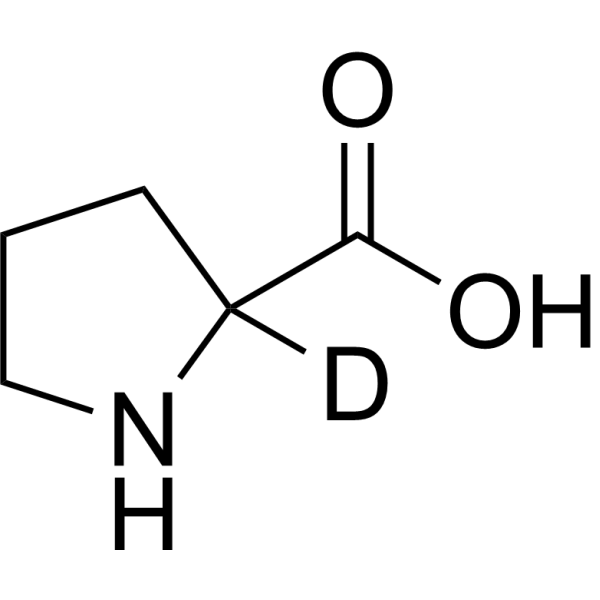
Cat. No.: HY-W012908S1
CAS No.: 282729-06-0
DL-Proline-2-d1 is the deuterated-labeled DL-Proline (HY-W012908). DL-Proline is a racemic mixture of D-Proline and L-Proline, belonging to cyclic imino acids with a five-membered ring structure. DL-Proline serves as a key structural unit in peptide synthesis. DL-Proline stabilizes β-turn conformations and affects the secondary structure of peptide segments. DL-Proline exhibits biological activities such as regulating peptide segment conformations and enhancing cyclic peptide stability. DL-Proline can be used in research on diseases related to peptide structure and function, including cancer and bacterial infections .
loading...
    loading...
Cat. No.: HY-W076861
CAS No.: 5678-45-5
Research Areas:  

Infection

3-Amino-3-(4-methoxyphenyl)propanoic acid is a β-amino acid. 3-Amino-3-(4-methoxyphenyl)propanoic acid can be stereoselectively synthesized using alanine as an amino donor and 3-(4-methoxyphenyl)3-oxopropanoic acid as an amino acceptor with a β-amino acid transaminase. 3-Amino-3-(4-methoxyphenyl)propanoic acid can be enantiomerically enriched from a racemic mixture using pyruvic acid as an amino acceptor with a β-amino acid transaminase. 3-Amino-3-(4-methoxyphenyl)propanoic acid can be used for research of bacterial and fungal infections .
loading...
    loading...
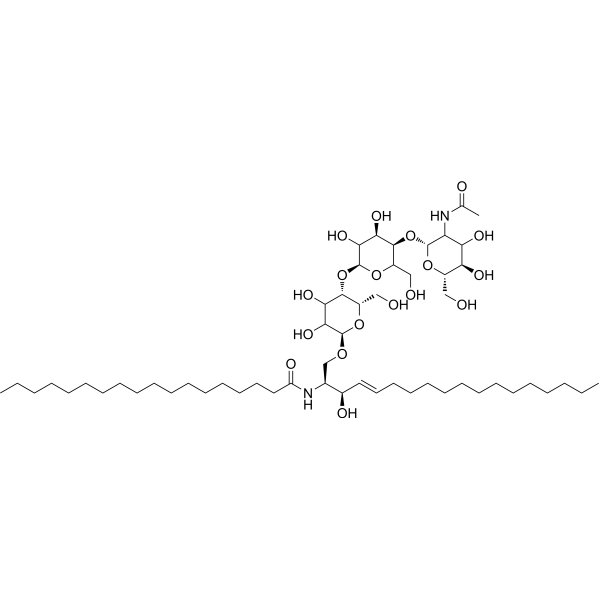
Cat. No.: HY-W127461
CAS No.: 35960-33-9
Synonyms: Gangliotriosylceramide
Research Areas:  

Others

Ganglioside GM2 asialo (asialo-GM2) is a glycosphingolipid containing three monosaccharide residues and one fatty acid of variable chain length, but lacks the sialic acid residue present on ganglioside M2. Asialo-GM2 is found at low or undetectable levels in normal human brains, but it accumulates in the brains of patients with Tay-Sachs disease and Sandhoff disease, which are expressed as lysosomal β- A neurodegenerative disorder characterized by hexosaminidase A and B deficiency. It also binds to various bacteria, including Pseudomonas isolated from cystic fibrosis patients. The Asialo-GM2 mixture contains ganglioside GM2 asialo molecular species with fatty acyl chains of variable length.
loading...
    loading...
Cat. No.: HY-103019AR
CAS No.: 1610358-53-6
Synonyms: (±)-BAY-1251152 (Standard); (±)-VIP152 (Standard)
Research Areas:  

Cancer

(±)-Enitociclib (Standard) is the analytical standard of (±)-Enitociclib (HY-103019A). This product is intended for research and analytical applications. (±)-Enitociclib ((±)-BAY-1251152) is the racemic mixture of Enitociclib (HY-103019E). Enitociclib is a selective CDK9 inhibitor and apoptosis inducer. Enitociclib inhibits CDK9 activity and reduces the phosphorylation of Ser2 in the carboxyl-terminal domain (CTD) of RNA polymerase Pol II, thereby downregulating the transcription of key oncogenes such as MYC and MCL1. Enitociclib has anti-proliferative activity targeting MYC+ lymphoma and multiple myeloma (MM) cells, and has synergistic effects with Bortezomib (HY-10227) and Lenalidomide (HY-A0003), and can be used in the research of hematological malignancies .
loading...
    loading...
Cat. No.: HY-P10428
Target:  

HPV

Research Areas:  

Infection

E6AP-mimicking peptide (compound 13) is a high-affinity, selective, irreversible and potent peptide-based covalent HPV16 E6 inhibitor targeting the 16E6 oncoprotein using a cysteine-reactive acrylamide warhead. E6AP-mimicking peptide has a Ki of 17 nM. E6AP-mimicking peptide targets all residues appearing in the binding pocket of E6 to disrupt the binding interface of 16E6 and E6AP. E6AP-mimicking peptide selectively binds and crosslinks to MBP-16E6 in PBS or a protein mixture .
loading...
    loading...
Cat. No.: HY-W010807R
CAS No.: 540-10-3
Research Areas:  

Others

Hexadecyl palmitate (Standard) is the analytical standard of Hexadecyl palmitate. This product is intended for research and analytical applications. Hexadecyl palmitate is an organic compound commonly used in the cosmetic industry as an emollient, thickener and skin conditioning agent. Cetyl palmitate is derived from a mixture of cetyl alcohol (a fatty alcohol) and palmitic acid (a saturated fatty acid). It is often used in skin care products such as moisturizers, lotions, and creams to improve their texture and Helps them glide smoothly on the skin. In addition to its use in cosmetics, cetyl palmitate is used in other industries including pharmaceuticals, food additives and lubricants. Overall, it's considered safe for use in personal care products, but like any other ingredient, it may cause irritation or an allergic reaction in some people.
loading...
    loading...
Cat. No.: HY-118197
CAS No.: 130007-52-2
Target:  

FLAP

Research Areas:  

Inflammation/Immunology

L-669083 is a leukotriene biosynthesis inhibitor whose structure is based on a mixture of indole and quinoline. In this study, a potent radioiodinated photoaffinity analog of L-689,037, [125I] L-691,678, was developed and characterized for immunoprecipitation studies showing that the quindole series of leukotriene biosynthesis inhibitors directly interact with FLAP. In addition, the results showed that MK-886, L-674,573, and L-689,037 competed with [125I] L-691,678 and [125I] L-669083 for binding to FLAP in a concentration-dependent manner, indicating that these three leukotriene biosynthesis inhibitors share a binding site on FLAP, further demonstrating that FLAP is a suitable target for structurally diverse leukotriene biosynthesis inhibitors.
loading...
    loading...
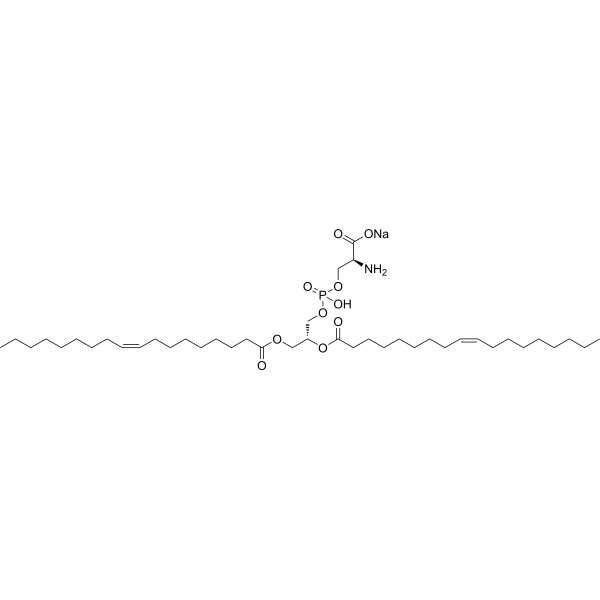
Cat. No.: HY-141613
CAS No.: 90693-88-2
Purity:  ≥98.0%
Synonyms: DOPS-NA
Target:  

Liposome

Research Areas:  

Others

1,2-Dioleoyl-sn-glycero-3-phospho-L-serine sodium (DOPS-NA) is a ubstitute for Phosphoserine/phosphatidylserine. 1,2-Dioleoyl-sn-glycero-3-phospho-L-serine sodium can be used together with DOPC and DOPE in lipid mixtures for the synthesis of liposomes. 1,2-Dioleoyl-sn-glycero-3-phospho-L-serine sodium can self-assemble into single-layer or double-layer membrane structures, similar to cell membranes, and possesses high membrane fluidity and flexibility. 1,2-Dioleoyl-sn-glycero-3-phospho-L-serine is widely applied in membrane biology, cell membrane research, lipid preparation, and drug delivery systems .
loading...
    loading...
Cat. No.: HY-154636
CAS No.: 8012-95-1
Research Areas:  

Endocrinology

Liquid Paraffin is a petroleum-derived mixture of saturated hydrocarbons and an orally active fecal lubricant. Liquid Paraffin is widely used in studies of constipation and fecal incontinence in children through its lubricating effect and the osmotic effect generated by its conversion to hydroxy fatty acids. Liquid Paraffin has high safety, is non-carcinogenic, and does not affect fat-soluble vitamin levels with long-term use. Liquid Paraffin does not cause abdominal pain or electrolyte disorders, but may lead to lipoid pneumonia and granulomas caused by rectal administration. Liquid Paraffin can also be used as a phase change material for thermal energy storage, or combined with nanoparticles to form a protective boundary film to reduce mechanical wear .
loading...
    loading...
Cat. No.: HY-172883A
Target:  

FABP PPAR

(E/Z)-ABP/PPAR modulator 1 is a mixture of the E and Z isomers of ABP/PPAR modulator 1 (HY-172883). ABP/PPAR modulator 1 is an orally active FABP and PPAR multiple modulator (IC50s of 0.65  μM and 1.08  μM for FABP1 and FABP4, EC50 s of 9.19  μM, 2.20  μM and 1.58 μM for PPARα, PPARγ and PPARδ). ABP/PPAR modulator 1 has potent anti-metabolic dysfunction-associated steatohepatitis (MASH) activity. ABP/PPAR modulator 1 dose-dependently ameliorates multiple pathological characteristics of fatty liver in WD + Carbon tetrachloride-induced MASH mice model .
loading...
    loading...
Cat. No.: HY-175088
Synonyms: C48:2 EOP (t18:0/30:0w18:2 (9Z,12Z)); N-(30-Linoleoyloxy-triacontanoyl)-phytosphingosine
Target:  

Drug Derivative

Research Areas:  

Others

EOP (t18:0/30:0/18:2) (C48:2 EOP (t18:0/30:0w18:2 (9Z,12Z)); N-(30-Linoleoyloxy-triacontanoyl)-phytosphingosine) is a plant ceramide-based EOS analog. EOP (t18:0/30:0/18:2) is formed by esterifying an ω-hydroxy very long chain ceramide (C28-36) with the essential fatty acid linoleic acid. EOP (t18:0/30:0/18:2) has been used as a component of a model stratum corneum lipid mixture .
loading...
    loading...
Cat. No.: HY-W017982
CAS No.: 55965-84-9
Synonyms: CMI/MI
CMIT/MIT (14.5% in water) (CMI/MI) is a mixture of CMIT and MIT, and is also a preservative and skin sensitizer. CMIT/MIT (14.5% in water) increases the levels of phosphorylated ERK1/2, p38, JNK1/2, p53, p21 and Bax, decreases the level of Bcl-2, and activates the Nrf-2/HO-1 signaling pathway. CMIT/MIT (14.5% in water) increases LDH release and lipid peroxidation levels, impairs antioxidant defense capacity, promotes pro-inflammatory cytokine release, induces apoptosis, triggers cell cycle arrest, exhibits neurotoxicity in neuroblastoma cells, and causes dysregulation of Th2/Th17 immune responses. CMIT/MIT (14.5% in water) can be used in studies related to allergy, atopic dermatitis and lung injury .
loading...
    loading...
Cat. No.: HY-KE8014

Protein Deglycosylation Kit (for N-linked & Complex O-linked Glycans) includes the enzymes and reagents reuired for the removal of all N-linked and some complex O-linked glycans. The enzyme reagent in this kit is a mixture of five glycosidases, namely PNGase F, O-Glycosidase, α2-3,6,8,9 Neuraminidase, β1-4 Galactosidase, and β-N-Acetylhexosaminidase. All enzymes in this kit are recombinant enzymes expressed in Escherichia coli BL21 and subsequently purified. The molecular weights of these enzymes are as follows: PNGase F is 36 kDa, O-Glycosidase is 14 kDa,α2-3,6,8,9 Neuraminidase is 66 kDa, β1-4 Galactosidase is 94 kDa, and β-N-Acetylhexosaminidase is 55 kDa.

loading...
    loading...
Cat. No.: HY-100742R
CAS No.: 1802977-61-2
GNE-140 racemate (Standard) is the analytical standard of GNE-140 racemate (HY-100742). This product is intended for research and analytical applications. GNE-140 racemate is a racemic mixture of (R)-GNE-140 (HY-100742A) and (S)-GNE-140 (HY-100742B), and also a tautomer of GNE-140 (HY-118241). GNE-140 racemate is an orally active lactate dehydrogenase inhibitor, with an IC50 of 3 nM against human LDHA and an IC50 of 5 nM against LDHB. GNE-140 racemate reduces the phosphorylation level and total protein expression of p38 MAPK, and inhibits EGF-induced AKT phosphorylation. GNE-140 racemate decreases lactate production, regulates glycolysis, the pentose phosphate pathway and nucleotide biosynthesis, increases extracellular pH, inhibits cell proliferation, migration and invasion, and induces caspase-3 activation and ROS accumulation. GNE-140 racemate can be used in research related to breast cancer, cystic fibrosis and pancreatic cancer .
loading...
    loading...
Cat. No.: HY-W017982A
CAS No.: 55965-84-9
Synonyms: CMI/MI (2.0-2.5% in water)
CMIT/MIT (2.0-2.5% in water) (CMI/MI (2.0-2.5% in water)) is a mixture of CMIT and MIT, and is also a preservative and skin sensitizer. CMIT/MIT (2.0-2.5% in water) increases the levels of phosphorylated ERK1/2, p38, JNK1/2, p53, p21 and Bax, decreases the level of Bcl-2, and activates the Nrf-2/HO-1 signaling pathway. CMIT/MIT (2.0-2.5% in water) increases LDH release and lipid peroxidation levels, impairs antioxidant defense capacity, promotes pro-inflammatory cytokine release, induces apoptosis, triggers cell cycle arrest, exhibits neurotoxicity in neuroblastoma cells, and causes dysregulation of Th2/Th17 immune responses. CMIT/MIT (2.0-2.5% in water) can be used in studies related to allergy, atopic dermatitis and lung injury .
loading...
    loading...
Cat. No.: HY-L221
626 compounds

Cosmetics are complex mixtures formulated through the rational blending and processing of various natural, synthetic, or extracted raw materials. The ingredients used in cosmetics are diverse in type and functionality. Based on their properties and applications, cosmetic ingredients can generally be classified into two main categories: base materials and auxiliary ingredients. The former constitutes the primary component of cosmetics, accounting for a significant proportion in formulations and serving as the key functional substances. Auxiliary ingredients, on the other hand, play roles in shaping the product, ensuring stability, or imparting color, fragrance, and other specific characteristics.Establishing a systematic ingredient database is of great significance for cosmetic research and development. By analyzing the physicochemical properties (such as oil-water partition coefficients and molecular weight distribution), biological activity mechanisms (such as antioxidant pathways and cellular signaling regulation), and compatibility of ingredients, the database can provide precise guidance for formulation design. This approach helps shorten the development cycle of cosmetic/skincare products and reduces trial-and-error costs.

MCE offers 626 types of cosmetic ingredient compounds, including antioxidants, humectants, emulsifiers, film-forming agents, and more.

Cat. No.: HY-122895A
CAS No.: 2285446-67-3
Purity:  98.09%
Target:  

PDI Apoptosis

Research Areas:  

Cancer

(E/Z)-E64FC26 is a mixture of the stereoisomers E-E64FC26 and Z-E64FC26, in which E-E64FC26 is the active component and acts as a potent PDI inhibitor. The IC50 values of E64FC26 (E-E64FC26) for PDIA1, PDIA3, PDIA4, TXNDC5, and PDIA6 are 0.6, 4.8, 33.1, 12.1, and 5.7 μM, respectively. By inhibiting PDI, (E/Z)-E64FC26 causes massive intracellular accumulation of misfolded polyubiquitinated proteins, thereby triggering strong endoplasmic reticulum stress and oxidative stress responses, which in turn induce apoptosis. (E/Z)-E64FC26 is used in research on multiple myeloma, ovarian cancer, and breast cancer .
loading...
    loading...
Cat. No.: HY-141613S
Synonyms: (2S,8R,19Z)DOPS-d3 ammonium
(2S,8R,19Z)1,2-Dioleoyl-sn-glycero-3-phospho-L-serine-d3 ammonium ((2S,8R,19Z)DOPS-d3 ammonium) is the deuterium labeled (2S,8R,19Z)1,2-Dioleoyl-sn-glycero-3-phospho-L-serine ammonium (HY-141613). 1,2-Dioleoyl-sn-glycero-3-phospho-L-serine sodium (DOPS-NA) is a ubstitute for Phosphoserine/phosphatidylserine. 1,2-Dioleoyl-sn-glycero-3-phospho-L-serine sodium can be used together with DOPC and DOPE in lipid mixtures for the synthesis of liposomes. 1,2-Dioleoyl-sn-glycero-3-phospho-L-serine sodium can self-assemble into single-layer or double-layer membrane structures, similar to cell membranes, and possesses high membrane fluidity and flexibility. 1,2-Dioleoyl-sn-glycero-3-phospho-L-serine is widely applied in membrane biology, cell membrane research, lipid preparation, and drug delivery systems .
loading...
    loading...

