563 Results for "

MCF7

" in MedChemExpress (MCE) Product Catalog:
Products (563)

563 Results for "MCF7" in MCE Product Catalog:

Cat. No.: HY-161786
Bcl-2-IN-20 (Compound 81) is an inhibitor for Bcl-2 with IC50 <10 μM (79.1% inhibition at 9 μM). Bcl-2-IN-20 exhibits cytotoxicity in SK-MEL-28 (IC50>10 μM), A549 (IC50=6.1 μM), HepG2 (IC50>10 μM), MCF-7 (IC50=8.9 μM), HCT116 (IC50>10 μM) and HEK-293 (IC50=14.1 μM). Bcl-2-IN-20 promotes the ROS production, induces apoptosis and DNA damage .
loading...
    loading...
Cat. No.: HY-168608
CAS No.: 1909225-07-5
Research Areas:  

Cancer

TRPM7-IN-1 (compound SUD), a benzoylurea derivative, is an effective TRPM7 inhibitor. TRPM7-IN-1 induces cell cycle arrest and apoptosis, decreases the migration of MCF-7 and BGC-823 cells. TRPM7-IN-1 decreases vimentin expression and increases E-cadherin expression. TRPM7-IN-1 potentially reduces the TRPM7-like current and decreases TRPM7 expression through the PI3K/Akt signaling pathway. TRPM7-IN-1 is a potential agent to suppress the metastasis of breast and gastric cancer by inhibiting TRPM7 expression and function .
loading...
    loading...
Cat. No.: HY-169382
Target:  

Melatonin Receptor

Research Areas:  

Cancer

Melatonin-Tamoxifen Conjugate (compound 16c) is an anticancer drug conjugate composed of Melatonin (HY-B0075) and Tamoxifen (HY-13757A), which is a potent antagonist of ERα (IC50=863 nM). Melatonin-Tamoxifen Conjugate binds to MLT receptor (Ki=3.1 nM) and promotes β-arrestin (EC50=914 nM) and ERK activation (EC50=98 nM) in cells expressing hMT1 receptor. Melatonin-Tamoxifen Conjugate against several common cell lines MCF-7, MDA-MB-231, and HT-1080 with IC50s of 6.8 μM, 6.4 μM, and 1.7 μM, respectively.
loading...
    loading...
Cat. No.: HY-173365
Target:  

VEGFR

Research Areas:  

Cancer

VEGFR-2-IN-67 (Compound 6b) is an inhibitor of vascular endothelial growth factor receptor 2 (VEGFR-2). Its IC50 values for MDA-231 and MCF-7 cell lines are 5.91 µM and 7.16 µM respectively, and its inhibitory effect on VEGFR-2 is comparable to that of Sorafenib (HY-10201) (IC50 is 53.63 nM). VEGFR-2-IN-67 exerts significant anti-cancer activity through mechanisms such as inducing Apoptosis (the early apoptosis rate reaches 57.20%), arresting the cell cycle at the G1 phase, upregulating pro-apoptotic markers and downregulating Bcl-2. VEGFR-2-IN-67 can be used for research in the field of cancer .
loading...
    loading...
Cat. No.: HY-173492
Target:  

EGFR Apoptosis

Research Areas:  

Cancer

EGFR-IN-156 (Compound 7f) is an EGFR inhibitor that also has inhibitory activity against mutations EGFRL858R and EGFRT790M (IC50 values are 0.186, 0.131, and 0.107 μM, respectively). EGFR-IN-156 has significant anticancer activity against human cancer cell lines HepG-29 (liver cancer), MCF-7 (breast cancer), and HCT-116 (colon cancer) (IC50 values are 1.67, 5.32, and 6.56 μM, respectively). EGFR-IN-156 inhibits cancer cell proliferation by inducing cell cycle arrest at the G/G1 phase and triggering apoptosis. EGFR-IN-156 shows promise in EGFR-related cancers .
loading...
    loading...
Cat. No.: HY-174232
Research Areas:  

Cancer

EGFR/CA-IX-IN-1 (Compound 14) is a dual inhibitor against epidermal growth factor receptor (EGFR) and carbonic anhydrase IX (CA-IX) with IC50 values of 5.92 nM and 63 nM, respectively. EGFR/CA-IX-IN-1 shows strong cytotoxicity against breast cancer cells (MDA-MB-231, MCF-7) with IC50 values of 5.78 μM and 8.05 μM, respectively. EGFR/CA-IX-IN-1 inhibits the catalytic activity of CA-IX, up-regulates BAX/Bcl-2, activates caspases, and arrests the cell cycle at the G1 phase. EGFR/CA-IX-IN-1 is promising for research of breast cancer .
loading...
    loading...
Cat. No.: HY-182275
Research Areas:  

Cancer

PROTAC PRMT1 degrader-1 (compound 4) is a PRMT1 PROTAC degrader, with a DC50 of 0.77 μM (MCF-7 cells). PROTAC PRMT1 degrader-1 recruits the CRBN E3 ubiquitin ligase to induce proteasome-dependent degradation of PRMT1; it also forms a ternary complex with PRMT1 and CRBN, promoting ubiquitination and subsequent proteasomal degradation of PRMT1. PROTAC PRMT1 degrader-1 reduces the level of asymmetric dimethylarginine in cancer cells, as well as the level of asymmetric dimethylation of arginine 3 on histone H4, while inhibiting the growth of various cancer cells. PROTAC PRMT1 degrader-1 can be used in the research of breast cancer and melanoma .
loading...
    loading...
Cat. No.: HY-183618
Research Areas:  

Cancer

DW-229 is a PROTAC degrader derived from Deferiprone (HY-B0568), targeting Fe(II)/α‑ketoglutarate‑dependent histone lysine demethylases (KDMs). DW-229 degrades KDM2A, KDM3A, KDM5B, KDM4A‑C, KDM5C, KDM6B in breast cancer cells. DW-229 shows IC50 < 0.5 μM against MCF‑7 cells and IC50 of 8.87 μM against MDA‑MB‑231 cells, with high cancer cell selectivity. DW-229 can be used for the research of breast cancer, liver cancer, prostate cancer, lung cancer .
loading...
    loading...
Cat. No.: HY-N10778
CAS No.: 1301267-02-6
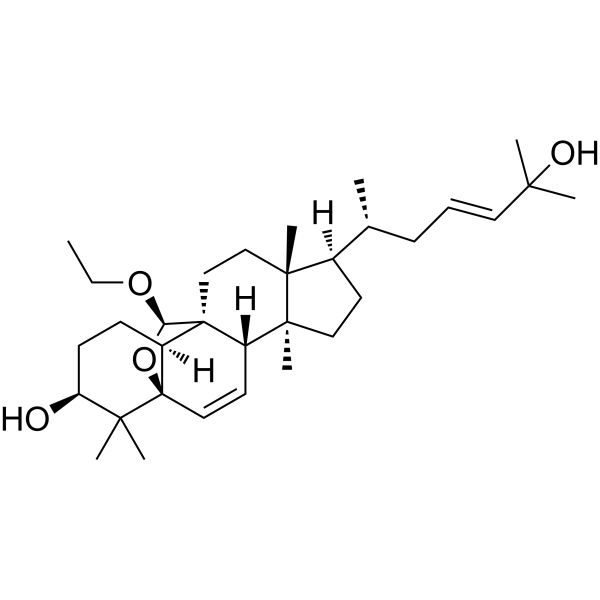
(19R,23E)-5b,19-Epoxy19-ethoxycucurbita-6,23-diene-3b,25-diol is a cucurbitane-type triterpenoid. (19R,23E)-5b,19-Epoxy19-ethoxycucurbita-6,23-diene-3b,25-diol has been tested to no effect against 5 cancer cell lines, MCF-7, HepG2, Du145, Colon205 and HL-60 by MTT assay .
loading...
    loading...
Cat. No.: HY-149633
Research Areas:  

Cancer

EGFR/HER2/DHFR-IN-3 (compound 4c) is a potent dual inhibitor of EGFR/HER2, with IC50s of 0.138 and 0.092 μM, respectively. EGFR/HER2/DHFR-IN-3 also inhibits DHFR, with an IC50 of 0.193 M. EGFR/HER2/DHFR-IN-3 causes arrest at the S phase of the cell cycle and induces apoptosis in MCF7 breast cancer cells .
loading...
    loading...
Cat. No.: HY-151459
CAS No.: 2831498-09-8
VEGFR-2/DHFR-IN-2 (compound 5b) is an inhibitor of VEGFR-2 and DHFR with IC50s of 0.623 and 9.085 μM, respectively. VEGFR-2/DHFR-IN-2 exhibits good cytotoxic activities against C26, HepG2, and MCF7 cancer cell lines with IC50 values of 3.59-8.38 μM. VEGFR-2/DHFR-IN-2 can be used for the research of cancer .
loading...
    loading...
Cat. No.: HY-P10873
ST-CY14 is an inhibitor for Nur77-PPARγ interaction with an EC50 of 3.15 μM, that binds to Nur77 (Kd=32 nM), blocks Nur77 from being ubiquitinated and degraded by PPARγ, reduces fatty acid uptake and mitochondrial respiration, and inhibits the transcription of CD36 and FABP4. ST-CY14 inhibits the proliferation and migration of cancer cell MCF7 and MDA-MB-231. ST-CY14 inhibits tumor growth and bone metastasis in mouse models .
loading...
    loading...
Cat. No.: HY-164924
CAS No.: 3026007-23-5
Research Areas:  

Cancer

ERD-12310A is an orally active ERα PROTAC degrader, with a Ki value of 0.95 nM against human ERα and a DC50 of 47 pM for ERα in MCF-7 cells. ERD-12310A forms a ternary complex with ERα and the CRBN E3 ubiquitin ligase, thereby inducing ubiquitination and proteasomal degradation of wild-type and ESR1 Y537S mutant ERα. ERD-12310A induces tumor regression in ER+ breast cancer xenografts and inhibits tumor growth in ESR1 Y537S mutant breast cancer xenografts. ERD-12310A can be used in studies related to ER-positive breast cancer and ESR1-mutant breast cancer .
loading...
    loading...
Cat. No.: HY-171895
CAS No.: 774603-05-3
Synonyms: 12-Nitro-9-cis,12-cis-octadecadienoic acid
12-Nitrolinoleate (12-Nitro-9-cis,12-cis-octadecadienoic acid) is an activator for peroxisome proliferator-activated receptor γ (PPARγ). 12-Nitrolinoleate is a nitrated form of linoleic acid. 12-Nitrolinoleate can be formed upon exposure to acidified nitrate and found in human red blood cells and plasma. 12-Nitrolinoleate can activate PPARγ-dependent gene expression in MCF-7 cells expressing PPARγ with an EC50 = 0.045 μM. 12-Nitrolinoleate is able to inhibit LPS (HY-D1056)-induced NF-κB transcription in RAW 264.7 cells. 12-Nitrolinoleate can inhibit IL-6, TNF-α and CCL2 induced by LPS .
loading...
    loading...
Cat. No.: HY-181769
CAS No.: 3043892-01-6
Anticancer agent 306 is a spiro tetramic acid derivative and a inhibitor of MMP1, MMP7 and PLK1. Anticancer agent 306 exerts antiproliferative activity against H1299, RKO and MCF-7 cells with IC50 values of 19.25 μM, 3.29 μM and 102.36 μM, respectively. Anticancer agent 306 can up-regulate p21 protein and down-regulate CCND1 and CCNB1 proteins to induce cell cycle arrest, regulate the expression of Bcl-2 and Bax to induce cell apoptosis. Anticancer agent 306 can down-regulate MMP1 and MMP7 proteins to inhibit tumor invasion and metastasis. Anticancer agent 306 can be used for the research of lung cancer, colorectal cancer, breast cancer .
loading...
    loading...
Cat. No.: HY-N16377
CAS No.: 1644075-01-3
1-Butyl-3,5,8-trihydroxy-9,10-anthracenedione (Compound 2) is an anthraquinone analog. 1-Butyl-3,5,8-trihydroxy-9,10-anthracenedione can be isolated from soil Actinomycete Streptomyces. 1-Butyl-3,5,8-trihydroxy-9,10-anthracenedione has potent cytotoxicity against HepG2, A875, BGC-823 and MCF-7 cells with IC50s of 2.29, 4.90, 0.99 and 1.66 μg/mL, respectively. 1-Butyl-3,5,8-trihydroxy-9,10-anthracenedione has an antitumor activity .
loading...
    loading...
Cat. No.: HY-172964
CAS No.: 2559686-28-9
Research Areas:  

Cancer

KIM-161 is a PIK3CA inhibitor. KIM-161 has significant antiproliferative activity with IC50 values of 1.428 and 1.562 µM against PI3KCA mutant breast cancer MCF7 and T47D cells, respectively. KIM-161 induces apoptosis and cell cycle arrest by inhibiting the PI3K/AKT/mTOR signaling pathway and inducing ROS production. KIM-161 can be used to study breast cancer and its PI3KCA mutant subtypes .
loading...
    loading...
Cat. No.: HY-N12589
CAS No.: 97643-91-9
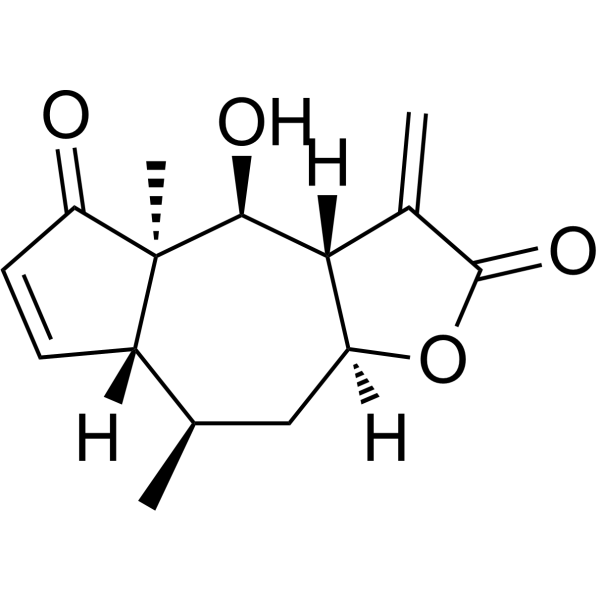
8-epi-Helenalin is a semitterpene lactone with anti-tumor activity that can be isolated from Inula britannicaL. var. chinensis (Rupr.) Reg. and the ED50 values of 8-epi-Helenalin for HL-60, A549, MCF7, HCT-15, SK-OV-3 and Malme-3M are 12.2 μM, 53.8 μM, 9.1 μM, 8.7 μM, 18.7 μM and 8.3 μM, respectively. 8-epi-Helenalin can be used for anti-tumor studies .
loading...
    loading...
Cat. No.: HY-111640
CAS No.: 1282040-14-5
Purity:  99.90%
Research Areas:  

Infection

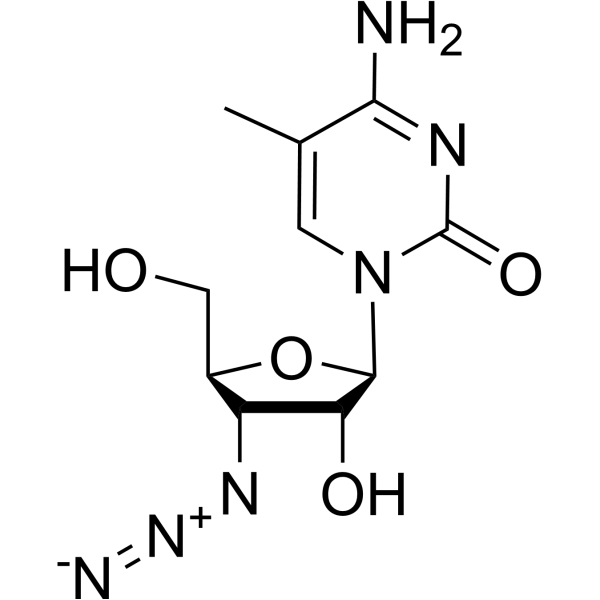
3'-Azido-3'-deoxy-5-methylcytidine (CS-92) is a potent xenotropic murine leukemia-related retrovirus (XMRV) inhibitor with a CC50 of 43.5 μM in MCF-7 cells. 3'-Azido-3'-deoxy-5-methylcytidine also inhibits HIV-1 reverse transcriptase with an EC50 of 0.06 μM in peripheral blood mononuclear (PBM) cells . 3'-Azido-3'-deoxy-5-methylcytidine is a click chemistry reagent, it contains an Azide group and can undergo copper-catalyzed azide-alkyne cycloaddition reaction (CuAAc) with molecules containing Alkyne groups. It can also undergo strain-promoted alkyne-azide cycloaddition (SPAAC) reactions with molecules containing DBCO or BCN groups.
loading...
    loading...
Cat. No.: HY-159122
CAS No.: 3009842-92-3
CA IX-IN-2 (Compound 9o) is an inhibitor for carbonic anhydrase (CA), that inhibits CA IX, CA XII and CA II with an IC50 of 5.6, 7.4 and 430 nM, respectively. CA IX-IN-2 inhibits the proliferation of cancer cell HCT-116, SW480, MDA-MB 231 and MCF-7, with IC50s of 14.63-29.33 μM. CA IX-IN-2 intercalates DNA, arrests cell cycle at G1/S phase, and induces apoptosis in MDA-MB-231. CA IX-IN-2 affects the mitochondrial membrane potential (MMP), increases the intracellular ROS levels, causes mitochondrial damage, and inhibits the cell migration of MDA-MB-231. CA IX-IN-2 exhibits antitumor efficacy in mouse models .
loading...
    loading...

