590 Results for "

Cell viability

" in MedChemExpress (MCE) Product Catalog:
Products (590)

590 Results for "Cell viability" in MCE Product Catalog:

Cat. No.: HY-183402
CAS No.: 917813-60-6
Synonyms: GO-Y026
연구분야:  

Cancer

FLLL12 (GO-Y026) is a curcumin analog anticancer agent. FLLL12 inhibits the phosphorylation of AKT, Bcl-2, Bid, EGFR, mTOR, FOXO1a, FOXO3a, STAT3, HER2/neu, as well as pancreatic AKT/STAT3; upregulates the expression of Bim and DR5; and activates PTPs. FLLL12 regulates downstream pathways, induces mitochondria-mediated and DR5-dependent extrinsic apoptosis, inhibits cancer cell viability, proliferation, anchorage-independent growth and migration, and exerts a synergistic effect with Doxorubicin (HY-15142A). FLLL12 can be used in research related to head and neck squamous cell carcinoma, breast cancer, prostate cancer, pancreatic cancer, lung cancer, colon cancer and colorectal cancer .
loading...
    loading...
Cat. No.: HY-189068
CAS No.: 1240895-94-6
연구분야:  

Cancer

GL-4512 is an orally active LILRB4/ILT3 inhibitor with an IC50 of 37 nM against human targets, and human Kd values of 18.1 nM and 39.2 nM, respectively. GL-4512 directly binds to the extracellular pockets of LILRB4/ILT3 that accommodate their ligands, blocks the LILRB4-SCG2 signaling pathway, and inhibits the downstream SHP1/SHP2 and STAT3 signaling pathways. GL-4512 restores anti-tumor immune activity, promotes the production of IFN-γ and IL-2, enhances the activation of cytotoxic T cells, reduces tumor cell viability, inhibits tumor growth, and strengthens intratumoral immune activation. GL-4512 can be used in research related to colorectal cancer and acute myeloid leukemia .
loading...
    loading...
Cat. No.: HY-N4246
CAS No.: 382148-47-2
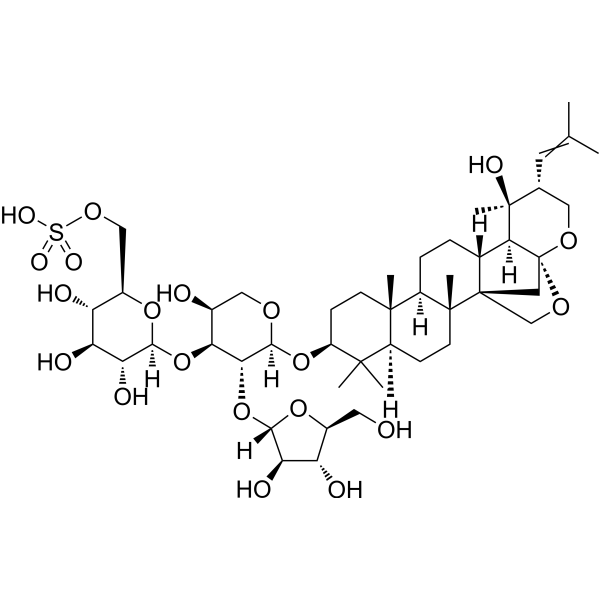
Bacopaside I is an orally active aquaporin AQP1 inhibitor and PKC modulator with neuroprotective and anticancer activities. Bacopaside I specifically blocks the water channel and cGMP-gated ion channel activities of AQP1 without affecting AQP4, thereby inhibiting the migration of colon cancer cells expressing AQP1. Bacopaside I activates the Akt pathway by interacting with PI3K, specifically inhibits MAO-A, effectively alleviates neuron necrosis and apoptosis induced by oxygen-glucose deprivation, reduces oxidative stress, and regulates the surface expression of neuroreceptors. When combined with Bacopaside II (HY-N6016), Bacopaside I significantly reduces the viability, proliferation and invasion ability of breast cancer cells, and binds to the pregnane X receptor (PXR). Bacopaside I is applicable to the research of colon cancer, breast cancer, vascular dementia, cerebral ischemia and other related diseases .
loading...
    loading...
Cat. No.: HY-D3120
CAS No.: 2246946-53-0
Target:  

Fluorescent Dye

연구분야:  

Others

LysoAIE2 is a Fluorescent probe for lysosomal viscosity detection and live-cell imaging. Its detection mechanism relies on the aggregation-induced emission effect: it exhibits only weak fluorescence in non-viscous media; in viscous environments, restricted intramolecular motion inhibits non-radiative energy dissipation pathways, thereby significantly enhancing fluorescence intensity. It achieves specific targeting of lysosomes through the proton acceptor property of its indole ring structure, while its hydroxyl group endows it with excellent water solubility. This probe is basically unaffected by microenvironmental polarity and pH within the range of pH 4.0 to pH 8.0, which avoids interference from these factors in viscosity measurement. LysoAIE2 has an emission wavelength of 570 nm. It can be used to monitor lysosomal viscosity changes during processes such as Dexamethasone (HY-14648)-induced lysosomal migration and starvation-induced mitophagy in live cells; at concentrations up to 40 μM, cell viability remains above 80%, demonstrating excellent biocompatibility .
loading...
    loading...
Cat. No.: HY-117854
CAS No.: 141311-11-7
Target:  

Leukotriene Receptor

연구분야:  

Inflammation/Immunology

SB 201146 is an LTB4 receptor antagonist with a potency range of 10 pM to 1 μM that plays a critical role in asthma-associated airway inflammation. Studies have focused on its effects on eosinophil survival, a hallmark of asthma pathology. Studies have shown that eosinophil-derived cysteinyl leukotrienes, including LTC4 and LTD4, as well as factors such as GM-CSF and fibronectin promote eosinophil survival. SB 201146 effectively reversed mast cell- and lymphocyte-induced eosinophil survival, highlighting its potential therapeutic role in disrupting the autocrine cysteinyl leukotriene pathway that maintains eosinophil viability. This antagonist also highlights the importance of LTB4 as a paracrine mediator that influences eosinophil survival in inflammatory settings such as asthma .
loading...
    loading...
Cat. No.: HY-132301
CAS No.: 2445185-57-7
Purity:  98.89%
Synonyms: MCT4-IN-1
연구분야:  

Cancer

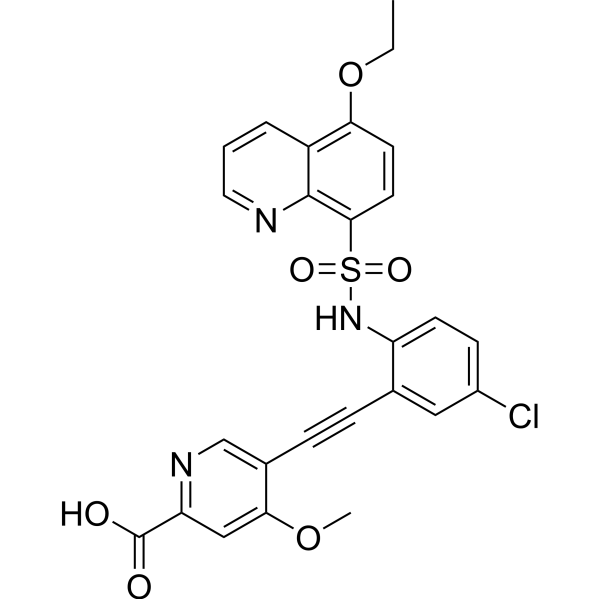
MSC-4381 (MCT4-IN-1), a chemical probe, is an orally active and selective monocarboxylate transporter 4 (MCT4/SLC16A3) inhibitor with an IC50 of 77 nM and a Ki of 11 nM. MSC-4381 targets to the cytosolic domain of MCT4. MSC-4381 results in lactate efflux inhibition and reduction of cellular viability in MCT4 high expressing cells. MSC-4381 has the potential for MCT4 transporter inhibition research . MSC-4381 is a click chemistry reagent, it contains an Alkyne group and can undergo copper-catalyzed azide-alkyne cycloaddition (CuAAc) with molecules containing Azide groups.
loading...
    loading...
Cat. No.: HY-160475
CAS No.: 1804942-56-0
AD-9308 is an orally active, highly selective aldehyde dehydrogenase 2 (ALDH2) activator. AD-9308 alleviates oxidative stress, improves mitochondrial function, restores cell viability, reduces renal tubular injury, fibrosis and inflammatory responses, reverses ventricular remodeling, restores the activities of Dicer and superoxide dismutase, inhibits the IL-6 signaling pathway, reduces the accumulation of 4-HNE-protein adducts, and improves glucose homeostasis. AD-9308 can be used in studies related to acrolein-induced kidney injury, diabetes, cardiomyopathy, heart failure, diet-induced obesity, fatty liver, insulin resistance and glucose intolerance .
loading...
    loading...
Cat. No.: HY-163709
Target:  

PROTACs FAK Akt ERK

연구분야:  

Cancer

PROTAC FAK degrader 2 is an orally active PROTAC FAK degrader with a DC50 of 60.10 nM. PROTAC FAK degrader 2 forms a ternary complex with FAK and CRBN E3 ubiquitin ligase, driving proteasome-mediated degradation of total and phosphorylated FAK. PROTAC FAK degrader 2 inhibits phosphorylation of AKT and ERK, suppressing their downstream signaling pathways. PROTAC FAK degrader 2 reduces cancer cell viability, adhesion, migration, and invasion. PROTAC FAK degrader 2 exerts anti-tumor activity in HCT8/T tumor xenografts in mice. PROTAC FAK degrader 2 can be used for the research of breast cancer, colorectal cancer, lung cancer .
loading...
    loading...
Cat. No.: HY-182700
CAS No.: 717863-53-1
Target:  

Complement System VEGFR

연구분야:  

Cancer

NRPa-308 is a potent and orally active Neuropilin-1 (NRP-1) antagonist with an IC50 of 42 μM for inhibiting VEGF-A165 binding to NRP-1. NRPa-308 blocks the specific interaction between VEGF-A165 and NRP-1. NRPa-308 effectively suppresses angiogenesis in vitro and in vivo and reduces the viability of a broad spectrum of human solid and haematological cancer cells. NRPa-308 inhibits tumor growth and prolongs median survival in a human breast cancer xenograft mouse model. NRPa-308 can be used for the research of multiple human malignancies including solid tumors and hematological cancers .
loading...
    loading...
Cat. No.: HY-P10699
CAS No.: 487036-63-5
MAX1 is a synthetic β-hairpin peptide that folds rapidly and self-assembles into a β-sheet-rich fibrous hydrogel network via non-covalent crosslinking. MAX1 hydrogel exhibits excellent shear-thinning and self-healing properties, enabling precise delivery via syringe and maintaining local retention after implantation. MAX1 hydrogel can uniformly encapsulate cells while preserving their viability and morphology, and protect growth factors (e.g., NGF) and chemotherapeutic drugs from degradation. MAX1 is applicable for spinal cord injury repair, medulloblastoma treatment, and three-dimensional high-throughput drug screening .
loading...
    loading...
Cat. No.: HY-P2265A
CAS No.: 2896737-31-6
Target:  

SOS1 Ras

연구분야:  

Cancer

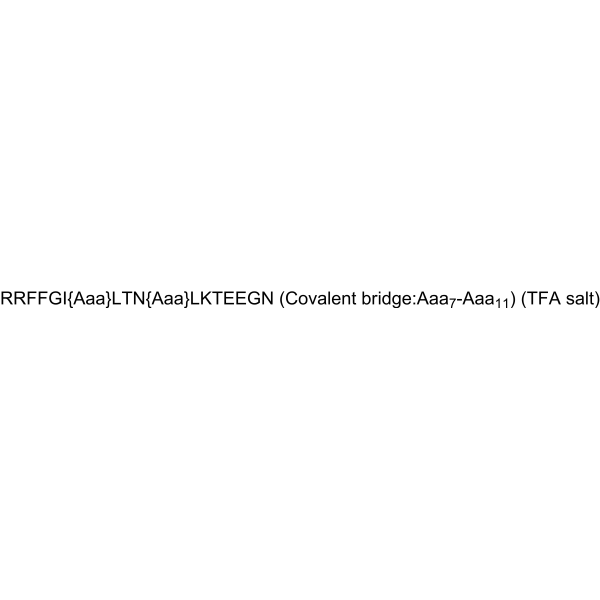
SAH-SOS1A TFA is a peptide-based SOS1/KRAS protein interaction inhibitor. SAH-SOS1A TFA binds to wild-type and mutant KRAS (G12D, G12V, G12C, G12S, and Q61H) with nanomolar affinity (EC50=106-175 nM). SAH-SOS1A TFA directly and independently blocks nucleotide association. SAH-SOS1A TFA impairs KRAS-driven cancer cell viability and exerts its effects by on-mechanism blockade of the ERK-MAPK phosphosignaling cascade downstream of KRAS .
loading...
    loading...
Cat. No.: HY-P6299
CAS No.: 944792-75-0
MAX8 is a synthetic β-hairpin peptide that folds rapidly and self-assembles into a β-sheet-rich fibrous hydrogel network via non-covalent crosslinking. MAX8 hydrogel exhibits excellent shear-thinning and self-healing properties, enabling precise delivery via syringe and maintaining local retention after implantation. MAX8 hydrogel can uniformly encapsulate cells while preserving their viability and morphology, and protect growth factors (e.g., NGF) and chemotherapeutic drugs from degradation. MAX8 is applicable for spinal cord injury repair, medulloblastoma treatment, and three-dimensional high-throughput drug screening .
loading...
    loading...
Cat. No.: HY-W041608
CAS No.: 26172-55-4
Methylchloroisothiazolinone is a widely used fungicide and also an aquatic pollutant with pro-inflammatory activity and neurotoxicity. Methylchloroisothiazolinone induces the production of pro-inflammatory cytokines (such as IL-1β, TNF-α, IL-6) by activating the NF-κB signaling pathway and upregulating TLR4 expression, thereby triggering allergic contact dermatitis. Methylchloroisothiazolinone reduces cholinesterase activity and exacerbates oxidative stress by impairing catalase activity and disrupting redox balance. Methylchloroisothiazolinone poses significant harm to Mediterranean mussels, reducing the viability of hemocytes and digestive gland cells, inhibiting immune phagocytic function, and disrupting osmoregulatory capacity. Methylchloroisothiazolinone is used in studies on allergic contact dermatitis and related immunotoxicity mechanisms .
loading...
    loading...
Cat. No.: HY-134096
CAS No.: 78323-98-5
Synonyms: DNS-M
Target:  

Fluorescent Dye

연구분야:  

Others

Dansyl-morpholine (DNS-M) is a Fluorescent probe for lipid droplet imaging, cancer cell discrimination, and real-time tracking of lipid droplet dynamics. As a solvatochromic probe with a donor-π-acceptor structure, it relies on hydrophobic interaction for its mechanism of action: its good lipophilicity, confirmed by an oil-water partition coefficient LogP = 2.35, allows it to rapidly penetrate cell membranes, and it specifically localizes to the hydrophobic core of lipid droplets; its fluorescence is strongly enhanced in the nonpolar environment of lipid droplets, while it emits very weak fluorescence in polar environments like PBS buffer, and it exhibits a bathochromic shift in emission wavelength with increasing solvent polarity. It has negligible cytotoxicity, with cell viability remaining over 95% after 24-hour incubation with 100 μM of the probe, and it possesses excellent photostability, retaining over 97% of initial fluorescence intensity after 60 continuous laser scans. For cell imaging applications, its excitation/emission wavelengths for lipid droplet labeling are Ex/Em = 405/480−540 nm, and in a simulative lipid environment O/W emulsion, it has an excitation wavelength of ~346 nm and emission wavelength of ~500 nm, giving a Stokes shift of 154 nm[1].
loading...
    loading...
Cat. No.: HY-171881
CAS No.: 864686-48-6
Target:  

GSK-3 DYRK

BI-5521 is an orally active GSK-3 inhibitor with an IC50 of 1.1 nM against GSK-3β. BI-5521 targets the two GSK-3 isoforms with similar potency and exhibits potent inhibitory activity against DYRK1A. By modulating GSK-3 activity, BI-5521 inhibits tumor proliferation and cancer cell growth, exerts cytotoxic effects, and reduces cancer cell viability. It shows consistent chemosensitivity across all subtypes of rhabdomyosarcoma, produces synergistic growth inhibitory effects when combined with SOS1 inhibitors, reduces oral glucose levels, regulates the myofibroblast differentiation pathway, decreases the nuclear localization of YAP/SMAD2/3, and lowers the positive rate of α-SMA in fibroblasts without affecting the apoptosis of CD4 + T cells. BI-5521 can be used in the research of non-small cell lung cancer, pleomorphic rhabdomyosarcoma, type 2 diabetes, pancreatic ductal adenocarcinoma, Alzheimer's disease, bipolar disorder, and metabolic dysfunction-associated steatotic liver disease .
loading...
    loading...
Cat. No.: HY-161177
연구분야:  

Infection

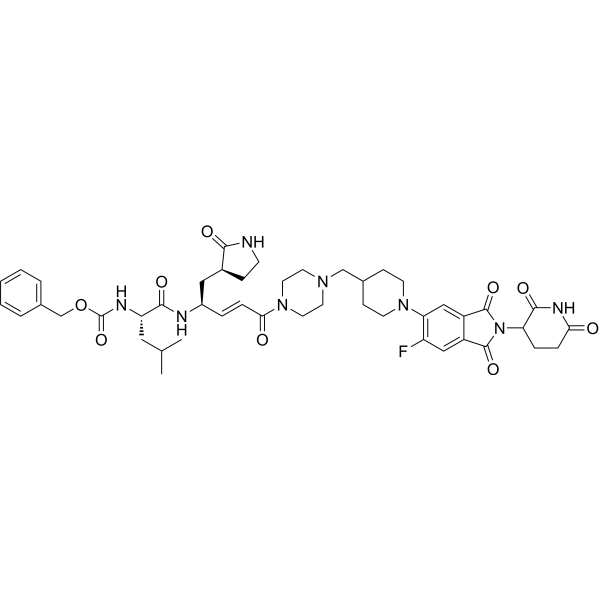
PROTAC KRAS G12D degrader 2 is a peptidomimetic PROTAC specifically targeting the dimeric SARS-CoV-2 3CL Pro protein. PROTAC KRAS G12D degrader 2 inhibits SARS-CoV-2 3CLPro with an IC50 of 21.2 μM. PROTAC KRAS G12D degrader 2 specifically binds to the active site of SARS-CoV-2 3CL Pro. PROTAC KRAS G12D degrader 2 reduces protein levels of SARS-CoV-2 3CL Pro without affecting cell viability. PROTAC KRAS G12D degrader 2 can be used for the study of viral infections in Coronavirus genera .
loading...
    loading...
Cat. No.: HY-182372
CAS No.: 1638153-78-2
Target:  

Epoxide Hydrolase

연구분야:  

Neurological Disease

SH-11037 is a potent inhibitor of soluble epoxide hydrolase (sEH) and docks to the substrate binding cleft in the sEH hydrolase domain. SH-11037 dose-dependently suppresses angiogenesis in the choroidal sprouting assay ex vivo and inhibited ocular developmental angiogenesis in zebrafish larvae. SH-11037 reduces choroidal neovascularisation lesion volume in the laser-induced CNV mouse model. SH-11037 synergises with anti-VEGF treatments in vitro and in vivo. SH-11037 induces G2/M phase blockade and retains retinal endothelial cell viability at active concentrations without overt toxicity. SH-11037 can be used for the research of retinal neovascularization and ocular neovascularization .
loading...
    loading...
Cat. No.: HY-W133627
CAS No.: 118719-16-7
Target:  

Molecular Glues

연구분야:  

Cancer

dCeMM1 is a molecular glue degrader that targets RBM39. dCeMM1 serves as a positive control for the screening of DCAF15-dependent molecular glue degraders. dCeMM1 promotes the DCAF15-RBM39 interaction, thereby recruiting RBM39 to the CRL4 DCAF15 E3 ubiquitin ligase complex, inducing ubiquitination and subsequent proteasomal degradation of RBM39. Meanwhile, dCeMM1 stabilizes DCAF15 by mediating neo-substrate recruitment to protect DCAF15 from autodegradation. dCeMM1 reduces the viability of leukemia cells in a neddylation-dependent and proteasome-dependent manner, and can be applied in leukemia-related research .
loading...
    loading...
Cat. No.: HY-159069
CAS No.: 9010-72-4
Purity:  95.02%
Zymosan (ZM), 95% is a yeast cell wall-derived carbohydrate-rich preparation and immunomodulator. Zymosan (ZM), 95% binds to and activates TLR-2, TLR-4, and Dectin-1 receptor to trigger downstream signaling pathways. Zymosan (ZM), 95% upregulates TLR-2, TLR-4, and TNF-α mRNA expression, increases serum TNF-α levels, and stimulates splenocyte number and viability in mice. Zymosan (ZM), 95% attenuates melanoma growth progression, modulates macrophage marker gene expression, and mediates phagocytosis, ROS generation, and cytokine production. Zymosan (ZM), 95% reduces Connexin 43 protein and mRNA levels, inhibits gap junctional intercellular communication, and induces proinflammatory factor production in human corneal cells. Zymosan (ZM), 95% induces peritoneal inflammation in mice, functions as a drug carrier, and supports fibroblast cell attachment in hydrogel formulations. Zymosan (ZM), 95% can be used for the research of melanoma, tumors, fungal keratitis, ocular surface inflammatory disorders, and peritoneal inflammation .
loading...
    loading...

