
100 Results for "

Starch

" in MedChemExpress (MCE) Product Catalog:
Products (100)

100 Results for "Starch" in MCE Product Catalog:

Cat. No.: HY-W017448
CAS No.: 24307-26-4
Synonyms: N,N-Dimethylpiperidinium chloride; PIX
Domaines de recherche:  

Others

Mepiquat chloride (N,N-Dimethylpiperidinium chloride) is a systemic plant growth regulator. Mepiquat chloride reduces the activity of RuBP carboxylase. Mepiquat chloride decreases plant height, total length of vegetative and fruiting branches, and total leaf area of cotton. Mepiquat chloride reduces the net photosynthetic rate of cotton leaves. Mepiquat chloride promotes starch accumulation in cotton leaves without altering sucrose content .
loading...
    loading...
Cat. No.: HY-W016993
CAS No.: 610-02-6
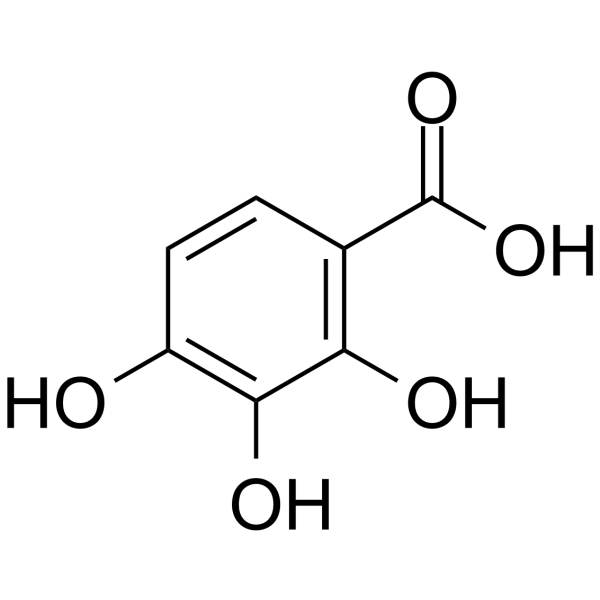
2,3,4-Trihydroxybenzoic acid is an α-amylase inhibitor with an IC50 of 17.30 mM against porcine α-amylase. 2,3,4-Trihydroxybenzoic acid increases cellular p21 and p27 protein levels. 2,3,4-Trihydroxybenzoic acid inhibits cancer cell growth and delays starch digestion to suppress postprandial hyperglycemia. 2,3,4-Trihydroxybenzoic acid can be used in research related to colorectal cancer, breast cancer and type 2 diabetes .
loading...
    loading...
Cat. No.: HY-P2802B
CAS No.: 9001-42-7
Target:  

Glycosidase

Domaines de recherche:  

Metabolic Disease

α-Glucosidase, rice is a GH31 glycoside hydrolase in rice seeds, with high selectivity for α-1,4-glycosidic bonds. α-Glucosidase, rice can be inhibited by rice husk extracts (IC50 = 1.25 μg/mL) and steroidal components (IC50 = 1.83 μg/mL). α-Glucosidase, rice exists in two major isoforms, among which isoform II is more sensitive to inhibitors. α-Glucosidase, rice can directly bind to and degrade starch granules in rice seeds. α-Glucosidase, rice can form ONG2-I and ONG2-II via post-translational proteolysis. α-Glucosidase, rice can be used in type 2 diabetes research .
loading...
    loading...
Cat. No.: HY-P2770
CAS No.: 9000-91-3
Target:  

Endogenous Metabolite

Domaines de recherche:  

Others

β-Amylase, Bacilus subtilis has abundant starch degrading activities. β-Amylase can be used for various biochemical studies .
loading...
    loading...
Cat. No.: HY-E70425
CAS No.: 9030-05-1
Target:  

Glycosyltransferase

Domaines de recherche:  

Metabolic Disease

Sucrose synthase belongs to glycosyltransferases and is a reversible catalyst present in plants, which catalyzes the conversion of sucrose into fructose and UDP-G or ADP-G. Sucrose synthase localizes to the cytoplasm, plasma membrane, cell wall, vacuole and mitochondria of plants. Sucrose synthase regulates sugar metabolism, supports the development of taproots, fruits, seeds and vascular tissues, drives the synthesis of starch, cellulose and callose, and enhances nitrogen fixation capacity. Sucrose synthase mediates signal transduction in plant meristems. Sucrose synthase is associated with plant growth, anaerobic stress tolerance, as well as shoot apical meristem and leaf morphology; overexpression of this enzyme promotes plant growth, increases xylem size, and elevates cellulose and starch contents .
loading...
    loading...
Cat. No.: HY-W040040A
CAS No.: 91464-90-3
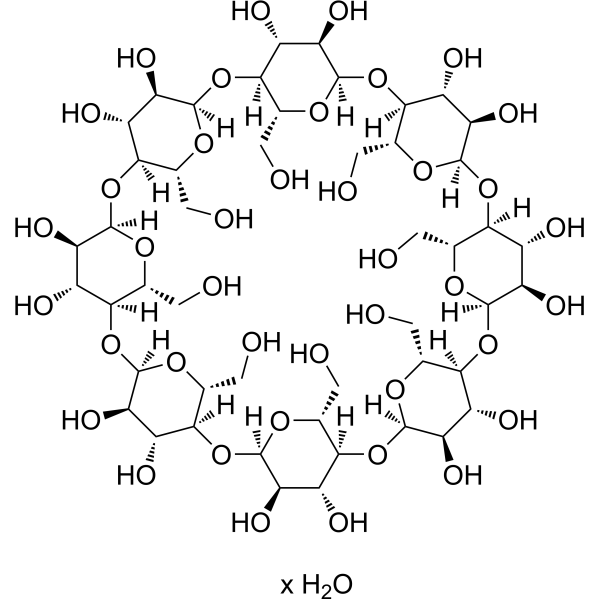
γ-Cyclodextrin hydrate is an orally active cyclic oligosaccharide composed of eight glucose molecules, which can be formed by bacteria digesting starch. γ-Cyclodextrin hydrate can form water-soluble inclusion complexes with a variety of poorly soluble compounds and is widely used in fields such as pharmacy and food. In addition, γ-Cyclodextrin hydrate has good safety .
loading...
    loading...
Cat. No.: HY-121242
CAS No.: 55511-98-3
Synonyms: VEL-5026
Target:  

Photosystem II

Domaines de recherche:  

Others

Buthidazole is a selective herbicide for weed control in corn. Buthidazole inhibits photosynthetic electron transport at two distinct sites in the photosynthetic electron transport chain. The major site of inhibition was on the reducing side of photosystem II. Another site of electron transport inhibition is on the oxidizing side of photosystem II. Buthidazole inhibits corn photosynthesis and prevents starch accumulation in bundle sheath chloroplasts and some ultrastructural disruption of mesophyl chloroplasts of corn plants .
loading...
    loading...
Cat. No.: HY-N2024AS
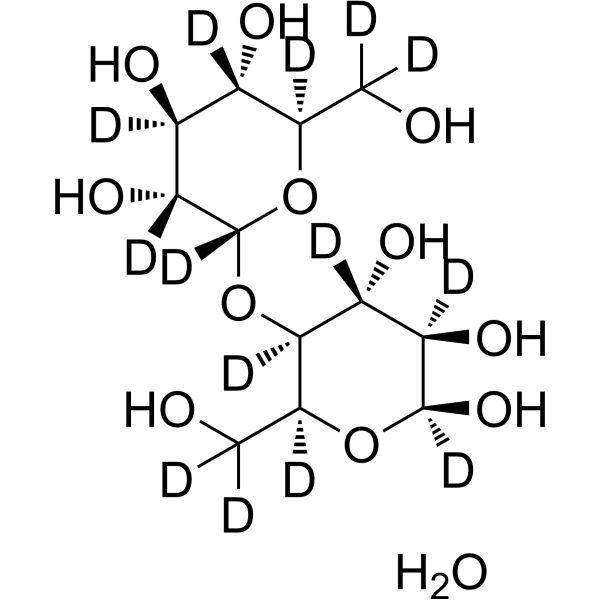
Maltose monohydrate-d14 is the deuterium labeled Maltose monohydrate. Maltose monohydrate is a disaccharide composed of two glucose molecules linked together. Maltose monohydrate is an endogenous metabolic product in plants, yeast, or bacteria, and it participates in carbon source storage and metabolism. Maltose monohydrate is a key core metabolite and main transport form in the temporary starch degradation, carbon output, and subsequent sucrose synthesis metabolism of the night chloroplast. In X. dendrorhous, maltose can act as a sugar donor and is converted into isomaltulose by α-glucosidase. Maltose monohydrate can act as a osmotic agent, supporting continuous capillary ultrafiltration and preventing severe metabolic disorders.
loading...
    loading...
Cat. No.: HY-N2024B
CAS No.: 69-79-4
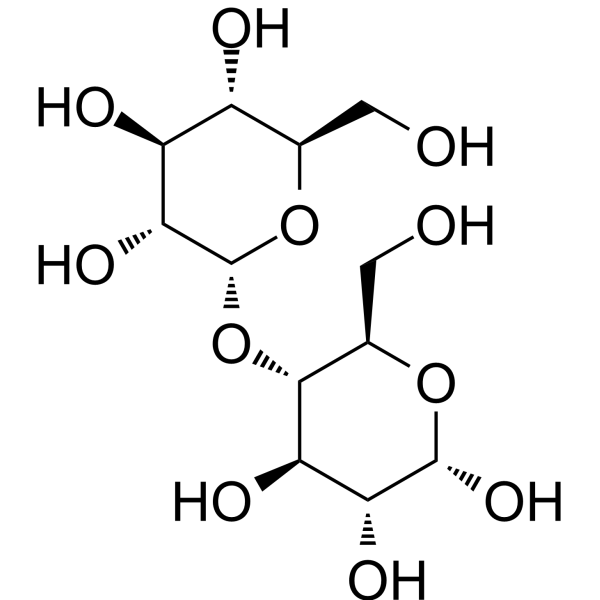
Maltose solution, 20% in H2O is a 20% aqueous maltose solution. Maltose is a disaccharide composed of two glucose molecules linked together. Maltose is an endogenous metabolic product in plants, yeast, or bacteria, and it participates in carbon source storage and metabolism. Maltose is a key core metabolite and main transport form in the temporary starch degradation, carbon output, and subsequent sucrose synthesis metabolism of the night chloroplast. In X. dendrorhous, maltose can act as a sugar donor and is converted into isomaltulose by α-glucosidase. Maltose can act as a osmotic agent, supporting continuous capillary ultrafiltration and preventing severe metabolic disorders .
loading...
    loading...
Cat. No.: HY-B2192A
CAS No.: 9000-92-4
Synonyms: Maltin
Domaines de recherche:  

Others

Diastase, Aspergillus oryzae (Maltin) is a starch hydrolase derived from Aspergillus oryzae. Diastase, Aspergillus oryzae catalyzes starch hydrolysis through sequential stages, first producing dextrins, then glucose and maltose .
loading...
    loading...
Cat. No.: HY-N8326
CAS No.: 6471-60-9
Maltononaose is a linear oligosaccharide consisting of 9 glucose units linked by alpha-1, 4-glucoside bonds. Maltononaose is used as a substrate to study the subsites affinity of glucoamylase. Maltononaose can be used to determine the activity of amylase and to optimize the process of starch hydrolysis .
loading...
    loading...
Cat. No.: HY-13458S1
CAS No.: 1329556-63-9
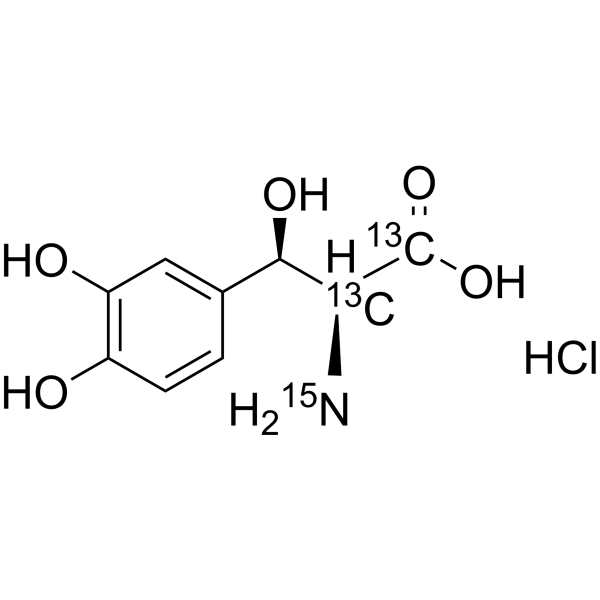
Synonyms: L-DOPS-13C2,15N hydrochloride; DOPS-13C2,15N hydrochloride; SM5688-13C2,15N hydrochloride
Droxidopa- 13C2, 15N (hydrochloride) is deuterium labeled Droxidopa. Droxidopa(L-DOPS), the mixture of Droxidopa (w/w80%) and Pharmaceutical starch (w/w20%), acts as a proagent to the neurotransmitters norepinephrine (noradrenaline) and epinephrine (adrenaline); Droxidopa(L-DOPS) is capable of crossing the protective blood-brain barrier .
loading...
    loading...
Cat. No.: HY-D2817
Target:  

Fluorescent Dye

Domaines de recherche:  

Others

FITC-PLL is a fluorescently labeled polycationic polypeptide probe composed of polylysine (PLL) and FITC (HY-66019), with a typical Ex/Em of 495/520 nm. The fluorescence intensity and lifetime of FITC-PLL are sensitive to pH and FITC density. FITC-PLL can be used for quantifying hapten receptor binding and endocytosis kinetics in macrophages, as a patternable substrate for neuron guidance, for negatively charged phospholipid membrane binding and transmembrane transport, and for live-cell imaging of starch nanoparticle conjugates and lysosome labeling .
loading...
    loading...
Cat. No.: HY-W016993R
CAS No.: 610-02-6
2,3,4-Trihydroxybenzoic acid (Standard) is the analytical standard substance of 2,3,4-Trihydroxybenzoic acid. This product is used for research and analytical applications. 2,3,4-Trihydroxybenzoic acid is an α-amylase inhibitor with an IC50 of 17.30 mM against porcine α-amylase. 2,3,4-Trihydroxybenzoic acid increases cellular p21 and p27 protein levels. 2,3,4-Trihydroxybenzoic acid inhibits cancer cell growth and delays starch digestion to suppress postprandial hyperglycemia. 2,3,4-Trihydroxybenzoic acid can be used in research related to colorectal cancer, breast cancer and type 2 diabetes.
loading...
    loading...
Cat. No.: HY-B2225BS
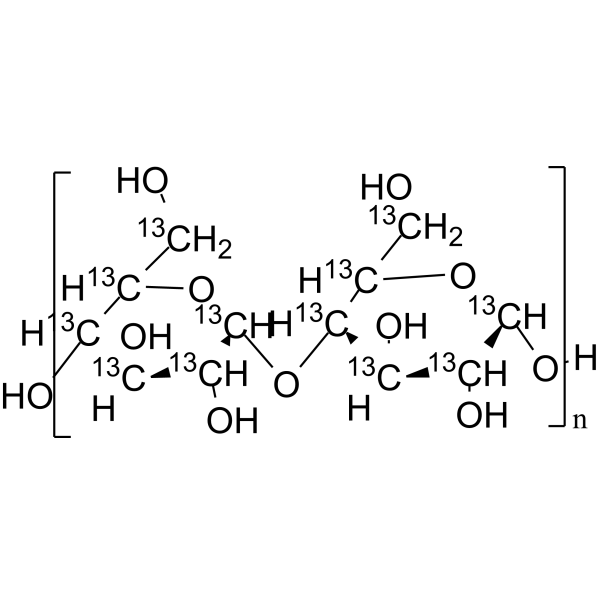
Starch- 13C12 (from corn) is the 13 labeled Starch (from corn) (HY-B2225B). Starch (from corn) is a carbohydrate extracted from the kernel of the corn plant. It contains two main components, namely amylose and amylopectin. Starches from corn have various applications in the food industry as thickeners, stabilizers and binders. It is commonly used in the production of products such as baked goods, snacks, sauces and soups. In addition, it can be used as a raw material for the production of biofuels and bioplastics.
loading...
    loading...
Cat. No.: HY-N2559R
CAS No.: 34620-77-4
Synonyms: Amylohexaose (Standard)
Maltohexaose is a natural saccharide, and can be produced from amylose, amylopectin and whole starch.
loading...
    loading...
Cat. No.: HY-N2024AR
CAS No.: 6363-53-7
Maltose monohydrate (Standard) is the analytical standard of Maltose monohydrate. This product is intended for research and analytical applications. Maltose monohydrate is a disaccharide composed of two glucose molecules linked together. Maltose monohydrate is an endogenous metabolic product in plants, yeast, or bacteria, and it participates in carbon source storage and metabolism. Maltose monohydrate is a key core metabolite and main transport form in the temporary starch degradation, carbon output, and subsequent sucrose synthesis metabolism of the night chloroplast. In X. dendrorhous, maltose can act as a sugar donor and is converted into isomaltulose by α-glucosidase. Maltose monohydrate can act as a osmotic agent, supporting continuous capillary ultrafiltration and preventing severe metabolic disorders.
loading...
    loading...
Cat. No.: HY-B2225AS
Synonyms: Edible corn Starch-13C12 (from potato)
Starch from potato- 13C12 is the 13C-labeled Starch from potato .
loading...
    loading...
Cat. No.: HY-N11598
CAS No.: 59920-31-9
α-GLU stands for α-glucosidase. α-GLU hydrolyzes starch and disaccharides via targeting to terminal, non-reducing (1→4)-linked α-D-glucose residues to produce α-glucose. α-GLU is substrate selective .
loading...
    loading...
Cat. No.: HY-W768245
a-D-Galactose-1,2- 13C2 1-phosphate potassium is the 13C- and 15N-labeled a-D-Galactose (HY-121370). α-D-Galactose is a non-starch polysaccharide found in the bulb tissues of Lilium davidii var. unicolor Salisb. α-D-Galactose has anti-oxidation properties, anti-tumour activities, immunomodulatory effects and anti-HIV functions .
loading...
    loading...

