


100 Results for "

Starch

" in MedChemExpress (MCE) Product Catalog:
Products (100)

100 Results for "Starch" in MCE Product Catalog:

Cat. No.: HY-N2024AS1
Maltose monohydrate- 13C12 is the 13C labeled isotope of Maltose monohydrate. Maltose monohydrate is a disaccharide composed of two glucose molecules linked together. Maltose monohydrate is an endogenous metabolic product in plants, yeast, or bacteria, and it participates in carbon source storage and metabolism. Maltose monohydrate is a key core metabolite and main transport form in the temporary starch degradation, carbon output, and subsequent sucrose synthesis metabolism of the night chloroplast. In X. dendrorhous, maltose can act as a sugar donor and is converted into isomaltulose by α-glucosidase. Maltose monohydrate can act as a osmotic agent, supporting continuous capillary ultrafiltration and preventing severe metabolic disorders.
loading...
    loading...
Cat. No.: HY-N6675
CAS No.: 94238-00-3
Gardenia yellow is a competitive inhibitor of α-Amylase (HY-B2193) and α-glucosidase. Gardenia yellow can bind to the catalytic sites of α-Amylase and α-glucosidase, inhibit starch digestion, and significantly increase the contents of resistant starch and slowly digestible starch in starch-based systems. Gardenia yellow reduces the glycemic index and hydrolysis index. Gardenia yellow can be used in diabetes-related research .
loading...
    loading...
Cat. No.: HY-P3173
CAS No.: 9075-68-7
Synonyms: R-enzyme
Research Areas:  

Others

Pullulanase (R-enzyme) is a key starch debranching enzyme that specifically hydrolyzes α-1,6-glycosidic linkages in polysaccharides such as amylopectin and pullulan, facilitating the efficient degradation of starch into fermentable sugars .
loading...
    loading...
Cat. No.: HY-N2559
CAS No.: 34620-77-4
Synonyms: Amylohexaose
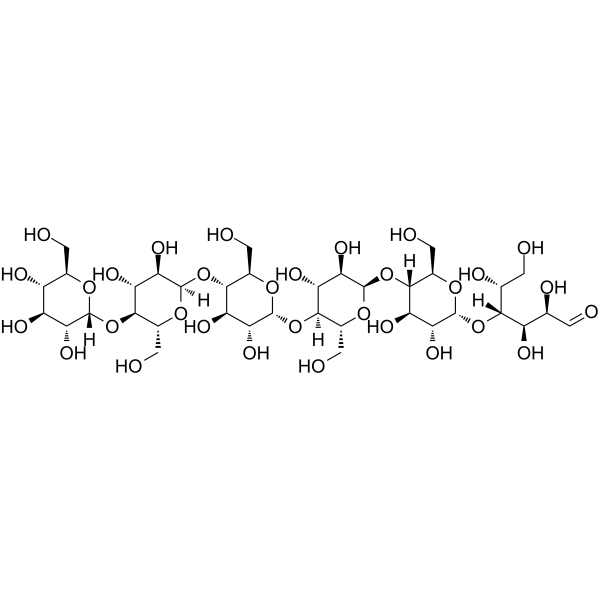
Maltohexaose (Amylohexaose) is a linear oligosaccharide containing 6 glucose units, which can be produced from amylose, amylopectin, and whole starch. Maltohexaose can inhibit the proliferation of P-815 cells .
loading...
    loading...
Cat. No.: HY-128868F
CAS No.: 60842-46-8
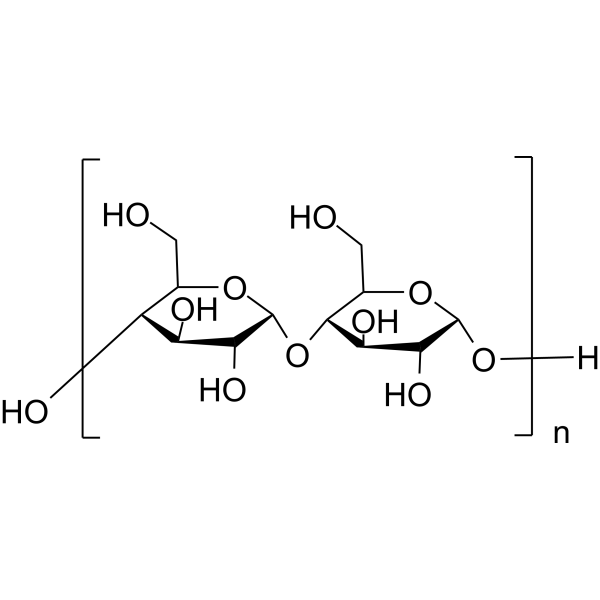
FITC-Dextran (MW 110000) is a compound belonging to the class of fluorescent dyes. It is commonly used in biomedical research as a tracer molecule to label and track cells or other biological matter. FITC-Dextran consists of fluorescein isothiocyanate (FITC) and dextran, a complex carbohydrate derived from starch. The combination of the two creates a stable fluorescent tracer that can be viewed under a microscope or quantified using specialized detection instruments.
loading...
    loading...
Cat. No.: HY-128868J
FITC-Dextran (MW 1000) is a compound that belongs to the class of fluorescent dyes. It is often used as a tracer molecule in biomedical research to label and track cells or other biological substances. FITC-Dextran consists of fluorescein isothiocyanate (FITC) and dextran, a complex carbohydrate extracted from starch. The combination of the two creates a stable fluorescent tracer that can be observed under a microscope or quantified using specialized detection instruments.
loading...
    loading...
Cat. No.: HY-W094695
CAS No.: 9005-84-9
Starch soluble is a biodegradable, highly biocompatible hydrophilic biopolymer nanocarrier. Starch soluble forms complexes with iodine, acts on multiple bacterial targets, and improves the storage stability of iodine. Starch soluble enhances the solubility and dissolution rate of Gefitinib (HY-50895). Starch soluble can be used as a nanocarrier for relevant studies .
loading...
    loading...
Cat. No.: HY-N15135
CAS No.: 9040-27-1
Arabinoxylan Medium viscosity is an orally active Dectin-1 splice variant modulator, glucose absorption inhibitor, and chyme viscosity enhancer. Arabinoxylan Medium viscosity inhibits particulate β-glucan-induced Dectin-1A activation and mildly suppresses Dectin-1B activation. In human dendritic cells stimulated with particulate β-glucan, Arabinoxylan Medium viscosity reduces the production of IL-10 and TNF-α, and increases the production of IL-4 and IL-23. Arabinoxylan Medium viscosity also supports antifungal immune responses without activating TLR2, TLR4 or TLR5, and does not induce cytokine production when used to stimulate human dendritic cells alone. Arabinoxylan Medium viscosity increases small intestinal chyme viscosity, gets degraded in the large intestine to produce short-chain fatty acids, reduces glucose absorption and insulin response, and improves glucose homeostasis. Arabinoxylan Medium viscosity supports microbial fermentation and the growth of beneficial microbiota in the gastrointestinal tract, prevents bile acid reabsorption, and delays starch digestion. Arabinoxylan Medium viscosity can be used in research related to type 2 diabetes, impaired glucose tolerance, and metabolic syndrome .
loading...
    loading...
Cat. No.: HY-W145520
CAS No.: 9037-22-3
Amylopectin is a branched glucan polymer and one of the two principal components of starch, found in botanical sources including corn, amaranth, and potato .
loading...
    loading...
Cat. No.: HY-B2193A
CAS No.: 9000-90-2
Synonyms: 1,4-alpha-D-Glucan-glucanohydrolase, ptyalin
α-Amylase, Human Saliva (1,4-alpha-D-Glucan-glucanohydrolase) is a hydrolase enzyme that can be isolated from human saliva. α-Amylase, Human Saliva catalyses the hydrolysis of internal α-1, 4-glycosidic linkages in starch to yield products like glucose and maltose. α-Amylase, Human Saliva can be used in life science research .
loading...
    loading...
Cat. No.: HY-B2193C
CAS No.: 9000-90-2
Synonyms: 1,4-alpha-D-Glucan-glucanohydrolase, amy2, PPA, PA
Research Areas:  

Others

α-Amylase, Porcine Pancreatic (1,4-alpha-D-Glucan-glucanohydrolase) is a hydrolase enzyme that can be isolated from porcine pancreatic. α-Amylase, Porcine Pancreatic catalyses the hydrolysis of internal α-1, 4-glycosidic linkages in starch to yield products like glucose and maltose. α-Amylase, Porcine Pancreatic can be used in life science research .
loading...
    loading...
Cat. No.: HY-B2225B
CAS No.: 9005-25-8
Synonyms: Edible corn Starch (from corn)
Starch (from corn) is a carbohydrate extracted from the kernel of the corn plant. It contains two main components, namely amylose and amylopectin. Starches from corn have various applications in the food industry as thickeners, stabilizers and binders. It is commonly used in the production of products such as baked goods, snacks, sauces and soups. In addition, it can be used as a raw material for the production of biofuels and bioplastics.
loading...
    loading...
Cat. No.: HY-W145519A
CAS No.: 9005-27-0
Hydroxyethyl starch (Mw 110-150 kDa) is a biochemical reagent used in drug delivery and other research .
loading...
    loading...
Cat. No.: HY-P2857A
CAS No.: 9032-08-0
Synonyms: Amyloglucosidase, Rhizopus sp.
Target:  

Glycosidase

Research Areas:  

Metabolic Disease

Glucoamylase, Rhizopus sp. (Amyloglucosidase, Rhizopus sp.) is a starch-hydrolyzing enzyme with high catalytic efficiency towards soluble starch and raw starch. Glucoamylase, Rhizopus sp. hydrolyzes α-1,4 and α-1,6 glycosidic linkages in starch and similar substrates, and primarily releases β-glucose molecules from the non-reducing ends. Glucoamylase, Rhizopus sp. participates in glycogen metabolism and is associated with type II glycogen storage disease. Glucoamylase, Rhizopus sp. converts starch into glucose, and is applicable to the industrial production of high-fructose syrup, ethanol and other fermented products .
loading...
    loading...
Cat. No.: HY-136830
CAS No.: 102129-65-7
Purity:  ≥95.0%
Synonyms: Adenosine-5'-diphosphoglucose disodium
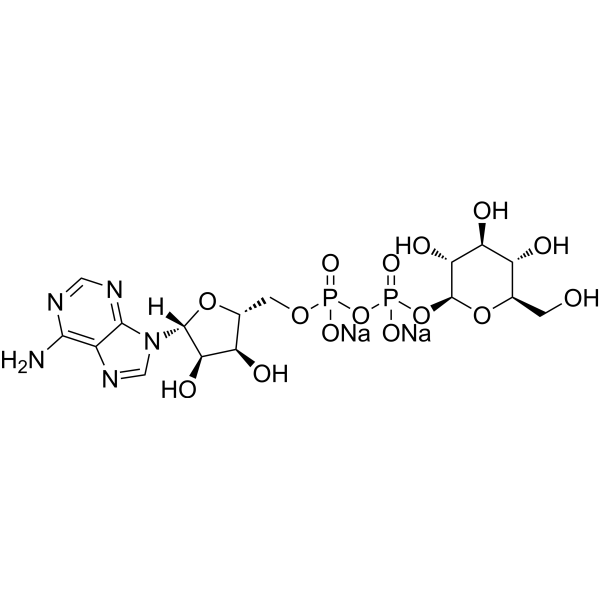
ADP-Glucose disodiumIs an immediate precursor for the biosynthesis of storage polysaccharides in plants, green algae and cyanobacteria, and structural polysaccharides in some bacteria, by the addition of glucose. It is used to produce amylose, amylopectin, starch and other polysaccharides by amylose synthase or starch synthase in plastids. ADPGUsually produced in plastids, although it can be biosynthesized in the cytoplasm of some grasses and imported into plastids by membrane-bound transporters .
loading...
    loading...
Cat. No.: HY-W718179
CAS No.: 9049-76-7
Synonyms: 2-Hydroxypropyl Starch
Hydroxypropyl starch (2-Hydroxypropyl starch) is a type of modified starch used as a food additive. Hydroxypropyl starch is not absorbed intact by the gut, but is significantly hydrolyzed by intestinal enzymes and then fermented by intestinal microbiota .
loading...
    loading...
Cat. No.: HY-B2193B
CAS No.: 9000-90-2
Synonyms: Amylase, a-Amylase, 1,4-a-D-glucan glucanohydrolase, glycogenase
Research Areas:  

Others

α-Amylase, Human Pancreas (Amylase) is a hydrolase enzyme that can be isolated from human pancreas. α-Amylase, Human Pancreas catalyses the hydrolysis of internal α-1, 4-glycosidic linkages in starch to yield products like glucose and maltose. α-Amylase, Human Pancreas can be used in life science research .
loading...
    loading...
Cat. No.: HY-N2024R
CAS No.: 69-79-4
Maltose (Standard) is the analytical standard of Maltose. This product is intended for research and analytical applications. Maltose is a disaccharide composed of two glucose molecules linked together. Maltose is an endogenous metabolic product in plants, yeast, or bacteria, and it participates in carbon source storage and metabolism. Maltose is a key core metabolite and main transport form in the temporary starch degradation, carbon output, and subsequent sucrose synthesis metabolism of the night chloroplast. In X. dendrorhous, maltose can act as a sugar donor and is converted into isomaltulose by α-glucosidase (α-Glucosidase). Maltose can act as a osmotic agent, supporting continuous capillary ultrafiltration and preventing severe metabolic disorders.
loading...
    loading...
Cat. No.: HY-W133963
CAS No.: 9063-38-1
Carboxyl methylstarch sodium is an anionic polymer prepared by carboxymethylation of starch, with properties of stability, thickening ability and film-forming capacity . Carboxyl methylstarch sodium exhibits metal adsorption activity and can remove copper ions and cadmium ions from aqueous solutions. Carboxyl methylstarch sodium can serve as a hydrophilic shell component for AIE-active luminescent polymer nanoprobes to achieve high water dispersibility. Carboxyl methylstarch sodium can bind to vancomycin without altering the in vitro antibacterial activity of vancomycin. Carboxyl methylstarch sodium possesses biodegradable, non-toxic and environmentally friendly characteristics. Carboxyl methylstarch sodium can be applied to relevant researches in various fields such as food, medicine and industry .
loading...
    loading...
Cat. No.: HY-W276164
CAS No.: 1120-04-3
Synonyms: Sodium stearyl sulfate
Sodium octadecyl sulfate (Sodium stearyl sulfate) is a long-chain alkyl sodium sulfate that functions as an emulsifier, crosslinking agent, and regulator. Sodium octadecyl sulfate has high safety, with a LD50 greater than 3.00 Gm./Kg for both intraperitoneal injection in mice and oral administration in rats. Sodium octadecyl sulfate enhances continuous contraction of the gastrocnemius muscle in frogs and boosts intestinal smooth muscle activity in albino rats. However, Sodium octadecyl sulfate exerts no significant effect on isolated tortoise myocardium and does not alter the conduction function of frog sciatic nerves. Sodium octadecyl sulfate can also be used to coat the surface of starch aggregates, promote crosslinking and increase aggregate size through hydrophobic and electrostatic interactions, and further form a coexistent B-V type crystalline structure with acid-hydrolyzed gelatinized starch, thereby effectively modifying the structure and surface properties of high-starch systems .
loading...
    loading...

