
106 Results for "

brain concentration

" in MedChemExpress (MCE) Product Catalog:
Products (106)

106 Results for "brain concentration" in MCE Product Catalog:

Cat. No.: HY-167876
CAS No.: 1927857-55-3
Target:  

PI3K

Research Areas:  

Cancer

PQR514 is a potent PI3K inhibitor with anticancer activity. PQR514 is able to inhibit cancer cell proliferation. PQR514 showed significant antitumor activity in the OVCAR-3 xenograft model, with the required concentration being approximately one-eighth that of PQR309. PQR514 has good pharmacokinetic properties and minimal brain penetration, making it an optimized candidate compound for inhibiting systemic tumors .
loading...
    loading...
Cat. No.: HY-N0229R
CAS No.: 56-41-7
Synonyms: L-2-Aminopropionic acid (Standard)
L-Alanine (Standard) is the analytical standard of L-Alanine. This product is intended for research and analytical applications. L-Alanine is a non-essential amino acid, involved in sugar and acid metabolism, increases immunity, and provides energy for muscle tissue, brain, and central nervous system. In Vitro: The viability of both hiPSCs, 201B7 cells and ehiPSCs decrease with an increase in L-Alanine concentration, and reach 7.5±1.3% and 3.7±0.7% respectively at 1.2 M of L-Alanine. On the other hand, no decrease in the viability of hFBs and hSkMCs are observed. Although the viability of iCMs slightly decreases along with the increase of the L-Alanine concentration, viability of iCMs at 1.2 M concentration of L-Alanine, 49.4±6.9%, is significantly higher than that of undifferentiated iPSCs, 201B7 cells and ehiPSCs (p< 0.01). The viability of hiPSCs, 201B7 cells and ehiPSCs, drastically decrease even after 2 or 4 h treatment. In contrast, the viability of hFBs fails to decrease at 1, 2, and 4 h and shows a small decrease at 24 h treatment. The viability of 201B7 cells in suspension culture decreases to 11.8±6.0% following treatment with 1.2 M L-Alanine for 2 h, whereas that of hFBs is 72.9±14.2% .
loading...
    loading...
Cat. No.: HY-116211
CAS No.: 15180-02-6
Synonyms: WIN-25978
Research Areas:  

Neurological Disease

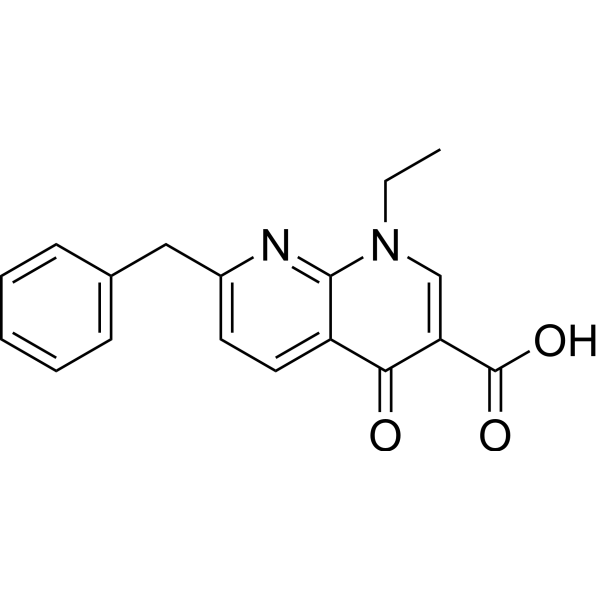
Amfonelic acid (WIN-25978) is a highly selective dopamine reuptake inhibitor. Amfonelic acid interferes with the in vitro neuronal uptake of norepinephrine in the iris of rats, but does not alter the concentrations of norepinephrine or dopamine in the whole mouse brain. Amfonelic acid can be used as a pharmacological tool to study the brain reward system, dopamine pathway and dopamine transporter .
loading...
    loading...
Cat. No.: HY-W338446
CAS No.: 22191-97-5
Target:  

Tau Protein

Research Areas:  

Neurological Disease

BF-170 is a selective tau fibril binding agent with an EC50 of 221 nM. It exhibits good blood-brain barrier permeability, and after intravenous injection in mice, the concentration in brain tissue reaches 9.1% ID/g within 2 minutes (with a brain clearance rate of 0.25% ID/g after 30 minutes). BF-170 can be used as a probe for tau protein pathology imaging in Alzheimer's disease (AD). It plays an important role in early-stage AD research and holds potential for imaging studies of tau-related neurodegenerative diseases .
loading...
    loading...
Cat. No.: HY-DY1045
CAS No.: 863918-78-9
Methoxy-X04 (solution) is a fluorescent dye that crosses the blood-brain barrier and selectively binds to beta-pleated sheets found in dense core amyloid Aβ plaques. Methoxy-X04 retains in vitro binding affinity for amyloid b (Ab) fibrils (Ki= 26.8 nM). Methoxy-X04 is fluorescent and stains plaques, tangles, and cerebrovascular amyloid in postmortem sections of AD brain with good specificity .
Solvent and concentration: DMSO: 5 mg/mL
loading...
    loading...
Cat. No.: HY-W127668
CAS No.: 5957-17-5
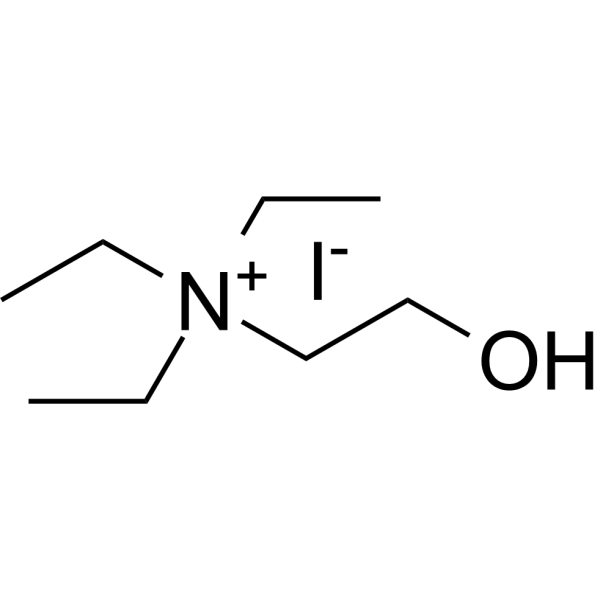
Triethylcholine iodide is a choline acetyltransferase inhibitor and a regulator of the acetylcholine synthesis pathway. Triethylcholine iodide inhibits acetylcholine synthesis in brain tissues and blocks neuromuscular and autonomic ganglionic transmission. Triethylcholine iodide exerts weak curare-like effects at extremely high concentrations. Triethylcholine iodide elevates the pentylenetetrazol seizure threshold, alters electroencephalogram patterns in Felis catus, but does not affect the maximal electroshock seizure threshold in Oryctolagus cuniculus. Triethylcholine iodide can be used in seizure-related research .
loading...
    loading...
Cat. No.: HY-17383R
CAS No.: 151533-22-1
Levomefolate calcium (Standard) is the analytical standard of Levomefolate calcium. This product is intended for research and analytical applications. Levomefolate calcium is a synthetic calcium salt of L-5-methyltetrahydrofolate and an orally active and brain-penetrant folate supplement. Levomefolate calcium incorporates into body folate pools to increase plasma and red blood cell folate levels over time. Levomefolate calcium does not significantly increase folate concentrations in breast milk. Levomefolate calcium can be used for the research of neural tube defects and megaloblastic anemia .
loading...
    loading...
Cat. No.: HY-113416AS
Purity:  98.00%
Synonyms: DHEA sulfate-d6 sodium dihydrate; Prasterone sulfate-d6 sodium dihydrate
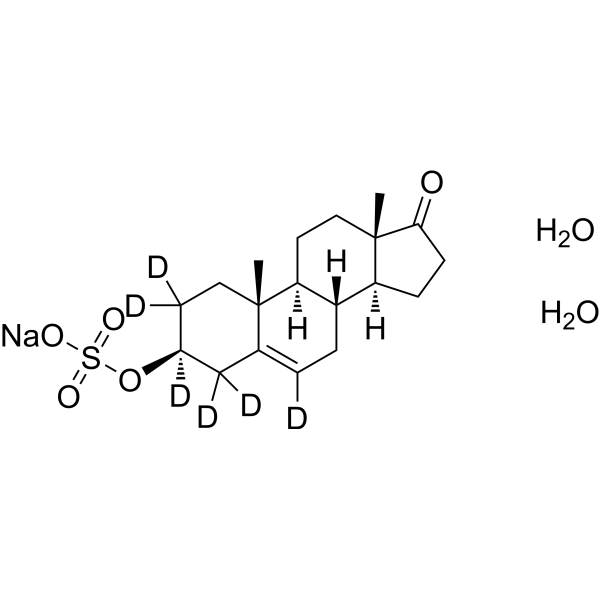
Dehydroepiandrosterone sulfate sodium dihydrate-d6 sodium dihydrate is the deuterium labeled Dehydroepiandrosterone sulfate sodium dihydrate. Dehydroepiandrosterone sulfate (DHEA sulfate; Prasterone sulfate) sodium dihydrate is a neurosteroid and the main secretion product of the adrenal gland. Dehydroepiandrosterone sulfate sodium dihydrate has both non-competitive antagonist activity of GABAA receptor and agonist activity of σ1 receptor. Dehydroepiandrosterone sulfate sodium dihydrate can partially penetrate the blood-brain barrier, inhibit GABAA receptor-mediated chloride influx, enhance NMDA receptor activity through σ1 receptors, exert anti-inflammatory, anti-glucocorticoid and antidepressant effects, and increase convulsive sensitivity. Dehydroepiandrosterone sulfate sodium dihydrate participates in neuroprotection, neurite growth regulation and catecholamine secretion regulation, and can be used in the study of depression, post-traumatic stress disorder (PTSD), Alzheimer's disease, etc. Dehydroepiandrosterone sulfate sodium dihydrate may also be a biomarker for cardiovascular disease mortality, and its concentration is independently and negatively correlated with mortality .
loading...
    loading...
Cat. No.: HY-P4708
CAS No.: 17136-25-3
Target:  

Inhibitory Antibodies

Research Areas:  

Neurological Disease

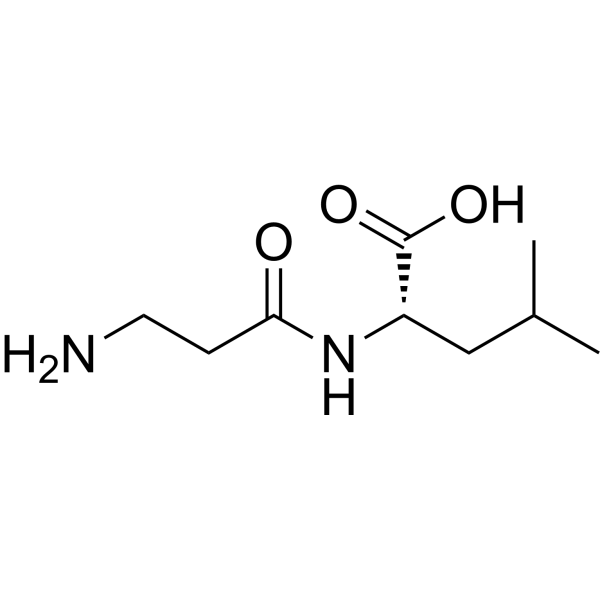
Excitin 1 is an orally active and CNS-penetrated peptide, alters behavior and brain monoamine and amino acid concentrations in rats .
loading...
    loading...
Cat. No.: HY-139182
CAS No.: 2514-37-6
Target:  

Endogenous Metabolite

Research Areas:  

Metabolic Disease

CAY10762 is an inhibitor of monoacylglycerol lipase (MAGL; IC50=34.1 nM). It reduces hydrogen peroxide-induced lactate dehydrogenase (LDH) release from Neuro2a cells when used at a concentration of 1 μM. CAY10762 (10 mg/kg) increases levels of 2-arachidonoyl glycerol in mouse brain.
loading...
    loading...
Cat. No.: HY-P99694
CAS No.: 2396411-71-3
Synonyms: JR-171

Target:  

Transferrin Receptor

Research Areas:  

Neurological Disease

Lepunafusp alfa (JR-171) is a BBB-penetrable fusion protein consisting of J-Brain Cargo and IDUA (a lysosomal enzyme, α-L-iduronidase). Lepunafusp alfa can reduce concentration of heparan sulfate (HS) and dermatan sulfate (DS). Lepunafusp alfa can be used for research of mucopolysaccharidosis type I .
loading...
    loading...
Cat. No.: HY-13289
CAS No.: 173997-05-2
Synonyms: SYN117; RS-25560-197
Research Areas:  

Cardiovascular Disease

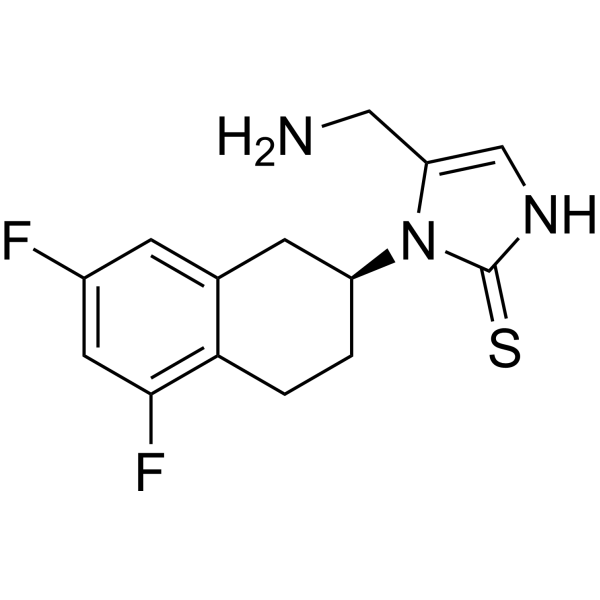
Nepicastat (SYN117) is a selective, potent, and orally active inhibitor of dopamine-beta-hydroxylase. Nepicastat (SYN117) produces concentration-dependent inhibition of bovine (IC50=8.5 nM) and human (IC50=9 nM) dopamine-beta-hydroxylase. Nepicastat (SYN117) can cross the blood-brain barrier (BBB) .
loading...
    loading...
Cat. No.: HY-129982
CAS No.: 289037-67-8
Purity:  99.14%
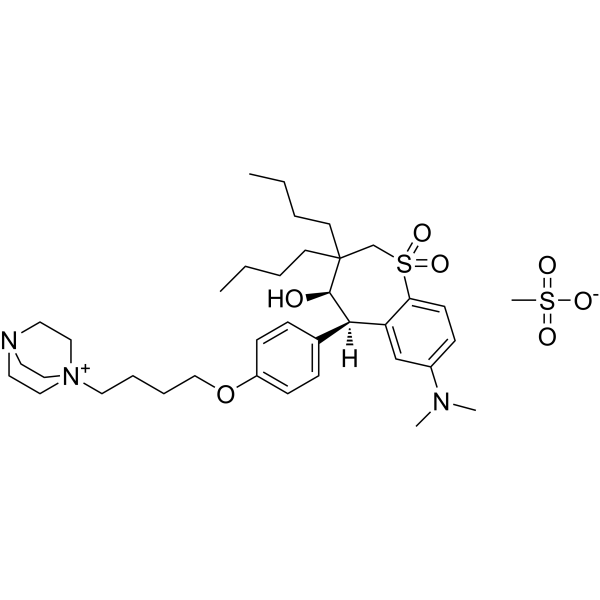
SC-435 is an orally effective apical sodium codependent bile acid transporter (ASBT) inhibitor. SC-435 effectively removes neurotoxic bile acids and ammonia from the blood by inhibiting intestinal ASBT, thereby alleviating liver and brain damage caused by liver failure. SC-435 can alter hepatic cholesterol metabolism and lower plasma low-density lipoprotein-cholesterol concentrations .
loading...
    loading...
Cat. No.: HY-100921A
CAS No.: 57096-28-3
Synonyms: N-Acetylaspartylglutamic acid trisodium
Spaglumic acid (N-Acetylaspartylglutamic acid) trisodium is a neuropeptide that exists in millimolar concentrations in the brain and possesses anti-allergic activity .
loading...
    loading...
Cat. No.: HY-10550B
CAS No.: 625375-84-0
Synonyms: XR9576 dimesylate
Target:  

P-glycoprotein

Research Areas:  

Cardiovascular Disease Others

Tariquidar dimesylate (XR9576 dimesylate) is a P-glycoprotein (P-gp) inhibitor. Tariquidar dimesylate increases the concentration of the drug in the brain by binding to P-glycoprotein, preventing it from transporting the drug from inside to outside the brain. Tariquidar dimesylate can be used in the study of blood-brain barrier penetration and multidrug resistance .
loading...
    loading...
Cat. No.: HY-B2150
CAS No.: 1672-63-5
Synonyms: 4-Hydroxyphenazone; NSC 174055
Target:  

Drug Metabolite

Research Areas:  

Others

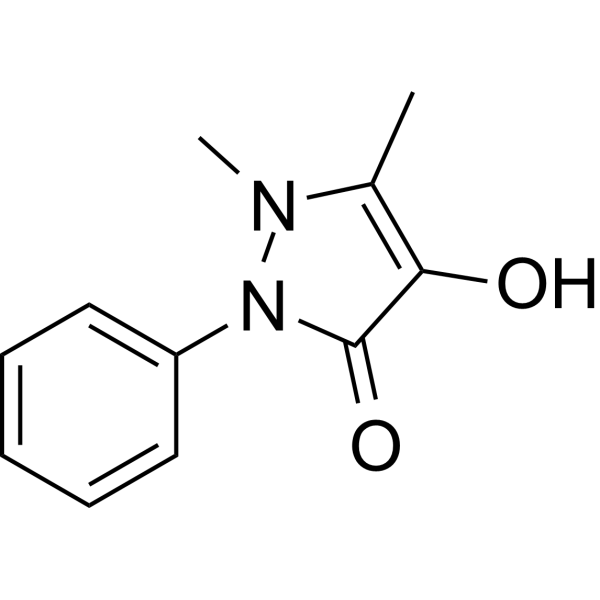
4-Hydroxyantipyrine (4-Hydroxyphenazone; NSC 174055) is the major metabolite of Antipyrine (HY-B0171), can be as a biodistribution promoter. 4-Hydroxyantipyrine can increase distribution of concentration ratio of Citicoline and Antipyrine in the brain .
loading...
    loading...
Cat. No.: HY-110180
CAS No.: 1276617-62-9
Purity:  99.76%
Target:  

mGluR

Research Areas:  

Neurological Disease

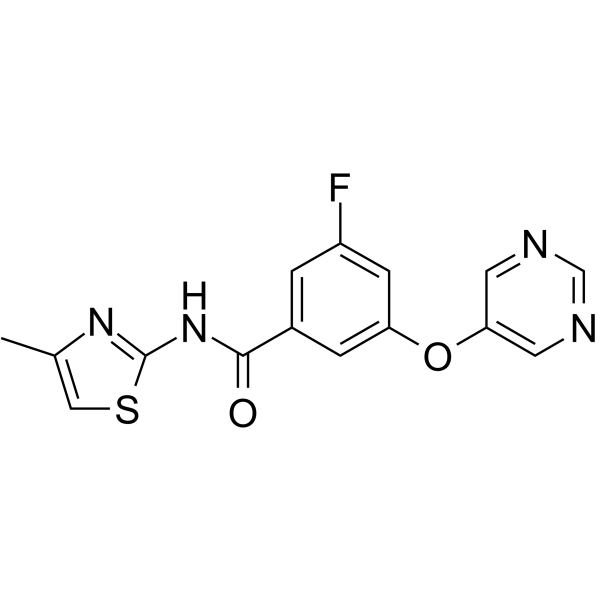
VU0409106 is a potent and selective mGlu5 negative allosteric modulator (NAM) with an IC50 of 24 nM. VU0409106 shows anxiolytic effects in rat models in a concentration-dependent manner. VU0409106 also penetrates the blood-brain barrier (BBB) .
loading...
    loading...
Cat. No.: HY-P11226
CAS No.: 659739-64-7
Target:  

Amyloid-β CaMK Apoptosis

Research Areas:  

Neurological Disease

TI-16 is a peptide that targets β-amyloid (Aβ) protein. TI-16 can cross the blood-brain barrier. TI-16 can increase the concentration of intracellular free CaM, thereby restoring calcium ion homeostasis and reducing Aβ toxicity. TI-16 can reduce the deposition of Aβ in the brain, improve neuronal pathology, inhibit cell apoptosis, and improve cognitive function in mice. TI-16 is commonly used in the study of Alzheimer's disease .
loading...
    loading...
Cat. No.: HY-131693
CAS No.: 57659-38-8
Synonyms: GAG
Target:  

GABA Receptor

Research Areas:  

Neurological Disease Cancer

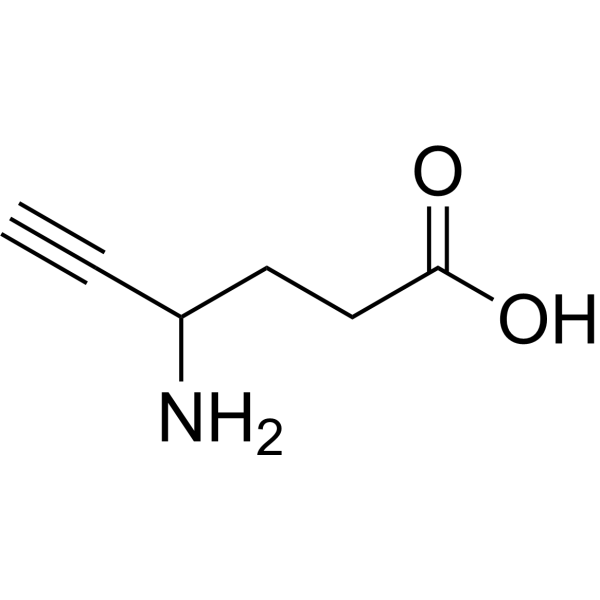
γ-Acetylenic GABA (4-Aminohex-5-ynoic acid) is an irreversible inhibitor of GABA-transaminase. γ-Acetylenic GABA can increase the concentration of GABA in rat brain . γ-Acetylenic GABA is a click chemistry reagent, it contains an Alkyne group and can undergo copper-catalyzed azide-alkyne cycloaddition (CuAAc) with molecules containing Azide groups.
loading...
    loading...
Cat. No.: HY-13769
CAS No.: 769856-81-7
Synonyms: TPU260
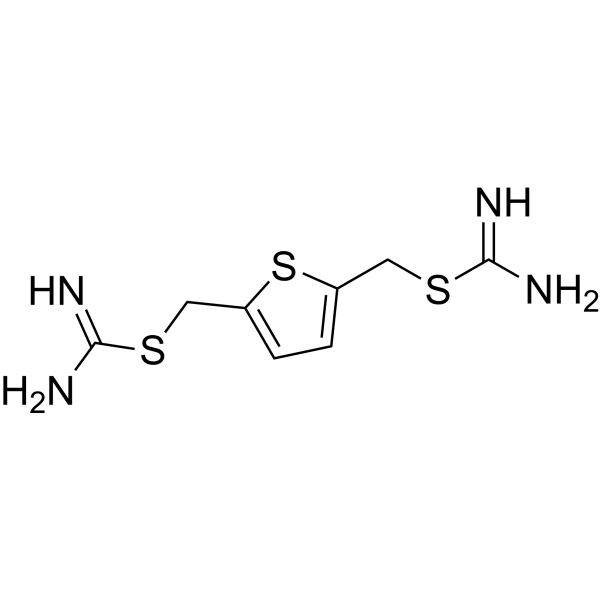
TPT-260 (TPU260), a thiophene thiourea derivative, is a retromer complex stabilizer against thermal denaturation (Kd = ~5 µM). TPT-260 increases the levels of retromer proteins, shifts amyloid-precursor protein (APP) away from the endosome, and decreases the pathogenic processing of APP. TPT-260 inhibits TLR4 upregulation, IKKβ phosphorylation, NF-κB p65 nuclear translocation, and NLRP3 inflammasome formation. TPT-260 improves retromer-mediated cargo trafficking, reduces brain infarct area, and decreases amyloid plaque deposition. TPT-260 exhibits minimal cytotoxicity to primary microglia at tested concentrations. TPT-260 can be used for the research of inflammatory bowel disease, ischemic stroke and Alzheimer's disease .
loading...
    loading...

