


184 Results for "

cell penetrability

" in MedChemExpress (MCE) Product Catalog:
Products (184)

184 Results for "cell penetrability" in MCE Product Catalog:

Cat. No.: HY-DY1038
CAS No.: 65-61-2
Acridine Orange hydrochloride (solution) is a cell-penetrable nucleic acid-selective fluorescent dye. Acridine Orange hydrochloride produces orange fluorescence when it binds to ssDNA or RNA, and green fluorescence when it binds to dsDNA (Ex: 488 nM; Em: green fluorescence at 530 nm, orange fluorescence at 640 nm) .
Solvent and Concentration: Sterile water: 10 mg/mL
The 1 mL volume is defined as the base specification. All larger sizes correspond to incremental volumes of this base.
loading...
    loading...
Cat. No.: HY-134665
CAS No.: 1197896-79-9
Purity:  99.36%
Research Areas:  

Infection

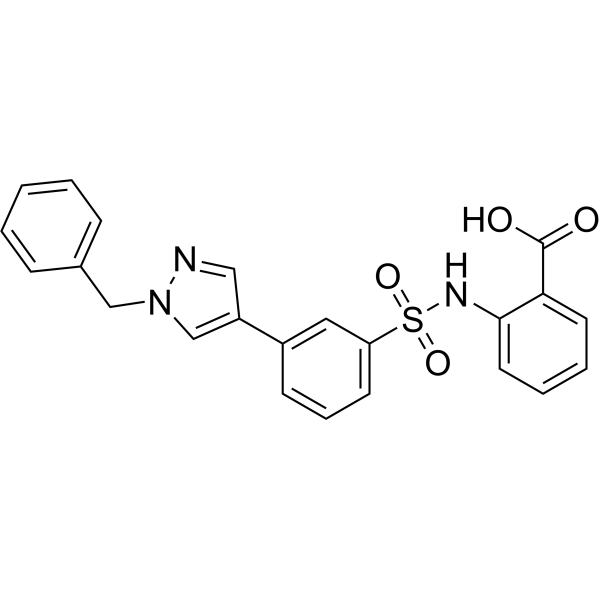
NITD-2, a dengue virus (DENV) polymerase inhibitor, inhibits the DENV RdRp-mediated RNA elongation. NITD-2 penetrates cell membrane poorly .
loading...
    loading...
Cat. No.: HY-143896
CAS No.: 2767442-46-4
Purity:  97.22%
Target:  

STING

Research Areas:  

Cancer

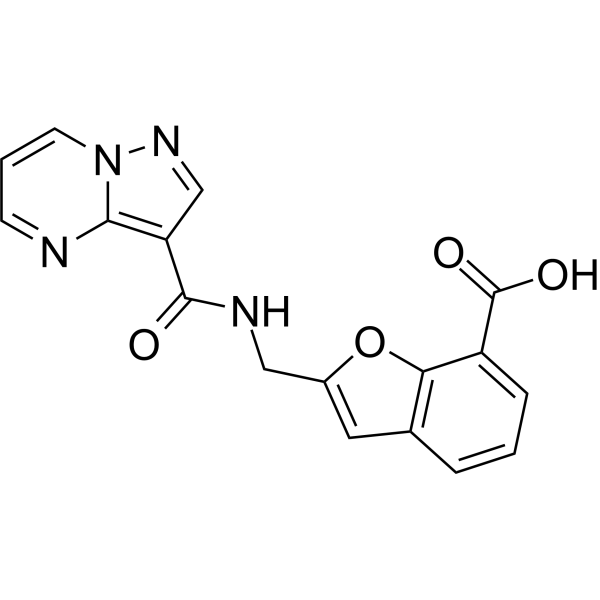
STING agonist-7 is a non-nucleotide STING agonist. STING agonist-7 binds selectively to mouse STING but not human STING. STING agonist-7 penetrates cell membrane poorly .
loading...
    loading...
Cat. No.: HY-DY1009
CAS No.: 150347-59-4
CFDA-SE (solution) is a fluorescent dye that can penetrate the cell membrane. It can react with the free amine group in the cytoskeleton protein inside the cell, and finally form a protein complex with fluorescence. After entering the cell, CFDA-SE locates in the cell membrane, cytoplasm and nucleus, and the fluorescence staining is strongest in the nucleus . CFDA-SE dye can be uniformly inherited by the cells with cell division and proliferation, and its attenuation is proportional to the number of cell divisions. This phenomenon can be detected and analyzed by flow cytometry under the excitation light of 488 nm, and can be used to detect the proliferation of cells .
Solvent and concentration: DMSO: 5 mM
loading...
    loading...
Cat. No.: HY-145777
CAS No.: 2377491-54-6
Purity:  99.51%
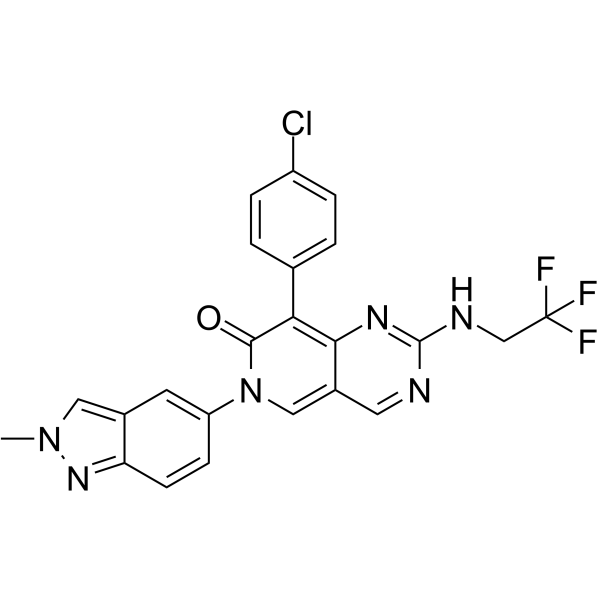
AGI-43192 is a potent and orally active inhibitor of methionine adenosyltransferase 2A (MAT2A) that limitedly penetrates the blood-brain barrier. AGI-43192 exhibits inhibitory activitity against MAT2A and S-adenosyl methionine (SAM) in HCT-116 MTAP-null cells with IC50s of 32 and 14 nM. AGI-43192 can significantly inhibit the proliferation of HCT-116 cells and tumor growth. AGI-43192 can be used to study the role of SAM regulation in the central nervous system (CNS) and colon cancer .
loading...
    loading...
Cat. No.: HY-Y0683A
CAS No.: 8009-03-8
Petrolatum (white) is mainly composed of hydrocarbons, possesses strong water resistance and moisturizing properties, and is commonly used as a pharmaceutical excipient. Petrolatum (white) penetrates into stratum corneum cells, improves skin barrier function, repairs epidermal structure, and reduces transepidermal water loss and the risk of skin damage. Petrolatum (white) induces the expression of antimicrobial peptides, innate immune genes, filaggrin and loricrin. Petrolatum (white) is used in research on atopic dermatitis and post-operative skin infections .
loading...
    loading...
Cat. No.: HY-D0920
CAS No.: 166196-17-4
TOTO-3 is a cyanine nucleic acid intercalating fluorescent probe that binds to both RNA and DNA (Ex=642 nm, Em=660 nm). TOTO-3 cannot enter intact cells, but can penetrate cells with permeabilized plasma membranes, staining cytoplasmic RNA and nucleoli to distinguish intact cells from damaged ones. TOTO-3 is taken up by macrophages in an ultrasound-independent manner. TOTO-3 accumulates in tumor cells via ultrasound-mediated enhancement of plasma membrane permeability. TOTO-3 supports optical imaging for real-time assessment of plasma membrane integrity, nucleic acid detection, and monitoring of ultrasound-mediated intracellular delivery processes. TOTO-3 is applicable to studies related to rectal cancer .
loading...
    loading...
Cat. No.: HY-107691
CAS No.: 158848-32-9
Purity:  ≥99.0%
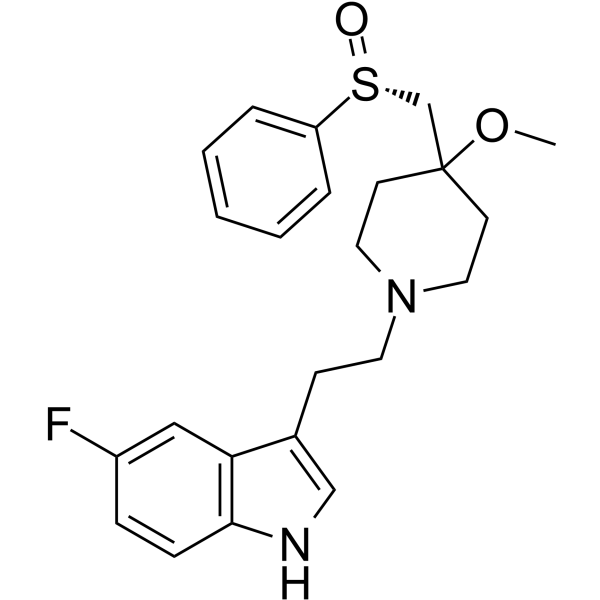
GR 159897 is a highly potent, selective, competitive, brain-penetrated non-peptide neurokinin 2 (NK2) receptor antagonist. GR 159897 has little or no affinity for NK1 and NK3 receptors. GR 159897 inhibits binding of [ 3H]GR100679 to human NK2 (hNK2)-CHO cells and rat colon membranes with pKis of 9.51 and 10, respectively. Antagonizes bronchoconstriction. Anxiolytic-like and anti-tumor effects .
loading...
    loading...
Cat. No.: HY-P4119
CAS No.: 863608-35-9
Research Areas:  

Others

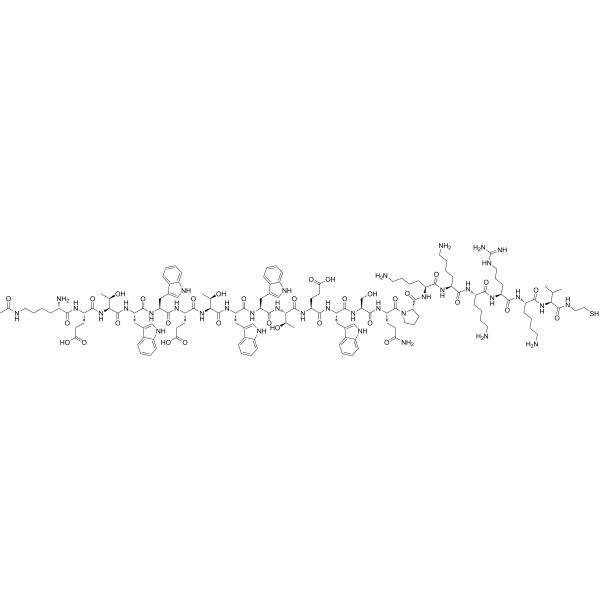
Pep-1-Cysteamine is an amphipathic chimeric cell-penetrating peptide. Pep-1-Cysteamine can penetrate biological membranes in an energy-independent manner without forming transmembrane pores, and efficiently deliver active proteins into cells, with its translocation dominated by electrostatic interactions and membrane perturbation .
loading...
    loading...
Cat. No.: HY-164307
CAS No.: 2769954-39-2
Synonyms: BLU 451; LNG-451
Target:  

EGFR

Research Areas:  

Cancer

Pebezertinib (BLU 451) is an orally active inhibitor for EGFR. Pebezertinib exhibits the ability to penetrate the central nervous system (CNS). Pebezertinib can be used for research about non-small cell lung cancer carrying EGFR exon 20 insertion .
loading...
    loading...
Cat. No.: HY-DY1015
CAS No.: 104821-25-2
Dihydroethidium (solution) , also known as DHE, is a peroxide indicator. Dihydroethidium penetrates cell membranes to form a fluorescent protein complex with blue fluoresces. After entering the cells, Dihydroethidium is mainly localized in the cell membrane, cytoplasm and nucleus, and the staining effect is the strongest in the nucleus. Dihydroethidium produces inherent blue fluorescence with a maximum excitation wavelength of 370 nm and a maximum emission wavelength of 420 nm; after dehydrogenation, Dihydroethidium combines with RNA or DNA to produce red fluorescence with a maximum excitation wavelength of 300 nm and a maximum emission wavelength of 610 nm. 535 nm can also be used as the excitation wavelength for actual observation .
Solvent and concentration: DMSO: 5 mM
loading...
    loading...
Cat. No.: HY-P10514
CAS No.: 678980-64-8
Research Areas:  

Others

Transportan 10 is a derivative of Transportan (HY-P1732) and is an amphiphilic cell penetrating peptide (CPP). Transportan 10 helps molecules penetrate cell membrane barriers by directly interacting with the lipid bilayer. Transportan 10 can be used in gene therapy or siRNA delivery vector research .
loading...
    loading...
Cat. No.: HY-P1421
CAS No.: 1081110-72-6
Target:  

PERK GHSR Apoptosis

Research Areas:  

Metabolic Disease

Obestatin(human) is a 23-amino acid amidated peptide that regulates appetite and gastrointestinal motility via its interaction with GPR39. Obestatin(human) can be used for weight loss. Obestatin(human) cannot penetrate the cell membrane .
loading...
    loading...
Cat. No.: HY-105552
CAS No.: 123-47-7
Synonyms: Endoiodin
Research Areas:  

Others

Prolonium (iodide) is membrane impermeant. Prolonium (iodide) can easily penetrate dead or damaged cells. Prolonium (iodide) is a probe that can be used for fluorescence microscopy and flow cytometry . Prolonium (iodide) also serve as an iodine source to maintain thyroid function .
loading...
    loading...
Cat. No.: HY-D1726
CAS No.: 2705841-53-6
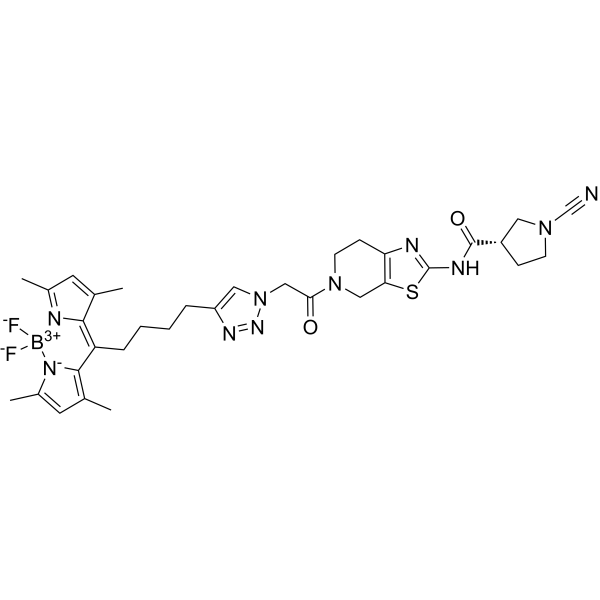
8RK59, a Bodipy probe, is a potent UCHL1 (ubiquitin C-terminal hydrolase L1) inhibitor, with an IC50 close to 1 μM. 8RK59 could penetrate and label living cells. BodipyFL-alkyne is coupled to the azide of 8RK64 (HY-148254) using copper(I)-mediated click chemistry, resulting in compound 8RK59 .
loading...
    loading...
Cat. No.: HY-P10719A
Target:  

MyD88

Research Areas:  

Infection Inflammation/Immunology

Pepinh-MYD TFA is a MyD88 inhibitor that contains a domain sequence from MyD88 TIR and a protein transduction sequence, enabling it to penetrate the cell membrane. Pepinh-MYD TFA interferes with MyD88-mediated TLR signaling pathways, thereby inhibiting related immune responses. Pepinh-MYD TFA holds potential for studying the role of MyD88 in viral infections .
loading...
    loading...
Cat. No.: HY-163384
CAS No.: 2378384-49-5
Target:  

Dopamine Transporter

Research Areas:  

Neurological Disease

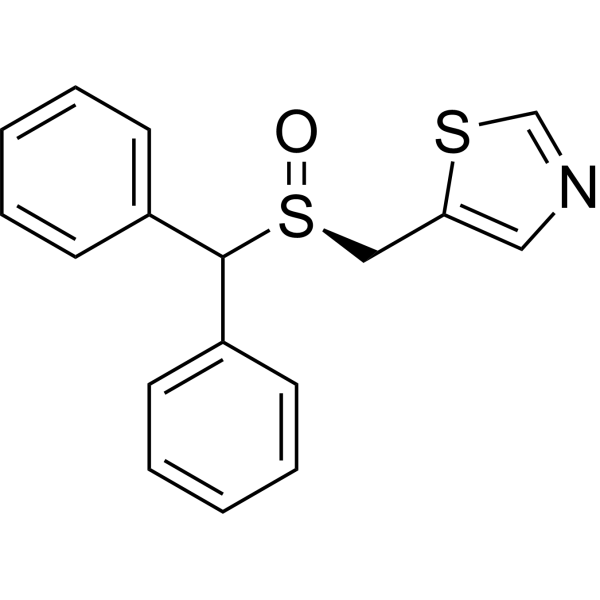
(S)-CE-123 is a potent, selective, and novel atypical dopamine transporter (DAT) inhibitor with an EC50 of 2.76 μM in uptake inhibition assays conducted in HEK293 cells stably expressing human isoforms of DAT. (S)-CE-123, a Modafinil analogue, is able to penetrate the blood–brain barrier. (S)-CE-123 improves cognitive and motivational processes in experimental animals .
loading...
    loading...
Cat. No.: HY-P10560
CAS No.: 955937-87-8
Research Areas:  

Others

M918 is a cell-penetrating peptide. M918 is internalized by cells through endocytosis and can effectively penetrate a variety of cells in a non-toxic manner. M918 can be used in gene therapy and drug delivery system research .
loading...
    loading...
Cat. No.: HY-P4247
CAS No.: 96337-25-6
Research Areas:  

Others

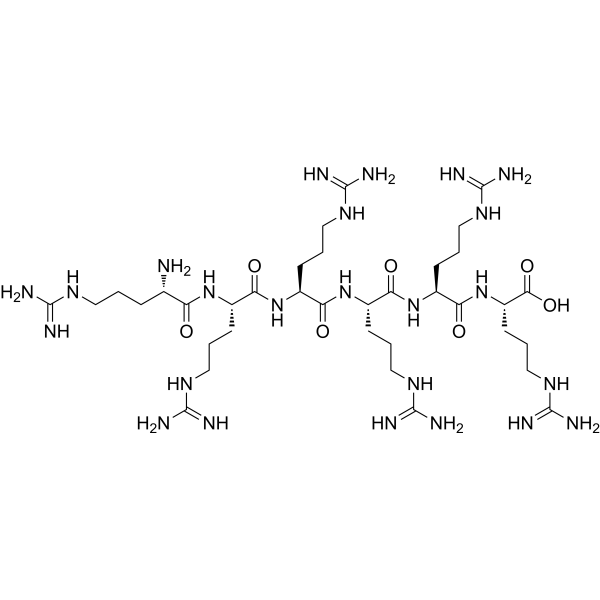
Hexa-arginine, consisting of six arginines, is a polycationic peptide that can penetrate cells efficiently and is mainly used for the intracellular delivery of low-molecular-weight agents, biomolecules, and particles .
loading...
    loading...
Cat. No.: HY-144898
CAS No.: 2756818-39-8
Purity:  99.93%
Research Areas:  

Cancer

SB-216 is an BBB-penetrable tubulin polymerization inhibitor. SB-216 can inhibit the proliferation and migration, and induce apoptosis and cell cycle arrest of tumor cells. SB-216 has good in vivo metabolic stability and low toxicity, but its oral bioavailability is limited. SB-216 has antitumor activity and can be used in the research of tumors such as melanoma .
loading...
    loading...

