87 Results for "

fragmentation

" in MedChemExpress (MCE) Product Catalog:
Products (87)

87 Results for "fragmentation" in MCE Product Catalog:

Cat. No.: HY-171184
CAS No.: 1140627-77-5
Research Areas:  

Cancer

EAPB0503 is a quinoline compound with anti-tumor activity, showing strong cytotoxicity against melanoma cells in vitro (IC50=200 nM). EAPB0503 can induce specific cell cycle arrest in mitosis of CML cells and directly activate apoptosis, leading to an increase in the G0 cell population, disruption of mitochondrial membrane potential, PARP cleavage, and DNA fragmentation. EAPB0503 also reduces the levels of BCR-ABL protein .
loading...
    loading...
Cat. No.: HY-176836
CAS No.: 1424353-64-9
Target:  

Endonuclease

Research Areas:  

Cancer

PNR-3-82 is a highly selective inhibitor of endonuclease G (EndoG) with an IC50 value of 0.61 μM against EndoG. As a non-competitive inhibitor, PNR-3-82 blocks EndoG-mediated DNA fragmentation. PNR-3-82 enhances the in vivo delivery efficiency of plasmid DNA and exhibits bioprotective effects against drug-related injuries and other cell/tissue damages. PNR-3-82 can be used in studies related to prostate cancer .
loading...
    loading...
Cat. No.: HY-174377

PeS-9 is an Androgen Receptor (AR) degrader that induces androgen receptor degradation PeS-9 induces mitochondrial and ER stress by promoting cytotoxic ROS production, leading to the release of mitochondrial cytochrome C and AIF. PeS-9 subsequently activates caspases-9 and -3, causing DNA fragmentation and apoptotic cell death. PeS-9 has anticancer activity against prostate cancer and exerts in vivo antitumor and antimetastatic activity with minor side effects. PeS-9 can be used for the study of targeting monotherapy against GLUT-1-overexpressing tumors .

loading...
    loading...
Cat. No.: HY-178099
Research Areas:  

Cancer

Apoptosis inducer 45 is an apoptosis inducer. Apoptosis inducer 45 is cytotoxically active against the MCF-7 cell line. Apoptosis inducer 45 elicits MCF-7 cell apoptosis via the mitochondrial pathway (increases the Bax/Bcl-2 ratio) by activating cleavage of caspase-9, thereby inducing the fragmentation of DNA repair protein PARP. Apoptosis inducer 45 also can induce caspase-8 cleavage, subsequently initiating cleavage of caspase-3 and its downstream protein PARP to culminate in the extrinsic apoptosis. Apoptosis inducer 45 can be used in the research of breast cancer .
loading...
    loading...
Cat. No.: HY-139012
CAS No.: 2584411-87-8
RC574 is a GPx1 and GPx4 modulator that increases GPx1 protein levels and enzyme activity and protects cells against RSL3-induced GPx4 inactivation and ferroptosis. RC574 inhibits glutamate-induced ferroptosis/oxytosis, mitochondrial superoxide anion production, mitochondrial membrane hyperpolarization, oxidant production, and mitochondrial fragmentation. RC574 protects primary cortical neurons against glutamate challenge and inhibits mitochondrial superoxide anion production while increasing antioxidant enzyme activity. RC574 ameliorates motor-related behavioral deficits and reduces reactive astrocytes in the striatum in a rat model of ischemic stroke. RC574 can be used in research on neurodegenerative diseases and ischemic stroke .
loading...
    loading...
Cat. No.: HY-117152
CAS No.: 25695-95-8
Synonyms: L-threo-Sphingosine C-18
Target:  

p38 MAPK Apoptosis

Research Areas:  

Cancer

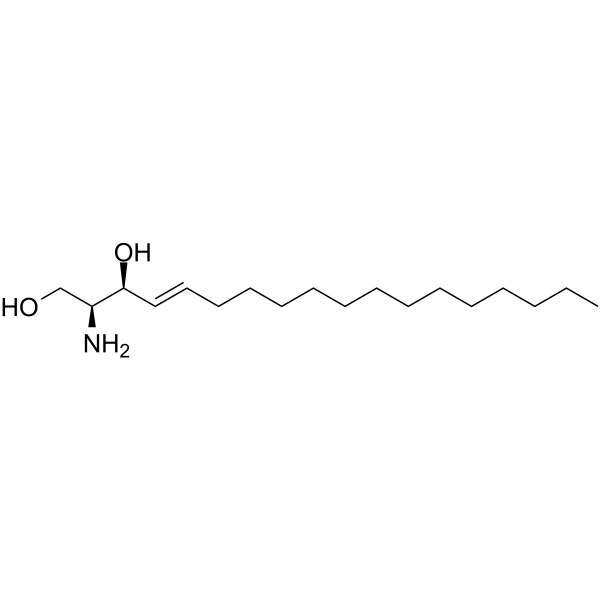
L-threo-Sphingosine is a potent MAPK inhibitor. L-threo-Sphingosine induces apoptosis and clear DNA fragmentation. L-threo-Sphingosine shows anticancer effect .
loading...
    loading...
Cat. No.: HY-163444
Target:  

Apoptosis

Research Areas:  

Cancer

Apoptosis inducer 15 (Compound 3) induces cell apoptosis and cell cycle arrest at G2/M phase. Apoptosis inducer 15 is cytotoxicitic without causing DNA fragmentation .
loading...
    loading...
Cat. No.: HY-W011425A
CAS No.: 7611-50-9
Synonyms: Nitrilotris(methylenephosphonic acid), trisodium salt
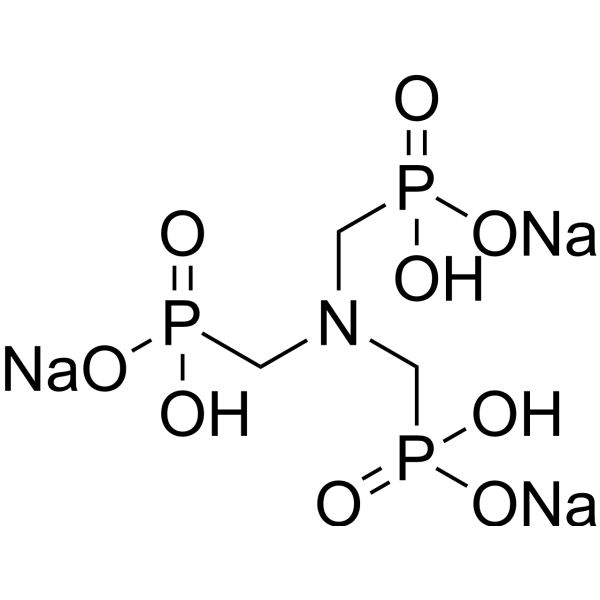
NTPO trisodium is a DNA damage inducer, causing genomic DNA damage and fragmentation, activating ATR-mediated cell cycle checkpoints. The DNA damaging effects of NTPO trisodium are abrogated by base excision repair (BER) but not nucleotide excision repair (NER) .
loading...
    loading...
Cat. No.: HY-W726390
CAS No.: 134720-04-0
Target:  

Adrenergic Receptor

Research Areas:  

Neurological Disease

2-(4-(2-Hydroxy-3-(isopropyl(nitroso)amino)propoxy)phenyl)acetamide is a genotoxic derivative of Atenolol (HY-17498) that can induce DNA fragmentation in rat hepatocytes when used at concentrations ranging from 0.1 to 1 mM.
loading...
    loading...
Cat. No.: HY-117249
CAS No.: 104958-90-9
Synonyms: AK-2123
Target:  

Apoptosis Caspase

Research Areas:  

Cancer

Sanazole (AK-2123) is a hypoxic cell radiosensitizer. Sanazole enhances radiation-induced DNA strand breaks. In mouse fibroblast tumors, Sanazole increases nuclear condensation and fragmentation, as well as elevates caspase-3 activity, thereby enhancing radiation-induced apoptosis .
loading...
    loading...
Cat. No.: HY-W747533
CAS No.: 170926-06-4
Synonyms: C8 Ceramine; Ceramine (d18:1/8:0)
Target:  

Drug Derivative

Research Areas:  

Others

C8 Ceramine is an analog of ceramide in which the carbonyl group of the ceramide is replaced by a methylene group. At a concentration of 10 μM, C8 ceramine induces maximal DNA fragmentation in U937 cells after 6 hours of incubation, compared to 12 hours for C8 ceramide.
loading...
    loading...
Cat. No.: HY-169253
Research Areas:  

Cancer

ROS inducer 5 (compound 6e) can induce intracellular ROS accumulation and subsequent nuclear fragmentation. ROS inducer 5 can induce apoptosis in MCF-7 cells, with an IC50 value of 3.85 μM. ROS inducer 5 can be used in anticancer research .
loading...
    loading...
Cat. No.: HY-159518
CAS No.: 2959444-40-5
ROS inducer 4 (compound TE3) is a mitochondrial inhibitor. ROS inducer 4 causes a series of mitochondria-related physiological changes in tumors, such as mitochondrial fragmentation, explosive generation and accumulation of ROS, decreased mitochondrial membrane potential, decreased ATP content, and activation of ROS-mediated apoptotic signaling in mitochondria .
loading...
    loading...
Cat. No.: HY-124519
CAS No.: 331749-88-3
Synonyms: Cent-1
Target:  

Microtubule/Tubulin

Research Areas:  

Cancer

Centmitor-1 (Cent-1) is a mitotic arrest inducer. Centmitor-1 modulates microtubule plus-ends and reduced microtubule dynamics. In cells, Centmitor-1 causes mitotic arrest characterized by chromosome alignment defects, multipolar spindles, centrosome fragmentation, and activated spindle assembly checkpoint .
loading...
    loading...
Cat. No.: HY-162807
CAS No.: 443749-05-1
Target:  

TMV

Research Areas:  

Infection

TMV-IN-10 (compound 4h) is an arecoline derivative with anti-tobacco mosaic virus (TMV) activity (EC50=146 µg/mL). TMV-IN-10 can be used in research on controlling crop pests and diseases and improving crop yields by acting on the viral coat protein (CP) to cause viral fragmentation .
loading...
    loading...
Cat. No.: HY-123786
CAS No.: 54490-26-5
Target:  

Apoptosis Caspase

Research Areas:  

Cancer

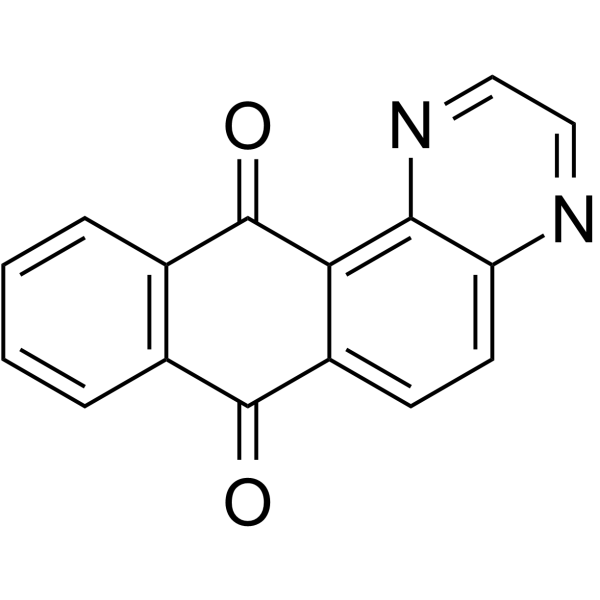
NSC745887 (compound 25) is an inhibitor that targets DNA topoisomerase cleavage, activates the caspase-8/9-caspase-3-poly (ADP-ribose) polymerase cascade, and induces apoptosis in cancer cells. NSC745887 enhances γH2AX expression and causes DNA fragmentation leading to DNA damage .
loading...
    loading...
Cat. No.: HY-147867
CAS No.: 2415311-84-9
Target:  

MMP

Research Areas:  

Cancer

MMP-2/9-IN-1 (Compound 4a) is a potent dual MMP-2 and MMP-9 inhibitor with IC50 values of 56 nM and 38 nM, respectively. MMP-2/9-IN-1 inhibits tumor growth, strongly induces cancer cell apoptosis, inhibits cell migration, and suppresses cell cycle progression leading to DNA fragmentation .
loading...
    loading...
Cat. No.: HY-N8248A
CAS No.: 22768-95-2
Target:  

Topoisomerase

Research Areas:  

Cancer

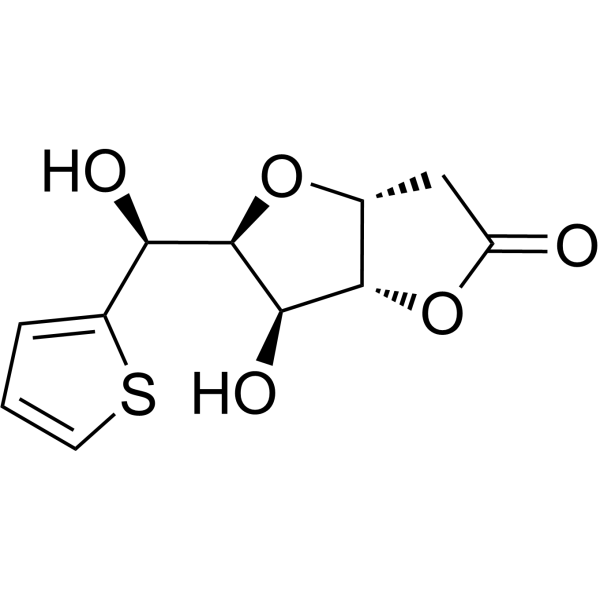
(-)-Eleutherin is a pyranonaphthoquinone derivative that exhibits cytotoxic activity by inhibiting DNA topoisomerase II. (-)-Eleutherin has been shown to have promising potential as a medicinal compound due to its association with naphthoquinones. (-)-Eleutherin demonstrates significant DNA fragmentation rates, indicating its strong cytotoxic effects on cells. Additionally, (-)-Eleutherin possesses higher antioxidant potential compared to control samples, contributing to its therapeutic efficacy.
loading...
    loading...
Cat. No.: HY-121642
CAS No.: 1169831-01-9
Target:  

Others

Research Areas:  

Others

SL-017 is a novel photoacoustic sensitizer and a derivative of photofrin B. It can be taken up by cells to the maximum extent within 30 minutes and is mainly localized in mitochondria. After being activated by visible light or ultrasound, SL-017 can significantly increase the production of reactive oxygen species (ROS). Low concentrations of SL-017 can rapidly cause the loss of mitochondrial membrane potential. SL-017 can also cause mitochondrial fragmentation, a process that occurs after the loss of membrane potential. Epoxyeicosatrienoic acids (EETs) can alleviate the loss of mitochondrial membrane potential caused by SL-017, but the antioxidant ascorbic acid has no such effect. These characteristics indicate that SL-017 mainly targets mitochondria and exerts its cytotoxic effect by triggering the collapse of mitochondrial membrane potential, generating ROS, and causing mitochondrial fragmentation. As a novel photoacoustic sensitizer, SL-017 has potential application value in photodynamic therapy and sonodynamic therapy.
loading...
    loading...
Cat. No.: HY-176775
CAS No.: 1423018-61-4
TPP-IOA is a cytochrome c peroxidase inhibitor. TPP-IOA inhibits apoptosis by preventing cardiolipin oxidation and cytochrome c release to the cytosol. TPP-IOA disrupts oxidative phosphorylation in isolated mitochondria. TPP-IOA inhibits cell death in SH-SY5Y cells grown in glucose, but not galactose. TPP-IOA causes mitochondrial depolarization and network fragmentation. TPP-lOA mitigates radiation induced death in mice .
loading...
    loading...

