6395 Results for "

CCK-mediated pathways

" in MedChemExpress (MCE) Product Catalog:
Products (6395)

6395 Results for "CCK-mediated pathways" in MCE Product Catalog:

Cat. No.: HY-L133
446 compounds

Copper is an important co-factor of all biological enzymes, but if the concentration exceeds the threshold of maintaining the homeostasis mechanism, copper will lead to cytotoxicity. This death mechanism has been named "Cuproptosis".

The mechanism of cuproptosis distinct from all other known mechanisms of regulated cell death, including apoptosis, pyroptosis, necroptosis, and ferroptosis.

Copper combine with the lipoylated components of the tricarboxylic acid cycle (TCA), leading to lipoylated protein aggregation and subsequent loss of iron-sulfur cluster proteins, ultimately resulting in protein toxicity stress and cell death. Studies have shown that the necessary factors for cuproptosis include the presence of glutathione, mitochondrial metabolism of galactose and pyruvate, and glutamine metabolism.

Targeted regulation of cuproptosis is a potential choice to treat cancer, rheumatoid arthritis, and other diseases. For example, up-regulation of LIPT1 may inhibit the occurrence and development of tumors by destroying TCA in mitochondria and then inducing cuproptosis.

MCE supplies a unique collection of 446 cuproptosis-related compounds, all of which act on the targets or signaling pathways related to cuproptosis and may have in inhibitory or activated effect on cuproptosis. MCE Cuproptosis Library is a useful tool for drug research related to cancer, rheumatoid arthritis, and other diseases.

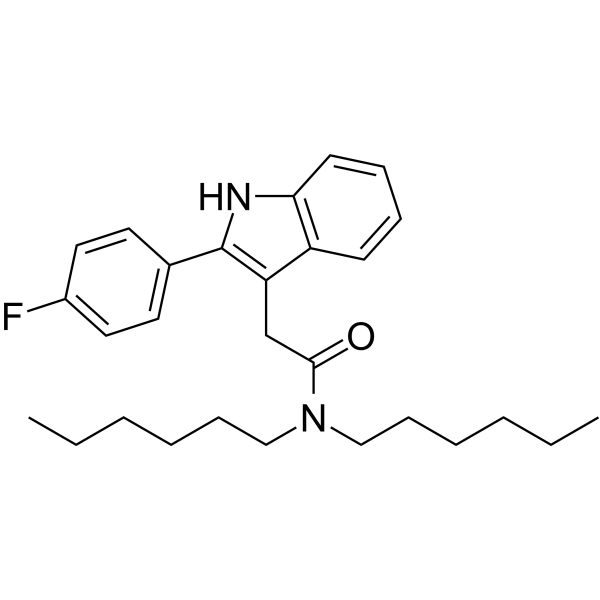
Cat. No.: HY-101059
CAS No.: 142720-24-9
Purity:  99.95%
FGIN-1-27 is a blood-brain barrier-penetrant TSPO ligand with a Ki value of 5 nM. FGIN 1-27 inhibits PKC-β, PKA/CREB, p38/ERK MAPK, MITF, tyrosinase, TRP-1, and TRP-2, thereby inhibiting melanogenesis and pigmentation. FGIN-1-27 alleviates X-ray radiation-induced astrocyte mitochondrial hyperfunction, reduces ROS and superoxide production, inhibits excessive activation of A1-type astrocytes, downregulates GFAP and C3 protein expression, and restores astrocyte proliferative capacity. FGIN-1-27 produces anticonvulsant effects in normal mice; in diazepam-withdrawn mice, the brain MDR pathway becomes subsensitive, and the anticonvulsant activity disappears. FGIN-1-27 attenuates pigmentation in zebrafish embryos and ameliorates UVB-induced skin pigmentation in guinea pigs. FGIN-1-27 directly stimulates testicular Leydig cells while upregulating luteinizing hormone levels, causing an acute increase in serum testosterone in male rats. FGIN 1-27 can be used for research related to hyperpigmentation, epilepsy, brain injury, and other diseases .
loading...
    loading...
Cat. No.: HY-109061A
CAS No.: 2411549-88-5
Synonyms: YH25448 mesylate hydrate; GNS-1480 mesylate hydrate
Research Areas:  

Cancer

Lazertinib (YH25448; GNS-1480) mesylate hydrate is an orally active, blood-brain barrier permeable third-generation EGFR tyrosine kinase inhibitor, as well as an ABCB1/ABCG2 inhibitor and a TRPA1 activator. Lazertinib mesylate hydrate exhibits IC50 values of 0.4 mM and 0.2 mM against human ABCB1 and ABCG2, respectively. By inhibiting mutant EGFR signaling, EGFR phosphorylation and the downstream ERK/AKT pathway, as well as upregulating surface expression of EGFR/MET, Lazertinib mesylate hydrate induces cell cycle arrest, apoptosis, spontaneous calcium responses, hyperexcitability of dorsal root ganglion (DRG) neurons, and TRPA1-dependent pain-like behaviors. Lazertinib mesylate hydrate competitively binds to the substrate-binding sites of ABCB1/ABCG2, stimulates their ATPase activity without altering their expression or plasma membrane localization, thereby enhancing ADCC activity, acting as a chemosensitizer, and reversing ABCB1-mediated multidrug resistance. It exerts antitumor activity as a single agent or in combination with other drugs. Lazertinib mesylate hydrate is applicable to research related to non-small cell lung cancer, multidrug-resistant cancers, and paresthesia .
loading...
    loading...
Cat. No.: HY-13689G
CAS No.: 133053-19-7
Go 6983 GMP is Go 6983 (HY-13689) produced by using GMP guidelines. GMP small molecules works appropriately as an auxiliary reagent for cell therapy manufacture. Go 6983 is a dual inhibitor targeting Suv39h1/2 (KMT1A/KMT1B) and PKC, as well as a transcriptional activator capable of inducing DNA hypomethylation. Go 6983 stimulates the transcription of Prdm14 by reducing Suv39h1/2 protein levels, decreasing histone modifications in the Prdm14 promoter region, and increasing the recruitment of RNA polymerase II. Go 6983 induces genome-wide DNA hypomethylation by inhibiting de novo methyltransferase expression and increasing Tet1/Tet2 levels, thereby promoting self-renewal and pluripotency maintenance of stem cells. Meanwhile, Go 6983 can block PKC-mediated signaling pathways to reduce the expression of EMT-related genes and eliminate the upregulation of antioxidant genes downstream of NRF2. Go 6983 is mainly used in mechanism studies related to myocardial ischemia/reperfusion injury .
loading...
    loading...
Cat. No.: HY-174469
CAS No.: 3070438-79-5
PROTAC PI3K/110β degrader-2 is a VHL-recruiting PI3K/110β PROTAC degrader, with DC50 values of 1.258 μM and 2.185 μM in MCF-7/ADM and A549/DDP cells, respectively. PROTAC PI3K/110β degrader-2 induces proteasomal degradation of PI3K/110β, inhibits phosphorylation of AKT and expression of Bcl-2, while suppressing the activity and expression of P-gp. It also induces endoplasmic reticulum stress and mitochondrial apoptosis via the PERK/CHOP pathway. PROTAC PI3K/110β degrader-2 exerts anti-tumor activity against multidrug-resistant cancer cells both in vitro and in vivo, and produces a synergistic effect when combined with Doxorubicin (HY-15142A) or Cisplatin (HY-17394), making it applicable for the research of multidrug-resistant cancers .
loading...
    loading...
Cat. No.: HY-184378
CAS No.: 2922221-22-3
Research Areas:  

Metabolic Disease Cancer

MDB5 is a Hedgehog pathway and Smoothened inhibitor that binds to the 7-TM domain of Smo . MDB5 reduces hepatic stellate cell activation, extracellular matrix-related gene expression, collagen deposition, hydroxyproline content and epithelial-mesenchymal transition, and prevents sinusoidal endothelial cell capillarization . MDB5 induces G1 and S phase cell cycle arrest, triggers apoptosis by upregulating Bax and downregulating Bcl-2, and also decreases oxygen consumption rate, glucose uptake, transglutaminase activity and fibronectin matrix assembly . MDB5 reduces the levels of liver injury markers, hepatic triglyceride deposition and hepatic steatosis, restores the tissue structure of the kidney and spleen, and inhibits pancreatic tumor growth without causing body weight loss . MDB5 can be loaded into PEG-PCC-g-DC micelles, achieving high drug loading, sustained release, improved water solubility, enhanced cellular uptake and optimized hepatic distribution, with good tolerance in mice . MDB5 is applicable to research related to alcohol-associated liver disease, liver fibrosis and pancreatic cancer .
loading...
    loading...
Cat. No.: HY-187340
Target:  

c-Kit c-Fms

CSF1R/c-Kit-IN-1 is a CSF-1R and c-Kit inhibitor, with an IC50 of 5.88 nM against human CSF-1R and an IC50 of 1.47 nM against human c-Kit. CSF1R/c-Kit-IN-1 binds to the ATP-binding pocket of CSF-1R, forming a hinge interaction with Cys666 via the oxazole nitrogen atom and adjacent amino group, and binds to residues in the hydrophobic binding pocket. CSF1R/c-Kit-IN-1 binds to the ATP-binding pocket of c-Kit, maintains a hinge interaction through its 2-amino-oxazole core, and binds to a broader hydrophobic surface near the solvent-exposed region via its morpholine substituent. CSF1R/c-Kit-IN-1 inhibits CSF-1-induced phosphorylation of ERK, which is a downstream readout of the CSF-1R signaling pathway. CSF1R/c-Kit-IN-1 can be used in the research of neuroinflammation-related neurodegenerative diseases .
loading...
    loading...
Cat. No.: HY-189364
CAS No.: 88262-44-6
Synonyms: SMC247-9
Research Areas:  

Cancer

(DL)-3,5-Dimethyltyrosine (SMC247-9) is a selective APOBEC3B inhibitor optimized from SMC247, with an IC50 of 50 pM. (DL)-3,5-Dimethyltyrosine binds to the APOBEC3B protein, reduces intracellular APOBEC3B protein abundance partially through a lysosome-dependent pathway, enhances IL-15 expression in tumor cells, and relieves the suppression of CD8 + T cells by tumor cells in an IL-15-dependent manner. (DL)-3,5-Dimethyltyrosine attenuates tumor- and macrophage-derived chemokine-mediated macrophage chemotaxis and inhibits pathological myeloid inflammatory signaling. (DL)-3,5-Dimethyltyrosine inhibits tumor growth in the immune checkpoint blockade-responsive MC38 syngeneic mouse model and produces synergistic effects with anti-PD-L1 in the immune checkpoint blockade-resistant TC-1 tumor model; it also ameliorates anti-PD-1-exacerbated DSS-induced colitis-like intestinal inflammatory injury. (DL)-3,5-Dimethyltyrosine can be used in research related to tumor immunotherapy .
loading...
    loading...
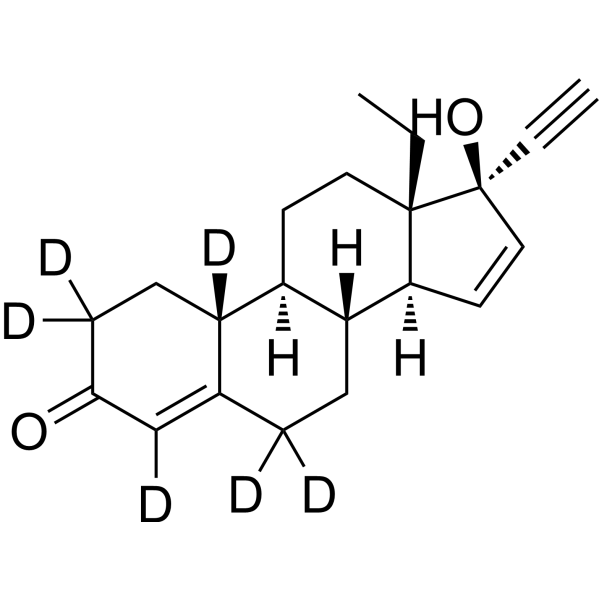
Cat. No.: HY-B0110S
CAS No.: 1542211-40-4
Synonyms: SHB 331-d6; WL 70-d6
Gestodene-d6 (SHB 331-d6; WL 70-d6) is the deuterated-labeled Gestodene (HY-B0110). Gestodene is an orally active synthetic progestogen compound of the 19-nortestosterone class. Gestodene binds with high affinity to the progesterone receptor, inhibits 5α-reductase, binds to androgen and aldosterone receptors, and inactivates CYP3A. Gestodene acts as a positive allosteric modulator of PAR1, enhances PAR1-mediated signaling pathways, and is capable of increasing the activation potency of PAR1-AP toward PAR1, thereby promoting ERK1/2 phosphorylation, receptor internalization, cell morphological changes, and human platelet aggregation. Gestodene and its A-ring reduced metabolites promote the proliferation, differentiation, and mineralization of neonatal rat osteoblasts. Gestodene itself has no binding capacity for estrogen receptors, and this osteogenic activity depends on intracellular metabolism to generate A-ring reduced products with estrogen-like agonistic activity. Gestodene is useful for research on diseases related to progesterone secretion and diseases related to thrombosis .
loading...
    loading...
Cat. No.: HY-N0113BR
CAS No.: 6027-23-2
Synonyms: Ordenina hydrochloride (Standard); Peyocactine hydrochloride (Standard)
Hordenine hydrochloride (Standard) (Ordenina hydrochloride (Standard); Peyocactine hydrochloride (Standard)) is the analytical standard of Hordenine hydrochloride (HY-N0113B). This product is intended for research and analytical applications. Hordenine hydrochloride (Ordenina hydrochloride; Peyocactine hydrochloride) is a multifunctional alkaloid with oral activity and blood-brain barrier penetration. Hordenine hydrochloride inhibits LPS-induced phosphorylation of p38, JNK, ERK1/2, p65, IκB, and AKT, prevents p65 nuclear translocation, and suppresses inflammatory cytokines and mediators. Hordenine hydrochloride inhibits melanin synthesis in melanocytes and reconstructed epidermis. Hordenine hydrochloride activates the Wnt/β-catenin signaling pathway. Hordenine hydrochloride activates DRD2, acts as a D3R partial agonist, α2A-AR full agonist, and 5-HT2A-R antagonist, and inhibits SERT and DAT. Hordenine hydrochloride inhibits α-synuclein accumulation and ameliorates motor deficits in Parkinson's disease models. Hordenine hydrochloride limits alcohol intake, reduces relapse drinking behavior. Hordenine hydrochloride can be used for research on mastitis, skin pigmentation, acute lung injury, foodborne diseases, hair loss, Parkinson's disease, bacterial infections, and alcohol use disorder .
loading...
    loading...
Cat. No.: HY-N0113BS
Synonyms: Ordenina-d6 hydrochloride; Peyocactine-d6 hydrochloride
Hordenine-d6 hydrochloride (Ordenina-d6 hydrochloride; Peyocactine-d6 hydrochloride) is the deuterated-labeled Hordenine hydrochloride (HY-N0113B). Hordenine hydrochloride (Ordenina hydrochloride; Peyocactine hydrochloride) is a multifunctional alkaloid with oral activity and blood-brain barrier penetration. Hordenine hydrochloride inhibits LPS-induced phosphorylation of p38, JNK, ERK1/2, p65, IκB, and AKT, prevents p65 nuclear translocation, and suppresses inflammatory cytokines and mediators. Hordenine hydrochloride inhibits melanin synthesis in melanocytes and reconstructed epidermis. Hordenine hydrochloride activates the Wnt/β-catenin signaling pathway. Hordenine hydrochloride activates DRD2, acts as a D3R partial agonist, α2A-AR full agonist, and 5-HT2A-R antagonist, and inhibits SERT and DAT. Hordenine hydrochloride inhibits α-synuclein accumulation and ameliorates motor deficits in Parkinson's disease models. Hordenine hydrochloride limits alcohol intake, reduces relapse drinking behavior. Hordenine hydrochloride can be used for research on mastitis, skin pigmentation, acute lung injury, foodborne diseases, hair loss, Parkinson's disease, bacterial infections, and alcohol use disorder .
loading...
    loading...
Cat. No.: HY-N20674
CAS No.: 76472-89-4
Chalcomoracin is an orally active anticancer agent. Chalcomoracin exhibits anticancer, antibacterial, and α-glucosidase inhibitory activities, with an IC50 of 14.23 µM against yeast α-glucosidase and an IC50 of 5.5 μM against FabI of Staphylococcus aureus. Chalcomoracin reduces the phosphorylation levels of ERK, JNK, and P38; enhances the phosphorylation level of ERK1/2; regulates the MAPK, mTOR, AKT, and p53 signaling pathways; upregulates the expression of Chop, Bip, PINK1, GRP78, and GADD153; and downregulates the expression of Alix. Chalcomoracin induces apoptosis (apoptosis), endoplasmic reticulum stress (endoplasmic reticulum stress), paraptosis (paraptosis), ROS production, mitophagy (mitophagy), and autophagy (autophagy); it inhibits cancer cell viability, colony-forming ability, migration, invasion, proliferation, tumorigenesis, fatty acid synthesis, S. aureus growth, vitreous-stimulated retinal cell activity, and cell cycle progression at the G0/G1 phase. Chalcomoracin can be used in research related to hepatocellular carcinoma, non-small cell lung cancer, triple-negative breast cancer, prostate cancer, proliferative vitreoretinopathy, pancreatic cancer, diabetes, and bacterial infections .
loading...
    loading...
Cat. No.: HY-N2593R
CAS No.: 32507-66-7
Isorhapontigenin (Standard) is the analytical standard of Isorhapontigenin (HY-N2593). This product is intended for research and analytical applications. Isorhapontigenin is an orally active dietary polyphenol. Isorhapontigenin acts as a potent antioxidant that reduces the production of reactive oxygen species (ROS). Isorhapontigenin promotes the binding of JUN to the AP-1 site on the SESN2 promoter, induces SESN2 transcription, triggers MAPK8-dependent JUN activation, and upregulates the expression of PPAR-α, PGC-1α and CPT-1A to facilitate fatty acid oxidation. Isorhapontigenin induces autophagy, apoptosis and preadipocyte differentiation; it inhibits tumor growth, cell invasion, NF-κB transcriptional activity, the PI3K/Akt signaling pathway, STAT1 phosphorylation and MMP-2 expression. Isorhapontigenin alleviates oxidative stress, inflammatory cytokine release and triglyceride accumulation; it increases intracellular ATP levels and promotes Nrf2 nuclear translocation. Isorhapontigenin improves insulin sensitivity in adipose tissue and glucose tolerance, and reduces postprandial blood glucose, insulin and free fatty acid levels. Isorhapontigenin is applicable to research on bladder cancer, liver injury, chronic obstructive pulmonary disease, acute lung injury and type 2 diabetes.
loading...
    loading...
Cat. No.: HY-P11935
CAS No.: 2410535-57-6
RR-171 is an amino acid polypeptide and an inhibitor of the Wnt signaling pathway. RR-171 reduces the expression levels of Wnt-1, GSK3β and β-catenin. RR-171 induces apoptosis (Apoptosis) in pancreatic cancer cells, which is characterized by an increased Bax/Bcl-2 ratio, activation of Caspase-3/7/9, and increased Cleaved-PARP; this pro-apoptotic effect can be partially reversed by Z-VAD-FMK (HY-16658B). RR-171 also induces pyroptosis (Pyroptosis) in pancreatic cancer cells, which is manifested by activation of the NLRP-3 inflammasome, activation of Caspase-1, cleavage of GSDMD, upregulation of IL-1β and IL-18, and increased LDH release; this pro-pyroptotic effect can be partially reversed by VX-765 (HY-13205). RR-171 inhibits the viability, proliferation and colony formation of pancreatic cancer cells, with low cytotoxicity against normal cells. RR-171 downregulates the expression of Ki-67 and PCNA in tumor tissues in vivo, with favorable biosafety. RR-171 can be used in studies related to pancreatic cancer .
loading...
    loading...
Cat. No.: HY-P991736
Anti-IL11 Antibody (X203, Mouse IgG) is an antibody targeting IL-11. Anti-IL11 Antibody (X203, Mouse IgG) inhibits IL-11-mediated activation of the ERK-mTORC1 axis, inactivation of LKB1-AMPK, and pro-senescence pathways. Anti-IL11 Antibody (X203, Mouse IgG) alleviates age-related metabolic decline, improves muscle function, reduces tissue fibrosis, decreases the expression of senescence markers, and maintains telomere length and mtDNA copy number. Anti-IL11 Antibody (X203, Mouse IgG) restores browning of white adipose tissue, upregulates thermogenic and mitochondrial biogenesis gene programs, reduces lipid droplet size, and decreases immune cell infiltration in visceral white adipose tissue. Anti-IL11 Antibody (X203, Mouse IgG) extends the median lifespan of mice and reduces the incidence of age-related tumors. Anti-IL11 Antibody (X203, Mouse IgG) can be used in the research of age-related metabolic decline, sarcopenia and age-related cancers .
loading...
    loading...
Cat. No.: HY-W011927R
CAS No.: 80-09-1
Synonyms: Bisphenol S (Standard); Bis(4-hydroxyphenyl) sulfone (Standard)
4,4'-Sulfonyldiphenol (Bisphenol S; Bis(4-hydroxyphenyl) sulfone) (Standard) is the analytical standard of 4,4'-Sulfonyldiphenol (HY-W011927). This product is intended for research and analytical applications. 4,4'-Sulfonyldiphenol, a substitute for Bisphenol A (HY-18260), is widely used in industrial and consumer products. 4,4'-Sulfonyldiphenol is an estrogen receptor (ER) agonist and can competitively bind to thyroid hormone receptors (TR) with IC50 values for TRα and TRβ are 2650 μM and 2294 μM respectively, thereby affecting breast development and reducing the expression of androgen receptor (AR) in fetal testes. 4,4'-Sulfonyldiphenol promotes the progression of glioblastoma by upregulating the EZH2 mediated PI3K/AKT/mTOR pathway. Under chronic exposure, 4,4'-Sulfonyldiphenol can cause significant lipid deposition and dyslipidemia in the mouse liver by upregulating JunB and Atf3, and has a role in causing obesity at low doses. 4,4'-Sulfonyldiphenol induces intestinal inflammation by altering the intestinal microbiome. 4,4'-Sulfonyldiphenol accelerates the progression of atherosclerosis in zebrafish embryo larvae.
loading...
    loading...
Cat. No.: HY-W028393R
CAS No.: 392-12-1
Indole-3-pyruvic acid (Standard) is the analytical standard of Indole-3-pyruvic acid (HY-W028393). This product is intended for research and analytical applications. Indole-3-pyruvic acid is an orally active ketone analog of tryptophan, and is an aryl hydrocarbon receptor (AHR) agonist. Indole-3-pyruvic acid inhibits p38/MAPK phosphorylation, regulates the tryptophan metabolic pathway, and also possesses protective activities against skin photodamage, as well as anti-inflammatory and anti-anxiety bioactivities in the gut. Indole-3-pyruvic acid can downregulate the expression of IL-1β, IL-6, Cox-2, and Bax to alleviate UVB-induced keratinocyte toxicity. Indole-3-pyruvic acid can activate AHR to promote Tr1 cell differentiation, increase IL-10, and inhibit Th1 cytokine production. Indole-3-pyruvic acid can alter the levels of kynurenine metabolites in the brain, mediating central nervous system-related effects. Indole-3-pyruvic acid can be used in research on skin lesions, colitis, and anxiety .
loading...
    loading...
Cat. No.: HY-W753897
Synonyms: SHB 331-d7; WL 70-d7
Gestodene-d7 (SHB 331-d7; WL 70-d7) is the deuterated-labeled Gestodene (HY-B0110). Gestodene is an orally active synthetic progestogen compound of the 19-nortestosterone class. Gestodene binds with high affinity to the progesterone receptor, inhibits 5α-reductase, binds to androgen and aldosterone receptors, and inactivates CYP3A. Gestodene acts as a positive allosteric modulator of PAR1, enhances PAR1-mediated signaling pathways, and is capable of increasing the activation potency of PAR1-AP toward PAR1, thereby promoting ERK1/2 phosphorylation, receptor internalization, cell morphological changes, and human platelet aggregation. Gestodene and its A-ring reduced metabolites promote the proliferation, differentiation, and mineralization of neonatal rat osteoblasts. Gestodene itself has no binding capacity for estrogen receptors, and this osteogenic activity depends on intracellular metabolism to generate A-ring reduced products with estrogen-like agonistic activity. Gestodene is useful for research on diseases related to progesterone secretion and diseases related to thrombosis .
loading...
    loading...
Cat. No.: HY-L259
0 compounds

In PROTAC drug development, linkers are often one of the key variables determining drug-likeness and degradation efficiency. Since PROTAC systems must simultaneously satisfy target protein binding, E3 ligase recruitment, and intracellular spatial conformational matching, their structural design is essentially a multi-parameter optimization problem. Differences in linker rigidity, flexibility, and spatial extension can significantly influence the formation pathway and stability of the ternary complex, leading to substantial variations in degradation activity. Therefore, the development of linker systems with modular tunability and high structural expandability has become an important direction in PROTAC optimization.

The MCE Alkyne PROTAC Linker Library contains 0 linkers based on terminal and internal alkyne scaffolds, forming a highly derivatizable linker module system. These linkers serve as standardized building blocks for rapid assembly and iterative optimization of PROTAC molecules, and support efficient conjugation with azide-containing functional groups via click chemistry. In practical drug development, this type of structure not only facilitates the construction of diverse linker space libraries, accelerating lead compound screening, but also enables systematic tuning of molecular geometry and physicochemical properties, thereby improving ternary complex stability and targeted protein degradation efficiency.

Cat. No.: HY-101059R
CAS No.: 142720-24-9
FGIN 1-27 (Standard) is the analytical standard of FGIN 1-27 (HY-101059). This product is intended for research and analytical applications. FGIN-1-27 is a blood-brain barrier-penetrant TSPO ligand with a Ki value of 5 nM. FGIN 1-27 inhibits PKC-β, PKA/CREB, p38/ERK MAPK, MITF, tyrosinase, TRP-1, and TRP-2, thereby inhibiting melanogenesis and pigmentation. FGIN-1-27 alleviates X-ray radiation-induced astrocyte mitochondrial hyperfunction, reduces ROS and superoxide production, inhibits excessive activation of A1-type astrocytes, downregulates GFAP and C3 protein expression, and restores astrocyte proliferative capacity. FGIN-1-27 produces anticonvulsant effects in normal mice; in diazepam-withdrawn mice, the brain MDR pathway becomes subsensitive, and the anticonvulsant activity disappears. FGIN-1-27 attenuates pigmentation in zebrafish embryos and ameliorates UVB-induced skin pigmentation in guinea pigs. FGIN-1-27 directly stimulates testicular Leydig cells while upregulating luteinizing hormone levels, causing an acute increase in serum testosterone in male rats. FGIN 1-27 can be used for research related to hyperpigmentation, epilepsy, brain injury, and other diseases .
loading...
    loading...

