725 Results for "

Depression

" in MedChemExpress (MCE) Product Catalog:
Products (725)

725 Results for "Depression" in MCE Product Catalog:

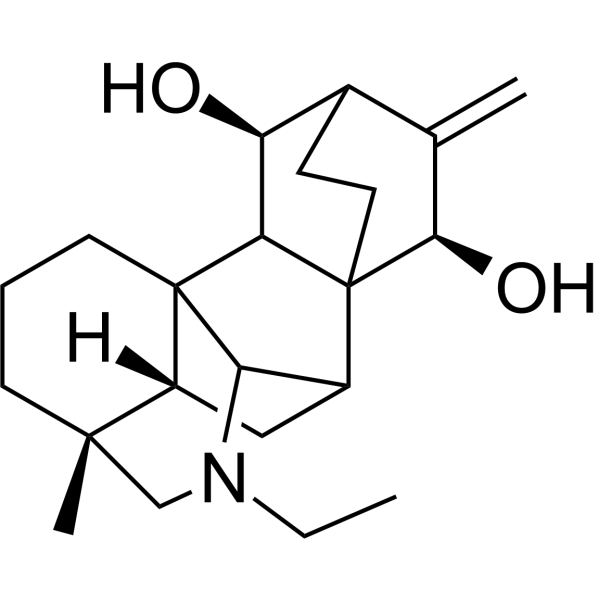
Cat. No.: HY-N5025
CAS No.: 1354-84-3
Bullatine A, a diterpenoid alkaloid, is a potent P2X7 antagonist. Bullatine A possesses anti-rheumatic, anti-inflammatory and anti-nociceptive effects. Bullatine A inhibits ATP-induced BV-2 cell death/apoptosis and P2X receptor-mediated inflammatory responses. Bullatine A suppresses glioma cell growth by targeting SIRT6. Bullatine A specifically attenuates pain hypersensitivity in rats. Bullatine A attenuates LPS (HY-D1056)-induced systemic inflammatory response by inhibiting the ROS/JNK/NF-κB pathway in mice. Bullatine A improves despair behavior in Chronic chronic social defeat stress (CSDS) mice. Bullatine A can be used for the study of inflammation, glioblastoma (GBM) and depression .
loading...
    loading...
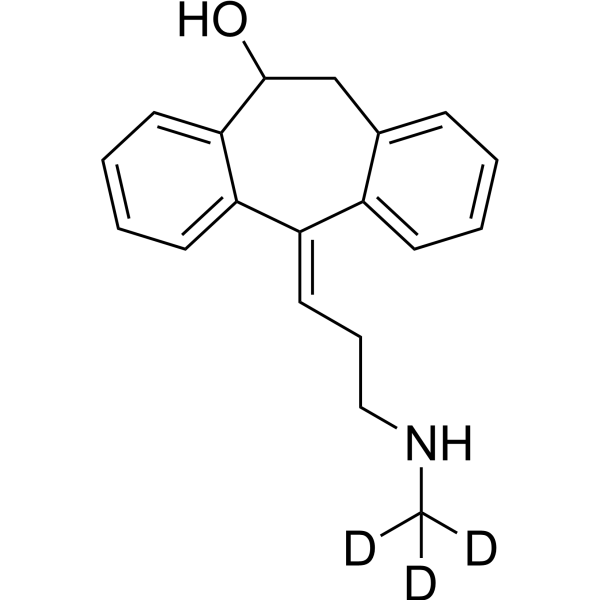
Cat. No.: HY-U00050S
Synonyms: E-10-OH-NT-d3
(E)-10-Hydroxynortriptyline-d3 (E-10-OH-NT-d3) is the deuterated-labeled (E)-10-Hydroxynortriptyline (HY-U00050). (E)-10-Hydroxynortriptyline (E-10-OH-NT) is a blood-brain barrier-permeable norepinephrine uptake inhibitor. (E)-10-Hydroxynortriptyline effectively promotes central norepinephrine neuronal transmission, with little interindividual variation in in vivo potency. (E)-10-Hydroxynortriptyline has low affinity for muscarinic receptors, exhibits only extremely weak anticholinergic activity, and does not inhibit salivary secretion. (E)-10-Hydroxynortriptyline can be used in studies related to depression .
loading...
    loading...
Cat. No.: HY-W075176R
CAS No.: 118712-89-3
Research Areas:  

Others

Transfluthrin (Standard) is the analytical standard of Transfluthrin (HY-W075176). This product is intended for research and analytical applications. Transfluthrin is an insecticide with extremely low acute toxicity to vertebrates. Transfluthrin acts as a mosquito repellent, exerts mosquito control effects via electric heating fumigators, and is widely used in studies related to malaria, bancroftian filariasis and mosquito-borne infectious diseases. Transfluthrin may also induce adverse reactions such as pulmonary sensory irritation, sensitization, genotoxicity and respiratory depression, and can increase the concentrations and activities of CYP2E1 and CYP3A2 in rat brains. Transfluthrin can be removed from wastewater through biodegradation and activated sludge adsorption, and can be degraded by microorganisms such as Azovibrio and Tauera .
loading...
    loading...
Cat. No.: HY-W158948
CAS No.: 180161-14-2
Target:  

Opioid Receptor

Research Areas:  

Neurological Disease

6-Fluoro-3-(1,2,3,6-tetrahydropyridin-4-yl)-1H-indole is a ORL-1 receptor modulator. 6-Fluoro-3-(1,2,3,6-tetrahydropyridin-4-yl)-1H-indole regulates downstream pathways associated with nociception, cognition and physiological processes. 6-Fluoro-3-(1,2,3,6-tetrahydropyridin-4-yl)-1H-indole is used in the research of central nervous system diseases and pain-related disorders including anxiety, depression, Alzheimer's disease and attention deficit disorder .
loading...
    loading...
Cat. No.: HY-103127
CAS No.: 1539266-32-4
Target:  

5-HT Receptor

Research Areas:  

Neurological Disease

25CN-NBOH hydrochloride exhibits agonist activity at the 5-HT2a receptor, shows 90- to 100-fold selectivity over the 5-HT2c receptor, and possesses blood-brain barrier permeability . 25CN-NBOH hydrochloride acts as an interoceptive agent with partial agonist-like properties . 25CN-NBOH hydrochloride serves as a pharmacological tool for 5-HT2A receptor research, and its tritiated form functions as a selective agonist radioligand . 25CN-NBOH hydrochloride can be used to investigate diseases characterized by cognitive rigidity, schizophrenia, obsessive-compulsive disorder, depression, pain, inflammation, migraine, and cluster headache .
loading...
    loading...
Cat. No.: HY-106980
CAS No.: 308123-60-6
Synonyms: (-)-18-Methoxycoronaridine
18-Methoxycoronaridine ((-)-18-Methoxycoronaridine) is an orally active and selective α3β4 nicotinic acetylcholine receptor (nAChR) antagonist. 18-Methoxycoronaridine is an inhibitor of serotonin transporter (SERT) and norepinephrine transporter (NET), with IC50 values of 51.6 μM and 121 μM for SERT and NET, respectively. 18-Methoxycoronaridine inhibits the function of SERT and NET, promotes 5-HT3A receptor desensitization, blocks α3β4 nAChR, and modulates receptor signaling pathways associated with reinforcement. 18-Methoxycoronaridine also exhibits potent antiparasitic activity. 18-Methoxycoronaridine can be used in research related to depression, obesity, alcoholism, smoking addiction, and cutaneous leishmaniasis .
loading...
    loading...
Cat. No.: HY-106980A
CAS No.: 266686-77-5
Synonyms: (-)-18-Methoxycoronaridine hydrochloride
18-Methoxycoronaridine ((-)-18-Methoxycoronaridine) hydrochloride is an orally active and selective α3β4 nicotinic acetylcholine receptor (nAChR) antagonist. 18-Methoxycoronaridine hydrochloride is an inhibitor of serotonin transporter (SERT) and norepinephrine transporter (NET), with IC50 values of 51.6 μM and 121 μM for SERT and NET, respectively. 18-Methoxycoronaridine hydrochloride inhibits the function of SERT and NET, promotes 5-HT3A receptor desensitization, blocks α3β4 nAChR, and modulates receptor signaling pathways associated with reinforcement. 18-Methoxycoronaridine hydrochloride also exhibits potent antiparasitic activity. 18-Methoxycoronaridine hydrochloride can be used in research related to depression, obesity, alcoholism, smoking addiction, and cutaneous leishmaniasis .
loading...
    loading...
Cat. No.: HY-116062A
CAS No.: 129540-12-1
Research Areas:  

Neurological Disease

JNJ-7925476 is a triple reuptake inhibitor that selectively and potently inhibits the activity of the serotonin transporter (SERT), norepinephrine transporter (NET), and dopamine transporter (DAT). JNJ-7925476 is rapidly absorbed into the blood and its concentration in the brain is 7-fold higher than that in plasma. The occupancy ED(50) values of JNJ-7925476 for SERT, NET, and DAT in the rat brain are 0.18, 0.09, and 2.4 mg/kg, respectively. JNJ-7925476 rapidly induces a significant increase in the levels of extracellular serotonin, dopamine, and norepinephrine in the rat cerebral cortex in a dose-dependent manner. JNJ-7925476 exhibits potent antidepressant-like activity in the mouse tail suspension test. These results suggest that JNJ-7925476 has in vivo efficacy in biochemical and behavioral models of depression .
loading...
    loading...
Cat. No.: HY-117046
CAS No.: 1025725-91-0
AVN-101 is a potent, brain-penetrant and orally active 5-HT7 receptor antagonist (Ki of 153 pM), with slightly lesser potency toward 5-HT6, 5-HT2A, and 5HT-2C receptors (Ki values of 2.04 nM, 1.56  nM, and 1.17  nM, respectively). AVN-101 also exhibits a rather high affinity toward histamine H1 (Ki of 0.58 nM) and adrenergic α2A, α2B, and α2C (Ki= 0.41-3.6 nM) receptors. AVN-101 can be studied in such diseases as general anxiety disorders, depression, schizophrenia, Alzheimer’s disease, and multiple sclerosis .
loading...
    loading...
Cat. No.: HY-117046A
CAS No.: 1061354-48-0
Purity:  99.59%
AVN-101 hydrochloride is a potent, brain-penetrant and orally active 5-HT7 receptor antagonist (Ki of 153 pM), with slightly lesser potency toward 5-HT6, 5-HT2A, and 5HT-2C receptors (Ki values of 2.04 nM, 1.56  nM, and 1.17  nM, respectively). AVN-101 hydrochloride also exhibits a rather high affinity toward histamine H1 (Ki of 0.58 nM) and adrenergic α2A, α2B, and α2C (Ki= 0.41-3.6 nM) receptors. AVN-101 hydrochloride can be studied in such diseases as general anxiety disorders, depression, schizophrenia, Alzheimer’s disease, and multiple sclerosis .
loading...
    loading...
Cat. No.: HY-15446R
CAS No.: 802906-73-6
Synonyms: RG7090 (Standard); RO4917523 (Standard)
Research Areas:  

Neurological Disease

Basimglurant (RG7090; RO4917523) (Standard) is the analytical standard of Basimglurant. This product is intended for research and analytical applications. Basimglurant is a selective, orally active, blood-brain barrier permeable negative allosteric modulator of metabotropic glutamate receptor 5 (mGluR5), with a Ki of 1.4 nM (against [ 3H]-ABP688 (HY-110141)) and 35.6 nM (against [ 3H]-MPEP (HY-14609A)). Basimglurant inhibits mGlu5-mediated signaling pathways and receptor constitutive activity, regulates dopamine levels in the nucleus accumbens, exerts anxiolytic, antidepressant-like, analgesic and arousal-promoting effects, and alters δ-wave power during non-rapid eye movement sleep. Basimglurant can be used in research on depression, fragile X syndrome, anxiety disorders, etc.
loading...
    loading...
Cat. No.: HY-165624A
CAS No.: 136296-40-7
(S)-LY-41, R-enantiomer of LY-41 (HY-165624), is 2-Sminotetralin (HY-W022362) derivative and 8-OH-DPAT (HY-112061) analogue. (S)-LY-41 is a potent and selective 5-HT1A receptor agonist. (S)-LY-41 can reduce the accumulation of 5-hydroxytryptophan (the precursor for 5-HT synthesis) in the rat brain induced by decarboxylase inhibitors (NSD 1015). (S)-LY-41 can lower the body temperature of rats and inhibit the escape response from the cage. (S)-LY-41 can induce the 5-HT behavioral syndrome. (S)-LY-41can be used for the research of neurological disease, such as depression and anxiety .
loading...
    loading...
Cat. No.: HY-178760
CAS No.: 3136748-24-5
Target:  

5-HT Receptor

Research Areas:  

Neurological Disease

TGF-8027 is a selective 5-HT2A agonist that can cross the blood-brain barrier. TGF-8027 exhibits EC50s of 3.3 nM, 160 nM and 7600 nM against human 5-HT2A, 5-HT2C and 5-HT2B and exhibits EC50s against mouse 5-HT2A and mouse 5-HT2C of 14 and 210 nM. TGF-8027 can induce a head-shaking response in mice. TGF-8027 can be used to study diseases that target the 5-HT2A receptor (such as depression) .
loading...
    loading...
Cat. No.: HY-184698
CAS No.: 3072761-08-8
Nrf2/HO-1 activator 4 is a Nrf2/HO-1 activator. Nrf2/HO-1 activator 4 inhibits nitric oxide production and the expression of pro-inflammatory cytokines IL-1β, IL-6, TNF-α, as well as upstream inflammatory enzymes COX-2 and iNOS. Nrf2/HO-1 activator 4 reduces ROS accumulation, and restores GSH levels and SOD activity. Nrf2/HO-1 activator 4 ameliorates depression-like behaviors in mice. Nrf2/HO-1 activator 4 can be used for research on major depressive disorder .
loading...
    loading...
Cat. No.: HY-186105A
CAS No.: 1597443-57-6
Research Areas:  

Neurological Disease

(-)-P7C3-S243 is an orally active, blood-brain barrier permeable neuroprotective agent. (-)-P7C3-S243 binds to μ-opioid Receptor and TSPO. (-)-P7C3-S243 inhibits the premature apoptosis death of newborn hippocampal neurons, protects mature nigral dopaminergic neurons, promotes neuronal survival and prevents cognitive impairment. (-)-P7C3-S243 ameliorates depression-like behaviors in rat models. (-)-P7C3-S243 is applicable to research related to Parkinson's disease and Alzheimer's disease .
loading...
    loading...
Cat. No.: HY-90003AR
CAS No.: 30123-17-2
Tianeptine sodium salt (Standard) is the analytical standard of Tianeptine sodium salt (HY-90003A). This product is intended for research and analytical applications. Tianeptine sodium salt is an atypical antidepressant. Tianeptine sodium salt is a moderate-intensity agonist of the μ-opioid receptor (MOR), and to a lesser extent, is an agonist of the δ-opioid receptor (DOR). Tianeptine sodium salt is a glutamate modulator that can enhance AMPA receptor and antagonize NMDA receptor. Tianeptine sodium salt increases sensitivity of the α1 adrenergic receptor, which only manifests in chronic treatment. Tianeptine sodium salt exerts neuroprotective effects under stress/inflammation-induced conditions, exhibiting anti-inflammatory and antioxidant properties. Tianeptine sodium salt inhibits MMP-9 by suppressing the PI3K/Akt-mediated NF-κB pathway. Tianeptine sodium salt can be used to alleviate symptoms of depression and anxiety, but does not cause sedative effects.
loading...
    loading...
Cat. No.: HY-B0356R
CAS No.: 85721-33-1
Synonyms: Bay-09867 (Standard)
Ciprofloxacin (Standard) is the analytical standard of Ciprofloxacin. This product is intended for research and analytical applications. Ciprofloxacin (Bay-09867) is an orally active, blood-brain barrier permeable fluoroquinolone antibacterial agent. Ciprofloxacin exerts bactericidal effects primarily by inhibiting topoisomerase II and IV. Ciprofloxacin inhibits the proliferation of human dental pulp stem cells and chondrocytes from young rats, and also activates the Akt signaling pathway and upregulates markers such as β-catenin and Nanog to maintain the morphological characteristics of stem cells. Ciprofloxacin induces significant neurotoxicity and tissue damage, including reducing serotonin and glutathione levels in the brain, inducing oxidative stress and depression-like behaviors, and causing articular cartilage damage. Ciprofloxacin can be applied to research related to infections of necrotic young permanent teeth and neurotoxicity .
loading...
    loading...
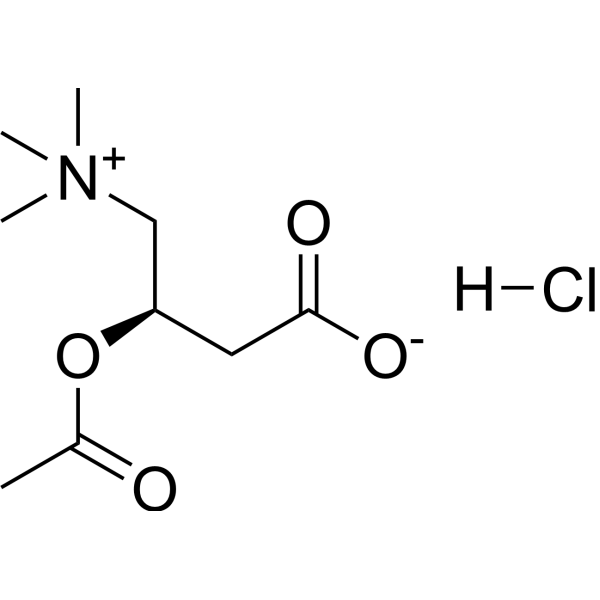
Cat. No.: HY-B0762R
CAS No.: 5080-50-2
Synonyms: O-Acetyl-L-carnitine hydrochloride (Standard); ALCAR hydrochloride (Standard)
Acetyl-L-carnitine hydrochloride (Standard) is the analytical standard of Acetyl-L-carnitine hydrochloride. This product is intended for research and analytical applications. Acetyl-L-carnitine (O-Acetyl-L-carnitine; ALCAR) hydrochloride is an orally active mitochondrial energy metabolism regulator and neuroprotectant that can penetrate the blood-brain barrier. Acetyl-L-carnitine hydrochloride selectively enters cells and the brain through the organic cation transporter OCTN2. Acetyl-L-carnitine hydrochloride can participate in fatty acid β-oxidation, promote acetylcholine synthesis, regulate mitochondrial function and inhibit oxidative stress as an acetyl donor. Acetyl-L-carnitine hydrochloride exerts its activity by enhancing energy metabolism, protecting neurons and improving synaptic plasticity. Acetyl-L-carnitine hydrochloride is mainly used in the study of neurodegenerative diseases and metabolic disorder-related diseases such as neonatal hypoxic-ischemic brain damage, Alzheimer's disease, and depression .
loading...
    loading...
Cat. No.: HY-G0002S
CAS No.: 2070009-33-3
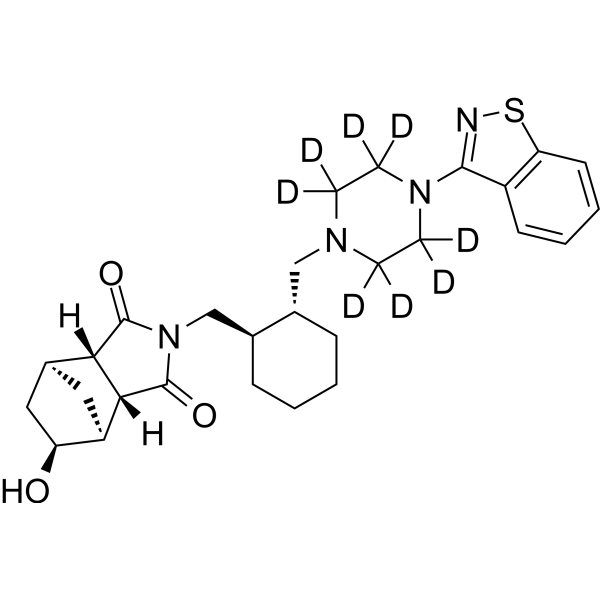
Lurasidone metabolite 14326-d8 is a deuterium-labeled form of Lurasidone metabolite 14326 (HY-G0002). Lurasidone metabolite 14326 is a minor active metabolite of Lurasidone (HY-B0032A) generated via metabolism by CYP3A4. Lurasidone metabolite 14326 shares similar receptor-binding properties with Lurasidone, acting as an antagonist of the dopamine D2 receptor (dopamine D2 receptor), an antagonist of the serotonin 5-HT2A and 5-HT7 receptors (5-HT2A and 5-HT7 receptor), and a partial agonist of the serotonin 5-HT1A receptor. Lurasidone metabolite 14326 can be used in the research of schizophrenia and bipolar depression .
loading...
    loading...
Cat. No.: HY-N1414
CAS No.: 139891-98-8
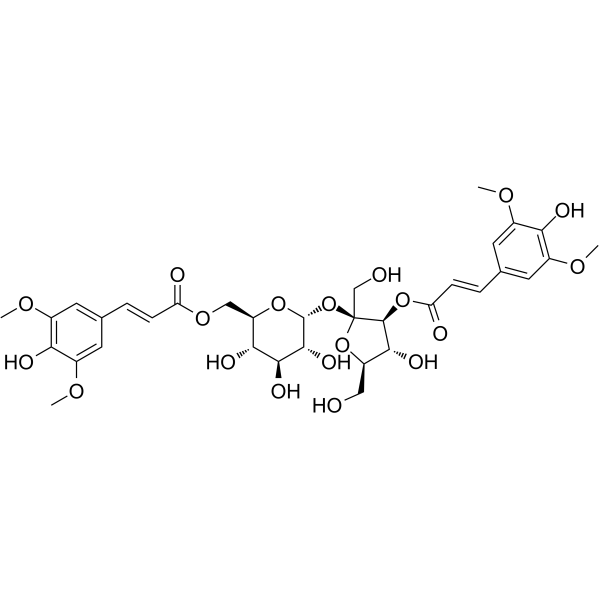
(E)-3',6-Disinapoylsucrose is an orally active, blood-brain barrier permeable neuroprotective agent that inhibits Aβ protein aggregation. (E)-3',6-Disinapoylsucrose exerts anxiolytic, anti-inflammatory and cognitive-enhancing effects. (E)-3',6-Disinapoylsucrose regulates the TrkB/BDNF signaling pathway, inhibits the expression of NF-κB p65, reduces pro-inflammatory cytokine levels, and alleviates neuronal damage. (E)-3',6-Disinapoylsucrose also enhances the functions of central 5-HT and noradrenergic systems, thereby improving spatial learning and memory abilities and reducing anxiety-like behaviors. (E)-3',6-Disinapoylsucrose can be used for the research of related diseases such as Alzheimer's disease, depression, memory impairment and anxiety disorder .
loading...
    loading...

