

585 Results for "

PD-L1

" in MedChemExpress (MCE) Product Catalog:
Products (585)

585 Results for "PD-L1" in MCE Product Catalog:

1
1 Cited Publications
Cat. No.: HY-P99144A

Target:  

PD-1/PD-L1

Research Areas:  

Inflammation/Immunology Cancer

Anti-Mouse PD-1 Antibody (S-5001) is a selective inhibitor targeting PD-1, blocking the PD-1/PD-L1 immune checkpoint axis through competitive binding to PD-1. Anti-Mouse PD-1 Antibody (S-5001) works by reversing the tumor immunosuppressive microenvironment and reactivating the anti-tumor activity of cytotoxic T lymphocytes. It can be used in research on tumors such as melanoma and HPV-positive oropharyngeal squamous cell carcinoma. Anti-Mouse PD-1 Antibody (S-5001) is often combined with photothermal therapy, chemotherapy, etc., to enhance efficacy [1] .
loading...
    loading...
1
1 Cited Publications
Cat. No.: HY-Y0588
CAS No.: 1148-11-4
Synonyms: L-Cbz-Proline
Target:  

MMP

Research Areas:  

Others

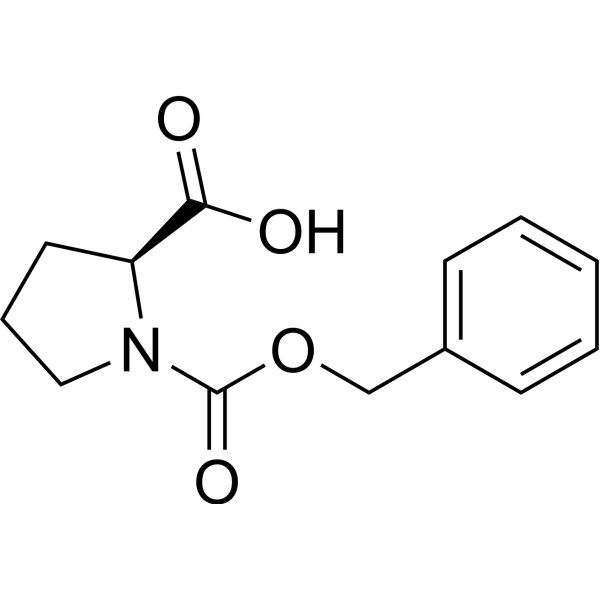
Carbobenzoxyproline (L-Cbz-Proline) is an inhibitor of prolidase. Carbobenzoxyproline can be used for prolidase deficiency (PD) research .
loading...
    loading...
1
1 Cited Publications
Cat. No.: HY-19745A
CAS No.: 2310135-18-1
Target:  

PD-1/PD-L1

Research Areas:  

Cancer

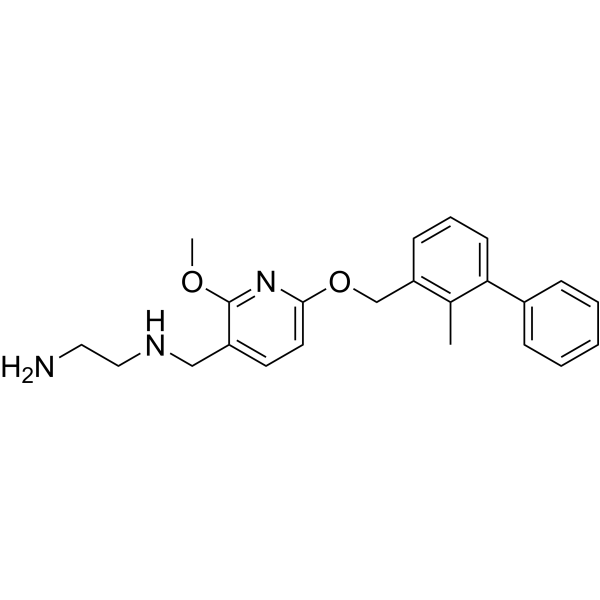
N-deacetylated BMS-202 is the deacetylated of BMS-202. BMS-202 is an inhibitor of the PD-1/PD-L1 interaction, mainly used for cancer treatment.
loading...
    loading...
1
1 Cited Publications
Cat. No.: HY-N0460
CAS No.: 1241-87-8
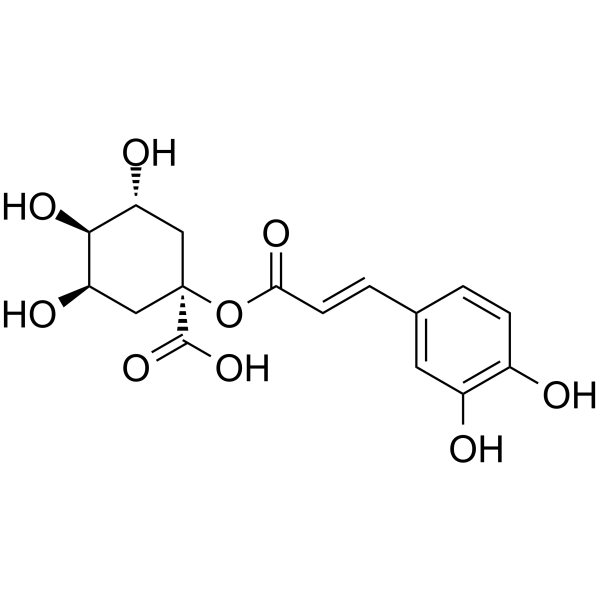
1-Caffeoylquinic acid is an effective NF-κB inhibitor, shows significant binding affinity to the RH domain of p105 with Ki of 0.007 μM [1]. 1-Caffeoylquinic acid has anti-oxidative stress ability . 1-Caffeoylquinic acid is the Inhibitor for PD-1/PD-L1 .
loading...
    loading...
1
1 Cited Publications
Cat. No.: HY-P10908
CAS No.: 3020015-02-2
Research Areas:  

Neurological Disease

H-20 is a PD-1 agonist peptide. H-20 increases μOR mRNA in DRG neurons and modulates μOR-mediated analgesia. H-20 produces synergistic analgesic effects in inflammatory pain models and can reduce analgesic-induced tolerance, hyperalgesia, constipation, and motor impairment. H-20 can be used in pain-related research [1].
loading...
    loading...
1
1 Cited Publications
Cat. No.: HY-P99675
CAS No.: 2428381-53-5
Synonyms: AK112

Target:  

PD-1/PD-L1 VEGFR

Research Areas:  

Cancer

Ivonescimab (AK112) is a PD-1/VEGF bispecific antibody. Ivonescimab competitively inhibiting PD-1/PD-L1 interaction, reversing the immunosuppression mediated by it, and blocks the binding of VEGF-A to VEGFR2, inhibiting tumour angiogenesis in the tumour microenvironment. Ivonescimab also has significantly anticancer activity against EGFR-mutated locally advanced or metastatic non-squamous non-small cell lung cancer (NSCL) [1] .
loading...
    loading...
1
1 Cited Publications
Cat. No.: HY-13488
CAS No.: 1351758-81-0
Purity:  99.55%
Target:  

LRRK2 MNK

Research Areas:  

Neurological Disease

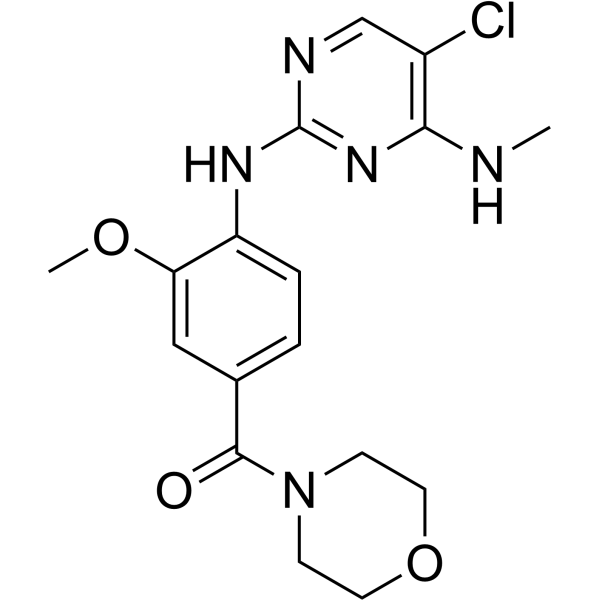
HG-10-102-01 is a highly potent, selective, and brain-penetrable LRRK2 inhibitor, with IC50 values of 20.3 and 3.2 nM against wild-type LRRK2 and LRRK2[G2019S], respectively. HG-10-102-01 also inhibits MNK2 and MLK1, with IC50 values of 0.6 and 2.1 μM. HG-10-102-01 can be used for Parkinson's disease (PD) research .
loading...
    loading...
1
1 Cited Publications
Cat. No.: HY-P99117
CAS No.: 2394841-59-7
Synonyms: AK104

Target:  

PD-1/PD-L1 CTLA-4

Research Areas:  

Inflammation/Immunology Cancer

Cadonilimab (AK104) is a humanized tetravalent IgG1 bispecific antibody targeting PD1/CTLA4. Cadonilimab blocks both PD-1 and CTLA-4 pathways, thereby relieving their corresponding immunosuppressive effects and reversing tumor specific T cell exhaustion. Cadonilimab significantly downregulates Fc-mediated effector functions, including antibody-dependent cell-mediated cytotoxicity (ADCC), antibody-dependent cellular phagocytosis (ADCP), complement dependent cytotoxicity (CDC). Cadonilimab can be used for research of metastatic cervical cancer, as well as other malignancies such as gastric cancer, GEJ adenocarcinoma and non-small cell lung cancer (NSCLC) [1] .
loading...
    loading...
Cat. No.: HY-P10950A
Target:  

PD-1/PD-L1 Apoptosis

Research Areas:  

Inflammation/Immunology Cancer

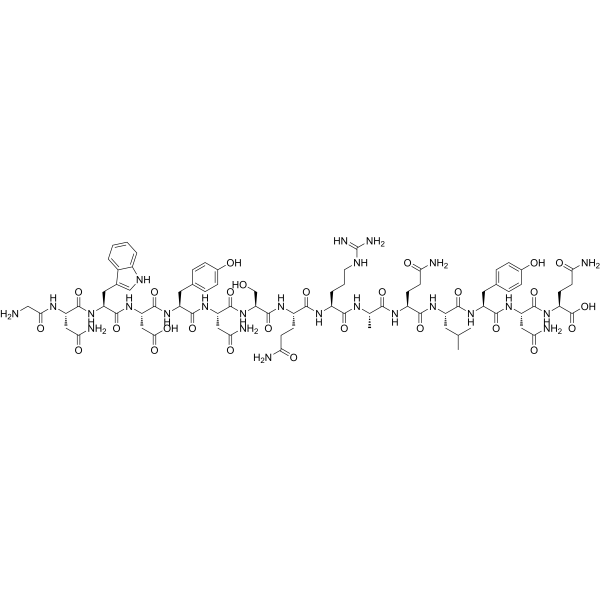
PD-L1 inhibitory peptide TFA is an inhibitor targeting the PD-1/PD-L1 interaction. PD-L1 inhibitory peptide TFA inhibits the PD-1-mediated apoptosis signaling pathway, maintains the survival and activity of T cells, activates the anti-tumor effect of cytotoxic T lymphocytes, and significantly improves the survival rate of mice in fungal sepsis models. PD-L1 inhibitory peptide TFA can be used for research on sepsis, breast cancer and other related diseases, as well as immunotherapy [1] .
loading...
    loading...
Cat. No.: HY-144258
CAS No.: 2499965-12-5
Purity:  99.85%
Target:  

PD-1/PD-L1

Research Areas:  

Inflammation/Immunology Cancer

PD-1/PD-L1-IN-14 (compound 17) is a bifunctional inhibitor of PD-1/PD-L1 interactions, with an IC50 of 27.8 nM. PD-1/PD-L1-IN-14 (compound 17) inhibits PD-1/PD-L1 interactions and promotes dimerization, internalization, and degradation of PD-L1 [1].
loading...
    loading...
Cat. No.: HY-145774
CAS No.: 2597056-04-5
Purity:  99.98%
Target:  

PD-1/PD-L1

Research Areas:  

Cancer

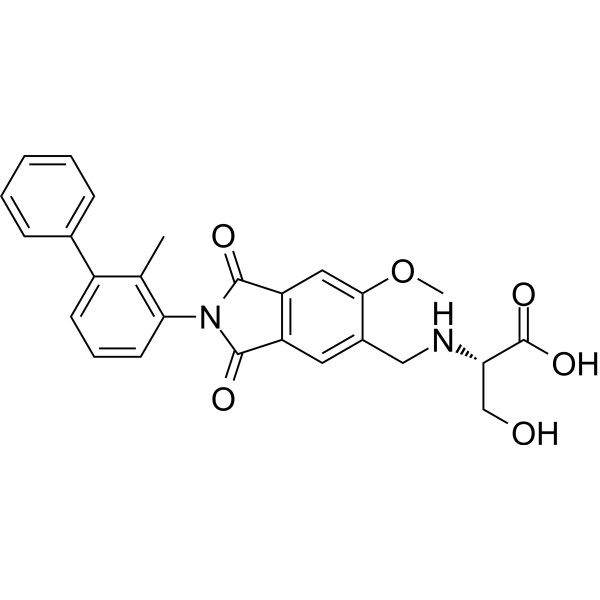
PD-1/PD-L1-IN-23 is a potent and orally active inhibitor of PD-1/PD-L1. PD-1/PD-L1-IN-23 is an ester proagent of L7. L7 is a benzo[c][1,2,5]oxadiazole derivative and biologically evaluated as inhibitors of PD-L1. PD-1/PD-L1-IN-23 displays significant antitumor effects in tumor models of syngeneic and PD-L1 humanized mice [1].
loading...
    loading...
Cat. No.: HY-P10950
CAS No.: 1931111-41-9
Target:  

PD-1/PD-L1

Research Areas:  

Inflammation/Immunology Cancer

PD-L1 inhibitory peptide is an inhibitor peptide targeting programmed cell death ligand 1 (PD-L1). PD-L1 inhibitory peptide binds to PD-L1, relieving immunosuppression and restoring the antitumor activity of T cells. PD-L1 inhibitory peptide is promising for research of cancers [1] .
loading...
    loading...
Cat. No.: HY-155101
CAS No.: 2953044-29-4
Purity:  99.52%
Target:  

PD-1/PD-L1

Research Areas:  

Cancer

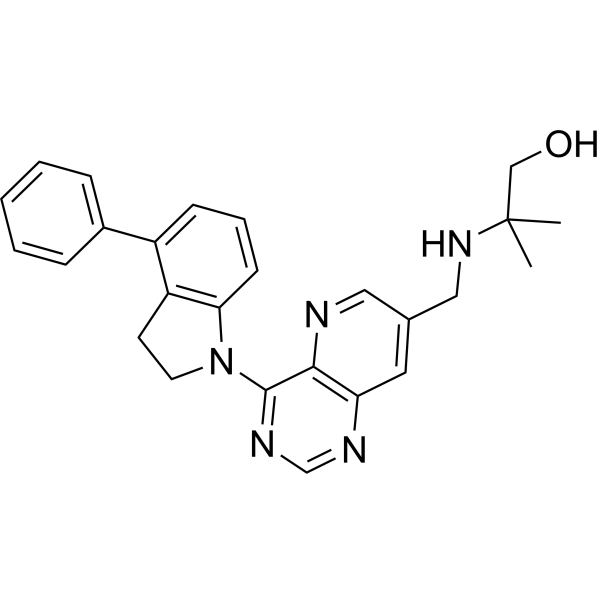
PD-L1-IN-3 (Compound 4a) is a compound that targets PD-1/PD-L1, the IC50 value and EC50 value is 4.97nM and 2.70 μM for inhibit PD-L1 and Jurkat T cells, respectively. PD-L1-IN-3 can bind PD-L1 dimer to prevent PD-1 binding to PD-L1, therefore blocking PD-1 signaling. PD-L1-IN-3 can be used for lung cancer and melanoma diseases research [1].
loading...
    loading...
Cat. No.: HY-P2478
CAS No.: 2815311-61-4
Target:  

PD-1/PD-L1

Research Areas:  

Inflammation/Immunology

Human PD-L1 inhibitor V, a human PD-1 protein binding peptide with a Kd value of 3.32 μM. Human PD-L1 inhibitor V inhibit the interaction of hPD-1/hPD-L1 [1].
loading...
    loading...
Cat. No.: HY-103048A
Purity:  99.34%
Target:  

PD-1/PD-L1

Research Areas:  

Cancer

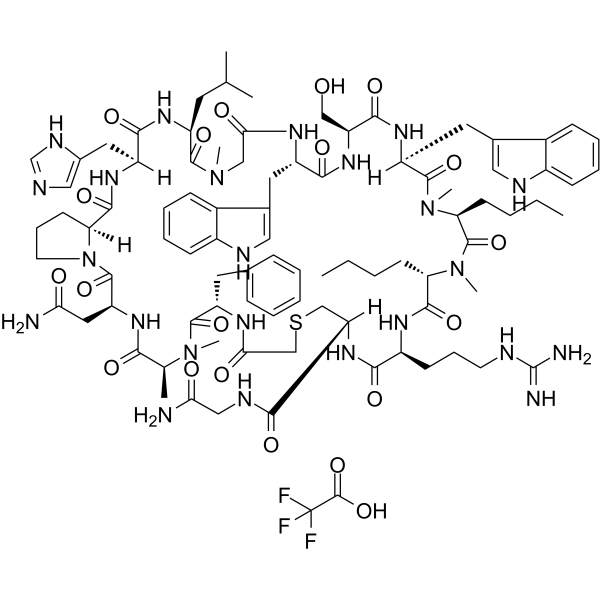
PD-1/PD-L1-IN 3 TFA, a macrocyclic peptide, is a potent and selective inhibitor of the PD-1/PD-L1 and CD80/PD-L1 interactions extracted from patent WO2014151634A1, compound No.1. PD-1/PD-L1-IN 3 TFA interferes with PD-L1 binding to PD-1 and CD80 by binding to PD-L1, with IC50s of 5.60 nM and 7.04 nM, respectively. PD-1/PD-L1-IN 3 TFA can be used for the research of various diseases, including cancer and infectious diseases [1].
loading...
    loading...
Cat. No.: HY-168530
CAS No.: 3122200-59-0
Target:  

PD-1/PD-L1

Research Areas:  

Cancer

PDL1 degrader-1 is a palmatine-derived PD-L1 degrader. PDL1 degrader-1 interacts with and inhibits deubiquitinase CSN5, inducing PD-L1 Ub/proteasome-dependent degradation. PDL1 degrader-1 can be used for the research of non-small cell lung cancer [1].
loading...
    loading...
Cat. No.: HY-P2477
CAS No.: 2135542-83-3
Target:  

PD-1/PD-L1

Research Areas:  

Inflammation/Immunology

Human PD-L1 inhibitor IV, a polypeptide, is a competitive human PD-1 protein inhibitor with a Kd value of 1.38 μM. Human PD-L1 inhibitor IV inhibits the interaction of hPD-1/hPD-L1 [1].
loading...
    loading...
Cat. No.: HY-152240
CAS No.: 2665734-13-2
Purity:  99.96%
Target:  

PD-1/PD-L1

Research Areas:  

Cancer

PD-1/PD-L1-IN-29 (S4-1) is a potent PD-1/PD-L1 inhibitor with an IC50 value of 6.1 nM. PD-1/PD-L1-IN-29 binds PD-L1 and disrupts PD-1/PD-L1 interactions, induces PD-L1 dimerization and internalization, improves its localization to the endoplasmic reticulum, and promotes PD-L1 entry into the endoplasmic reticulum. PD-1/PD-L1-IN-29 has anticancer activity [1].
loading...
    loading...
Cat. No.: HY-155959
CAS No.: 2975602-78-7
Purity:  99.57%
Target:  

PD-1/PD-L1

Research Areas:  

Cancer

PD-1/PD-L1-IN-33 (Compound N11) is a PD-1/PD-L1 inhibitor. PD-1/PD-L1-IN-33 inhibits PD-1 and PD-L1 interaction with an IC50: 6.3 nM. PD-1/PD-L1-IN-33 promotes T-cell proliferation, activation, and infiltration into tumor spheres. PD-1/PD-L1-IN-33 has immunomodulatory and anticancer activity [1].
loading...
    loading...
Cat. No.: HY-162972
CAS No.: 2995357-09-8
Target:  

PROTACs PD-1/PD-L1

Research Areas:  

Inflammation/Immunology Cancer

PROTAC PD-L1 degrader-2 is a PD-L1 PROTAC degrader with an IC50 of 197.4 nM and a Kd of 301 nM. PROTAC PD-L1 degrader-2 induces PD-L1 endocytosis, drives degradation via the proteasomal and lysosomal pathways, and inhibits the PD-1/PD-L1 interaction. As an immune activator, PROTAC PD-L1 degrader-2 increases the levels of CD4 +, CD8 +, granzyme B and perforin. PROTAC PD-L1 degrader-2 can be used in studies related to colon cancer immunology [1].
loading...
    loading...

