97 Results for "

TCA

" in MedChemExpress (MCE) Product Catalog:
Products (97)

97 Results for "TCA" in MCE Product Catalog:

Cat. No.: HY-E70262
CAS No.: 799812-78-5
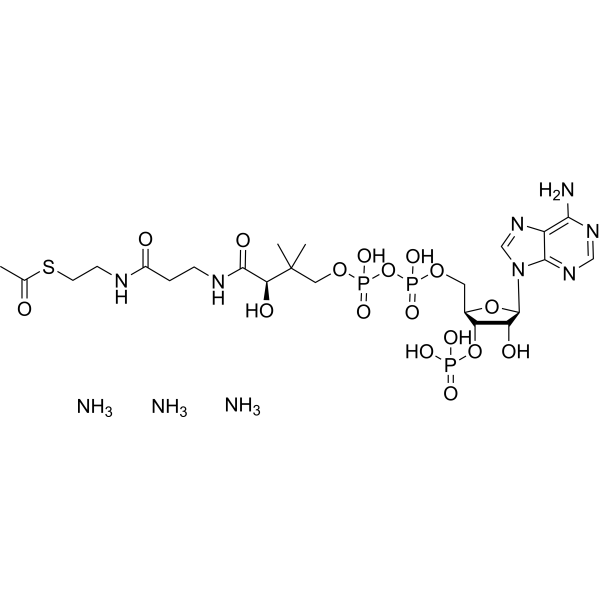
Acetoyl-CoA (triammonium) is a triammonium derivative of Acetoyl-CoA (HY-114293), Acetyl-CoA is a membrane-impermeant central metabolic intermediate, participates in the TCA cycle and oxidative phosphorylation metabolism. Acetyl-coenzyme A, regulates various cellular mechanisms by providing (sole donor) acetyl groups to target amino acid residues for post-translational acetylation reactions of proteins. Acetyl Coenzyme A is also a key precursor of lipid synthesis .
loading...
    loading...
Cat. No.: HY-157840
CAS No.: 758689-17-7
Target:  

Parasite

Research Areas:  

Infection

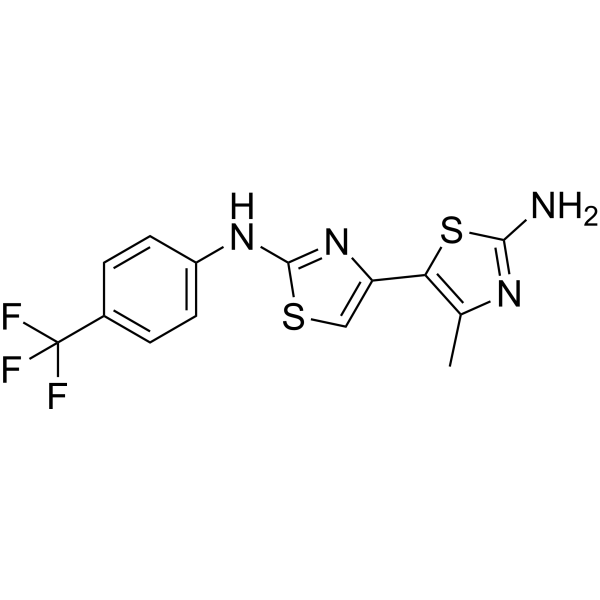
Anti-infective agent 9 (compound 1) is a Plasmodium falciparum inhibitor (IC50=600 nM), can downregulate pyruvate levels and TCA cycle in Plasmodium. Anti-infective agent 9It has good metabolic stability and low toxicity to human liver cells. The study found, Anti-infective agent 9Potential targets for inhibiting Plasmodium falciparum are not 1-deoxidation-d-xylulose-5-Phosphate synthase (DXPS) .
loading...
    loading...
Cat. No.: HY-F0001A
CAS No.: 1949720-50-6
Synonyms: Disodium NADH hydrate
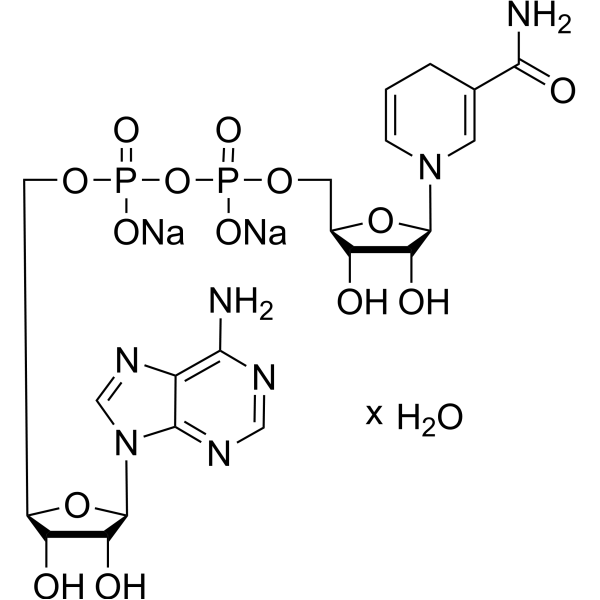
NADH disodium hydrate (Disodium NADH hydrate) is an orally effective reduced coenzyme. NADH disodium hydrate plays a role in regenerating electron donors during cellular energy metabolism, including glycolysis, β-oxidation, and the tricarboxylic acid (TCA) cycle. NADH disodium hydrate regulates calcium homeostasis by promoting the opening of IP3-gated Ca 2+ channels and inhibiting Ryanodine receptor, and affects mitochondrial function through direct interaction with VDAC. NADH disodium hydrate is used in cytoprotective studies related to cerebral ischemic injury, neurodegenerative diseases, aging, and signal transduction .
loading...
    loading...
Cat. No.: HY-W016103R
CAS No.: 86-48-6
1-Hydroxy-2-naphthoic acid (Standard) is an analytical standard for 1-Hydroxy-2-naphthoic acid (HY-W016103). This product is intended for research and analytical applications. 1-Hydroxy-2-naphthoic acid is a ubiquitous bicyclic intermediate metabolite in the microbial degradation process of polycyclic aromatic hydrocarbons (PAHs). 1-Hydroxy-2-naphthoic acid can be converted into 1,2-naphthalenediol, which enters the naphthalene degradation pathway and participates in the tricarboxylic acid (TCA) cycle to achieve complete mineralization.
loading...
    loading...
Cat. No.: HY-N6663R
CAS No.: 13466-78-9
3-Carene (Standard) is the analytical standard of 3-Carene (HY-N6663). This product is intended for research and analytical applications. 3-Carene is an orally active TCA cycle enzyme inhibitor. 3-Carene inhibits succinate dehydrogenase and malate dehydrogenase as well as pyruvate kinase, disrupting energy metabolism. 3-Carene disrupts cell wall and cell membrane integrity, leading to potassium ion leakage, protein leakage, membrane depolarization, ATP depletion, morphological disruption, and cell lysis. 3-Carene interferes with amino acid metabolism, pantothenate and CoA biosynthesis, purine and pyrimidine metabolism, and aminoacyl-tRNA biosynthesis. 3-Carene enhances GABA receptor-mediated synaptic responses. 3-Carene can be used in research on bacterial infections, inflammation, anxiety, and sleep disorders .
loading...
    loading...
Cat. No.: HY-P71667
Purity:  ≥ 90%, as determined by reducing SDS-PAGE.
Synonyms: HLAG; HLA-6.0; HLA-G; sHLA-G; Soluble HLA class I histocompatibility antigen, alpha chain G; MHC class I antigen G; HLA G antigen; HLA class I histocompatibility antigen, alpha chain G
Species:  
Human
Source:  
HEK293
loading...
    loading...
Cat. No.: HY-P83030
Synonyms: ECL; SLC; CKb9; TCA4; 6Ckine; SCYA21

Host:  

Rabbit

Application:  

WB

Reactivity:  

Human

loading...
    loading...
Cat. No.: HY-P2809B
Research Areas:  

Metabolic Disease

Malic Dehydrogenase, Porcine (EC 1.1.1.37) exists as two isoforms within eukaryotic cells, one that is expressed in the mitochondria and functions in the TCA cycle and one in the cytoplasm that converts malate from the mitochondria back into oxaloacetate.
loading...
    loading...
Cat. No.: HY-P2809D
Research Areas:  

Metabolic Disease

Malic Dehydrogenase, Bovine (EC 1.1.1.37) exists as two isoforms within eukaryotic cells, one that is expressed in the mitochondria and functions in the TCA cycle and one in the cytoplasm that converts malate from the mitochondria back into oxaloacetate.
loading...
    loading...
Cat. No.: HY-P2809C
Research Areas:  

Metabolic Disease

Malic Dehydrogenase (oxaloacetate-decarboxylating), Chicken (EC 1.1.1.40) exists as two isoforms within eukaryotic cells, one that is expressed in the mitochondria and functions in the TCA cycle and one in the cytoplasm that converts malate from the mitochondria back into oxaloacetate.
loading...
    loading...
Cat. No.: HY-Y0836S1
CAS No.: 52089-62-0
Synonyms: Diethyl Butanedioate-d4
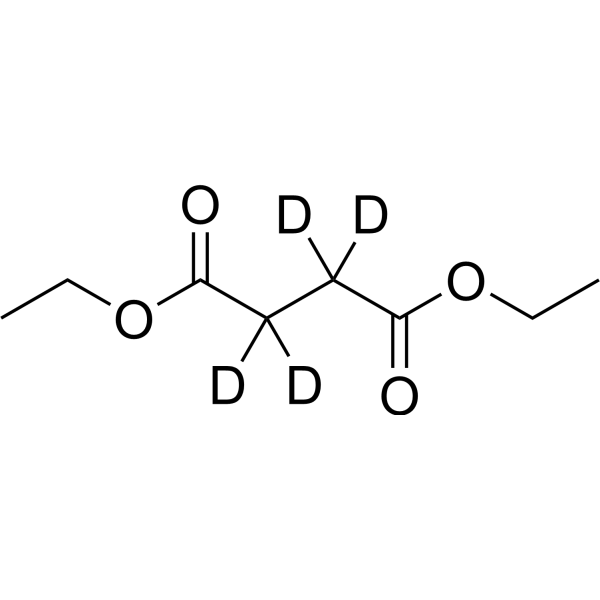
Diethyl succinate-d4 is the deuterium labeled Diethyl succinate . Diethyl succinate (Diethyl Butanedioate) is used at physiological pH and crosses biological membranes, incorporates into cells in tissue culture and is metabolized by the TCA cycle. Diethyl succinate is known to be non-toxic and used in fragrances and flavoring .
loading...
    loading...
Cat. No.: HY-W795740
CAS No.: 113036-11-6
(R)-Mono-ethyl 3-acetoxyglutarate is an important metabolic intermediate that promotes the activity of tricarboxylic acid (TCA) cycle enzymes. (R)-Mono-ethyl 3-acetoxyglutarate can help study key processes in metabolic pathways. (R)-Mono-ethyl 3-acetoxyglutarate has important application value in cell metabolism research.
loading...
    loading...
Cat. No.: HY-182683
CAS No.: 385419-89-6
Research Areas:  

Infection

MMV085203 is a potent Plasmodium falciparum inhibitor, with a PfTrxR EC50 of 900 nM. MMV085203 exerts potent antimalarial activity against both blood‑stage and sexual‑stage Plasmodium falciparum parasites, with superior efficacy toward clinical isolates of high clonal diversity. MMV085203 modulates parasite redox homeostasis, induces ROS production, and elevates mitochondrial TCA cycle intermediates. MMV085203 can be used for the research of malaria .
loading...
    loading...
Cat. No.: HY-P704666
Purity:  ≥ 90%, as determined by reducing SDS-PAGE.
Synonyms: CCL1; SISe; Prev. SCYA1; Chemokine (C-C Motif) Ligand 1; T Lymphocyte-Secreted Protein I-309; Inflammatory Cytokine I-309; I-309; C-C Motif Chemokine 1; TCA3; Small-Inducible Cytokine A1; P500; C-C Motif Chemokine Ligand 1; Small Inducible Cytokine A1 (I-309, Homologous To Mouse TCA-3)
Species:  
Human
Source:  
HEK293
loading...
    loading...
Cat. No.: HY-N21563
CAS No.: 7196-09-0
Synonyms: Pantothenoylcysteine 4'-phosphate; PPC
4'-Phosphopantothenoylcysteine (Pantothenoylcysteine 4'-phosphate) serves as a substrate for phosphopantothenoylcysteine decarboxylase (PPC-DC) and MdHAL3. 4'-Phosphopantothenoylcysteine enables flavin-mediated decarboxylation of the cysteine moiety via formation of a charge-transfer complex and generation of a thioaldehyde intermediate. 4'-Phosphopantothenoylcysteine is a metabolism-related biomarker and a raw material for coenzyme A synthesis, and it participates in the regulation of the TCA cycle. 4'-Phosphopantothenoylcysteine can be used in studies related to hepatocellular carcinoma .
loading...
    loading...
Cat. No.: HY-P72227
Purity:  ≥ 90%, as determined by reducing SDS-PAGE.
Synonyms: HLAG; HLA-6.0; HLA-G; sHLA-G; Soluble HLA class I histocompatibility antigen, alpha chain G; MHC class I antigen G; HLA G antigen; HLA class I histocompatibility antigen, alpha chain G
Species:  
Human
Source:  
E. coli
loading...
    loading...
Cat. No.: HY-153667
CAS No.: 2101206-49-7
Research Areas:  

Metabolic Disease

MK-2305 is an orally active GPR40 partial agonist with an EC50 of 6 nM in rats. MK-2305 mediates glucose-stimulated insulin secretion and inhibits endogenous glucose production by reducing gluconeogenesis from tricarboxylic acid (TCA) cycle substrates. MK-2305 increases plasma insulin levels under hyperglycemic and glucose-stimulated conditions, reduces fasting blood glucose, and improves glucose homeostasis. MK-2305 can be used in studies related to type 2 diabetes .
loading...
    loading...
Cat. No.: HY-L133
446 compounds

Copper is an important co-factor of all biological enzymes, but if the concentration exceeds the threshold of maintaining the homeostasis mechanism, copper will lead to cytotoxicity. This death mechanism has been named "Cuproptosis".

The mechanism of cuproptosis distinct from all other known mechanisms of regulated cell death, including apoptosis, pyroptosis, necroptosis, and ferroptosis.

Copper combine with the lipoylated components of the tricarboxylic acid cycle (TCA), leading to lipoylated protein aggregation and subsequent loss of iron-sulfur cluster proteins, ultimately resulting in protein toxicity stress and cell death. Studies have shown that the necessary factors for cuproptosis include the presence of glutathione, mitochondrial metabolism of galactose and pyruvate, and glutamine metabolism.

Targeted regulation of cuproptosis is a potential choice to treat cancer, rheumatoid arthritis, and other diseases. For example, up-regulation of LIPT1 may inhibit the occurrence and development of tumors by destroying TCA in mitochondria and then inducing cuproptosis.

MCE supplies a unique collection of 446 cuproptosis-related compounds, all of which act on the targets or signaling pathways related to cuproptosis and may have in inhibitory or activated effect on cuproptosis. MCE Cuproptosis Library is a useful tool for drug research related to cancer, rheumatoid arthritis, and other diseases.

Cat. No.: HY-182811
CAS No.: 1241957-37-8
AT-051/43421517 is a PGK1 activator with a Kd of 2.45 μM. AT-051/43421517 induces enhanced glycolytic metabolism and maintains TCA cycle activity, while inhibiting ROS production and Apoptosis. AT-051/43421517 reduces Aβ deposition and Tau hyperphosphorylation. AT-051/43421517 alleviates neuropathological damage in the brains of 3×Tg-AD mice. AT-051/43421517 improves cognitive impairment. AT-051/43421517 can be used for research on Alzheimer's disease and Parkinson's disease .
loading...
    loading...
Cat. No.: HY-P71892
Purity:  ≥ 95%, as determined by reducing SDS-PAGE.
Synonyms: Scya21c; Ccl21c; TCA4; Thymus-derived chemotactic agent 4; Small-inducible cytokine A21c; Beta-chemokine exodus-2; 6Ckine; C-C motif chemokine 21c
Species:  
Mouse
Source:  
E. coli
loading...
    loading...

