104 Results for "

amyloid aggregation

" in MedChemExpress (MCE) Product Catalog:
Products (104)

104 Results for "amyloid aggregation" in MCE Product Catalog:

Cat. No.: HY-168079
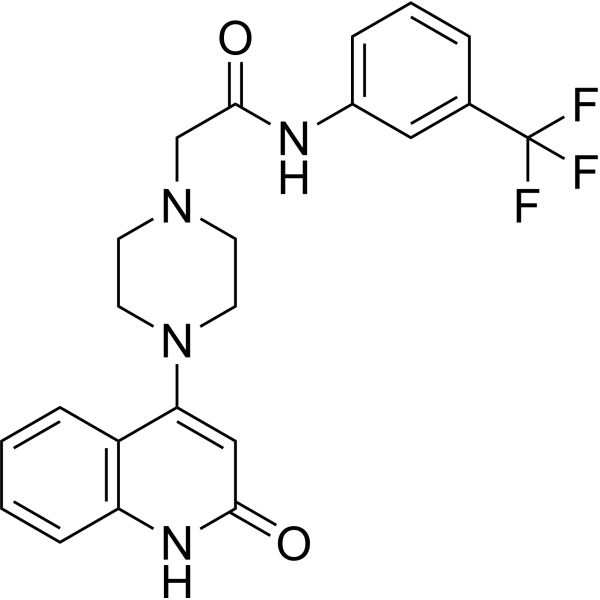
GSK-3β inhibitor 21 (compound 44) is an ATP-competitive GSK-3β inhibitor (IC50=6.06 μM) with anti-amyloid aggregation and tau phosphorylation inhibitory activities. GSK-3β inhibitor 21 can be used in the study of Alzheimer's disease .
loading...
    loading...
Cat. No.: HY-P10627
CAS No.: 2760733-01-3
Target:  

Amyloid-β

Research Areas:  

Neurological Disease

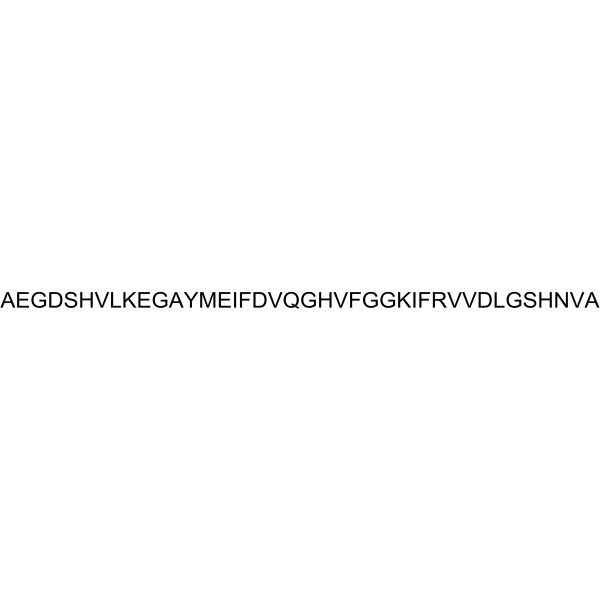
SOD1 (147-153) human is a peptide fragment of Cu/Zn superoxide dismutase (SOD1) with a high propensity to form amyloid fibrils. SOD1 (147-153) human may trigger the aggregation of full-length SOD1 and is a common molecular determinant of familial amyotrophic lateral sclerosis (fALS) and sporadic amyotrophic lateral sclerosis (sALS) .
loading...
    loading...
Cat. No.: HY-P5370
CAS No.: 1678415-68-3
Target:  

Amyloid-β

Research Areas:  

Others

Scrambled β-amyloid (1-40) is a biological active peptide. (Aβ (1-40) together with Aβ (1-42) are two major C-terminal variants of the Aβ protein constituting the majority of Aβs. These undergo post-secretory aggregation and deposition in the Alzheimer’s disease brain. This peptide is the scrambled sequence of Abeta 1-40 HY-P0265)
loading...
    loading...
Cat. No.: HY-W540926
CAS No.: 75006-64-3
Synonyms: Biacetyl dioxime sodium hydrate
Research Areas:  

Neurological Disease

Dimethylglyoxime sodium hydrate (Biacetyl dioxime sodium hydrate) is an oxime compound. Dimethylglyoxime sodium hydrate selectively coordinates with divalent nickel ions Ni 2+ to form stable complexes, and can also coordinate with copper ions Cu 2+, but does not coordinate with iron, selenium or zinc. Dimethylglyoxime sodium hydrate inhibits the aggregation of human β-amyloid 40 peptide in vitro. Dimethylglyoxime sodium hydrate is used in the research of Alzheimer's disease .
loading...
    loading...
Cat. No.: HY-P2358A
Target:  

NF-κB p38 MAPK

Research Areas:  

Infection Inflammation/Immunology

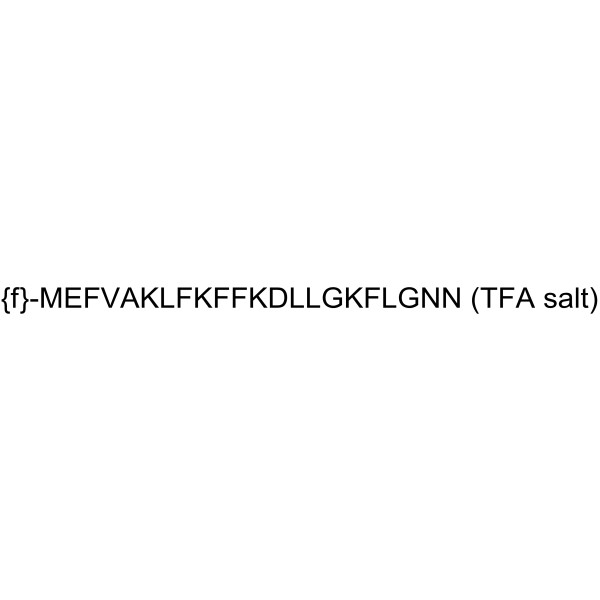
PSMα3 TFA is an inhibitor of NF-κB p65 and p38 MAPK. PSMα3 TFA forms membrane pores and binds to residues of human insulin B chain to inhibit insulin aggregation. PSMα3 TFA forms α-type amyloid-like fibrils to exert cytotoxic effects, and acts as a functional amyloid virulence determinant of Staphylococcus aureus. PSMα3 TFA is applicable to research related to spondyloarthritis, rheumatoid arthritis, insulin-derived amyloidosis, and Staphylococcus aureus infection .
loading...
    loading...
Cat. No.: HY-W010041R
CAS No.: 488-59-5
Scyllo-Inositol is an inhibitor that targets the aggregation of misfolded proteins (such as α-synuclein and Amyloid-β), is orally effective, and can cross the blood-brain barrier. Scyllo-Inositol can selectively bind to and stabilize non-toxic oligomers, preventing them from converting into toxic fibers, exerting protein homeostasis regulation and neuroprotective activity. Scyllo-Inositol binds to the hydrophobic region of pathogenic proteins, inhibits protein aggregation, and promotes lysosome- and proteasome-mediated degradation pathways, thereby reducing neurotoxicity. Scyllo-Inositol can be used in the study of neurodegenerative diseases such as Parkinson's disease, Alzheimer's disease, and Huntington's disease .
loading...
    loading...
Cat. No.: HY-146347
CAS No.: 2376710-36-8
Research Areas:  

Neurological Disease

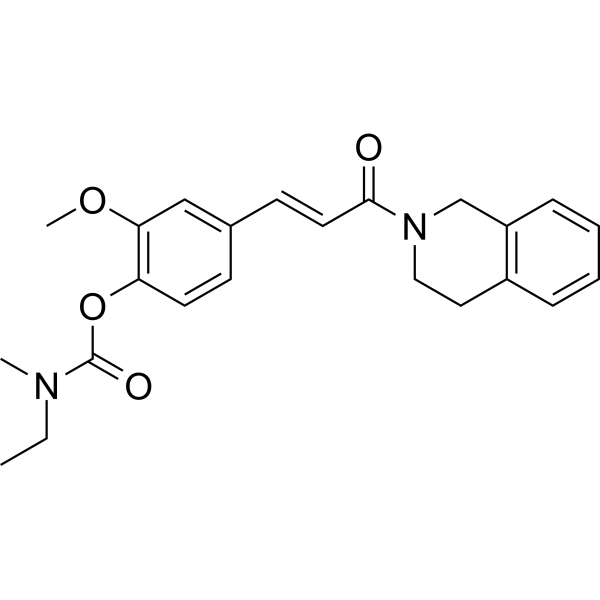
MAO-B-IN-10 (compound 4f) is a potent, selective, BBB-penetrated MAO-B (monoamine oxidase-B) inhibitor, with IC50 of 5.3 μM. MAO-B-IN-10 can inhibit (58.2%) and disaggregate (43.3%) self-mediated Aβ (amyloid β) aggregation. MAO-B-IN-10 can be use for Alzheimer’s disease research .
loading...
    loading...
Cat. No.: HY-P10534
CAS No.: 873582-78-6
ccβ is a 17-residue peptide that folds into a coiled-coil trimer at low temperatures and aggregates to form amyloid fibrils at high temperatures. ccβ serves as a simple model system for investigating α-helix to β-sheet conformational transitions and template-mediated aggregation processes associated with prion and amyloidogenic diseases. ccβ can be used in studies of prion diseases and Alzheimer's disease .
loading...
    loading...
Cat. No.: HY-136813
CAS No.: 2205015-77-4
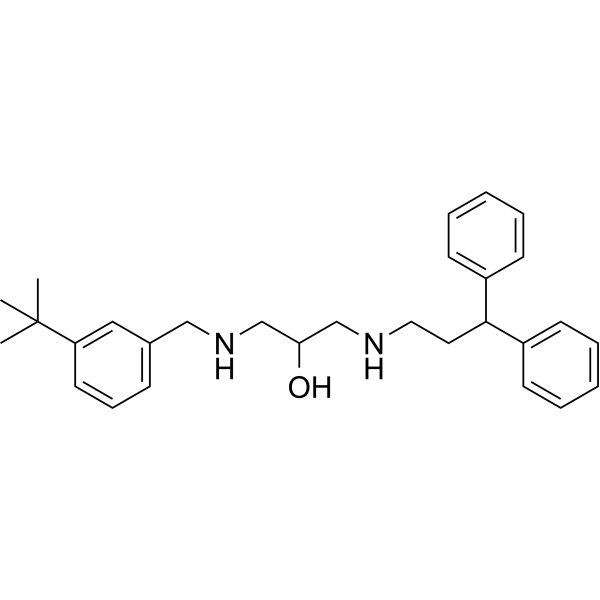
Multitarget AD inhibitor-1 is a selective and reversible butyrylcholinesterase (BuChE) inhibitor with IC50s of 7.22 μM and 1.55 μM for hBuChE and eqBuChE (BuChE from equine serum), respectively. Multitarget AD inhibitor-1 inhibits β-secretase (IC50hBACE-1=41.60 μM), amyloid β aggregation (IC50Aβ=3.09 μM), tau aggregation. Multitarget AD inhibitor-1, a diphenylpropylamine derivative, has the potential for multifunctional disease-modifying anti-Alzheimer’s research .
loading...
    loading...
Cat. No.: HY-157440
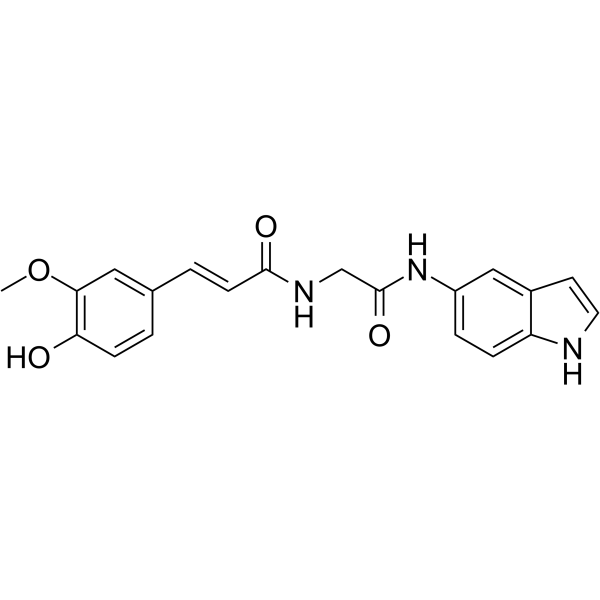
AChE/Aβ-IN-3 (compound AM5) is a dual inhibitor of AChE and Amyloid-β aggregation with IC50<.sub> values of 1.29 and 4.93 μM, respectively. AChE/Aβ-IN-3 has antioxidant properties that scavenge ROS and restore their normal levels. AChE/Aβ-IN-3 can be used in the study of neurological diseases, such as Alzheimer's disease .
loading...
    loading...
Cat. No.: HY-172782
BuChE-IN-20 is a selective butyrylcholinesterase (hBuChE) inhibitor (IC50 = 0.13 μM) with BBB permeability. BuChE-IN-20 is a L-Tryptophan derivative. BuChE-IN-20 possesses neuroprotective properties by inhibiting the production of nitric oxide (NO) and lowering the levels of ROS. BuChE-IN-20 is proficient in inhibiting the self-aggregation of amyloid-beta (Aβ) peptides. BuChE-IN-20 can be used in research for Alzheimer’s disease .
loading...
    loading...
Cat. No.: HY-161505
CAS No.: 3008535-20-1
Target:  

Transthyretin (TTR)

Research Areas:  

Others

Transthyretin-IN-3 (compound 6) is a designed benzofuran analogue. Transthyretin-IN-3 selectively binds to plasma transthyretin (TTR) to inhibit Amyloid aggregation (IC50=5.0±0.2 μM). Transthyretin-IN-3 can bind to TTR's thyroxine binding site specifically by carrying chlorine substituents at specific locations in its structure. This binding can prevent TTR tetramers from dissociating into unstable monomers .
loading...
    loading...
Cat. No.: HY-117259S
Synonyms: ALZ-801-d6
Valiltramiprosate-d6 (ALZ-801-d6) is deuterium labeled Valiltramiprosate. ALZ-801 is a potent and orally available small-molecule β-amyloid (Aβ) anti-oligomer and aggregation inhibitor, valine-conjugated proagent of Tramiprosate with substantially improved PK properties and gastrointestinal tolerability compared with the parent compound . ALZ-801 is an advanced and markedly improved candidate for the treatment of alzheimer’s disease .
loading...
    loading...
Cat. No.: HY-146399
CAS No.: 2761542-55-4
Research Areas:  

Neurological Disease

AChE/BChE-IN-9 (Compound 7a) is a potent, orally active AChE and BChE inhibitor with IC50 values of 5.74 μM and 14.05 μM against hAChE and eqBChE, respectively. AChE/BChE-IN-9 is also an efficacious antioxidant with an IC50 of 57.35 μM. AChE/BChE-IN-9 is able to chelate iron and modulates aggregation of amyloid β1-42. AChE-IN-16 can cross the BBB .
loading...
    loading...
Cat. No.: HY-152110
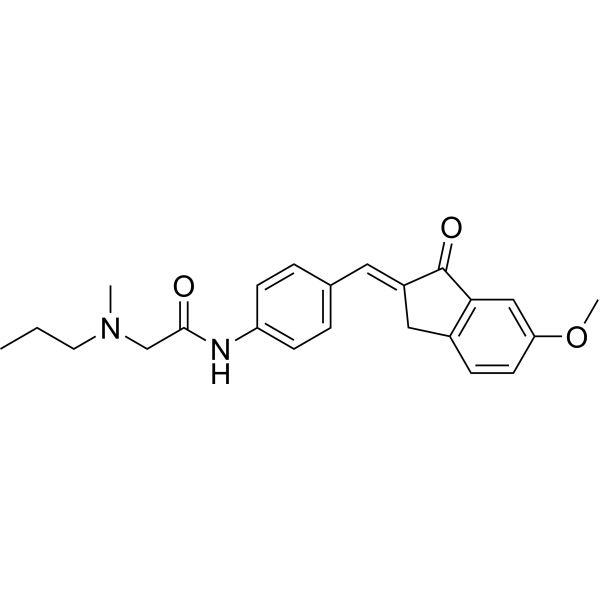
Dual AChE-MAO B-IN-5, indanone derivative, is a potent dual AChE/MAO-B inhibitior with IC50 values of 0.0224, 0.0412, and 0.1116 μM for AChE, MAO-B and MAO-A, respectively. Dual AChE-MAO B-IN-5 has antioxidant activity and prevents β-amyloid plaque aggregation. Dual AChE-MAO B-IN-5 can be used for Alzheimer’s disease (AD) research .
loading...
    loading...
Cat. No.: HY-N0373R
CAS No.: 58749-23-8
Licochalcone B (Standard) is the analytical standard of Licochalcone B. This product is intended for research and analytical applications. Licochalcone B is an extract from the root of Glycyrrhiza uralensis. Licochalcone B inhibits amyloid β (42) self-aggregation (IC50=2.16 μM) and disaggregate pre-formed Aβ42 fibrils, reduce metal-induced Aβ42 aggregation through chelating metal ionsLicochalcone B inhibits phosphorylation of NF-κB p65 in LPS signaling pathway. Licochalcone B inhibits growth and induces apoptosis of NSCLC cells. Licochalcone B specifically inhibits the NLRP3 inflammasome by disrupting NEK7‐NLRP3 interaction .
loading...
    loading...
Cat. No.: HY-W707693
CAS No.: 115268-26-3
Scyllo-Inositol-d6 is the deuterium labeled Scyllo-Inositol (HY-W010041). Scyllo-Inositol is an inhibitor that targets the aggregation of misfolded proteins (such as α-synuclein and Amyloid-β), is orally effective, and can cross the blood-brain barrier. Scyllo-Inositol can selectively bind to and stabilize non-toxic oligomers, preventing them from converting into toxic fibers, exerting protein homeostasis regulation and neuroprotective activity. Scyllo-Inositol binds to the hydrophobic region of pathogenic proteins, inhibits protein aggregation, and promotes lysosome- and proteasome-mediated degradation pathways, thereby reducing neurotoxicity. Scyllo-Inositol can be used in the study of neurodegenerative diseases such as Parkinson's disease, Alzheimer's disease, and Huntington's disease .
loading...
    loading...
Cat. No.: HY-149211
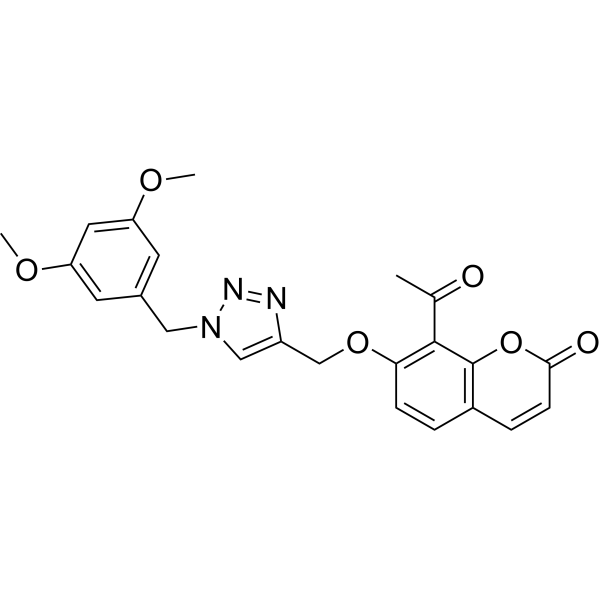
AChE/BChE-IN-12 (compound 10b), a 3,5-dimethoxy analogue, is a potent AChE, BChE, and β-secretase-1 (BACE-1) inhibitor, with IC50 values of 2.57, 3.26, and 10.65 μM, respectively. AChE/BChE-IN-12 crosses the blood-brain barrier via passive diffusion and inhibits the self-aggregation of amyloid-β monomers. AChE/BChE-IN-12 can be used for Alzheimer’s disease (AD) research .
loading...
    loading...
Cat. No.: HY-P10824
CAS No.: 1430219-69-4
Target:  

Amyloid-β

Research Areas:  

Neurological Disease

RI-OR2-TAT is a brain-penetrant inhibitor of β-Amyloid oligomerization, which is produced by adding the HIV protein transduction domain TAT to RI-OR2. RI-OR2-TAT binds to Aβ42 fibrils with a Kd value of 58-125 nM. RI-OR2-TAT reduces Aβ aggregation and plaque levels, reduces activation of microglia and oxidative damage, and increases the number of young neurons in the dentate gyrus .
loading...
    loading...
Cat. No.: HY-170583
CAS No.: 3058182-98-9
Research Areas:  

Neurological Disease

hAChE-IN-10 (Compound ET11) is the inhibitor for human acetylcholinesterase (AChE) with an IC50 of 6.34 nM. hAChE-IN-10 scavenges free radicals, and exhibits antioxidant activity. hAChE-IN-10 exhibits metal chelating activity, inhibits Cu 2+-induced Aβ1-42 aggregation, reduces the formation of amyloid plaques, and exhibits neuroprotective activity. hAChE-IN-10 ameliorates the Scopolamine (HY-N0296)-induced cognitive impairment in mouse models .
loading...
    loading...

