887 Results for "

Colon cancer

" in MedChemExpress (MCE) Product Catalog:
Products (887)

887 Results for "Colon cancer" in MCE Product Catalog:

Cat. No.: HY-175290
CAS No.: 3091068-95-7
Target:  

Arf Family GTPase

Research Areas:  

Cancer

Arf1-GEFs-IN-1 is a potent and orally active ADP-ribosylation factor 1- guanine nucleotide exchange factors (Arf1-GEFs) inhibitor with an IC50 value of 40.85 μM against CT26 cells. Arf1-GEFs-IN-1 primarily mediates tumor regression by triggering anti-tumor immune responses, rather than through direct cytotoxicity. Arf1-GEFs-IN-1 effectively promotes CCL5 expression, demonstrates excellent in vivo efficacy. Arf1-GEFs-IN-1 can be used for the study of colon cancer .
loading...
    loading...
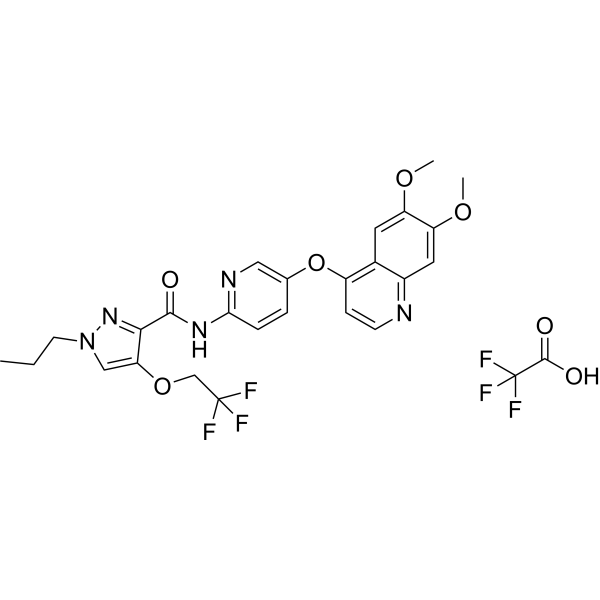
Cat. No.: HY-178348
Research Areas:  

Cancer

PARP1/c-Met-IN-2 is a highly potent, orally active, PARP1 (IC50 = 21.8 nM) and c-Met (IC50 = 30.2 nM) dual inhibitor. PARP1/c-Met-IN-2 can elevate the expression level of γH2AX, cause DNA damage. PARP1/c-Met-IN-2 exhibits remarkable anti-tumor efficacy in the Olaparib (HY-10162)-resistant HCT116 (HCT116OR) xenograft models. PARP1/c-Met-IN-2 can be used for the study of Colon Cancer .
loading...
    loading...
Cat. No.: HY-N17550
CAS No.: 173740-54-0
25-Hydroperoxycycloart-23-en-3β-ol is an anticancer, antibacterial, and antimalarial agent. 25-Hydroperoxycycloart-23-en-3β-ol can be isolated from Blepharodon nitidum. 25-Hydroperoxycycloart-23-en-3β-ol exhibits anti-Mycobacterium tuberculosis and antileishmanial activities. 25-Hydroperoxycycloart-23-en-3β-ol shows significant cytotoxic activity against a panel of tumor cell lines (large cell lung cancer, melanoma, colon adenocarcinoma, chronic myelogenous leukemia) .
loading...
    loading...
Cat. No.: HY-P990256

Target:  

CTLA-4

Research Areas:  

Inflammation/Immunology Cancer

Anti-Mouse CTLA-4/CD152 (LALA-PG) Antibody (9D9) is a mouse-derived IgG2a κ type antibody inhibitor targeting to mouse CTLA-4/CD152. Anti-Mouse CTLA-4/CD152 (LALA-PG) Antibody (9D9) contains a LALA-PG mutation in the Fc fragment rendering it unable to bind to endogenous Fcγ receptors. Anti-Mouse CTLA-4/CD152 (LALA-PG) Antibody (9D9) can be used for the researches of cancer and immunology, such as colon .
loading...
    loading...
Cat. No.: HY-W011683S2
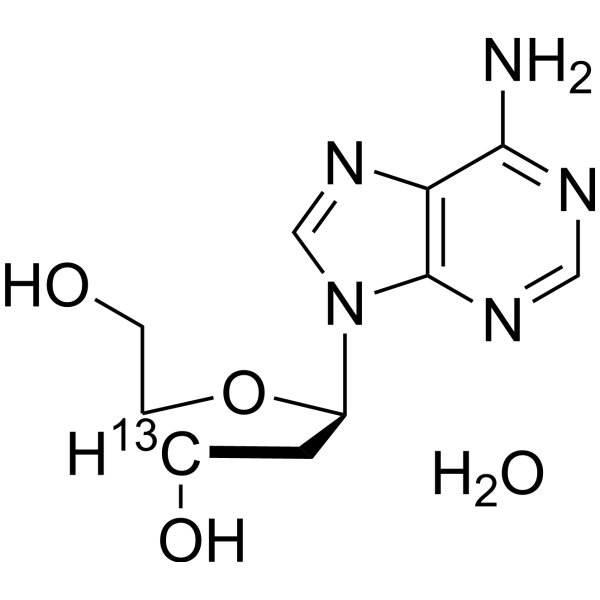
2'-Deoxyadenosine monohydrate-3′- 13C is the 13C labeled 2'-Deoxyadenosine monohydrate (HY-W011683) caspase-3 and promotes apoptosis. 2'-Deoxyadenosine monohydrate inhibits the activity of S-adenosyl-L-homocysteine hydrolase (SAHH). 2'-Deoxyadenosine monohydrate inhibits the growth of various cells. 2'-Deoxyadenosine monohydrate has an anticancer effect on colon cancer>
loading...
    loading...
Cat. No.: HY-W011683S6
CAS No.: 2483830-27-7
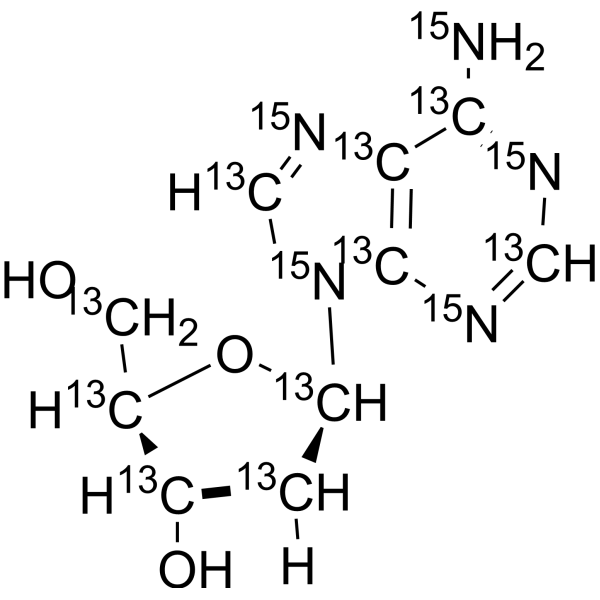
2'-Deoxyadenosine monohydrate- 13C10, 15N5 is the 13C and 15N labeled 2'-Deoxyadenosine monohydrate (HY-W011683) . 2′-Deoxyadenosine monohydrate is an adenine nucleoside that inhibits glucose-stimulated insulin release. 2′-Deoxyadenosine monohydrate inhibits glucose-stimulated increases seen in islet cyclic AMP (cAMP) accumulation. 2'-Deoxyadenosine monohydrate activates caspase-3 and promotes apoptosis. 2'-Deoxyadenosine monohydrate inhibits the activity of S-adenosyl-L-homocysteine hydrolase (SAHH). 2'-Deoxyadenosine monohydrate inhibits the growth of various cells. 2'-Deoxyadenosine monohydrate has an anticancer effect on colon cancer .
loading...
    loading...
Cat. No.: HY-W015635R
CAS No.: 2179-57-9
Diallyl disulfide (Standard) is the analytical standard of Diallyl disulfide. This product is intended for research and analytical applications. Diallyl disulfide is an orally active decomposition product of allicin and has a pungent odor. Diallyl disulfide can act as a hydrogen sulfide donor. Diallyl disulfide has inhibitory activity against squalene monooxygenase with an IC50 of 400 μM. Diallyl disulfide can alleviate the cytotoxicity and apoptosis of intestinal and liver cells induced by Ethyl Carbamate (HY-B1207). Diallyl disulfide can prevent emphysema induced by cigarette smoke. Diallyl disulfide also has anti-colon cancer and anti-inflammatory neurogenic activities, and can reverse the depressive-like behavior of mice.
loading...
    loading...
Cat. No.: HY-W040329S
CAS No.: 1987883-24-8
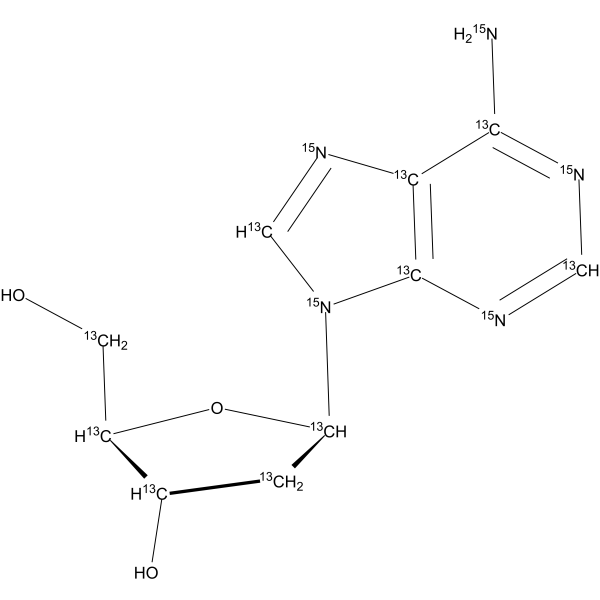
2'-Deoxyadenosine- 13C10, 15N5 is 13C and 15N-labeled 2'-Deoxyadenosine (HY-W040329) . 2′-Deoxyadenosine is an adenine nucleoside that inhibits glucose-stimulated insulin release. 2′-Deoxyadenosine inhibits glucose-stimulated increases seen in islet cyclic AMP (cAMP) accumulation. 2'-Deoxyadenosine activates caspase-3 and promotes apoptosis. 2'-Deoxyadenosine inhibits the activity of S-adenosyl-L-homocysteine hydrolase (SAHH). 2'-Deoxyadenosine inhibits the growth of various cells. 2'-Deoxyadenosine has an anticancer effect on colon cancer .
loading...
    loading...
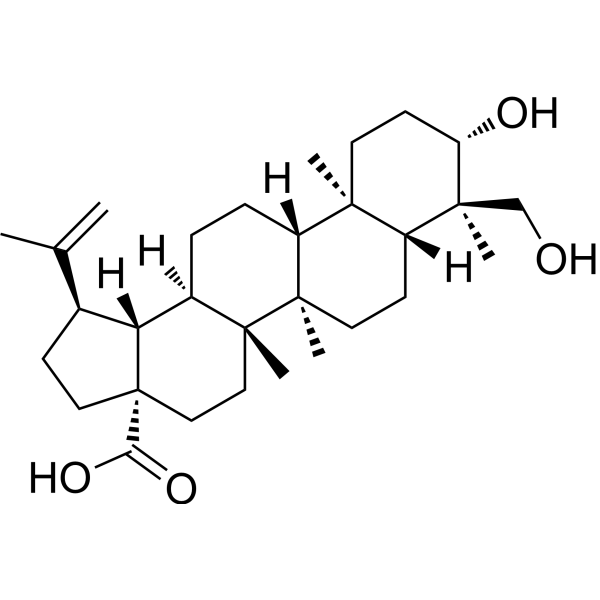
Cat. No.: HY-N0566
CAS No.: 85999-40-2
Synonyms: Anemosapogenin
23-Hydroxybetulinic acid (Anemosapogenin) is an orally active triterpenoid with broad-spectrum anticancer activity. 23-Hydroxybetulinic acid reduces the levels of Bcl-2 and survivin, elevates the level of Bax, promotes the cleavage/activation of caspase-3 and caspase-9, and induces apoptosis via the endogenous mitochondrial pathway involving cytochrome C release and mitochondrial membrane potential disruption. 23-Hydroxybetulinic acid arrests the cell cycle at S and G1 phases, inhibits cancer cell proliferation, blocks the MAPK signaling pathway, regulates MMP2, and induces autophagic apoptosis by upregulating beclin-1. 23-Hydroxybetulinic acid inhibits the activity and efflux function of P-gp, increases the intracellular accumulation of chemotherapeutic drugs, and synergistically enhances cytotoxicity with Doxorubicin (HY-15142). 23-Hydroxybetulinic acid inhibits the phosphorylation and nuclear translocation of STAT6, blocks M2 macrophage polarization, and reduces M2 macrophage-mediated apoptosis resistance of colon cancer cells. 23-Hydroxybetulinic acid can be used in related studies on chronic myeloid leukemia, hepatocellular carcinoma, sarcoma 180, multidrug-resistant breast cancer, leukemia, Doxorubicin-induced cardiotoxicity, and colorectal cancer .
loading...
    loading...
Cat. No.: HY-104048R
CAS No.: 1851373-36-8
Research Areas:  

Cancer

QC6352 (Standard) is the analytical standard of QC6352 (HY-104048). This product is intended for research and analytical applications. QC6352 is an orally active KDM4 inhibitor with anti-tumor and anti-proliferative activity. QC6352 has in vivo inhibitory effects on PDX models of breast and colon cancer and reduces the number of chemoresistant cell populations. QC6352 inhibits KDM4 different isoforms with IC50s of 104 nM (KDM4A), 56 nM (KDM4B), 35 nM (KDM4C), and 104 nM (KDM4D), respectively. QC6352 has moderate inhibitory activity against KDM5 with an IC50 of 750 nM (KDM5B) .
loading...
    loading...
Cat. No.: HY-108543R
CAS No.: 93718-83-3
Research Areas:  

Cancer

NSC 95397 (Standard) is the analytical standard of NSC 95397 (HY-108543). This product is intended for research and analytical applications. NSC 95397 is a potent, selective Cdc25 dual specificity phosphatase inhibitor (Ki=32 nM (Cdc25A), 96 nM (Cdc25B), 40 nM (Cdc25C); IC50=22.3 nM (human Cdc25A), 56.9 nM (human Cdc25C), 125 nM (Cdc25B)) . NSC 95397 inhibits mitogen-activated protein Kinase phosphatase-1 (MKP-1) and suppresses proliferation and induces apoptosis in colon cancer cells through MKP-1 and ERK1/2 pathway .
loading...
    loading...
Cat. No.: HY-134160
CAS No.: 696-06-0
Purity:  99.90%
Synonyms: 5-DHFU; 5-Fluorodihydropyrimidine-2,4-dione; 5-Fluorodihydrouracil
Research Areas:  

Cancer

5,6-Dihydro-5-Fluorouracil (5-DHFU; 5-Fluorodihydropyrimidine-2,4-dione) is the active metabolite of the thymidylate synthase inhibitor prodrug 5-fluorouracil (HY-90006), which is formed from 5-fluorouracil by dihydropyrimidine dehydrogenase (DPD). 5,6-Dihydro-5-Fluorouracil is cytotoxic to HaCaT keratinocytes (IC50=13.5 μM). Intravenous administration of 5,6-Dihydro-5-Fluorouracil (90 mg/kg/wk) in combination with 5-fluorouracil and the DPD inhibitor eniluracil (HY-10533) slows tumor growth in a rat colon cancer model.
loading...
    loading...
Cat. No.: HY-152830A
Purity:  99.82%
Synonyms: Q702 TFA
Target:  

c-Fms TAM Receptor MHC

Research Areas:  

Cancer

Adrixetinib (Q702) TFA is an orally active triple inhibitor against CSF1R, Mer, and Axl, with Kd values of 8.7 nM, 0.8 nM, and 0.3 nM, respectively. Adrixetinib TFA acts as a potent immune modulator that remodels the tumor microenvironment. Adrixetinib TFA increases the abundance of M1 macrophages and CD8⁺ T cells, while decreasing the levels of M2 macrophages and myeloid-derived suppressor cells (MDSCs). Adrixetinib TFA upregulates the expression of MHC class I and E-cadherin in tumor cells. Adrixetinib TFA shows remarkable antitumor efficacy in syngeneic mouse tumor models. Adrixetinib TFA is suitable for the research of breast cancer, renal adenocarcinoma, colon carcinoma, and melanoma .
loading...
    loading...
Cat. No.: HY-161066
Target:  

Ras

Research Areas:  

Cancer

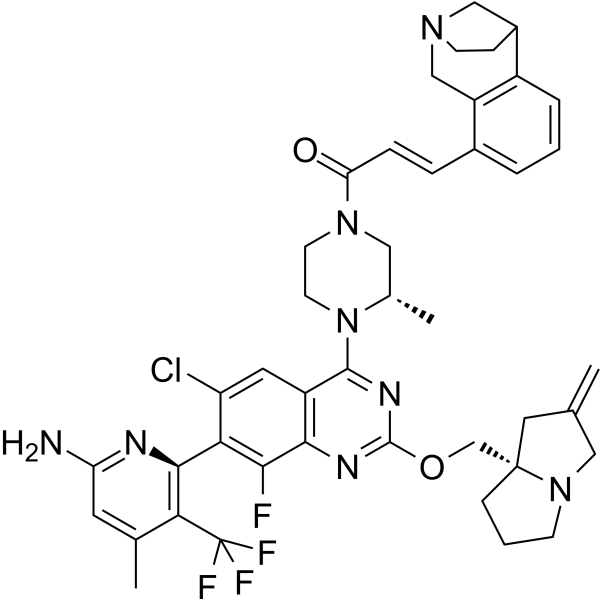
KRAS G13D-IN-1 (Compound 41) is a selective and covalently reversible inhibitor of KRAS G13D (IC50: 0.41 nM). The selectivity for KRAS G13D is 29-fold against KRAS wild type. KRAS G13D-IN-1 is an inhibitor of the GDP state and targets the SWII binding pocket of KRAS G13D. KRAS G13D-IN-1 inhibits KRAS binding to GDP and turns on/off downstream signaling cascades. KRAS G13D-IN-1 can be used in the research of colon cancer .
loading...
    loading...
Cat. No.: HY-175195
CAS No.: 2913578-04-6
Adenosine receptor antagonist 6 is an orally active and selective A2A adenosine receptor (A2AAR) antagonist, with a Ki of 19.18 nM. Adenosine receptor antagonist 6 inhibits 5’-N-ethylcarboxamide adenosine (NECA) (HY-103173)-mediated cAMP production (IC50 = 0.089 μM) and immunosuppression, while promoting IL-2 and IFN-γ secretion. Adenosine receptor antagonist 6 abolishes the immunosuppressive effects of adenosine on T-cell activation and cytokine release. Adenosine receptor antagonist 6 inhibits tumor growth in a CT26/MC38 xenograft model. Adenosine receptor antagonist 6 can be used for the study of colon cancer .
loading...
    loading...
Cat. No.: HY-180523
PKM2-IN-13 is a selective PKM2 inhibitor inhibiting PKM2 with an IC50 value of 55.13 μM. PKM2-IN-13 exhibits broad-spectrum anticancer activity with low toxicity to normal cells. PKM2-IN-13 induces apoptosis by elevated ROS levels and activation of caspases 3/7, and interacts with and inhibits the glycolytic activity of Pyruvate Kinase M2 in virto. PKM2-IN-13 demonstrates a favorable safety profile with no significant adverse effects in vivo. PKM2-IN-13 can be used for oral squamous cell carcinoma (OSCC), colon carcinoma, breast cancer and melanoma research .
loading...
    loading...
Cat. No.: HY-B0984R
CAS No.: 13636-18-5
Fendiline (hydrochloride) (Standard) is the analytical standard of Fendiline (hydrochloride). This product is intended for research and analytical applications. Fendiline hydrochloride, a diphenylalkylamine type of antianginal agent, is an L-type calcium channel blocker (IC50 of 17 µM). Fendiline hydrochloride is also a selective K-Ras inhibitor, and has no effect on H-Ras and N-Ras. Fendiline hydrochloride inhibits K-Ras plasma membrane localization (IC50 of 9.64 μM), inhibits K-Ras signal output and blocks the proliferation of pancreatic, colon, lung, and endometrial cancer cell lines expressing oncogenic mutant K-Ras. Fendiline hydrochloride is a STING agonist and is able to inhibit the growth of multiple refractory cold tumors (MC38, CT26 and B16F10) .
loading...
    loading...
Cat. No.: HY-P990742
CAS No.: 2762499-30-7
Synonyms: TJ-CD4B; ABL111; TJ033721

Target:  

TNF Receptor Claudin

Research Areas:  

Inflammation/Immunology Cancer

Givastomig (ABL111, TJ033721) is a bispecific antibody (BsAb) inhibitor. Givastomig can specifically binds to Claudin18.2 (CLDN 18.2) on the surface of cancer cells and 4-1BB (CD137, TNFRSF9) on the surface of activated T cells and natural killer (NK) cells. Givastomig is engineered to contain a single Fc-domain mutation (asparagine to alanine) to eliminate Fc-effector function. Givastomig-bound cell lines expressing a range of CLDN18.2 levels with high affinity and induced 4-1BB activation only in the context of CLDN18.2 binding. Givastomig can be used for the study of colon carcinoma .
loading...
    loading...
Cat. No.: HY-P992356

Target:  

Topoisomerase

Research Areas:  

Cancer

GENA-104A16 is a humanized monoclonal antibody targeting CNTN4, with multiple functions including immunostimulation, cytotoxicity and immunoregulation. By binding to CNTN4, GENA-104A16 blocks its interaction with APP, thereby restoring T cell function, inducing tumor cell death and regulating tumor-infiltrating immune cell populations. GENA-104A16 also exerts topoisomerase I inhibitory activity via the payload Exatecan (HY-13631). GENA-104A16 can be used in research related to colon cancer liver metastasis and other CNTN4-expressing solid tumors .
loading...
    loading...
Cat. No.: HY-P992434

Research Areas:  

Cancer

OSE-279 is a high-affinity humanized monoclonal bivalent antibody targeting PD-1, the recommended isotype control is HY-P99003. OSE-279 blocks PD-1 ligand binding, inhibits PDL1-induced SHP1 phosphorylation, restores T cell activation, and promotes reactivation of primary T cell effector functions. OSE-279 binds hFcRn receptor, predicts long half-life, induces CD4 and CD8 T cell proliferation, and promotes interleukin 2 and interferon gamma secretion. OSE-279 can be used for the research of advanced malignancies, colon cancer, hepatocarcinoma, mesothelioma .
loading...
    loading...

