9106 Results for "

Cardiovascular

" in MedChemExpress (MCE) Product Catalog:
Products (9106)

9106 Results for "Cardiovascular" in MCE Product Catalog:

Cat. No.: HY-156023
CAS No.: 863589-52-0
Purity:  99.28%
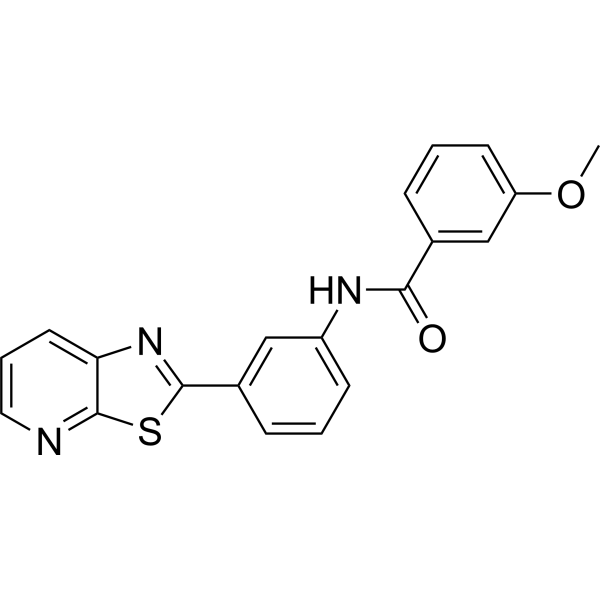
SIRT1 activator 2 is a SIRT1 activator with an ED50 value <5 μM. SIRT1 activator 2 modulates SIRT1 deacetylase activity. SIRT1 activator 2 can be used for aging research .
loading...
    loading...
Cat. No.: HY-160004
CAS No.: 1523493-53-9
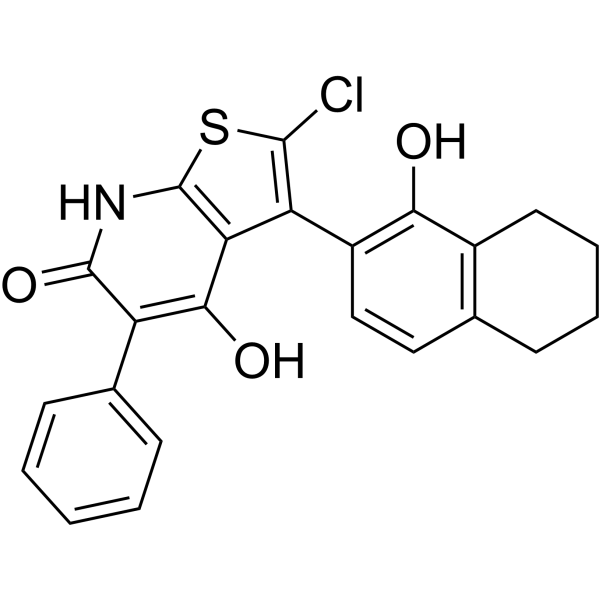
PXL770 is an orally active, direct allosteric AMP-activated protein kinase (AMPK) activator. PXL770 decreases C26:0 levels, improves mitochondrial respiration, reduces expression of proinflammatory genes and induces expression of compensatory transporters (ABCD2/3) in ALD fibroblasts/lymphocytes. PXL770 normalizes plasma VLCFA levels, significantly reduces elevated VLCFA levels in brain and spinal cord in Abcd1 KO mice. PXL770 improves glycemia, dyslipidemia, and insulin resistance in ob/ob and high-fat diet (HFD)-fed mice. PXL770 can be used for the study of X-linked adrenoleukodystrophy (ALD), autosomal dominant polycystic kidney disease and nonalcoholic steatohepatitis (NASH) .
loading...
    loading...
Cat. No.: HY-B1018AS
CAS No.: 1219798-40-9
Phenelzine-d5 sulfate is the deuterium labeled Phenelzine sulfate (HY-B1018A). Phenelzine sulfate, an antidepressant agent, is an irreversible and orally active monoamine oxidase (MAO-A and MAO-B) inhibitor. Phenelzine sulfate inhibits GABA transaminase and primary amine oxidase (PrAO), and sequester reactive aldehydes. Phenelzine sulfate also inhibits LSD1 (Ki: 5.6 μM) and suppresses oxidative stress and lipogenesis. Phenelzine sulfate elevates neurotransmitters (serotonin, norepinephrine, dopamine). Phenelzine sulfate is studied in neurological, metabolic and cancer diseases for depression and anxiety disorders, stroke, spinal cord injury, traumatic brain injury, multiple sclerosis, Parkinson’s disease, Alzheimer’s disease, inflammatory pain, obesity and prostate cancer .
loading...
    loading...
Cat. No.: HY-D0924A
Synonyms: Sulfo-Cyanine5.5 acetate
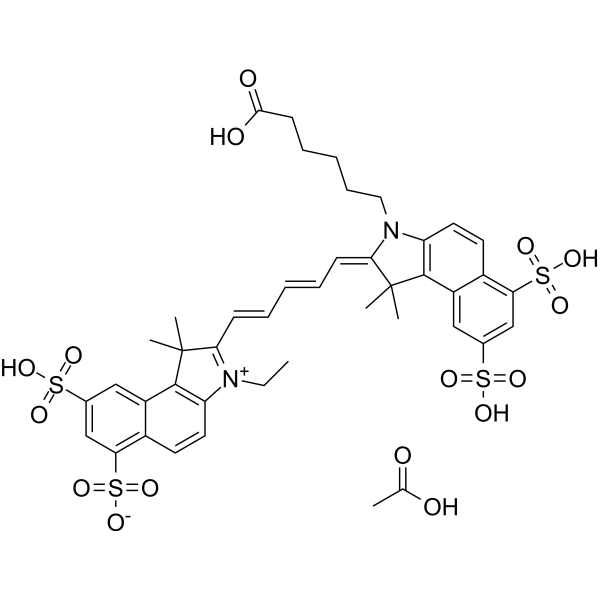
Cy5.5 acetate is a CY dye. CY, short for Cyanine, is a compound consisting of two nitrogen atoms connected by an odd number of methyl units. Cyanine compounds have the characteristics of long wavelength, adjustable absorption and emission, high extinction coefficient, good water solubility and relatively simple synthesis . CY dyes are of en used for the labeling of proteins, antibodies and small molecular compounds. For the labeling of protein antibodies, the combination can be completed through a simple mixing reaction. Below, we introduce the labeling method of protein antibody labeling, which has certain reference significance .
loading...
    loading...
Cat. No.: HY-D0924B
Synonyms: Sulfo-Cyanine5.5 TEA
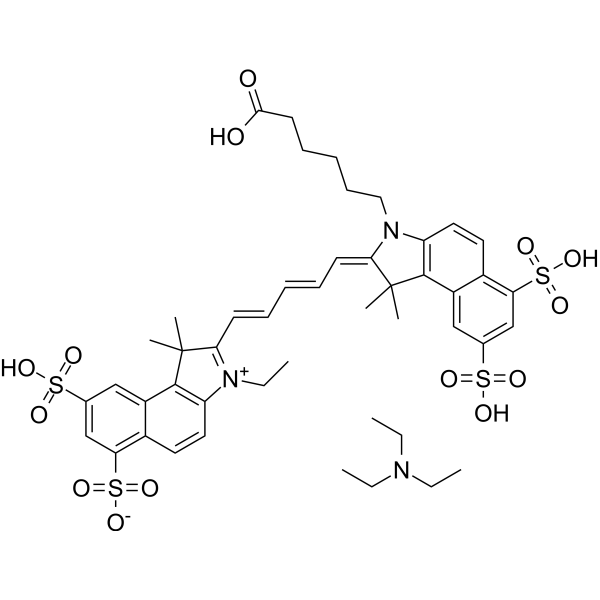
Cy5.5 TEA is a CY dye. CY, short for Cyanine, is a compound consisting of two nitrogen atoms connected by an odd number of methyl units. Cyanine compounds have the characteristics of long wavelength, adjustable absorption and emission, high extinction coefficient, good water solubility and relatively simple synthesis . CY dyes are of en used for the labeling of proteins, antibodies and small molecular compounds. For the labeling of protein antibodies, the combination can be completed through a simple mixing reaction. Below, we introduce the labeling method of protein antibody labeling, which has certain reference significance .
loading...
    loading...
Cat. No.: HY-N0031R
CAS No.: 104777-68-6
Plantamajoside (Standard) is the analytical standard of Plantamajoside. This product is intended for use in research and analytical applications. Plantamajoside is an orally active phenylpropanoid glycoside. Plantamajoside can be isolated from Plantago asiatica L.(Plantaginaceae). Plantamajoside inactivates NF-κB, PI3K/akt, induces Apoptosis, and improves Autophagy. Plantamajoside regulates MAPK, integrin-linked kinase/c-Src. Plantamajoside inhibits multiple cancers, improves lung and kidney damage. Plantamajoside has neuroprotective and anti-inflammatory effects .
loading...
    loading...
Cat. No.: HY-N0559R
CAS No.: 52659-56-0
Kirenol (Standard) is the analytical standard of Kirenol (HY-N0559). This product is intended for research and analytical applications. Kirenol is a diterpenoid compound, an orally active apoptosis inducer and signaling pathway regulator, with a Kd value of 5.47 μM against the target CK2. Kirenol promotes the cleavage of Bid into tBid, regulates the protein levels/phosphorylation of Bax, Bcl-2, p53 and p21, and induces caspase-independent apoptosis, S-phase cell cycle arrest, ROS accumulation and cytotoxicity in cancer cells. Kirenol activates the CK2/AKT and AMPK-mTOR-ULK1 pathways, inhibits the signaling of NF-κB, TGF-β/Smads and NLRP3 inflammasome, and regulates the GSK3β, BMP and Wnt/β-catenin pathways. Kirenol induces autophagy, mitophagy and osteoblast differentiation, promotes mitochondrial fusion, and exerts antioxidant, anti-inflammatory, antifibrotic, renoprotective, cardioprotective, neuroprotective and analgesic effects. Kirenol is applicable to research related to chronic myeloid leukemia, ischemic stroke, diabetic nephropathy, heart failure, acute lung injury and osteoporosis.
loading...
    loading...
Cat. No.: HY-N1570
CAS No.: 34175-96-7
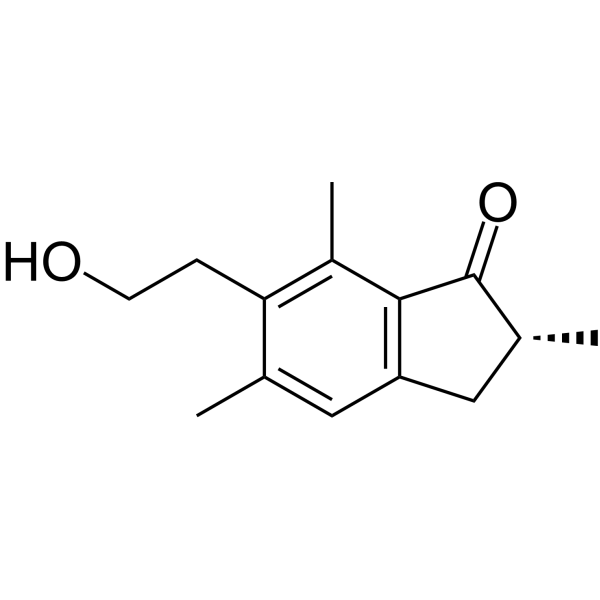
Pterosin B is an orally active indanone. Pterosin B can be obtained from Pteridium aquilinum. Pterosin B is a Sik3 signaling inhibitor. Pterosin B inhibits Klf5 expression and reduces β-amyloid deposition. Pterosin B prevents chondrocyte hypertrophy and osteoarthritis in mice. Pterosin B inhibits cardiomyocyte hypertrophy, improves cognitive impairment, and lowers blood glucose. Pterosin B can be used in research on arthritis, Alzheimer's disease, pathological cardiac hypertrophy and diabetes .
loading...
    loading...
Cat. No.: HY-N1570R
CAS No.: 34175-96-7
Pterosin B (Standard) is the analytical standard of Pterosin B (HY-N1570). This product is intended for research and analytical applications. Pterosin B is an indanone. Pterosin B can be obtained from Pteridium aquilinum. Pterosin B is a Sik3 signaling inhibitor. Pterosin B inhibits Klf5 expression and reduces β-amyloid deposition. Pterosin B prevents chondrocyte hypertrophy and osteoarthritis in mice. Pterosin B inhibits cardiomyocyte hypertrophy, improves cognitive impairment, and lowers blood glucose. Pterosin B can be used in research on arthritis, Alzheimer's disease, pathological cardiac hypertrophy and diabetes .
loading...
    loading...
Cat. No.: HY-N17816
CAS No.: 571-72-2
Tambulin is an orally active flavonol compound found in Zanthoxylum armatum. Tambulin can inhibit cell proliferation, induce apoptosis and inhibit ROS production. Tambulin upregulates cleaved caspase-3, cleaved caspase-9, and Bax, downregulates Bcl-2 levels. Tambulin can stimulate glucose-dependent insulin secretion and induce endothelium-independent vasorelaxation. Tambulin binds to succinate dehydrogenase (SDH) (Ki = 11.02 μM) and shows significant ferric reducing power. Tambulin can enhances oxidative stress resistance, reduces, lipofuscin deposits, lipid levels, α-synuclein levels, improves locomotary behavior, and dopamine levels in in age-synchronized L1 hermaphrodite Caenorhabditis elegans models of ageing and Parkinson's disease. Tambulin can be used for the researches of Parkinson's disease, lung squamous cell carcinoma, and diabetes .
loading...
    loading...
Cat. No.: HY-N3181
CAS No.: 10391-09-0
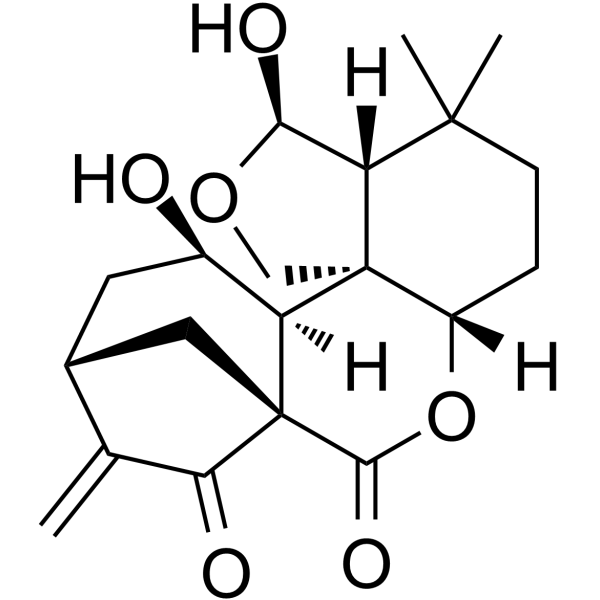
Nodosin is an orally active diterpenoid compound that can be isolated from Isodon serra. Nodosin can inhibit the proliferation and induce cell cycle arrest and apoptosis of tumor cells. Nodosin can also inhibit oxidative stress, inflammatory responses, and ferroptosis. Nodosin has anti-inflammatory and anti-tumor activities .
loading...
    loading...
Cat. No.: HY-N7108R
CAS No.: 6665-86-7
7-Hydroxyflavone (Standard) is the analytical standard of 7-Hydroxyflavone. This product is intended for research and analytical applications. 7-Hydroxyflavone is a flavonoid isolated from Clerodendrum phlomidis, with anti-inflammatory activity. 7-Hydroxyflavone protects renal cells from nicotine (NIC)-associated cytotoxicity via the ERK/Nrf2/HO-1 pathway. 7-Hydroxyflavone inhibits PKM2 with an IC50 of 2.12 μM. 7-Hydroxyflavone inhibits COX-2 and 5-LOX with IC50 of 27 µg/mL and 33 µg/mL. 7-Hydroxyflavone is orally active .
loading...
    loading...
Cat. No.: HY-NP0194A
C1q Protein (mouse) is a complement protein and is a recognition molecule of the classical pathway, performs a diverse range of complement and non-complement functions. C1q Protein (mouse) binds various ligands derived from self, non-self, and altered self and modulate the functions of immune
and non-immune cells. C1q Protein (mouse) can be used for the research of mutiple disease .
loading...
    loading...
Cat. No.: HY-P1615
CAS No.: 1006388-38-0
Synonyms: UPARANT
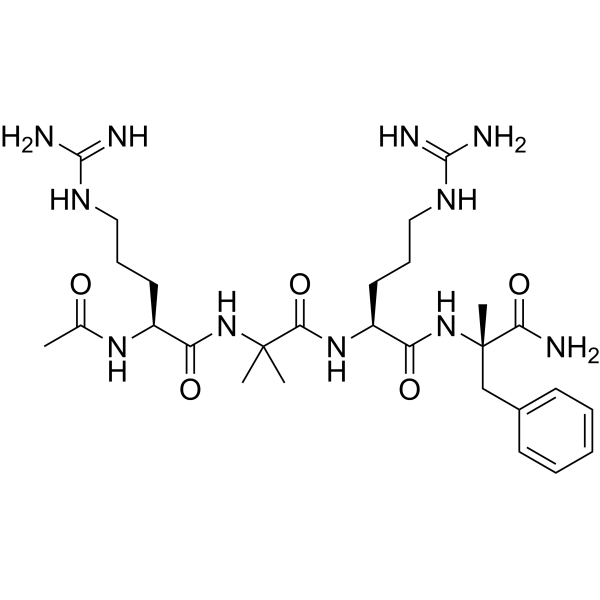
Cenupatide (UPARANT) is a uPAR and FPR antagonist with anti-angiogenic, anti-inflammatory, and vascular barrier regulatory activities, as well as high stability and resistance to enzymatic degradation in blood/plasma. Cenupatide blocks the uPAR-FPR interaction, reduces VEGF-induced phosphorylation levels of AKT, VEGFR-2, STAT3, JNK, p38 MAPK, ERK1/2, and NF-κB p65, and inhibits αvβ3 integrin activation. Cenupatide suppresses endothelial cell migration, invasion, tube formation, and angiogenic signaling pathways, restores tight junctions and blood-retinal barrier integrity, reduces pro-inflammatory marker levels, and inhibits apoptosis. Cenupatide reduces retinal neovascularization, renal fibrosis, and vascular leakage, and restores visual function in preclinical models. Cenupatide is applicable to research related to retinopathy, diabetic complications, ocular diseases, cancer, and inflammatory diseases .
loading...
    loading...
Cat. No.: HY-W001083R
CAS No.: 621-37-4
3-Hydroxyphenylacetic acid (Standard) is the analytical standard of 3-Hydroxyphenylacetic acid (HY-W001083). This product is intended for research and analytical applications. 3-Hydroxyphenylacetic acid is an orally active flavonoid metabolite produced by intestinal flora, with blood pressure-lowering activity. 3-Hydroxyphenylacetic acid can also inhibit ferroptosis by upregulating the expression of GPX4, thereby improving spermatogenic dysfunction in aged mice. In addition, abnormal levels of 3-Hydroxyphenylacetic acid are closely related to certain diseases, such as autism spectrum disorders.
loading...
    loading...
Cat. No.: HY-W001083S1
2-(3-Hydroxyphenyl-2,4,6-d3)acetic-2,2-d2 acid is the deuterium labeled 3-Hydroxyphenylacetic acid (HY-W001083). 3-Hydroxyphenylacetic acid is an orally active flavonoid metabolite produced by intestinal flora, with blood pressure-lowering activity. 3-Hydroxyphenylacetic acid can also inhibit ferroptosis by upregulating the expression of GPX4, thereby improving spermatogenic dysfunction in aged mice. In addition, abnormal levels of 3-Hydroxyphenylacetic acid are closely related to certain diseases, such as autism spectrum disorders.
loading...
    loading...
Cat. No.: HY-W001083S2
3-Hydroxyphenylacetic acid-d6 is the deuterium labeled 3-Hydroxyphenylacetic acid (HY-W001083). 3-Hydroxyphenylacetic acid is an orally active flavonoid metabolite produced by intestinal flora, with blood pressure-lowering activity. 3-Hydroxyphenylacetic acid can also inhibit ferroptosis by upregulating the expression of GPX4, thereby improving spermatogenic dysfunction in aged mice. In addition, abnormal levels of 3-Hydroxyphenylacetic acid are closely related to certain diseases, such as autism spectrum disorders .
loading...
    loading...
Cat. No.: HY-W010155R
CAS No.: 526-55-6
Synonyms: Indole-3-ethanol (Standard)
Tryptophol (Standard) (Indole-3-ethanol (Standard)) is an analytical standard of Tryptophol (HY-W010155). This product is intended for use in research and analytical applications.Tryptophol is an aromatic alcohol and secondary metabolite produced by microorganisms. Tryptophol induces Apoptosis and cleavage of caspase-8. Tryptophol inhibits Cunninghamella blakesleeana biofilm. Tryptophol has anti-phage infection, biofilm formation regulation, anti-inflammatory, hemolytic, sleep induction, temperature change, seizure susceptibility and immune regulation activities. Tryptophol is used in the research of African trypanosomiasis, sleep disorders, epilepsy.
loading...
    loading...
Cat. No.: HY-W011927
CAS No.: 80-09-1
Synonyms: Bisphenol S; Bis(4-hydroxyphenyl) sulfone
4,4'-Sulfonyldiphenol (Bisphenol S; Bis(4-hydroxyphenyl) sulfone), a substitute for Bisphenol A (HY-18260), is widely used in industrial and consumer products. 4,4'-Sulfonyldiphenol is an oally ative estrogen receptor (ER) agonist and can competitively bind to thyroid hormone receptors (TR) with IC50 values for TRα and TRβ are 2650 μM and 2294 μM respectively, thereby affecting breast development and reducing the expression of androgen receptor (AR) in fetal testes. 4,4'-Sulfonyldiphenol promotes the progression of glioblastoma by upregulating the EZH2 mediated PI3K/AKT/mTOR pathway. Under chronic exposure, 4,4'-Sulfonyldiphenol can cause significant lipid deposition and dyslipidemia in the mouse liver by upregulating JunB and Atf3, and has a role in causing obesity at low doses. 4,4'-Sulfonyldiphenol induces intestinal inflammation by altering the intestinal microbiome. 4,4'-Sulfonyldiphenol accelerates the progression of atherosclerosis in zebrafish embryo larvae .
loading...
    loading...
Cat. No.: HY-W018197
CAS No.: 103-81-1
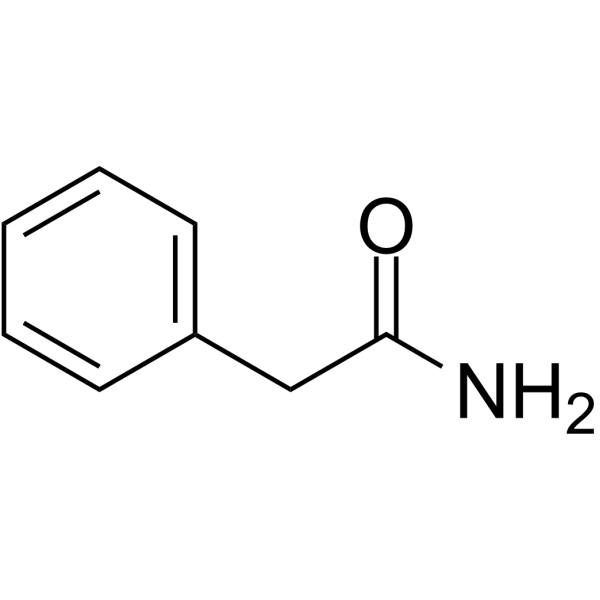
2-Phenylacetamide is a estrogen-like compound that can be isolated from Lepidium apetalum seeds. 2-Phenylacetamide inhibits p38 MAPK signaling pathway, exhibits anti-inflammatory, antioxidant, anti-hypertensive, and anti-fibrosis effects. 2-Phenylacetamide is orally active .
loading...
    loading...

