10028 Results for "

pyroglutamate modification

" in MedChemExpress (MCE) Product Catalog:
Products (10028)

10028 Results for "pyroglutamate modification" in MCE Product Catalog:

Cat. No.: HY-P3818A
Target:  

PKC

Research Areas:  

Others

PKCδ Peptide Substrate acetate is a highly selective peptide substrate targeting PKCδ. PKCδ Peptide Substrate acetate can only be efficiently catalyzed for phosphorylation modification by PKCδ, and Thr431 is the sole phosphorylation site. PKCδ Peptide Substrate acetate binds to the catalytic pocket of PKC in a competitive manner, but exhibits no PKC agonistic or inhibitory activity. PKCδ Peptide Substrate acetate is a dedicated biochemical probe for the quantitative detection of PKCδ in vitro, and can be used for studies on PKCδ-related pathways .
loading...
    loading...
Cat. No.: HY-W095635
CAS No.: 17787-40-5
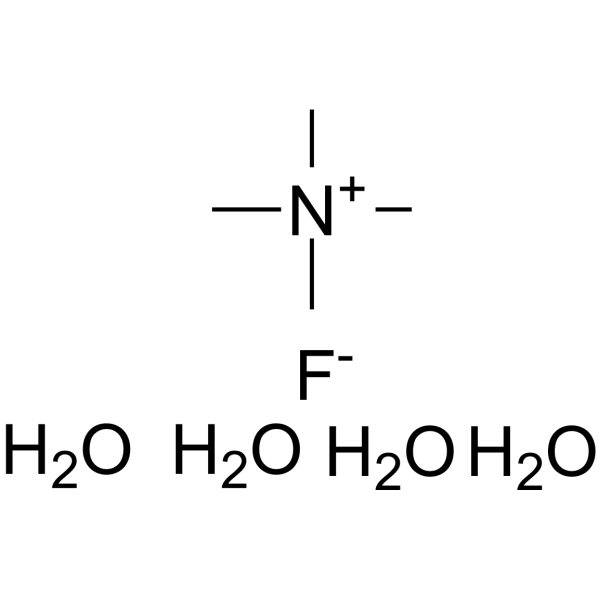
Tetramethylammonium fluoride tetrahydrate (TMAF) is a quaternary ammonium salt. TMAF is commonly used as a weak base and a source of fluoride ions in various organic reactions, including nucleophilic substitution, functional group deprotection, and ring-opening polymerization. Unlike other fluoride sources, TMAF is compatible with many functional groups, making it a versatile tool in synthetic chemistry. Functional reagents, In addition, TMAF has been used as a fluorinating agent in medicinal chemistry, for the preparation of radiotracers and protein modification in biochemistry, and the tetrahydrate form of TMAF is more stable and easier to handle than the anhydrous form.
loading...
    loading...
Cat. No.: HY-W1048914
3-Arm PEG2000-NH2 is a three-armed PEG derivative. The core structure of 3-Arm PEG2000-NH2 consists of three PEG chains, each terminal of which is modified with an amino (-NH2) group. The primary amino group in 3-Arm PEG2000-NH2 can be covalently linked to functional groups such as carboxylic acids, NHS esters, and isocyanates for targeted modification of liposomes/nanoparticles.
loading...
    loading...
Cat. No.: HY-W1048914A
3-Arm PEG5000-NH2 is a three-armed PEG derivative. The core structure of 3-Arm PEG5000-NH2 consists of three PEG chains, each terminal of which is modified with an amino (-NH2) group. The primary amino group in 3-Arm PEG5000-NH2 can be covalently linked to functional groups such as carboxylic acids, NHS esters, and isocyanates for targeted modification of liposomes/nanoparticles.
loading...
    loading...
Cat. No.: HY-W1048914B
3-Arm PEG10000-NH2 is a three-armed PEG derivative. The core structure of 3-Arm PEG10000-NH2 consists of three PEG chains, each terminal of which is modified with an amino (-NH2) group. The primary amino group in 3-Arm PEG10000-NH2 can be covalently linked to functional groups such as carboxylic acids, NHS esters, and isocyanates for targeted modification of liposomes/nanoparticles.
loading...
    loading...
Cat. No.: HY-W1048914C
3-Arm PEG20000-NH2 is a three-armed PEG derivative. The core structure of 3-Arm PEG20000-NH2 consists of three PEG chains, each terminal of which is modified with an amino (-NH2) group. The primary amino group in 3-Arm PEG20000-NH2 can be covalently linked to functional groups such as carboxylic acids, NHS esters, and isocyanates for targeted modification of liposomes/nanoparticles.
loading...
    loading...
Cat. No.: HY-W1048914D
3-Arm PEG40000-NH2 is a three-armed PEG derivative. The core structure of 3-Arm PEG40000-NH2 consists of three PEG chains, each terminal of which is modified with an amino (-NH2) group. The primary amino group in 3-Arm PEG40000-NH2 can be covalently linked to functional groups such as carboxylic acids, NHS esters, and isocyanates for targeted modification of liposomes/nanoparticles.
loading...
    loading...
Cat. No.: HY-W145552
CAS No.: 144985-19-3
Synonyms: 4-Methoxyphenyl 3-O-allyl-beta-D-galactopyranoside
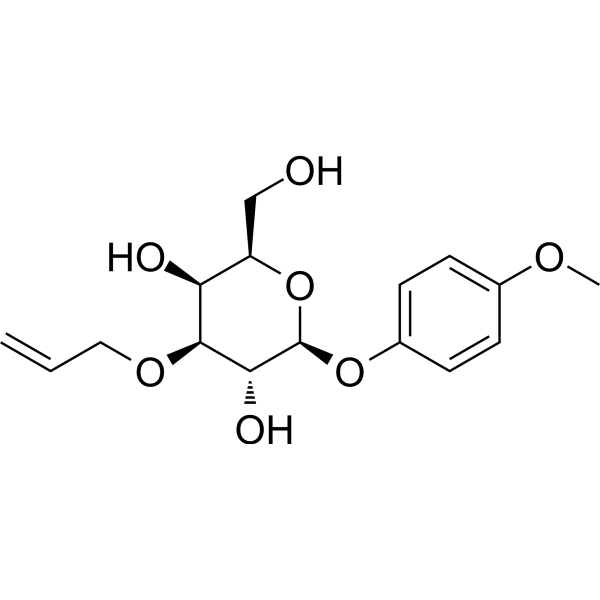
4-Methoxyphenyl 3-O-Allyl-β-D-galactopyranoside is an organic compound belonging to the family of galactopyranosides. It is often used as a building block for the synthesis of more complex glycosides and glycoconjugates. 4-Methoxyphenyl 3-O-Allyl-β-D-galactopyranoside has various applications in biochemical research, especially in the study of carbohydrate metabolism and protein-carbohydrate interactions. This compound contains an allyl protecting group that can be selectively removed using palladium-catalyzed conditions to reveal hydroxyl functionality for further chemical modification.
loading...
    loading...
Cat. No.: HY-W440911
Research Areas:  

Cancer

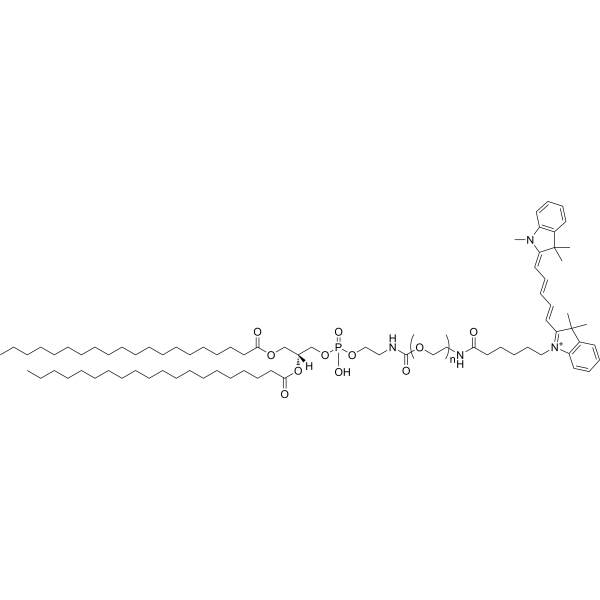
DSPE-PEG2000-Cy5 is a Cy5 (HY-D0821) fluorophore-labeled conjugate of distearoylphosphatidylethanolamine and polyethylene glycol, as well as a liposome component. The Cy5 fluorophore is commonly used for labeling proteins and nucleic acids in imaging, flow cytometry and genomic applications. DSPE-PEG2000-Cy5 supports cell membrane modification, in vivo tumor targeting research and long-term in vivo circulation of its liposomal formulations (Ex/Em=633/670 nm) .
loading...
    loading...
Cat. No.: HY-L005
2,031 compounds

Epigenetics refers to changes in phenotype that are not rooted in DNA sequence. Many types of epigenetic processes have been identified, including DNA methylation, alteration in the structure of histone proteins and gene regulation by small noncoding microRNAs. Modification of DNA, protein, or RNA, resulting in changes to the function and/or regulation of these molecules, without altering their primary sequences, reveals the complexities of cellular differentiation, embryology, the regulation of gene expression, aging, cancer, and other diseases.

MCE provide a unique collection of 2,031 epigenetics-related compounds that can be used in the research of the related diseases.

Cat. No.: HY-112764GL
CAS No.: 160743-62-4
mPEG2000-DMG (GMP Like) is mPEG2000-DMG (HY-112764) produced by using GMP like guidelines. GMP Like small molecules works appropriately as an auxiliary reagent for cell therapy manufacture. mPEG2000-DMG is used for the preparation of liposome for siRNA delivery with improved transfection efficiency in vitro. mPEG2000-DMG is also used for the lipid nanoparticle for an oral plasmid DNA delivery approach in vivo through a facile surface modification to improve the mucus permeability and delivery efficiency of the nanoparticles .
loading...
    loading...
Cat. No.: HY-114894
CAS No.: 2230185-95-0
Target:  

Ras PI3K SOS1

Research Areas:  

Cancer

2C07 is a mutant Ras (K-Ras M72C, H-Ras M72C) inhibitor. 2C07 blocks the activation of PI3K through allosteric Ras modification. 2C07 binds to the modified switch II pocket (S-IIG) of Ras in both GDP- and GTP-bound states, stabilizes the GDP-bound state, disrupts the polar interactions of the canonical GTP-bound state, and inhibits SOS binding and nucleotide exchange. 2C07 can be used in cancer-related research .
loading...
    loading...
Cat. No.: HY-116284A
CAS No.: 7000-27-3
Synonyms: Methyl β-D-glucoside hemihydrate
Target:  

Drug Intermediate

Research Areas:  

Others

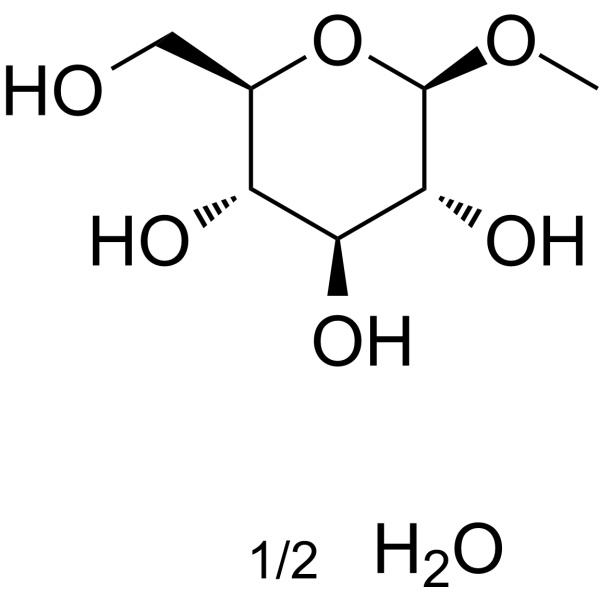
Methyl β-D-glucopyranoside (Methyl β-D-glucoside) hemihydrate is a model glycosyl acceptor for enzymatic glycosylation reactions. Methyl β-D-glucopyranoside hemihydrate participates in glycoside synthesis and can react with acyl donors such as caffeic acid esters under the catalysis of specific enzymes (such as Lipozyme TL IM) to achieve acylation modification. Methyl β-D-glucopyranoside hemihydrate can be used in organic synthesis and biocatalysis research, especially the efficient enzymatic preparation of medicinal glycosides (such as Robustaside B (HY-N2720), 6-O-caffeoyl salidroside) .
loading...
    loading...
Cat. No.: HY-126370
CAS No.: 6699-20-3
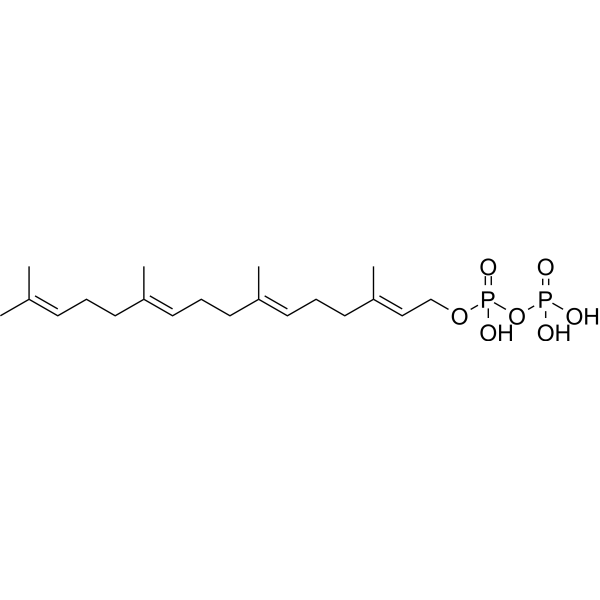
Geranylgeranyl pyrophosphate is a type of isoprenoid metabolic intermediate, mainly synthesized through the mevalonate pathway. Geranylgeranyl pyrophosphate is a key precursor in various biological synthesis processes, especially as a necessary substrate for post-translational modification of proteins - geranylgeranyl phosphorylation. Geranylgeranyl pyrophosphate regulates various cellular processes and disease progression through protein geranylgeranyl phosphorylation, such as activating the YAP signaling pathway, promoting cell proliferation and inhibiting apoptosis; promoting IL-2 production and STAT5 phosphorylation; and influencing metabolic homeostasis and cancer, etc .
loading...
    loading...
Cat. No.: HY-126370A
CAS No.: 313263-08-0
Purity:  ≥95.0%
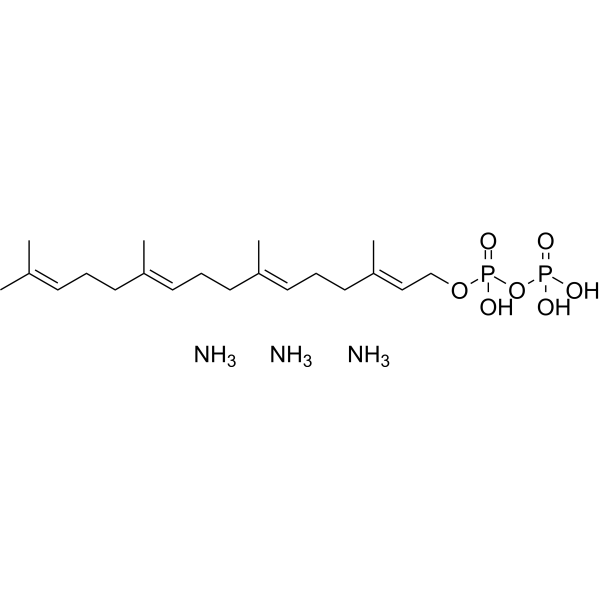
Geranylgeranyl pyrophosphate triammonium is a type of isoprenoid metabolic intermediate, mainly synthesized through the mevalonate pathway. Geranylgeranyl pyrophosphate triammonium is a key precursor in various biological synthesis processes, especially as a necessary substrate for post-translational modification of proteins - geranylgeranyl phosphorylation. Geranylgeranyl pyrophosphate triammonium regulates various cellular processes and disease progression through protein geranylgeranyl phosphorylation, such as activating the YAP signaling pathway, promoting cell proliferation and inhibiting apoptosis; promoting IL-2 production and STAT5 phosphorylation; and influencing metabolic homeostasis and cancer, etc .
loading...
    loading...
Cat. No.: HY-134902
CAS No.: 537039-67-1
Synonyms: UDP-α-6N3-glucose; 6-Azidoglucose-UDP
UDP-6-azido-6-Deoxy-D-Glc (UDP-α-6N3-glucose; 6-Azidoglucose-UDP) is a UDP-sugar donor . UDP-6-azido-6-Deoxy-D-Glc is used for the selective labeling of 5-hmC in genomic DNA. UDP-6-azido-6-Deoxy-D-Glc enables glyco-diversification modification of saponin intermediates and click chemistry-based derivatization .
loading...
    loading...
Cat. No.: HY-145746
CAS No.: 1782950-80-4
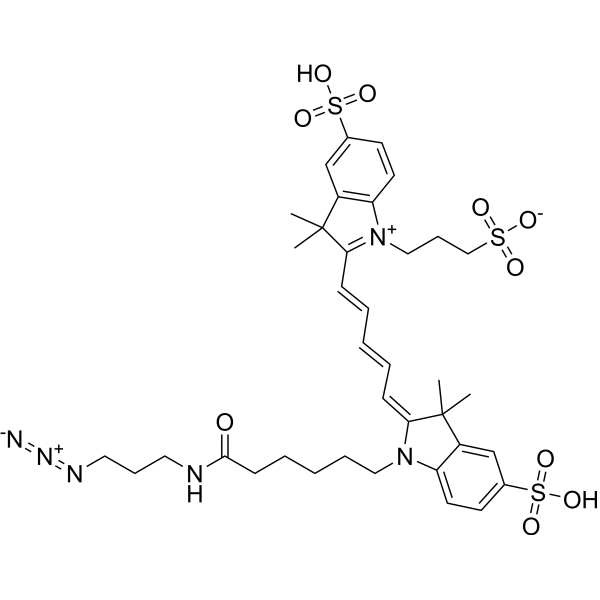
Sulfo-Cy5 azide is a near-infrared fluorescent probe with favorable click chemistry reactivity. Sulfo-Cy5 azide enables fluorescence imaging, tissue and cellular visualization of PD-L1 in tumors, and site-specific modification of anti-PD-L1 antibodies. Sulfo-Cy5 azide has been employed for RNA labeling and imaging. Sulfo-Cy5 azide can be conjugated to targeting agents for fluorescence imaging in atherosclerosis and breast cancer models (Ex/Em = 645/670 nm) .
loading...
    loading...
Cat. No.: HY-151823
CAS No.: 2576471-56-0
Target:  

ADC Linkers

Research Areas:  

Others

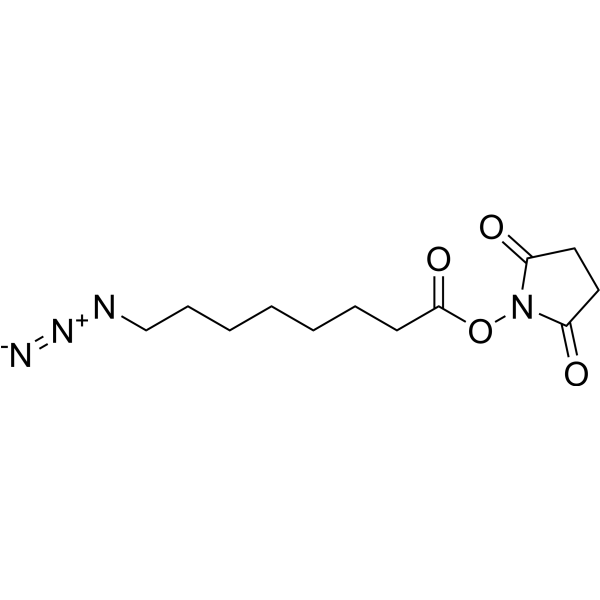
8-Azido-octanoyl-OSu is a click chemistry reagent containing an azide group. Used as a building block to introduce 8-azidooctanoic acid (CAS 217180-76-2) fragment. This fragment is used for further modifications using Click-chemistry (CuAAC), as a protected aminogroup or is used in physico-chemical investigations . It contains an azide group and can undergo copper-catalyzed azide-alkyne cycloaddition (CuAAc) with molecules containing alkyne groups. It can also undergo ring strain-promoted alkyne-azide cycloaddition (SPAAC) with molecules containing DBCO or BCN groups.
loading...
    loading...
Cat. No.: HY-155924
CAS No.: 474922-82-2
Synonyms: 14:0 PEG350 PE ammonium; 1,2-Dimyristoyl-sn-glycero-3-phosphoethanolamine-N-[methoxy(polyethylene glycol)-350] ammonium
Target:  

Liposome

Research Areas:  

Others

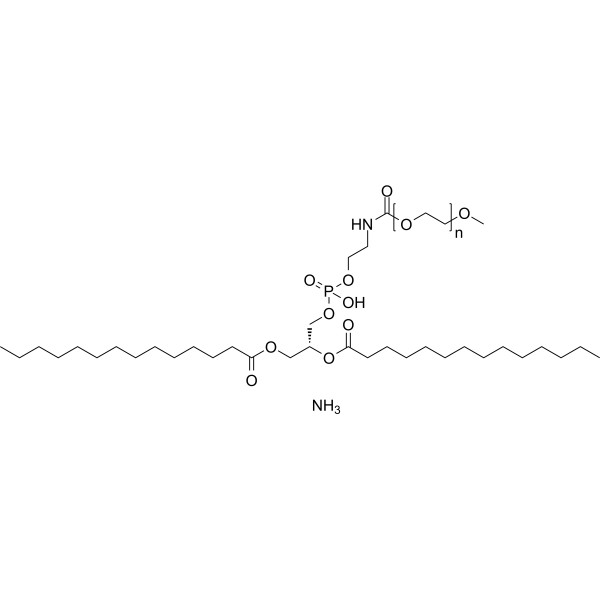
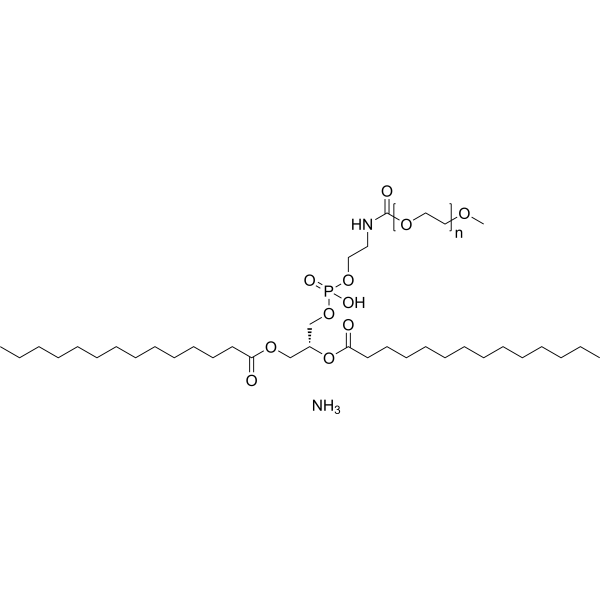
DMPE-PEG350 ammonium (14:0 PEG350 PE ammonium) is a PEG lipid functional end group used in the synthesis of liposomes (LPs) for the design of conjugated polymer nanoparticles. Through biotin modification and carboxyl terminus, lipid nanoparticles (LNPs) further coupling with other biomolecules can be achieved. Functionalized nanoparticles can be used for targeted labeling of specific cellular proteins. With streptavidin as a linker, biotinylated PEG lipid-conjugated polymer nanoparticles are able to bind to biotinylated antibodies on cell surface receptors, yielding the utility of fluorescence-based imaging and sensing.
loading...
    loading...
Cat. No.: HY-155925
CAS No.: 474922-82-2
Synonyms: 14:0 PEG550 PE ammonium; 1,2-Dimyristoyl-sn-glycero-3-phosphoethanolamine-N-[methoxy(polyethylene glycol)-550] ammonium
Target:  

Liposome

Research Areas:  

Others

DMPE-PEG550 ammonium (14:0 PEG550 PE ammonium) is a PEG lipid functional end group used in the synthesis of liposomes (LPs) for the design of conjugated polymeric nanoparticles. Through biotin modification and carboxyl terminus, lipid nanoparticles (LNPs) further coupling with other biomolecules can be achieved. Functionalized nanoparticles can be used for targeted labeling of specific cellular proteins. With streptavidin as a linker, biotinylated PEG lipid-conjugated polymer nanoparticles are able to bind to biotinylated antibodies on cell surface receptors, yielding the utility of fluorescence-based imaging and sensing.
loading...
    loading...

