10028 Results for "

pyroglutamate modification

" in MedChemExpress (MCE) Product Catalog:
Products (10028)

10028 Results for "pyroglutamate modification" in MCE Product Catalog:

2
2 Cited Publications
Cat. No.: HY-13943
CAS No.: 1202759-32-7
Purity:  99.92%
Target:  

Btk

Research Areas:  

Cancer

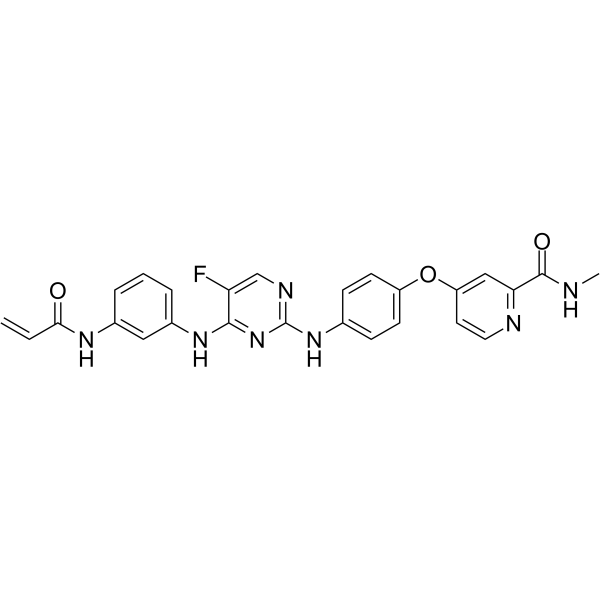
CNX-774 is an orally active, irreversible and selective BTK inhibitor, with an IC50 of < 1 nM. CNX-774 specifically targets Cysteine 481 of Btk for covalent modification .
loading...
    loading...
2
2 Cited Publications
Cat. No.: HY-160415
CAS No.: 3066823-45-5
Target:  

PROTACs METTL3 Apoptosis

Research Areas:  

Cancer

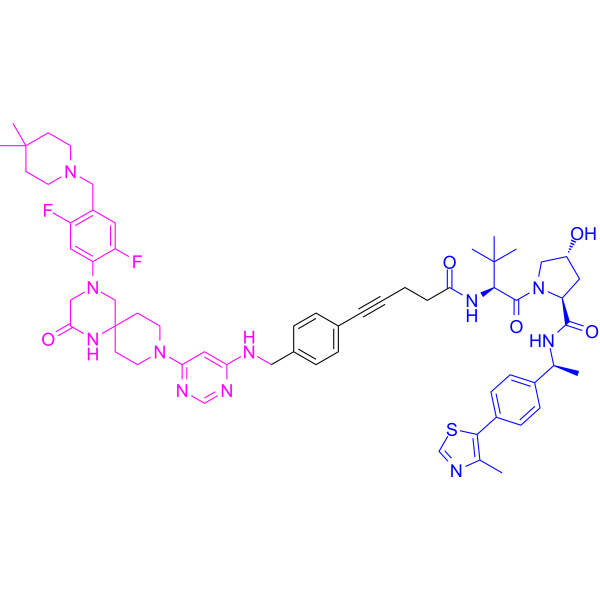
WD6305 is a potent and selective METTL3-METTL14 PROTAC degrader. WD6305 has DC50 values of 140 nM and 194 nM for METTL3 and METTL14, respectively. WD6305 inhibits m 6A modification and proliferation of AML cells, and induces apoptosis.
loading...
    loading...
2
2 Cited Publications
Cat. No.: HY-160415A
Target:  

PROTACs METTL3 Apoptosis

Research Areas:  

Cancer

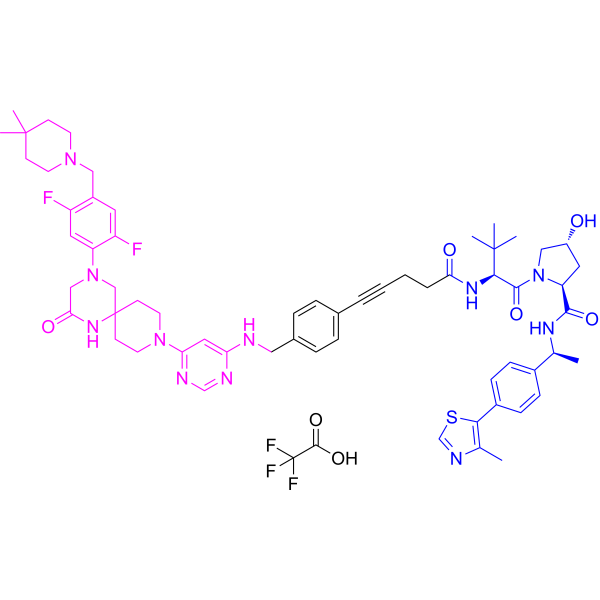
WD6305 TFA is a potent and selective METTL3-METTL14 PROTAC degrader. WD6305 TFA has DC50 values of 140 nM and 194 nM for METTL3 and METTL14, respectively. WD6305 TFA inhibits m 6A modification and proliferation of AML cells, and induces apoptosis. WD6305 TFA has antitumor activity .
loading...
    loading...
2
2 Cited Publications
Cat. No.: HY-N0086R
CAS No.: 1867-73-8
Synonyms: 6-Methyladenosine (Standard); N-Methyladenosine (Standard)
N6-Methyladenosine (Standard) is the analytical standard of N6-Methyladenosine. This product is intended for research and analytical applications. N6-Methyladenosine is the most prevalent internal (non-cap) modification present in the messenger RNA (mRNA) of all higher eukaryotes. N6-Methyladenosine can modifies viral RNAs and has antiviral activities. In Vitro: N6-methyladenosine (m6A) is selectively recognized by the human YTH domain family 2 (YTHDF2) protein to regulate mRNA degradation. N6-methyladenosine (m6A), a prevalent internal modification in the messenger RNA of all eukaryotes, is post-transcriptionally installed by m6A methyltransferase (e.g., MT-A70) within the consensus sequence of G(m6A)C (70%) or A(m6A)C (30%). N6-methyladenosine (m6A)-containing RNAs are greatly enriched in the YTHDF-bound portion and diminished in the flow-through portion . N6-methyladenosine (m6A), the most abundant internal RNA modification, functions in diverse biological processes, including regulation of embryonic stem cell self-renewal and differentiation. N6-methyladenosine (m6A) is a large protein complex, consisting in part of methyltransferase-like 3 (METTL3) and methyltransferase-like 14 (METTL14) catalytic subunits .
loading...
    loading...
2
2 Cited Publications
Cat. No.: HY-145733
CAS No.: 2247061-09-0
Purity:  99.62%
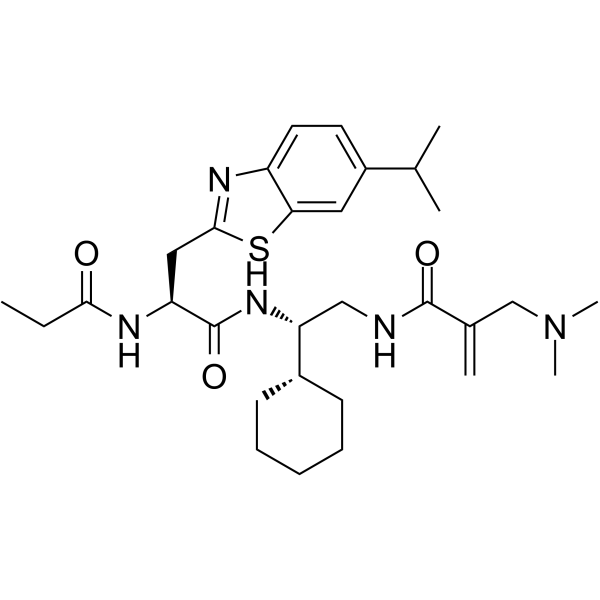
DI-1859 is a DCN1 and cullin 3 inhibitor with a Ki of <1 nM against human DCN1. DI-1859 forms a covalent bond with Cys115 of DCN1, cleaves its dimethylamino group, disrupts the DCN1-UBC12 interaction, and selectively inhibits the neddylation modification of cullin 3 relative to other cullins. DI-1859 inactivates CRL3, promotes the accumulation of NRF2 and SLC7A11, upregulates the expression of HO-1 and NQO1, reduces reactive oxygen species (ROS) levels, enhances insulin signaling, promotes insulin secretion, activates RhoA, regulates the phosphorylation of AKT, without completely blocking the neddylation modification of cullin 3 or restoring the expression of IRS-1. DI-1859 can be used in the research of Acetaminophen (HY-66005)-induced hepatotoxicity, hyperglycemia, metabolic dysfunction-associated steatotic liver disease, insulin resistance, breast cancer and lung cancer .
loading...
    loading...
2
2 Cited Publications
Cat. No.: HY-W008091
CAS No.: 554-01-8
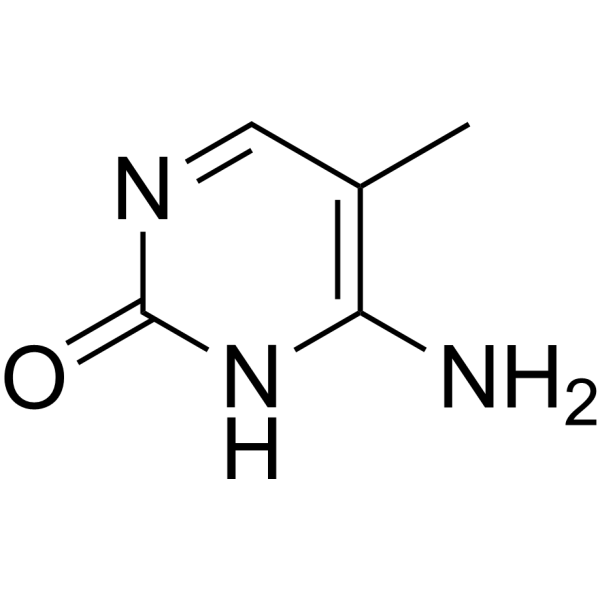
5-Methylcytosine is a well-characterized DNA modification in prokaryotes and eukaryotes. 5-Methylcytosine forms symmetrical methylation on CpG dinucleotides in DNA, stabilizes tRNA/rRNA structure in RNA, and affects mRNA translation. 5-Methylcytosine can be oxidized to generate 5hmC, 5fC, and 5caC. 5-Methylcytosine can be used in epigenetics, developmental biology, and the study of diseases such as colorectal cancer and hepatocellular carcinoma .
loading...
    loading...
2
2 Cited Publications
Cat. No.: HY-W008091A
CAS No.: 58366-64-6
Research Areas:  

Cancer

5-Methylcytosine hydrochloride is a well-characterized DNA modification in prokaryotes and eukaryotes. 5-Methylcytosine hydrochloride forms symmetrical methylation on CpG dinucleotides in DNA, stabilizes tRNA/rRNA structure in RNA, and affects mRNA translation. 5-Methylcytosine hydrochloride can be oxidized to generate 5hmC, 5fC, and 5caC. 5-Methylcytosine hydrochloride can be used in epigenetics, developmental biology, and the study of diseases such as colorectal cancer and hepatocellular carcinoma .
loading...
    loading...
2
2 Cited Publications
Cat. No.: HY-Y1168
CAS No.: 3945-69-5
Synonyms: 4-(4,6-Dimethoxy-1,3,5-triazin-2-yl)-4-methylmorpholinium chloride
DMTMM (4-(4,6-dimethoxy-1,3,5-triazine-2-yl)-4-methylmorpholinium chloride) is a coupling agent. DMTMM can activate carboxyl groups and promote the formation of amide bonds. DMTMM plays an important role in promoting the chemical modification of biomacromolecules such as polysaccharides and proteins. DMTMM can be used for research of tissue engineering, breast cancer, corneal regeneration, and biomaterials .
loading...
    loading...
1
1 Cited Publications
Cat. No.: HY-N10574
CAS No.: 72496-59-4
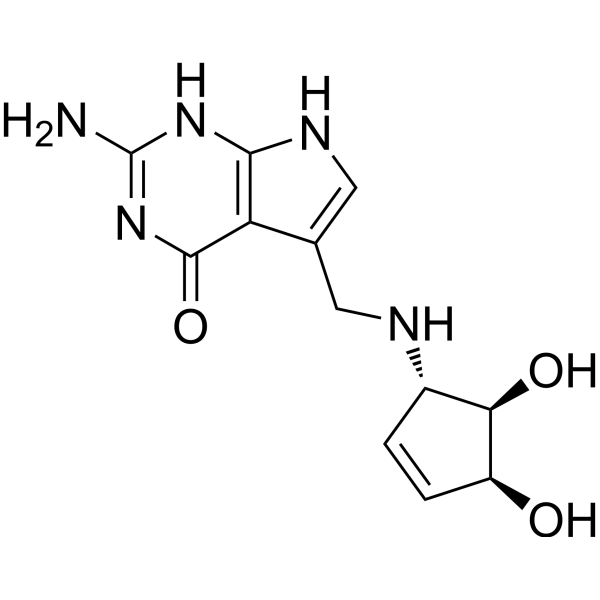
Queuine is a selective substrate for tRNA guanine transglycosylase (TGT) and can be incorporated into eukaryotic tRNA. Queuine promotes tRNA modification, affecting mitochondrial function and Warburg metabolic phenotype. If Queuine is deficient, aerobic glycolysis can be enhanced, oxidative phosphorylation can be inhibited, and Warburg metabolism can be promoted, accompanied by increased ammonia and lactate production and increased lactate dehydrogenase activity. Queuine can be used for autoimmune diseases (such as experimental models of multiple sclerosis) and cancer metabolic regulation, and its deficiency is associated with low tRNA modification in tumor cells .
loading...
    loading...
1
1 Cited Publications
Cat. No.: HY-N10574A
CAS No.: 86496-18-6
Queuine dihydrochloride is a selective substrate for tRNA guanine transglycosylase (TGT) and can be incorporated into eukaryotic tRNA. Queuine dihydrochloride promotes tRNA modification, affecting mitochondrial function and Warburg metabolic phenotype. If Queuine dihydrochloride is deficient, aerobic glycolysis can be enhanced, oxidative phosphorylation can be inhibited, and Warburg metabolism can be promoted, accompanied by increased ammonia and lactate production and increased lactate dehydrogenase activity. Queuine dihydrochloride can be used for autoimmune diseases (such as experimental models of multiple sclerosis) and cancer metabolic regulation, and its deficiency is associated with low tRNA modification in tumor cells .
loading...
    loading...
1
1 Cited Publications
Cat. No.: HY-121539
CAS No.: 70351-51-8
Purity:  98.35%
Target:  

TRP Channel

Research Areas:  

Neurological Disease

Supercinnamaldehyde is a potent transient receptor potential ankyrin 1 (TRPA1) activator with an EC50 value of 0.8 μM. Supercinnamaldehyde activates TRPA1 ion channels through covalent modification of cysteines .
loading...
    loading...
1
1 Cited Publications
Cat. No.: HY-W014728
CAS No.: 62-32-8
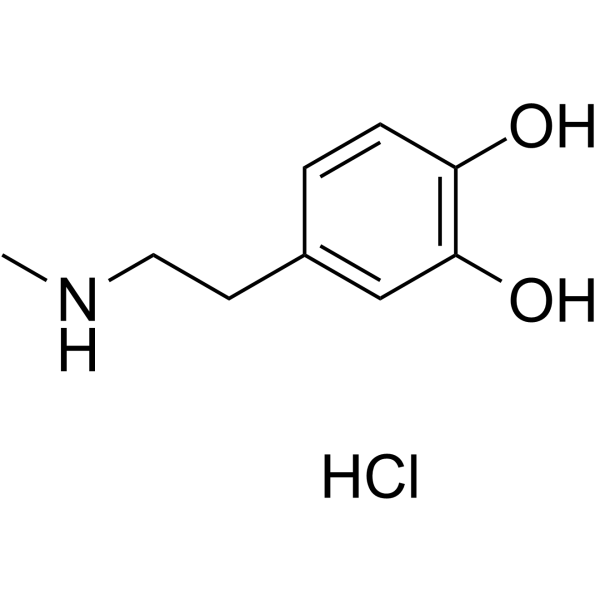
N-Methyldopamine hydrochloride is a precursor of adrenaline in the adrenal medulla. N-Methyldopamine hydrochloride is a modification of the dopamine (DA), and retains agonist activity at the DA1 receptor. N-Methyldopamine hydrochloride remains capable of universal surface coating and secondary reactions using the surface catechols. N-Methyldopamine hydrochloride can be used for heart failure research .
loading...
    loading...
1
1 Cited Publications
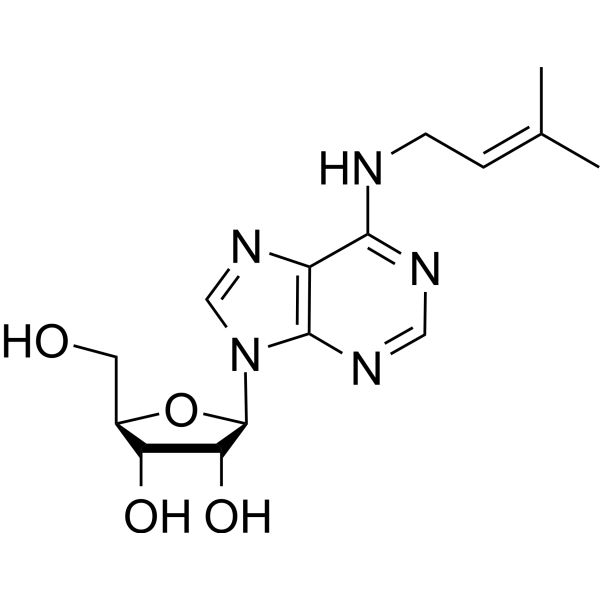
Cat. No.: HY-W011209
CAS No.: 7724-76-7
Synonyms: Riboprine
N6-Isopentenyladenosine (Riboprine), an RNA modification found in cytokinins, which regulate plant growth/differentiation, and a subset of tRNAs, where it improves the efficiency and accuracy of translation. N6-Isopentenyladenosine, an end product of the mevalonate pathway, is an autophagy inhibitor with an interesting anti-melanoma activity .
loading...
    loading...
1
1 Cited Publications
Cat. No.: HY-RI00500
Target:  

MicroRNA

Research Areas:  

Cancer

hsa-miR-27b-3p inhibitors are chemically-modified oligonucleotides that hybridize with mature miRNAs. The miRNA inhibitors have full-length nucleotide 2'-methoxy modification. The miRNA inhibitors strongly compete with mature miRNAs to prevent the complementary pairing of miRNAs and their target genes, thereby inhibiting miRNAs from functioning.
loading...
    loading...
1
1 Cited Publications
Cat. No.: HY-160638
CAS No.: 73768-68-0
Target:  

TET Protein

Research Areas:  

Cancer

NSC-311068 is TET1 inhibitor. NSC-311068 selectively suppress TET1 transcription and 5-hydroxymethylcytosine (5hmC) modification. NSC-311068 represses the level of TET1 expression and the global 5hmC level. NSC-311068 effectively inhibits cell viability in AML cells with high expression of TET1 .
loading...
    loading...
1
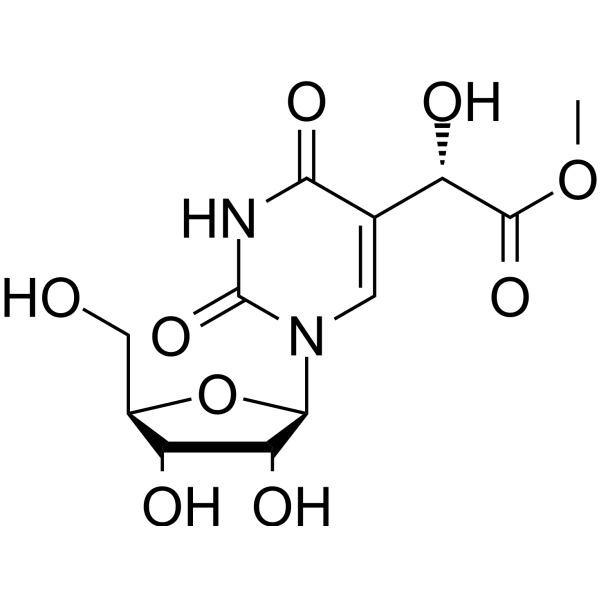
1 Cited Publications
Cat. No.: HY-153100A
CAS No.: 89665-83-8
Purity:  98.87%
Target:  

Others

Research Areas:  

Others

(S)-mchm5U is a hydroxylated form of mcm5U, may be present in tRNA from the silkworm Bombyx mori. (S)-mchm5U may be present also in mammalian tRNA, and that the ALKBH8 oxygenase could be responsible for its formation. (S)-mchm5U can be used for RNA modification synthesis .
loading...
    loading...
1
1 Cited Publications
Cat. No.: HY-153084A
Target:  

mRNA CD19

Research Areas:  

Cancer

CD19 CAR mRNA (Human) expresses CAR protein that specifically targets human CD19. CD19 CAR mRNA can trigger transitory expression of CAR, allowing T cells to be targeted without permanent genetic modification. CD19 CAR mRNA targets CD19 which is a transmembrane glycoprotein primarily expressed on B lymphocytes and is important in B cell activation. CD19 CAR mRNA can be studied in cancer research such as lymphoma and leukemia .
loading...
    loading...
1
1 Cited Publications
Cat. No.: HY-P10387
Research Areas:  

Cancer

RSM3 is a METTL3-METTL14 complex inhibitor with a Kd of 3.10 μM for the METTL3-METTL14 complex. RSM3 reduces the m 6A modification level of SLC31A1 and the global RNA methylation level. RSM3 upregulates programmed cell death-related genes, enhances cell apoptosis, inhibits pro-cancer signals and suppresses tumor growth. RSM3 is applicable to the research of preeclampsia and cancer .
loading...
    loading...
1
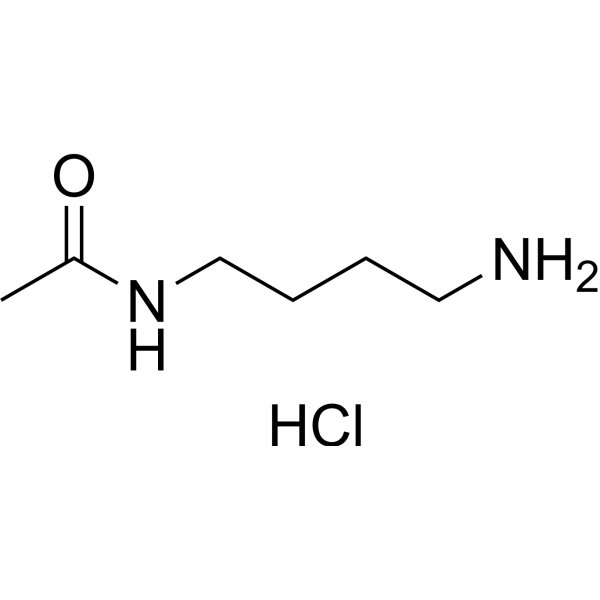
1 Cited Publications
Cat. No.: HY-113100
CAS No.: 18233-70-0
Purity:  ≥99.0%
N-Acetylputrescine hydrochloride is a polyamine metabolite that regulates cell proliferation and signal transduction mainly by participating in polyamine acetylation modification. N-Acetylputrescine hydrochloride may reduce the positive charge of polyamines, affect protein-nucleic acid interactions, and promote cell growth. The concentration changes of N-Acetylputrescine hydrochloride can help disease diagnosis (such as early screening and efficacy evaluation of lung cancer) and microbial cell wall structure research. N-Acetylputrescine hydrochloride can be used as a potential biomarker for the progression of squamous cell carcinoma of the lung (SCCL) and Parkinson's disease (PD) .
loading...
    loading...
1
1 Cited Publications
Cat. No.: HY-P10387A
Target:  

METTL3 Apoptosis

Research Areas:  

Cancer

RSM3 TFA is a METTL3-METTL14 complex inhibitor with a Kd of 3.10 μM for the METTL3-METTL14 complex. RSM3 TFA reduces the m 6A modification level of SLC31A1 and the global RNA methylation level. RSM3 TFA upregulates programmed cell death-related genes, enhances cell apoptosis, inhibits pro-cancer signals and suppresses tumor growth. RSM3 TFA is applicable to the research of preeclampsia and cancer .
loading...
    loading...

