134 Results for "

GLUTs

" in MedChemExpress (MCE) Product Catalog:
Products (134)

134 Results for "GLUTs" in MCE Product Catalog:

Cat. No.: HY-D3410
CAS No.: 2991899-29-5
CDr17 is a GLUT1 substrate and selective fluorescent dye staining M1 microphages. CDr17 utilizes the Gating-Oriented Live-cell Distinction (GOLD) mechanism to enter M1 macrophages (Ex/Em = 646/662 nm) .
loading...
    loading...
Cat. No.: HY-D3311
M1219 is a GSH/ATP dual near-infrared activated fluorescent probe that enables independent real-time monitoring of dynamic changes in intracellular GSH and ATP without spectral crosstalk (GSH: Ex=640 nm, Em=740~800 nm; ATP: Ex=594 nm/610 nm, Em=650~700 nm). M1219 not only visualizes the metabolic regulatory mechanism of TNBC under single/dual-target inhibition of SLC7A11/GLUT1 and accurately evaluates its in vivo efficacy, but also achieves precise localization of the TNBC tumor invasion boundary. M1219 can be used for the research of triple-negative breast cancer .
loading...
    loading...
Cat. No.: HY-N17773
CAS No.: 491-79-2
Hydrangeic acid is an orally effective stilbene-type glycolipid metabolism regulator that lowers blood glucose and lipids. It can be isolated from processed leaves of Hydrangea macrophylla var. thunbergii. Hydrangeic acid is associated with glycolipid metabolism and insulin sensitivity regulation. Hydrangeic acid does not directly activate PPARγ or PPARα, but instead upregulates the mRNA expression of adiponectin, PPARγ2, GLUT4, and fatty acid-binding protein aP2, and downregulates TNF-α mRNA expression, promoting adipogenesis, glucose uptake, and GLUT4 translocation in 3T3-L1 cells. Simultaneously, Hydrangeic acid inhibits inflammatory factor-induced NO production, exerting activity in improving insulin resistance. Hydrangeic acid can be used in research related to type 2 diabetes and does not cause liver weight gain as a side effect.
loading...
    loading...
Cat. No.: HY-129165
CAS No.: 618361-63-0
Target:  

Pyruvate Kinase GLUT

Research Areas:  

Cancer

ZINC08383544 is a PKM2 activator with anti-tumor activity. ZINC08383544 binds to the dimer-dimer interface of PKM2, promotes tetramer formation, blocks nuclear translocation, inhibits the expression of glycolysis-related genes such as GLUT1, and reduces T cell-mediated inflammatory responses. ZINC08383544 can be used in cancer-related research such as cervical cancer .
loading...
    loading...
Cat. No.: HY-13753R
CAS No.: 18883-66-4
Synonyms: Streptozocin (Standard); NSC-85998 (Standard); U 9889 (Standard)
Streptozotocin (Standard) is the analytical standard of Streptozotocin (HY-13753). This product is intended for research and analytical applications. Streptozotocin (Streptozocin; STZ) is an antibiotic widely used in experimental animal models of induced diabetes. Streptozotocin enters B cells via the glucose transporter (GLUT2) and causes the alkylation of DNA ( DNA-methylating ). Streptozotocin can induce the apoptosis of β cells .
loading...
    loading...
Cat. No.: HY-137677
CAS No.: 37589-80-3
Synonyms: Guanosine 5'-[γ-thio]triphosphate
Target:  

GLUT

Research Areas:  

Metabolic Disease

GTPγS (Guanosine 5'-[γ-thio]triphosphate) is a G-protein activator that protects proteins from proteolytic degradation, stimulates GLUT4 translocation in a tyrosine kinase-dependent manner, stimulate phospholipases and induce actin polymerization. GTPγS to couple with G- protein α, to study its effect on kinase activity. GTPγS acts as a component of lysis buffer .
loading...
    loading...
Cat. No.: HY-184703
Target:  

GLUT AMPK

Research Areas:  

Metabolic Disease

Antidiabetic agent 9 is an orally active antidiabetic agent. Antidiabetic agent 9 promotes the translocation of GLUT4 to the cell surface, activates the AMPK signaling pathway, and has no effect on the PI-3-K/AKT signaling pathway. Antidiabetic agent 9 reduces blood glucose levels in Streptozotocin (HY-13753)-induced diabetic rats. Antidiabetic agent 9 can be used in the research of diabetes .
loading...
    loading...
Cat. No.: HY-182250
CAS No.: 2505339-87-5
Target:  

FAP ERK GLUT

BR103354 is an orally active, selective fibroblast activation protein (FAP) inhibitor with an IC50 value of 14 nM against hFAP. BR103354 restores the levels of phosphorylated ERK and Glut1 that are reduced by co-treatment with hFGF21 and FAP, decreases non-fasting blood glucose concentrations, improves glucose tolerance, and reduces hepatic triglyceride content. BR103354 ameliorates hepatic steatosis and hepatic fibrosis. BR103354 can be used in the research of type 2 diabetes and non-alcoholic steatohepatitis .
loading...
    loading...
Cat. No.: HY-180784
Hypoglycemic agent 4 (Compound 5b) is a tetrahydroacridine derivative with orally active hypoglycemic activity. Hypoglycemic agent 4 has a good binding affinity for the key diabetic targets: DPP-IV, SGLT1, and GLUT2. Hypoglycemic agent 4 can inhibit glucose diffusion. Hypoglycemic agent 4 can reduce fasting blood sugar in Streptozotocin (HY-13753)-induced diabetic rats and its effect is comparable to Gliclazide (HY-B0753). Hypoglycemic agent 4 can be used for research of type 2 diabetes .
loading...
    loading...
Cat. No.: HY-182000
CAS No.: 3055112-52-9
Xanthine oxidase-IN-23 (Compound BPF) is an orally active, reversible, mixed-type Xanthine oxidase inhibitor with an IC50 of 3.33 μM. Xanthine oxidase-IN-23 directly binds to XOD in a reversible mixed-type manner to inhibit its catalytic activity. Xanthine oxidase-IN-23 upregulates ABCG2 and downregulates GLUT9 to promote renal urate excretion. Xanthine oxidase-IN-23 reduces serum urate levels and improves renal function in hyperuricemic mice. Xanthine oxidase-IN-23 can be used in the research of hyperuricemia .
loading...
    loading...
Cat. No.: HY-N6936
CAS No.: 641-12-3
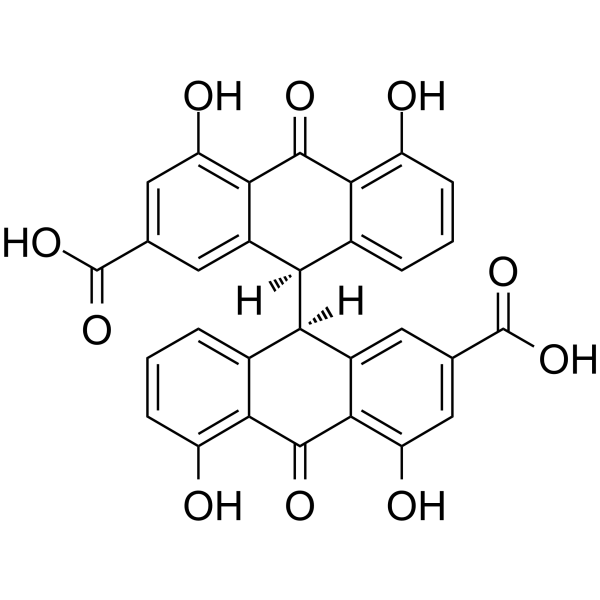
Sennidin A is an anthraquinone derivative and a HCV NS3 helicase inhibitor with an IC50 of 0.8 μM against HCV NS3 helicase. Sennidin A induces Akt phosphorylation at Ser-473 and Thr-308 and promotes GLUT4 translocation to the plasma membrane. Sennidin A inhibits HCV replication. Sennidin A stimulates glucose incorporation and 2-Deoxyglucose uptake in cells. Sennidin A does not induce tyrosine phosphorylation of the insulin receptor or insulin receptor substrate-1. Sennidin A can be used for research on type 2 diabetes and hepatitis C .
loading...
    loading...
Cat. No.: HY-W010736R
CAS No.: 30334-71-5
1,2-Dipalmitoyl-sn-glycerol (Standard) is the analytical standard of 1,2-Dipalmitoyl-sn-glycerol (HY-W010736). This product is intended for research and analytical applications. 1,2-Dipalmitoyl-sn-glycerol is a diacylglycerol that activates PKC. 1,2-Dipalmitoyl-sn-glycerol promotes GLUT4 translocation to the cell surface and recruitment to the plasma membrane of adipocytes. 1,2-Dipalmitoyl-sn-glycerol can be used in research on type 2 diabetes .
loading...
    loading...
Cat. No.: HY-123986R
CAS No.: 68003-38-3
CTPI-2 (Standard) is the analytical standard of CTPI-2 (HY-123986). This product is intended for research and analytical applications. CTPI-2 is a third-generation mitochondrial citrate carrier SLC25A1 inhibitor with a KD of 3.5 μM. CTPI-2 inhibits glycolysis, PPARγ, and its downstream target the glucose transporter GLUT4. CTPI-2 halts salient alterations of NASH reverting steatosis, preventing the evolution to steatohepatitis, reducing inflammatory macrophage infiltration in the liver and adipose tissue, and starkly mitigating obesity induced by a high-fat diet. Antitumor activity .
loading...
    loading...
Cat. No.: HY-128447R
CAS No.: 10152-76-8
Allyl methyl sulfide (Standard) is the analytical standard of Allyl methyl sulfide (HY-128447). This product is intended for research and analytical applications. Allyl methyl sulfide is an orally active organic sulfide. Allyl methyl sulfide is one of the main active ingredients in garlic volatile metabolites. Allyl methyl sulfide can be extracted from garlic. Allyl methyl sulfide enhances SOD activity, inhibits NF-κB signaling pathway, and upregulates pancreatic GLUT2 expression. Allyl methyl sulfide has significant antioxidant, anti-inflammatory and hypoglycemic activities. Allyl methyl sulfide can be used in the research of diabetes and its complications .
loading...
    loading...
Cat. No.: HY-142444
CAS No.: 2647975-06-0
Target:  

VAP-1

Research Areas:  

Metabolic Disease

SSAO/VAP-1 inhibitor 1 is a potent inhibitor of SSAO/VAP-1. SSAO/VAP-1 promotes the transfer of Glucose transport 4 (GLUT 4) from adipocytes to the cell membrane, thereby regulating glucose transport. In endothelial cells, SSAO/VAP-1 can mediate the adhesion and exudation of leukocytes and endothelial cells, and participate in inflammatory responses. SSAO/VAP-1 inhibitor 1 has the potential for the research of inflammation and/or inflammation-related disease or diabetes and/or diabetes-related disease (extracted from patent WO2021102774A1, compound E3) .
loading...
    loading...
Cat. No.: HY-N0755R
CAS No.: 17306-46-6
Rhoifolin (Standard) is the analytical standard of Rhoifolin. This product is intended for research and analytical applications. Rhoifolin is a flavone glycoside can be isolated from Rhus succedanea. Rhoifolin has anti-diabetic effect acting through enhanced adiponectin secretion, tyrosine phosphorylation of insulin receptor-β and glucose transporter 4 (GLUT 4) translocation. Rhoifolin has an anti-inflammatory action via multi-level regulation of inflammatory mediators. Rhoifolin ameliorates titanium particle-stimulated osteolysis and attenuates osteoclastogenesis via RANKL-induced NF-κB and MAPK pathways. Rhoifolin also has cytotoxic activity against different cancer cell lines .
loading...
    loading...
Cat. No.: HY-177903
CAS No.: 2003231-25-0
Research Areas:  

Cancer

Triptolide-6-succinate-β-D-glucose (Compound 2) is a glucose-conjugated derivative of Triptolide (HY-32735). Triptolide-6-succinate-β-D-glucose is a tumor-selective prodrug targeting glucose transporters ( GLUT). Triptolide-6-succinate-β-D-glucose can induce the degradation of the RPB subunit of RNA polymerase II. Triptolide-6-succinate-β-D-glucose inhibits the proliferation of HEK293T cells with an IC50 value of 268 nM. Triptolide-6-succinate-β-D-glucose can be used for the research of cancer, such as prostatic cancer .
loading...
    loading...
Cat. No.: HY-178447
PPARγ agonist 20 is a potent, orally active PPAR-γ agonist. PPARγ agonist 20 effectively increases antioxidant defenses (SOD, GSH) and reduces lipid peroxidation. PPARγ agonist 20 can upregulate of Pparg, Glut4, and AdipoQ, suppresses of TNF-α, IL-6, and NF-κB p65. PPARγ agonist 20 significantly lowers fasting blood glucose, improving glucose tolerance, and restoring metabolic balance in Streptozotocin (HY-13753)-Nicotinamide (HY-B0150)-induced diabetic rats. PPARγ agonist 20 can be used for the study of type 2 diabetes .
loading...
    loading...
Cat. No.: HY-175767
Research Areas:  

Cancer

PROTAC BRD4 Degrader-39 is a selective targeting Bromodomain protein 4 (BRD4) degrader with an DC50 value of 24.66 nM. PROTAC BRD4 Degrader-39 conjugates BRD PROTAC (ARV-771) (HY-100972) with carbohydrate. PROTAC BRD4 Degrader-39 selectively delivers to tumor cells with high GLUT1 expression, followed by GSH-triggered release of ARV-771 and degrades BRD4. PROTAC BRD4 Degrader-39 can inhibit tumor growth and show no significant toxicity. PROTAC BRD4 Degrader-39 can be used for the research of cancer, such as breast cancer .
loading...
    loading...
Cat. No.: HY-W747548
CAS No.: 116180-17-7
12 (S)-HEPE is an oxidation product of Eicosapentaenoic acid (HY-B0660) . 12 (S)-HEPE activates p38α, GSKβ, CREB, and ERK1/2. 12 (S)-HEPE induces DNA synthesis. 12 (S)-HEPE leads to activation of the PI3K-mTORC2-Akt signaling pathway and translocation of Glut4 to the plasma membrane. 12 (S)-HEPE increases glucose uptake. 12 (S)-HEPE reduces body weight gain in HFD mice. 12 (S)-HEPE can be used in research on colorectal cancer, zymosan-induced peritonitis, diabetes, and obesity .
loading...
    loading...

