1316 Results for "

image

" in MedChemExpress (MCE) Product Catalog:
Products (1316)

1316 Results for "image" in MCE Product Catalog:

Cat. No.: HY-P11932
Research Areas:  

Cancer

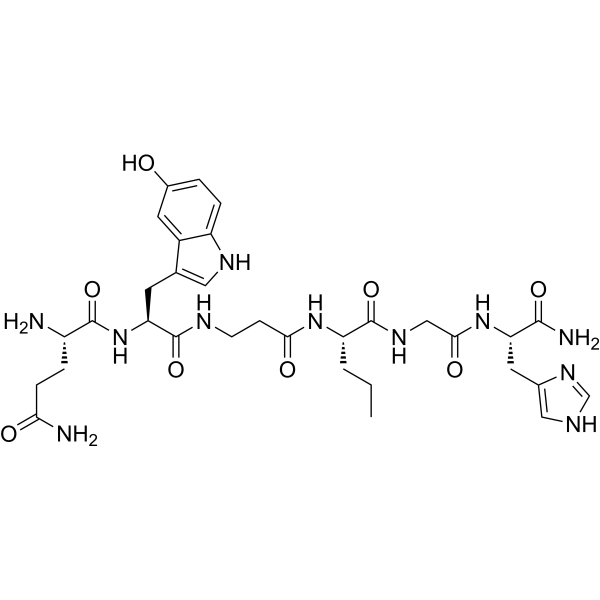
FGLP21 is a polypeptide targeting FGL1. FGLP21 has a simulated binding affinity of -9.56 kcal/mol for FGL1, and inhibits the binding of 68Ga-NODA-FGLP21 to FGL1 in a competitive binding assay using FGL1-positive Huh7 cells, with an IC50 of 101.0 nM. FGLP21 preferentially binds to FGL1-positive Huh7 cells, and excess unlabeled FGLP21 can significantly block the uptake of 68Ga-NODA-FGLP21 in Huh7 xenograft tumors. FGLP21 can be used for FGL1-targeted tumor imaging and immune checkpoint research .
loading...
    loading...
Cat. No.: HY-P5520
CAS No.: 2413262-74-3
GB-6 is a short linear peptide that targets the gastrin releasing peptide receptor (GRPR). GRPR is overexpressed in pancreatic cancer. Based on the tumor selectivity and tumor-specific accumulation properties of GB-6, GB-6 labeled with near infrared (NIR) fluorescent dyes or radionuclide netium-99m (99mTc) can be used as a high-contrast imaging probe. GB-6 has excellent in vivo stability, with tumor to pancreatic and intestinal fluorescence signal ratios of 5.2 and 6.3, respectively, in SW199 0 subcutaneous xenograft models. GB-6 can rapidly target tumors and accurately delineate tumor boundaries, which has broad application prospects .
loading...
    loading...
Cat. No.: HY-P992449
Synonyms: PRLR ADC antibody

Target:  

ADC Antibodies

Research Areas:  

Cancer

REGN2878 (PRLR ADC antibody) is a monoclonal antibody targeting the prolactin receptor (PRLR) and can block prolactin‑mediated activation of PRLR. REGN2878 exhibits an equilibrium dissociation constant (KD) of 1.05 nM and an IC50 of 0.344 nM for human PRLR. REGN2878 can be rapidly internalized and degraded in lysosomes by PRLR‑positive tumor cells, showing antigen‑specific binding and targeted enrichment properties. REGN2878 derivatives can be used as an immunoPET agent for antigen‑specific imaging of PRLR‑related tumors, and can also serve as a component of ADCs to exert anti‑tumor activity in breast cancer xenograft models. REGN2878 can be used in the research of breast cancer and prostate cancer. Isotype Comparison HY-P99001 .
loading...
    loading...
Cat. No.: HY-W738256
CAS No.: 180152-82-3
Synonyms: MDTPA
Research Areas:  

Cancer

Maleimide-DTPA (MDTPA) is a maleimide-functionalized bifunctional chelator that enables site-specific conjugation via a thioether bond to single-domain antibody fragments (sdAb) containing free cysteine, and mediates 111In radiolabeling. DTPA-2Rs15d-HLC, formed by the conjugation of Maleimide-DTPA with anti-HER2 sdAb 2Rs15d-HLC, retains high affinity for HER2 with a Kd of 5.9 nM, and maintains targeting ability to HER2-positive cells and tumors after 111In labeling. Maleimide-DTPA can be used for radiotracer construction, SPECT molecular imaging, and HER2-positive tumor research .
loading...
    loading...
Cat. No.: HY-W800702
CAS No.: 2770422-53-0
BP Fluor 555 Azide is a water-soluble, bright orange-fluorescent dye with excitation ideally suited for the 532 nm or 555 nm laser lines and visualized with TRITC (tetramethylrhodamine) filter sets. BP Fluor 555 conjugates of antibodies, peptides, and proteins are pH insensitive from pH 4 to pH 10. AF 555 conjugates ideally suited for detection of low abundance targets. BP Fluor 555 Azide can be reacted with terminal alkynes via a copper-catalyzed click reaction (CuAAC). It also reacts with strained cyclooctyne via a copper-free “click chemistry” reaction to form a stable triazole and does not require Cu-catalyst or elevated temperatures. The brightness and photostability of this dye are best suited to direct imaging of low-abundance targets.
loading...
    loading...
Cat. No.: HY-Y1091
CAS No.: 923-27-3
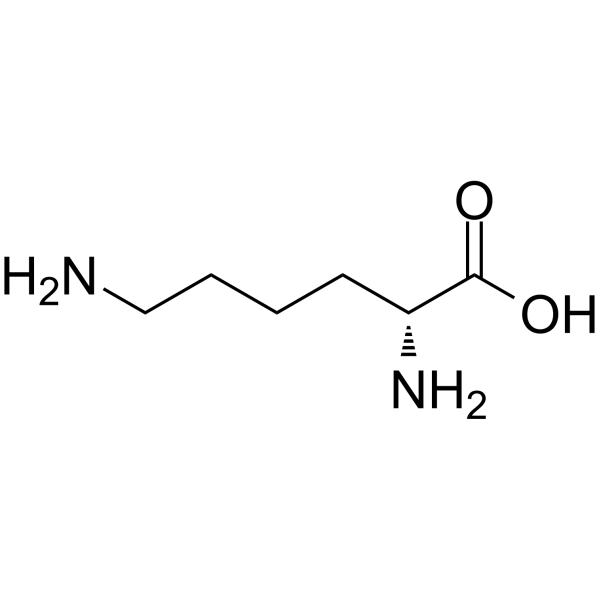
D-Lysine is the D-enantiomer of L-Lysine (HY-N0469). D-Lysine is metabolically inert and not utilized for protein synthesis by mammalian ribosomes. D-Lysine blocks renal uptake of 111In/ 90Y-Octreotide (HY-P0036)-based probes without inhibiting uptake by tumor/receptor tissues, and thus acts as a renoprotective agent in diagnostic imaging and peptide receptor radionuclide therapy (PRRT). D-Lysine specifically inhibits the early steps of non-enzymatic glycation by competing with glucose via its free amino group, theoretically, it can serve as a glycation competitor that "does not interfere with protein synthesis" under chronic hyperglycemia in diabetes. D-Lysine can be used in research related to cancer and diabetes .
loading...
    loading...
Cat. No.: HY-Y1804
CAS No.: 7274-88-6
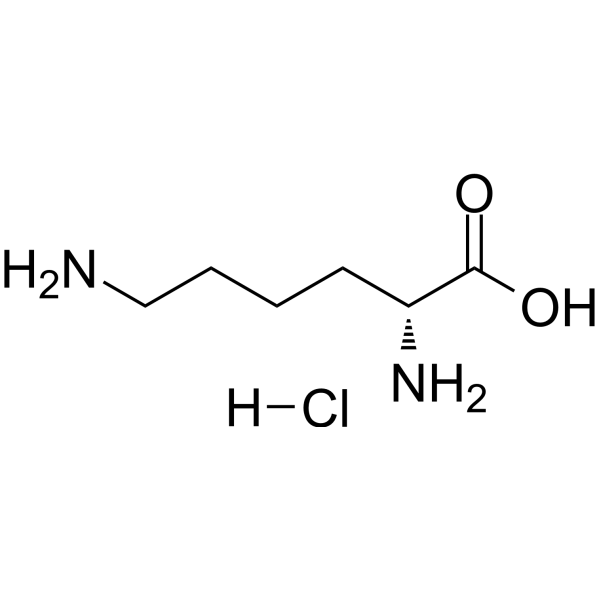
D-Lysine monohydrochloride is the D-enantiomer of L-Lysine (HY-N0469). D-Lysine monohydrochloride is metabolically inert and not utilized for protein synthesis by mammalian ribosomes. D-Lysine monohydrochloride blocks renal uptake of 111In/ 90Y-Octreotide (HY-P0036)-based probes without inhibiting uptake by tumor/receptor tissues, and thus acts as a renoprotective agent in diagnostic imaging and peptide receptor radionuclide therapy (PRRT). D-Lysine monohydrochloride specifically inhibits the early steps of non-enzymatic glycation by competing with glucose via its free amino group, theoretically, it can serve as a glycation competitor that "does not interfere with protein synthesis" under chronic hyperglycemia in diabetes. D-Lysine monohydrochloride can be used in research related to cancer and diabetes .
loading...
    loading...
Cat. No.: HY-123382
CAS No.: 1695551-19-9
Target:  

Drug Isomer

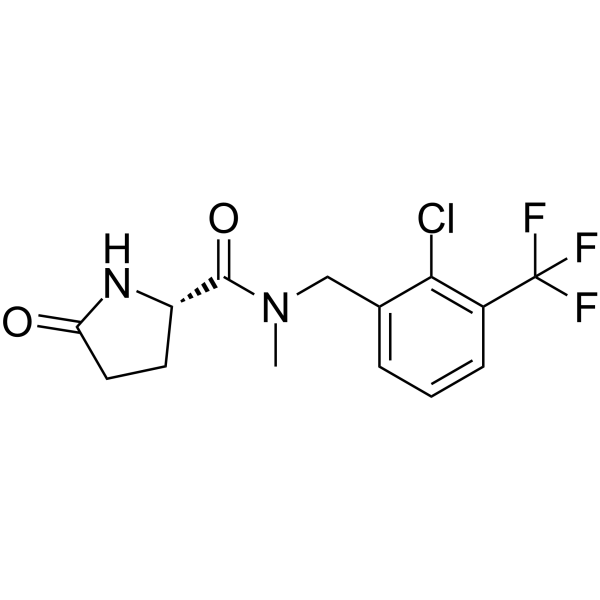
GSK-1482160 isomer is the isomer of GSK-1482160 (HY-19888). GSK-1482160 is an orally active and blood-brain barrier penetrant P2X7 receptor (P2X7R) negative allosteric modulator with pIC50s of 8.5 (human) and 6.5 (rat). GSK-1482160 reduces the efficacy of ATP at the P2X7 receptor without affecting its affinity, thereby inhibiting the release of IL-1β. GSK-1482160 is an effective radioligand and can be labeled with radioactive isotopes like 11C or 18F to image P2X7R. GSK-1482160 can be used for the studies of chronic joint pain and chronic constriction injury (CCI).
loading...
    loading...
Cat. No.: HY-141637S1
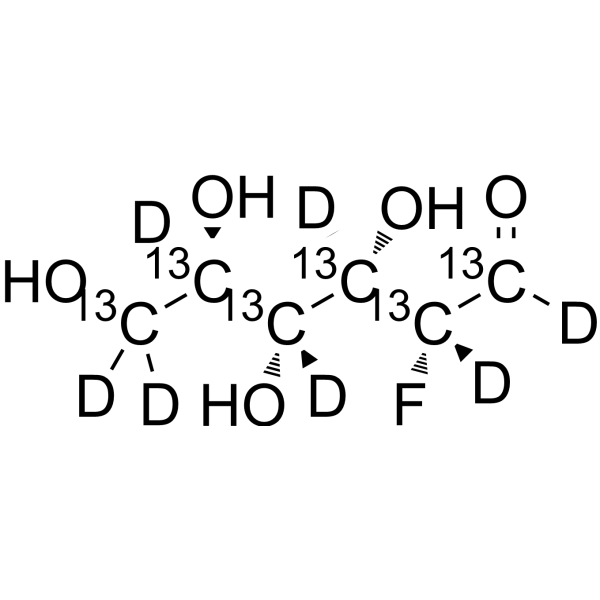
2-Deoxy-2-fluoro-D-glucose- 13C6,d7 is the 13C-labeled and deuterium labeled 2-Deoxy-2-fluoro-D-glucose (HY-141637). 2-Deoxy-2-fluoro-D-glucose (2-Fluoro-2-deoxy-D-glucose) is a glucose analog that can be absorbed by cells. 2-Deoxy-2-fluoro-D-glucose is capable of being labelled with 18F for positron emission tomography (PET) imaging. 18F-2-Deoxy-2-fluoro-D-glucose can be used to detect breast cancer and gastric cancer .
loading...
    loading...
Cat. No.: HY-170779
CAS No.: 3078291-78-5
Target:  

FAP

Research Areas:  

Cancer

DOTA-NI-FAPI-04 is a FAP inhibitor (IC50 = 7.44 nM). By integrating FAP targeting with hypoxia-sensitive groups (nitroimidazole), DOTA-NI-FAPI-04 significantly enhances tumor uptake and retention capabilities. DOTA-NI-FAPI-04 chelates metallic isotopes (such as 68Ga and 177Lu) through DOTA to produce radioactive probes ([68Ga]Ga/DOTA-NI-FAPI-04 and [177Lu]Lu/DOTA-NI-FAPI-04), which can be used for research in tumor diagnostics and therapeutic agents. DOTA-NI-FAPI-04 holds dual targeting potential in the fields of cancer imaging, tumor microenvironment analysis, and radionuclide therapy, particularly suitable for scenarios where the tumor stroma and hypoxic regions synergistically interact .
loading...
    loading...
Cat. No.: HY-179227
Target:  

HDAC

Research Areas:  

Neurological Disease

HDAC6 ligand-7 (Compound 16a) is a positron emission tomography (PET) tracer for the deacetylase 6 (HDAC6) enzyme with a Kd value of 1.66 nM. HDAC6 ligand-7 exhibits excellent HDAC6 inhibitory activity, with IC50 values of 2.7 and 3.7 nM for hHDAC6 and mHDAC6, respectively, and has high selectivity for HDAC1/4/7/8. HDAC6 ligand-7 after being radioactively labeled with fluorine-18, [¹⁸F]HDAC6 ligand-7 shows varying degrees of radioactive uptake in PET, which can reflect the specific binding to HDAC6. HDAC6 ligand-7 can be used for the study of HDAC6 imaging .
loading...
    loading...
Cat. No.: HY-184626
Thiol-modified magnetite nanoparticles are prepared via high-temperature pyrolysis and surface-modified with thiol functional groups. Magnetite is widely used in magnetic resonance imaging, magnetic separation, targeted drug delivery, tumor hyperthermia, cell labeling and separation, as a contrast agent, and in retinal detachment repair surgery due to its stable properties, good biocompatibility, high strength, and lack of toxicity. It is also used as a catalyst carrier, microwave absorbing material, and magnetic recording material. Xianfeng has developed numerous derivatives of magnetite, including oleic acid-modified magnetite, magnetite with different PEG ends, DMSA-modified magnetite, polylysine-modified magnetite, carboxylated dextran-modified magnetite nanoparticles, streptavidin-modified magnetite particles, thiol-modified magnetite magnetic nanoparticles, and polyethyleneimine (PEI)-modified magnetic magnetite nanoparticles, among others.
loading...
    loading...
Cat. No.: HY-D1320
CAS No.: 1267539-32-1
Target:  

Fluorescent Dye

Research Areas:  

Others

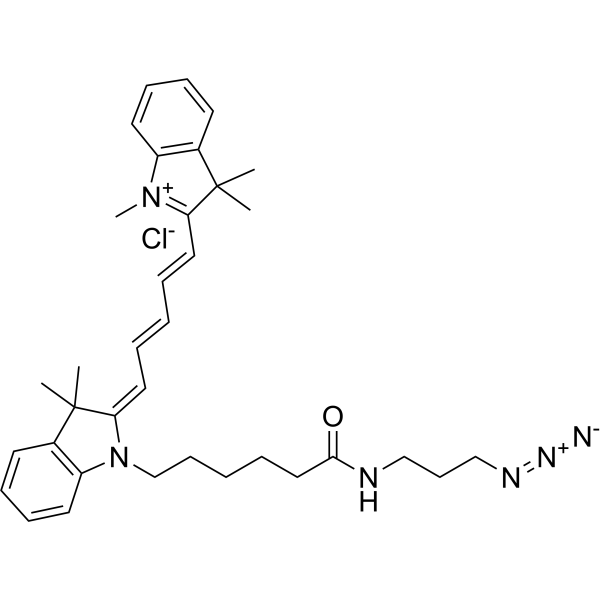
Cyanine5 azide chloride is a Fluorescent probe for cell-selective bacterial protein labeling, as well as a fluorescent dye for single-molecule imaging and dynamic tracking of intracellular organelles. Cyanine5 azide chloride can conjugate with the alkynyl side chain of propargylglycine incorporated into bacterial proteins by the engineered methionyl-tRNA synthetase variant PraRS via copper (I)-catalyzed azide-alkyne [3+2] cycloaddition reaction, thereby enabling in-gel fluorescent visualization of labeled proteins. Cyanine5 azide chloride can diffuse across cell membranes and undergo copper-free click reaction with DBCO-functionalized scAVD pre-bound to DBCO-functionalized biotin, forming fluorescent nanoprobes with enhanced brightness, photostability and localization accuracy, and exhibiting discrete photobleaching steps. The excitation wavelength of Cyanine5 azide chloride is Ex = 633 nm .
loading...
    loading...
Cat. No.: HY-D2763
CAS No.: 890928-51-5
BP Fluor 532 maleimide is a photostable, bright yellow-fluorescent dye with pH insensitive emission from pH 4 to pH 10. The excitation of BP Fluor 532 is ideally suited for the frequency-doubled Nd:YAG laser line. BP Fluor 532 dye can be conjugated to a variety of antibodies, peptides, proteins, tracers, and amplification substrates, and is often used for the generation of stable signals in imaging and flow cytometry. Maleimide is the most popular sulfhydryl-reactive group for conjugating the dye to a thiol group on a protein, oligonucleotide thiophosphate, or low molecular weight ligand. The maleimide group specifically and efficiently reacts with reduced thiols (sulfhydryl groups, –SH) at pH 6.5 to 7.5 to form a stable thioether bond. The resulting conjugates exhibit brighter fluorescence and greater photostability than the conjugates of many other spectrally similar fluorophores.
loading...
    loading...
Cat. No.: HY-D3067
Target:  

Fluorescent Dye

Research Areas:  

Metabolic Disease Cancer

ASSI-Leu is a novel AIE fluorescent probe based on an asymmetric tetraaryl imidazole skeleton, which can be used for ratiometric imaging detection of endogenous leucine aminopeptidase. ASSI-Leu contains an L-leucine-based recognition group that blocks the excited-state intramolecular proton transfer (ESIPT) in its 2-(2'-hydroxyphenyl) benzothiazole (HBT) skeleton, thereby generating an enol-form emission signal at Ex/Em = 365/417 nm. ASSI-Leu undergoes cleavage of the L-leucine group mediated by LAP to form ASSI-OH, which further activates aggregation-induced emission (AIE) and ESIPT, generating a keto-form emission signal at Ex/Em = 365/554 nm and producing a ratiometric fluorescent signal. ASSI-Leu enables real-time tracking of LAP in cancer cells and zebrafish models .\n
loading...
    loading...
Cat. No.: HY-D3073
CAS No.: 2477607-64-8
Target:  

Fluorescent Dye

Research Areas:  

Others

DXB-NIR is a push-pull dioxaboron fluorescent probe with solvatochromic properties, featuring high fluorescence brightness, photostability, and a large two-photon absorption cross-section. DXB-NIR exhibits Ex/Em of 550/620–780 nm (with two-photon excitation at 930 nm). DXB-NIR quantifies local polarity via the intensity ratio I (>640)/I (<640) between the far-red channel (<640 nm) and the near-infrared channel (>640 nm), and it can simultaneously label the plasma membrane, endoplasmic reticulum, and lipid droplets in live cells. DXB-NIR monitors the increase in local polarity of various cell compartments under conditions of cholesterol depletion, starvation, and oxidative stress. DXB-NIR can be used for polarity imaging of biological membranes and lipid droplets, as well as studies related to cellular stress .
loading...
    loading...
Cat. No.: HY-D3186
CAS No.: 2163840-29-5
HMRef-βGal is a fluorescent probe and a substrate responsive to β-galactosidase (β-galactosidase) (Ex/Em=498 nm/505-600 nm). After being cleaved by β-galactosidase, HMRef-βGal triggers significant fluorescence enhancement via intramolecular spirocyclic function regulation. HMRef-βGal generates bright fluorescence in cancer cells with elevated β-galactosidase activity, enabling visualization of tiny peritoneal metastases in mouse models. HMRef-βGal exhibits low in vitro cytotoxicity and low acute in vivo toxicity in mice. HMRef-βGal can be used for preclinical fluorescence-guided diagnosis and cytoreductive surgery of peritoneal metastases, including compatibility with real-time naked-eye detection and endoscopic imaging, as well as for studies related to peritoneal metastases of ovarian cancer .
loading...
    loading...
Cat. No.: HY-D3377
CAS No.: 1616953-95-7
Synonyms: LysoRhoNox
Target:  

Fluorescent Dye

Research Areas:  

Others

HMRhoNox-M (LysoRhoNox) is a selective fluorescent probe for detecting Fe 2+ (ferrous iron ions), with excitation/emission wavelengths of Ex/Em = 550/575 nm. HMRhoNox-M exists in a non-fluorescent spirocyclic closed conformation under physiological pH conditions. Fe 2+ triggers the deoxidation of its N-oxide group, shifting the equilibrium toward the fluorescent quinone-type (TMHMR) open conformation. HMRhoNox-M shows selectivity for Fe 2+ over other metal ions, as well as biologically relevant reactive oxygen species, reactive sulfur species, reactive nitrogen species and reducing agents. HMRhoNox-M can penetrate cell membranes and localize to lysosomes, enabling the imaging of intracellular Fe 2+ fluctuations, transferrin-mediated labile iron accumulation, and lysosomal Fe 2+ changes associated with ferroptosis .
loading...
    loading...
Cat. No.: HY-D3391
RMR-Tre is a fluorescent probe targeting the mycobacterial acyltransferase Ag85. Under the catalysis of Ag85, RMR-Tre undergoes 6-position mycoloylation and anchors to the mycobacterial membrane, while achieving fluorescence activation by inhibiting the intramolecular twisted charge transfer state transition. RMR-Tre can distinguish live mycobacteria from dead ones through metabolism-driven labeling, enabling rapid, wash-free, low-background detection of viable bacteria. RMR-Tre reports the drug resistance of Mycobacterium tuberculosis via the trehalose catalytic shift activity readout associated with TreS. In addition, RMR-Tre can be combined with flow cytometry or high-content imaging techniques to visualize and quantitatively analyze the metabolic heterogeneity of Mycobacterium tuberculosis related to persistence and drug resistance. RMR-Tre is widely used in tuberculosis-related research .
loading...
    loading...
Cat. No.: HY-D3418
Target:  

Fluorescent Dye

Research Areas:  

Inflammation/Immunology

BOD-Tz-TMR is a fluorescent probe used for nitric oxide (NO) detection and atherosclerotic plaque imaging.BOD-Tz-TMR has a detection limit of 31 nM for NO. BOD-Tz-TMR functions via Förster resonance energy transfer (FRET) and bioorthogonal reactions, in which the tetrazine linker quenches fluorescence through the energy transfer to dark state (ETDS) mechanism. The interaction of BOD-Tz-TMR with NO triggers a ratiometric shift in fluorescence from BODIPY (Ex/Em: 488 nm/512 nm, green channel) to TMR (Em: 592 nm, red channel). BOD-Tz-TMR labels macrophages through a bioorthogonal reaction with BCN, enabling its targeted accumulation at atherosclerotic plaque sites to detect endogenous NO associated with lesion progression. BOD-Tz-TMR can be used in studies related to atherosclerosis .
loading...
    loading...

