1329 Results for "

synthases

" in MedChemExpress (MCE) Product Catalog:
Products (1329)

1329 Results for "synthases" in MCE Product Catalog:

Cat. No.: HY-B2004R
CAS No.: 130000-40-7
Thifluzamide (Standard) is the analytical standard of Thifluzamide. This product is intended for research and analytical applications. Thifluzamide is a fungicide that inhibits fungal respiration by blocking the ubiquinone-binding site in mitochondrial complex II. Thifluzamide exhibits significant activity against Basidiomycota pathogens (such as Rhizoctonia cerealis, Ustilago and Puccinia genera) and is commonly used in studies on wheat sharp eyespot. Thifluzamide displays a dual mechanism in regulating lipid metabolism: it reduces fatty acid synthase activity to inhibit endogenous fatty acid synthesis, and increases carnitine palmitoyltransferase-I activity to accelerate fatty acid β-oxidation, thereby reducing total cholesterol and triglyceride levels in the liver. Thifluzamide also induces hepatotoxicity in zebrafish models and carries a risk of developmental toxicity. Thifluzamide inhibition of Rhizoctonia cerealis may result in low to moderate levels of drug resistance, leading to the generation of stable drug-resistant mutants .
loading...
    loading...
Cat. No.: HY-W010918R
CAS No.: 58-64-0
Synonyms: Adenosine diphosphate (Standard); ADP (Standard)
Adenosine 5'-diphosphate (Standard) is the analytical standard of Adenosine 5'-diphosphate. This product is intended for research and analytical applications. Adenosine 5'-diphosphate (Adenosine diphosphate) is a nucleoside diphosphate. Adenosine 5'-diphosphate is the product of ATP dephosphorylation by ATPases. Adenosine 5'-diphosphate induces human platelet aggregation and inhibits stimulated adenylate cyclase by an action at P2T-purinoceptors. In Vitro: Adenosine 5'-diphosphate consists of the pyrophosphate group, the pentose sugar ribose, and the nucleobase adenine. Adenosine 5'-diphosphate is the product of ATP dephosphorylation by ATPases. ADP is converted back to ATP by ATP synthases. ATP is an important energy transfer molecule in cells. Adenosine 5'-diphosphate is utilized in a wide number of cellular processes, including respiration, biosynthetic reactions, motility, and cell division.
loading...
    loading...
Cat. No.: HY-126473
CAS No.: 70010-76-3
Target:  

Parasite Apoptosis

Research Areas:  

Infection Inflammation/Immunology

NE97220 is a biochemical reagent. NE97220 induces macrophage apoptosis and reduces their viability, leading to internucleosomal DNA fragmentation. NE97220 inhibits the growth of Trypanosoma brucei rhodesiense . NE97220 is used in research on human African trypanosomiasis and immune-related studies .
loading...
    loading...
Cat. No.: HY-125740
CAS No.: 7228-78-6
Purity:  99.87%
Synonyms: Malvidin-3-O-glucoside chloride; Oenin chloride
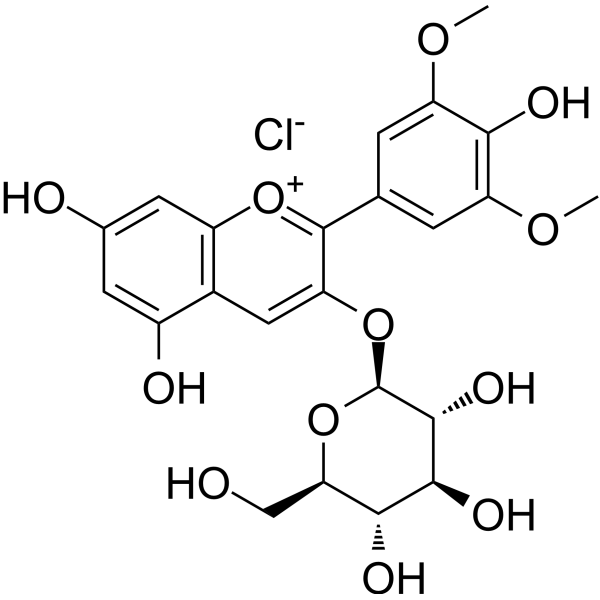
Malvidin-3-glucoside (Malvidin-3-O-glucoside; Oenin) chloride is an orally active inhibitor of the NF-κB pathway, which blocks inflammatory responses induced by TNF-α, reduces IκB-α degradation and p65 nuclear translocation, and upregulates endothelial nitric oxide synthase eNOS to increase NO production. Malvidin-3-glucoside chloride exerts anti-inflammatory and antioxidant effects by inhibiting pro-inflammatory molecules such as MCP-1, ICAM-1, and IL-6, and regulating intestinal microorganisms and metabolites, while protecting endothelial cells and improving intestinal microecological dysbiosis under inflammatory conditions. Malvidin-3-glucoside chloride can be used to study chronic inflammatory-related diseases such as atherosclerosis and inflammatory bowel disease, and has the potential to prevent vascular inflammation and improve intestinal health .
loading...
    loading...
Cat. No.: HY-141466A
Purity:  97.85%
Crotonyl-CoA tetrasodium, a high-energy acyl donor, is an intermediate in the fermentation of butyric acid, and in the metabolism of lysine and tryptophan. Crotonyl-CoA tetrasodium is important in the metabolism of fatty acids and amino acids. Crotonyl-CoA tetrasodium acts as a substrate for p300’s histone crotonyltransferase activity, competing with acetyl-CoA for p300-mediated histone acylation reactions. Crotonyl-CoA tetrasodium regulates global and gene-specific histone crotonylation levels in cells, with cellular concentration changes altering histone crotonylation at regulatory elements of activated genes. Crotonyl-CoA tetrasodium serves as the substrate for crotonyl-CoA reductase/carboxylase (CCRC)-catalyzed NADPH-mediated reduction and carbon dioxide trapping to form unusual alkylmalonyl-CoA polyketide synthase extender units. Crotonyl-CoA tetrasodium can be used for the research of LPS-induced inflammatory response .
loading...
    loading...
Cat. No.: HY-166309
CAS No.: 116912-55-1
Crotonyl-CoA tetralithium, a high-energy acyl donor, is an intermediate in the fermentation of butyric acid, and in the metabolism of lysine and tryptophan. Crotonyl-CoA tetralithium is important in the metabolism of fatty acids and amino acids. Crotonyl-CoA tetralithium acts as a substrate for p300’s histone crotonyltransferase activity, competing with acetyl-CoA for p300-mediated histone acylation reactions. Crotonyl-CoA tetralithium regulates global and gene-specific histone crotonylation levels in cells, with cellular concentration changes altering histone crotonylation at regulatory elements of activated genes. Crotonyl-CoA tetralithium serves as the substrate for crotonyl-CoA reductase/carboxylase (CCRC)-catalyzed NADPH-mediated reduction and carbon dioxide trapping to form unusual alkylmalonyl-CoA polyketide synthase extender units. Crotonyl-CoA tetralithium can be used for the research of LPS-induced inflammatory response .
loading...
    loading...
Cat. No.: HY-148285
CAS No.: 604-98-8
Synonyms: Succinyl-coenzyme A; S-(Hydrogen succinyl)coenzyme A
Succinyl CoA (Succinyl-coenzyme A) is a pivotal intermediate metabolite in the tricarboxylic acid cycle and a key coenzyme A metabolite. Succinyl CoA is biosynthesized from α-ketoglutarate or propionyl-CoA. Succinyl CoA acts as a critical precursor and substrate for heme biosynthesis and gluconeogenesis. Succinyl CoA insufficiency caused by cobalamin deficiency is directly linked to growth retardation, impaired heme synthesis, tissue glycine accumulation and neurological abnormalities. Succinyl CoA can be used in research on metabolic, neurological, and hematological abnormalities (such as porphyria) caused by nutritional vitamin B12 deficiency (leading to a lack of Succinyl-Coenzyme A synthesis) .
loading...
    loading...
Cat. No.: HY-148869
CAS No.: 5060-32-2
Synonyms: R-Hexanoyl-CoA; R-Hexanoyl coenzyme A
Hexanoyl coenzyme A is a short-chain fatty acyl-CoA thioester. Hexanoyl coenzyme A competes with butyryl-CoA to abolish the dehydrogenation effect of medium-chain acyl-CoA dehydrogenase on butyryl-CoA, and does not serve as a substrate for short-chain acyl-CoA dehydrogenase. Hexanoyl coenzyme A acts as a biosynthetic precursor for the synthesis of olivetolic acid and cannabinoids. Hexanoyl coenzyme A is applicable to research related to short-chain acyl-CoA dehydrogenase deficiency .
loading...
    loading...
Cat. No.: HY-CE01038
CAS No.: 74875-70-0
Synonyms: 3-Hydroxyhexanoyl-coenzyme A; [R,S]-Lactyl-CoA
Research Areas:  

Metabolic Disease

3-Hydroxyhexanoyl-CoA (3-Hydroxyhexanoyl-coenzyme A) is a derivative of coenzyme A, which is produced from hexanoic acid via β-oxidation .
loading...
    loading...
Cat. No.: HY-N17632
CAS No.: 73338-86-0
Moracin G is a plant-derived kinase modulator and receptor ligand that forms stable bindings with multiple key proteins (AKT1, COX2 and Estrogen receptor 1) and competitively inhibits the activity of specific kinases. By binding to MELK to disrupt cell cycle regulation, Moracin G impairs the survival and proliferation of cancer cells, induces cancer cell apoptosis, and thereby exerts anti-tumor potential. Moracin G can be used in research related to periodontitis and breast cancer .
loading...
    loading...
Cat. No.: HY-W004812
CAS No.: 161660-94-2
Synonyms: (1S,3S)-3-[(tert-Butoxycarbonyl)amino]cyclopentanecarboxylic acid
Research Areas:  

Infection

BOC-(1R,3S)-3-aminocyclopentane carboxylic acid ((1S,3S)-3-[(tert-Butoxycarbonyl)amino]cyclopentanecarboxylic acid) is a conformationally constrained peptide building block and a key component of SARS-CoV-2 main protease (Mpro) inhibitors. When incorporated into macrocyclic peptides, BOC-(1R,3S)-3-aminocyclopentane carboxylic acid not only helps generate high-affinity Mpro inhibitors by preorganizing the secondary structure of peptides, but also exerts sequence-dependent functional inhibition on the hydrolytic activity of Mpro. BOC-(1R,3S)-3-aminocyclopentane carboxylic is widely used in COVID-19-related research .
loading...
    loading...
Cat. No.: HY-W008385
CAS No.: 156-86-5
Synonyms: L-Homoarginine
H-HomoArg-OH (L-Homoarginine) is an orally active endogenous non-protein amino acid. H-HomoArg-OH acts as a weak alternative substrate for NOS and interferes with NO production, selectively inhibits tissue-nonspecific alkaline phosphatase (TNAP), and suppresses the uptake of arginine by y +-type transporters (system y +). H-HomoArg-OH increases tissue hArg concentrations in vivo, regulates amino acid homeostasis, and improves renal function and pathological features of diabetic nephropathy. H-HomoArg-OH can be used in studies related to diabetes and cardiomyopathy .
loading...
    loading...
Cat. No.: HY-W008385AS
Synonyms: L-Homoarginine-d4 dihydrochloride
H-HoArg-OH-d4 dihydrochloride (L-Homoarginine-d4 dihydrochloride) is the d4-labeled H-HoArg-OH dihydrochloride. H-HoArg-OH dihydrochloride (L-Homoarginine dihydrochloride) is an orally active endogenous non-protein amino acid. H-HoArg-OH dihydrochloride acts as a weak alternative substrate for NOS and interferes with NO production, selectively inhibits tissue-nonspecific alkaline phosphatase (TNAP), and suppresses the uptake of arginine by y +-type transporters (system y +). H-HoArg-OH dihydrochloride increases tissue hArg concentrations in vivo, regulates amino acid homeostasis, and improves renal function and pathological features of diabetic nephropathy. H-HoArg-OH dihydrochloride can be used in studies related to diabetes and cardiomyopathy .
loading...
    loading...
Cat. No.: HY-W008385R
CAS No.: 156-86-5
Synonyms: L-Homoarginine (Standard)
H-HoArg-OH (Standard) (L-Homoarginine (Standard)) is the analytical standard of H-HoArg-OH (HY-W008385). This product is intended for research and analytical applications. H-HomoArg-OH (L-Homoarginine) is an orally active endogenous non-protein amino acid. H-HomoArg-OH acts as a weak alternative substrate for NOS and interferes with NO production, selectively inhibits tissue-nonspecific alkaline phosphatase (TNAP), and suppresses the uptake of arginine by y +-type transporters (system y +). H-HomoArg-OH increases tissue hArg concentrations in vivo, regulates amino acid homeostasis, and improves renal function and pathological features of diabetic nephropathy. H-HomoArg-OH can be used in studies related to diabetes and cardiomyopathy .
loading...
    loading...
Cat. No.: HY-W008385S
CAS No.: 1332075-41-8
Synonyms: L-Homoarginine-d4
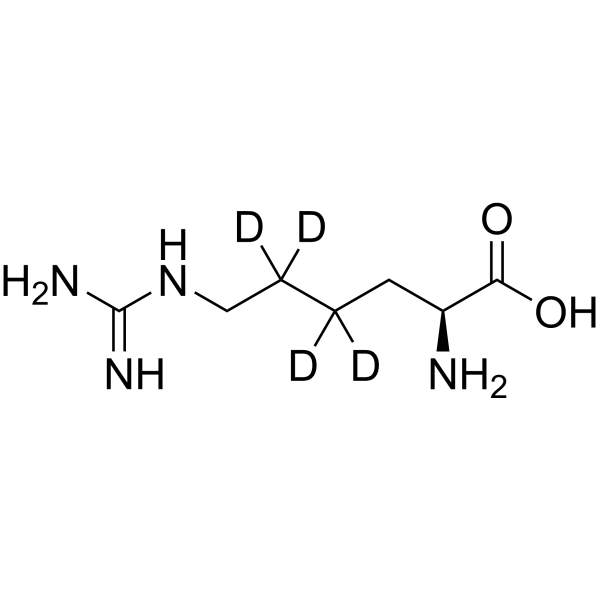
H-HoArg-OH-d4 (L-Homoarginine-d4) is the d4-labeled H-HoArg-OH (HY-W008385). H-HoArg-OH (L-Homoarginine) is an orally active endogenous non-protein amino acid. H-HoArg-OH acts as a weak alternative substrate for NOS and interferes with NO production, selectively inhibits tissue-nonspecific alkaline phosphatase (TNAP), and suppresses the uptake of arginine by y +-type transporters (system y +). H-HoArg-OH increases tissue hArg concentrations in vivo, regulates amino acid homeostasis, and improves renal function and pathological features of diabetic nephropathy. H-HoArg-OH can be used in studies related to diabetes and cardiomyopathy .
loading...
    loading...
Cat. No.: HY-W008829
CAS No.: 685-91-6
N,N-Diethylacetamide is a polar solvent widely used in film and fiber manufacturing, as well as in laboratories as a carrier for water-insoluble chemicals. N,N-Diethylacetamide exerts potent anti-inflammatory effects by inhibiting the NF-κB pathway, suppressing the expression of NO and iNOS, and downregulating key inflammatory cytokines such as TNF-α and IL-6, without affecting the MAPK pathway. N,N-Diethylacetamide can be used to study inflammatory preterm birth.
loading...
    loading...
Cat. No.: HY-W012340
CAS No.: 1483-01-8
Synonyms: L-Homoarginine hydrochloride
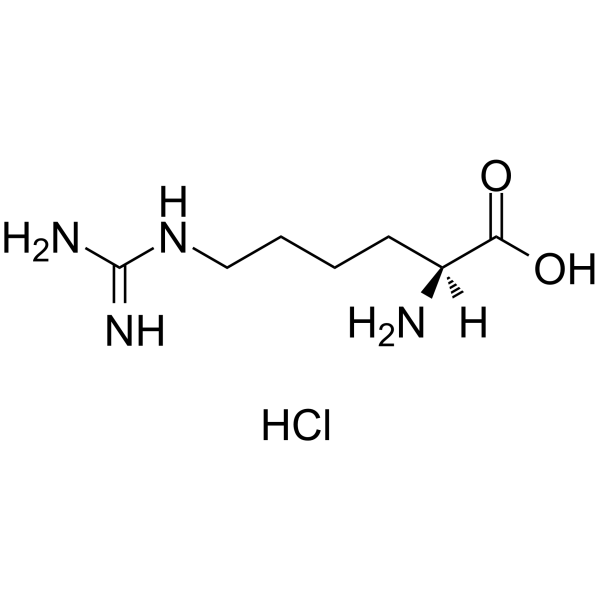
H-HomoArg-OH hydrochloride (L-Homoarginine hydrochloride) is an orally active endogenous non-protein amino acid. H-HomoArg-OH hydrochloride acts as a weak alternative substrate for NOS and interferes with NO production, selectively inhibits tissue-nonspecific alkaline phosphatase (TNAP), and suppresses the uptake of arginine by y +-type transporters (system y +). H-HomoArg-OH hydrochloride increases tissue hArg concentrations in vivo, regulates amino acid homeostasis, and improves renal function and pathological features of diabetic nephropathy. H-HomoArg-OH hydrochloride can be used in studies related to diabetes and cardiomyopathy .
loading...
    loading...
Cat. No.: HY-W012340R
CAS No.: 1483-01-8
H-HomoArg-OH hydrochloride (Standard) is the analytical standard of H-HomoArg-OH hydrochloride (HY-W012340). This product is intended for research and analytical applications. H-HomoArg-OH hydrochloride (L-Homoarginine hydrochloride) is an orally active endogenous non-protein amino acid. H-HomoArg-OH hydrochloride acts as a weak alternative substrate for NOS and interferes with NO production, selectively inhibits tissue-nonspecific alkaline phosphatase (TNAP), and suppresses the uptake of arginine by y +-type transporters (system y +). H-HomoArg-OH hydrochloride increases tissue hArg concentrations in vivo, regulates amino acid homeostasis, and improves renal function and pathological features of diabetic nephropathy. H-HomoArg-OH hydrochloride can be used in studies related to diabetes and cardiomyopathy .
loading...
    loading...
Cat. No.: HY-W012340S
CAS No.: 2483830-23-3
Synonyms: L-Homoarginine-13C7,15N4 hydrochloride
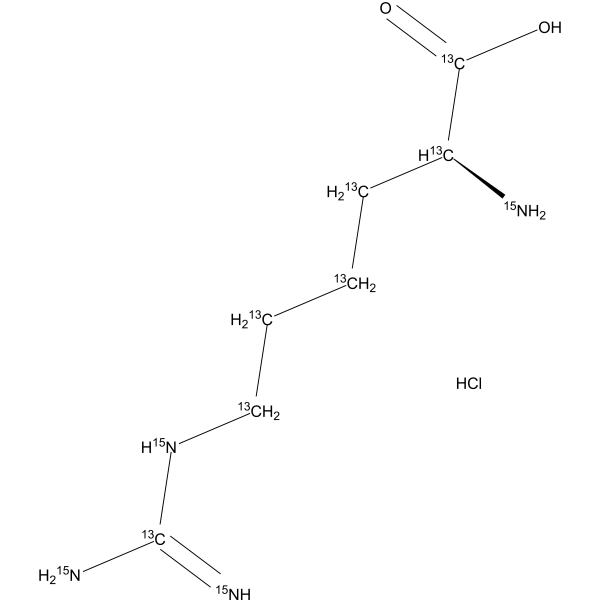
H-HomoArg-OH- 13C7, 15N4 hydrochloride (L-Homoarginine- 13C7, 15N4 hydrochloride) is the 15N, 13C-labeled H-HomoArg-OH (hydrochloride) (HY-W012340). H-HomoArg-OH hydrochloride (L-Homoarginine hydrochloride) is an orally active endogenous non-protein amino acid. H-HomoArg-OH hydrochloride acts as a weak alternative substrate for NOS and interferes with NO production, selectively inhibits tissue-nonspecific alkaline phosphatase (TNAP), and suppresses the uptake of arginine by y +-type transporters (system y +). H-HomoArg-OH hydrochloride increases tissue hArg concentrations in vivo, regulates amino acid homeostasis, and improves renal function and pathological features of diabetic nephropathy. H-HomoArg-OH hydrochloride can be used in studies related to diabetes and cardiomyopathy .
loading...
    loading...
Cat. No.: HY-123901
CAS No.: 112649-21-5
Purity:  98.19%
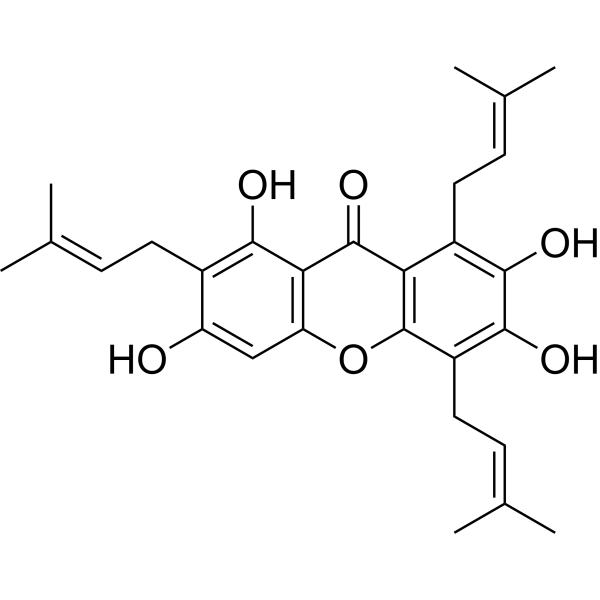
Garcinone E is a xanthone natural product that exerts antioxidant, anti-inflammatory, antitumor, and immunomodulatory activities by inhibiting JNK, TNF-α, NF-κB, and FAS, and enhancing Nrf2 signaling pathways. Garcinone E can be used in research on autoimmune hepatitis, obesity, and various cancers (including breast cancer, colorectal cancer, cervical cancer, liver cancer, lung cancer, and gastric cancer) .
loading...
    loading...

