1427 Results for "

M2 Macrophage Reprogramming

" in MedChemExpress (MCE) Product Catalog:
Products (1427)

1427 Results for "M2 Macrophage Reprogramming" in MCE Product Catalog:

Cat. No.: HY-P71898
Purity:  ≥ 95%, as determined by reducing SDS-PAGE.
Synonyms: CCL3; Tonsillar Lymphocyte LD78 Alpha Protein; Prev. SCYA3; C-C Motif Chemokine 3; MIP-1-Alpha; PAT 464.1; G0S19-1; SIS-Beta; LD78ALPHA; MIP1A; LD78; Macrophage Inflammatory Protein 1 Alpha; SCI; Chemokine (C-C Motif) Ligand 3; Small Inducible Cytokine A3
Species:  
Rat
Source:  
E. coli
loading...
    loading...
Cat. No.: HY-P73443
Purity:  ≥ 95%, as determined by reducing SDS-PAGE.
Synonyms: TNF; Tumor Necrosis Factor (TNF Superfamily, Member 2); Prev. TNFA; Tumor Necrosis Factor-Alpha; TNF-Alpha; Tumor Necrotic Factor Alpha; TNFSF2; TNF Superfamily, Member 2; Tumor Necrosis Factor Ligand Superfamily Member 2; TNF, Macrophage-Derived; TNF-A; TNF, Monocyte-Derived; DIF; APC1 Protein; Cachectin; IMD127; TNLG1F; Tumor Necrosis Factor; Tumor Necrosis Factor Ligand 1F
Species:  
Canine
Source:  
E. coli
loading...
    loading...
Cat. No.: HY-P7256AF
Purity:  ≥ 95%, as determined by reducing SDS-PAGE.
Synonyms: CCL3; Tonsillar Lymphocyte LD78 Alpha Protein; Prev. SCYA3; C-C Motif Chemokine 3; MIP-1-Alpha; PAT 464.1; G0S19-1; SIS-Beta; LD78ALPHA; MIP1A; LD78; Macrophage Inflammatory Protein 1 Alpha; SCI; Chemokine (C-C Motif) Ligand 3; Small Inducible Cytokine A3
Species:  
Human
Source:  
E. coli
loading...
    loading...
Cat. No.: HY-P7768AF
Purity:  ≥ 95%, as determined by reducing SDS-PAGE.
Synonyms: CCL3; Tonsillar Lymphocyte LD78 Alpha Protein; Prev. SCYA3; C-C Motif Chemokine 3; MIP-1-Alpha; PAT 464.1; G0S19-1; SIS-Beta; LD78ALPHA; MIP1A; LD78; Macrophage Inflammatory Protein 1 Alpha; SCI; Chemokine (C-C Motif) Ligand 3; Small Inducible Cytokine A3
Species:  
Mouse
Source:  
E. coli
loading...
    loading...
Cat. No.: HY-P705613
Purity:  ≥ 90%, as determined by reducing SDS-PAGE.
Synonyms: CCL3; Tonsillar Lymphocyte LD78 Alpha Protein; Prev. SCYA3; C-C Motif Chemokine 3; MIP-1-Alpha; PAT 464.1; G0S19-1; SIS-Beta; LD78ALPHA; MIP1A; LD78; Macrophage Inflammatory Protein 1 Alpha; SCI; Chemokine (C-C Motif) Ligand 3; Small Inducible Cytokine A3
Species:  
Human
Source:  
E. coli
loading...
    loading...
Cat. No.: HY-P706116
Purity:  ≥ 90%, as determined by reducing SDS-PAGE.
Synonyms: TNF; Tumor Necrosis Factor (TNF Superfamily, Member 2); Prev. TNFA; Tumor Necrosis Factor-Alpha; TNF-Alpha; Tumor Necrotic Factor Alpha; TNFSF2; TNF Superfamily, Member 2; Tumor Necrosis Factor Ligand Superfamily Member 2; TNF, Macrophage-Derived; TNF-A; TNF, Monocyte-Derived; DIF; APC1 Protein; Cachectin; IMD127; TNLG1F; Tumor Necrosis Factor; Tumor Necrosis Factor Ligand 1F
Species:  
Sheep
Source:  
E. coli
loading...
    loading...
Cat. No.: HY-P706224
Purity:  ≥ 85%, as determined by reducing SDS-PAGE.
Synonyms: TNF; Tumor Necrosis Factor (TNF Superfamily, Member 2); Prev. TNFA; Tumor Necrosis Factor-Alpha; TNF-Alpha; Tumor Necrotic Factor Alpha; TNFSF2; TNF Superfamily, Member 2; Tumor Necrosis Factor Ligand Superfamily Member 2; TNF, Macrophage-Derived; TNF-A; TNF, Monocyte-Derived; DIF; APC1 Protein; Cachectin; IMD127; TNLG1F; Tumor Necrosis Factor; Tumor Necrosis Factor Ligand 1F
Species:  
Others
Source:  
E. coli
loading...
    loading...
Cat. No.: HY-116115
CAS No.: 1233715-33-7
Synonyms: 17-Oxo-DPA; 17-Oxo-7(Z),10(Z),13(Z),15(E),19(Z)-DPA
Target:  

NF-κB PPAR

Research Areas:  

Inflammation/Immunology

17-Oxo-7(Z),10(Z),13(Z),15(E),19(Z)-docosapentaenoic acid (17-Oxo-DPA; 17-Oxo-7(Z),10(Z),13(Z),15(E),19(Z)-DPA) is an electrophilic oxo-derivative (EFOX) of the docosahexaenoic acid (DHA) (HY-B2167). 17-Oxo-7(Z),10(Z),13(Z),15(E),19(Z)-docosapentaenoic acid is generated during inflammation by COX-2-catalyzed mechanism in activated macrophages. 17-Oxo-7(Z),10(Z),13(Z),15(E),19(Z)-docosapentaenoic acid acts as an agonist for PPARγ and a modulator for NF-κB signaling pathway, inhibits the production of pro-inflammatory cytokines and nitric oxide, and exhibits anti-inflammatory efficacy .
loading...
    loading...
Cat. No.: HY-19655S
Synonyms: ABT-773-d6; Abbott-195773-d6; A-195773-d6
Cethromycin-d6 (ABT-773-d6; Abbott-195773-d6; A-195773-d6) is the d6-labeled Cethromycin (HY-19655). Cethromycin (ABT-773; Abbott-195773) is an orally effective ketolide antibiotic with broad-spectrum antibacterial activity. Cethromycin binds to domains II/V of the 23S rRNA of the 50S subunit, inhibiting bacterial protein synthesis. Cethromycin can accumulate in lung tissue, alveolar macrophages, epithelial lining fluid, and human polymorphonuclear leukocytes. Cethromycin exhibits potent in vitro activity against a variety of respiratory pathogens, including Mycoplasma pneumoniae. Cethromycin exhibits significant intracellular and pulmonary enrichment and anti-inflammatory effects against mycoplasma pneumonia in mouse models, improving airway obstruction and airway hyperresponsiveness. Cethromycin disrupts the apicoplast and reduces liver-stage parasite burden during the liver stage of Plasmodium berghei. Cethromycin can be used in research related to pneumonia, Staphylococcus aureus infection, gonorrhea, and malaria .
loading...
    loading...
Cat. No.: HY-N2896
CAS No.: 465-00-9
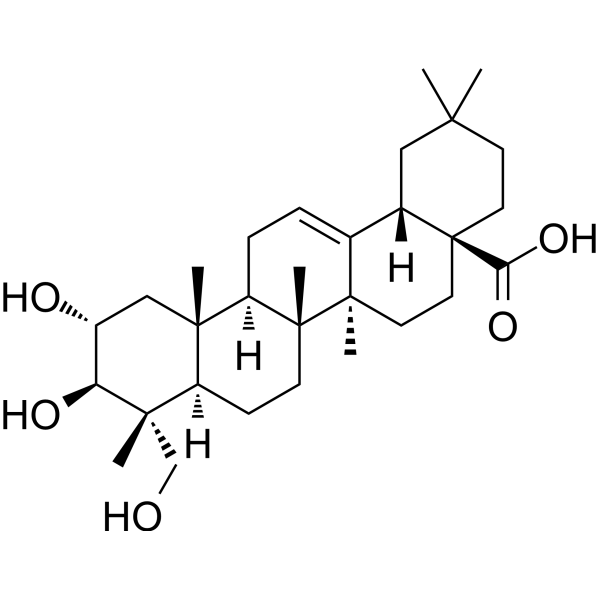
Arjunolic acid is an orally active, multifunctional bioactive compound. Arjunolic acid exhibits free radical scavenging activity, as well as fungal and bacterial activities. Arjunolic acid induces apoptosis (Apoptosis) in various cancer cells. Arjunolic acid protects hepatocytes against induced oxidative stress and apoptosis by reducing reactive oxygen species and inhibiting NF-κB activation. Arjunolic acid regulates pancreatic dysfunction in type 2 diabetic rats by blocking the activation of the TLR-4/MyD88 and canonical Wnt pathways. Arjunolic acid inhibits neuroinflammation and ameliorates depressive behaviors via the SIRT1/AMPK/Notch1 signaling pathway in microglia. Arjunolic acid improves Crohn's disease-like colitis by restoring gut microbiota composition and inhibiting TLR4 signaling. Arjunolic acid suppresses osteosarcoma progression by inhibiting Wnt3a-mediated M2 polarization of macrophages. Arjunolic acid ameliorates diabetic retinopathy via the autophagy pathway regulated by AMPK/mTOR/HO-1. Arjunolic acid is applicable to research related to type 2 diabetes, organ toxicity, depression, Crohn's disease, osteosarcoma, diabetic retinopathy, and testicular dysfunction .
loading...
    loading...
Cat. No.: HY-P11242
Cm-CATH2 is an antimicrobial peptide discovered from Chelonia mydas. Cm-CATH2 has a potent, broad-spectrum and rapid bactericidal ability by rapidly destroying the integrity of bacterial cell membranes. It shows strong activity against Gram-positive bacteria (such as VREF, Staphylococcus aureus), Gram-negative bacteria (such as Escherichia coli, Klebsiella pneumoniae), and fungi (such as Candida albicans) with MICs ranges from 1.17 to 18.75 μg/mL. Cm-CATH2 is also effective against various aquatic pathogenic bacteria. Cm-CATH2 not only inhibits biofilm formation but can also remove the formed biofilms. Cm-CATH2 has immunomodulatory functions and chemotactic effects on immune cells, and can inhibit the production of pro-inflammatory cytokines by macrophages stimulated by LPS (HY-D1056). Cm-CATH2 prevents the activation of NF-κB by inhibiting the degradation of IκBα, and also inhibits the phosphorylation of MAPK signaling pathways (p38, JNK, ERK). Cm-CATH2 demonstrates strong anti-infective ability in mouse peritonitis models and pneumonia models .
loading...
    loading...
Cat. No.: HY-P992059

Target:  

CD1

Research Areas:  

Cancer

Anti-Mouse CD1d Antibody (1B1) is an antibody targeting mouse CD1d (Kd=12.5 nM). By inserting into the lipid-binding groove of CD1d, Anti-Mouse CD1d Antibody (1B1) overlaps with the binding sites of type I and type II NKT cell receptors (TCR), thereby effectively blocking TCR-mediated interactions. Anti-Mouse CD1d Antibody (1B1) activates antigen-presenting cells such as dendritic cells and macrophages, induces them to release IL-12p70, and increases the levels of key cytokines including IL-12, IFN-γ and IFN-α in mouse serum. Anti-Mouse CD1d Antibody (1B1) can be used in studies related to renal cancer, breast cancer and colon adenocarcinoma. When combined with anti-DR5 or anti-CD137 antibodies and chemotherapeutic drugs, Anti-Mouse CD1d Antibody (1B1) exhibits significant tumor inhibitory and even eradication effects in mice .
loading...
    loading...
Cat. No.: HY-P73812
Purity:  ≥ 90%, as determined by reducing SDS-PAGE.
Synonyms: CCL15; Chemokine (C-C Motif) Ligand 15; Prev. SCYA15; C-C Motif Chemokine 15; HCC-2; Leukotactin 1; NCC-3; NCC3; MIP-5; New CC Chemokine 3; Macrophage Inflammatory Protein 5; CC Chemokine 3; Chemokine CC-2; Leukotactin-1; MIP-1 Delta; MRP-2B; HMRP-2B; Mrp
Species:  
Human
Source:  
E. coli
loading...
    loading...
Cat. No.: HY-N2110
CAS No.: 2543-94-4
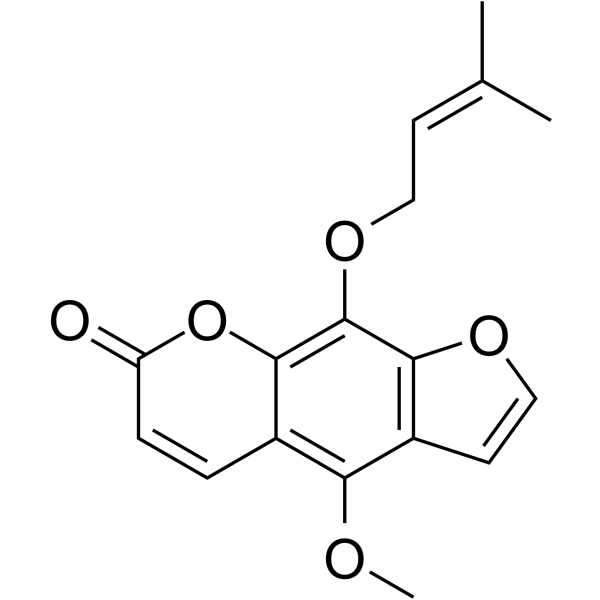
Phellopterin, an orally active furocoumarin with multiple biological activities. Phellopterin is a partial agonist of the central benzodiazepine receptors. Phellopterin exerts anti-inflammatory effects by upregulating SIRT1, downregulating ICAM-1 (reducing chronic inflammation, aiding diabetic ulcer healing), inhibiting STAT3 phosphorylation (easing atopic dermatitis inflammation), regulating Akt/PKC pathways (lowering TNF-α-induced VCAM-1 to block monocyte adhesion), and inhibiting TLR4/NF-κB pathway and macrophage M2 polarization (alleviating colitis-related cancers). Phellopterin suppresses ovarian cancer progression via inhibiting the PU.1/CLEC5A/PI3K-AKT loop (inducing cell cycle arrest, apoptosis, DNA damage). Phellopterin alleviates murine diabetes by promoting adipocyte differentiation and increasing PPARγ. Phellopterin also has anti-HSV-1 activity. Phellopterin can be used for studying anti-inflammation, anti-cancer (e.g., ovarian cancer, colitis cancer), blood glucose lowering, anti-diabetes, and anti-virus .
loading...
    loading...
Cat. No.: HY-N2110R
CAS No.: 2543-94-4
Phellopterin (Standard) is the analytical standard of Phellopterin. Phellopterin, an orally active furocoumarin with multiple biological activities. Phellopterin is a partial agonist of the central benzodiazepine receptors. Phellopterin exerts anti-inflammatory effects by upregulating SIRT1, downregulating ICAM-1 (reducing chronic inflammation, aiding diabetic ulcer healing), inhibiting STAT3 phosphorylation (easing atopic dermatitis inflammation), regulating Akt/PKC pathways (lowering TNF-α-induced VCAM-1 to block monocyte adhesion), and inhibiting TLR4/NF-κB pathway and macrophage M2 polarization (alleviating colitis-related cancers). Phellopterin suppresses ovarian cancer progression via inhibiting the PU.1/CLEC5A/PI3K-AKT loop (inducing cell cycle arrest, apoptosis, DNA damage). Phellopterin alleviates murine diabetes by promoting adipocyte differentiation and increasing PPARγ. Phellopterin also has anti-HSV-1 activity. Phellopterin can be used for studying anti-inflammation, anti-cancer (e.g., ovarian cancer, colitis cancer), blood glucose lowering, anti-diabetes, and anti-virus.
loading...
    loading...
Cat. No.: HY-W040255
CAS No.: 89947-79-5
Synonyms: PGPC
1-Palmitoyl-2-glutaryl-sn-glycero-3-phosphocholine is an oxidized phospholipid. 1-Palmitoyl-2-glutaryl-sn-glycero-3-phosphocholine reduces the viability of HUVECs, increases the levels of ferrous ions and lipid peroxidation, promotes the production of superoxide anions, and decreases the levels of glutathione and GPX4 in cells. 1-Palmitoyl-2-glutaryl-sn-glycero-3-phosphocholine upregulates the mRNA and protein levels of FABP3 in HUVECs, impairs mitochondrial membrane potential, and induces ferroptosis-related changes as well as mitochondrial dysfunction and damage. 1-Palmitoyl-2-glutaryl-sn-glycero-3-phosphocholine activates caspase-11 and promotes the continuous release of IL-1β from macrophages and dendritic cells. 1-Palmitoyl-2-glutaryl-sn-glycero-3-phosphocholine inhibits the proliferation of aortic smooth muscle cells and induces apoptosis in these cells. 1-Palmitoyl-2-glutaryl-sn-glycero-3-phosphocholine is applicable to relevant research on atherosclerosis .
loading...
    loading...
Cat. No.: HY-P7193
Purity:  ≥ 95%, as determined by reducing SDS-PAGE.
Synonyms: CXCL3; C-X-C Motif Chemokine 3; Prev. GRO3; GRO3 Oncogene; SCYB3; GRO-Gamma; CINC-2b; MIP2-Beta; MIP-2b; Melanoma Growth Stimulatory Activity Gamma; GROg; MGSA Gamma; Macrophage Inflammatory Protein 2-Beta; MIP2B; Chemokine (C-X-C Motif) Ligand 3; GROG; Growth-Regulated Protein Gamma; C-X-C Motif Chemokine Ligand 3; GRO-Gamma(1-73)
Species:  
Human
Source:  
E. coli
loading...
    loading...
Cat. No.: HY-P705929
Purity:  ≥ 90%, as determined by reducing SDS-PAGE.
Synonyms: MMP9; Matrix Metallopeptidase 9 (Gelatinase B, 92kDa Gelatinase, 92kDa Type IV Collagenase); Prev. CLG4B; Macrophage Gelatinase; Matrix Metalloproteinase 9 (Gelatinase B, 92kDa Gelatinase, 92kDa Type IV Collagenase); Type V Collagenase; Matrix Metalloproteinase-9; 92 KDa Gelatinase; MMP-9; Gelatinase B; GELB; MANDP2; Matrix Metallopeptidase 9; 92 KDa Type IV Collagenase
Species:  
Human
Source:  
HEK293
loading...
    loading...
Cat. No.: HY-P702232
Purity:  ≥ 90%, as determined by reducing SDS-PAGE.
Synonyms: CCR1; MIP-1alpha-R; Prev. CMKBR1; CC-CKR-1; Prev. SCYAR1; RANTES-R; Chemokine (C-C Motif) Receptor 1; HM145; MIP1aR; CCR-1; CKR-1; RANTES Receptor; CD191; CD191 Antigen; Macrophage Inflammatory Protein 1-Alpha Receptor; CMKR1; C-C Chemokine Receptor Type 1; CKR1; LD78 Receptor; C-C Motif Chemokine Receptor 1; C-C CKR-1
Species:  
Mouse
Source:  
E. coli Cell-free
loading...
    loading...
Cat. No.: HY-113402AR
CAS No.: 283159-88-6
Synonyms: γ-Glu-Cys TFA (Standard)
Gamma-glutamylcysteine (TFA) (Standard) is the analytical standard of Gamma-glutamylcysteine (TFA). This product is intended for research and analytical applications. Gamma-glutamylcysteine TFA (γ-Glu-Cys TFA) is an orally active, blood-brain barrier permeable dipeptide . Gamma-glutamylcysteine TFA activates AMPK, SIRT1, IL-4/STAT6, AC/cAMP/PI3K, IGF-1R/IRS1/PI3K, and Nrf2 signaling pathways; it inhibits NF-κB, JAK1/STAT1/3, MAPKs, cadmium-induced p38 MAPK, JNK, and PI3K/Akt signaling pathways. Gamma-glutamylcysteine TFA regulates macrophage polarization, modulates the trafficking of CD36 and GLUT4, induces glutathione synthesis, improves metabolic dysfunction, reduces lipid deposition, ameliorates glucose homeostasis, inhibits apoptosis (Apoptosis), stabilizes mitochondria, suppresses lipid peroxidation, iron accumulation and ferroptosis (Ferroptosis), reduces ds-HMGB1 levels, reverses mechanical hyperalgesia, and alleviates hepatic lipid droplet formation. Gamma-glutamylcysteine TFA is applicable to research related to inflammatory bowel disease, type 2 diabetes, cadmium-induced neurotoxicity, Alzheimer's disease, cerebral ischemia/reperfusion injury, neuropathy, and alcoholic liver disease.
loading...
    loading...

