
213 Results for "

STEP

" in MedChemExpress (MCE) Product Catalog:
Products (213)

213 Results for "STEP" in MCE Product Catalog:

Cat. No.: HY-124591
CAS No.: 1381769-23-8
Purity:  98.73%
Research Areas:  

Neurological Disease

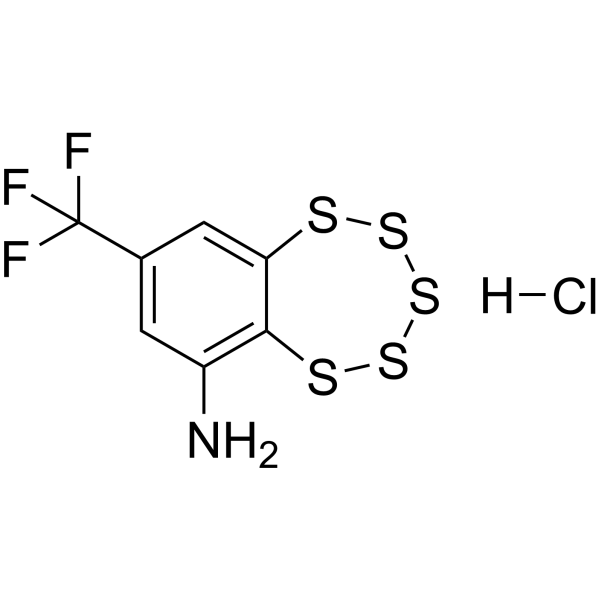
TC-2153 is a selective inhibitor of striatal-enriched protein tyrosine phosphatase (STEP), with psychotropic activity and low acute toxicity. TC-2153 increases the expression of brain-derived neurotropic factor (BDNF) in the brain. And it decreases MAOA and 5-HT1A receptors mRNA level in midbrain. TC-2153 also inhibits 5-HT2A receptor-mediated signaling .
loading...
    loading...
Cat. No.: HY-77957
CAS No.: 60134-26-1
1-O-Methyl-2-deoxy-D-ribose is a ribose derivative that can be more conveniently obtained through a one-step reaction by introducing a methoxy protective group at the anomeric carbon position under acidic conditions. This facilitates the acquisition of 2-deoxy-D-ribose. 1-O-Methyl-2-deoxy-D-ribose can be utilized in research on the synthesis of chemical materials .
loading...
    loading...
Cat. No.: HY-E71753
Research Areas:  

Others

3-Hydroxypropionyl-CoA synthase (EC 6.2.1.36) catalyses a step in the 3-hydroxypropanoate/4-hydroxybutanoate cycle, an autotrophic CO2 fixation pathway found in some thermoacidophilic archaea.The enzymes from Metallosphaera sedula and Sulfolobus tokodaii can also use propionate, acrylate, acetate, and butanoate as substrates, and are thus different from EC 6.2.1.17 (propionate-CoA ligase), which does not accept acetate or butanoate.
loading...
    loading...
Cat. No.: HY-N0491
CAS No.: 299-39-8
Synonyms: (-)-Lupinidine sulfate
Research Areas:  

Others

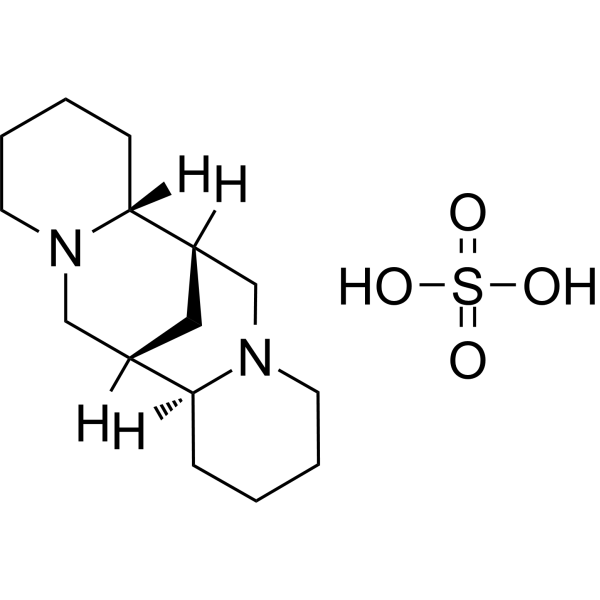
(-)-Sparteine sulfate ((-)-Lupinidine sulfate) is a chiral proton base and catalytic promoter. (-)-Sparteine sulfate promotes the enantioselective carbolithiation of cinnamyl derivatives with primary and secondary organolithium reagents. (-)-Sparteine sulfate forms mixed aggregates with lithium halides. As an exogenous chiral base, (-)-Sparteine sulfate deprotonates palladium-bound secondary alcohols, promotes the formation of palladium-alkoxide species, and alters the rate-limiting step of the catalytic cycle, thereby affecting reaction rate and enantioselectivity .
loading...
    loading...
Cat. No.: HY-P3354
Target:  

iGluR

Research Areas:  

Neurological Disease

p3Ysh-3 is a peptide inhibitor of STEP Phosphatase-GluA2 AMPA receptor interaction with a Ki of 1.09 μM. p3Ysh-3 restores the memory deficits and displays anxiolytic and antidepressant effects in a scopolamine-treated rat model. p3Ysh-3 is a promising lead compound for novel cognitive enhancers and/or behavioral modulators .
loading...
    loading...
Cat. No.: HY-W012185A
CAS No.: 352224-02-3
Synonyms: (-)-Lupinidine hydroiodide
Research Areas:  

Others

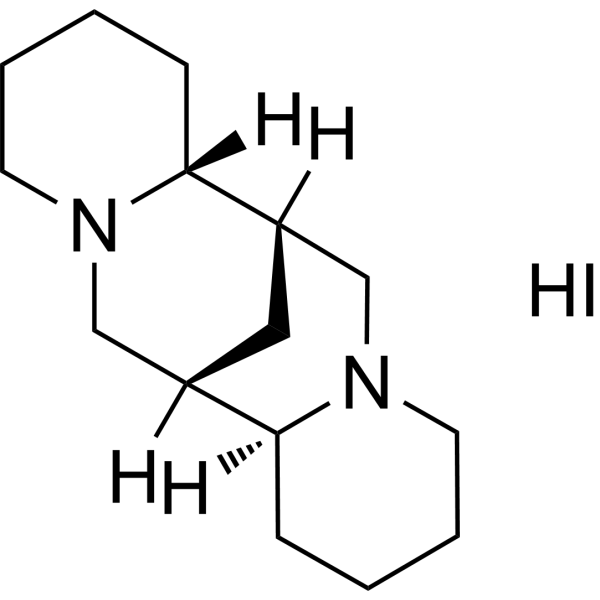
(-)-Sparteine hydroiodide ((-)-Lupinidine hydroiodide) is a chiral proton base and catalytic promoter. (-)-Sparteine hydroiodide promotes the enantioselective carbolithiation of cinnamyl derivatives with primary and secondary organolithium reagents. (-)-Sparteine hydroiodide forms mixed aggregates with lithium halides. As an exogenous chiral base, (-)-Sparteine hydroiodide deprotonates palladium-bound secondary alcohols, promotes the formation of palladium-alkoxide species, and alters the rate-limiting step of the catalytic cycle, thereby affecting reaction rate and enantioselectivity .
loading...
    loading...
Cat. No.: HY-K0538

MCE Animal Tissue Direct PCR Kit (with Dye) is specifically designed for direct amplification from a variety of animal tissue samples. It enables rapid release of genomic DNA from animal tissues (such as insect legs/wings, mouse tails, ears, toes, skin, and internal organs) in a single step, allowing the lysate to be used directly for downstream PCR amplification without the need for conventional DNA extraction and purification procedures, thereby significantly simplifying the workflow.

loading...
    loading...
Cat. No.: HY-101812
CAS No.: 56488-59-6
Purity:  98.39%
Research Areas:  

Metabolic Disease

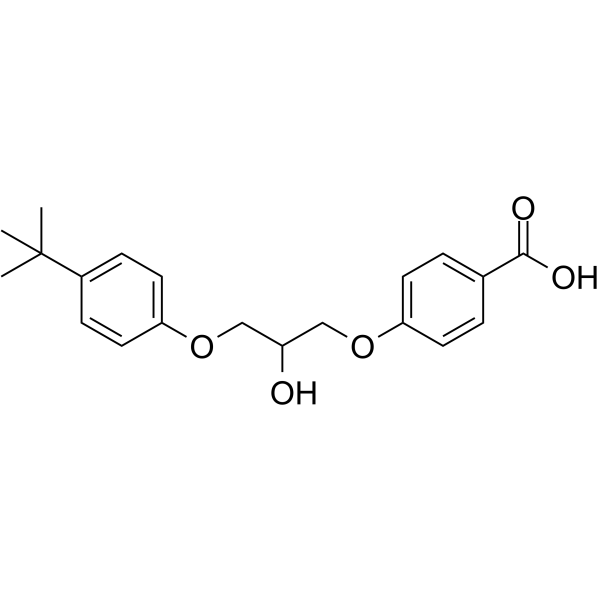
Terbufibrol is an orally active lipid-lowering agent. Terbufibrol inhibits hepatic Cholesterol 7 alpha-hydroxylase. Terbufibrol blocks a step between Acetate and HMG-CoA in the hepatic cholesterol synthesis process. Terbufibrol reduces serum total cholesterol, HDL, LDL, lipoprotein levels, and the cholesterol/phospholipid ratio, with dose- and sex-dependent changes in lipoprotein components. Terbufibrol exerts sustained cholesterol-lowering activity in baboons and rats. Terbufibrol can be used in research related to hypercholesterolemia .
loading...
    loading...
Cat. No.: HY-14162
CAS No.: 936349-47-2
Target:  

FLAP

Research Areas:  

Inflammation/Immunology

AM103 (free acid) is a selective FLAP inhibitor that can block the first step of the LT pathway, which is 5-LO activation. AM103 (free acid) can inhibit the production of LTB4 and cysteinyl leukotrienes (CysLT). AM103 (free acid) has anti-inflammatory activity in a mouse model of chronic lung inflammation and can extend the survival time of mice injected with platelet-activating factor. AM103 (free acid) can be used for research on respiratory diseases such as asthma .
loading...
    loading...
Cat. No.: HY-148254
CAS No.: 2705841-52-5
Purity:  99.78%
Target:  

Deubiquitinase

Research Areas:  

Others

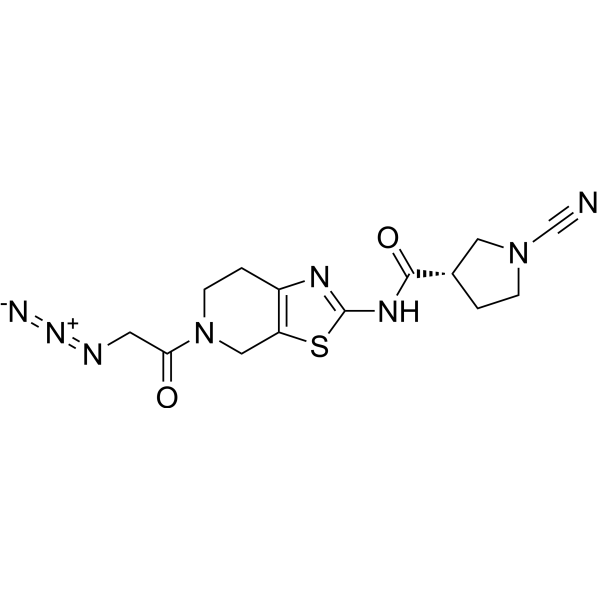
8RK64 is a UCHL1 inhibitor that covalently binds the active-site cysteine residue to form an isothiourea adduct, with selectivity over UCHL3, UCHL5, and other cysteine DUBs. 8RK64 inhibits human UCHL1 with an IC50 of 0.32 μM. 8RK64 is an azide-containing precursor usable as a two-step activity-based probe via click chemistry. 8RK64 can be used for the research of Parkinson's disease .
loading...
    loading...
Cat. No.: HY-151855
CAS No.: 80667-36-3
Purity:  98.41%
Target:  

ADC Linkers

Research Areas:  

Others

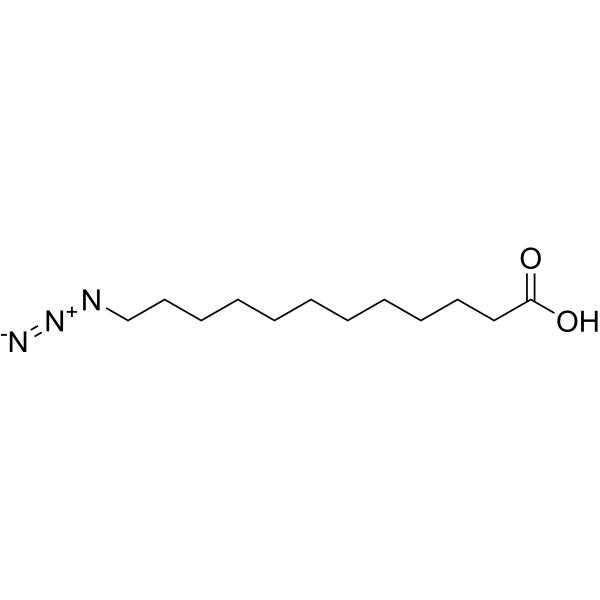
Azido Myristic Acid is a click chemistry reagent containing an azide group. Azido Myristic Acid can be used to identify and characterize post-translationally myristylated proteins with using a simple and robust two-step labeling and detection technique . It contains an azide group and can undergo copper-catalyzed azide-alkyne cycloaddition (CuAAc) with molecules containing alkyne groups. It can also undergo ring strain-promoted alkyne-azide cycloaddition (SPAAC) with molecules containing DBCO or BCN groups.
loading...
    loading...
Cat. No.: HY-184642
Titanium dioxide magnetic beads are magnetic microparticle carriers whose surface is coated with titanium dioxide nanoparticles. This material is commonly used in protein digests of biological samples for the simple, convenient, efficient, highly specific, and reproducible enrichment of phosphorylated peptides. The surface properties of titanium dioxide magnetic beads make them show no significant preference for monophosphorylated or polyphosphorylated peptides, making them ideal for single-step enrichment of phosphorylated peptides in mass spectrometry-based proteomics analysis.
loading...
    loading...
Cat. No.: HY-E70947
Target:  

Endogenous Metabolite

Research Areas:  

Metabolic Disease

β-Hydroxybutyrate Dehydrogenase, Rhodopseudomonas sphaeroides (EC 1.1.1.30) is a soluble cytosolic enzyme that does not require a phospholipid allosteric activator. β-Hydroxybutyrate Dehydrogenase, Rhodopseudomonas sphaeroides is required for the utilization of ketone bodies as a source of metabolic energy. β-Hydroxybutyrate Dehydrogenase, Rhodopseudomonas sphaeroides catalyzes the oxidation of 3-hydroxybutyrate to acetoacetate, the first step in the conversion of ketone bodies to citric acid, which is then further metabolized via the tricarboxylic acid cycle (Krebs cycle).
loading...
    loading...
Cat. No.: HY-E70959
Target:  

Endogenous Metabolite

Research Areas:  

Metabolic Disease

β-Hydroxybutyrate Dehydrogenase, Pseudomonas lemoignei (EC 1.1.1.30) is a soluble cytosolic enzyme that does not require a phospholipid allosteric activator. β-Hydroxybutyrate Dehydrogenase, Pseudomonas lemoignei is required for the utilization of ketone bodies as a source of metabolic energy. β-Hydroxybutyrate Dehydrogenase, Pseudomonas lemoignei catalyzes the oxidation of 3-hydroxybutyrate to acetoacetate, the first step in the conversion of ketone bodies to citric acid, which is then further metabolized via the tricarboxylic acid cycle (Krebs cycle).
loading...
    loading...
Cat. No.: HY-17032
CAS No.: 60929-23-9
Synonyms: (rac)-AS1069562 free base; YM-08054 free base
Target:  

Endogenous Metabolite

Research Areas:  

Neurological Disease

Indeloxazine ((rac)-AS1069562 free base) is a brain active compound with anti-amnesic activity. Indeloxazine significantly prolonged the step latency in senescence accelerated mice (SAM-P/8/Ta), indicating that it has a promoting effect on brain function. Indeloxazine has a broader pharmacology than piracetam and exhibits stronger anti-amnesic activity. Indeloxazine has also been used as an anticonvulsant compound, further supporting its potential use in neuroprotection and behavioral improvement .
loading...
    loading...
Cat. No.: HY-185314
CAS No.: 1848207-89-5
Research Areas:  

Others

Metproxybicyclone is a graminaceous herbicide. Metproxybicyclone also acts as an ACCase inhibitor, with an IC50 of 0.19 μM against Lolium multiflorum. Metproxybicyclone inhibits eukaryotic homomeric acetyl-CoA carboxylase, which catalyzes the first key step in fatty acid biosynthesis of graminaceous plants. Metproxybicyclone controls susceptible graminaceous weeds as well as graminaceous weed populations with target-site, non-target-site, and ACCase D2078G target-site resistance mechanisms. Metproxybicyclone is safe to dicotyledonous crops and is suitable for pre-plant burndown applications .
loading...
    loading...
Cat. No.: HY-B1304
CAS No.: 6160-12-9
Synonyms: (-)-Lupinidine sulfate pentahydrate
(-)-Sparteine sulfate pentahydrate ((-)-Lupinidine sulfate pentahydrate) is a chiral proton base and catalytic promoter. (-)-Sparteine sulfate pentahydrate promotes the enantioselective carbolithiation of cinnamyl derivatives with primary and secondary organolithium reagents. (-)-Sparteine sulfate pentahydrate forms mixed aggregates with lithium halides. As an exogenous chiral base, (-)-Sparteine sulfate pentahydrate deprotonates palladium-bound secondary alcohols, promotes the formation of palladium-alkoxide species, and alters the rate-limiting step of the catalytic cycle, thereby affecting reaction rate and enantioselectivity .
loading...
    loading...
Cat. No.: HY-W713888
CAS No.: 66687-07-8
Aniline blue diammonium is a component of commonly used polychrome stains. Aniline blue diammonium is used to stain collagen fibers in tissue sections using Masson′s trichrome protocol for staining multiple components. Collagen is stained blue by this method. The dye is suitable for selective staining of callose in plant specimens and staining histones for assessing nuclear maturity. Aniline blue diammonium is used in Gomori′s one-step trichrome stain and Mallory′s connective tissue stain for tissue including kidney and intestine.
loading...
    loading...
Cat. No.: HY-10016R
CAS No.: 870843-42-8
Research Areas:  

Neurological Disease

E 2012 (Standard) is the analytical standard of E 2012 (HY-10016). This product is intended for research and analytical applications. E 2012 is a potent gamma (γ) secretase modulator without affecting Notch processing. E 2012 inhibits 3β-hydroxysterol Δ24-reductase (DHCR24) at the final step in the cholesterol biosynthesis. E 2012 aims at Alzheimer's disease by reduction of amyloid β-42, and induces cataract following repeated doses in the rat .
loading...
    loading...
Cat. No.: HY-118843
CAS No.: 60628-98-0
Target:  

Potassium Channel

Research Areas:  

Infection

Lombazole is an antimicrobial compound with activity that inhibits cell membrane synthesis. Lombazole had little effect on K+ permeability in S. aureus. Lombazole inhibited only de novo synthesis of cell enclosure in S. aureus, and this effect occurred before growth was affected. The main effect of lombazole was through inhibition of lipid synthesis. Lombazole may have an effect on key steps in lipid biosynthesis, as inferred from the lack of changes in lipid patterns after treatment. Lombazole also inhibited the sterol C-14 demethylation step in Candida albicans .
loading...
    loading...

