2419 Results for "

decrease

" in MedChemExpress (MCE) Product Catalog:
Products (2419)

2419 Results for "decrease" in MCE Product Catalog:

Cat. No.: HY-Z7733
CAS No.: 72956-44-6
Synonyms: Desmethylcarvedilol; BM-14242
Target:  

Calcium Channel

Research Areas:  

Metabolic Disease

O-Desmethylcarvedilol (Desmethylcarvedilol) is an active metabolite of the non-selective β-adrenergic receptor (β-AR) antagonist Carvedilol (HY-B0006). O-Desmethylcarvedilol inhibits store-overload-induced calcium release in HEK293 cells expressing the ryanodine receptor 2 (RyR2) R4496C (RyR2 R4496C) mutation (IC50 = 7.62 µM). O-Desmethylcarvedilol reduces increases in heart rate and prevents decreases in diastolic blood pressure induced by Isoproterenol (HY-B0468) in conscious rabbits (ED50s = 32 and 5 µg/kg, respectively) .
loading...
    loading...
Cat. No.: HY-126359
CAS No.: 27098-24-4
Purity:  ≥98.0%
Synonyms: SLPC; 18:0-18:2 PC
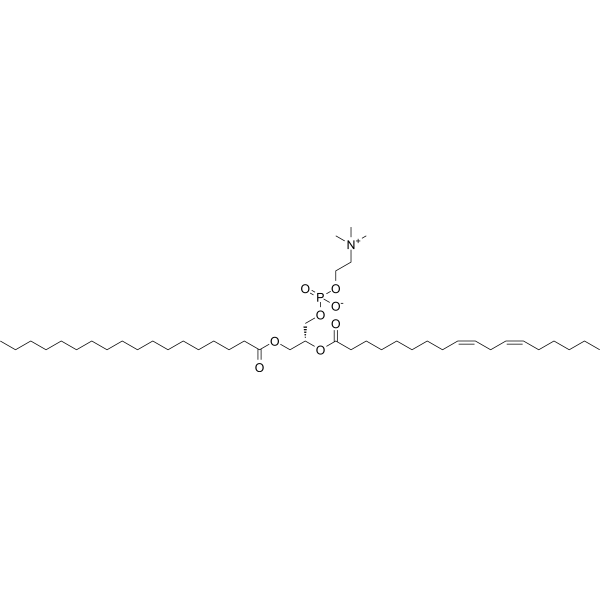
1-Stearoyl-2-linoleoyl-sn-glycero-3-phosphocholine (SLPC; 18:0-18:2 PC) is an endogenous phospholipid marker molecule in the glycerophospholipid metabolic pathway. 1-Stearoyl-2-linoleoyl-sn-glycero-3-phosphocholine is a core component of the phospholipid bilayer of biological membranes and a key responsive lipid for radiation injury and cardiometabolic diseases. 1-Stearoyl-2-linoleoyl-sn-glycero-3-phosphocholine constitutes the phospholipid bilayers of cell membranes and high-density lipoprotein (HDL), and regulates the core activity of lipoprotein functional homeostasis. The content of 1-Stearoyl-2-linoleoyl-sn-glycero-3-phosphocholine in mouse serum shows a significant dose-dependent decrease with increasing ionizing radiation dose, and its level in human HDL also decreases significantly in metabolic syndrome. 1-Stearoyl-2-linoleoyl-sn-glycero-3-phosphocholine can serve as a biological dosimeter marker for ionizing radiation injury, and is used for rapid and accurate assessment of radiation absorbed dose in exposed individuals. 1-Stearoyl-2-linoleoyl-sn-glycero-3-phosphocholine can also act as a lipidomics research target for cardiometabolic diseases such as lipid metabolic syndrome and early-onset coronary heart disease .
loading...
    loading...
Cat. No.: HY-107859S
CAS No.: 1276500-47-0
Purity:  99.15%
Synonyms: TCEP-d12
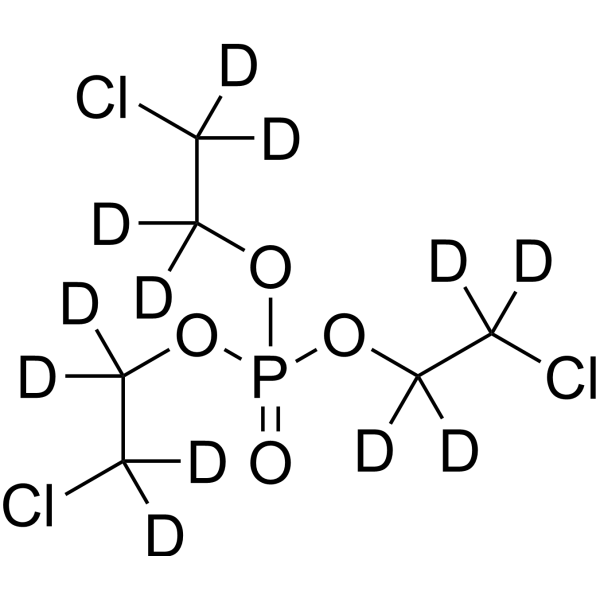
Tris(2-chloroethyl)phosphate-d12 is the deuterium labeled Tris(β-chloroethyl) phosphate. Tris(2-chloroethyl) phosphate is a widely used organic phosphorus flame retardant, mainly used as a plasticizer. Tris(2-chloroethyl) phosphate has orally active hepatotoxicity, inducing an increase in reactive oxygen species (ROS) and calcium ions (Ca²⁺) influx, a decrease in mitochondrial membrane potential (△Ψm), and causing DNA damage and cell apoptosis. Tris(2-chloroethyl) phosphate directly binds to FXR, inducing obesity and the formation of fatty liver in mice. Chloroethyl) phosphate activates the TLR4/NF-κB pathway, triggering liver inflammation.
loading...
    loading...
Cat. No.: HY-111431R
CAS No.: 3233-58-7
Synonyms: p-Tolyl sulfate (Standard)
p-Cresyl sulfate (Standard) (p-Tolyl sulfate (Standard)) is the analytical standard of p-Cresyl sulfate (HY-111431). This product is intended for research and analytical applications. p-Cresyl sulfate (p-Tolyl sulfate) is a uremic toxin, that can cause renal damage and dysfunction. p-Cresyl sulfate shows antiproliferation activity. p-Cresyl sulfate increases the protein expression of HIF-1α and VHL, decreases the protein expression of HIF-2α. p-Cresyl sulfate induces epithelial-mesenchymal transition (EMT). p-Cresyl sulfate activates the JNK and p38 MAPK signaling pathways .
loading...
    loading...
Cat. No.: HY-114652
CAS No.: 26148-68-5
Purity:  ≥99.0%
Synonyms: 2-Amino-α-carboline; AαC
Target:  

Endogenous Metabolite

Research Areas:  

Cancer

AalphaC (AαC) is a potential carcinogen with carcinogenic activity. AalphaC is an important biomarker in tobacco smoke and is associated with tobacco smoke exposure. Urinary concentrations of AalphaC are significantly higher in dedicated smokers than in non-smokers, indicating its importance in monitoring tobacco exposure. AalphaC levels increase significantly with increasing serum nicotine levels, indicating its close relationship with tobacco use. In addition, consuming high-temperature cooked beef significantly increases the amount of AalphaC in urine, while consuming vegetables is associated with a decrease in AalphaC concentrations. Smoking half a pack of cigarettes is associated with a significant increase in the amount of AalphaC, which further confirms the biological activity of AalphaC and its association with dietary habits .
loading...
    loading...
Cat. No.: HY-121032
CAS No.: 1848233-59-9
DO53 is a serine hydrolase inhibitor that targets ABHD6, PAFAH2, PLA2G7, ABHD2 and CES1C. DO53 reduces LPS (HY-D1056A1)-induced cytokine production in the mouse brain, decreases fasting-induced refeeding behavior, and induces hypoactivity in mice. As a DAGL negative control, DO53 shows no activity against DAGLα/β in vivo, and does not affect brain lipid levels, DSE/DSI synaptic plasticity or LPS-induced anhidrosis in mice . DO53 can be used in studies related to LPS-induced neuroinflammation and fasting-induced refeeding .
loading...
    loading...
Cat. No.: HY-121535
CAS No.: 116476-16-5
Research Areas:  

Others

Levosemotiadil, an S-isomer of semotiadil, exhibits stronger binding affinity to human serum albumin (HSA) compared to its R-isomer counterpart. This study utilized high-performance frontal analysis (HPFA) to demonstrate that levosemotiadil binds approximately three times more strongly to HSA than semotiadil. The binding parameters were evaluated using Scatchard analysis, revealing specific interactions with the diazepam binding site on HSA. The presence of diazepam decreased the binding affinity of both enantiomers, while warfarin did not alter their binding characteristics. These findings highlight levosemotiadil's potential as a Ca- and Na-channel blocker with significant binding preferences for HSA, crucial for understanding its pharmacokinetics and therapeutic effects .
loading...
    loading...
Cat. No.: HY-121605
CAS No.: 1195795-93-7
Purity:  97.44%
Target:  

Apoptosis

Research Areas:  

Cancer

RL71 is a curcuminoid anticancer agent that exhibits potent cytotoxicity against a variety of ER-negative breast cancer cells. RL71 (1 μM) induces cell cycle arrest in the G2/M phase and induces apoptosis in SKBr3 cells. RL7 also decreases HER2/neu phosphorylation and increases p27. RL71 also significantly reduced the phosphorylation of Akt and transiently increased the stress kinases JNK1/2 and p38 MAPK. Furthermore, RL71 exhibited anti-angiogenic potential in vitro, inhibiting the migration of HUVEC cells and the ability of these cells to form tubular networks .
loading...
    loading...
Cat. No.: HY-122585
CAS No.: 2138321-18-1
Target:  

MMP Src FAK

Research Areas:  

Cancer

proMMP-9 inhibitor-3c (compound 3c) is a potent proMMP-9 inhibitor. proMMP-9 inhibitor-3c is specific for binding to the proMMP-9 hemopexin-like domain (Kd=320 nM). proMMP-9 inhibitor-3c disruption of MMP-9 homodimerization prevents association of proMMP-9 with both α4β1 integrin and CD44 and results in the dissociation of EGFR. This disruption results in decreased phosphorylation of Src and its downstream target proteins focal adhesion kinase (FAK) and paxillin (PAX) .
loading...
    loading...
Cat. No.: HY-125972
CAS No.: 1263893-98-6
Purity:  98.01%
zr17-2 is a molecule that mimics a hypothermic state. zr17-2 binds RBM3/CIRBP, selectively enhances RBM3 rather than CIRP, and blocks CIRBP degradation. Zr17-2 significantly increases DHODH expression and decreases PTGS2 expression. zr17-2 inhibits pro-inflammatory markers. zr17-2 improves post-transplantation function and mitochondrial function of aged donor hearts. zr17-2 can be used in research on ischemic stroke, perinatal asphyxia, myocardial injury, and traumatic optic neuropathy .
loading...
    loading...
Cat. No.: HY-130624
CAS No.: 2413849-81-5
Target:  

HSP Apoptosis

Research Areas:  

Cancer

Hsp90-Cdc37-IN-2 (Compound 41) is an inhibitor for the interaction between heat shock protein 90 (Hsp90) and cyclin 37 (Cdc37). Hsp90-Cdc37-IN-2 inhibits the proliferation of cancer cell A549, MCF-7, HOS and HepG2 with IC50 of 0.41-0.94 μM. Hsp90-Cdc37-IN-2 decreases the mitochondrial membrane potential, induces apoptosis, and arrest cell cycle at G0/G1 phase in A549 .
loading...
    loading...
Cat. No.: HY-133488
CAS No.: 1402703-50-7
Research Areas:  

Inflammation/Immunology Cancer

ST1072 is an inhibitor of CerS4 and CerS6. ST1072 preferentially inhibits CerS6 over CerS4, and reduces the production of C16 ceramide. ST1072 impairs TCR-mediated N-RAS activation, ERK signaling pathway, and the colocalization of CD3/PKCθ. ST1072 decreases the production of IFN-γ as well as the migration of donor cells to target organs. ST1072 regulates immune cell populations and the expression of co-stimulatory molecules. ST1072 can be used in research related to colon cancer, cervical cancer, graft-versus-host disease, and hematologic malignancies .
loading...
    loading...
Cat. No.: HY-136450
CAS No.: 100648-13-3
Purity:  98.78%
Synonyms: TCBZ-SO
Target:  

Parasite BCRP

Research Areas:  

Infection Cancer

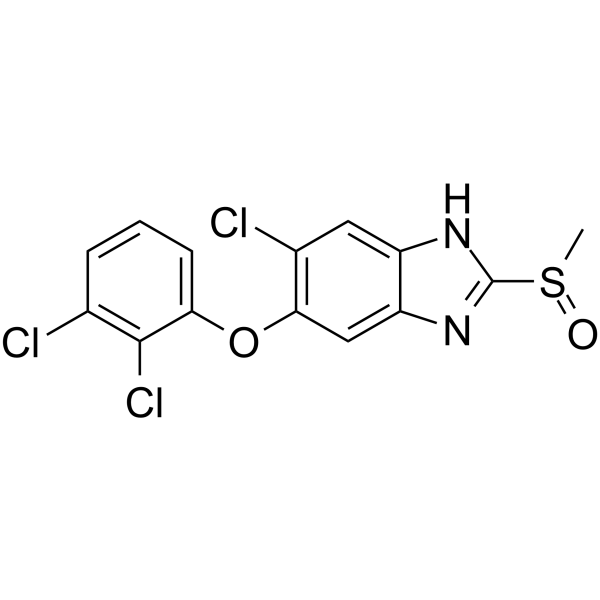
Triclabendazole sulfoxide (TCBZ-SO) is an orally active ABCG2 inhibitor with antiparasitic activity. Triclabendazole sulfoxide inhibits ABCG2-mediated active efflux and ATPase activity. Triclabendazole sulfoxide increases the intracellular accumulation of Mitoxantrone (HY-13502). Triclabendazole sulfoxide reduces the apical-directed transepithelial transport of Nitrofurantoin and Danofloxacin, while increasing their basolateral-directed transepithelial transport. Triclabendazole sulfoxide elevates the plasma levels of sulfasalazine in wild-type mice. Triclabendazole sulfoxide decreases ABCG2-mediated secretion of Nitrofurantoin into milk in wild-type lactating mice. Triclabendazole sulfoxide can be used in the research of insecticidal agents and cancers such as breast cancer .
loading...
    loading...
Cat. No.: HY-138879B
CAS No.: 357425-68-4
Purity:  99.74%
Synonyms: (1S,5R)-CP-601927
Target:  

nAChR

Research Areas:  

Neurological Disease

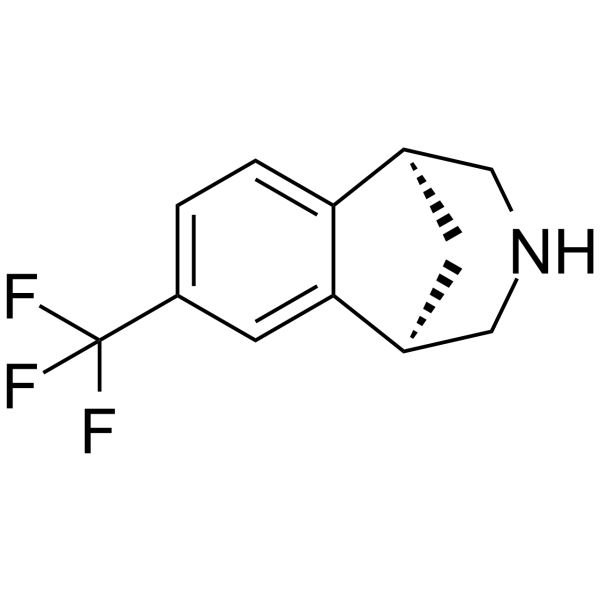
CP-601932 ((1S,5R)-CP-601927) is a high-affinity partial agonist at α3β4 nAChR (Ki=21 nM; EC50=~ 3 μM). CP-601932 has the same high-binding affinity at α4β2 nAChR (Ki=21 nM) and an order of magnitude lower affinity for α6 and α7 nAChR subtypes. CP-601932 selectively decreases ethanol but not sucrose consumption and operant self-administration following long-term exposure. CP-601932 can penetrate the CNS .
loading...
    loading...
Cat. No.: HY-148032
CAS No.: 20776-45-8
Synonyms: 5-BT
Target:  

5-HT Receptor

Research Areas:  

Neurological Disease

5-Benzyloxytryptamine (5-BT) is a selective partial agonist for 5-hydroxytryptamine 1D/1B (5-HT1D/1B) receptors with an IC50 value of 40 nM for bovine caudate 5-HT1D and reduced affinity for other receptors (5-HT2 IC50>470 nM). 5-Benzyloxytryptamine inhibits adenylate cyclase to decrease neurotransmitter release and downregulate cAMP signaling. 5-Benzyloxytryptamine is promising for research of neurotransmitter imbalance-related disorders like migraine .
loading...
    loading...
Cat. No.: HY-150085
CAS No.: 2393881-77-9
Target:  

Kallikrein

Research Areas:  

Inflammation/Immunology

GSK951 is a highly potent, selective, and reversibly covalent KLK5 inhibitor, with an IC50 of approximately 250 pM and a pIC50 of 9.6 against hKLK5. It exhibits over 100-fold selectivity over KLK7, KLK14, matriptase, and elastase. GSK951 binds to the catalytic site of KLK5 via covalent interaction with the catalytic serine, with a slow dissociation rate. GSK951 improves skin barrier function, reduces transepidermal water loss, decreases the expression of proinflammatory cytokines, and inhibits the elevated KLK5 protease activity in the stratum corneum. GSK951 can be used in studies related to skin barrier dysfunction.
loading...
    loading...
Cat. No.: HY-150661S
CAS No.: 2482467-12-7
Synonyms: 3-epi-25-Hydroxy Vitamin D3-13C5
Research Areas:  

Endocrinology

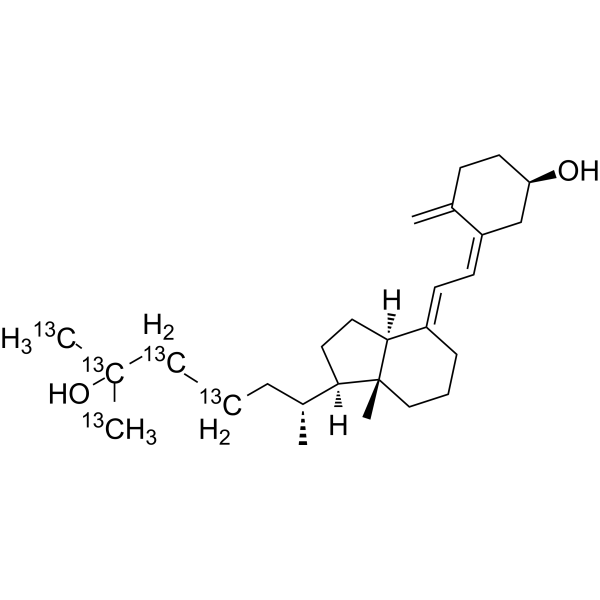
3-epi-Calcifediol- 13C5 (3-epi-25-Hydroxy Vitamin D3- 13C5) is the 13C-labeled 3-epi-Calcifediol (HY-32351B). 3-epi-25-hydroxy Vitamin D3 is the C-3 epimer of 25-hydroxy vitamin D3.1 Dietary administration of 3-epi-25-hydroxy vitamin D3 (0.5 and 1 IU/g) decreases levels of serum parathyroid hormone (PTH) in male, but not female, weanling rats.
loading...
    loading...
Cat. No.: HY-152830
CAS No.: 2394874-66-7
Purity:  99.51%
Synonyms: Q702
Target:  

c-Fms TAM Receptor MHC

Research Areas:  

Cancer

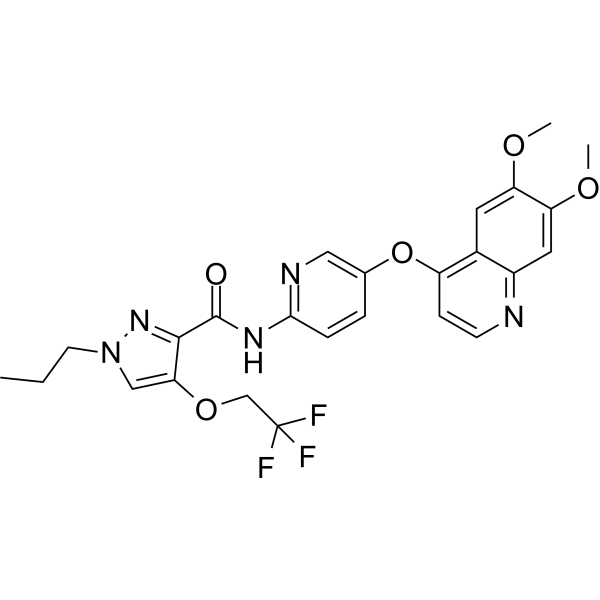
Adrixetinib (Q702) is an orally active triple inhibitor against CSF1R, Mer, and Axl, with Kd values of 8.7 nM, 0.8 nM, and 0.3 nM, respectively. Adrixetinib acts as a potent immune modulator that remodels the tumor microenvironment. Adrixetinib increases the abundance of M1 macrophages and CD8⁺ T cells, while decreasing the levels of M2 macrophages and myeloid-derived suppressor cells (MDSCs). Adrixetinib upregulates the expression of MHC class I and E-cadherin in tumor cells. Adrixetinib shows remarkable antitumor efficacy in syngeneic mouse tumor models. Adrixetinib is suitable for the research of breast cancer, renal adenocarcinoma, colon carcinoma, and melanoma .
loading...
    loading...
Cat. No.: HY-16347
CAS No.: 290296-54-7
Synonyms: CID 6451149 hydrochloride
Target:  

Neurokinin Receptor

Research Areas:  

Neurological Disease Endocrinology

Netupitant hydrochloride (CID 6451149 hydrochloride) is a blood-brain barrier penetrable, orally active NK1 receptor inhibitor with a Ki of 0.95 nM (CHO cells) against the human receptor. Netupitant hydrochloride antagonizes the effects induced by Substance P, inhibits the maximal response of Substance P with a long-lasting action, and suppresses NK1 agonist-induced behaviors in mice and gerbils. Netupitant hydrochloride reduces the frequency of bladder contractions, prolongs contraction intervals, decreases basal pressure at high doses, and acts on the afferent branch of the micturition reflex. Netupitant hydrochloride can be used in research related to overactive bladder, chemotherapy-induced nausea and vomiting, post-operative nausea and vomiting, anxiety disorders, and depression .
loading...
    loading...
Cat. No.: HY-164896
CAS No.: 3080918-74-4
Target:  

PIN1

Research Areas:  

Cancer

PIN1 degrader-2 is a covalent PIN1 degrader with an IC50 of 4.1 nM. PIN1 degrader-2 induces a decrease in the thermal stability of PIN1 and triggers concentration-dependent PIN1 degradation in various cancer cells. PIN1 degrader-2 covalently modifies PIN1 Cys113. PIN1 degrader-2 also reduces the cell viability of pancreatic cancer, breast cancer, prostate cancer and lung cancer cells. PIN1 degrader-2 can be used in research related to pancreatic cancer, breast cancer, prostate cancer and non-small cell lung cancer .
loading...
    loading...

