1. Search Result
Search Result
Results for "

MRSA

" in MedChemExpress (MCE) Product Catalog:

370

Inhibitors & Agonists

1

Fluorescent Dye

3

Biochemical Assay Reagents

33

Peptides

90

Natural
Products

2

Isotope-Labeled Compounds

2

Click Chemistry

2

Oligonucleotides

1

GMP Molecules

Cat. No. Product Name Target Research Areas Chemical Structure
  • HY-14737
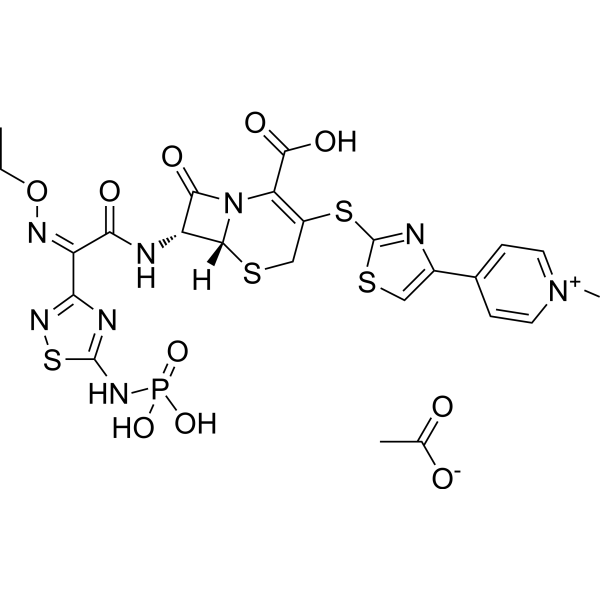
    Ceftaroline fosamil
    2 Publications Verification

    TAK-599; PPI0903

    Bacterial Antibiotic Infection
    Ceftaroline fosamil (TAK-599), a cephalosporin derivative, is an N-phosphono proagent of anti-methicillin-resistant Staphylococcus aureus (MRSA) T-91825. Ceftaroline fosamil can be used for the research of MRSA infection .
    Ceftaroline fosamil
  • HY-112579
    Ceftobiprole
    3 Publications Verification

    Ro 63-9141; BAL 9141

    Bacterial Antibiotic Infection Inflammation/Immunology
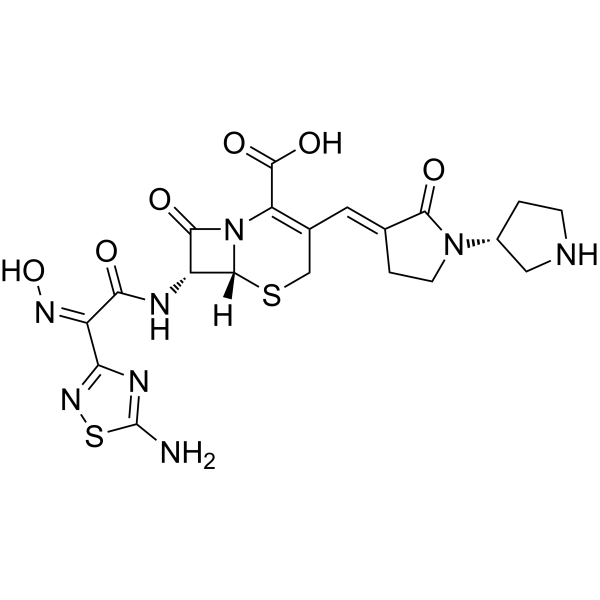
    Ceftobiprole (Ro 63-9141) is a broad-spectrum cephalosporin with high levels of in vitro activity against methicillin- (MRSA) and vancomycin-resistant staphylococci (VRSA) and penicillin-resistant streptococci with a MIC90 value of 2 μg/mL for MRSA. Ceftobiprole also inhibits gram-positive and gram-negative pathogens. Ceftobiprole can be used for the study of hospital-acquired pneumonia (excluding ventilator-associated pneumonia) and community-acquired pneumonia .
    Ceftobiprole
  • HY-16764

    JNJ-Q2

    Bacterial Antibiotic Infection Inflammation/Immunology
    Avarofloxacin (JNJ-Q2) is a broad-spectrum fluoroquinolone antibacterial agent being developed for the treatment of acute bacterial skin and skin-structure infections and community-acquired pneumonia with oral activity. Avarofloxacin (JNJ-Q2) is an aminoethylidenylpiperidine fluoroquinolone that demonstrates antibacterial effect against numerous Gram-positive bacteria with a mean 0.12 mg/L MIC90 value. Avarofloxacin (JNJ-Q2) has potential for treatment of methicillin-resistant Staphylococcus aureus (MRSA) infections .
    Avarofloxacin
  • HY-125747
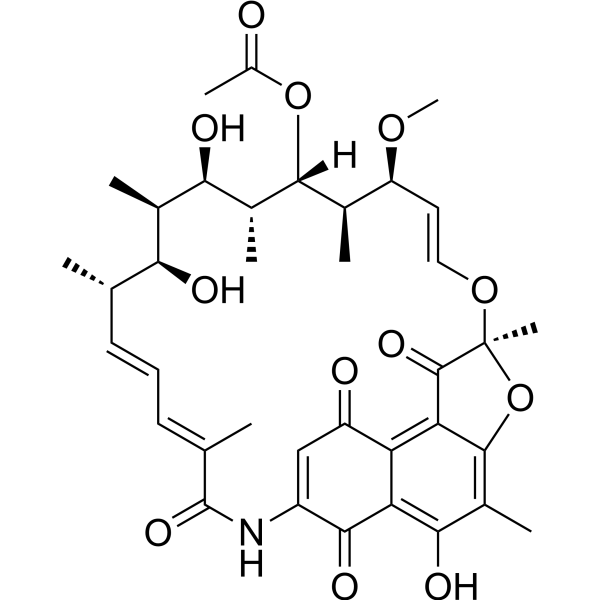
    Actinomycin X2 (purity≥85%)
    1 Publications Verification

    Actinomycin V (purity≥85%)

    Bacterial Antibiotic Apoptosis Infection Cancer
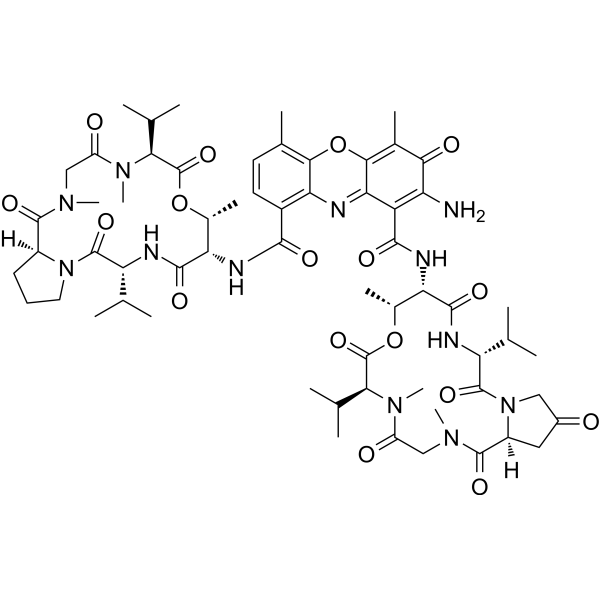
    Actinomycin X2 (Actinomycin V), produced by many Streptomyces sp., shows strong inhibition of MRSA with a minimum inhibitory concentration (MIC) value of 0.25 μg/mL. Actinomycin X2 can be used for cancer and bacterial infection .
    Actinomycin X2 (purity≥85%)
  • HY-W041988

    Bacterial Infection
    Fmoc-Glu-OMe is a glutamic acid derivative. Fmoc-Glu-OMe exhibits significant antibacterial activity and excellent gelation properties in silver nitrate (AgNO3) solution. Fmoc-Glu-OMe promotes wound healing in rat models and eliminates bacteria in MRSA-infected rat wound models. Fmoc-Glu-OMe can be used in studies related to wound infections and MRSA-infected wounds .
    Fmoc-Glu-OMe
  • HY-133119

    Bacterial Infection
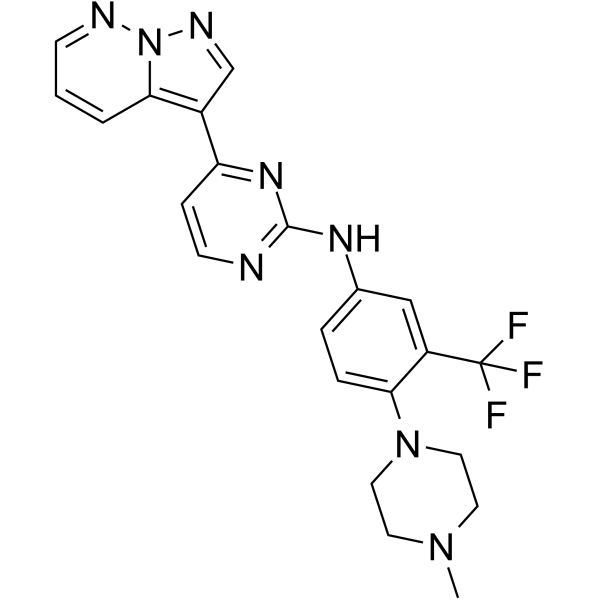
    PK150, an analogue of Sorafenib, shows oral bioavailability and antibacterial activity against several pathogenic strains at submicromolar concentrations. PK150 inhibits Gram-positive Methicillin-sensitive S. aureus (MSSA), Methicillin-resistant S. aureus (MRSA), Vancomycin intermediate S. aureus (VISA) with MICs of 0.3, 0.3-1, 0.3 μM, respectively .
    PK150
  • HY-N10765

    Bacterial Inflammation/Immunology Cancer
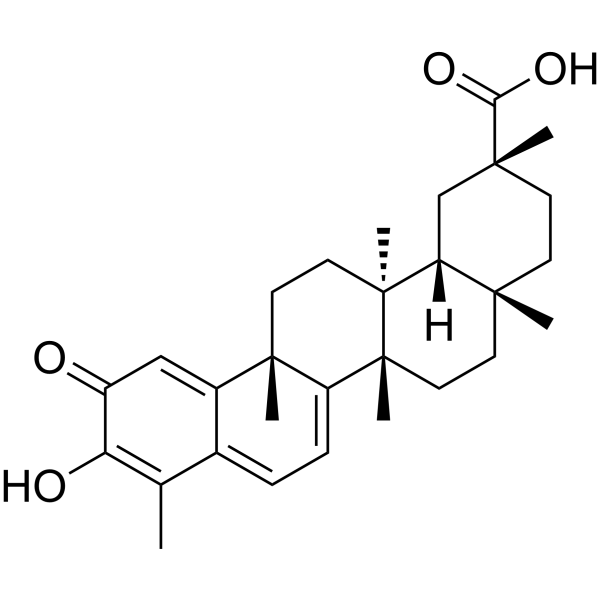
    Salvinolone is active against methicillin-resistant Staphylococcus aureus (MRSA) and vancomycin-resistant Enterococcus (VRE). Salvinolone shows cytotoxic activity with an IC50 of 47.6 μM against the HL-60 tumor cell line for 72 h .
    Salvinolone
  • HY-156009

    Bacterial Infection
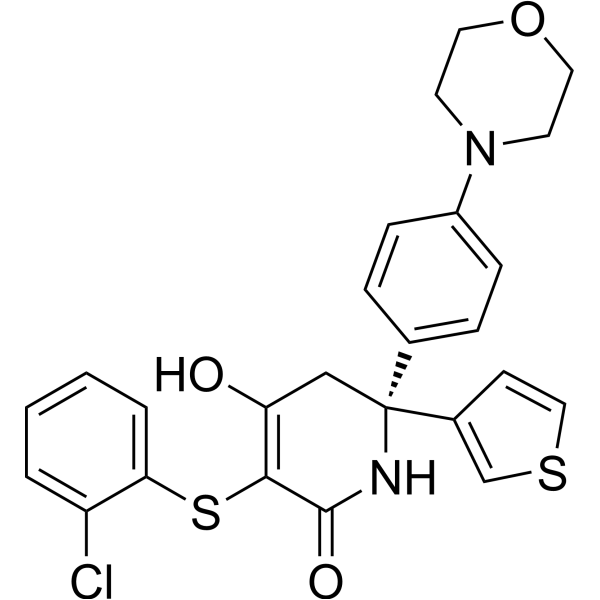
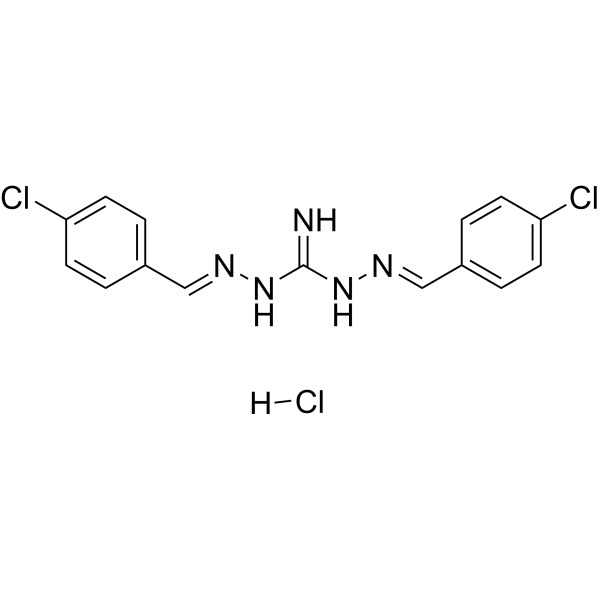
    CDFI is an inhibitor of the lipid II flippase MurJ. CDFI potentiates the activity of β-lactams against MRSA .
    CDFI
  • HY-P3361A

    Parasite Bacterial Antibiotic Infection Inflammation/Immunology
    IDR-1018 acetate is an innate defense regulator conjugate, with MICs of 16 μg/mL for MRSA USA300 LAC, MRSA SAP 0017 and S. epidermidis ATCC14990. IDR-1018 acetate can be used to synthesis V-IDR1018 (vancomycin-innate defense regulator conjugate) .
    IDR-1018 acetate
  • HY-14784

    REP8839

    Bacterial Infection
    Bederocin (REP8839) is a Methionyl-tRNA synthetase inhibitor. Bederocin can be used in research of bacterial infection, including S. aureus and MRSA .
    Bederocin
  • HY-N3920

    Bacterial Infection
    Gancaonin G is a 6-prenylated isoflavanone that can be isolated from Glycyrrhiza uralensis. Gancaonin G has antibacterial activity against Streptococcus mutants and MRSA strains .
    Gancaonin G
  • HY-N8151

    Bacterial Infection
    Sanguisorbigenin is a natural antibacterial agent that inhibits methicillin-resistant S. aureus (MRSA) .
    Sanguisorbigenin
  • HY-P3361

    Parasite Bacterial Antibiotic Infection Inflammation/Immunology
    IDR-1018 is an innate defense regulator conjugate, with MICs of 16 μg/mL for MRSA USA300 LAC, MRSA SAP 0017 and S. epidermidis ATCC14990. IDR-1018 can be used to synthesis V-IDR1018 (vancomycin-innate defense regulator conjugate) .
    IDR-1018
  • HY-P5710

    Bacterial Infection
    LCI peptide is an antimicrobial peptide with antibacterial activity. LCI peptide is active against plant pathogens, Xanthomonas and Pseudomonas, including E. coli, Gentamicin-resistant MRSA and Xoo .
    LCI peptide
  • HY-119123A

    LTX-109 trihydrochloride

    Fungal Bacterial Infection
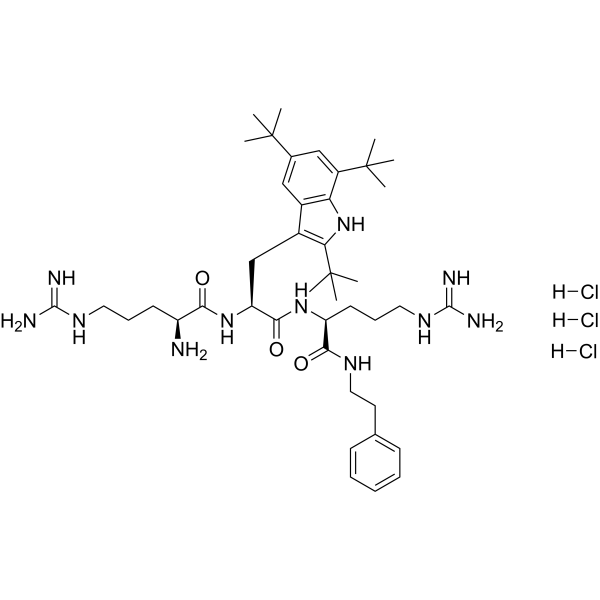
    Voxvoganan (LTX-109) trihydrochloride, a topical antimicrobial, is highly effective against S. aureus with a MIC range of 2 to 4 μg/mL. Voxvoganan trihydrochloride can be used for the research of bacterial skin infections, fungal infections and nasal decolonisation of MRSA .
    Voxvoganan trihydrochloride
  • HY-14738

    TAK-599 free acid; PPI0903 free acid

    Bacterial Antibiotic Infection
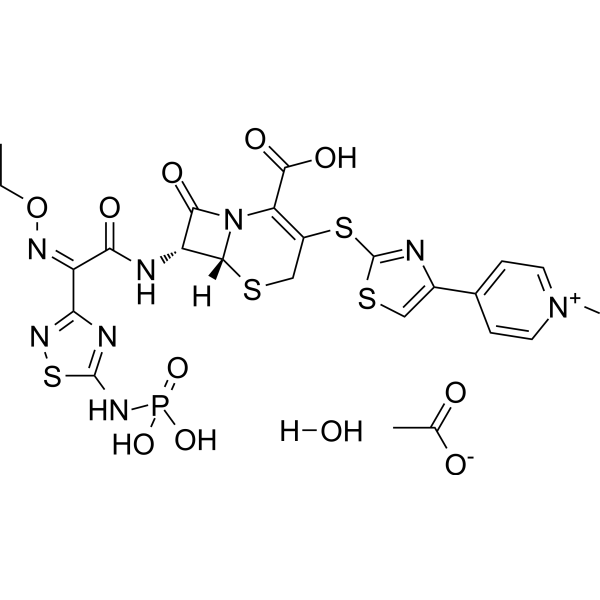
    Ceftaroline fosamil (inner) (TAK-599 free acid), a cephalosporin derivative, is an N-phosphono proagent of anti-methicillin-resistant Staphylococcus aureus (MRSA) T-91825. Ceftaroline fosamil (inner) can be used for the research of MRSA infection .
    Ceftaroline fosamil (inner)
  • HY-P5545

    Bacterial Infection
    Lynronne-1 is an antimicrobial peptide. Lynronne-1 is active against Gram-positive bacterials, including MDR strains (MIC: 8-32 μg/mL for methicillin-resistant MRSA strains). Lynronne-1 reduces the bacterial load in MRSA infected wound murine model. Lynronne-1 is also effective against P. aeruginosa infection .
    Lynronne-1
  • HY-119123

    LTX-109

    Fungal Bacterial Infection
    Voxvoganan (LTX-109), a topical antimicrobial, is highly effective against S. aureus with a MIC range of 2 to 4 μg/mL. Voxvoganan can be used for the research of bacterial skin infections, fungal infections and nasal decolonisation of MRSA .
    Voxvoganan
  • HY-178912

    Reactive Oxygen Species (ROS) Bacterial ClpP Infection Inflammation/Immunology
    Anti-MRSA agent 39 is an orally active ClpX modulator that binds Staphylococcus aureus caseinolytic protease X (SaClpX) with high affinity (Kd = 3.6 μM). Anti-MRSA agent 39 exerts antibacterial effects through temperature-dependent inhibition of cell division. Anti-MRSA agent 39 elicits profound metabolic dysregulation in methicillin-resistant Staphylococcus aureus (MRSA), manifesting as significantly reduced ATP levels, elevated reactive oxygen species (ROS), and decreased NAD+/NADH ratio, and accelerates bacterial lysis rates in MRSA ATCC 33591. Anti-MRSA agent 39 significantly increases the proportion of MRSA cells in the mitotic phase, and the cells exhibit obvious morphological abnormalities. Anti-MRSA agent 39 can be used for the study of invasive MRSA infections .
    Anti-MRSA agent 39
  • HY-178949

    Antibiotic Bacterial DNA/RNA Synthesis Infection
    MRSA antibiotic 3 (Compound C8) is a small-molecule antibiotic active against Methicillin (HY-121544)-resistant Staphylococcus aureus (MRSA), showing a MIC of 0.5 μg/mL against the standard S. aureus strain (ATCC 29213). MRSA antibiotic 3 potently inhibits the ATPase activity of S. aureus DNA gyrase with an IC50 of 0.32 μM. MRSA antibiotic 3 exhibits strong inhibitory activity against five clinical MRSA isolates, with MIC values ranging from 0.5 to 1 μg/mL. MRSA antibiotic 3 demonstrates negligible cytotoxicity at effective antibacterial concentrations and causes no hemolysis in erythrocytes even at extremely high concentrations. MRSA antibiotic 3 shows significant protective effects in both Galleria mellonella infection and murine sepsis models .
    MRSA antibiotic 3
  • HY-178476

    Bacterial Reactive Oxygen Species (ROS) Infection
    Anti-MRSA agent 36 (Compound III13) is an antibacterial agent with strong anti MRSA activity (MIC = 1 μg/mL). Anti-MRSA agent 36 targets phosphatidylglycerol (PG) on bacterial membranes, disrupting membrane integrity, leading to DNA leakage and increased ROS. Anti-MRSA agent 36 has advantages such as low cytotoxicity, low hemolysis, difficulty in inducing drug resistance, and good plasma stability. Anti-MRSA agent 36 can be used for the study of skin abscess and systemic infection models .
    Anti-MRSA agent 36
  • HY-173478

    Topoisomerase Bacterial Antibiotic Infection
    OSUAB-0284 is a bacterial topoisomerase inhibitor. OSUAB-0284 has significant anti-staphylococcal activity, especially against methicillin-resistant Staphylococcus aureus (MRSA). OSUAB-0284 exerts its antibacterial effect by inhibiting bacterial topoisomerase. OSUAB-0284 can be used to study infections caused by drug-resistant bacteria such as MRSA .
    OSUAB-0284
  • HY-14737R

    TAK-599 (Standard); PPI0903 (Standard)

    Reference Standards Bacterial Antibiotic Infection
    Ceftaroline fosamil (Standard) is the analytical standard of Ceftaroline fosamil. This product is intended for research and analytical applications. Ceftaroline fosamil (TAK-599), a cephalosporin derivative, is an N-phosphono proagent of anti-methicillin-resistant Staphylococcus aureus (MRSA) T-91825. Ceftaroline fosamil can be used for the research of MRSA infection[1][2][3].
    Ceftaroline fosamil (Standard)
  • HY-P10345

    Bacterial Infection
    OP-145, an cathelicidin LL-37 derivative, is an antimicrobial peptide, and shows antibacterial activity against several MRSA strains. OP-145 can be used for research of chronic suppurative otitis media .
    OP-145
  • HY-P5706

    Bacterial Infection Inflammation/Immunology
    HG2 is a fast-acting antimicrobial peptide. HG2 shows anti-biofilm and anti-inflammatory activities. HG2 is active against Gram-positive pathogens, especially against MRSA strains (MIC: 16-32 μg/mL). HG2 can bind to bacterial lipids and reduces ATP concentration in S. aureus MRSA USA300 cells .
    HG2
  • HY-N15272

    Bacterial COX NO Synthase Reactive Oxygen Species (ROS) p38 MAPK Infection Cardiovascular Disease Inflammation/Immunology
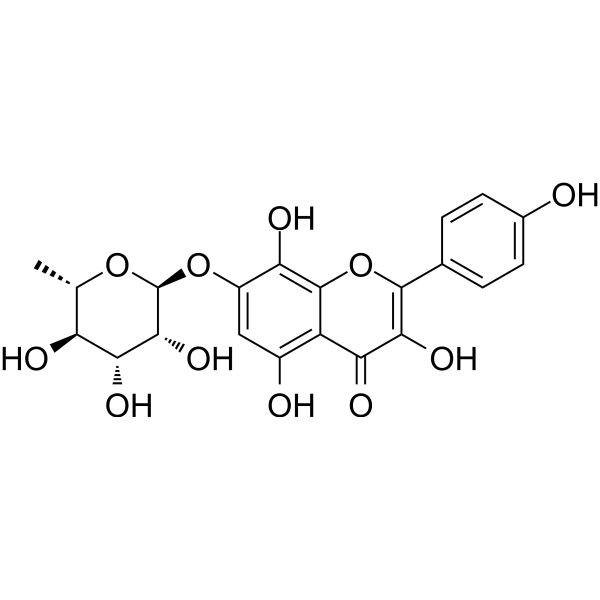
    Artocarpesin is a flavonoid compound. Artocarpesin has inhibitory effects on methicillin-resistant Staphylococcus aureus (MRSA). Artocarpesin inhibits the production of NO, PGE2 and ROS by inhibiting COX-2 and iNOS expression, and plays an anti-inflammatory role. In addition, Artocarpesin inhibits platelet aggregation by inhibiting cyclic nucleotides and MAPKs, which can be used in the study of cardiovascular diseases .
    Artocarpesin
  • HY-146458

    Bacterial Cytochrome P450 Infection
    Antibacterial agent 102 (compound 32) possesses potent in vitro and in vivo antibacterial activity, with MICs < 0.5 μg/mL in Staphylococcus aureus (S. aureus). Antibacterial agent 102 also moderately inhibits CYP3A4 with an IC50 value of 6.148 μM. Antibacterial agent 102 can reduce Methicillin-resistant Staphylococcus aureus (MRSA) load in thigh infected mice .
    Antibacterial agent 102
  • HY-124199

    Antibiotic Bacterial Infection
    Cephalochromin is an antibiotic and an inhibitor for bacterial fatty acid synthase (FabI). Cephalochromin inhibits FabI of Staphylococcus aureus and Escherichia coli with IC50 of 1.9 and 1.8 μM. Cephalochromin inhibits gram-positive methicillin-resistant S. aureus (MRSA) and quinolone-resistant S. aureus (QRSA), with MIC of 2-8 µg/mL .
    Cephalochromin
  • HY-161827

    Bacterial Infection
    Anti-MRSA agent 14 (Compound C17) has antibacterial agent against MRSA and MRSA-infected skin murine model. Anti-MRSA agent 14 is more potential than Norfloxacin (HY-B0132) against MRSA. Anti-MRSA agent 14 disrupts cell membrane and restrains metabolism. Anti-MRSA agent 14 shows antibacterial effects against S. aureus ATCC 6538, S. aureus ATCC 29213, S. epidermidis ATCC 12228, and MRSA with MIC values of 1, 2, 2, 1 μM respectively .
    Anti-MRSA agent 14
  • HY-144278

    Bacterial Infection Inflammation/Immunology
    Anti-MRSA agent 1 (Compound 13d) is a wonderful MRSA (MIC = 0.5 μg/mL) inhibitor. Anti-MRSA agent 1 (Compound 13d) could effectually relieve the development of MRSA resistance .
    Anti-MRSA agent 1
  • HY-163906

    Bacterial Infection
    Anti-MRSA agent 16 (Compound 4) is an inhibitor of methicillin-resistant Staphylococcus aureus (MRSA). Anti-MRSA agent 16 is effective in combination with oxacillin or meropenem in infected mice .
    Anti-MRSA agent 16
  • HY-169416

    Bacterial Reactive Oxygen Species (ROS) Infection
    Anti-MRSA agent 21 (Compound 27) has antibacterial activity against MRSA, with an MIC of 1 μM. Anti-MRSA agent 21 can damage bacterial cell membranes and increase reactive oxygen species .
    Anti-MRSA agent 21
  • HY-169160

    Bacterial Infection
    Anti-MRSA agent 18 (E17) is an inhibitor of MRSA with MIC values of 2 μg/mL for S. aureus and 4 μg/mL for MRSA, respectively. Anti-MRSA agent 18 interacts with bacterial cell membrane phosphatidylglycerol and cardiolipin, causing changes in cell membrane permeability and polarization, increased intracellular ROS, and DNA and protein leakage, thereby accelerating bacterial death .
    Anti-MRSA agent 18
  • HY-170802

    Bacterial Infection
    Anti-MRSA agent 22 (Compound 5a) is a potent antibacterial agent against MRSA with a MIC value of 6 µg/mL. Anti-MRSA agent 22 exhibits high binding affinity (−11.19) to FabI .
    Anti-MRSA agent 22
  • HY-179059

    Bacterial Reactive Oxygen Species (ROS) Infection
    Anti-MRSA agent 40 (Compound 7-8) is a potent agent against Methicillin-resistant Staphylococcus aureus (MRSA). Anti-MRSA agent 40 exhibits significant antibacterial activity against MRSA2 and S. aureus ATCC 29213, with its MIC values being 1 μg/mL. Anti-MRSA agent 40 causes depolarization of the cell membrane, damages membrane integrity, and simultaneously increases the level of ROS within MRSA2, ultimately leading to cell lysis and death. Anti-MRSA agent 40 shows significant efficacy in the MRSA2 skin abscess model. Anti-MRSA agent 40 can be used for research on anti-MRSA infections .
    Anti-MRSA agent 40
  • HY-178493

    Bacterial Infection
    Anti-MRSA agent 37 (Compound 5B) is an antibacterial agent against methicillin-resistant Staphylococcus aureus (MRSA) (MIC=0.25-0.5 μg/mL). Anti-MRSA agent 37 inhibits biofilm formation, disrupts cell wall integrit, attacks cell membrane and induces oxidative stress. Anti-MRSA agent 37 is promising for research of MRSA-related diseases such as skin infections .
    Anti-MRSA agent 37
  • HY-175338

    Bacterial Infection
    Anti-MRSA agent 34 (Compound 6) is an antimicrobial agent targeting methicillin-resistant Staphylococcus aureus (MRSA) (MIC=14 μg/mL). Anti-MRSA agent 34 is promising for research of microbial infection .
    Anti-MRSA agent 34
  • HY-172912

    Bacterial Infection
    Anti-MRSA agent 27 (compound 4a) is a potent anti-methicillin-resistant Staphylococcus aureus agent with a MIC of 0.0975 μmol/L. Anti-MRSA agent 27 disrupts MRSA biofilms and suppresses hemolytic toxin production .
    Anti-MRSA agent 27
  • HY-156289

    Bacterial Infection
    Anti-MRSA agent 8 (Compound 7g) is a DAPG derivative with strong antibacterial activity. Anti-MRSA agent 8 assertes its activity by targeting bacterial cell membranes. Anti-MRSA agent 8 can be used for the research of methicillin-resistant Staphylococcus aureus (MRSA) .
    Anti-MRSA agent 8
  • HY-168705

    Bacterial Infection
    Anti-MRSA agent 20 (Compound a4) is an anti-microbial agent (MIC: < 0.03125 μg/mL) against MRSA). Anti-MRSA agent 20 binds to the ribosomal peptidyl transferase center and inhibits bacterial survival by inhibiting MRSA toxin synthesis and bacterial division. Anti-MRSA agent 20 significantly reduces the MRSA load in the lungs and attenuates lung injury in the MRSA-infected mice (ED50 = 6.48 mg/kg) .
    Anti-MRSA agent 20
  • HY-178513

    Bacterial Reactive Oxygen Species (ROS) Infection
    Anti-MRSA agent 38 is a broad-spectrum antibacterial agent (MIC = 0.0625-2 µg/mL). Anti-MRSA agent 38 can inhibit ribosomal protein synthesis. Anti-MRSA agent 38 exerts multiple bactericidal effects by disrupting bacterial membrane structure and inducing ROS accumulation. Anti-MRSA agent 38 can selectively kill tumor cells, such as HGC-27 (IC50 = 0.86 µM), MRC-5 (IC50 = 5.52 µM), and RPC (IC50 = 6.09 µM) cells. Anti-MRSA agent 38 can be used to study infectious diseases such as bacterial infection .
    Anti-MRSA agent 38
  • HY-146428

    Bacterial Infection
    Anti-MRSA agent 4 (compound 7a) is a potent and selective growth inhibitor of Gram-positive Methicillin-resistant Staphylococcus aureus (MRSA), with MIC ≤ 0.26 µM. Anti-MRSA agent 4 exhibits no cytotoxic and no hemolytic activity in HEK293 cells .
    Anti-MRSA agent 4
  • HY-174323

    Bacterial DNA/RNA Synthesis Infection
    Anti-MRSA agent 28 is an antibacterial agent against multidrug resistant (MDR) gram-positive strains with MICs of 0.06-0.125 μg/mL. Anti-MRSA agent 28 can target DNA polymerase IIIC to reduce the amount of genomic DNA with the IC50 of 3.80 μg/mL. Anti-MRSA agent 28 has good antibacterial activity and reduces inflammation. Anti-MRSA agent 28 can be used against gram-positive strains and infectious conditions.
    Anti-MRSA agent 28
  • HY-161893

    Bacterial Infection
    Anti-MRSA agent 15 (Compound 9o10) exhibits antibacterial activity, that inhibits methicillin-resistant Staphylococcus aureus (MRSA) with a MIC of 0.0625 μg/mL. Anti-MRSA agent 15 exhibits low hemolysis and low cytotoxicity. Anti-MRSA agent 15 exhibits anti-infective in mice .
    Anti-MRSA agent 15
  • HY-144822

    Bacterial Infection
    Anti-MRSA agent 2 (compound 14) has highly inhibitory activity against Methicillin-resistant Staphylococcus aureus (MRSA) with MIC of 0.098 μg/ml, and relatively low cytotoxicity in normal cells. Anti-MRSA agent 2 has strong ability to destroy bacterial membrane and bind to genomic DNA .
    Anti-MRSA agent 2
  • HY-174459

    Bacterial Penicillin-binding protein (PBP) Infection
    Anti-MRSA agent 31 (Compound 6) is an anti-methicillin-resistant Staphylococcus aureus (MRSA) agent with a MIC of 97 μg/mL and a MBC of 781.25 μg/mL. Anti-MRSA agent 31 has a potent antibacterial activity and a strong Binding Protein 2a (PBP2a) inhibitory activity .
    Anti-MRSA agent 31
  • HY-144823

    Bacterial Infection
    Anti-MRSA agent 3 (compound 18) has highly inhibitory activity against Methicillin-resistant Staphylococcus aureus (MRSA) with MIC of 0.098 μg/ml, and low cytotoxicity in normal cells. Anti-MRSA agent 3 has relatively strong ability to destroy bacterial cell wall and membrane, high binding affinity to bacterial genomic DNA .
    Anti-MRSA agent 3
  • HY-173225

    Bacterial Infection
    MRSA/VRE-IN-1 (Compound 3e) is an inhibitor against methicillin-resistant Staphylococcus aureus (MRSA) and vancomycin-resistant Enterococcus (VRE). The MIC/MBC of MRSA/VRE-IN-1 against VRE is 3.6/7.3 µM, and against MRSA is 7.3/14.6 µM. MRSA/VRE-IN-1 can be used in the research of the anti-infection field .
    MRSA/VRE-IN-1
  • HY-163073

    Bacterial Infection
    Anti-MRSA agent 9 (compound 39) shows antibacterial effects against clinically isolated methicillin-resistant Staphylococcus aureus (MRSA) with MIC values of 1 μg/ml. Anti-MRSA agent 9 also shows anti-MRSA efficacy in vivo .
    Anti-MRSA agent 9
  • HY-168873

    Bacterial Infection
    Anti-MRSA agent 23 (compound 11) is a potent anti-methicillin-resistant Staphylococcus aureus agent. Anti-MRSA agent 23 shows antibacterial and antibiofilm activities. Anti-MRSA agent 23 accelerates the reconstruction and healing of MRSA-infected cutaneous wounds by decreasing bacterial loads, attenuating inflammation, and promoting angiogenesis .
    Anti-MRSA agent 23

Inquiry Online

Your information is safe with us. * Required Fields.

Salutation


Country or Region *

Applicant Name *


Organization Name *

Department *


Email Address *


Product Name *

Cat. No.


Requested quantity *

Phone Number *


Remarks

Inquiry Online

Inquiry Information

Product Name:
Cat. No.:
Quantity:
MCE Japan Authorized Agent:

