6 Results for "

ACSS2,cancer

" in MedChemExpress (MCE) Product Catalog:
Products (6)

6 Results for "ACSS2,cancer" in MCE Product Catalog:

5
5 Cited Publications
Cat. No.: HY-145953
CAS No.: 1824637-41-3
Purity:  99.94%
Research Areas:  

Cancer

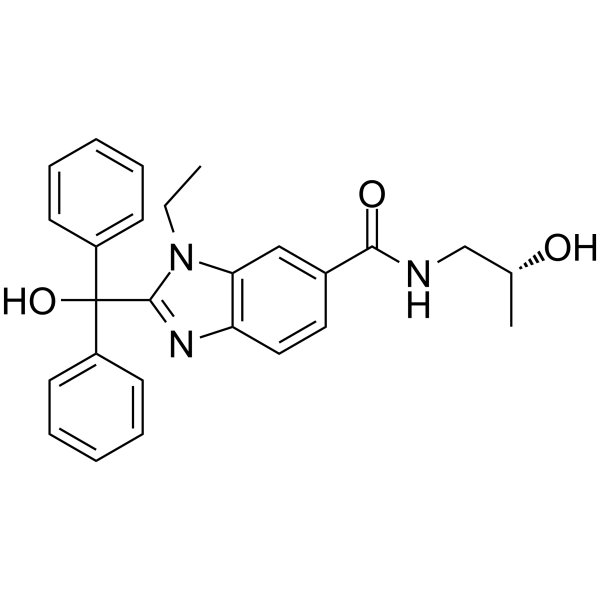
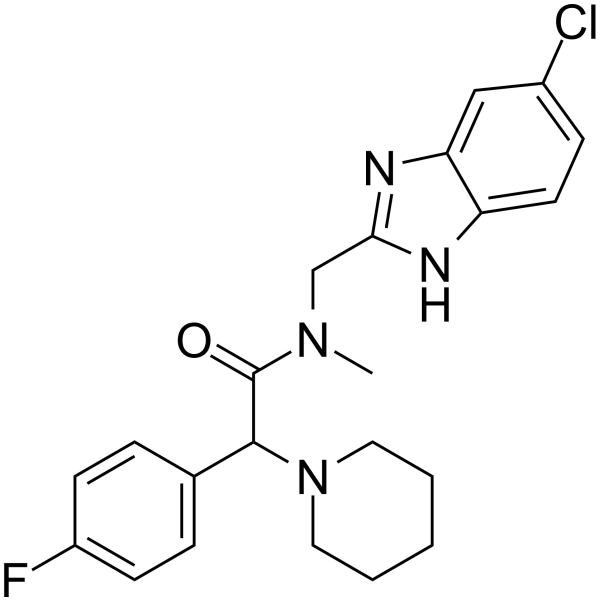
VY-3-135 is a potent, orally active, and stable ACSS2 inhibitor with an IC50 value of 44 nM. VY-3-135 is specific to ACSS2 among the AcCoA synthetase family of enzymes. VY-3-135 does not inhibit ACSS1 or ACSS3 enzymatic activity. VY-3-135 can be used for the research of breast cancer .
loading...
    loading...
2
2 Cited Publications
Cat. No.: HY-148104
CAS No.: 2332820-04-7
Purity:  99.49%
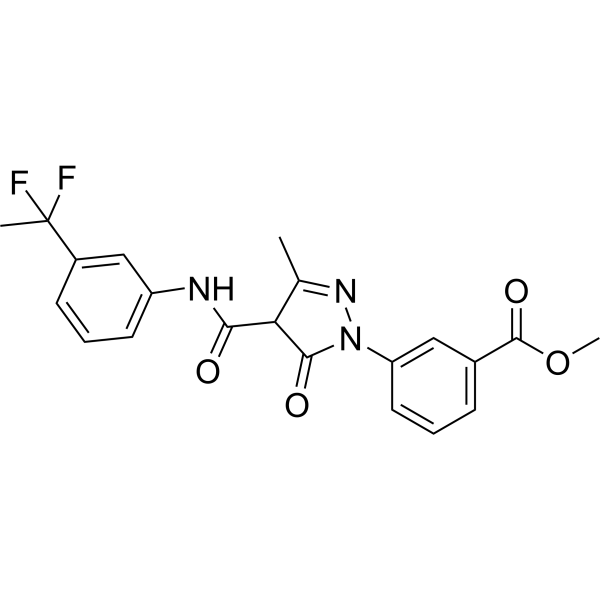
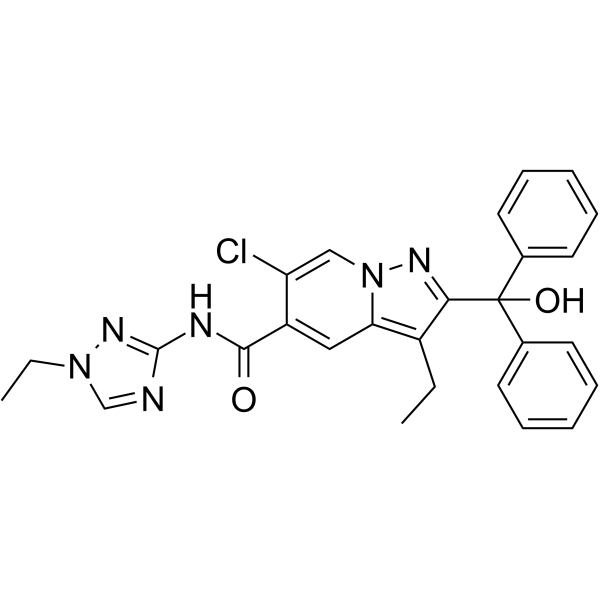
ACSS2-IN-2 is an acyl-CoA synthetase short-chain family member 2 (ACSS2) inhibitor. ACSS2-IN-2 can inhibit ACSS2 activity with an IC50 value of 3.8 nM. ACSS2-IN-2 can be used for the research of several diseases, such as viral infection, metabolic disorders, neuropsychiatric diseases, inflammatory/autoimmune conditions and cancer .
loading...
    loading...
2
2 Cited Publications
Cat. No.: HY-N2353
CAS No.: 147-81-9
Synonyms: (±)​-​Arabinose; DL-​Arabinose; dl-​Arabinose
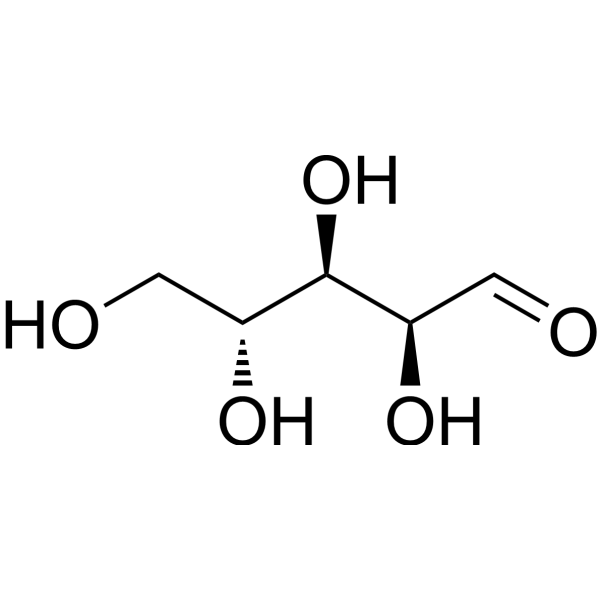
Arabinose is a pentose sugar commonly found in plants. Arabinose alleviates immune dysregulation and inflammation by promoting balanced immune responses and reducing inflammation. Arabinose induces cytotoxicity, autophagy (Autophagy), and cell cycle arrest in breast cancer cells through the p38-MAPK signaling pathway. Arabinose activates the ACSS2-PPARγ/TFEB-AMPK axis in neuroblastoma cells, thereby exerting neuromodulatory/antidepressant effects. Arabinose can also be used as an intermediate in compound synthesis. Arabinose may be applied in research related to immune inflammation, depression, breast cancer, and other diseases .
loading...
    loading...
Cat. No.: HY-161117
CAS No.: 1497439-74-3
Target:  

Acetyl-CoA synthetase

Research Areas:  

Cancer

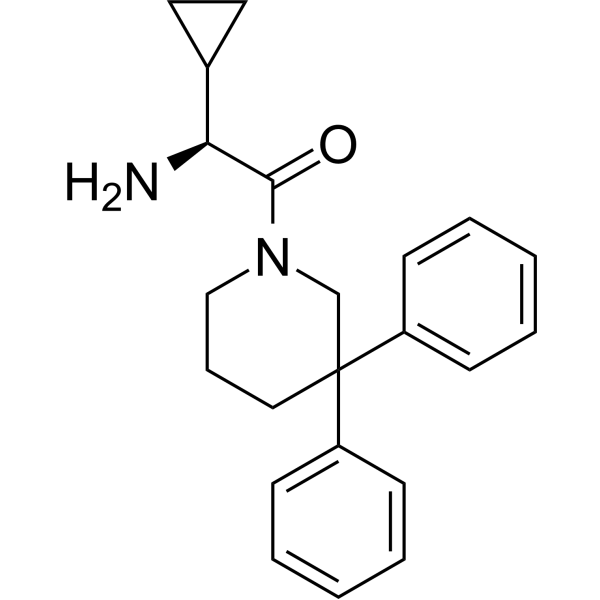
AD-8007 is a blood-brain barrier-permeable ACSS2 inhibitor with human IC50 of 0.89 μM and Kd of 116.6 μM. AD-8007 reduces colony-forming ability, lipid storage levels and FASN protein expression, and induces cancer cell death. AD-8007 shrinks established tumors, acts synergistically with radiotherapy to inhibit tumor growth, reduces tumor burden, causes no obvious toxicity to normal brain tissue, and prolongs survival. AD-8007 exhibits superior metabolic stability. AD-8007 is applicable to research related to breast cancer brain metastasis .
loading...
    loading...
Cat. No.: HY-161116
CAS No.: 2306525-79-9
AD-5584 is a selective and blood-brain barrier-penetrant ACSS2 inhibitor (IC50 = 0.86 μM). AD-5584 binds to the nucleotide-binding pocket of ACSS2, blocking CoA binding and acetyl transfer through steric hindrance, thereby inhibiting the conversion of acetate to acetyl-CoA. AD-5584 decreases acetyl-CoA levels, lipid droplet content, FASN expression, E2F1, SLC7A11, and GPX4 levels, and reduces E2F1 occupancy at the SLC7A11 promoter. AD-5584 induces ferroptosis, lipid peroxidation, malondialdehyde accumulation, and cell death, and decreases clonogenic survival and proliferative capacity. AD-5584 can be used for research on breast cancer brain metastasis .
loading...
    loading...
Cat. No.: HY-145392
CAS No.: 2711039-08-4
Target:  

Acetyl-CoA synthetase

Research Areas:  

Cancer

ACSS2-IN-1 is a potent acetyl-CoA synthetase 2 (ACSS2) inhibitor with an IC50 of <1 nM. ACSS2-IN-1 inhibits ACSS2 enzymatic activity, blocks the metabolic pathway converting acetate to acetyl-CoA in cancer cells, and thereby suppresses tumor energy metabolism, lipid synthesis and histone acetylation. ACSS2-IN-1 can be used in the research of cancer and hyperproliferative disorders .
loading...
    loading...

