15 Results for "

AR-dependent prostate cancer

" in MedChemExpress (MCE) Product Catalog:
Products (15)

15 Results for "AR-dependent prostate cancer" in MCE Product Catalog:

11
11 Cited Publications
Cat. No.: HY-16985
CAS No.: 1297538-32-9
Synonyms: ODM-201; BAY-1841788
Target:  

Androgen Receptor

Research Areas:  

Cancer

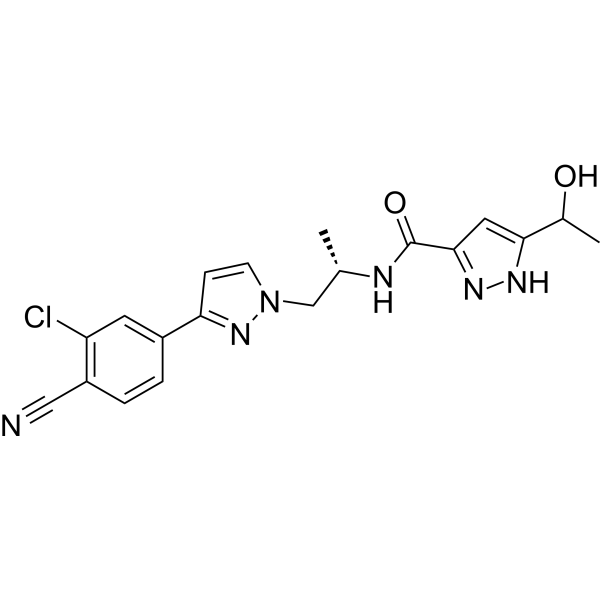
Darolutamide (ODM-201) is an orally active competitive androgen receptor (AR) antagonist. Darolutamide has a Ki of 11 nM for rat wild-type AR (wtAR) and IC50 of 26 nM for human wild-type AR (hAR)-mediated transcriptional activation . Darolutamide inhibits testosterone-induced AR nuclear translocation and transcriptional activation . Darolutamide exerts selective effects on AR-positive cells by inhibiting AR-dependent signaling pathways, and its active metabolite retains full antagonistic activity against AR mutants . Darolutamide can be used for the research of prostate cancer, including androgen receptor-dependent prostate cancer .
loading...
    loading...
1
1 Cited Publications
Cat. No.: HY-19337
CAS No.: 1297537-33-7
Synonyms: BAY 1896953; ORM-15341
Target:  

Androgen Receptor

Research Areas:  

Cancer

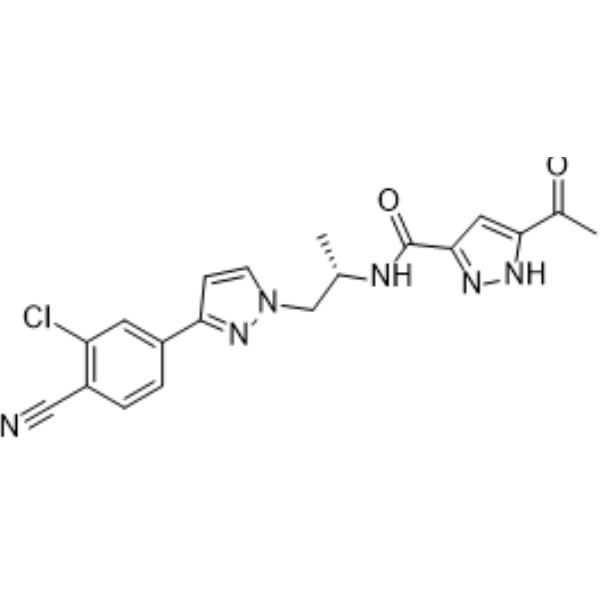
Ketodarolutamide (ORM-15341) is a potent, high-affinity nonsteroidal competitive full antagonist of androgen receptor (AR). Ketodarolutamide displays a Ki value of 8 nM for rat wild-type AR and an IC50 value of 38 nM in AR-HEK293 cells . Ketodarolutamide inhibits testosterone-induced nuclear translocation of the AR and antagonizes both overexpressed and mutant ARs . Ketodarolutamide specifically suppresses the proliferation of AR-dependent prostate cancer cells and exhibits antitumor activity in models of castration-resistant prostate cancer (CRPC) . Ketodarolutamide is suitable for the mechanistic and therapeutic research of prostate cancer .
loading...
    loading...
Cat. No.: HY-145602
CAS No.: 2567686-02-4
Purity:  98.75%
Synonyms: CPI-0209
Research Areas:  

Cancer

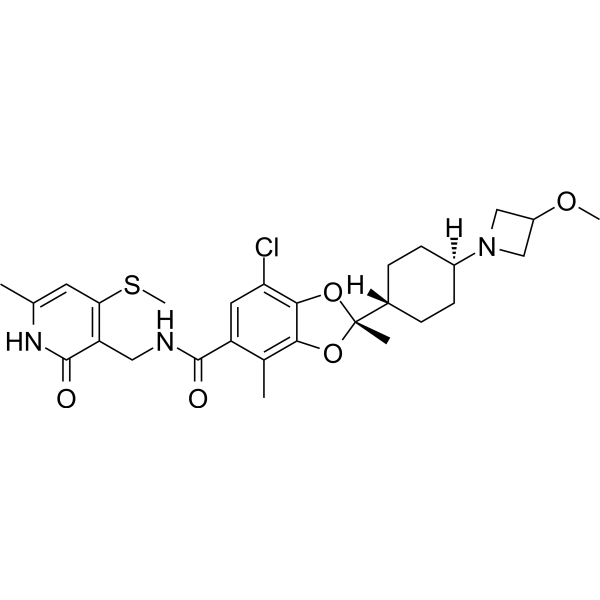
Tulmimetostat (CPI-0209) is an orally active EZH1/EZH2 inhibitor that targets and inhibits the EZH2 enzyme.Tulmimetostat has antitumor activity and is used in a variety of solid tumor studies .
loading...
    loading...
Cat. No.: HY-173351
CAS No.: 2901806-51-5
Research Areas:  

Cancer

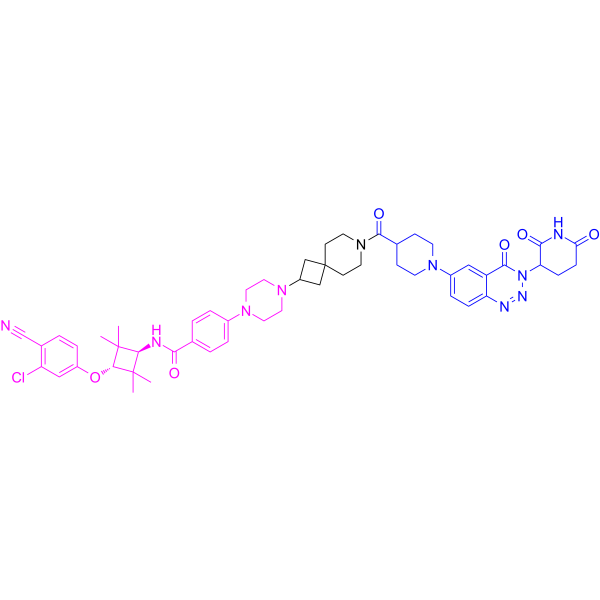
G-6599 is a covalent molecular glue degrader targeting SMARCA2/SMARCA4, with DC50 values of 0.017 nM and 0.057 nM against SMARCA2 and SMARCA4 in SW1573 cells, respectively. G-6599 exhibits proteome selectivity for SMARCA2, SMARCA4, and PBRM1. G-6599 induces the assembly of the SMARCA2-FBXO22 ternary complex, enabling ubiquitination and proteasomal degradation of both proteins via the ubiquitin-proteasome pathway without the need for biotransformation. G-6599 shows antiproliferative effects in relevant cancer cell models. G-6599 can be used for research on androgen-dependent prostate cancer and SMARCA4-mutant non-small cell lung cancer .
loading...
    loading...
Cat. No.: HY-16985S
CAS No.: 2484757-20-0
Synonyms: ODM-201-d4; BAY-1841788-d4
Darolutamide-d4 (ODM-201-d4) is deuterium labeled Darolutamide (HY-16985). Darolutamide (ODM-201) is an orally active competitive androgen receptor (AR) antagonist, with a Ki of 11 nM for rat wild-type AR (wtAR) and an IC50 of 26 nM for human wild-type AR (hAR)-mediated transcriptional activation . Darolutamide inhibits testosterone-induced AR nuclear translocation and transcriptional activation . Darolutamide exerts selective effects on AR-positive cells by inhibiting AR-dependent signaling pathways, and its active metabolite retains full antagonistic activity against AR mutants . Darolutamide can be used for the research of prostate cancer, including androgen receptor-dependent prostate cancer .
loading...
    loading...
Cat. No.: HY-164807
CAS No.: 1489236-55-6
Target:  

HyT Androgen Receptor HSP

Research Areas:  

Cancer

SARD279 is a HyT degrader of androgen receptor (AR). SARD279 binds to AR, recruits HSP70, mediates ubiquitin-dependent proteasomal degradation, and competitively inhibits the transactivation of AR. SARD279 exhibits antiproliferative activity in AR-dependent prostate cancer cells and castration-resistant prostate cancer cells, including those harboring the AR F876L mutation. SARD279 can be used in studies related to prostate cancer and castration-resistant prostate cancer .
loading...
    loading...
Cat. No.: HY-16985R
CAS No.: 1297538-32-9
Synonyms: ODM-201 (StandARd); BAY-1841788 (StandARd)
Research Areas:  

Cancer

Darolutamide (Standard) is the analytical standard of Darolutamide (HY-16985). This product is intended for research and analytical applications. Darolutamide (ODM-201) is an orally active competitive androgen receptor (AR) antagonist, with a Ki of 11 nM for rat wild-type AR (wtAR) and an IC50 of 26 nM for human wild-type AR (hAR)-mediated transcriptional activation . Darolutamide inhibits testosterone-induced AR nuclear translocation and transcriptional activation . Darolutamide exerts selective effects on AR-positive cells by inhibiting AR-dependent signaling pathways, and its active metabolite retains full antagonistic activity against AR mutants . Darolutamide can be used for the research of prostate cancer, including androgen receptor-dependent prostate cancer .
loading...
    loading...
Cat. No.: HY-146397
CAS No.: 2760703-21-5
Research Areas:  

Cancer

TD-802 is a CRBN-recruiting PROTAC androgen receptor (AR) degrader with liver microsomal stability and in vivo pharmacokinetic properties. TD-802 exhibits weak degrading activity against the AR-V7 splice variant, and its degradation process depends on the ubiquitin-proteasome system and Cullin-Ring ubiquitin ligase. TD-802 inhibits the proliferation of AR-dependent prostate cancer cells and the growth of AR-positive prostate cancer tumors in in vivo xenograft models .
loading...
    loading...
Cat. No.: HY-179124
Target:  

Apoptosis Caspase

Research Areas:  

Cancer

Apoptosis inducer 52 is a derivative of flutamide that induces apoptosis in prostate cancer cells. Apoptosis inducer 52 promotes apoptosis by activating both intrinsic and extrinsic apoptotic pathways, without generating reactive oxygen species (ROS). Apoptosis inducer 52 triggers caspase 3/7 activity and the externalization of phosphatidylserine, leading to cell cycle arrest at the G0/G1 phase. Apoptosis inducer 52 can be used for the research of androgen receptor (AR)-dependent and -independent prostate cancers and leukemia .
loading...
    loading...
Cat. No.: HY-117953
CAS No.: 155180-53-3
Target:  

Androgen Receptor

Research Areas:  

Cancer

RU 59063 is a high-affinity, selective nonsteroidal androgen receptor (AR) ligand that acts as a partial AR agonist/antagonist in CV-1 cell transcription assays. RU 59063 has a Ka value of 6.2×10 9 M -1 for human AR. RU 59063 induces a conformation of AR that can bind to the androgen response element (ARE), triggers partial AR-dependent transcriptional activation, and antagonizes testosterone-induced AR transcriptional activity. RU 59063 inhibits testosterone propionate-induced ornithine decarboxylase activity in mouse kidneys and testosterone propionate-induced prostate weight gain in rats. RU 59063 can be used in studies related to prostate cancer .
loading...
    loading...
Cat. No.: HY-179050
CAS No.: 401580-43-6
Research Areas:  

Cancer

Androgen receptor-IN-7 is a potent androgen receptor (AR) inhibitor. Androgen receptor-IN-7 exhibits potent anticancer activity against PC-3 cells (IC50 =370.37 nM) and LNCaP cells via both AR-dependent and AR-independent pathways. Androgen receptor-IN-7 induces ROS production in PC-3 cells. Androgen receptor-IN-7 can be used for prostate cancer research .
loading...
    loading...
Cat. No.: HY-164477
CAS No.: 1431166-12-9
Target:  

Androgen Receptor

Research Areas:  

Cancer

FL442 is an Androgen Receptor (AR) modulator. FL442 exhibits strong inhibitory effects in AR-dependent prostate cancer cells, showing similar inhibitory efficiency to traditional antiandrogen drugs Bicalutamide (HY-14249) and Enzalutamide (HY-70002), while maintaining antiandrogenic activity against the AR mutant F876L, which is highly resistant to Enzalutamide. Pharmacokinetic studies of FL442 in mice reveal a long half-life (8 hours), good targeting (prostate tissue), and metabolic stability, and it effectively inhibits LNCaP tumor growth at low plasma concentrations (30 ng/mL) .
loading...
    loading...
Cat. No.: HY-19337S
CAS No.: 2484757-41-5
Synonyms: BAY 1896953-d3; ORM-15341-d3
Ketodarolutamide-d3 (BAY 1896953-d3) is the deuterium labeled Ketodarolutamide (HY-19337). Ketodarolutamide (ORM-15341) is a potent, high-affinity nonsteroidal competitive full antagonist of androgen receptor (AR). Ketodarolutamide displays a Ki value of 8 nM for rat wild-type AR and an IC50 value of 38 nM in AR-HEK293 cells . Ketodarolutamide inhibits testosterone-induced nuclear translocation of the AR and antagonizes both overexpressed and mutant ARs . Ketodarolutamide specifically suppresses the proliferation of AR-dependent prostate cancer cells and exhibits antitumor activity in models of castration-resistant prostate cancer (CRPC) . Ketodarolutamide is suitable for the mechanistic and therapeutic research of prostate cancer .
loading...
    loading...
Cat. No.: HY-19337S1
Synonyms: BAY 1896953-d6; ORM-15341-d6
Ketodarolutamide-d6 (BAY 1896953-d6) is the deuterium labeled Ketodarolutamide (HY-19337). Ketodarolutamide (ORM-15341) is a potent, high-affinity nonsteroidal competitive full antagonist of androgen receptor (AR). Ketodarolutamide displays a Ki value of 8 nM for rat wild-type AR and an IC50 value of 38 nM in AR-HEK293 cells . Ketodarolutamide inhibits testosterone-induced nuclear translocation of the AR and antagonizes both overexpressed and mutant ARs . Ketodarolutamide specifically suppresses the proliferation of AR-dependent prostate cancer cells and exhibits antitumor activity in models of castration-resistant prostate cancer (CRPC) . Ketodarolutamide is suitable for the mechanistic and therapeutic research of prostate cancer .
loading...
    loading...
Cat. No.: HY-183667
CAS No.: 1332390-06-3
Research Areas:  

Cancer

JNJ-pan-AR is an orally active androgen receptor (AR) inhibitor with an IC50 of 19 nM and a Ki of 8.4 nM against human wild-type AR. JNJ-pan-AR abolishes androgen-induced KLK2 and KLK3 mRNA expression and reduces androgen-dependent colony formation in prostate cancer cells. JNJ-pan-AR blocks AR nuclear translocation, inhibits PSA protein expression, and represses the growth of AR-dependent tumor cells and ARF877L-driven tumor xenografts. JNJ-pan-AR blocks transactivation and signaling of wild-type AR and various mutant AR variants. JNJ-pan-AR is applicable for research on castration-resistant prostate cancer .
loading...
    loading...
  • 1

