32 Results for "

CRL cells

" in MedChemExpress (MCE) Product Catalog:
Products (32)

32 Results for "CRL cells" in MCE Product Catalog:

20
20 Publications Verification
Cat. No.: HY-101488
CAS No.: 1010100-07-8
Purity:  99.85%
CC-885, a cereblon (CRBN) modulator, acts as a molecular glue degrader targeting GSPT1 with a Kd of 350 nM. CC-885 binds to CRBN to alter the substrate specificity of the CRL4 E3 ligase, promoting the ubiquitination and proteasomal degradation of GSPT1, BNIP3L, PLK1, CDK4, IKZF1/3, GSPT2, WIZ, CHD7, GOLM1, CK1α and ETS1. CC-885 induces apoptosis, cell cycle arrest, transcriptional downregulation and antiproliferation in cancer cells. CC-885 is applicable to research related to relapsed/refractory acute myeloid leukemia, MYC-driven tumors, metastatic castration-resistant prostate cancer, multiple myeloma, hepatocellular carcinoma, glioblastoma, VHL-deficient clear cell renal cell carcinoma and non-small cell lung cancer .
loading...
    loading...
10
10 Cited Publications
Cat. No.: HY-128586
CAS No.: 1848959-10-3
Purity:  99.52%
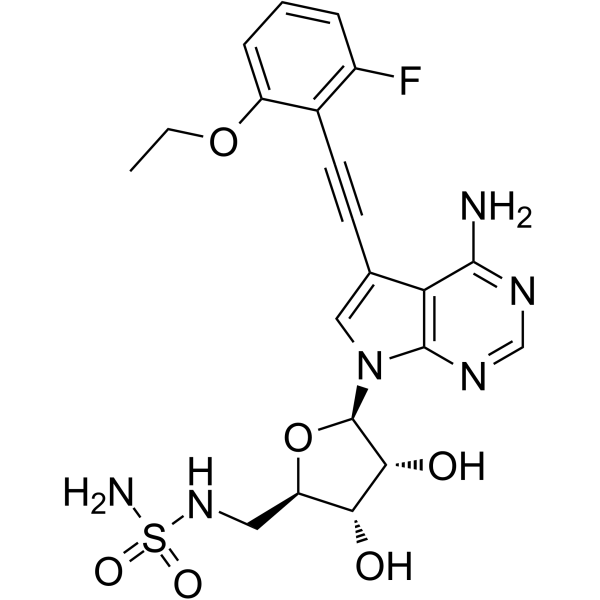
TAS4464 is a long-acting, highly selective covalent inhibitor targeting NEDD8-activating enzyme (NAE) (IC50=0.955 nM), and also inhibits CAII with an IC50 of 0.73 μM, which is less potent than MLN4924 (HY-70062). The IC50 values of TAS4464 against other E1 enzymes UAE and SAE are 449 nM and 1280 nM, respectively. TAS4464 targets NEDD8 in an ATP-dependent manner to inhibit NAE, blocks the neddylation pathway, causes accumulation of CRL ubiquitin ligase substrates (such as CDT1, p27, phosphorylated IκBα), and further induces tumor cell apoptosis. TAS4464 exhibits antiproliferative and cytotoxic effects, and has broad-spectrum antitumor activity against various hematologic and solid tumor cell lines as well as patient-derived tumor cells. TAS4464 has a wide selcetive window, without obvious toxicity. TAS4464 can be used in the research of hematologic malignancies (leukemia, lymphoma, multiple myeloma, etc.) and solid tumors (small cell lung cancer, colorectal cancer, sarcoma, endometrial cancer, ovarian cancer, etc.) .
loading...
    loading...
10
10 Cited Publications
Cat. No.: HY-128586A
CAS No.: 1848959-11-4
Purity:  98.91%
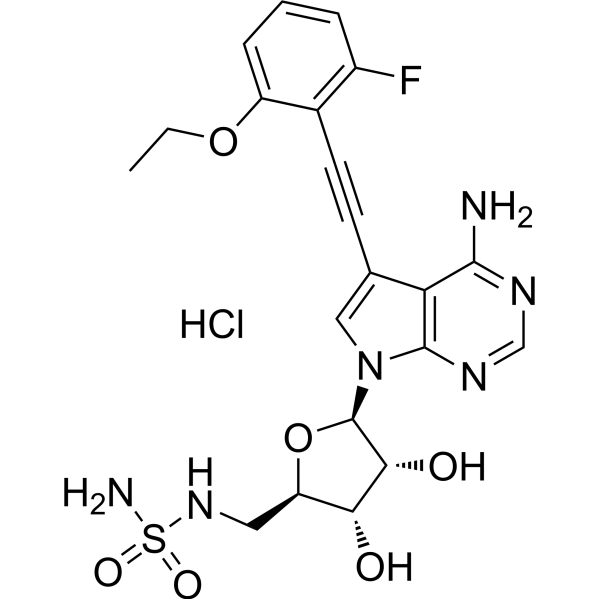
TAS4464 hydrochloride is a long-acting, highly selective covalent inhibitor targeting NEDD8-activating enzyme (NAE) (IC50=0.955 nM), and also inhibits CAII with an IC50 of 0.73 μM, which is less potent than MLN4924 (HY-70062). The IC50 values of TAS4464 hydrochloride against other E1 enzymes UAE and SAE are 449 nM and 1280 nM, respectively. TAS4464 hydrochloride targets NEDD8 in an ATP-dependent manner to inhibit NAE, blocks the neddylation pathway, causes accumulation of CRL ubiquitin ligase substrates (such as CDT1, p27, phosphorylated IκBα), and further induces tumor cell apoptosis. TAS4464 hydrochloride exhibits antiproliferative and cytotoxic effects, and has broad-spectrum antitumor activity against various hematologic and solid tumor cell lines as well as patient-derived tumor cells. TAS4464 hydrochloride has a wide therapeutic window, without obvious toxicity. TAS4464 hydrochloride can be used in the research of hematologic malignancies (leukemia, lymphoma, multiple myeloma, etc.) and solid tumors (small cell lung cancer, colorectal cancer, sarcoma, endometrial cancer, ovarian cancer, etc.) .
loading...
    loading...
7
7 Cited Publications
Cat. No.: HY-130800
CAS No.: 1860875-51-9
Purity:  99.76%
Synonyms: CC-90009
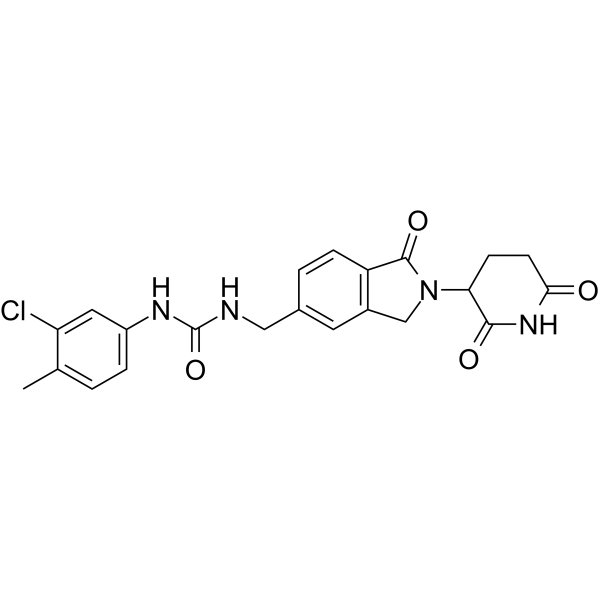
Eragidomide (CC-90009) is a GSPT1 Molecular Glue degrader. Eragidomide exhibits antiproliferative and pro-apoptotic (apoptosis) activities against acute myeloid leukemia cells. Eragidomide recruits the CRL4CRBN E3 ubiquitin ligase complex to selectively target GSPT1 for ubiquitination and proteasomal degradation. Eragidomide reduces leukemia cell engraftment and eliminates leukemia stem cells. Eragidomide promotes the activation of the GCN1/GCN2/ATF4 pathway and the integrated stress response pathway, inhibits global protein translation, promotes preferential translation of ATF4, and induces the accumulation of ATF4, CHOP and ATF3. The response to Eragidomide is regulated by the ILF2/ILF3 heterodimer complex, the mTOR signaling pathway and the integrated stress response. Eragidomide can be used in research related to acute myeloid leukemia and relapsed/refractory acute myeloid leukemia .
loading...
    loading...
5
5 Cited Publications
Cat. No.: HY-130708
CAS No.: 2688842-08-0
Purity:  99.60%
Research Areas:  

Cancer

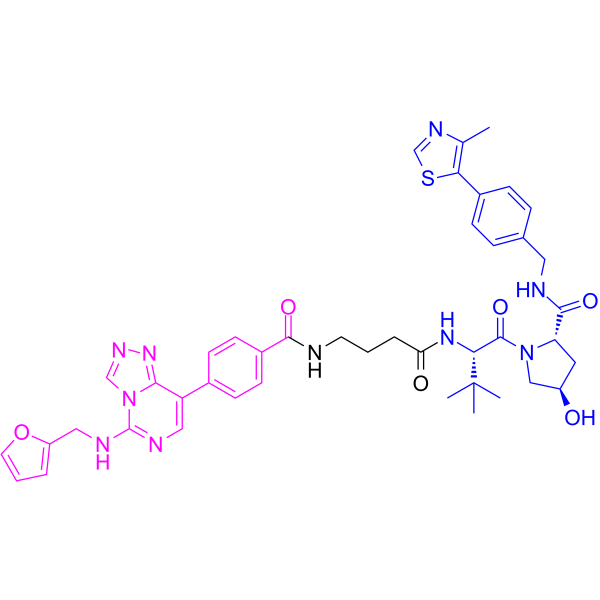
UNC6852 is a PRC2 PROTAC degrader, with a DC50 value of 0.79 μM for EED (HeLa), 0.3 μM for EZH2 (HeLa), and 0.59 μM for SUZ12 (DLBCL). UNC6852 binds to the WD40 aromatic cage of EED and CRL2-VHL, inducing proteasomal degradation of EED, EZH2 and SUZ12. UNC6852 reduces the level of H3K27me3 and exerts antiproliferative effects in cancer cells. UNC6852 can be used in studies related to diffuse large B-cell lymphoma, triple-negative breast cancer and prostate cancer .
loading...
    loading...
5
5 Cited Publications
Cat. No.: HY-123844
CAS No.: 1883863-52-2
Purity:  99.94%
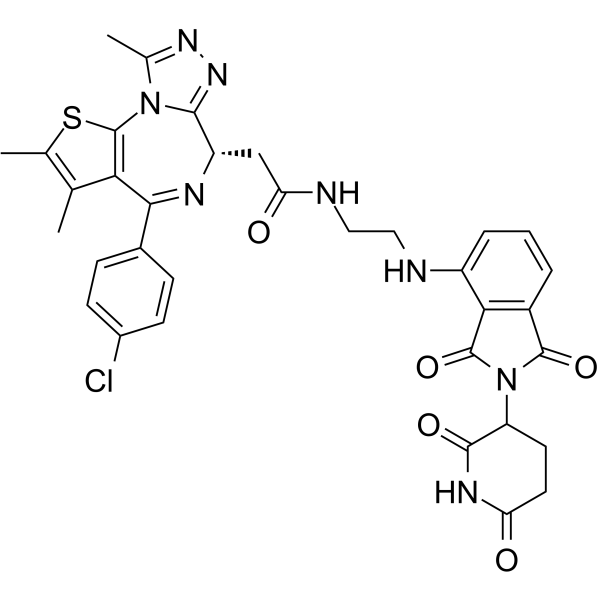
dBET57 is a potent and selective BRD4BD1 PROTAC degrader with a DC50 of approximately 500 nM. dBET57 forms a ternary complex with CRL4 CRBN and BRD4BD1, induces the ubiquitination and degradation of BRD4, and indirectly inhibits the transcription of MYCN, c-Myc and PD-L1, ultimately leading to cell cycle arrest and apoptosis. dBET57 can be used in related research on neuroblastoma, non-small cell lung cancer and colorectal cancer .
loading...
    loading...
3
3 Cited Publications
Cat. No.: HY-122826
CAS No.: 2243076-67-5
Purity:  98.90%
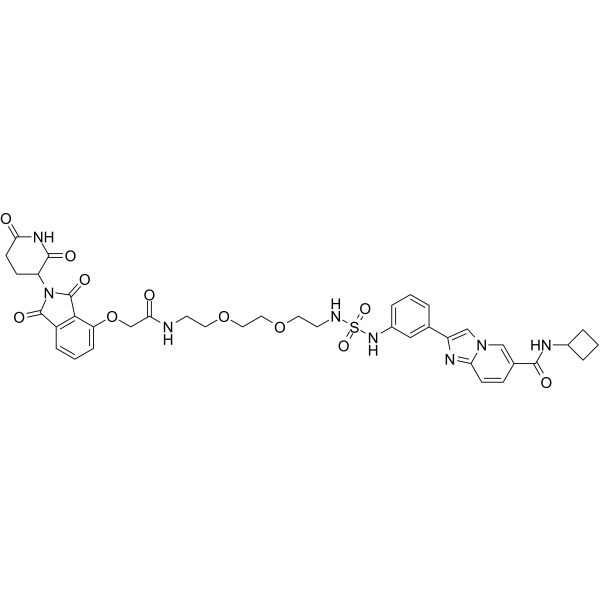
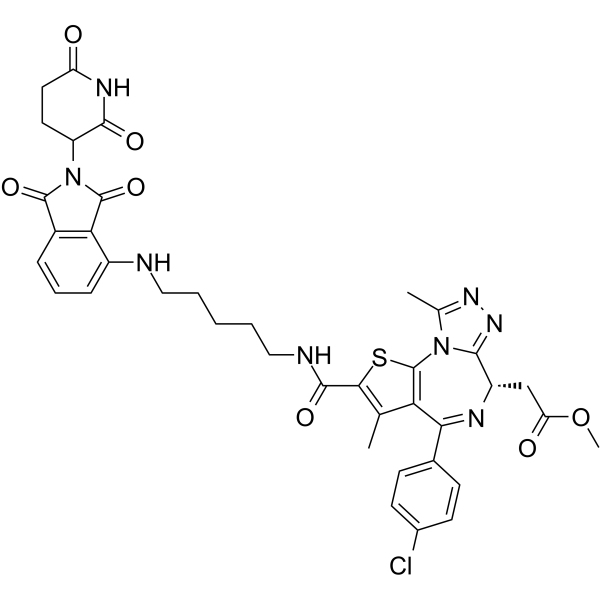
ZXH-3-26 is a CRBN-recruiting BRD4 PROTAC degrader with a DC50/5h of approximately 5 nM. ZXH-3-26 drives the ubiquitination and degradation of BRD4 by recruiting BRD4BD1 to the CRL4 CRBN E3 ubiquitin ligase complex, thereby inhibiting the dynamic distribution of super-enhancers. ZXH-3-26 reverses TNF-α-induced impairment of the immunosuppressive function of mesenchymal stem cells, and affects RNA synthesis and the transcriptional elongation process of Pol II. ZXH-3-26 can be used in studies related to inflammatory arthritis, malignant tumors, and HIV latency .
loading...
    loading...
2
2 Cited Publications
Cat. No.: HY-114322
CAS No.: 2306193-61-1
Purity:  98.00%
Research Areas:  

Cancer

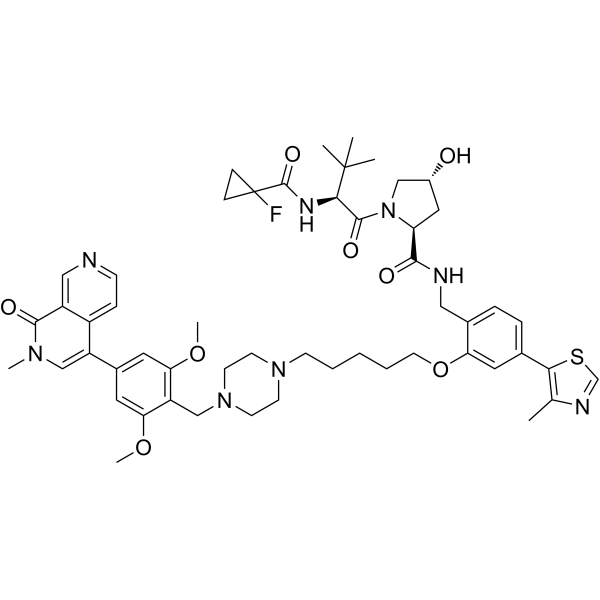
VZ185 is a BRD9 and BRD7 PROTAC degrader, with DC50 values of 1.76 nM and 4.5 nM, respectively, in RI-1 cells; and DC50 values of 4 nM and 34 nM, respectively, in HEK293 cells. VZ185 hijacks the CRL2 VHL E3 ubiquitin ligase complex to induce ubiquitination and subsequent proteasomal degradation of BRD9 and BRD7. VZ185 can be used in research related to acute myeloid eosinophilic leukemia and malignant rhabdoid tumors .
loading...
    loading...
1
1 Cited Publications
Cat. No.: HY-160799
CAS No.: 2412367-83-8
Research Areas:  

Cancer

HA-9104 is a potent and selective inhibitor of cullin-5 neddylation via virtually targeting the V30 pocket of UBE2F. HA-9104 binds to UBE2F, reduces its protein levels, and consequently inhibits cullin-5 neddylation. HA-9104 has potent growth suppression and radiosensitizing activities via targeting the UBE2F-CRL5 axis and causing DNA damage, leading to induction of apoptosis and G2/M arrest in lung and pancreatic cancer cells .
loading...
    loading...
Cat. No.: HY-145319
CAS No.: 2367619-87-0
Purity:  99.75%
FPFT-2216 is an orally active Molecular glue degrader targeting IKZF1, IKZF3, CK-1α, and PDE6D, with a DC50 of 8 nM against PDE6D. FPFT-2216 mediates ubiquitin-proteasome degradation via the CRL4 CRBN E3 ubiquitin ligase complex and interacts with the non-isoprenoid-binding region of PDE6D. FPFT-2216 activates the p53 signaling pathway, inhibits the CBM complex/NF-κB pathway, upregulates IL-2, suppresses IL-1β and IL-6, and induces tumor cell Apoptosis. FPFT-2216 exhibits anticancer activity against multiple myeloma and lymphoma. FPFT-2216 can be used in research related to multiple myeloma, lymphoma, acute lymphoblastic leukemia, acute myeloid leukemia, pancreatic ductal adenocarcinoma, non-small cell lung cancer, and gastric adenocarcinoma .
loading...
    loading...
Cat. No.: HY-144977
CAS No.: 1281683-44-0
Purity:  99.67%
Research Areas:  

Cancer

dCeMM4 is a Cyclin K Molecular glue degrader. dCeMM4 mediates the direct interaction between CDK12:cyclin K and the CRL4B ligase complex, thereby driving the ubiquitination and proteasomal degradation of Cyclin K. dCeMM4 induces Apoptosis without cell cycle phase-specific arrest. dCeMM4 exhibits synergistic activity with DNA damage inducers, and a correlation exists between Cyclin K degradation and cellular sensitivity. dCeMM4 can be used in studies related to T-cell malignancies .
loading...
    loading...
Cat. No.: HY-153459
CAS No.: 2684292-71-3
Purity:  98.83%
Research Areas:  

Cancer

IBG1 is a bivalent molecular glue degrader targeting BRD2/BRD4, with IC50 values of 12.8 nM and 462 nM, respectively, and an EC50 of 44 nM. By binding to the adjacent BD1 and BD2 bromodomains of BRD2 and BRD4, IBG1 stabilizes the ternary complex formed with DCAF16, thereby driving CRL-mediated ubiquitination and proteasomal degradation. IBG1 induces cancer cell apoptosis and inhibits cancer cell growth in a DCAF16-dependent manner, and downregulates MYC expression through DCAF16-independent BET bromodomain inhibition. IBG1 can be used in research of various cancers including prostate cancer .
loading...
    loading...
Cat. No.: HY-W133627
CAS No.: 118719-16-7
Target:  

Molecular Glues

Research Areas:  

Cancer

dCeMM1 is a molecular glue degrader that targets RBM39. dCeMM1 serves as a positive control for the screening of DCAF15-dependent molecular glue degraders. dCeMM1 promotes the DCAF15-RBM39 interaction, thereby recruiting RBM39 to the CRL4 DCAF15 E3 ubiquitin ligase complex, inducing ubiquitination and subsequent proteasomal degradation of RBM39. Meanwhile, dCeMM1 stabilizes DCAF15 by mediating neo-substrate recruitment to protect DCAF15 from autodegradation. dCeMM1 reduces the viability of leukemia cells in a neddylation-dependent and proteasome-dependent manner, and can be applied in leukemia-related research .
loading...
    loading...
Cat. No.: HY-115881
CAS No.: 2769141-82-2
Purity:  98.60%
Research Areas:  

Cancer

SR-1114 is a ENL PROTAC degrader, with DC50 values of 150 nM, 311 nM and 1.65 μM in MV4;11, MOLM-13 and OCI/AML-2 cells, respectively. SR-1114 has an IC50 of 155 nM against the human CRL4CRBN complex. SR-1114 can be used in research related to acute leukemia and acute myeloid leukemia .
loading...
    loading...
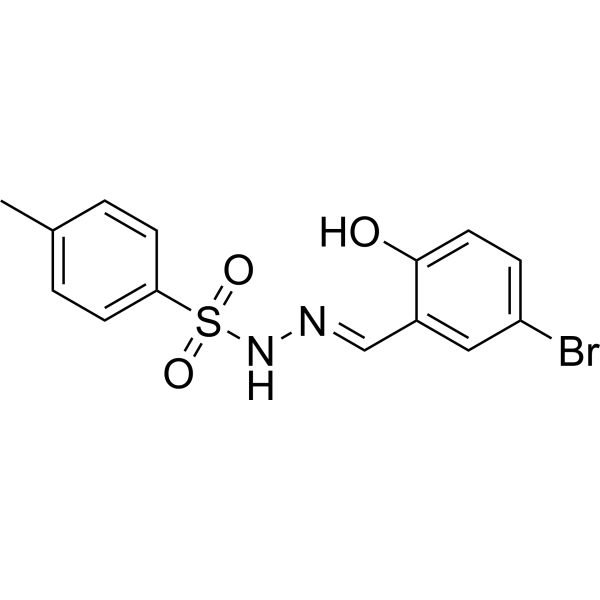
Cat. No.: HY-156373
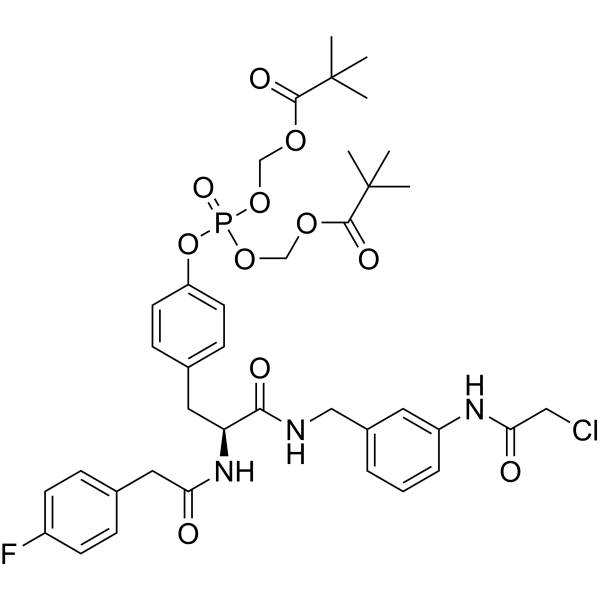
MN714 is a prodrug of MN551 (HY-156395) with enhanced cell permeability. MN714 specifically and covalently binds to SOCS2 within living cells, with an EC50 of 3.77 μM at 2 h and 2.52 μM at 8 h. MN714 serves as a chemical probe for investigating the biological mechanisms of the SOCS2 and CRL5 complex, and also functions as an E3 ligase linker for PROTAC development .
loading...
    loading...
Cat. No.: HY-175756
CAS No.: 2901804-87-1
Research Areas:  

Cancer

SMARCA2/4 degrader-1 is a SMARCA2/4 molecular glue degrader with a DCAF16 EC50 of 110 nM. SMARCA2/4 degrader-1 covalently adducts at cysteine to form a ternary complex with SMARCA2/4 and recruits CUL4 DCAF16 and CRL1 FBXO22 E3 ligase complexes. SMARCA2/4 degrader-1 induces ubiquitination and proteasomal degradation of SMARCA2/4. SMARCA2/4 degrader-1 can be used for research of SMARCA4-deficient malignancies, non-small cell lung cancer (NSCLC), and colorectal cancer .
loading...
    loading...
Cat. No.: HY-177742
CAS No.: 2251753-65-6
LXH-3-71 is a PHGDH degrader. LXH-3-71 acts as a molecular glue to enhance the interaction of the PHGDH-DDB1-CRL E3 ligase complex, triggering ubiquitination and proteasomal degradation of PHGDH. LXH-3-71 regulates the stemness of colorectal cancer cells and inhibits tumor proliferation and colony formation. LXH-3-71 can be used in the research of colorectal cancer .
loading...
    loading...
Cat. No.: HY-169327
CAS No.: 2415160-21-1
Research Areas:  

Cancer

MD-265 is a PROTAC degrader targeting MDM2, which activates p53 in cancer cells carrying wild-type p53. MD-265 induces MDM2 degradation by recruiting the CRL4-CRBN ligase complex via the ubiquitination and proteasomal degradation pathway. MD-265 upregulates p53 target genes, induces apoptosis, reduces Mcl-1 levels, increases caspase-3 cleavage, and inhibits colony formation of wild-type p53 leukemia stem cells. MD-265 can be used in research related to leukemia and acute myeloid leukemia .
loading...
    loading...
Cat. No.: HY-177694
CAS No.: 2798907-41-0
Research Areas:  

Cancer

PROTAC AR Degrader-11 is a PROTAC degrader that targets the androgen receptor (AR) and its splice variant AR-V7. PROTAC AR Degrader-11 simultaneously degrades full-length AR and AR-V7 via the ubiquitin-proteasome system by recruiting the CRL4-CRBN E3 ligase (FIG.2A). PROTAC AR Degrader-11 reduces the viability of cancer cells. PROTAC AR Degrader-11 can be used in studies related to castration-resistant prostate cancer .
loading...
    loading...
Cat. No.: HY-156746
Target:  

PROTACs Btk

Research Areas:  

Cancer

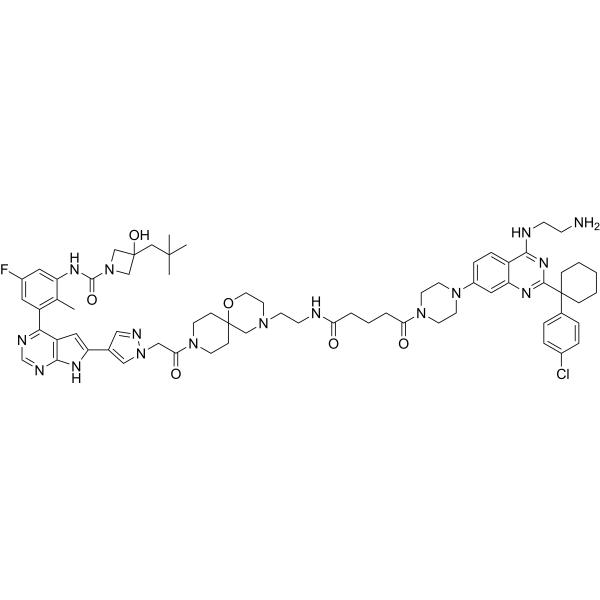
DBt-10 is a PROTAC degrader that targets and degrades BTK by recruiting DCAF1. It degrades BTK in TMD8 BTK-GFP/mCherry cells with a DC50 of 137 nM. DBt-10 induces CRL4 DCAF1-dependent ubiquitination and proteasomal degradation of BTK, and retains BTK-degrading and antiproliferative activities in TMD8 cells that are resistant to CRBN-BTK PROTACs due to loss of CRBN expression. DBt-10 has a high survival window and exhibits extremely weak apoptosis-inducing effects on lymphoma cells. DBt-10 can be used for research on diffuse large B-cell lymphoma .
loading...
    loading...