1. Search Result
Search Result
Results for "

Chloroquine

" in MedChemExpress (MCE) Product Catalog:

74

Inhibitors & Agonists

2

Peptides

12

Natural
Products

11

Isotope-Labeled Compounds

1

Oligonucleotides

Cat. No. Product Name Target Research Areas Chemical Structure
  • HY-17589A
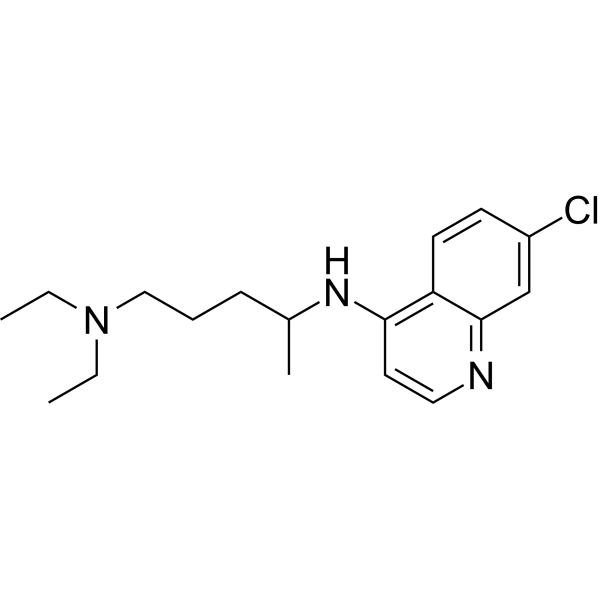
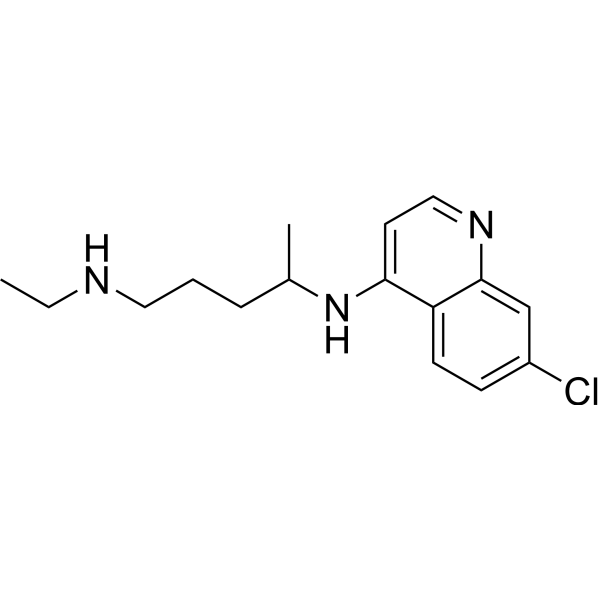
    Chloroquine
    Maximum Cited Publications
    1191 Publications Verification

    Parasite Autophagy SARS-CoV Toll-like Receptor (TLR) HIV Antibiotic Infection Inflammation/Immunology Cancer
    Chloroquine is an antimalarial and anti-inflammatory agent widely used to treat malaria and rheumatoid arthritis. Chloroquine is an autophagy and toll-like receptors (TLRs) inhibitor. Chloroquine is highly effective in the control of SARS-CoV-2 (COVID-19) infection in vitro (EC50=1.13 μM) .
    Chloroquine
  • HY-17589
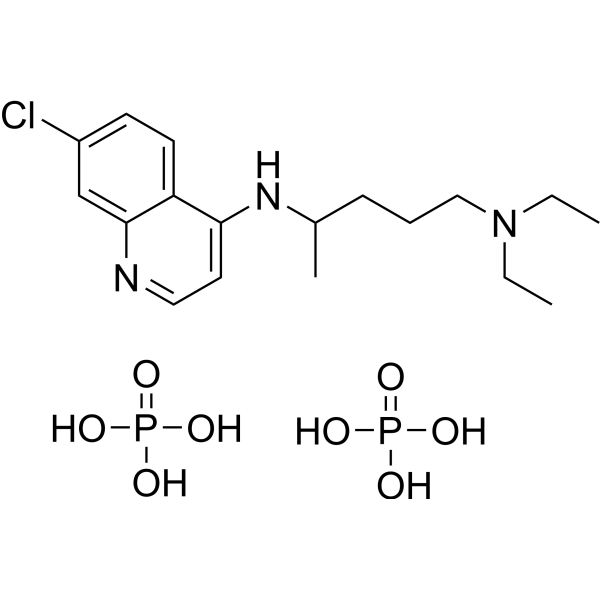
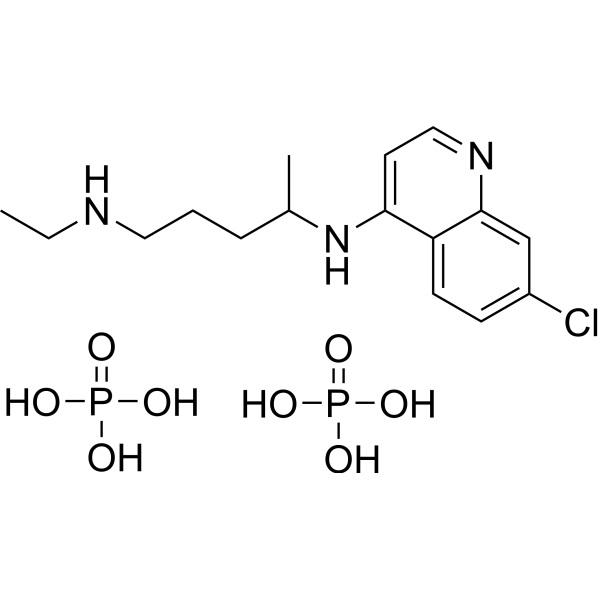
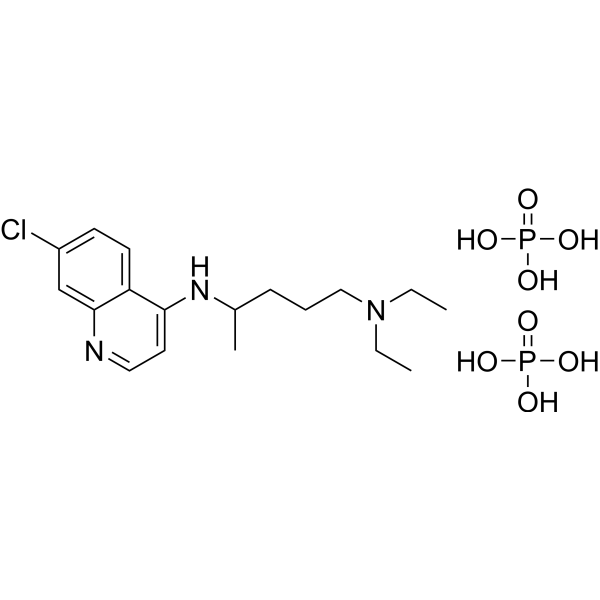
    Chloroquine phosphate
    Maximum Cited Publications
    1191 Publications Verification

    Parasite Autophagy SARS-CoV Toll-like Receptor (TLR) HIV Antibiotic Infection Inflammation/Immunology Cancer
    Chloroquine phosphate is an antimalarial and anti-inflammatory agent widely used to treat malaria and rheumatoid arthritis. Chloroquine phosphate is an autophagy and toll-like receptors (TLRs) inhibitor. Chloroquine phosphate is highly effective in the control of SARS-CoV-2 (COVID-19) infection in vitro (EC50=1.13 μM) .
    Chloroquine phosphate
  • HY-17589B
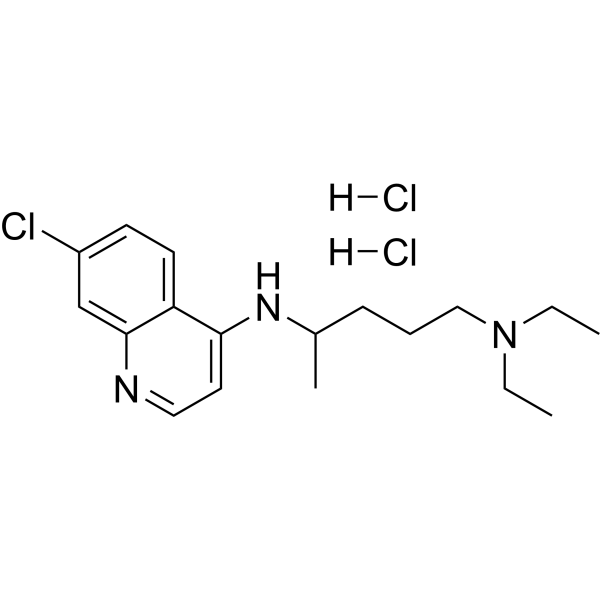
    Chloroquine dihydrochloride
    Maximum Cited Publications
    1191 Publications Verification

    Parasite Autophagy SARS-CoV Toll-like Receptor (TLR) HIV Antibiotic Infection Inflammation/Immunology Cancer
    Chloroquine dihydrochloride is an antimalarial and anti-inflammatory agent widely used to treat malaria and rheumatoid arthritis. Chloroquine dihydrochloride is an autophagy and toll-like receptors (TLRs) inhibitor. Chloroquine dihydrochloride is highly effective in the control of SARS-CoV-2 (COVID-19) infection in vitro (EC50=1.13 μM) .
    Chloroquine dihydrochloride
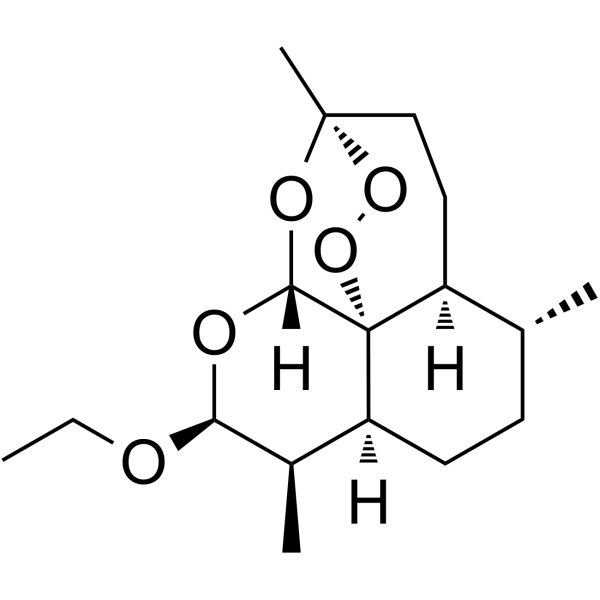
  • HY-B0770
    Artemotil
    1 Publications Verification

    β-Arteether; (+)-Arteether; Arteether

    CXCR Parasite Infection Cancer
    Artemotil (β-Arteether) has antimalarial activity for the treatment of chloroquine-resistant Plasmodium falciparum malaria with an IC50 of 1.61 nM. Artemotil also has central nervous system (CNS) neurotoxicity and anorectic toxicity in rats, dogs and monkeys .
    Artemotil
  • HY-17589AR
    Chloroquine (Standard)
    1 Publications Verification

    Reference Standards Parasite Autophagy SARS-CoV Toll-like Receptor (TLR) HIV Antibiotic Infection Inflammation/Immunology Cancer
    Chloroquine (Standard) is the analytical standard of Chloroquine. This product is intended for research and analytical applications. Chloroquine is an antimalarial and anti-inflammatory agent widely used to treat malaria and rheumatoid arthritis. Chloroquine is an autophagy and toll-like receptors (TLRs) inhibitor. Chloroquine is highly effective in the control of SARS-CoV-2 (COVID-19) infection in vitro (EC50=1.13 μM) .
    Chloroquine (Standard)
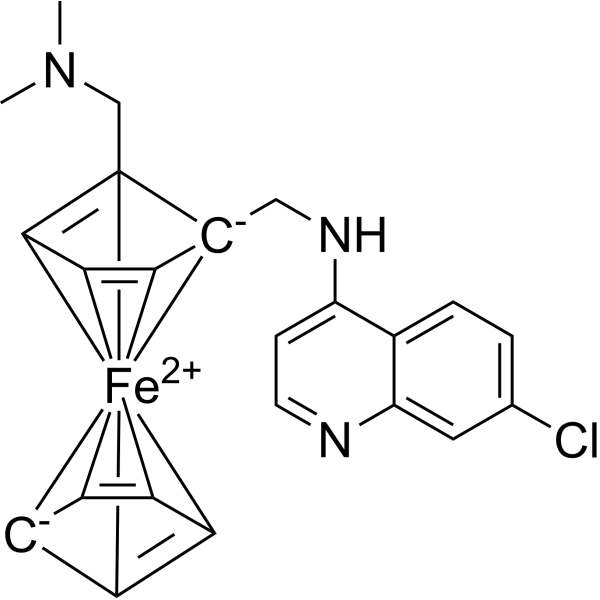
  • HY-19364
    Ferroquine
    1 Publications Verification

    FerroChloroquine; SSR97193

    Parasite Infection
    Ferroquine (Ferrochloroquine), a ferrocenyl analogue of Chloroquine, is an antimalarial agent. Ferroquine shows parasiticidal effect on Plasmodium by inducing oxidative stress and the subsequent destruction of the membrane .
    Ferroquine
  • HY-B1177

    Environmental Pollutants TRP Channel Parasite Infection
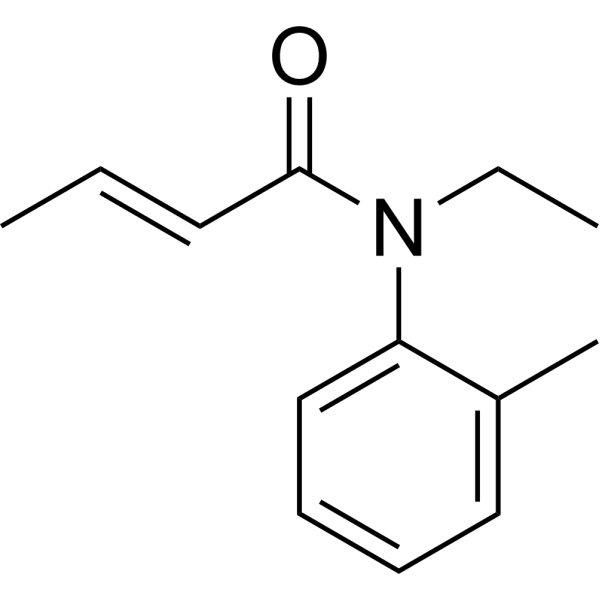
    Crotamiton is a TRPV4 inhibitor. Crotamiton inhibits TRPV4 currents. Crotamiton inhibits TRPV4 selective agonist-induced pruritus-related behaviors in mice. Crotamiton inhibits Histamine- and Chloroquine-induced calcium influx via the H1R/TRPV1, MRGPRA3/TRPA1 pathways, and also suppresses calcium influx in primary mouse dorsal root ganglion neurons. Crotamiton is applicable to research related to pruritus, scabies, and non-scabietic pruritus .
    Crotamiton
  • HY-18299
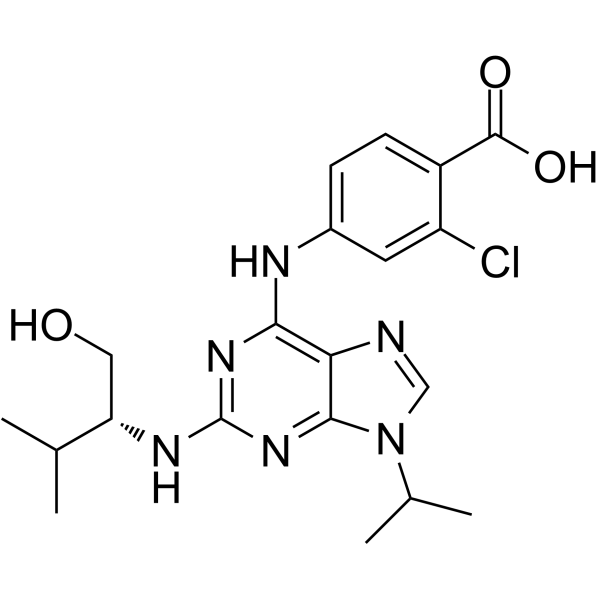
    Purvalanol B
    2 Publications Verification

    NG 95

    CDK Parasite Infection Cancer
    Purvalanol B (NG 95) is a potent, selective, reversible and ATP-competitive inhibitor CDK, with IC50s of 6 nM, 6 nM, 9 nM, 6 nM for cdc2-cyclin B, CDK2-cyclin A, CDK2-cyclin E and CDK5-p35, respectively. Purvalanol B shows selectivity for CDK over a range of other protein kinases (IC50>1000 nM). Purvalanol B inhibits the growth a chloroquine-resistant strain of P. falciparum .
    Purvalanol B
  • HY-17589R
    Chloroquine phosphate (Standard)
    190+ Cited Publications

    Reference Standards Parasite Autophagy SARS-CoV Toll-like Receptor (TLR) HIV Antibiotic Infection Inflammation/Immunology Cancer
    Chloroquine (phosphate) (Standard) is the analytical standard of Chloroquine (phosphate). This product is intended for research and analytical applications. Chloroquine phosphate is an antimalarial and anti-inflammatory agent widely used to treat malaria and rheumatoid arthritis. Chloroquine phosphate is an autophagy and toll-like receptors (TLRs) inhibitor. Chloroquine phosphate is highly effective in the control of SARS-CoV-2 (COVID-19) infection in vitro (EC50=1.13 μM) .
    Chloroquine phosphate (Standard)
  • HY-100662

    BisdesethylChloroquine

    Drug Metabolite Cardiovascular Disease Infection
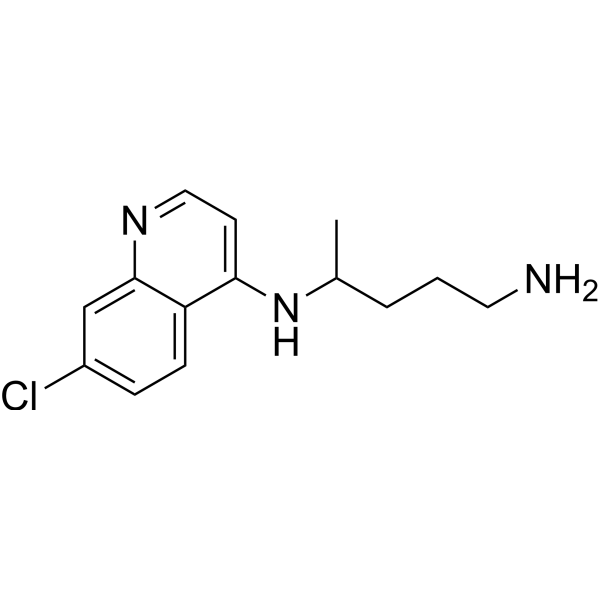
    Didesethyl chloroquine (Bisdesethylchloroquine) is the major metabolite of the antimalarial agent Chloroquine (HY-17589A). Didesethyl chloroquine is a potent myocardial inhibitor. Didesethyl chloroquine reduces calcium binding and accumulation in cardiac mitochondria, induces mitochondrial swelling, rupture and membrane conformational changes. Didesethyl chloroquine inhibits the growth of Plasmodium falciparum strains. Didesethyl chloroquine can be used in research related to malaria, chikungunya virus infection, and cardiovascular and cerebrovascular diseases .
    Didesethyl chloroquine
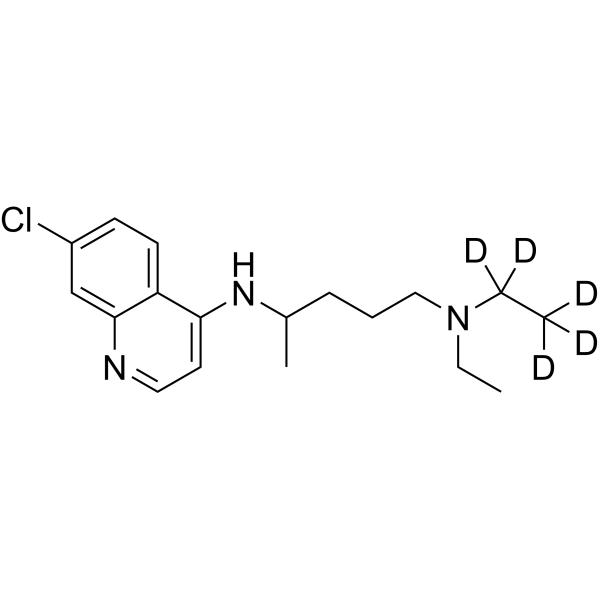
  • HY-17589AS
    Chloroquine-d5
    1 Publications Verification

    Isotope-Labeled Compounds Parasite Autophagy SARS-CoV Toll-like Receptor (TLR) HIV Infection Inflammation/Immunology Cancer
    Chloroquine-d5 is deuterium labeled Chloroquine (HY-17589A). Chloroquine is an antimalarial and anti-inflammatory agent widely used to treat malaria and rheumatoid arthritis. Chloroquine is an autophagy and toll-like receptors (TLRs) inhibitor. Chloroquine is highly effective in the control of SARS-CoV-2 (COVID-19) infection in vitro (EC50=1.13 μM) .
    Chloroquine-d5
  • HY-P10579
    123B9
    1 Publications Verification

    Ephrin Receptor Cancer
    123B9, a tumor-homing agent, is a potent and selective EphA2 agonist with a Kd value of 4.0 μM. 123B9 selectively targets the EphA2 tyrosine kinase receptor ligand-binding domain. 123B9 does not appreciably inhibit the ligand binding domains of the most closely related EphA3 and EphA4 receptors .
    123B9
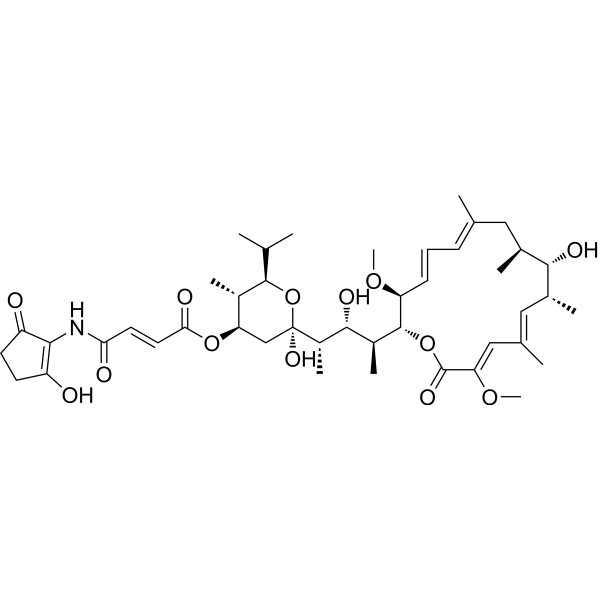
  • HY-N6738
    Bafilomycin B1
    1 Publications Verification

    Antibiotic Bacterial Fungal Proton Pump Infection Neurological Disease
    Bafilomycin B1 is a macrolide antibiotic that can be isolated from mycelium of Streptomyces gresuis. Bafilomycin B1 is neuroprotective against Chloroquine (HY-17589A)-induced death. Bafilomycin B1 is a structural analog of Bafilomycin A1 and has the ability to inhibit V-ATPase. Bafilomycin B1 inhibits significantly the oxidized low density lipoprotein (LDL)-induced accumulation of lipid droplets .
    Bafilomycin B1
  • HY-N7583

    Parasite Infection
    Norcaesalpinin E, a C-17-norcassane-type diterpene found in Caesalpinia crista, is a Plasmodium falciparum growth inhibitor with an IC50 of 90 nM. Norcaesalpinin E induces dose-dependent growth inhibition of Plasmodium falciparum. Norcaesalpinin E can be used for the research of malaria .
    Norcaesalpinin E
  • HY-135811A
    Desethyl chloroquine diphosphate
    2 Publications Verification

    Parasite Toll-like Receptor (TLR) Autophagy Infection
    Desethyl chloroquine diphosphate is a major desethyl metabolite of Chloroquine. Chloroquine diphosphate is an inhibitor of autophagy and toll-like receptors (TLRs). Desethyl chloroquine diphosphate possesses antiplasmodic activity .
    Desethyl chloroquine diphosphate
  • HY-135810

    DesethylhydroxyChloroquine

    CHIKV Influenza Virus Parasite Infection Inflammation/Immunology
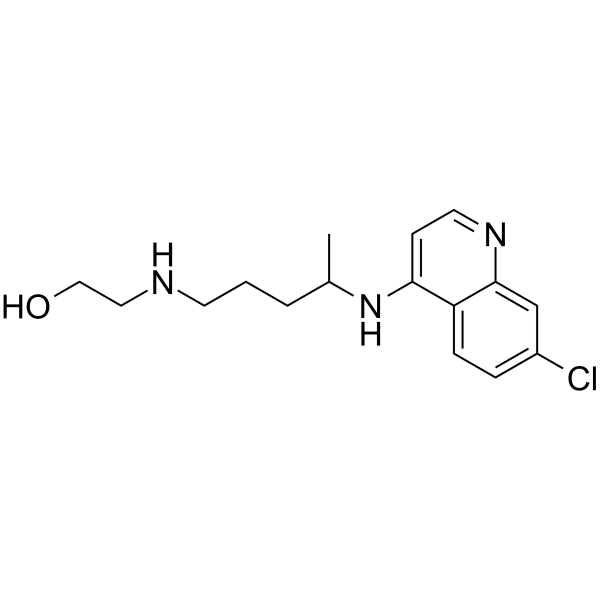
    Cletoquine (Desethylhydroxychloroquine) is a major active metabolite of Hydroxychloroquine. Cletoquine is produced in the liver by CYP2D6, CYP3A4, CYP3A5, and CYP2C8 isoenzymes. Cletoquine is also a Chloroquine derivative and has the ability to against the chikungunya virus (CHIKV). Cletoquine has antimalarial effects and has the potential for autoimmune diseases treatment .
    Cletoquine
  • HY-17589S1

    Isotope-Labeled Compounds Parasite Autophagy SARS-CoV Toll-like Receptor (TLR) HIV Antibiotic Infection Inflammation/Immunology Cancer
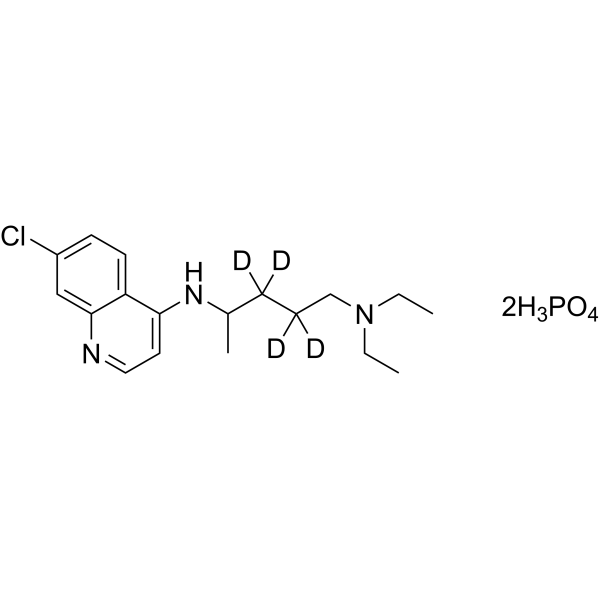
    Chloroquine-d4 (phosphate) is the deuterium labeled Chloroquine phosphate. Chloroquine phosphate is an antimalarial and anti-inflammatory agent widely used to treat malaria and rheumatoid arthritis. Chloroquine phosphate is an autophagy and toll-like receptors (TLRs) inhibitor. Chloroquine phosphate is highly effective in the control of SARS-CoV-2 (COVID-19) infection in vitro (EC50=1.13 μM) .
    Chloroquine-d4 phosphate
  • HY-135811
    Desethyl chloroquine
    2 Publications Verification

    Parasite Toll-like Receptor (TLR) Autophagy Infection
    Desethyl chloroquine is a major desethyl metabolite of Chloroquine. Chloroquine diphosphate is an inhibitor of autophagy and toll-like receptors (TLRs). Desethyl chloroquine possesses antiplasmodic activity .
    Desethyl chloroquine
  • HY-17589S

    Isotope-Labeled Compounds Parasite Autophagy SARS-CoV Toll-like Receptor (TLR) HIV Antibiotic Infection Inflammation/Immunology Cancer
    Chloroquine-d5 (diphosphate) is the deuterium labeled Chloroquine (phosphate). Chloroquine phosphate is an antimalarial and anti-inflammatory agent widely used to treat malaria and rheumatoid arthritis. Chloroquine phosphate is an autophagy and toll-like receptors (TLRs) inhibitor. Chloroquine phosphate is highly effective in the control of SARS-CoV-2 (COVID-19) infection in vitro (EC50=1.13 μM) .
    Chloroquine-d5 diphosphate
  • HY-N1074

    Scandenolone

    Parasite PKA Infection Inflammation/Immunology
    Warangalone is an anti-malarial compound which can inhibit the growth of both strains of parasite 3D7 (chloroquine sensitive) and K1 (chloroquine resistant) with IC50s of 4.8 μg/mL and 3.7 μg/mL, respectively. Warangalone can also inhibit cyclic AMP-dependent protein kinase catalytic subunit (cAK) with an IC50 of 3.5 μM.
    Warangalone
  • HY-17036

    Parasite Infection
    Naphthoquine phosphate is a potent and orally active antimalarial agent. Naphthoquine phosphate has thorough killing function for various schizonts of plasmodia, including resistance of P. falciparum to Chloroquine .
    Naphthoquine phosphate
  • HY-N2891

    Aristololactam A II

    Parasite COX Infection
    Aristolactam A II (Aristololactam A II) is a weak COX inhibitor with cytotoxic and anti-plasmodial activities. Aristolactam A II exhibits inhibitory activity against Chloroquine (HY-17589A)-sensitive strains, and exerts its inhibitory effect on Plasmodium falciparum growth by inducing cell membrane damage marked by LDH release. Aristolactam A II can be applied to the research of malaria-related mechanisms .
    Aristolactam A II
  • HY-124582
    NEO214
    1 Publications Verification

    Autophagy mTOR Cancer
    NEO214 is an autophagy inhibitor and a covalent conjugate of the PDE4 inhibitor Rolipram (HY-16900) and perillyl alcohol (HY-N7000). It has anti-cancer activity and blood-brain barrier (BBB) permeability. Over sex. NEO214 prevents autophagy-lysosome fusion, thereby blocking autophagic flux and triggering glioma cell death. The process involves mTOR activation, andTFEB(Transcription Factor EB) aggregation. NEO214 inhibitionMacroautophagy/autophagy in glioblastoma cells has the potential to overcome chemotherapy resistance in glioblastoma .
    NEO214
  • HY-N2932

    Amsonin; Amsonine; NSC 93133

    Parasite Infection
    β-Yohimbine (Amsonin) is an indole alkaloid that can be isolated from Aspidosperma ulei Markgr. β-Yohimbine shows antiplasmodial activity against the Chloroquine (HY-17589A)-resistant Fc M29-Cameroon strain (IC50: > 1 μg/mL) .
    β-Yohimbine
  • HY-W614112

    Drug Isomer Others
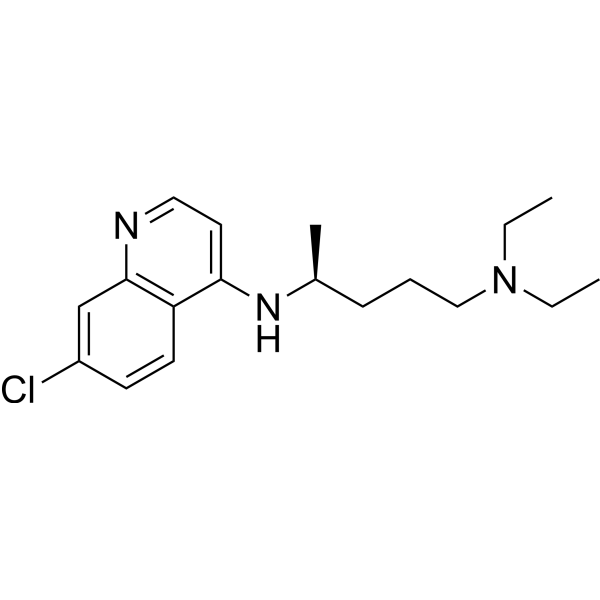
    (-)-Chloroquine is a chloroquine enantiomer .
    (-)-Chloroquine
  • HY-135811R

    Reference Standards Parasite Toll-like Receptor (TLR) Autophagy Infection
    Desethyl chloroquine (Standard) is the analytical standard of Desethyl chloroquine. This product is intended for research and analytical applications. Desethyl chloroquine is a major desethyl metabolite of Chloroquine. Chloroquine diphosphate is an inhibitor of autophagy and toll-like receptors (TLRs). Desethyl chloroquine possesses antiplasmodic activity .
    Desethyl chloroquine (Standard)
  • HY-135811AR

    Parasite Toll-like Receptor (TLR) Autophagy Infection
    Desethyl chloroquine (diphosphate) (Standard) is the analytical standard of Desethyl chloroquine (diphosphate). This product is intended for research and analytical applications. Desethyl chloroquine diphosphate is a major desethyl metabolite of Chloroquine. Chloroquine diphosphate is an inhibitor of autophagy and toll-like receptors (TLRs). Desethyl chloroquine diphosphate possesses antiplasmodic activity .
    Desethyl chloroquine diphosphate (Standard)
  • HY-156862

    Angiotensin Receptor Others
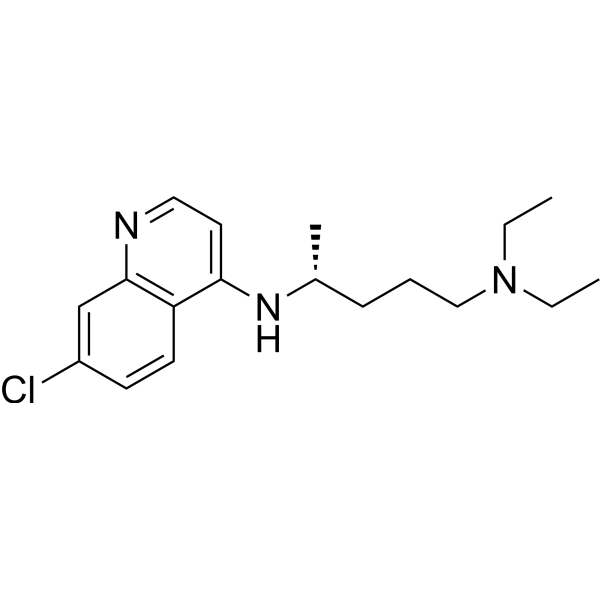
    (+)-Chloroquine is a aminoquinoline drug impairs in vitro the terminal glycosylation of angiotensin-converting enzyme 2 (ACE-2) .
    (+)-Chloroquine
  • HY-135847

    SSR97213

    Parasite Drug Metabolite Infection
    Desmethyl ferroquine (SSR97213) is the active and major metabolite of Ferroquine. Ferroquine is an antimalarial. Desmethyl ferroquine shows significant activity against Chloroquine-susceptible and resistant P. falciparum strains .
    Desmethyl ferroquine
  • HY-157892

    Parasite Infection
    Antimalarial agent 38 is an orally active antimalarial agent, which inhibits Plasmodium falciparum D6 strain, Chloroquine (HY-17589A)-sensitive Thai strain and Chloroquine-resistant FcB1 strain and K1 strain, with IC50s of 0.5, 13, 1 and 13 μM, respectively. Antimalarial agent 38 is non-cytotoxic for mammalian cells MCR58 (IC50 >140 μM). Antimalarial agent 38 improves the survival rate of Plasmodium yoelii nigeriensis infected mouse model .
    Antimalarial agent 38
  • HY-158721

    Marinamide

    Endogenous Metabolite Parasite Infection Cancer
    Penicinoline (Marinamide) (Compound 1), a pyrrolyl 4-quinolinone alkaloid, is a microbial secondary metabolite. Penicinoline can be isolated from endophytic fungus Penicillium sp. Penicinoline has antimalarial activity against Chloroquine (HY-17589A) sensitive strain (pf3d7) and against Chloroquine resistant strain (pfDd2) of plasmodium falciparum. Penicinoline also has strong insecticidal activity against Aphis gossypii and selective anticancer effect with significant cytotoxicity for 95-D and HepG2 cells .
    Penicinoline
  • HY-W437569

    Parasite Insecticide Infection Cancer
    Melicopine is an alkaloid found in Z. simulans with antimalarial and anticancer activities. It exhibits inhibitory activity against chloroquine-sensitive 3D7 and chloroquine-resistant Dd2 strains of P. falciparum, with IC50 values of 29.7 and 33.7 µg/mL, respectively. Melicopine is cytotoxic to prostate cancer cells PC-3M and LNCaP (IC50 values of 47.9 and 37.8 µg/mL), but has no effect on non-cancerous HEK293 cells (IC50 greater than 100 µg/mL). Melicopine holds promise for research in anticancer and anti-infection fields .
    Melicopine
  • HY-N16123

    Parasite Infection
    Chloranthalactone C (Compound 43), a lindenane-type sesquiterpenoid, is an antimalarial agent. Chloranthalactone C can be isolated from plant Chloranthus japonicas Sieb. Chloranthalactone C inhibits Chloroquine (HY-17589A)-resistant Plasmodium falciparum strain Dd2 growth. Chloranthalactone C can be used for parasitic infections research .
    Chloranthalactone C
  • HY-103691A
    ARN5187 trihydrochloride
    1 Publications Verification

    Autophagy Apoptosis Cancer
    ARN5187 trihydrochloride is a lysosomotropic REV-ERBβ ligand with a dual inhibitory activity toward REV-ERB-mediated transcriptional regulation and autophagy. ARN5187 trihydrochloride shows lysosomotropic potency and cytotoxicity. ARN5187 trihydrochloride induces apoptosis .
    ARN5187 trihydrochloride
  • HY-135811S

    Isotope-Labeled Compounds Parasite Toll-like Receptor (TLR) Autophagy Infection
    Desethyl chloroquine-d4 is the deuterium labeled Desethyl chloroquine. Desethyl chloroquine is a major desethyl metabolite of Chloroquine. Chloroquine diphosphate is an inhibitor of autophagy and toll-like receptors (TLRs). Desethyl chloroquine possesses antiplasmodic activity .
    Desethyl chloroquine-d4
  • HY-135811S1

    Isotope-Labeled Compounds Parasite Toll-like Receptor (TLR) Autophagy Infection
    Desethyl chloroquine-d5 is deuterium labeled Desethyl chloroquine. Desethyl chloroquine is a major desethyl metabolite of Chloroquine. Chloroquine diphosphate is an inhibitor of autophagy and toll-like receptors (TLRs). Desethyl chloroquine possesses antiplasmodic activity .
    Desethyl chloroquine-d5
  • HY-17589BR

    Reference Standards Parasite Autophagy SARS-CoV Toll-like Receptor (TLR) HIV Antibiotic Infection Inflammation/Immunology Cancer
    Chloroquine (dihydrochloride) (Standard) is the analytical standard of Chloroquine (dihydrochloride). This product is intended for research and analytical applications. Chloroquine dihydrochloride is an antimalarial and anti-inflammatory agent widely used to treat malaria and rheumatoid arthritis. Chloroquine dihydrochloride is an autophagy and toll-like receptors (TLRs) inhibitor. Chloroquine dihydrochloride is highly effective in the control of SARS-CoV-2 (COVID-19) infection in vitro (EC50=1.13 μM)[1][2][3][4].
    Chloroquine dihydrochloride (Standard)
  • HY-100662S

    BisdesethylChloroquine-d4

    Isotope-Labeled Compounds Drug Metabolite Cardiovascular Disease
    Didesethyl chloroquine-d4 is the deuterium labeled Didesethyl chloroquine. Didesethyl chloroquine (Bisdesethylchloroquine) is a major metabolite of the antimalarial agent Chloroquine. Didesethyl chloroquine is a potent myocardial depressant .
    Didesethyl chloroquine-d4
  • HY-175493

    Parasite Infection
    CRT-IN-1 (compound 6x) is a potent chloroquine resistance transporter (CRT) inhibitor with an IC50 of 0.33 μM. CRT-IN-1 has activity .
    CRT-IN-1
  • HY-167647

    Parasite Infection
    Menoctone is an orally active antimalarial agent that demonstrates suppressive effects against blood-induced rodent malaria. Menoctone enhances the anti-malarias effect of chloroquine or quinine and can be utilized in malarias research .
    Menoctone
  • HY-12855

    Autophagy Cancer
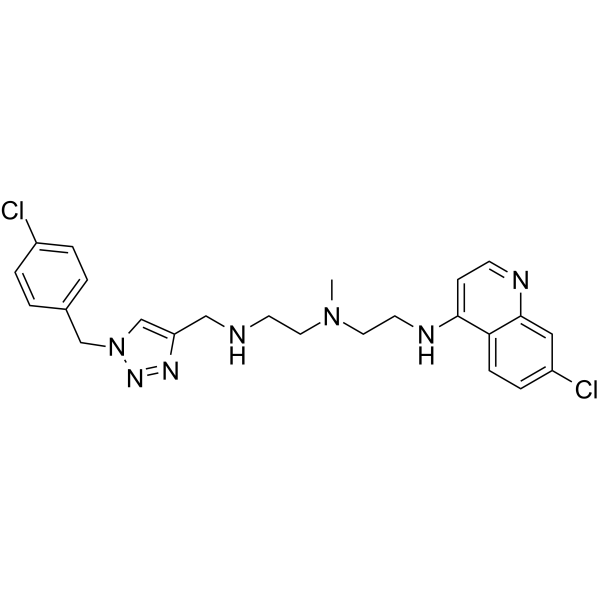
    Lys01, a dimeric form of Chloroquine (HY-17589A), is an autophagy inhibitor. Lys01 inhibits cell viability of 1205Lu, c8161, LN229, HT-29 cells with IC50s of 3.6, 3.8, 7.9, 6.0 μM. Lys01 can be used for anticancer research .
    Lys01
  • HY-146769

    Parasite Infection
    Antimalarial agent 11 (compound 1), a spirocyclic chromane, is a potent antimalarial agent. Antimalarial agent 11 exhibits excellent potency with an EC50 of 350 nM against the Chloroquine-resistant Dd2 strain. Antimalarial agent 11 has EC50s of 1.48 µM and 1.81 µM against D6 and ARC08-022 strains, respectively .
    Antimalarial agent 11
  • HY-118865

    Parasite Infection
    Piperaquine tetraphosphate is a potent antimalaria agent. Piperaquine tetraphosphate shows inhibition for chloroquine-sensitive and the chloroquine-resistant isolates. Piperaquine tetraphosphate in combination with dihydroartemisinin has the potential for the research of chloroquine-resistant malaria .
    Piperaquine tetraphosphate
  • HY-106515

    WR228258

    Parasite Infection
    Tebuquine (WR228258), a 4-aminoquinoline, is a potent antimalarial agent. Tebuquine is active against the Chloroquine (HY-17589A) sensitive HB3 strain and the Chloroquine resistant K1 strain of Plasmodium falciparum with IC50s of 0.9 nM and 20.8 nM, respectively .
    Tebuquine
  • HY-116552

    Parasite Infection
    KAR425 is a potent and orally active antimalarial agent. KAR425 shows antimalarial activity against the Chloroquine-sensitive (CQS) D6, the Chloroquine-resistant (CQR) Dd2, and 7G8 strains of Plasmodium falciparum, with IC50 values of 62 nM, 55 nM, and 60 nM, respectively .
    KAR425
  • HY-149960

    Parasite Infection
    Antiparasitic agent-17 (compound 5u) is an orally active antiparasitic agent. Antiparasitic agent-17 inhibits Chloroquine sensitive (Pf3D7) and Chloroquine resistant (PfK1) strain with IC50s of 0.96 μM and 1.67 μM, respectively .
    Antiparasitic agent-17
  • HY-N8374

    Parasite Infection
    Pheanthine (Compound 2) is an antiplasmodial agent, that inhibits chloroquine-resistant Plasmodium falciparum K-1 (IC50 is 0.8 μM) and chloroquine-sensitive P. falciparum strain NF54 A19A (IC50 of 0.03 μM). Pheanthine exhibits low cytotoxicity in human lung fibrosblast (MRC-5, IC50 is 11.2 μM) and macrophages (PMM, IC50 is 8 μM) .
    Pheanthine
  • HY-163070

    Parasite Infection
    Antimalarial agent 35 (compound QP11) is a selective inhibitor FP2. Antimalarial agent 35 has antimalarial activity and shows synergistic effects when combined with chloroquine(HY-17589A) .
    Antimalarial agent 35
  • HY-161984

    HDAC Infection Others
    HDAC-IN-76 (compound 6i) is a histone deacetylase (HDAC) inhibitor. HDAC-IN-76 IC50 values of 30 nM and 98 nM for Pf3D7 (chloroquine (HY-17589A) drug-susceptible strain) and PfDd2 (chloroquine (HY-17589A) drug-resistant strain), has a highly potent antimalarial activity against asexual blood-stage Plasmodium, respectively, and exhibits selective inhibition against parasites, with IC50 values of 7 nM and 9 nM for human HDAC1 and HDAC6, respectively, while inhibiting PfHDAC1 .
    HDAC-IN-76
  • HY-171852

    Biochemical Assay Reagents Cancer
    Iodoquine is an analog of chloroquine. Iodoquine exhibits high uptake in tumor cells and can localize to cells with high ALDH1 content, including cancer stem cells. With low uptake in normal brain tissue, iodoquine can be used in research related to tumor diagnosis or as a radiotracer .
    Iodoquine

Inquiry Online

Your information is safe with us. * Required Fields.

Salutation


Country or Region *

Applicant Name *


Organization Name *

Department *


Email Address *


Product Name *

Cat. No.


Requested quantity *

Phone Number *


Remarks

Inquiry Online

Inquiry Information

Product Name:
Cat. No.:
Quantity:
MCE Japan Authorized Agent:

