34 Results for "

Copper detection

" in MedChemExpress (MCE) Product Catalog:
Products (34)

34 Results for "Copper detection" in MCE Product Catalog:

  • Targets Recommended:
34
34 Publications Verification
Cat. No.: HY-141511
CAS No.: 874748-20-6
Purity:  97.74%
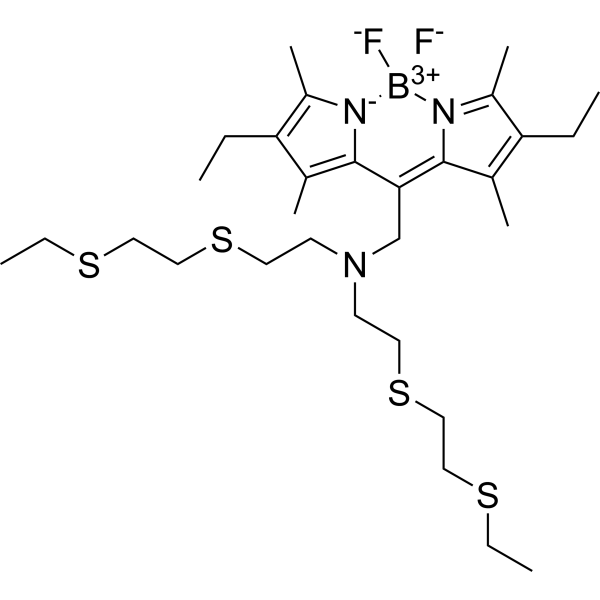
Coppersensor-1 (CS1) is a membrane-permeable fluorescent dye. Coppersensor-1 has a picomolar affinity for Cu + with high selectivity over competing cellular metalions. Coppersensor-1 as a probe, can selective and sensitive detection of copper(I) ions (Cu +) in biological samples, including live cells. Coppersensor-1 can be used for the research of imaging of severe diseases such as cancer, cardiovascular disorders and neurogenerative diseases .
loading...
    loading...
3
3 Cited Publications
Cat. No.: HY-151656
CAS No.: 118162-46-2
Purity:  99.88%
Synonyms: Azido Palmitic Acid
Target:  

ADC Linkers

Research Areas:  

Others

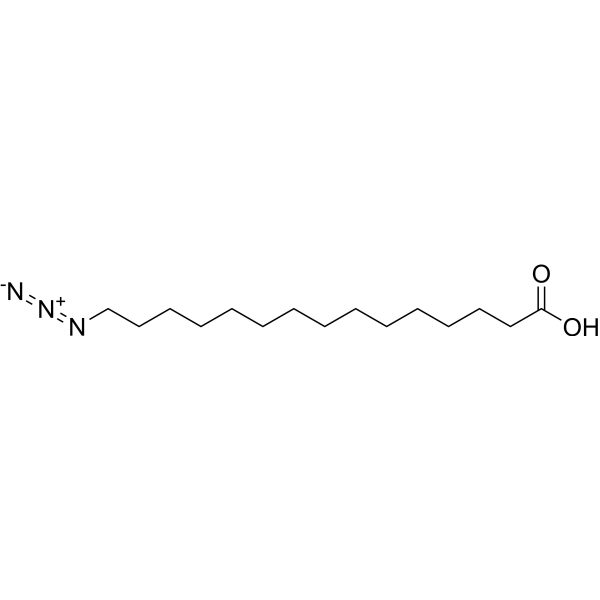
15-Azido-pentadecanoic acid is a click chemistry reagent containing an azide group. Azido Palmitic Acid can be used to identify and characterize post-translationally palmitylated proteins with using a simple and robust two-step labeling and detection technique . 15-Azido-pentadecanoic acid is a click chemistry reagent, it contains an Azide group and can undergo copper-catalyzed azide-alkyne cycloaddition reaction (CuAAc) with molecules containing Alkyne groups. It can also undergo strain-promoted alkyne-azide cycloaddition (SPAAC) reactions with molecules containing DBCO or BCN groups.
loading...
    loading...
2
2 Cited Publications
Cat. No.: HY-123645
CAS No.: 74317-53-6
Purity:  99.87%
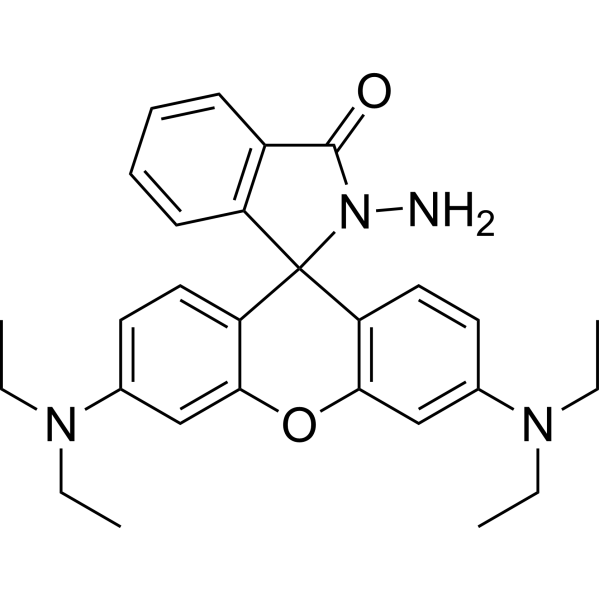
Rhodamine B hydrazide is a fluorescent derivative based on rhodamine B, containing the spirocyclic structure of Rhodamine B (HY-Y0016), which can be used to detect copper ions (Cu 2+), mercury ions, peroxynitrite, hydroxyl radicals and nitric oxide (NO) .
Excitation/emission wavelength:
Conventional detection: 510/578 nm.
Sulfite detection: 554 nm absorption, 574 nm emission (due to the formation of Rhodamine B fluorescent product).
loading...
    loading...
1
1 Cited Publications
Cat. No.: HY-D1601
CAS No.: 98907-26-7
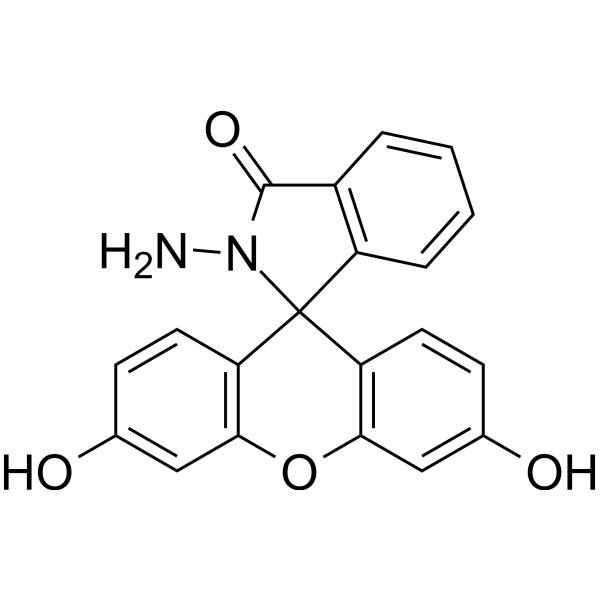
N-Aminofluorescein is a fluorescein hydrazide with spiro form, a highly selective and sensitive fluorescence probe for Cu 2+. N-Aminofluorescein has no selective fluorescence response to other common metal ions, can be used for direct detection of Cu 2+ in biological systems with λex/em=495/516 nm . N-Aminofluorescein can be used to measure the concentration of copper ions in cells .
loading...
    loading...
1
1 Cited Publications
Cat. No.: HY-155639
CAS No.: 2230051-33-7
Purity:  99.55%
Research Areas:  

Others

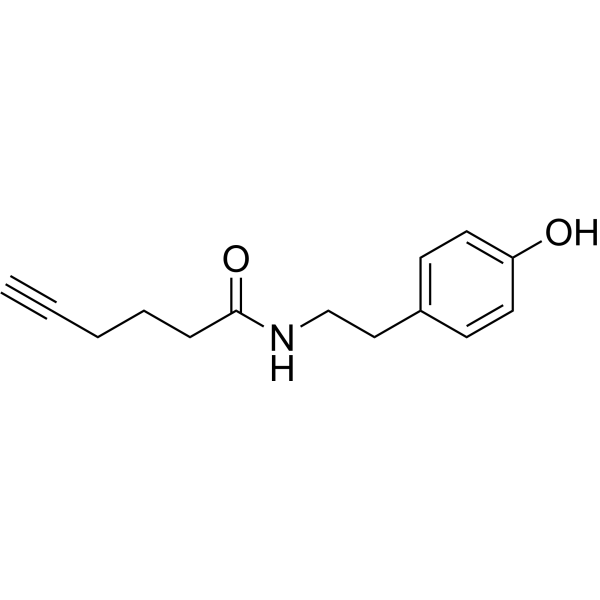
Tyramide alkyne is an alternative labeling substrate that can be coupled to detection or enrichment moieties via a Copper-catalyzed Azide/Alkyne Cycloaddition (CuAAC) “click” reaction. Tyramide alkyne can be used for ascorbate peroxidase 2 (APEX2) labeling .
loading...
    loading...
Cat. No.: HY-D0027
CAS No.: 26093-31-2
Synonyms: Coumarin 120; AMC
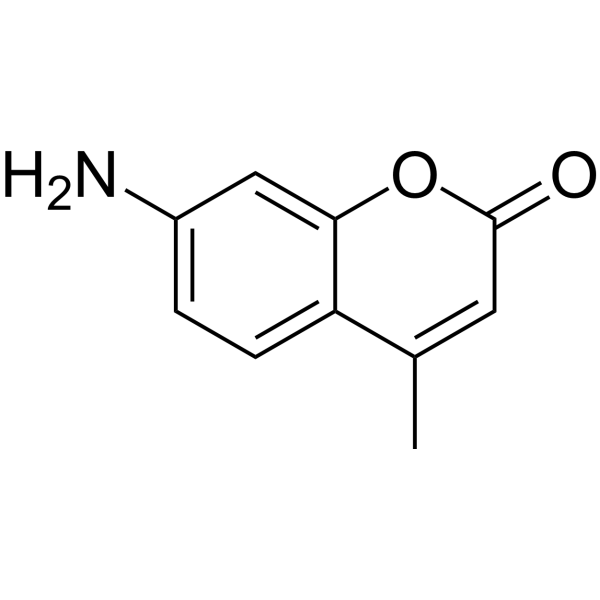
7-Amino-4-methylcoumarin belongs to the coumarin class, can be isolated from the endophytic fungus Xylaria sp. and has a broad spectrum of antibacterial activity. 7-Amino-4-methylcoumarin is also commonly used as an important laser dye that emits in the blue region, capable of analyzing glycoprotein monosaccharides and N-linked oligosaccharides, and is also utilized in tissue pathology analysis, enzyme activity measurement, and copper ion detection. The excitation wavelength and emission wavelength are 351 nm and 430 nm, respectively.
loading...
    loading...
Cat. No.: HY-W115721
CAS No.: 523-21-7
Synonyms: Sodium rhodizonate dibasic
Rhodizonic acid disodium (Sodium rhodizonate dibasic) is a transition metal-dependent pro-oxidant and lead detection agent that induces reactive oxygen species generation, DNA damage, and inhibits Aconitase activity. Rhodizonic acid disodium generates superoxide anion radicals in an iron (II)-dependent manner, leading to aconitase inactivation. Rhodizonic acid disodium also triggers hydroxyl radical-mediated DNA strand breaks and 8-OHdG formation via copper ion reduction. Rhodizonic acid disodium reacts with lead to form a scarlet precipitate, with the color intensity proportional to lead content, enabling qualitative or quantitative analysis of lead. Rhodizonic acid disodium can also be used for real-time visualization of the dynamic process of lead sequestration in the plant rhizosphere and evaluation of the effects of environmental factors such as soil type on the stability of lead-sequestering structures .
loading...
    loading...
Cat. No.: HY-151855
CAS No.: 80667-36-3
Purity:  98.41%
Target:  

ADC Linkers

Research Areas:  

Others

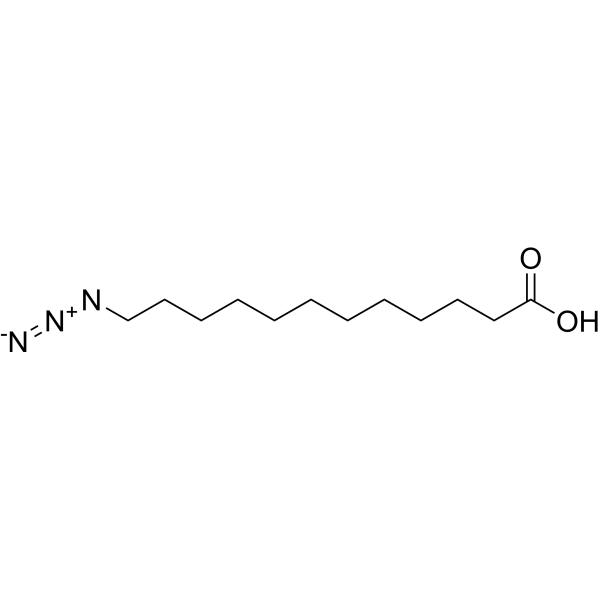
Azido Myristic Acid is a click chemistry reagent containing an azide group. Azido Myristic Acid can be used to identify and characterize post-translationally myristylated proteins with using a simple and robust two-step labeling and detection technique . It contains an azide group and can undergo copper-catalyzed azide-alkyne cycloaddition (CuAAc) with molecules containing alkyne groups. It can also undergo ring strain-promoted alkyne-azide cycloaddition (SPAAC) with molecules containing DBCO or BCN groups.
loading...
    loading...
Cat. No.: HY-D0813
CAS No.: 62625-22-3
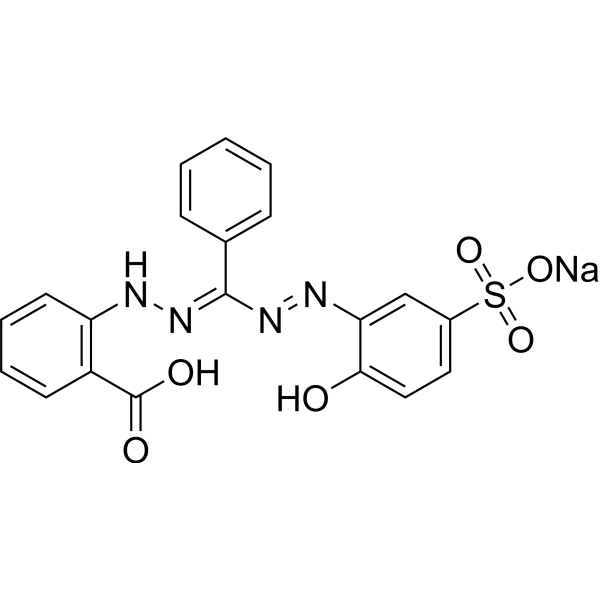
Zincon sodium is an excellent colorimetric reagent for the detection of zinc and copper ions in aqueous solution. Zincon sodium can be used for the determination of zinc, copper, and cobalt ions in metalloproteins .
loading...
    loading...
Cat. No.: HY-W753658
CAS No.: 1335151-56-8
Target:  

Fluorescent Dye

Research Areas:  

Others

Coppersensor-3 (CS3) is a bright small-molecule fluorescent probe for selective Cu(I) detection. Coppersensor-3 is selective and sensitive enough to image labile copper pools in living cells at endogenous, basal levels. Coppersensor-3 can be used for the cell biology of copper research .
loading...
    loading...
Cat. No.: HY-12679
CAS No.: 1621002-24-1
Target:  

Btk

Research Areas:  

Cancer

PF-06658607 is an alkynylated irreversible Brutons tyrosine kinase (BTK) inhibitor that covalently reacts with active site cysteines in the ATP-binding pocket. PF-06658607 can be used to detect "off "-targets for covalent kinase inhibitors in cancer cells. The alkyne moiety allows for azide-based detection probe via copper-catalyzed click chemistry .
loading...
    loading...
Cat. No.: HY-W423080
CAS No.: 945928-17-6
Research Areas:  

Others

TAMRA alkyne, 5-isomer (Compound 3) is an alkyne derivative of TAMRA and can be used for the enrichment, in-gel fluorescence detection, and identification of O-GlcNAc-modified proteins. TAMRA alkyne, 5-isomer contains an Alkyne group and can undergo copper-catalyzed azide-alkyne cycloaddition reaction (CuAAc) with molecules containing Azide groups. It can also undergo strain-promoted alkyne-azide cycloaddition (SPAAC) reactions with molecules containing DBCO or BCN groups .
loading...
    loading...
Cat. No.: HY-W110146
CAS No.: 1262681-31-1
Research Areas:  

Others

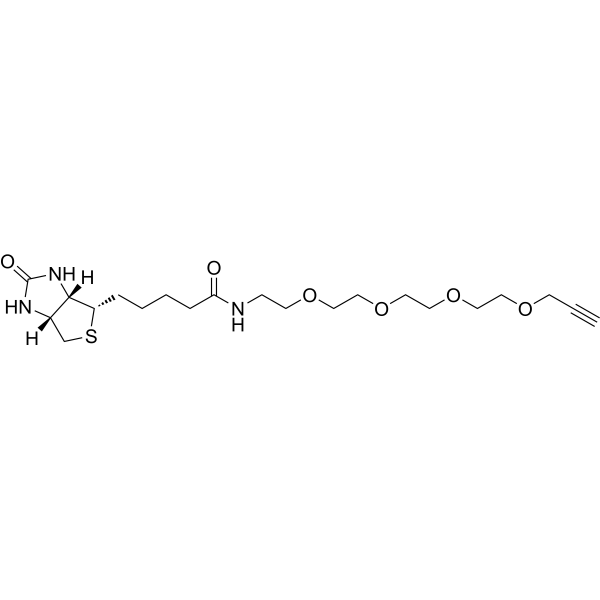
(3aS,4S,6aR)-Biotin-PEG4-Alkyne is an alkyne-activated biotinylation reagent. (3aS,4S,6aR)-Biotin-PEG4-Alkyne can be reacted with azides via a copper-catalyzed click reaction. Biotin-labeled biomolecules can be bound to avidin or streptavidin for further purification and detection .
loading...
    loading...
Cat. No.: HY-N16571
CAS No.: 65602-55-3
Marionol is a type of flavonol compound and belongs to the secondary metabolites of plants. Marionol exhibits significant specificity towards Cu²⁺ and possesses the characteristic of intramolecular proton transfer in excited state (ESIPT), enabling it to generate strong fluorescence upon excitation by ultraviolet light. The maximum excitation/emission wavelengths are 350 nm and 510 nm (depending on the solvent), respectively. Marionol can be used as a fluorescence probe for Cu²⁺ .
loading...
    loading...
Cat. No.: HY-W615095
CAS No.: 2227450-68-0
Target:  

PROTAC Linkers

Research Areas:  

Others

Biotin-PEG2-alkyne is a click chemistry PEG linker based on copper (I)-catalyzed azide-alkyne cycloaddition (CuAAC), as well as a biotinylation reagent. In solution-phase and click labeling systems, Biotin-PEG2-alkyne efficiently conjugates biotin groups to azide-functionalized streptavidin amplicons. Biotin-PEG2-alkyne is also widely applicable in fixed cells and mouse intestinal tissue sections to achieve specific biotinylation of various azide-labeled biomolecules (such as proteins, lipids, DNA, and Afatinib (HY-10261)), thereby effectively promoting signal amplification and precise detection of targets .
loading...
    loading...
Cat. No.: HY-W800697
CAS No.: 2644752-87-2
BP Fluor 430 Picolyl Azide is an advanced fluorescent probe that incorporatess a copper-chelating motif to raise the effective concentration of Cu(I) at the reaction site. The rate of the CuAAC reaction depends on the concentrations of all reagents, including copper, therefore raising the effective copper concentration at the reaction site will dramatically increase the rate of CuAAC reaction without the need to increase concentration of azide reagent or copper. In addition, the use of BP Fluor 430 Picolyl Azide instead of conventional BP Fluor 430 Azide allows for at least a tenfold reduction in the concentration of the copper catalyst without sacrificing the efficiency of labeling. In summary, the introduction of a picolyl moiety into an azide probe leads to a substantial increase in the sensitivity of alkyne detection. This is of special value for the detection of low abundance targets or where significant increase in signal intensity is desired.
loading...
    loading...
Cat. No.: HY-D2230
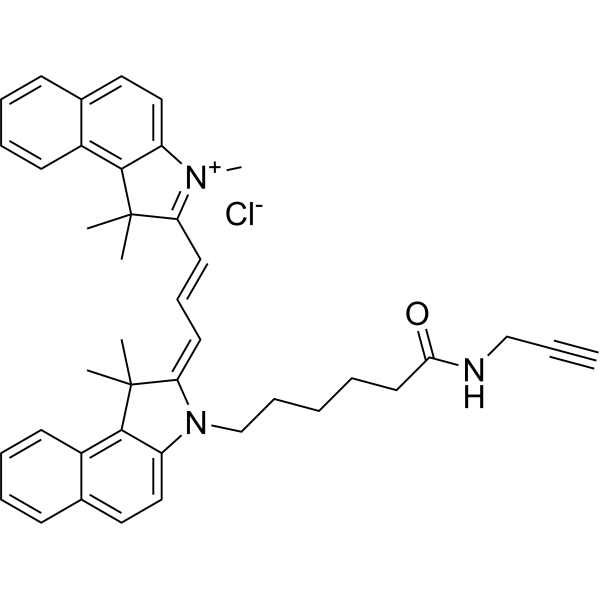
Cy3.5 alkyne, a fluorescent dye, is a click chemistry reagent, it contains an Alkyne group and can undergo copper-catalyzed azide-alkyne cycloaddition (CuAAc) with molecules containing Azide groups. Cy3.5 alkyne can be used for the detection and labeling of azide-containing molecules/ biomolecules with fluorescence spectroscopy after azide-alkyne cycloaddition .
loading...
    loading...
Cat. No.: HY-155438
CAS No.: 2883232-96-8
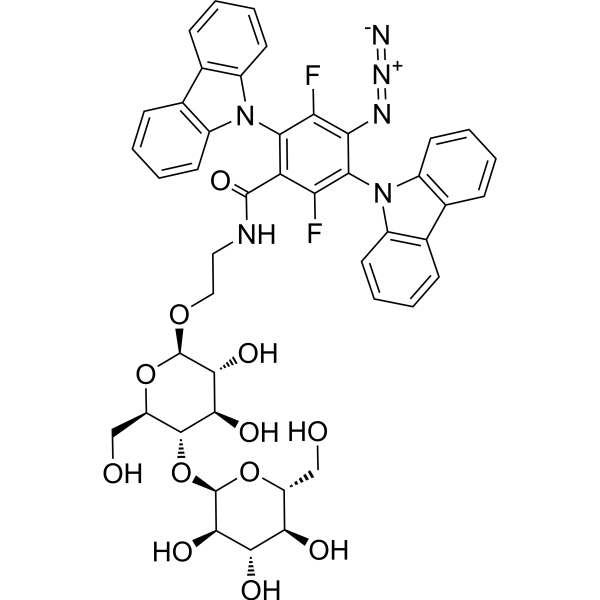
Mal-Cz is a maltose-derived fluorescence-on imaging probe for the detection of E. coli and Staphylococcus aureus . It contains an Azide group and can undergo copper-catalyzed azide-alkyne cycloaddition reaction (CuAAc) with molecules containing Alkyne groups. It can also undergo strain-promoted alkyne-azide cycloaddition (SPAAC) reactions with molecules containing DBCO or BCN groups.
loading...
    loading...
Cat. No.: HY-173390
CAS No.: 2059099-03-3
Research Areas:  

Others

BCN-E-BCN is a strained cycloalkyne-based probe designed for detecting protein sulfenylation, the primary intermediate in protein oxidation. This structurally constrained cycloalkyne compound specifically recognizes sulfenic acid groups formed during thiol oxidation, while remaining completely unreactive toward other oxidative states (such as free thiols, sulfinic, or sulfonic acid groups). Researchers can leverage its efficient conjugation with azide-bearing tags through copper-free click chemistry to amplify detection signals. Compared to conventional detection methods, BCN-E-BCN demonstrates superior reaction kinetics and enhanced sensitivity. With these advantages, BCN-E-BCN shows great promise as an effective tool for protein oxidation research .
loading...
    loading...
Cat. No.: HY-W800696
CAS No.: 2644752-86-1
BP Fluor 430 Azide is a water-soluble, green-fluorescent, azide-activated probe that reacts with terminal alkynes via a copper-catalyzed click reaction (CuAAC). It also reacts with strained cyclooctyne via a copper-free click chemistry reaction to form a stable triazole and does not require a Cu-catalyst or elevated temperatures. BP Fluor 430 is a bright, photostable, green-fluorescent probe with excitation near its absorption maximum at 432 nm and emission maximum at 539 nm. This probe is water soluble and pH-insensitive from pH 4 to pH 10. A next generation probe, BP Fluor 430 Picolyl Azide, is also available for detection of low abundance alkyne-tagged biomolecules.
loading...
    loading...

