



35 Results for "

EAE model

" in MedChemExpress (MCE) Product Catalog:
Products (35)

35 Results for "EAE model" in MCE Product Catalog:

9
9 Publications Verification
Cat. No.: HY-P1240
CAS No.: 149635-73-4
Synonyms: Myelin Oligodendrocyte Glycoprotein Peptide (35-55), mouse, rat
MOG (35-55) mouse, rat (Myelin Oligodendrocyte Glycoprotein Peptide (35-55), mouse, rat) is a minor component of CNS myelin. MOG (35-55) mouse, rat has encephalitogenic activity and induces T cell proliferative. MOG (35-55) mouse, rat induces Th1 cytokine response as well as relatively high levels of IgG antibodies. MOG (35-55) mouse, rat produces a relapsing-remitting neurological disease with extensive plaque-like demyelination. MOG (35-55) mouse, rat (MOG (35-55)) can be used for experimental autoimmune encephalomyelitis (EAE) modeling .
loading...
    loading...
9
9 Publications Verification
Cat. No.: HY-100754
CAS No.: 1792180-81-4
Purity:  99.43%
Synonyms: PF-06651600
Research Areas:  

Inflammation/Immunology

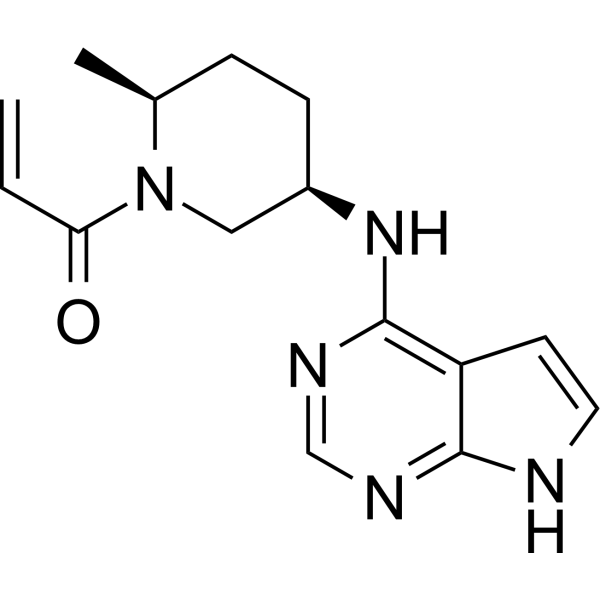
Ritlecitinib (PF-06651600) is a highly selective, orally active, irreversible covalent JAK3 inhibitor (IC50=33 nM) without inhibitory activity towards JAK1, JAK2, and TYK2 (IC50 >10 μ M). Ritlecitinib rapidly inactivates the JAK3 kinase, and blocks signaling and downstream STAT phosphorylation mediated by common gamma chain cytokines such as IL-2 and IL-15. Ritlecitinib can inhibit Th1/Th17 cell differentiation and function, and effectively suppress preclinical animal models such as alopecia areata, adjuvant-induced arthritis (AIA), and experimental autoimmune encephalomyelitis (EAE) .
loading...
    loading...
9
9 Publications Verification
Cat. No.: HY-P1240A
Synonyms: Myelin Oligodendrocyte Glycoprotein Peptide (35-55), mouse, rat TFA
MOG (35-55) (MOG (35-55)) TFA is a minor component of CNS myelin. MOG (35-55) (TFA) has encephalitogenic activity and induces T cell proliferative. MOG (35-55) (TFA) induces Th1 cytokine response as well as relatively high levels of IgG antibodies. MOG (35-55) (TFA) produces a relapsing-remitting neurological disease with extensive plaque-like demyelination. MOG (35-55) (MOG (35-55)) TFA can be used for experimental autoimmune encephalomyelitis (EAE) modeling .
loading...
    loading...
9
9 Publications Verification
Cat. No.: HY-P1240B
Synonyms: Myelin Oligodendrocyte Glycoprotein Peptide (35-55), mouse, rat acetate
MOG (35-55) (Myelin Oligodendrocyte Glycoprotein Peptide (35-55), mouse, rat) acetate is a minor component of CNS myelin. MOG (35-55) (acetate) has encephalitogenic activity and induces T cell proliferative. MOG (35-55) (acetate) induces Th1 cytokine response as well as relatively high levels of IgG antibodies. MOG (35-55) (acetate) produces a relapsing-remitting neurological disease with extensive plaque-like demyelination. MOG (35-55) (Myelin Oligodendrocyte Glycoprotein Peptide (35-55), mouse, rat) acetate can be used for experimental autoimmune encephalomyelitis (EAE) modeling .
loading...
    loading...
9
9 Publications Verification
Cat. No.: HY-100754C
CAS No.: 2192215-81-7
Purity:  99.77%
Synonyms: PF-06651600 tosylate
Research Areas:  

Inflammation/Immunology

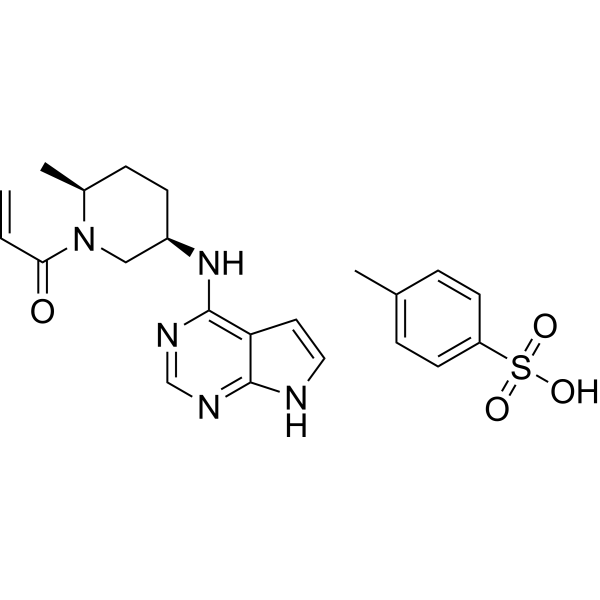
Ritlecitinib (PF-06651600) tosylate is a highly selective, orally active, irreversible covalent JAK3 inhibitor (IC50=33 nM) without inhibitory activity towards JAK1, JAK2, and TYK2 (IC50 >10 μ M). Ritlecitinib tosylate rapidly inactivates the JAK3 kinase, and blocks signaling and downstream STAT phosphorylation mediated by common gamma chain cytokines such as IL-2 and IL-15. Ritlecitinib tosylate can inhibit Th1/Th17 cell differentiation and function, and effectively suppress preclinical animal models such as alopecia areata, adjuvant-induced arthritis (AIA), and experimental autoimmune encephalomyelitis (EAE) .
loading...
    loading...
1
1 Cited Publications
Cat. No.: HY-P3719
CAS No.: 2022956-48-3
Target:  

CCR

Research Areas:  

Inflammation/Immunology

MOG (35-55) amide, mouse, rat the terminal amidation form of the 35-55 fragment of the myelin oligodendrocyte glycoprotein (MOG) immunogenic peptide (MOG (35-55) (HY-P1240)). MOG(35-55) amide, mouse, rat can be used for experimental autoimmune encephalomyelitis (EAE) modeling .
loading...
    loading...
1
1 Cited Publications
Cat. No.: HY-P1409A
Target:  

Potassium Channel

Research Areas:  

Inflammation/Immunology

ADWX 1 TFA is a new peptide inhibitor that is potent and selective for Kv1.3 with an IC50 value of 1.89 pM. ADWX 1 inhibits Kv1.3 channel activity specifically to inhibit both the initial calcium signaling and NF-κB activation. ADWX 1 TFA ameliorates the disease in rats of experimental autoimmune encephalomyelitis (EAE) models. ADWX 1 TFA can be used to study T cell-mediated autoimmune diseases .
loading...
    loading...
Cat. No.: HY-168625
CAS No.: 3050683-38-7
Synonyms: VAV1 degrader-3
MRT-6160 (Example 185) is an orally active VAV1 molecular glue degrader (DC50: 7 nM). MRT-6160 reduces immune cell activation, immune cell proliferation and the production of various cytokines. MRT-6160 can be used for research of inflammatory or autoimmune disorder. MRT-6160 inhibits disease progression in experimntal autoimmune encephalomyelitis (EAE) mouse model, Collagen-induced arthritis (CIA) mouse model, etc. .
loading...
    loading...
Cat. No.: HY-P99148

Target:  

TNF Receptor

Anti-Mouse TNF alpha Antibody (TN3-19.12) is an anti-mouse TNF alpha IgG antibody inhibitor derived from host Armenian Hamster. Anti-Mouse TNF alpha Antibody (TN3-19.12) neutralizes cytotoxic activity in supernatants obtained from LNC-8 cells. Anti-Mouse TNF alpha Antibody (TN3-19.12) reduces the symptoms and severity of EAE (experimental allergic encephalomyelitis) in LNC-8 cells xenograft mice models. Anti-Mouse TNF alpha Antibody (TN3-19.12) prevents diabetes in NOD mice. Anti-Mouse TNF alpha Antibody (TN3-19.12) shows apparent radiosensitizing effect in CD2F1 mice .
loading...
    loading...
Cat. No.: HY-125726
CAS No.: 151057-28-2
Synonyms: (3'-sulfo)Galβ-Cer(d18:1/24:1); N-Nervonoyl Sulfatide; C24:1 Sulfatide
Sulfo galactosylceramide (N-Nervonoyl Sulfatide; C24:1 Sulfatide) is a glycolipid and the major sulfolipid species in mature myelin. Sulfo galactosylceramide interacts with C-type lectins and immunoglobulin-like receptors, with the highest affinity for LMIR5. Sulfo galactosylceramide induces MCP-1 production by basophils but not mast cells, and increases NFAT activation via LMIR5. Sulfo galactosylceramide alleviates symptoms and improves survival in a mouse model of chronic relapsing-remitting experimental autoimmune encephalomyelitis (EAE), and reduces inflammatory lesions and the number of infiltrating mononuclear cells in the lumbar spinal cord of EAE mice.
loading...
    loading...
Cat. No.: HY-150307
CAS No.: 2082765-42-0
Purity:  99.78%
Research Areas:  

Inflammation/Immunology

KP-302 (Compound 23) is a selective inhibitor of protein arginine deaminase PAD2 with a Ki of 60 μM. KP-302 also reverses physical disability in the EAE mouse model of multiple sclerosis (MS) and eliminates T cell infiltration in the brain. KP-302 can be studied in research as a disease-modifying agent for MS .
loading...
    loading...
Cat. No.: HY-P10532
CAS No.: 121196-80-3
Target:  

PKC

Research Areas:  

Others Inflammation/Immunology

Myelin basic protein, MBP (68-86) is the portion of the 68th to 86th amino acid residues in the MBP protein sequence. Myelin basic protein, MBP (68-86) can act as an autoantigen, triggering the immune system to attack its own myelin. Myelin basic protein, MBP (68-86) is used as one of the immunogens in the experimental autoimmune encephalomyelitis (EAE) animal model to study immune responses associated with multiple sclerosis (MS) .
loading...
    loading...
Cat. No.: HY-142042
CAS No.: 287196-91-2
Purity:  99.84%
3-Hydroxy-4-carboxyalkylamidino-5-arylamino-isothiazoles is an inhibitor for bone morphogenetic protein 2 (BMP2) with an IC50 of 2.2 μM. 3-Hydroxy-4-carboxyalkylamidino-5-arylamino-isothiazoles is inhibitor for mitogen-activated protein kinase 1 (MEK1). 3-Hydroxy-4-carboxyalkylamidino-5-arylamino-isothiazoles exhibits anti-inflammatory and neuroprotective activity in EAE mouse model .
loading...
    loading...
Cat. No.: HY-P990004

Target:  

Tim3

Research Areas:  

Inflammation/Immunology Cancer

Anti-Mouse TIM-3 Antibody (B8.2C12) is an anti-mouse TIM-3 IgG1 monoclonal antibody. Anti-Mouse TIM-3 Antibody (B8.2C12) can block the binding of Tim-3 with Phosphatidylserine (PtdSer) and CEACAM1 without interfering with the binding to Galectin-9. Anti-Mouse TIM-3 Antibody (B8.2C12) can inhibit tumor growth and activate tumor infiltrating CD8 + T cells. Anti-Mouse TIM-3 Antibody (B8.2C12) can be used for studying cancer such as breast cancer and colon cancer and constructing experimental autoimmune encephalomyelitis (EAE) models .
loading...
    loading...
Cat. No.: HY-170409
CAS No.: 1195795-81-3
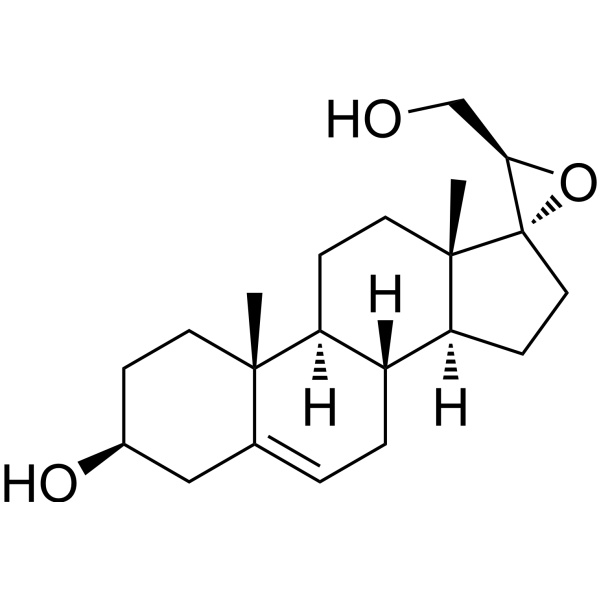
BNN27 is the agonist for TrkA receptor and p75NTR receptor, that exhibits neurotrophic and anti-apoptotic effects. BNN27 increases the levels of glutamate, GABA, and glutamine in the rat hippocampus and prefrontal cortex, improves glutamate turnover. BNN27 exhibits neuroprotective efficacy in mouse amyotrophic lateral sclerosis (ALS) model, exhibits anti-inflammatory efficacy in experimental autoimmune encephalomyelitis (EAE) model, exhibits retinal protective efficacy in rat diabete models. BNN27 is blood-brain barrier penetrable .
loading...
    loading...
Cat. No.: HY-120615
CAS No.: 1236188-38-7
BMS-520 is a potent, orally active and selective sphingosine-1-phosphate 1 (S1P1) agonist with an EC50 of 0.47nM. BMS-520 shows ~3400-fold selectivity over S1P3. BMS-520 demonstrates impressive efficacy in a rat model of arthritis and in a mouse experimental autoimmune encephalomyelitis (EAE) model of multiple sclerosis. BMS-520 can be used for arthritis and EAE research .
loading...
    loading...
Cat. No.: HY-W795993
CAS No.: 10245-44-0
Research Areas:  

Inflammation/Immunology

TJU103 is a CD4 inhibitor. TJU103 inhibits autoreactive CD4 + T cells by disrupting the function of the CD4 during activation. TJU103 decreases mononuclear cell infiltration in brain and spinal cord tissue of experimental allergic encephalomyelitis (EAE) mice model. TJU103 downregulates Th1 and Th2 cytokine levels in response to proteolipid protein epitope 139-151 (PLPe) and exhibits inhibitory effects both after the appearance of EAE symptoms and upon rechallenge with Ag. TJU103 can be used for autoimmune diseases like EAE and sclerosis (MS) research .
loading...
    loading...
Cat. No.: HY-158374
CAS No.: 2792153-06-9
Target:  

IRAK

Research Areas:  

Inflammation/Immunology

BIO-8169 is a selective inhibitor for interleukin receptor-associated kinase 4 (IRAK 4), with an IC50 of 0.23 nM. BIO-8169 exhibits good pharmacokinetic character, reduces the production of pro-inflammatory cytokines, and attenuates the autoimmune encephalomyelitis in EAE mice model. BIO-8169 exhibits good blood brain penetrant with a rat Kpu,u of 0.7 .
loading...
    loading...
Cat. No.: HY-100754A
CAS No.: 2140301-97-7
Synonyms: PF-06651600 malonate
Research Areas:  

Inflammation/Immunology

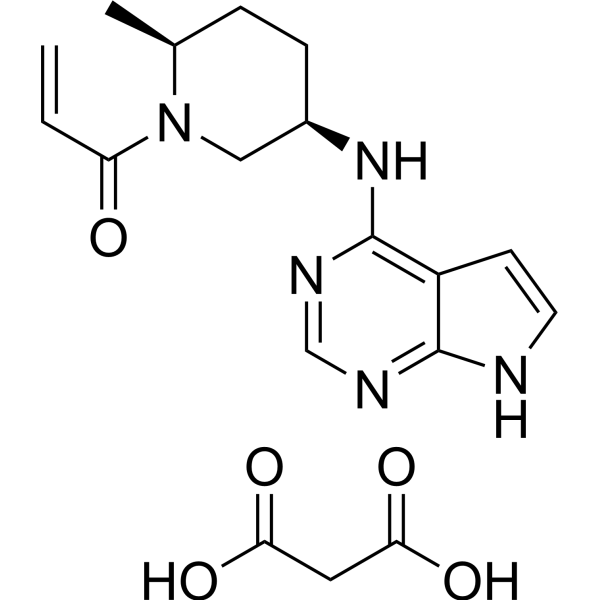
Ritlecitinib (PF-06651600) malonate is a highly selective, orally active, irreversible covalent JAK3 inhibitor (IC50=33 nM) without inhibitory activity towards JAK1, JAK2, and TYK2 (IC50 >10 μ M). Ritlecitinib malonate rapidly inactivates the JAK3 kinase, and blocks signaling and downstream STAT phosphorylation mediated by common gamma chain cytokines such as IL-2 and IL-15. Ritlecitinib malonate can inhibit Th1/Th17 cell differentiation and function, and effectively suppress preclinical animal models such as alopecia areata, adjuvant-induced arthritis (AIA), and experimental autoimmune encephalomyelitis (EAE) .
loading...
    loading...
Cat. No.: HY-16622A
CAS No.: 1005407-76-0
Target:  

LPL Receptor

Research Areas:  

Others

GSK1842799, an alkyl-substituted biaryl amino alcohol, is a selective S1P1 modulator developed for multiple sclerosis (MS). Upon phosphorylation, GSK1842799-P exhibited subnanomolar S1P1 agonist activity with over 1000-fold selectivity over S1P3. The compound showed good oral bioavailability, rapid in vivo conversion to GSK1842799-P, and significant lymphocyte count reduction at 0.1 mg/kg. It matched FTY720 efficacy at 3 mg/kg in the mouse EAE model and achieved comparable plasma levels to FTY-720 phosphate in cynomolgus monkeys. With favorable ADME, PK/PD properties, and toxicology, GSK1842799 advanced to further clinical development .
loading...
    loading...

