







1. Search Result
Search Result
Results for "

EC

" in MedChemExpress (MCE) Product Catalog:

99

Inhibitors & Agonists

1

Fluorescent Dye

54

Biochemical Assay Reagents

3

Peptides

1

Inhibitory Antibodies

2

Natural
Products

295

Recombinant Proteins

1

Isotope-Labeled Compounds

92

Antibodies

2

Click Chemistry

1

GMP Molecules

Cat. No. Product Name Target Research Areas Chemical Structure
  • HY-P2974
    Elastase, Porcine pancreas
    4 Publications Verification

    EC 3.4.21.36; Pancreatopeptidase E

    Elastase Metabolic Disease
    Elastase, Porcine pancreas (EC 3.4.21.36) is a single polypeptide chain of 240 amino acid residues, derived from pig pancreas. Elastase, Porcine pancreas is a serine protease that can hydrolyze proteins and polypeptide. Elastase from porcine pancreas can induce emphysema in hamsters .
    Elastase, Porcine pancreas
  • HY-E70005A
    Collagenase, Type I
    Maximum Cited Publications
    17 Publications Verification

    EC 3.4.24.3

    MMP Others
    Collagenase, Type I is a microbially derived matrix metalloproteinases (MMPs) and zinc peptidase. Collagenase, Type I breaks down collagens 1, 3, 7, 8, 10, gelatin, proteoglycans, aggrecan .

    Collagenase, Type I
  • HY-N0567
    Hydroxysafflor yellow A
    10+ Cited Publications

    Safflomin A; HSYA

    Apoptosis Autophagy Cardiovascular Disease Cancer
    Hydroxysafflor yellow A (Safflomin A) is a natural product of flavonoids isolated from safflower. Hydroxysafflor yellow A can inhibit cell proliferation and promote apoptosis through the autophagy pathway. Hydroxysafflor yellow A has anti-inflammatory, antioxidant and antitumor effects. Hydroxysafflor yellow A can be used in the study of cardiovascular disease .
    Hydroxysafflor yellow A
  • HY-17447A
    Tranylcypromine hydrochloride
    5+ Cited Publications

    SKF 385 hydrochloride

    Monoamine Oxidase Ligands for Target Protein for PROTAC Histone Demethylase Neurological Disease
    Tranylcypromine hydrochloride (SKF 385 hydrochloride) is an irreversible inhibitor of lysine-specific demethylase 1 (LSD1/BHC110) and monoamine oxidase (MAO). Tranylcypromine hydrochloride inhibits LSD1, MAO A and MAO B with IC50s of 20.7, 2.3 and 0.95 μM, respectively. Tranylcypromine hydrochloride can be used for the research of depression .
    Tranylcypromine hydrochloride
  • HY-P1635
    Pepsin
    3 Publications Verification

    EC 3.4.23.1

    Endogenous Metabolite Endocrinology
    Pepsin is the major pig and human gastric proteases, it is a pepsin-like minor gastric proteolytic enzymes. Pepsin contributes to proteolysis of food proteins in the vertebrate stomach .
    Pepsin
  • HY-129046
    RNase A, Bovine pancreas
    5 Publications Verification

    Ribonuclease A; EC 4.6.1.18; RNase A

    Endonuclease DNA/RNA Synthesis Others
    RNase A (Bovine pancreatic RNase) is a widely used Endonuclease in DNA purification by specifically hydrolyzing cytosine or uracil residues of RNA. RNase A degrades the RNA in the RNA/DNA duplex. RNase A catalyses the breakdown of 3',5'-phosphodiester linkages of single stranded RNA. RNase A family members in organisms are tightly involved in various physiological and pathological processes including cell growth and development, proliferation, differentiation and migration. Dysregulation of RNase A activity or expression level is closely related to pancreatic, ovarian, bladder and thyroid cancer. RNase A has tumor cell-killing ability .
    RNase A, Bovine pancreas
  • HY-108910
    Chymotrypsin
    2 Publications Verification

    EC 3.4.21.1; Chymotrypsin A

    Toll-like Receptor (TLR) NF-κB MMP Others Inflammation/Immunology
    Chymotrypsin (EC 3.4.21.1; Chymotrypsin A) is an orally effective inhibitor targeting molecules such as TLR4, NF-κB, MMP-1, TNF-α, IL-1β, and IL-6. Chymotrypsin downregulates the TLR4/NF-κB signaling pathway, inhibiting the release of inflammatory factors, reducing cell infiltration and tissue damage. It also reduces the expression of tumor cell adhesion molecules (such as CD44 and CD54) and can be specifically detected by fluorescent probes (such as NBD-3). Chymotrypsin has anti-inflammatory, hepatoprotective, joint damage-reducing, liver protection against lipotoxicity, and anti-tumor metastasis functions. It can be used in research on diseases such as rheumatoid arthritis, non-alcoholic fatty liver disease, and melanoma metastasis. Chymotrypsin can be used in studies of inflammation, edema, and expectoration .
    Chymotrypsin
  • HY-120142
    EC359
    10+ Cited Publications

    Apoptosis Cancer
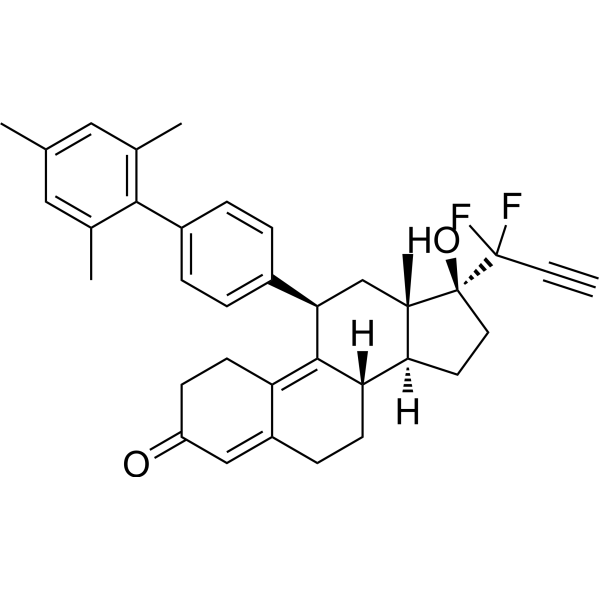
    EC359 is a potent, selective, high affinity and orally active leukemia inhibitory factor receptor (LIFR) inhibitor with a Kd of 10.2 nM, which directly interacts with LIFR to effectively block LIF/LIFR interactions . EC359 is a click chemistry reagent, it contains an Alkyne group and can undergo copper-catalyzed azide-alkyne cycloaddition (CuAAc) with molecules containing Azide groups.
    EC359
  • HY-P1748

    EC 3.4.24.27; TML

    Endogenous Metabolite Infection
    Thermolysin, Bacillus thermoproteolyticus rokko (EC 3.4.24.27) (TML) is a thermostable neutral metalloproteinase enzyme secreted by the Gram-positive bacteria Bacillus thermoproteolyticus. Thermolysin catalyzes the hydrolysis of peptide bonds containing hydrophobic residues .

    Optimal pH: 8.0. Considerably stable from pH 5 to 9.5.
    Optimal temperature : 70 °C
    Thermolysin, Bacillus thermoproteolyticus rokko
  • HY-P2869

    EC 3.2.1.23; GAL

    Glycosidase Metabolic Disease
    β-Galactosidase, E. coli (EC 3.2.1.23; GAL) is a glycoside hydrolase that hydrolyzes the β-glycosidic bonds formed between galactose and its organic moieties. β-Galactosidase, E. coli can hydrolyze lactose to form glucose and galactose, and enter glycolysis; it can also catalyze the transgalactosylation of lactose into allolactose; allolactose can be cracked into monosaccharides .
    β-Galactosidase, E. coli
  • HY-126386

    EC 3.2.1.15

    Biochemical Assay Reagents Others
    Pectinase (EC 3.2.1.15) is a mixed enzymes that hydrolyze pectic substances, it mostly presents in microorganisms and higher plants. Pectinase is involved in the metabolism of the cell wall as well as in the growth of the cell, senescence, ripening of fruits, pathogenesis and abscission process .
    Pectinase, aspergillus niger
  • HY-P2860

    ACHE; EC 3.1.1.7

    Cholinesterase (ChE) Neurological Disease
    Acetylcholinesterase, Fly head (ACHE; EC 3.1.1.7) is a cholinergic enzyme mainly found in neuromuscular junctions and cholinergic type chemical synapses used in biochemical research. Acetylcholinesterase, Fly head catalyzes the breakdown or hydrolysis of acetylcholine and some other choline esters that act as neurotransmitters into acetate and choline. Acetylcholinesterase, Fly head's main role is to terminate neuronal transmission and signaling between synapses to prevent ACh spread and activation of nearby receptors .
    Acetylcholinesterase, Fly head
  • HY-13615A
    EC-17 disodium salt
    1 Publications Verification

    Fluorescent Dye Folate Receptor (FR) Cancer
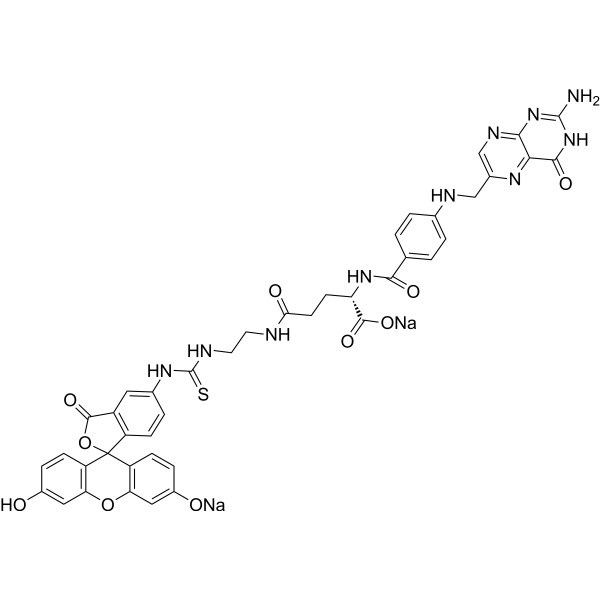
    EC-17 disodium salt is a folate receptor alpha (FRα) targeting contrast agent with fluorescent properties in the visible light spectrum. The EC-17 maximum excitation and emission wavelengths are 490 nm and 520 nm, respectively .
    EC-17 disodium salt
  • HY-14649G

    Vitamin A acid; all-trans-Retinoic acid; ATRA

    RAR/RXR PPAR Endogenous Metabolite Autophagy Cancer
    Retinoic acid (Vitamin A acid) (GMP) is Retinoic acid (HY-14649) produced by using GMP guidelines. GMP small molecules works appropriately as an auxiliary reagent for cell therapy manufacture. Retinoic acid is an agonist of RAR nuclear receptors .
    Retinoic acid
  • HY-P2810

    EC 3.4.23.4

    Endogenous Metabolite Ser/Thr Protease Metabolic Disease
    Rennin, also known as Chymosin, is a pepsin-related proteolytic enzyme synthesized by cells in the stomach of certain animals that efficiently converts liquid milk into a semi-solid, allowing it to remain in the stomach for longer. The natural substrate of Rennin is K-casein, which is specifically cleaved at the peptide bond between amino acid residues 105 and 106, phenylalanine and methionine, and is widely used in cheese production .
    Rennin
  • HY-P2729

    EC 3.4.21.14

    Ser/Thr Protease Apoptosis Interleukin Related Bacterial Inflammation/Immunology Cancer
    Subtilisin (EC 3.4.21.14) is a bacterial serine protease. Subtilisin induces Apoptosis. Subtilisin stimulates the expression of pro-allergic cytokines (IL-1α, IL-33). Subtilisin induces prototypic allergic lung inflammation. Subtilisin exhibits anticancer activity against breast and colon cancer. Subtilisin shows antifouling activity. Subtilisin can be used as a detergent additive .
    Subtilisin
  • HY-E70198
    Pepsin (MS Grade)
    3 Publications Verification

    EC 3.4.23.1 (MS Grade)

    Endogenous Metabolite Others
    Pepsin (MS Grade) is the major pig and human gastric proteases, it is a pepsin-like minor gastric proteolytic enzymes. Pepsin (MS Grade) contributes to proteolysis of food proteins in the vertebrate stomach .
    Pepsin (MS Grade)
  • HY-100949
    EC330
    5+ Cited Publications

    Interleukin Related Biochemical Assay Reagents Cancer
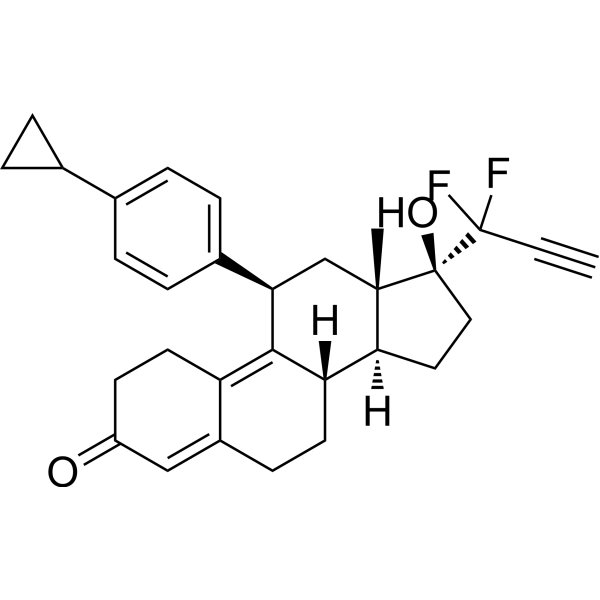
    EC330 is a leukemia inhibitory factor (LIF) inhibitor. EC330 is a click chemistry reagent, it contains an Alkyne group and can undergo copper-catalyzed azide-alkyne cycloaddition (CuAAc) with molecules containing Azide groups.
    EC330
  • HY-13615

    EC-17

    Fluorescent Dye Folate Receptor (FR) Cancer
    Folate-FITC (EC-17) is a folate receptor alpha (FRα) targeting contrast agent with fluorescent properties in the visible light spectrum. The Folate-FITC maximum excitation and emission wavelengths are 490 nm and 520 nm, respectively .
    Folate-FITC
  • HY-P1775

    EC 4.2.1.1

    Carbonic Anhydrase Neurological Disease Metabolic Disease Cancer
    Carbonic anhydrase, Bovine erythrocytes (EC 4.2.1.1) is ubiquitous zinc-containing metalloenzyme present in prokaryotes and eukaryotes. Carbonic anhydrase can catalyze reversible conversion of carbon dioxide to bicarbonate and protons. Carbonic anhydrase can be used for the research of cancer, glaucoma, obesity and epilepsy .

    Carbonic anhydrase, Bovine erythrocytes
  • HY-P2833

    GSH-Px; EC 1.11.1.9

    Glutathione Peroxidase Metabolic Disease
    Glutathione Peroxidase (GSH-Px; EC 1.11.1.9) belongs to the peroxidase family and is commonly used in biochemical research. Glutathione Peroxidase can catalyze reduced glutathione (GSH) to form a disulfide bridge with another glutathione molecule, convert it into oxidized glutathione (GSSG), and react with hydrogen peroxide or lipid peroxide reaction, reducing it to H2O. Glutathione Peroxidase is an effective antioxidant against oxidative stress .
    Glutathione Peroxidase
  • HY-125862

    EC 1.6.4.2; GR

    Calcineurin Reactive Oxygen Species (ROS) Cardiovascular Disease Neurological Disease
    Glutathione reductase, baker's yeast (EC 1.6.4.2) is a reductase. Glutathione reductase, baker's yeast eliminates intracellular ROS. Glutathione reductase, baker's yeast reduces oxidized glutathione (GSSG) to reduced glutathione (GSH) using NADPH as an electron donor. Glutathione reductase, baker's yeast exerts antioxidant activity. Glutathione reductase is mainly used to study diseases associated with oxidative stress, such as Parkinson's disease and sickle cell anemia .
    Glutathione Reductase, baker's yeast
  • HY-128206
    I3MT-3
    5 Publications Verification

    HMPSNE

    Hippo (MST) Metabolic Disease
    I3MT-3 (HMPSNE) is a potent, selective, and cell-membrane permeable inhibitor of 3-Mercaptopyruvate sulfurtransferase (3MST) (IC50=2.7 μM). I3MT-3 is inactive for other H2S/sulfane sulfur-producing enzymes.?I3MT-3 targets a persulfurated cysteine residue located in the active site of 3MST .
    I3MT-3
  • HY-12309

    AGN 190205; BASF-46928

    Organoid Neurological Disease
    EC23 (AGN 190205) is a stable synthetic retinoid analogue and induces neuronal differentiation .
    EC23
  • HY-P2746

    EC 3.4.2.2

    Endogenous Metabolite Metabolic Disease
    Carboxypeptidase B, Porcine pancreas (EC 3.4.2.2) is a peptide exonuclease that can specifically degrade peptide chains. Carboxypeptidase B is progressively degraded from the C-terminal to release free amino acids. Carboxypeptidase B hydrolyzes only peptide bonds with basic amino acids (such as arginine and lysine) as C-terminal residues .
    Carboxypeptidase B, Porcine pancreas
  • HY-P2798

    EC 3.1.1.8; BCHE, Horse serum

    Cholinesterase (ChE) Neurological Disease
    Cholinesterase, Horse serum infers to acetylcholinesterase (AChE) and butyryl cholinesterase (BChE). AChE and BChE catalyze the hydrolysis of 6-MAM to morphine .
    Cholinesterase, Horse serum
  • HY-108910A
    Chymotrypsin (MS grade)
    2 Publications Verification

    EC 3.4.21.1 (MS grade); Chymotrypsin A (MS grade)

    Toll-like Receptor (TLR) NF-κB MMP Others Inflammation/Immunology
    Chymotrypsin (EC 3.4.21.1; Chymotrypsin A) (MS grade) is an orally effective inhibitor targeting molecules such as TLR4, NF-κB, MMP-1, TNF-α, IL-1β, and IL-6. Chymotrypsin (MS grade) downregulates the TLR4/NF-κB signaling pathway, inhibits the release of inflammatory factors, reduces cell infiltration and tissue damage, and also reduces the expression of tumor cell adhesion molecules (such as CD44 and CD54). It can also be specifically detected by fluorescent probes (such as NBD-3). Chymotrypsin (MS grade) has anti-inflammatory, hepatoprotective, joint damage-reducing, liver protection against lipotoxicity, and anti-tumor metastasis functions, and can be used in the research of diseases such as rheumatoid arthritis, non-alcoholic fatty liver disease, and melanoma metastasis. Chymotrypsin (MS grade) can be used in studies of inflammation, edema, and expectoration .
    Chymotrypsin (MS grade)
  • HY-P3016A

    EC 2.6.1.1, porcine heart; GOT, porcine heart; AST, porcine heart

    Aminotransferases (Transaminases) Cardiovascular Disease
    Aspartate aminotransferase (EC 2.6.1.1), porcine heart is a metabolic regulator with the highest activity in the heart, liver and skeletal muscle. Aspartate aminotransferase, porcine heart comprises two isozymes: the cytoplasmic form (AST1) and the mitochondrial form (AST2). By catalyzing reversible transamination reactions between oxaloacetate, L-glutamate and other substances, it is deeply involved in key physiological processes such as amino acid metabolism, the tricarboxylic acid cycle and neurotransmitter synthesis. Aspartate aminotransferase, porcine heart also provides substrate support for the synthesis of urea and purines/pyrimidines. Aspartate aminotransferase, porcine heart is a serum marker reflecting cardiac and hepatic injury, and its abnormal levels are also closely associated with myocardial infarction, cardiovascular diseases and various cancers .
    Aspartate aminotransferase, porcine heart
  • HY-135653
    EC5026
    1 Publications Verification

    BPN-19186

    Epoxide Hydrolase Neurological Disease
    EC5026 (BPN-19186) is a first-in-class, non-opioid and orally active soluble Epoxide Hydrolase (sEH) inhibitor. EC5026 shows efficacy for inflammatory and neuropathic pain .
    EC5026
  • HY-P2740

    EC 1.1.1.1

    Endogenous Metabolite Metabolic Disease
    Alcohol dehydrogenase, Saccharomyces cerevisiae is a dimeric protein in the cytosol of cells. Alcohol dehydrogenase, the key enzyme for alcohol consumption in the body, is the highest expressed in the liver and participates in the detoxification mechanism of environmental alcohol .
    Alcohol dehydrogenase, Saccharomyces cerevisiae
  • HY-P3017

    CtXyn11A; EC 3.2.1.8

    Poly(ADP-ribose) Glycohydrolase (PARG) Others
    Endo-1,4-β-xylanase (Xylanase) is an arabinoxylan (AX) degrading enzyme and a glycoside hydrolase, is often used in biochemical studies. Endo-1,4-β-xylanase cleaves the β-xylosidic bond between two d-xylopyranosyl residues linked in β-(1,4) .
    Endo-1,4-β-xylanase
  • HY-P2980

    EC 3.4.2.1

    Endogenous Metabolite Others
    Carboxypeptidase A, Bovine pancreas (EC 3.4.2.1) is a zinc-containing metalloprotease, is often used in biochemical studies. Carboxypeptidase A catalyzes the hydrolysis of the peptide bonds that are adjacent to the C-terminal end of a polypeptide chain. Carboxypeptidase A is a prototypical enzyme for metalloproteases that plays important roles in biological systems .
    Carboxypeptidase A, Bovine pancreas
  • HY-P2871

    EC 3.2.1.22

    Endogenous Metabolite Others
    α-Galactosidase, Aspergillus niger (EC 3.2.1.22), that is, α-galactosidase, is a glycoside hydrolase that widely exists in animals, plants and microorganisms, and is often used in biochemical research. α-Galactosidase catalyzes the hydrolysis of α-1,6-linked terminal galactose residues, including galactooligosaccharides, galactomannans, and galactolipids. Catalyzes many catabolic processes including cleavage of glycoproteins, glycolipids and polysaccharides .
    α-Galactosidase, Aspergillus niger
  • HY-E70201

    EC 3.4.2.2 (MS grade)

    Endogenous Metabolite Others
    Carboxypeptidase B (MS grade) is a peptide exonuclease that can specifically degrade peptide chains. Carboxypeptidase B (MS grade) is progressively degraded from the C-terminal to release free amino acids. Carboxypeptidase B (MS grade) hydrolyzes only peptide bonds with basic amino acids (such as arginine and lysine) as C-terminal residues .
    Carboxypeptidase B (MS grade)
  • HY-P3016

    EC 2.6.1.1; GOT; AST

    Aminotransferases (Transaminases) Cardiovascular Disease
    Aspartate aminotransferase (EC 2.6.1.1), Genetically engineered bacteria is a metabolic regulator with the highest activity in the heart, liver and skeletal muscle. Aspartate aminotransferase, Genetically engineered bacteria comprises two isozymes: the cytoplasmic form (AST1) and the mitochondrial form (AST2). By catalyzing reversible transamination reactions between oxaloacetate, L-glutamate and other substances, it is deeply involved in key physiological processes such as amino acid metabolism, the tricarboxylic acid cycle and neurotransmitter synthesis. Aspartate aminotransferase, Genetically engineered bacteria also provides substrate support for the synthesis of urea and purines/pyrimidines. Aspartate aminotransferase, Genetically engineered bacteria is a serum marker reflecting cardiac and hepatic injury, and its abnormal levels are also closely associated with myocardial infarction, cardiovascular diseases and various cancers .
    Aspartate aminotransferase, Genetically engineered bacteria
  • HY-13479

    HSP Cancer
    EC144 is a potent and selective inhibitor of heat shock protein 90 (Hsp90) with an IC50 of 1.1 nM. EC144 inhibits tumor growth and causes partial tumor regressions. EC144 has the potential for the research of cancer diseases . EC144 is a click chemistry reagent, it contains an Alkyne group and can undergo copper-catalyzed azide-alkyne cycloaddition (CuAAc) with molecules containing Azide groups.
    EC144
  • HY-114256

    PSMA Cancer
    EC1169 is a cytotoxic maytansinoid conjugate that specifically binds to prostate-specific membrane antigen (PSMA). EC1169 precisely delivers the maytansinoid B hydrazide payload to PSMA-positive cells to exert antitumor activity. EC1169 only inhibits the growth of PSMA-positive cells but has no effect on PSMA-negative cells, and enables complete recovery in mice bearing PSMA-positive tumors. EC1169 exhibits safety with no body weight loss or major organ damage induced. EC1169 is used in studies of prostate cancer and other PSMA-expressing malignancies .
    EC1169
  • HY-B1856

    Environmental Pollutants Acetyl-CoA Carboxylase Cancer
    Haloxyfop is an aryloxyphenoxypropionic acid herbicide and is widely used in grass weeds in broad-leaf crops . Haloxyfop inhibits the acetyl coenzyme A carboxylase (EC 6.4.1.2) from corn seedling chloroplasts with an IC50 of 0.5 μM, but has no effect on this enzyme in pea .
    Haloxyfop
  • HY-E70181

    EC:3.2.1.46; GALC

    Ceramidase Others
    Galactosylceramidase involves in lysosomal catabollsm of galactosytceramide. Galactosylceramidase can be used in study Krabbe disease .
    Galactosylceramidase
  • HY-P2809
    Malic dehydrogenase, microorganism
    1 Publications Verification

    MDH; EC 1.1.1.37

    Endogenous Metabolite Metabolic Disease
    Malate dehydrogenase (EC 1.1.1.37) (MDH) catalyzes the mutual conversion of oxaloacetate and malate, and is associated with the oxidation/reduction of dinucleotide coenzymes .
    Malic dehydrogenase, microorganism
  • HY-132177
    α-L-Fucosidase, Microorganism
    1 Publications Verification

    EC 3.2.1.51; FUC

    Endogenous Metabolite Cancer
    α-L-Fucosidase, Microorganism (EC 3.2.1.51) is an enzyme that catalyzes the chemical reaction. Serum activity of α-L-Fucosidase, Microorganism, a lysosomal enzyme present in all mammalian cells, has been proposed as a marker of hepatocellular carcinoma (HCC) .
    α-L-Fucosidase, Microorganism
  • HY-P2741

    E.C. 2.4.1.8

    Endogenous Metabolite Metabolic Disease
    Maltose phosphorylase is a dimerase which catalyzes the transformation of maltose and inorganic phosphate into β-D-glucose-1-phosphate and glucose. Maltose phosphorylases have been classified in family 65 of the glycoside hydrolases .
    Maltose phosphorylase
  • HY-P2768

    LDH, EC 1.4.1.9

    Endogenous Metabolite Metabolic Disease
    Leucine dehydrogenase, Microorganism (EC 1.4.1.9) can be purified from Bacillus spheroides. Leucine dehydrogenase catalyzed the oxidative deamination of L-leucine, L-valine, L-isoleucine, L-norvaline, L-alpha-aminobutyrate, and L-norleucine, and the reductive amination of their keto analogues .
    Leucine dehydrogenase, Microorganism
  • HY-P2981

    Carboxypeptidase Y; EC 3.4.16.1

    Carboxypeptidase Others
    Carboxypeptidase C is a carboxypeptidase, is often used in biochemical studies. Carboxypeptidase C removes COOH-terminal lysine, arginine, and proline, as well as all other neutral, aliphatic, aromatic, and the acidic protein amino acids of a peptide chain .
    Carboxypeptidase C
  • HY-E70051

    EC 2.4.1.40(Pm1138)

    Endogenous Metabolite Others
    alpha-1,3-N-Acetylgalactosaminyltransferase (Pm1138) (EC 2.4.1.40(Pm1138)), also namely the ABO system transferase with glycosyl transferase activity .
    alpha-1,3-N-Acetylgalactosaminyltransferase (Pm1138)
  • HY-E70138

    EC:2.4.1.133; B4GALT7

    Glycosyltransferase Others
    β-1,4-Galactosyltransferase 7 has exclusive specificity for the donor substrate UDP-galactose and all transfer galactose in a β-1,4 linkage to similar acceptor sugars: GlcNAc, Glc, and Xyl. .
    β-1,4-Galactosyltransferase 7
  • HY-E70013A

    EC 3.2.1.73

    Glycosidase Others
    Licheninase (EC 3.2.1.73) is a glycoside hydrolase is active on the β-glucan cell wall of cereals, fungi, and seaweed. Licheninase specifically hydrolyzes β(1→4) linkages in mixed linkage β(1→3)/β(1→4)-glucans. Licheninase improves cellulose degradation .
    Licheninase
  • HY-E70183

    EC:3.2.1.20; GAA

    Biochemical Assay Reagents Others
    Lysosomal α-Glucosidase (EC:3.2.1.20) is a γ-amylase with specificity for glycogen and several natural and synthetic oligoglucosides .
    Lysosomal α-Glucosidase
  • HY-E70157
    Fucosyltransferase 8
    1 Publications Verification

    EC:2.4.1.68; FUT8; α1-6FucT

    Glucosylceramide Synthase (GCS) Infection
    Fucosyltransferase 8 (EC:2.4.1.68; FUT8; α1-6FucT) is a glycosyl transferase and catalyzes the transfer of a fucose residue from GDP-fucose to the innermost N-acetylglucosamine residue of N-glycans .
    Fucosyltransferase 8
  • HY-124067

    IKK JAK STAT NF-κB Cancer
    EC-70124 is an orally active multikinase inhibitor targeting IKKβ and JAK2. EC-70124 blocks IkB phosphorylation and STAT3 (Tyr705) activation, suppressing NF-κB nuclear translocation and STAT3 transcriptional activity. EC-70124 reduces tumor growth and cancer stem cell (CSC) populations in prostate cancer cells and xenograft models. EC-70124 is promising for research of prostate cancer .
    EC-70124

Inquiry Online

Your information is safe with us. * Required Fields.

Salutation


Country or Region *

Applicant Name *


Organization Name *

Department *


Email Address *


Product Name *

Cat. No.


Requested quantity *

Phone Number *


Remarks

Inquiry Online

Inquiry Information

Product Name:
Cat. No.:
Quantity:
MCE Japan Authorized Agent:

