
From 11:00 pm to 12:00 pm EST ( 8:00 pm to 9:00 pm PST ) on January 6th, the website will be under maintenance. We are sorry for the inconvenience. Please arrange your schedule properly.
Luspatercept (ACE-536) is a recombinant modified ActRIIB fusion protein that binds with transforming growth factor β superfamily ligands. Luspatercept increases the erythrocyte numbers and promotes maturation of erythroid precursors. Luspatercept binds with GDF11 and inhibits Smad2/3 signaling. Luspatercept can be used for the research of anemia .
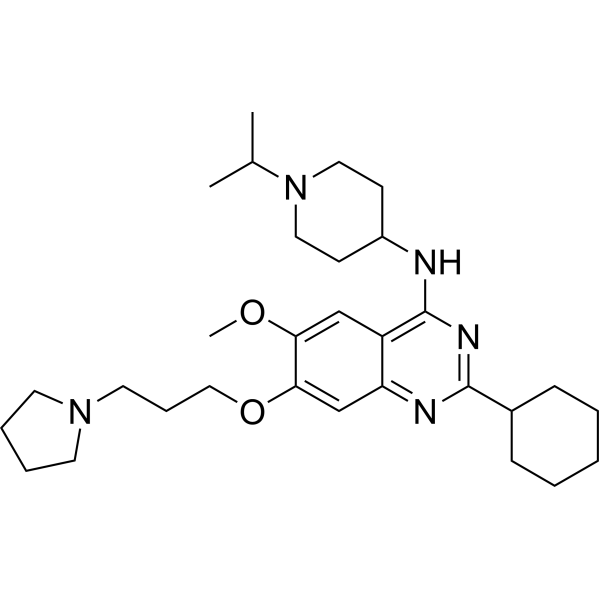
UNC0638, a chemical probe, selectively inhibits G9a and GLP histone methyltransferases with IC50 of 15 nM and 19 nM, respectively. UNC0638 inhibits TNBC cell invasion and migration in vitro. UNC0638 is also an inhibitor of EHMT1/2 and induces fetal hemoglobin (HbF) expression in human erythroid progenitor cell culture. In addition, UNC0638 has anti-FMDV (foot-and-mouth disease virus) and anti-VSV (vesicular stomatitis virus) activities, with excellent potency and selectivity against multiple epigenetic and non-epigenetic targets .
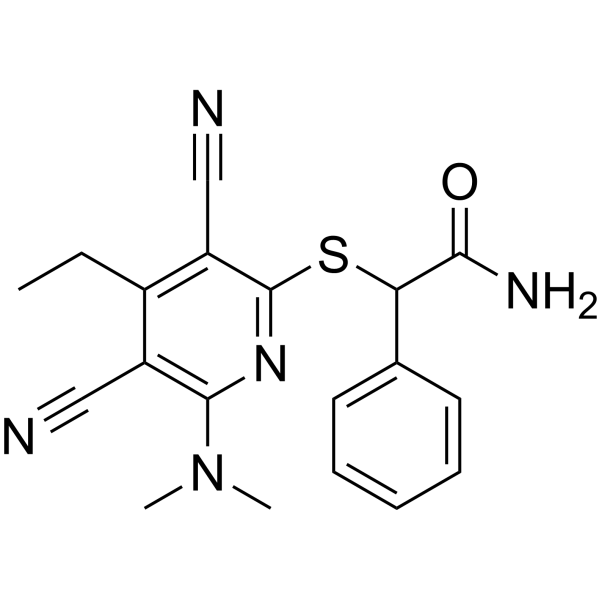
Ofirnoflastum (Ofirnoflast) is an orally active first-in-class allosteric NEK7 inhibitor with an IC50 of 46 nM. Ofirnoflastum binds an allosteric site adjacent to NEK7’s ATP-binding pocket, induces conformational shifts, disrupts NEK7-NLRP3 binding, blocks NLRP3 inflammasome assembly, spares NEK7’s physiological functions, and suppresses caspase-1, caspase-8, NF-κB, and TNF activity. Ofirnoflastum reduces pro-inflammatory cytokine production, suppresses ASC specks, IL-1β release, pyroptotic cell death, and leukemic burden, induces apoptosis and erythroid differentiation, restores hematopoiesis, and improves outcomes in colitis models. Ofirnoflastum can be used for the research of myelodysplastic syndromes, chronic myelomonocytic leukemia, and acute myeloid leukemia .
Nrf2-IN-1 is an inhibitor of nuclear factor-erythroid 2-related factor 2 (Nrf2). Nrf2-IN-1 is developed for the research of acute myeloid leukemia (AML) .
Lartesertib (M4076) is an inhibitor of the serine/threonine protein kinase ATM with high potency. Lartesertib can inhibit the growth of multiple hematopoietic cell lines. Additionally, when combined with the ATR inhibitor Tuvusertib (HY-111451), Lartesertib can promote the death of tumor cells, activate the immune signaling pathway, and exhibit anti-tumor activity .
cis-Vaccenic acid, the antiviral extract from Rhodopseudomonas capsulate and the predominant active component of Rhodopseudomonas capsulate , acts a potential fetal hemoglobin inducer .
2'-Deoxycytidine hydrochloride is an orally effective nucleic acid biosynthesis enzyme inhibitor. 2'-Deoxycytidine hydrochloride competes with nucleic acid biosynthesis enzymes and nucleoside transporters, thereby reducing the toxicity of cytarabine. 2'-Deoxycytidine (hydrochloride) can be used in the research of L1210 lymphoblastic leukemia .
Maackiain (DL-Maackiain) is an orally active multi-target inhibitor with anti-tumor activity and neuroprotective effects. Maackiain activates the AMPK, NLRP3 and Nrf2/HO-1 pathways, and inhibits key targets such as NF-κB, mTOR, MAO-B, NFATc1 and PKCδ, thereby precisely regulating processes including apoptosis, autophagy and pyroptosis. Maackiain also effectively inhibits microglial activation, osteoclast formation, and proliferation and invasion of tumor cells, and protects dopaminergic neurons from damage. Maackiain is applicable to the research of various diseases such as Alzheimer's disease, osteoporosis, sepsis and dengue fever 。
Zn (II) Mesoporphyrin IX (ZnMP) is a heme oxygenase inhibitor with photochemical substrate activity. Zn (II) Mesoporphyrin IX specifically inhibits the activity of bone marrow heme oxygenase. In vitro, Zn (II) Mesoporphyrin IX inhibits the growth of erythroid and myeloid progenitor cells in rabbit bone marrow, and blocks the rhG-CSF-induced mobilization of these progenitor cells into the peripheral blood, exhibiting toxicity to hematopoietic growth and progenitor cell production in rabbits. Zn (II) Mesoporphyrin IX undergoes irreversible photochemical decomposition conforming to first-order kinetic characteristics when irradiated with UV-B in 95% ethanol solution. Zn (II) Mesoporphyrin IX can be used in hematopoietic regulation research, but its photolability and toxic effects on the hematopoietic system require attention .
ACA-28 is a potent ERK MAPK signaling modulator. ACA-28 selectively inhibits cancer cell growth and induces apoptosis. ACA-28 can activate nuclear factor erythroid 2-related factor 2 (Nrf2) signaling via inducing ROS production. ACA-28 can be used for the research of cancer, such as melanoma
.
Anti-Mouse CD71/TfR1 Antibody (8D3) is a rat-derived anti-mouse CD71/TfR1 IgG2a type antibody inhibitor. Anti-Mouse CD71/TfR1 Antibody (8D3) depletes of CD71+ erythroid cells but does not change percentages of Tregs in neonatal mice. Anti-Mouse CD71/TfR1 Antibody (8D3) enhances neonatal mice defence against infection .
Luspatercept (mIgG2a) (RAP-536) is a fusion protein, consisting of a modified extracellular domain of human ActRIIB linked to the murine IgG2a Fc domain. Luspatercept (mIgG2a) inhibits Smad2/3 signaling, promotes differentiation of late-stage erythroid precursors and mitigates ineffective erythropoiesis (IE) in murine β-thalassemia. Luspatercept (mIgG2a) reduces anemia, α-globin aggregates, hemolysis, and disease complications of IE such as iron overload, splenomegaly, and bone defects .
β-Benzamide adenine dinucleotide is a biologically active metabolite of benzamide riboside. β-Benzamide adenine dinucleotide is a competitive inhibitor of human NAD kinase with a Ki value of 90 μM, and inhibits human IMPDH with IC50 values of 0.787 μM and 0.884 μM for type I and type II, respectively. β-Benzamide adenine dinucleotide exhibits inhibitory activities against lactate dehydrogenase, glutamate dehydrogenase, and malate dehydrogenase. β-Benzamide adenine dinucleotide can be used for the study of chronic myelogenous leukemia .
TBE 31 is a potent and orally active NQO1 inducer with an Dm value of 1.1 nM. TBE 31 also is a potent Nrf2 activator. TBE 31 reacts with cysteines of Keap1, impairing its ability to target nuclear factor-erythroid 2 p45-related factor 2 (Nrf2) for degradation. TBE 31 shows cytoprotective effects .
Substance P(1-4) is a potent neurokinin receptors (NK-R) antagonist. Substance P(1-4) has regulation of normal hematopoiesis and inhibits endogenous erythroid colony (EEC) formation .
AChE/Nrf2 modulator 1 is an orally active acetylcholinesterase (AChE)/nuclear factor erythroid 2-related factor 2 (Nrf2) modulator. AChE/Nrf2 modulator 1 has Nrf2 inductive activity and AChE inhibitory activity for eeAChE and hAChE with IC50 values of 0.07 μM and 0.38 μM, respectively. AChE/Nrf2 modulator 1 can be used for the research of Alzheimer's disease .
Dimethyl fumarate-d6 is a deuterium labeled Dimethyl fumarate. Dimethyl fumarate is a nuclear factor (erythroid-derived)-like 2 (Nrf2) pathway activator and induces upregulation of antioxidant gene expression .
NFE2L1 activator-1 (Compound 5b) is a potent nuclear factor erythroid 2-related factor 1 (NFE2L1) activator (EC50 = 2.4 µM). NFE2L1 activator-1 effectively resists ferroptosis (Ferroptosis). NFE2L1 activator-1 can specifically activate the NFE2L1 signaling pathway to upregulate GPX4, PSMB7, PSMC4. NFE2L1 activator-1 can be used in cancer research .
Ac-Tyr-Val-Lys-Asp-aldehyde is a reversible caspase-1 inhibitor. Ac-Tyr-Val-Lys-Asp-aldehyde increases GATA1 levels by inhibiting caspase-1 and promotes erythroid differentiation. can be used for disease research including anemia-associated to chronic diseases, chemotherapy-induced anemia and Diamond-Blackfan anemia .
YPLP is a yeast-derived peptide Tyr-Pro-Leu-Pro, which exhibits activity in anti fatigue mechanisms through the nuclear factor erythroid-2-related factor 2 (Nrf2)- and AMP-activated protein kinase (AMPK) pathway. YPLP is orally active .
DC-PGKI is an orally active ATP-competitive PGK1 inhibitor(IC50 = 0.16 Μm, Kd = 99.08 nM). DC-PGKI stabilizes PGK1 in vitro and in vivo, and suppresses both glycolytic activity and the kinase function of PGK1. DC-PGKI-mediated inhibition of PGK1 leads to the accumulation of NRF2 (nuclear factor-erythroid factor 2-related factor 2, NFE2L2), which then translocates to the nucleus, binds to the proximal regions of IL-1β and IL-6 genes, and suppresses the LPS-induced expression of these genes. DC-PGKI can be used for the study of colitis .
Tyrphostin AG 568 is a tyrphostin tyrosine kinase inhibitor that induces erythroid differentiation. Tyrphostin AG 568 can be utilized in research related to autologous bone marrow transplantation .
UNC0638 hydrate selectively inhibits G9a and GLP histone methyltransferases with IC50 of 15 nM and 19 nM, respectively. UNC0638 hydrate inhibits TNBC cell invasion and migration in vitro. UNC0638 hydrate is also an inhibitor of EHMT1/2 and induces fetal hemoglobin (HbF) expression in human erythroid progenitor cell culture. In addition, UNC0638 hydrate has anti-FMDV (foot-and-mouth disease virus) and anti-VSV (vesicular stomatitis virus) activities, with excellent potency and selectivity against multiple epigenetic and non-epigenetic targets .
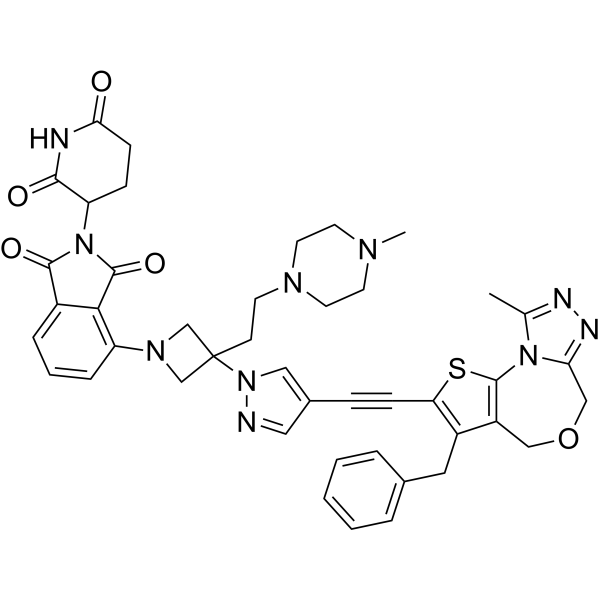
WIZ degrader 3 (Compound 29) is a degrader for widely interspaced zinc finger motifs (WIZ), with an AC50 of 6.4 nM. WIZ degrader 3 induces the expression of fetal hemoglobin (HbF), with an EC50 of 45 nM. WIZ degrader 3 can be used for the research of blood disorders, such as sickle cell disease and β- thalassemia .
RLYB331 (KY1066) is a is a monoclonal antibody targeting Matriptase-2 (TMPRSS6) . RLYB331 binds to the serine protease active site of matriptase-2, blocking protease activity to increase hepcidin expression. RLYB331 reduces iron overload, inhibits α-aggregates, reduces ROS, inhibits apoptosis, and enhances erythroid differentiation. RLYB331 ameliorates ineffective erythropoiesis in β-thalassemic mouse models. RLYB331 can be used for the research of β-thalassemia .
Human GATA1 mRNA encodes the human GATA binding protein 1 (GATA1) which belongs to the GATA family. GATA1 plays an important role in erythroid development by regulating the switch of fetal hemoglobin to adult hemoglobin.
KY1070 is a fully human anti-BMP6 antibody with a Kd of 0.00014 μM against the human BMP6. It exhibits high specificity for BMP6, showing no cross-reactivity with other members of the BMP family, and effectively inhibits BMP6-induced BMP receptor heterodimerization and hepcidin expression. KY1070 modulates Ferroportin expression on erythroid progenitor cells and accelerates erythropoiesis. In rodent anemia models, KY1070 reduces the required dose of erythropoietin (EPO) when used in combination with EPO and enhances the responsiveness of mice with chronic kidney disease (CKD)-associated anemia to EPO treatment. KY1070 is applicable for research on anemia of chronic disease [1] [2].
ML385 (Standard) is the analytical standard of ML385 (HY-100523). This product is intended for research and analytical applications. ML385 is a specific nuclear factor erythroid 2-related factor 2 (NRF2) inhibitor with an IC50 of 1.9 μM.
PIISVYWK is an orally active PPARγ Inhibitor, heme oxygenase-1 Activator, and Nrf2 Activator. PIISVYWK mediates activity via the HO-1/Nrf2 pathway, ameliorates oxidative stress, reduces inflammation, and mediates anti-obesity activity. PIISVYWK can be used for the research of obesity .
Esculeogenin A is the sapogenol of tomato saponin Esculeoside A (HY-N18067). Esculeogenin A is an orally active hepatoprotective, hypolipidemic, and antioxidant agent. Esculeogenin A regulates molecular targets like PPARα, SREBP1, Nrf2, NF-κB, ACAT1/ACAT2 to promote hepatic fatty acid oxidation, suppress de novo lipogenesis, enhance antioxidant defense, and inhibit inflammation. Esculeogenin A improves liver function, alleviates hyperlipidemia, and inhibits hepatic steatosis and foam cell formation, preventing nonalcoholic fatty liver disease in high-fat-diet-fed rats and reducing atherosclerotic lesions in apoE-deficient mice. Esculeogenin A can be used for the research of nonalcoholic fatty liver disease, atherosclerosis, and hyperlipidemia .
Zn (II) Mesoporphyrin IX (ZnMP) is a heme oxygenase inhibitor with photochemical substrate activity. Zn (II) Mesoporphyrin IX specifically inhibits the activity of bone marrow heme oxygenase. In vitro, Zn (II) Mesoporphyrin IX inhibits the growth of erythroid and myeloid progenitor cells in rabbit bone marrow, and blocks the rhG-CSF-induced mobilization of these progenitor cells into the peripheral blood, exhibiting toxicity to hematopoietic growth and progenitor cell production in rabbits. Zn (II) Mesoporphyrin IX undergoes irreversible photochemical decomposition conforming to first-order kinetic characteristics when irradiated with UV-B in 95% ethanol solution. Zn (II) Mesoporphyrin IX can be used in hematopoietic regulation research, but its photolability and toxic effects on the hematopoietic system require attention .
Substance P(1-4) is a potent neurokinin receptors (NK-R) antagonist. Substance P(1-4) has regulation of normal hematopoiesis and inhibits endogenous erythroid colony (EEC) formation .
Ac-Tyr-Val-Lys-Asp-aldehyde is a reversible caspase-1 inhibitor. Ac-Tyr-Val-Lys-Asp-aldehyde increases GATA1 levels by inhibiting caspase-1 and promotes erythroid differentiation. can be used for disease research including anemia-associated to chronic diseases, chemotherapy-induced anemia and Diamond-Blackfan anemia .
YPLP is a yeast-derived peptide Tyr-Pro-Leu-Pro, which exhibits activity in anti fatigue mechanisms through the nuclear factor erythroid-2-related factor 2 (Nrf2)- and AMP-activated protein kinase (AMPK) pathway. YPLP is orally active .
PIISVYWK is an orally active PPARγ Inhibitor, heme oxygenase-1 Activator, and Nrf2 Activator. PIISVYWK mediates activity via the HO-1/Nrf2 pathway, ameliorates oxidative stress, reduces inflammation, and mediates anti-obesity activity. PIISVYWK can be used for the research of obesity .
Luspatercept (ACE-536) is a recombinant modified ActRIIB fusion protein that binds with transforming growth factor β superfamily ligands. Luspatercept increases the erythrocyte numbers and promotes maturation of erythroid precursors. Luspatercept binds with GDF11 and inhibits Smad2/3 signaling. Luspatercept can be used for the research of anemia .
Anti-Mouse CD71/TfR1 Antibody (8D3) is a rat-derived anti-mouse CD71/TfR1 IgG2a type antibody inhibitor. Anti-Mouse CD71/TfR1 Antibody (8D3) depletes of CD71+ erythroid cells but does not change percentages of Tregs in neonatal mice. Anti-Mouse CD71/TfR1 Antibody (8D3) enhances neonatal mice defence against infection .
Luspatercept (mIgG2a) (RAP-536) is a fusion protein, consisting of a modified extracellular domain of human ActRIIB linked to the murine IgG2a Fc domain. Luspatercept (mIgG2a) inhibits Smad2/3 signaling, promotes differentiation of late-stage erythroid precursors and mitigates ineffective erythropoiesis (IE) in murine β-thalassemia. Luspatercept (mIgG2a) reduces anemia, α-globin aggregates, hemolysis, and disease complications of IE such as iron overload, splenomegaly, and bone defects .
RLYB331 (KY1066) is a is a monoclonal antibody targeting Matriptase-2 (TMPRSS6) . RLYB331 binds to the serine protease active site of matriptase-2, blocking protease activity to increase hepcidin expression. RLYB331 reduces iron overload, inhibits α-aggregates, reduces ROS, inhibits apoptosis, and enhances erythroid differentiation. RLYB331 ameliorates ineffective erythropoiesis in β-thalassemic mouse models. RLYB331 can be used for the research of β-thalassemia .
KY1070 is a fully human anti-BMP6 antibody with a Kd of 0.00014 μM against the human BMP6. It exhibits high specificity for BMP6, showing no cross-reactivity with other members of the BMP family, and effectively inhibits BMP6-induced BMP receptor heterodimerization and hepcidin expression. KY1070 modulates Ferroportin expression on erythroid progenitor cells and accelerates erythropoiesis. In rodent anemia models, KY1070 reduces the required dose of erythropoietin (EPO) when used in combination with EPO and enhances the responsiveness of mice with chronic kidney disease (CKD)-associated anemia to EPO treatment. KY1070 is applicable for research on anemia of chronic disease [1] [2].
cis-Vaccenic acid, the antiviral extract from Rhodopseudomonas capsulate and the predominant active component of Rhodopseudomonas capsulate , acts a potential fetal hemoglobin inducer .
2'-Deoxycytidine hydrochloride is an orally effective nucleic acid biosynthesis enzyme inhibitor. 2'-Deoxycytidine hydrochloride competes with nucleic acid biosynthesis enzymes and nucleoside transporters, thereby reducing the toxicity of cytarabine. 2'-Deoxycytidine (hydrochloride) can be used in the research of L1210 lymphoblastic leukemia .
Maackiain (DL-Maackiain) is an orally active multi-target inhibitor with anti-tumor activity and neuroprotective effects. Maackiain activates the AMPK, NLRP3 and Nrf2/HO-1 pathways, and inhibits key targets such as NF-κB, mTOR, MAO-B, NFATc1 and PKCδ, thereby precisely regulating processes including apoptosis, autophagy and pyroptosis. Maackiain also effectively inhibits microglial activation, osteoclast formation, and proliferation and invasion of tumor cells, and protects dopaminergic neurons from damage. Maackiain is applicable to the research of various diseases such as Alzheimer's disease, osteoporosis, sepsis and dengue fever 。
Esculeogenin A is the sapogenol of tomato saponin Esculeoside A (HY-N18067). Esculeogenin A is an orally active hepatoprotective, hypolipidemic, and antioxidant agent. Esculeogenin A regulates molecular targets like PPARα, SREBP1, Nrf2, NF-κB, ACAT1/ACAT2 to promote hepatic fatty acid oxidation, suppress de novo lipogenesis, enhance antioxidant defense, and inhibit inflammation. Esculeogenin A improves liver function, alleviates hyperlipidemia, and inhibits hepatic steatosis and foam cell formation, preventing nonalcoholic fatty liver disease in high-fat-diet-fed rats and reducing atherosclerotic lesions in apoE-deficient mice. Esculeogenin A can be used for the research of nonalcoholic fatty liver disease, atherosclerosis, and hyperlipidemia .
AHSP proteins are chaperones in developing red blood cells that protect alpha-hemoglobin from harmful aggregation and precipitation. It is essential for alpha-hemoglobin stability, and it regulates conditions associated with excess alpha-hemoglobin, such as beta-thalassemia. AHSP Protein, Human is the recombinant human-derived AHSP protein, expressed by E. coli , with tag free.
ALAS2 Protein catalyzes PLP-dependent condensation of succinyl-CoA and glycine, producing aminolevulinic acid (ALA) with CoA and CO2 by-products. It significantly contributes to heme formation in erythropoiesis, with catalytic activity reaching 75-85% of isoform 1. ALAS2 Protein, Human (His) is the recombinant human-derived ALAS2 protein, expressed by E. coli , with N-6*His labeled tag.
ERMAP protein potentially serves as a cell-adhesion or receptor molecule in erythroid cells, suggesting involvement in crucial interactions or signaling events. The precise mechanisms, ligands, and broader implications of ERMAP's activity in erythroid cell biology require further investigation. Unraveling ERMAP's function may provide insights into its significance in hematopoiesis and related physiological processes. ERMAP Protein, Human (HEK293, His) is the recombinant human-derived ERMAP protein, expressed by HEK293 , with C-6*His labeled tag.
The INHBA protein plays a key role in regulating pituitary function by regulating follicle-stimulating hormone secretion together with activin. Its broad effects span a variety of physiological processes, including hormone secretion, germ cell development, erythrocyte differentiation, insulin secretion, nerve cell survival, embryonic development, and bone growth, depending on unique subunit composition. Activin A Protein, Human/Mouse/Rat (CHO) is the recombinant human/rat/mouse-derived Activin A protein, expressed by CHO, with tag free.
The INHBA protein plays a key role in regulating pituitary function by regulating follicle-stimulating hormone secretion together with activin. Its broad effects span a variety of physiological processes, including hormone secretion, germ cell development, erythrocyte differentiation, insulin secretion, nerve cell survival, embryonic development, and bone growth, depending on unique subunit composition. Animal-Free Activin A Protein, Human/Mouse/Rat (His) is the recombinant human, rat, mouse-derived animal-FreeActivin A protein, expressed by E. coli , with C-His labeled tag. This product is for cell culture use only.
TIMP-1 is a metalloproteinase inhibitor that irreversibly inactivates collagenase and other metalloproteinases by binding to their catalytic zinc cofactor.It regulates MMP1, MMP2, MMP3, MMP7, MMP8, MMP9, MMP10, MMP11, MMP12, MMP13 and MMP16 and affects cellular processes such as differentiation, migration and cell death.TIMP-1 Protein, Mouse (HEK293) is the recombinant mouse-derived TIMP-1 protein, expressed by HEK293 , with tag free.
The TIMP-1 protein forms a one-to-one complex with the target metalloprotease, irreversibly inactivating it by binding to the catalytic zinc cofactor. It inhibits multiple MMPs, activates cell signaling through CD63 and ITGB1, and interacts with MMP1, MMP3, MMP10, and MMP13. TIMP-1 Protein, Human (HEK293, His) is the recombinant human-derived TIMP-1 protein, expressed by HEK293 , with C-His labeled tag.
The NFE2L2 protein is a key transcription factor that activates cytoprotective genes in response to oxidative stress by binding to the antioxidant response element (ARE). Normally, the BCR(KEAP1) complex degrades NFE2L2 in the cytoplasm. NFE2L2 Protein, Human (His) is the recombinant human-derived NFE2L2 protein, expressed by E. coli , with N-His labeled tag.
The NFE2L2 protein is a key transcription factor that activates cytoprotective genes in response to oxidative stress by binding to the antioxidant response element (ARE). Normally, the BCR(KEAP1) complex degrades NFE2L2 in the cytoplasm. NFE2L2 Protein, Human (P.pastoris, His) is the recombinant human-derived NFE2L2 protein, expressed by P. pastoris , with N-His labeled tag.
Dimethyl fumarate-d6 is a deuterium labeled Dimethyl fumarate. Dimethyl fumarate is a nuclear factor (erythroid-derived)-like 2 (Nrf2) pathway activator and induces upregulation of antioxidant gene expression .
2'-Deoxycytidine hydrochloride is an orally effective nucleic acid biosynthesis enzyme inhibitor. 2'-Deoxycytidine hydrochloride competes with nucleic acid biosynthesis enzymes and nucleoside transporters, thereby reducing the toxicity of cytarabine. 2'-Deoxycytidine (hydrochloride) can be used in the research of L1210 lymphoblastic leukemia .
Human GATA1 mRNA encodes the human GATA binding protein 1 (GATA1) which belongs to the GATA family. GATA1 plays an important role in erythroid development by regulating the switch of fetal hemoglobin to adult hemoglobin.
Inquiry Online
Your information is safe with us. * Required Fields.
Western blot analysis of extracts from THP-1(lane 2(20μg), Jurkat (lane 3(20μg) and NIH3T3(lane 4(20μg) using FOXO1A (HY-P80132) Rabbit mAb. Proteins were transferred
to a PVDF membrane and blocked with 5% non-fat milk in TBST for 2 hour at room temperature. The primary antibody (1/1000) and Loading control antibody (Beta Actin, HY-P80438, 1/10000) was
used in 5% non-fat milk in TBST at 4°C overnight. Goat Anti-Mouse/Rabbit IgG-HRP Secondary Antibody (1/10000) was used for 1 hour at room temperature.
Western blot analysis of extracts from THP-1(lane 2(20μg), Jurkat (lane 3(20μg) and NIH3T3(lane 4(20μg) using FOXO1A (HY-P80132) Rabbit mAb. Proteins were transferred
to a PVDF membrane and blocked with 5% non-fat milk in TBST for 2 hour at room temperature. The primary antibody (1/1000) and Loading control antibody (Beta Actin, HY-P80438, 1/10000) was
used in 5% non-fat milk in TBST at 4°C overnight. Goat Anti-Mouse/Rabbit IgG-HRP Secondary Antibody (1/10000) was used for 1 hour at room temperature.
Western blot analysis of extracts from THP-1(lane 2(20μg), Jurkat (lane 3(20μg) and NIH3T3(lane 4(20μg) using FOXO1A (HY-P80132) Rabbit mAb. Proteins were transferred
to a PVDF membrane and blocked with 5% non-fat milk in TBST for 2 hour at room temperature. The primary antibody (1/1000) and Loading control antibody (Beta Actin, HY-P80438, 1/10000) was
used in 5% non-fat milk in TBST at 4°C overnight. Goat Anti-Mouse/Rabbit IgG-HRP Secondary Antibody (1/10000) was used for 1 hour at room temperature.
Western blot analysis of extracts from THP-1(lane 2(20μg), Jurkat (lane 3(20μg) and NIH3T3(lane 4(20μg) using FOXO1A (HY-P80132) Rabbit mAb. Proteins were transferred
to a PVDF membrane and blocked with 5% non-fat milk in TBST for 2 hour at room temperature. The primary antibody (1/1000) and Loading control antibody (Beta Actin, HY-P80438, 1/10000) was
MedchemExpress Validation 03
Western blot analysis of extracts from THP-1(lane 2(20μg), Jurkat (lane 3(20μg) and NIH3T3(lane 4(20μg) using FOXO1A (HY-P80132) Rabbit mAb. Proteins were transferred
MedchemExpress Validation 04
Western blot analysis of extracts from THP-1(lane 2(20μg), Jurkat (lane 3(20μg) and NIH3T3(lane 4(20μg) using FOXO1A (HY-P80132) Rabbit mAb. Proteins were transferred
to a PVDF membrane and blocked with 5% non-fat milk in TBST for 2 hour at room temperature. The primary antibody (1/1000) and Loading control antibody (Beta Actin, HY-P80438, 1/10000) was
used in 5% non-fat milk in TBST at 4°C overnight. Goat Anti-Mouse/Rabbit IgG-HRP Secondary Antibody (1/10000) was used for 1 hour at room temperature.
MedchemExpress Validation
Western blot analysis of extracts from THP-1(lane 2(20μg), Jurkat (lane 3(20μg) and NIH3T3(lane 4(20μg) using FOXO1A (HY-P80132) Rabbit mAb. Proteins were transferred
to a PVDF membrane and blocked with 5% non-fat milk in TBST for 2 hour at room temperature. The primary antibody (1/1000) and Loading control antibody (Beta Actin, HY-P80438, 1/10000) was
used in 5% non-fat milk in TBST at 4°C overnight. Goat Anti-Mouse/Rabbit IgG-HRP Secondary Antibody (1/10000) was used for 1 hour at room temperature.
Western blot analysis of extracts from THP-1(lane 2(20μg), Jurkat (lane 3(20μg) and NIH3T3(lane 4(20μg) using FOXO1A (HY-P80132) Rabbit mAb. Proteins were transferred
to a PVDF membrane and blocked with 5% non-fat milk in TBST for 2 hour at room temperature. The primary antibody (1/1000) and Loading control antibody (Beta Actin, HY-P80438, 1/10000) was
used in 5% non-fat milk in TBST at 4°C overnight. Goat Anti-Mouse/Rabbit IgG-HRP Secondary Antibody (1/10000) was used for 1 hour at room temperature.
MedchemExpress Validation
Western blot analysis of extracts from THP-1(lane 2(20μg), Jurkat (lane 3(20μg) and NIH3T3(lane 4(20μg) using FOXO1A (HY-P80132) Rabbit mAb. Proteins were transferred
to a PVDF membrane and blocked with 5% non-fat milk in TBST for 2 hour at room temperature. The primary antibody (1/1000) and Loading control antibody (Beta Actin, HY-P80438, 1/10000) was
used in 5% non-fat milk in TBST at 4°C overnight. Goat Anti-Mouse/Rabbit IgG-HRP Secondary Antibody (1/10000) was used for 1 hour at room temperature.
MedchemExpress Validation
Western blot analysis of extracts from THP-1(lane 2(20μg), Jurkat (lane 3(20μg) and NIH3T3(lane 4(20μg) using FOXO1A (HY-P80132) Rabbit mAb. Proteins were transferred
to a PVDF membrane and blocked with 5% non-fat milk in TBST for 2 hour at room temperature. The primary antibody (1/1000) and Loading control antibody (Beta Actin, HY-P80438, 1/10000) was
used in 5% non-fat milk in TBST at 4°C overnight. Goat Anti-Mouse/Rabbit IgG-HRP Secondary Antibody (1/10000) was used for 1 hour at room temperature.
MedchemExpress Validation
Western blot analysis of extracts from THP-1(lane 2(20μg), Jurkat (lane 3(20μg) and NIH3T3(lane 4(20μg) using FOXO1A (HY-P80132) Rabbit mAb. Proteins were transferred
to a PVDF membrane and blocked with 5% non-fat milk in TBST for 2 hour at room temperature. The primary antibody (1/1000) and Loading control antibody (Beta Actin, HY-P80438, 1/10000) was
used in 5% non-fat milk in TBST at 4°C overnight. Goat Anti-Mouse/Rabbit IgG-HRP Secondary Antibody (1/10000) was used for 1 hour at room temperature.
MedchemExpress Validation
Western blot analysis of extracts from THP-1(lane 2(20μg), Jurkat (lane 3(20μg) and NIH3T3(lane 4(20μg) using FOXO1A (HY-P80132) Rabbit mAb. Proteins were transferred
to a PVDF membrane and blocked with 5% non-fat milk in TBST for 2 hour at room temperature. The primary antibody (1/1000) and Loading control antibody (Beta Actin, HY-P80438, 1/10000) was
used in 5% non-fat milk in TBST at 4°C overnight. Goat Anti-Mouse/Rabbit IgG-HRP Secondary Antibody (1/10000) was used for 1 hour at room temperature.
MedchemExpress Validation
Western blot analysis of extracts from THP-1(lane 2(20μg), Jurkat (lane 3(20μg) and NIH3T3(lane 4(20μg) using FOXO1A (HY-P80132) Rabbit mAb. Proteins were transferred
to a PVDF membrane and blocked with 5% non-fat milk in TBST for 2 hour at room temperature. The primary antibody (1/1000) and Loading control antibody (Beta Actin, HY-P80438, 1/10000) was
used in 5% non-fat milk in TBST at 4°C overnight. Goat Anti-Mouse/Rabbit IgG-HRP Secondary Antibody (1/10000) was used for 1 hour at room temperature.
MedchemExpress Validation
Western blot analysis of extracts from THP-1(lane 2(20μg), Jurkat (lane 3(20μg) and NIH3T3(lane 4(20μg) using FOXO1A (HY-P80132) Rabbit mAb. Proteins were transferred
to a PVDF membrane and blocked with 5% non-fat milk in TBST for 2 hour at room temperature. The primary antibody (1/1000) and Loading control antibody (Beta Actin, HY-P80438, 1/10000) was
used in 5% non-fat milk in TBST at 4°C overnight. Goat Anti-Mouse/Rabbit IgG-HRP Secondary Antibody (1/10000) was used for 1 hour at room temperature.
MedChemExpress values your privacy and your trust is important to us. We use cookies to enhance your website experience. Some cookies are necessary to run the website.
Privacy and Cookie Policy

