1. Search Result
Search Result
Results for "

Frontal cortex

" in MedChemExpress (MCE) Product Catalog:

21

Inhibitors & Agonists

3

Natural
Products

Cat. No. Product Name Target Research Areas Chemical Structure
  • HY-101075
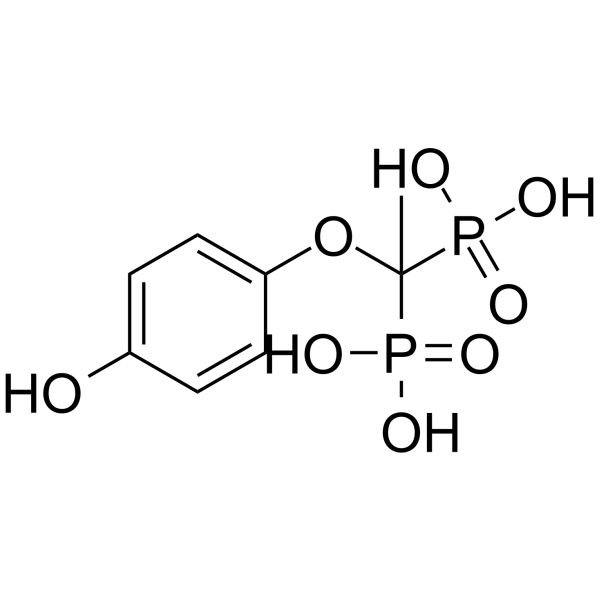
    L-690330
    1 Publications Verification

    Phosphatase Others
    L-690330 is a competitive inhibitor of inositol monophosphatase (IMPase) with Kis of 0.27 and 0.19 μM for recombinant human and bovine IMPase, 0.30 and 0.42 μM for human and bovine frontal cortex IMPase, respectively. L-690330 exhibits 10-fold more sensitive than mouse and rat IMPase .
    L-690330
  • HY-W097625

    Toll-like Receptor (TLR) MyD88 p38 MAPK NF-κB Heme Oxygenase (HO) Neurological Disease Inflammation/Immunology Cancer
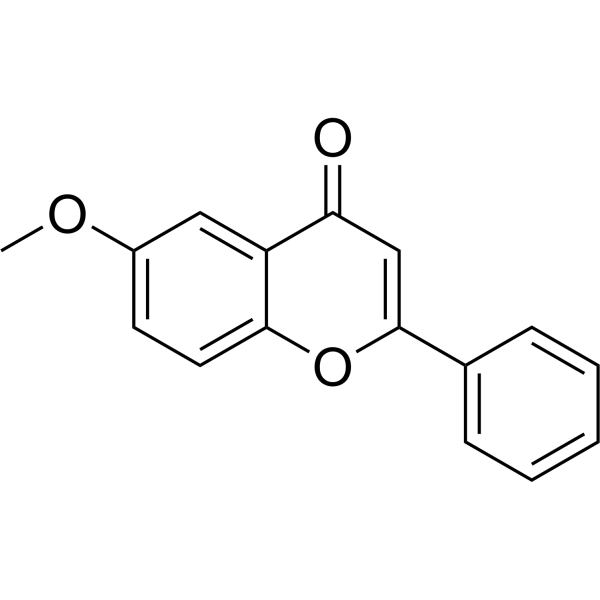
    6-Methoxyflavone is an orally active methoxyflavone. 6-Methoxyflavone suppresses neuroinflammation in microglia through the inhibition of TLR4/MyD88/p38 MAPK/NF-κB dependent pathways and the activation of HO-1/NQO-1 signaling. 6-Methoxyflavone induces S-phase arrest through the CCNA2/CDK2/p21CIP1 signaling pathway in HeLa cells. 6-Methoxyflavone inhibits NFAT Translocation into the nucleus and suppresses T cell activation. 6-Methoxyflavone partially restores chronic ethanol-induced behavioral deficits in mice. 6-Methoxyflavone antagonizes chronic constriction injury and diabetes associated neuropathic nociception expression. 6-Methoxyflavone can be used for the study of cancer, inflammation and neurological diseases .
    6-Methoxyflavone
  • HY-12143

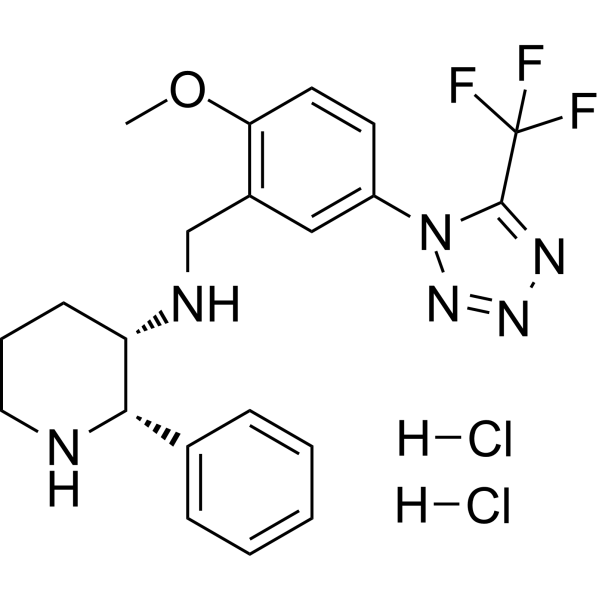
    GR 205171A

    Neurokinin Receptor Neurological Disease
    Vofopitant dihydrochloride (GR 205171A) is a blood-brain barrier-permeable NK1 receptor inhibitor with a pKi of 9.02 in mice. Vofopitant dihydrochloride blocks vomiting-related responses and inhibits pseudoptyalism. Vofopitant dihydrochloride exerts anxiolytic effects, regulates 5-HT receptor function and increases central 5-HT release. Vofopitant dihydrochloride improves hyperarousal symptoms of post-traumatic stress disorder. Vofopitant dihydrochloride can be used in research related to depression, anxiety, vomiting and postoperative nausea and vomiting .
    Vofopitant dihydrochloride
  • HY-N0801

    MMP Cholinesterase (ChE) Neurological Disease Inflammation/Immunology
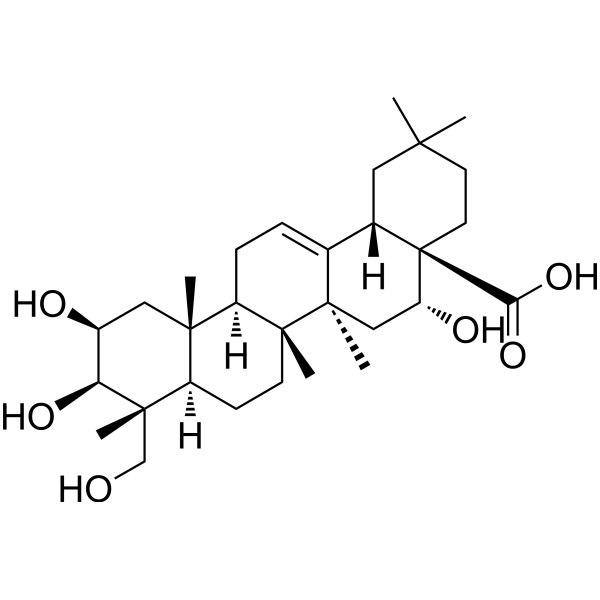
    Polygalacic acid, is a triterpene, isolated from the root of Polygala tenuifolia Willd. Polygalacic acid inhibits MMP expression. Polygalacic acid may have a therapeutic effect in Osteoarthritis (OA) treatment . Polygalacic acid exerts a significant neuroprotective effect on cognitive impairment, PA improves cholinergic system reactivity by inhibiting acetylcholinesterase (AChE) activity, increasing choline acetyltransferase (ChAT) activity, and elevating levels of acetylcholine (Ach) in the hippocampus and frontal cortex .
    Polygalacic acid
  • HY-120717

    mGluR Cytochrome P450 Neurological Disease
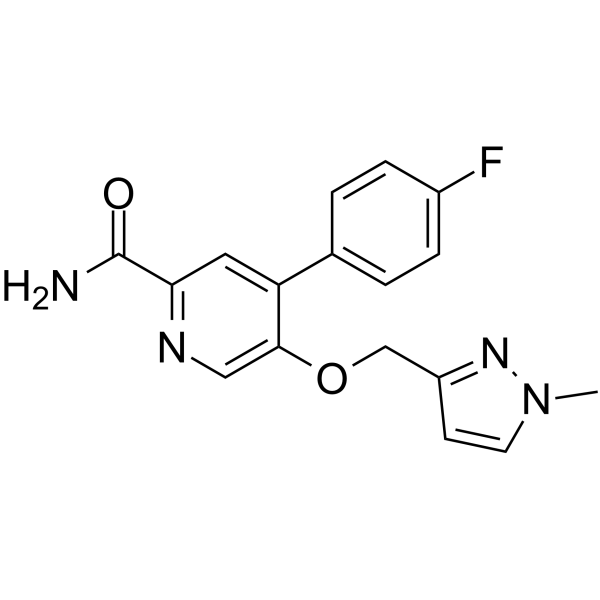
    VU6001966 is a brain-penetrant and selective mGlu2 receptor inhibitor. VU6001966 blocks mGlu2 receptor activity, counteracts LY379268 (HY-103558)-mediated blood-brain barrier protection and inflammatory cytokine dampening in microglia under inflammatory conditions. VU6001966 enhances antidepressant effects when combined with Scopolamine (HY-N0296). VU6001966 can be used for the research of major depressive disorder .
    VU6001966
  • HY-100027A

    Monoamine Oxidase Neurological Disease
    Ro 41-1049 hydrochloride is a reversible and selective inhibitor of monoamine oxidase-A (MAO-A). An homogeneous population of high affinity binding sites for [ 3H]Ro 41-1049 is found in membrane preparations from human frontal cortex and placenta (Kd values of 16.5 and 64.4 nM, respectively) .
    Ro 41-1049 hydrochloride
  • HY-103133

    5-HT Receptor Neurological Disease
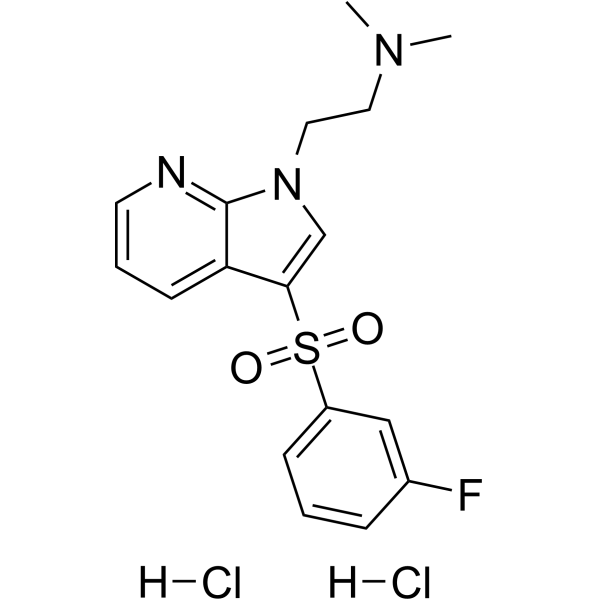
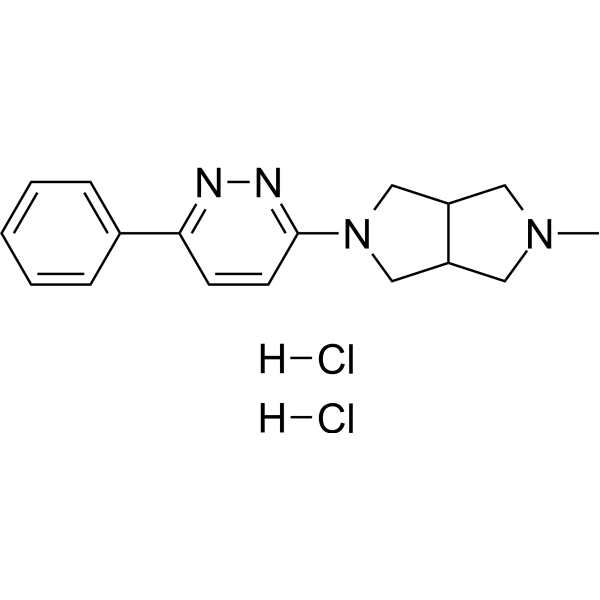
    WAY 208466 dihydrochloride is a potent and selective 5-HT6 receptor agonist (EC50=7.3 nM for the human 5-HT6 receptor). WAY-208466 dihydrochloride elevates cortical GABA levels in rat frontal cortex . WAY 208466 dihydrochloride exhibits antidepressant and anxiolytic-like effects .
    WAY208466 dihydrochloride
  • HY-W794785

    5-HT Receptor Neurological Disease
    WAY 208466 is a selective 5-HT6 receptor agonist with an EC50 of 7.3 nM. WAY-208466 increases GABA levels following both acute and chronic administration in the dorsolateral frontal cortex of rat models with stereotaxic surgery. WAY 208466 can be used for anxiety-related disorders like obsessive compulsive disorder (OCD) research .
    WAY 208466
  • HY-101208

    5-HT Receptor Neurological Disease Inflammation/Immunology
    L-694247 is a selective 5-HT1D agonist with the pIC50 values of 10.03, 8.64, 6.42, and 5.66 for 5-HT1D, 5-HT1A, 5-HT1C, and 5-HT1E receptors , respectively .
    L-694247
  • HY-101208A

    5-HT Receptor Neurological Disease Inflammation/Immunology
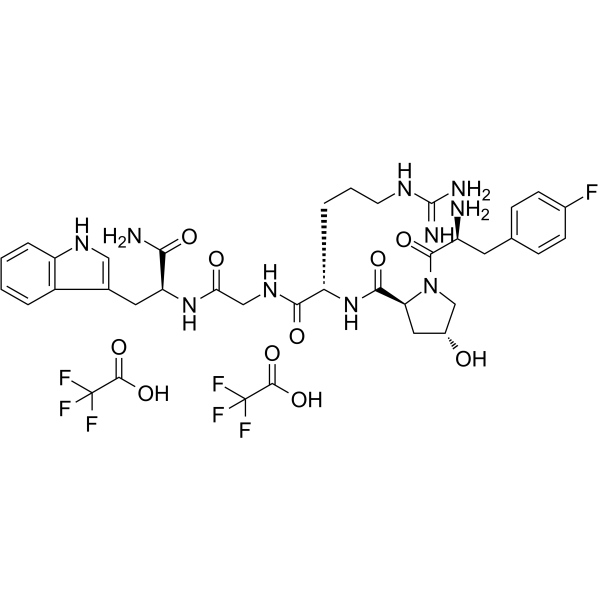
    L694247 (TFA) is a selective 5-HT1D agonist with pIC50 values of 10.03, 8.64, 6.42, and 5.66 for 5-HT1D, 5-HT1A, 5-HT1C, and 5-HT1E receptors, respectively .
    L-694247 TFA
  • HY-105181

    nAChR Neurological Disease
    T 588 is an orally active neuroprotective agent. T 588 can increase acetylcholine release from the frontal cortex and hippocampus and meliorate cognitive dysfunction. T 588 can protect cerebellar granule cells from glutamate neurotoxicity. T 588can be used for the research of neurological disease, such as Alzheimer's disease .
    T 588
  • HY-103089

    5-HT Receptor Neurological Disease
    LY393558 is a potent and orally active inhibitor of the 5-HT transporter and an antagonist of 5-HT1B and 5-HT1D receptors. LY393558 increase the extracellular levels of 5-HT in mice model frontal cortex. LY393558 can be used for researching depression .
    LY393558
  • HY-119495

    Thyroid Hormone Receptor Neurological Disease
    JTP 2942 is a thyrotropin-releasing hormone analogue. JTP 2942 can promote the release of Acetylcholine in the hippocampus and frontal cortex of rats. JTP 2942 possesses neuroprotective and cognitive-improving activities. JTP 2942 dose-dependently improves motor and neurological deficits in rat models of chronic focal cerebral ischemia. JTP 2942 can be used for the research of cerebral ischemia, motor neuron diseases, and other related conditions .
    JTP 2942
  • HY-59201A

    ERK 5-HT Receptor Epigenetic Reader Domain nAChR Neurological Disease Metabolic Disease
    A-582941 dihydrochloride is a selective, orally active, blood-brain barrier-permeable α7 nAChR agonist, with Ki values of 10.8 nM and 17 nM in rat brain and human frontal cortex, respectively. A-582941 dihydrochloride exhibits agonistic activity at 5-HT3 receptors, with a Ki of 150 nM. A-582941 dihydrochloride triggers phosphorylation of ERK1/2 and CREB, inhibits GSK-3β via Ser-9 phosphorylation, increases acetylcholine release, induces the expression of Arc and c-Fos, activates brain regions associated with working memory and attention, and reduces cell death caused by nerve growth factor (NGF) deprivation. A-582941 dihydrochloride is applicable for the research of Alzheimer's disease and schizophrenia .
    A-582941 dihydrochloride
  • HY-107562

    Histamine Receptor Neurological Disease
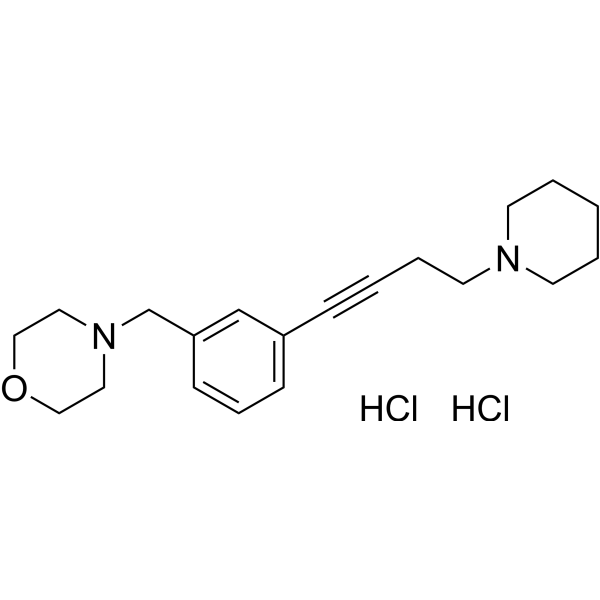
    JNJ-10181457 is a neutral, potent, brain-penetrant and selective non-imidazole H3 antagonist which increases NE and ACh concentrations in rat frontal cortex. JNJ-10181457 can be used for neurological research .
    JNJ 10181457 dihydrochloride
  • HY-101075A
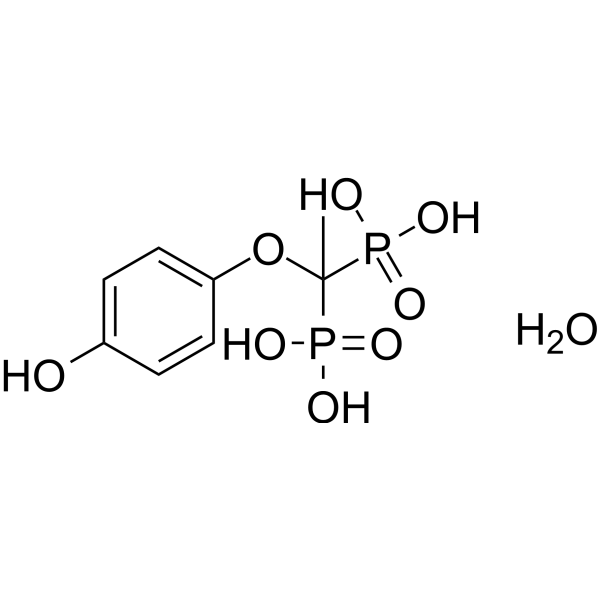
    L-690330 hydrate
    1 Publications Verification

    Phosphatase Others
    L-690330 hydrate is a competitive inhibitor of inositol monophosphatase (IMPase) with Kis of 0.27 and 0.19 μM for recombinant human and bovine IMPase, 0.30 and 0.42 μM for human and bovine frontal cortex IMPase, respectively. L-690330 hydrate exhibits 10-fold more sensitive than mouse and rat IMPase .
    L-690330 hydrate
  • HY-19845

    ACR-325

    Dopamine Receptor Neurological Disease
    Ordopidine is a dopamine D2 receptor antagonist. Ordopidine can inhibit hyperactivity caused by psychostimulants. Ordopidine can be used in neurological research .
    Ordopidine
  • HY-W205529

    Fluorescent Dye Neurological Disease
    RO 16-6491 Free base is a selective, reversible inhibitor of monoamine oxidase type B (MAO-B), exhibiting high affinity and specificity for binding sites in human frontal cortex mitochondria and platelet membranes. RO 16-6491 demonstrates a fast dissociation of bound radioactivity at 20 degrees C, indicating its dynamic binding properties. RO 16-6491 also acts as a substrate for MAO-B, suggesting that its oxidation may produce a stable intermediate responsible for its potent inhibitory effects. RO 16-6491 serves as an excellent radioligand probe for investigating the regional tissue distribution of MAO-B in various physiological and pathological states.
    RO 16-6491 free base
  • HY-W097625R

    Toll-like Receptor (TLR) MyD88 p38 MAPK NF-κB Heme Oxygenase (HO) Reference Standards PERK Neurological Disease Metabolic Disease Inflammation/Immunology Cancer
    6-Methoxyflavone (Standard) is the analytical standard of 6-Methoxyflavone (HY-W097625). This product is intended for research and analytical applications. 6-Methoxyflavone is an orally active methoxyflavone. 6-Methoxyflavone suppresses neuroinflammation in microglia through the inhibition of TLR4/MyD88/p38 MAPK/NF-κB dependent pathways and the activation of HO-1/NQO-1 signaling. 6-Methoxyflavone induces S-phase arrest through the CCNA2/CDK2/p21CIP1 signaling pathway and activates the PERK/EIF2a/ATF4/CHOP pathway in HeLa cells. 6-Methoxyflavone acts as a Flumazenil (HY-B0009)-insensitive positive allosteric modulator at human recombinant α1β2γ2L and α2β2γ2L GABAα receptors. 6-Methoxyflavone inhibits NFAT Translocation into the nucleus and suppresses T cell activation. 6-Methoxyflavone partially restores chronic ethanol-induced behavioral deficits in mice. 6-Methoxyflavone antagonizes chronic constriction injury and diabetes associated neuropathic nociception expression. 6-Methoxyflavone can be used for the study of cancer, inflammation and neurological diseases .
    6-Methoxyflavone (Standard)
  • HY-59201

    nAChR 5-HT Receptor ERK Epigenetic Reader Domain Neurological Disease
    A-582941 is a selective, orally active, blood-brain barrier-permeable α7 nAChR agonist, with Ki values of 10.8 nM and 17 nM in rat brain and human frontal cortex, respectively. A-582941 exhibits agonistic activity at 5-HT3 receptors, with a Ki of 150 nM. A-582941 triggers phosphorylation of ERK1/2 and CREB, inhibits GSK-3β via Ser-9 phosphorylation, increases acetylcholine release, induces the expression of Arc and c-Fos, activates brain regions associated with working memory and attention, and reduces cell death caused by nerve growth factor (NGF) deprivation. A-582941 is applicable for the research of Alzheimer's disease and schizophrenia .
    A-582941
  • HY-134483

    5-HT Receptor Neurological Disease
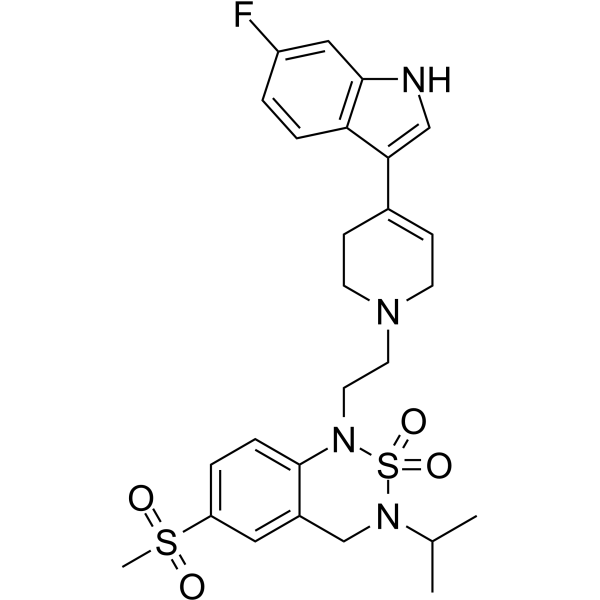
    5-HT7/5-HT2A receptor antagonist 1 is a high-affinity, orally active, brain-penetrant 5-HT7 and 5-HT2A receptor ligand having a pKi = 8.1 at both receptors. 5-HT7/5-HT2A receptor antagonist 1 behaves as an antagonist in an in vitro functional assay for 5-HT2A and as an inverse agonist in an in vitro functional assay for 5-HT7. 5-HT7/5-HT2A receptor antagonist 1 blockade of 5-Carboxamidotryptamine (5-CT) (HY-135555) induced hypothermia in rats, and blockade of 2,5-dimethoxy-4-iodoamphetamine (DOI) induced head-twitches in mice. 5-HT7/5-HT2A receptor antagonist 1 occupied 5-HT2A receptor binding sites in the frontal cortex of the rat brain. 5-HT7/5-HT2A receptor antagonist 1 can be used for the study of Neurological diseases .
    5-HT7/5-HT2A receptor antagonist 1

Inquiry Online

Your information is safe with us. * Required Fields.

Salutation


Country or Region *

Applicant Name *


Organization Name *

Department *


Email Address *


Product Name *

Cat. No.


Requested quantity *

Phone Number *


Remarks

Inquiry Online

Inquiry Information

Product Name:
Cat. No.:
Quantity:
MCE Japan Authorized Agent:

